

Haval Jolion Boot Space: Size, Litres and Practicality

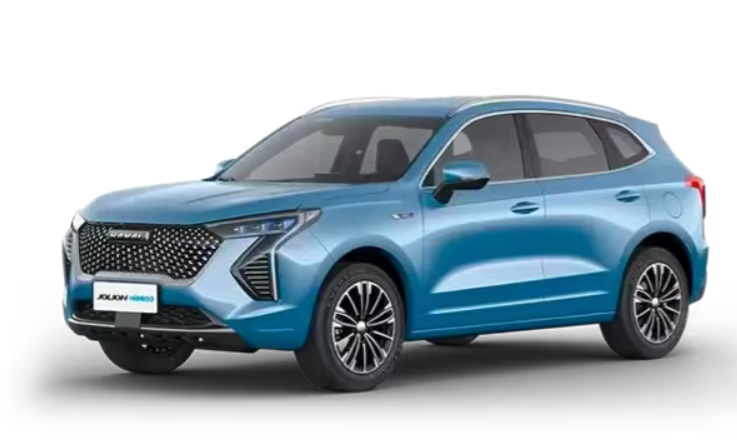
If we are considering a GWM Haval Jolion as a practical family SUV, one of the first things we probably want to know is simple: how big is the boot?
The answer depends more than we might expect on the version we choose.
For the current Australian-market Haval Jolion, boot capacity ranges from 255 litres to 337 litres with the rear seats upright, while folding the second row increases maximum cargo capacity to as much as 1,133 litres.
The standard petrol Premium and Lux models provide the largest cargo area, while the Hybrid sacrifices some luggage capacity because of its different design and powertrain packaging.
In this guide, we will look closely at the Haval Jolion boot space, including petrol and hybrid models, seats-up and seats-down capacity, everyday practicality, luggage capacity and whether the Jolion has enough cargo room for family use.
Content in this publication
- How Big Is the Haval Jolion Boot?
- Haval Jolion Boot Space With Seats Up
- Haval Jolion Boot Space With Rear Seats Folded
- Haval Jolion Hybrid Boot Space
- Haval Jolion Petrol Boot Space
- Haval Jolion Vanta Boot Space
- Why Do Some Websites Say the Haval Jolion Has a 430-Litre Boot?
- Is the Haval Jolion Boot Big Enough for a Family?
- How Many Suitcases Fit in a Haval Jolion?
- Haval Jolion Boot Dimensions
- Is the Haval Jolion Boot Easy to Use?
- Haval Jolion Boot Space vs Passenger Space
- Petrol vs Hybrid: Which Jolion Is Better for Cargo?
- Is 337 Litres a Good Boot Size?
- Can You Increase the Haval Jolion Cargo Space?
- Is the Haval Jolion Good for Road Trips?
- Haval Jolion Boot Space for Everyday Shopping
- What Should We Check Before Buying a Haval Jolion?
- Haval Jolion Boot Space: Final Verdict
- Frequently Asked Questions
How Big Is the Haval Jolion Boot?
For the current model range in Australia, the Haval Jolion offers several different boot capacities.
| Haval Jolion version | Seats up | Rear seats folded |
|---|---|---|
| Premium Petrol | 337 litres | 1,133 litres |
| Lux Petrol | 337 litres | 1,133 litres |
| Vanta Petrol | 291 litres | 952 litres |
| Premium Hybrid | 255 litres | 916 litres |
| Lux Hybrid | 255 litres | 916 litres |
| Vanta Hybrid | 255 litres | 916 litres |
Current specifications therefore make the Premium and Lux petrol models the most spacious Jolion versions for carrying luggage.
That difference is significant.
The petrol Premium or Lux gives us around 82 litres more cargo capacity than a Hybrid when all five seats are being used.
For buyers who regularly travel with children, pushchairs, suitcases or sports equipment, that extra space could make the petrol model considerably more practical.
Haval Jolion Boot Space With Seats Up
The standard petrol Haval Jolion Premium and Lux provide approximately 337 litres of boot space with the rear seats in place.
That means we can keep all five passenger seats available while still having enough room for typical everyday cargo.
In practical terms, 337 litres should normally be sufficient for things such as:
- Several supermarket shopping bags
- A couple of medium suitcases
- Backpacks
- Sports equipment
- A compact folding stroller
- Work bags and laptops
- Small boxes
- Weekend luggage for two people
However, it is worth remembering that quoted litre figures do not tell us everything.
The shape of the boot, wheel-arch intrusion, loading height and rear-seat design can have just as much influence on usability as the headline capacity.
Haval Jolion Boot Space With Rear Seats Folded
Fold the rear seats in the standard petrol Premium or Lux and cargo capacity expands to approximately 1,133 litres.
That completely changes the character of the vehicle.
Instead of simply carrying everyday shopping or luggage, we can use the Jolion for much larger loads.
The expanded cargo area can be useful when transporting:
- Large suitcases
- Flat-pack furniture
- Camping equipment
- Boxes when moving house
- Sporting equipment
- Larger household purchases
- Gardening supplies
- Pet equipment
For occasional bulky loads, the ability to expand from 337 litres to more than 1,100 litres is one of the Jolion's stronger practicality features.
Do the Haval Jolion Rear Seats Fold Flat?
The rear seatbacks fold down to create a substantially larger cargo area, although depending on the version they may not produce a completely uninterrupted flat floor.
Reviews of the current Jolion Hybrid have noted a noticeable lip when the second-row seats are folded.
This is not necessarily a major issue for suitcases or boxes, but it can matter when loading long or heavy objects that we want to slide directly into the vehicle.
Haval Jolion Hybrid Boot Space
The Haval Jolion Hybrid boot space is approximately 255 litres with the rear seats upright and 916 litres with them folded in the current Australian specification.
That makes the Hybrid noticeably less spacious than the standard petrol Jolion.
The difference with the seats upright is:
Petrol Premium/Lux: 337 litres
Hybrid: 255 litres
That represents an 82-litre reduction.
Although 255 litres remains usable for normal daily driving, buyers prioritising maximum luggage capacity should pay particular attention to this difference.
Why Does the Haval Jolion Hybrid Have a Smaller Boot?
Hybrid vehicles need additional hardware, including components associated with the battery and electrical drivetrain.
Vehicle manufacturers have to package those components somewhere, and sometimes cargo space is sacrificed.
The newer Jolion Hybrid also uses a different body configuration from the continuing petrol versions in Australia.
When this updated Hybrid arrived, its cargo capacity dropped from the previous configuration's 337 litres to around 255 litres.
This is therefore one of the biggest trade-offs we should consider when choosing between the Haval Jolion petrol and Hybrid.
Haval Jolion Petrol Boot Space
If cargo capacity is our priority, the standard petrol Haval Jolion is generally the better choice.
The current Premium and Lux petrol versions have 337 litres behind the second row and up to 1,133 litres with the rear seats folded.
That combination makes them particularly attractive for drivers who regularly need to carry both passengers and luggage.
Compared with the Hybrid, we get more usable cargo volume without needing to fold the rear seats.
There is another practical difference.
Petrol variants can include a space-saver spare wheel, whereas current Hybrid versions use a tyre repair kit rather than the same spare-wheel arrangement.
Drivers frequently travelling long distances or through rural areas may consider that difference important as well.
Haval Jolion Vanta Boot Space
The current Jolion Vanta petrol has slightly less cargo capacity than the regular Premium and Lux petrol versions.
Its quoted figures are approximately:
- 291 litres with the seats upright
- 952 litres with the rear seats folded
The Vanta Hybrid remains at approximately 255 litres and 916 litres respectively.
Therefore, buyers should not assume every petrol Jolion automatically comes with the same 337-litre cargo area.
Checking the exact model and specification is important before buying.
Why Do Some Websites Say the Haval Jolion Has a 430-Litre Boot?
This is one of the most confusing things about researching Haval Jolion cargo capacity.
We may encounter older specifications quoting around 430 litres.
That number appeared in reviews of earlier Jolion models, with some publications reporting 430 litres behind the second row and 1,133 litres with the seats folded.
Current Australian specifications, however, quote 337 litres for the regular petrol Premium and Lux models.
Differences can arise because of:
- Model year
- Vehicle specification
- Market
- Measurement methodology
- Equipment beneath the cargo floor
- Different body versions
For this reason, we should always compare specifications for the exact year and variant we intend to buy instead of assuming one Jolion boot capacity applies to every model.
Is the Haval Jolion Boot Big Enough for a Family?
For most small families, the petrol Jolion should provide reasonably useful everyday cargo space.
A 337-litre boot gives us enough flexibility for school runs, grocery shopping, weekend trips and general family duties.
Where things become more complicated is when we need to combine several bulky items at once.
Imagine travelling with:
- Two adults
- Two children
- A large stroller
- Several suitcases
- Children's bags
In that situation, 337 litres may require careful packing.
The 255-litre Hybrid is even more restrictive.
Families regularly carrying a large pushchair plus additional luggage should therefore test the boot personally before purchasing.
Haval Jolion Boot Space for a Pram
A compact or medium folding pram should fit into the petrol Jolion, although the amount of remaining cargo room depends heavily on the stroller's folded dimensions.
Large travel systems can occupy a substantial percentage of a 337-litre cargo area.
In the Hybrid's 255-litre boot, a bulky stroller may leave relatively little space for shopping or suitcases.
If we have a particular pram, the most reliable approach is to bring it to the dealership and physically test it.
Litres are useful for comparison, but real-world dimensions matter more when carrying unusually shaped objects.
How Many Suitcases Fit in a Haval Jolion?
There is no exact answer because suitcase dimensions differ considerably.
However, the petrol Jolion should generally cope with a combination such as a couple of medium suitcases plus smaller bags more comfortably than the Hybrid.
For airport trips involving four or five adults, the limiting factor will probably be cargo space rather than passenger room.
Folding one section of the second-row seat can be a useful compromise if fewer rear passengers are travelling.
This allows us to carry long or bulky luggage while retaining at least part of the second row.
Haval Jolion Boot Dimensions
Cargo volume is normally published in litres, while detailed boot measurements such as exact floor width, opening height and depth are not always consistently quoted across markets.
The overall vehicle dimensions help provide some context.
Current Jolion variants are approximately 4.47 metres long with a 2.70-metre wheelbase, although width and height vary slightly according to specification.
The relatively long wheelbase contributes to the Jolion's generous passenger accommodation, but buyers should remember that cabin space and boot volume compete for the same overall vehicle footprint.
This partly explains why a vehicle can feel spacious for rear passengers without necessarily having an enormous cargo compartment.
Is the Haval Jolion Boot Easy to Use?
Capacity is only one part of practicality.
A good SUV boot should also be accessible and sensibly shaped.
For everyday use, we want:
- A reasonably wide opening
- Minimal wheel-arch intrusion
- Good vertical clearance
- Easy access from the rear
- Useful tie-down or storage points
- Rear seats that are easy to fold
- A manageable loading height
The Jolion generally provides the square, conventional luggage area we expect from a compact SUV.
However, the reduced volume of Hybrid versions means careful packing may be more necessary when carrying larger objects.
Haval Jolion Boot Space vs Passenger Space
One reason the Haval Jolion remains practical despite its modest cargo figures is that the vehicle offers generous interior passenger room for its class.
The wheelbase measures around 2,700mm, helping create good second-row legroom.
This demonstrates an important point when comparing SUVs.
A car with a larger boot does not automatically have a more spacious cabin.
Manufacturers choose how to divide available space between:
- Rear passengers
- Cargo
- Mechanical components
- Suspension
- Spare-wheel storage
- Hybrid components
The Jolion tends to place considerable emphasis on passenger accommodation.
Petrol vs Hybrid: Which Jolion Is Better for Cargo?
If boot space is one of our main purchasing criteria, the Premium or Lux petrol version is the clear winner.
It offers:
337L seats up / 1,133L folded
The Hybrid provides:
255L seats up / 916L folded
The difference remains significant whether the rear seats are upright or folded.
However, cargo capacity is not the only consideration.
The Hybrid may appeal to drivers prioritising lower fuel consumption, particularly for urban driving.
So the choice becomes a trade-off:
Choose the petrol Jolion if:
- Maximum boot space is important
- We frequently travel with luggage
- We regularly carry a stroller
- We want greater maximum cargo volume
- We prefer a spare-wheel arrangement on applicable versions
Choose the Hybrid if:
- Fuel efficiency matters more
- Most driving occurs around town
- We rarely carry large loads
- 255 litres is sufficient for our daily needs
Neither option is automatically better. It depends on how we intend to use the vehicle.
Is 337 Litres a Good Boot Size?
A 337-litre boot is adequate rather than enormous.
It provides useful daily practicality, particularly considering the Jolion's positioning, but drivers expecting the luggage capacity of a larger medium SUV may find it limiting.
We should also avoid evaluating vehicles solely from published litre figures.
Two 337-litre boots can behave very differently depending on their shape.
A wide, square floor can be considerably easier to pack than a narrow or heavily sculpted compartment with the same measured volume.
This is why real-world inspection remains valuable.
Can You Increase the Haval Jolion Cargo Space?
The easiest way to increase cargo capacity is to fold the second-row seats.
In the Premium and Lux petrol Jolion, doing so increases available volume from 337 litres to around 1,133 litres.
We can also make better use of available space by:
- Using soft luggage instead of rigid suitcases
- Removing unnecessary items from the boot
- Using compact storage organisers
- Folding part of the rear seat when possible
- Choosing smaller travel equipment
- Packing heavier rectangular items first
For occasional family holidays, a roof-mounted cargo solution may also provide additional storage, provided it is compatible with the vehicle and used within the manufacturer's load limits.
Is the Haval Jolion Good for Road Trips?
The Jolion can work well as a road-trip vehicle, particularly the petrol model, but passenger numbers make a big difference.
For two people, cargo capacity is rarely likely to be a major issue because the rear seats can be folded.
For three or four passengers, the 337-litre petrol boot requires more organised packing.
With five passengers and luggage for a long holiday, capacity could become restrictive.
The Hybrid requires even more consideration because its standard cargo area is only around 255 litres.
For regular long-distance family holidays, we would strongly recommend checking whether everyone's luggage physically fits before choosing a specific Jolion version.
Haval Jolion Boot Space for Everyday Shopping
For ordinary supermarket trips, even the Hybrid's smaller cargo area should be sufficient for most households.
Grocery bags are relatively flexible and can use the available floor area efficiently.
Where the difference between 255 and 337 litres becomes noticeable is when we combine shopping with permanent items such as:
- A stroller
- Emergency equipment
- Children's gear
- Sports bags
- Work equipment
Once part of the boot is permanently occupied, every additional litre becomes more valuable.
What Should We Check Before Buying a Haval Jolion?
If cargo space is important, we would recommend checking the actual vehicle rather than relying exclusively on online specifications.
Bring the equipment we use most frequently.
For example:
- Stroller
- Golf clubs
- Large suitcase
- Dog crate
- Sports equipment
Place it directly inside the boot.
We should also inspect the cargo area with the rear seats folded and check whether the resulting floor shape works for the items we expect to transport.
Finally, confirm the exact trim.
A Premium petrol, Vanta petrol and Hybrid do not all offer identical boot capacity.
Haval Jolion Boot Space: Final Verdict
The Haval Jolion boot space varies considerably depending on the version we choose.
For current Australian models, the standard Premium and Lux petrol Jolion provide 337 litres with the rear seats upright and up to 1,133 litres when folded.
The Vanta petrol drops to approximately 291 litres and 952 litres respectively.
Current Hybrid versions provide around 255 litres with five seats in use and 916 litres with the rear seats folded.
For buyers prioritising cargo capacity, the regular petrol Jolion is therefore the strongest option.
The Hybrid still provides useful everyday storage, but its smaller boot is an important compromise that should not be overlooked.
Ultimately, the Jolion works well as an everyday compact family SUV, particularly when we value passenger room as much as luggage capacity. But families regularly carrying large strollers, holiday luggage or bulky equipment should test the cargo area carefully before deciding which variant to buy.
Frequently Asked Questions
How many litres is the Haval Jolion boot?
Current Australian Premium and Lux petrol Haval Jolion models have approximately 337 litres of boot capacity with the rear seats upright. Folding the second row increases capacity to approximately 1,133 litres.
How big is the Haval Jolion Hybrid boot?
The current Haval Jolion Hybrid offers approximately 255 litres with the rear seats up and 916 litres with them folded.
Why does the Haval Jolion Hybrid have less boot space?
The Hybrid uses a different vehicle configuration and must accommodate hybrid powertrain components. The current Hybrid's cargo area is therefore smaller than that of the regular petrol Premium and Lux models.
Does the Haval Jolion have enough boot space for a pram?
A compact or medium folding pram should fit in most Jolion versions, but large travel systems may occupy much of the available space, particularly in the 255-litre Hybrid boot. Testing the specific stroller before purchasing is recommended.
How much boot space does the Haval Jolion have with the seats down?
The standard Premium and Lux petrol versions provide up to approximately 1,133 litres with the second row folded. The Vanta petrol has around 952 litres, while current Hybrid models provide around 916 litres.
If you want to know other articles similar to Haval Jolion Boot Space: Size, Litres and Practicality you can visit the category Service and Parts.
Kia Sorento Windscreen Replacement Cost: Complete 2026 Price Guide
Kia Sorento Tyre Pressure Reset: Complete TPMS Guide
Kia Sorento Hybrid Towing Capacity: Complete Guide
Kia Sorento Engine Size: Complete Guide to All Engines
Kia Sorento Service Cost: Complete 2026 Maintenance Guide
Kia Sorento Key Fob Battery Replacement: Complete DIY Guide
Leave a Reply
More content of your interest