
Haval Jolion Tank Capacity: Fuel Tank Size and Driving Range

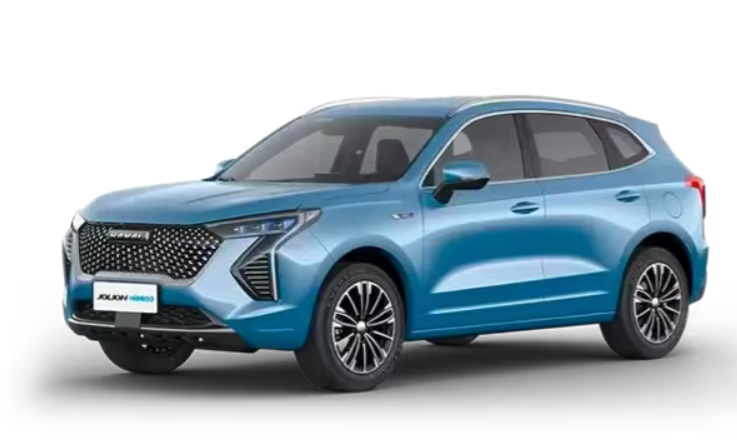
If we're trying to work out how far a Haval Jolion can travel between fuel stops, one of the first specifications we need to know is its fuel tank size. The Haval Jolion tank capacity is approximately 55 litres, although the exact specification can vary slightly depending on the model year, powertrain and market.
Both petrol and hybrid versions of the Jolion have commonly been offered with a fuel tank of around 55 litres. Australian specifications, for example, list approximately 55 litres for both petrol and hybrid Jolion variants.
That gives the compact SUV a practical combination of fuel capacity and driving range, particularly in the fuel-efficient Jolion Hybrid.
In this guide, we'll look at the Haval Jolion fuel tank capacity, petrol and hybrid differences, estimated driving range, fuel economy, reserve capacity and how much it may cost us to fill the tank.
Content in this publication
- What Is the Haval Jolion Fuel Tank Capacity?
- Haval Jolion Petrol Tank Capacity
- Haval Jolion Hybrid Fuel Tank Capacity
- How Many Gallons Is a Haval Jolion Fuel Tank?
- How Far Can a Haval Jolion Travel on a Full Tank?
- Haval Jolion Petrol Range per Tank
- Haval Jolion Hybrid Range per Tank
- Is the Haval Jolion Fuel Tank Large?
- How Much Does It Cost to Fill a Haval Jolion?
- Does the Haval Jolion Have a Fuel Reserve?
- Why Can't We Put 55 Litres Into an Empty-Looking Tank?
- Can You Put More Than 55 Litres in a Haval Jolion?
- Haval Jolion Tank Capacity vs Fuel Economy
- Why Real-World Jolion Range Changes
- How to Get More Kilometres From a Tank
- Does Eco Mode Increase Jolion Range?
- Is the Jolion Hybrid Better for Long Distances?
- How Accurate Is the Haval Jolion Distance-to-Empty Display?
- Does Haval Jolion Tank Capacity Change by Model Year?
- Does Jolion Trim Level Affect Fuel Tank Size?
- Haval Jolion Petrol vs Hybrid: Which Goes Farther?
- Is a 55-Litre Tank Enough for Road Trips?
- Haval Jolion Tank Capacity: Our Verdict
- Frequently Asked Questions
What Is the Haval Jolion Fuel Tank Capacity?
The Haval Jolion fuel tank capacity is approximately 55 litres, or roughly 14.5 US gallons.
Depending on the specific version, official specifications may express the capacity with a small manufacturing tolerance.
| Haval Jolion Version | Approximate Fuel Tank Capacity |
|---|---|
| Jolion Petrol | 55 litres |
| Jolion Hybrid | 55 litres |
| Litres to US gallons | About 14.5 gallons |
| Litres to UK gallons | About 12.1 gallons |
Haval specifications published for several markets also list a 55-litre tank across multiple Jolion variants.
For everyday ownership, therefore, 55 litres is the figure we should normally use when calculating Jolion fuel costs and potential driving range.
Haval Jolion Petrol Tank Capacity
Petrol versions of the Haval Jolion generally use a 55-litre fuel tank.
That includes many models powered by Haval's turbocharged 1.5-litre petrol engine.
Depending on the country and model year, the engine may be offered with different power outputs and transmissions, but the tank size generally remains around the same.
A 55-litre tank is fairly typical for a compact SUV. It provides enough capacity for longer trips without creating unnecessary additional weight or taking up excessive space underneath the vehicle.
Haval Jolion Hybrid Fuel Tank Capacity
The Haval Jolion Hybrid also has an approximately 55-litre fuel tank in commonly sold versions.
This is especially useful because the hybrid typically consumes considerably less petrol than the conventional petrol Jolion.
In other words, while both versions may carry approximately the same amount of fuel, the hybrid can potentially travel considerably farther on one tank.
Australian specification information has listed the petrol and hybrid models with approximately 55-litre fuel tanks.
Why Doesn't the Hybrid Need a Smaller Tank?
Some manufacturers reduce fuel tank capacity in hybrid vehicles because the battery and hybrid components take up additional space.
Haval has generally retained a relatively generous tank in the Jolion Hybrid.
That gives us the benefits of:
- Lower fuel consumption
- Long potential driving range
- Fewer petrol station visits
- Better suitability for highway journeys
- More flexibility on long-distance trips
For drivers covering significant kilometres every year, this combination can make the Jolion Hybrid particularly attractive.
How Many Gallons Is a Haval Jolion Fuel Tank?
A 55-litre fuel tank equals approximately:
- 14.5 US gallons
- 12.1 imperial gallons
Drivers in Australia, New Zealand, South Africa and many other markets will normally see fuel capacity quoted in litres.
However, converting the figure into gallons can be useful when comparing the Jolion with vehicles sold in the United States or when calculating fuel economy in miles per gallon.
How Far Can a Haval Jolion Travel on a Full Tank?
The answer depends mainly on fuel consumption.
We can estimate theoretical driving range with a simple calculation:
Fuel tank capacity ÷ fuel consumption × 100 = theoretical range
For example, if a Jolion consumes 8 L/100 km:
55 ÷ 8 × 100 = 687.5 km
That doesn't mean we'll necessarily get exactly 688 km from every tank.
Real-world range varies according to traffic, temperature, driving style, tyre pressure, passengers and many other factors.
Haval Jolion Petrol Range per Tank
Let's assume our petrol Jolion consumes approximately 7.5 to 8.5 L/100 km in typical combined driving.
With a 55-litre tank, theoretical range would look roughly like this:
| Average Consumption | Theoretical Range |
|---|---|
| 6.5 L/100 km | 846 km |
| 7.0 L/100 km | 786 km |
| 7.5 L/100 km | 733 km |
| 8.0 L/100 km | 688 km |
| 8.5 L/100 km | 647 km |
| 9.0 L/100 km | 611 km |
| 10.0 L/100 km | 550 km |
We shouldn't expect to use every litre of fuel before refuelling, so practical range will normally be lower.
For many owners, roughly 550 to 700 km between refuelling stops can be a reasonable real-world expectation for a petrol Jolion, depending heavily on driving conditions.
Haval Jolion Hybrid Range per Tank
The Jolion Hybrid can potentially stretch the same 55 litres considerably farther.
If fuel consumption is around 5 L/100 km, theoretically:
55 ÷ 5 × 100 = 1,100 km
Again, that's a mathematical maximum based on the stated consumption rather than a guarantee of actual road range.
Here's how different consumption figures affect the result:
| Hybrid Fuel Consumption | Theoretical Range |
|---|---|
| 4.5 L/100 km | 1,222 km |
| 5.0 L/100 km | 1,100 km |
| 5.5 L/100 km | 1,000 km |
| 6.0 L/100 km | 917 km |
| 6.5 L/100 km | 846 km |
An official South African specification document, for example, lists a Jolion hybrid variant at 5.1 L/100 km combined.
At that consumption rate, a 55-litre tank produces a theoretical range of approximately 1,078 km.
Real-world results will naturally vary.
Is the Haval Jolion Fuel Tank Large?
For a compact SUV, we'd describe a 55-litre tank as reasonably generous rather than exceptionally large.
Vehicles in this category often have tanks somewhere around 45 to 60 litres.
The Jolion therefore sits comfortably within the expected range.
More importantly, tank size alone doesn't determine how convenient a vehicle is on longer journeys.
Fuel economy matters just as much.
A vehicle with a 60-litre tank consuming 10 L/100 km theoretically travels around 600 km.
A Jolion Hybrid using 5.5 L/100 km with a 55-litre tank could theoretically travel around 1,000 km.
That's why we should always consider tank capacity and fuel efficiency together.
How Much Does It Cost to Fill a Haval Jolion?
The amount we spend filling the Jolion depends on local petrol prices and how empty the tank is.
The formula is straightforward:
Fuel price per litre × litres added = refill cost
For example:
| Petrol Price | Cost for 55 Litres |
|---|---|
| $1.50/L | $82.50 |
| $1.60/L | $88.00 |
| $1.70/L | $93.50 |
| $1.80/L | $99.00 |
| $1.90/L | $104.50 |
| $2.00/L | $110.00 |
| $2.20/L | $121.00 |
In practice, we usually won't put the full 55 litres into the vehicle because there will still be fuel remaining when the low-fuel warning appears.
If we refill 45 litres at $1.80/L, for example, the cost would be:
45 × $1.80 = $81
Does the Haval Jolion Have a Fuel Reserve?
Like most modern vehicles, the Haval Jolion leaves some usable fuel remaining when the low-fuel warning appears.
However, we shouldn't think of this as a completely separate physical "reserve tank."
The warning simply indicates that the fuel level has reached a predetermined low point.
The exact amount remaining can vary, and we shouldn't rely on a specific number of reserve kilometres.
What Should We Do When the Low-Fuel Light Comes On?
Our safest approach is to refuel as soon as practical.
Continually driving until the tank is almost completely empty isn't recommended.
Apart from the risk of getting stranded, repeatedly running extremely low can expose the fuel pump to higher temperatures because fuel helps cool and lubricate the pump assembly.
Why Can't We Put 55 Litres Into an Empty-Looking Tank?
Some owners may notice that when the fuel gauge indicates almost empty, they can only add 45 or 50 litres.
That's completely normal.
The difference exists because:
- The gauge isn't a laboratory measurement.
- The vehicle keeps a safety margin.
- Some fuel remains in the tank when the warning appears.
- Tank geometry affects the fuel-level sensor.
- The pump may automatically stop before the absolute maximum volume is reached.
Therefore, having a 55-litre nominal tank doesn't mean every petrol station visit will involve adding exactly 55 litres.
Can You Put More Than 55 Litres in a Haval Jolion?
We shouldn't deliberately attempt to overfill the vehicle.
Modern fuel tanks include expansion space and evaporative-emissions components.
When the petrol pump automatically clicks off, that's generally our signal to stop filling.
Repeatedly trying to squeeze additional fuel into the filler neck can cause problems with the evaporative-emission system and doesn't meaningfully improve driving range.
Haval Jolion Tank Capacity vs Fuel Economy
Fuel capacity tells us how much petrol the vehicle can carry.
Fuel economy tells us how quickly the vehicle uses it.
The second number often matters more for running costs.
Consider two Jolions with the same 55-litre capacity.
Petrol Jolion
At 8 L/100 km:
Theoretical range: approximately 688 km
Jolion Hybrid
At 5.1 L/100 km:
Theoretical range: approximately 1,078 km
That's a theoretical difference of almost 400 km from essentially the same amount of petrol.
This illustrates the biggest practical advantage of the hybrid powertrain.
Why Real-World Jolion Range Changes
Our actual range can be very different from an official laboratory consumption figure.
Several factors affect it.
City Traffic
Frequent acceleration and braking usually increases consumption in conventional petrol vehicles.
The hybrid can perform particularly well in urban conditions because it can recover energy during deceleration and use its electric motor more frequently.
Highway Speed
Steady highway driving can improve petrol-model economy compared with stop-start traffic.
However, fuel consumption rises substantially as speed increases because aerodynamic drag becomes more significant.
Driving Style
Aggressive acceleration can dramatically increase fuel use.
Smooth throttle inputs and anticipating traffic ahead generally help us travel farther per tank.
Vehicle Load
Passengers, luggage and accessories add weight.
The heavier the vehicle becomes, the more energy it requires to accelerate.
Tyre Pressure
Underinflated tyres increase rolling resistance.
Keeping our tyres at the manufacturer's recommended pressures helps maintain fuel economy as well as tyre life and handling.
Air Conditioning
Climate-control systems consume energy.
The effect is generally relatively modest, but heavy air-conditioning use in hot weather can reduce efficiency.
Short Journeys
Engines tend to be less efficient before reaching normal operating temperature.
A Jolion used mostly for short trips may therefore consume more fuel than one frequently driven on longer journeys.
How to Get More Kilometres From a Tank
We don't need extreme hypermiling techniques to improve the Jolion's efficiency.
A few sensible habits can make a noticeable difference.
Accelerate Smoothly
Hard acceleration consumes significantly more fuel than gradual acceleration.
Maintain a Consistent Speed
Constant speed is generally more efficient than repeatedly accelerating and slowing down.
Check Tyre Pressure
Correct tyre pressures reduce rolling resistance.
Avoid Carrying Unnecessary Weight
Remove heavy items from the boot if we don't regularly need them.
Reduce Excessive Idling
An idling petrol engine consumes fuel while covering zero kilometres.
Use Eco Mode When Appropriate
If our Jolion is equipped with an Eco driving mode, it can soften throttle response and help encourage more efficient driving.
Plan Ahead
Combining several short journeys into one longer trip can improve overall fuel efficiency.
Does Eco Mode Increase Jolion Range?
Potentially, yes.
Eco mode typically modifies throttle response and other vehicle systems to encourage lower fuel consumption.
It doesn't physically increase the 55-litre capacity of the tank.
Instead, it may help us use those 55 litres more efficiently.
The difference depends heavily on how we drive.
A careful driver may notice only a small change, while an aggressive driver could see a larger improvement after switching to a smoother Eco-oriented driving style.
Is the Jolion Hybrid Better for Long Distances?
It can be.
The biggest advantage is the potential combination of low fuel consumption and a 55-litre petrol tank.
That can theoretically provide a very long cruising range.
However, choosing between petrol and hybrid shouldn't depend on tank capacity alone.
We should also compare:
- Purchase price
- Fuel prices
- Annual kilometres
- City versus highway driving
- Servicing costs
- Insurance
- Resale value
- Performance preferences
Drivers spending a lot of time in city traffic may get particularly strong benefits from the hybrid system.
How Accurate Is the Haval Jolion Distance-to-Empty Display?
The distance-to-empty figure is an estimate.
The vehicle calculates it using recent fuel consumption and the estimated amount of petrol remaining.
If we've been driving efficiently, the indicated range may increase.
If we suddenly begin driving faster, climbing steep hills or sitting in heavy traffic, it may fall quickly.
We therefore shouldn't interpret the displayed range as a guarantee.
When fuel becomes low, refuelling is safer than trying to reach exactly zero kilometres remaining.
Does Haval Jolion Tank Capacity Change by Model Year?
Specifications can change between model years, trim levels and countries.
While 55 litres is the commonly quoted capacity for many Jolion petrol and hybrid versions, owners should check the specification for their exact vehicle.
Haval itself notes in published specification material that specifications can change, so the owner's manual or current local-market specification remains the best reference for a particular vehicle.
This becomes particularly important when researching used Jolions because vehicles sold under similar names may have different specifications depending on their destination market.
Does Jolion Trim Level Affect Fuel Tank Size?
Usually, trim level has little or no effect on fuel tank capacity within the same powertrain.
For example, differences between Premium, Lux and higher-spec Jolion variants usually involve equipment such as:
- Infotainment displays
- Wheels
- Upholstery
- Driver assistance technology
- Cameras
- Lighting
- Comfort equipment
Fuel tank capacity generally stays around 55 litres across comparable versions.
The bigger difference is between powertrains because the hybrid's lower consumption allows the same fuel capacity to deliver substantially greater potential range.
Haval Jolion Petrol vs Hybrid: Which Goes Farther?
Under comparable conditions, the hybrid should generally travel farther on one tank.
Suppose we compare:
Petrol: 8.0 L/100 km
Hybrid: 5.1 L/100 km
Using a 55-litre tank:
- Petrol theoretical range: 688 km
- Hybrid theoretical range: 1,078 km
That's around 390 km of additional theoretical range for the hybrid.
Real-world results won't always produce such a large difference, but it demonstrates why tank capacity needs to be considered alongside consumption.
Is a 55-Litre Tank Enough for Road Trips?
For most drivers, absolutely.
Even at a relatively high consumption rate of 9 L/100 km, a 55-litre tank theoretically represents more than 600 km of driving.
We would normally stop before using every litre, but the Jolion still offers enough capacity for long-distance touring.
The hybrid can potentially provide considerably more range.
For remote-area travel, however, fuel availability should always be planned carefully regardless of the vehicle's theoretical range.
Haval Jolion Tank Capacity: Our Verdict
The Haval Jolion has an approximately 55-litre fuel tank in many petrol and hybrid configurations, making its fuel capacity competitive for a compact SUV.
The tank itself isn't unusually huge, but that's not really the point.
What makes the specification interesting is how far the vehicle can travel using those 55 litres.
Petrol versions may realistically provide several hundred kilometres between fuel stops, while the hybrid's significantly lower fuel consumption can potentially push theoretical range toward or beyond 1,000 km under favourable conditions.
If our main priority is fewer fuel stops and lower petrol consumption, the Jolion Hybrid has the obvious advantage.
If we're simply looking for the key number, however, it's easy to remember:
Haval Jolion fuel tank capacity: approximately 55 litres (14.5 US gallons).
Frequently Asked Questions
How many litres is a Haval Jolion fuel tank?
The Haval Jolion fuel tank is approximately 55 litres in many petrol and hybrid versions. The exact specification should be confirmed for the specific model year and market.
How many gallons does a Haval Jolion hold?
A 55-litre Haval Jolion fuel tank equals approximately 14.5 US gallons or 12.1 imperial gallons.
What is the Haval Jolion Hybrid fuel tank capacity?
The Haval Jolion Hybrid commonly has an approximately 55-litre fuel tank, similar to petrol versions. Its lower fuel consumption means it can potentially travel much farther on the same amount of petrol.
How far can a Haval Jolion go on a full tank?
A petrol Jolion could theoretically cover roughly 600 to 700 km using consumption of around 8–9 L/100 km, while an efficient hybrid could theoretically approach 1,000 km or more. Actual range varies considerably with driving conditions.
Does the Haval Jolion have a reserve fuel tank?
There isn't normally a separate reserve tank. Instead, fuel remains in the main tank when the low-fuel warning appears. We should refuel soon after the warning rather than relying on the remaining fuel for a fixed number of kilometres.
If you want to know other articles similar to Haval Jolion Tank Capacity: Fuel Tank Size and Driving Range you can visit the category Service and Parts.
Kia Sorento Windscreen Replacement Cost: Complete 2026 Price Guide
Kia Sorento Tyre Pressure Reset: Complete TPMS Guide
Kia Sorento Hybrid Towing Capacity: Complete Guide
Kia Sorento Engine Size: Complete Guide to All Engines
Kia Sorento Service Cost: Complete 2026 Maintenance Guide
Kia Sorento Key Fob Battery Replacement: Complete DIY Guide
Leave a Reply
More content of your interest