

Kia Sorento Weight: Complete Guide to Kerb Weight, GVWR and Payload

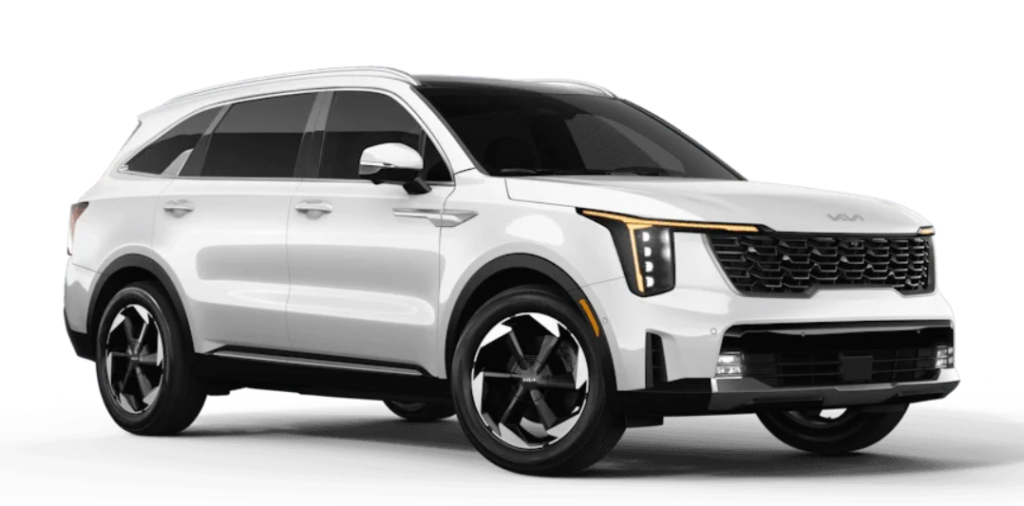
The Kia Sorento weight varies depending on the model year, engine, trim level and drivetrain. Whether we're comparing a diesel Sorento with a petrol model or considering a hybrid for everyday family driving, understanding vehicle weight helps us make better decisions about fuel consumption, towing, carrying capacity and performance.
So, how much does a Kia Sorento weigh?
The 2026 Kia Sorento ranges from approximately 1,730 kg (3,814 lbs) to 2,110 kg (4,652 lbs) in US-market specifications, depending on the powertrain and configuration. Diesel, hybrid and plug-in hybrid versions sold in other countries have different official kerb weights.
In this guide, we'll explore Kia Sorento weight specifications, compare different engines, explain gross vehicle weight ratings and examine how vehicle mass affects daily driving.
Content in this publication
- How Much Does a Kia Sorento Weigh?
- Kia Sorento Weight Comparison by Engine
- Kia Sorento Kerb Weight Explained
- Kia Sorento Diesel Weight
- Kia Sorento Petrol Weight
- Kia Sorento Hybrid Weight
- Kia Sorento Plug-in Hybrid Weight
- Kia Sorento Gross Vehicle Weight (GVWR)
- Kia Sorento Payload Capacity
- Kia Sorento Towing Capacity and Vehicle Weight
- Kia Sorento Weight Distribution
- Kia Sorento Weight in KG vs LBS
- Kia Sorento Weight by Generation
- Does Kia Sorento Weight Affect Fuel Consumption?
- Kia Sorento Weight and Driving Performance
- Kia Sorento Weight vs Other SUVs
- How to Check the Exact Weight of Your Kia Sorento
- Is the Kia Sorento Too Heavy?
- Frequently Asked Questions About Kia Sorento Weight
- Final Thoughts: Understanding Kia Sorento Weight
How Much Does a Kia Sorento Weigh?
The Kia Sorento is a midsize SUV designed to combine passenger comfort, practicality and towing capability. Its weight reflects its relatively large dimensions, available all-wheel-drive system, safety equipment and multiple powertrain configurations.
The following table provides a useful overview of official weight specifications.
Kia Sorento Weight Comparison by Engine
| Kia Sorento version | Kerb/curb weight | Market |
|---|---|---|
| 2026 Petrol LX FWD | 1,730 kg / 3,814 lbs | USA |
| 2026 Petrol S FWD | 1,768–1,803 kg | USA |
| 2026 Petrol SX FWD | 1,805–1,848 kg | USA |
| 2026 Hybrid FWD | 1,883–1,932 kg | USA |
| 2026 Hybrid AWD | 1,973–2,061 kg | USA |
| 2026 Plug-in Hybrid AWD | 2,110 kg / 4,652 lbs | USA |
| 2.2L Diesel AWD | 1,929 kg | UK |
| 1.6L Hybrid AWD | 1,955 kg | UK |
| 1.6L Plug-in Hybrid AWD | 2,110 kg | UK |
These figures come from Kia's published US 2026 specifications and its UK Sorento specifications. Market-specific equipment and weight-measurement conventions can differ, so figures from different countries are not always directly comparable.
Kia Media
+3
Why Does the Kia Sorento Weight Vary?
Several factors explain why two Kia Sorento vehicles can have different kerb weights even when they look nearly identical.
The most important differences include:
- Engine type: Petrol, diesel, hybrid and plug-in hybrid systems contain different mechanical components.
- Drivetrain: All-wheel-drive configurations generally include additional components.
- Battery capacity: Plug-in hybrids carry larger battery packs than conventional hybrids.
- Trim level: Premium models often feature additional equipment.
- Wheels and tyres: Larger wheels and different tyre configurations can affect mass.
- Optional equipment: Panoramic roofs, upgraded seating and other accessories can increase vehicle weight.
Understanding these differences becomes especially important when we regularly carry passengers, luggage or a trailer.
Kia Sorento Kerb Weight Explained
Kerb weight, also called curb weight in the United States, represents the weight of a vehicle in a specified ready-to-drive condition.
It normally includes the vehicle's standard equipment, operating fluids and fuel according to the applicable measurement standard.
However, the precise definition varies between markets. Some European measurements incorporate an allowance for the driver, while US measurements typically exclude occupants.
This distinction matters because a Kia Sorento with a listed kerb weight of 1,950 kg doesn't necessarily weigh exactly that amount when placed on a scale.
What Is Included in Kia Sorento Kerb Weight?
Depending on the relevant standard, kerb weight generally accounts for:
- The engine and transmission.
- Standard interior and exterior equipment.
- Engine oil and other operating fluids.
- Fuel under the specified measurement conditions.
- The vehicle's battery or hybrid battery pack.
- Standard wheels and tyres.
Passenger weight, additional luggage and optional accessories may not be included.
Kerb Weight vs Gross Vehicle Weight
One of the most common mistakes we can make is confusing kerb weight with gross vehicle weight.
Kerb weight represents the vehicle under the manufacturer's specified unloaded conditions.
Gross vehicle weight rating (GVWR) represents the maximum permitted total mass of the vehicle when loaded.
This includes passengers, luggage, accessories and any trailer load transferred onto the vehicle through the tow ball.
The difference between these figures provides an indication of available payload capacity.
Kia Sorento Diesel Weight
The Kia Sorento diesel remains an important option in markets where buyers value strong torque, long-distance efficiency and towing capability.
The 2.2-litre CRDi diesel engine is commonly paired with an eight-speed dual-clutch automatic transmission in recent models.
According to Kia UK's published specifications, the diesel AWD Sorento has:
| Specification | Weight |
|---|---|
| Kerb weight | 1,929 kg |
| Gross vehicle weight | 2,600 kg |
| Gross train weight | 5,100 kg |
| Maximum braked trailer weight | 2,500 kg |
Kia UK
These figures relate to the specified UK configuration. Australian and other international versions may have different kerb weights and towing ratings.
Is the Diesel Kia Sorento Heavy?
At approximately 1.9 tonnes, the diesel Sorento is certainly not a lightweight SUV.
Nevertheless, its weight is understandable when we consider its three-row seating configuration, body structure, diesel engine, transmission and available equipment.
The diesel engine's substantial torque helps the Sorento manage its mass during everyday driving.
Compared with a plug-in hybrid, the diesel also avoids carrying a large high-voltage traction battery.
Does Diesel Engine Weight Affect Performance?
Vehicle weight influences how much energy is required to accelerate, climb hills and maintain speed under load.
However, engine characteristics matter just as much as mass.
Diesel engines generally produce strong torque at relatively low engine speeds, making them particularly suitable for situations such as:
- Carrying multiple passengers.
- Travelling long distances.
- Driving on steep roads.
- Towing caravans or trailers.
- Maintaining speed with additional cargo.
Although a lighter vehicle can offer advantages, the engine's power delivery, transmission and gearing also determine how effortless the Sorento feels.
Kia Sorento Petrol Weight
Petrol-powered Kia Sorento models offer another balance between performance, efficiency and overall vehicle weight.
For the US-market 2026 Sorento, Kia offers a naturally aspirated 2.5-litre petrol engine and a turbocharged 2.5-litre engine, depending on the trim.
The entry-level LX front-wheel-drive model weighs approximately 1,730 kg.
Higher trims become heavier because of their equipment levels, drivetrains and mechanical specifications.
Kia Sorento 2.5 Petrol Weight
The 2026 Sorento LX FWD has an official curb weight of 3,814 lbs, equivalent to approximately 1,730 kg.
This makes it one of the lighter configurations in the current US range.
The relatively modest weight may help with everyday efficiency, particularly compared with heavier AWD or electrified configurations.
However, fuel consumption also depends on engine efficiency, driving conditions and aerodynamic drag.
Kia Sorento 2.5 Turbo Weight
The 2.5-litre turbocharged Sorento generally weighs more than the basic naturally aspirated petrol version.
For example, the 2026 SX FWD has an official curb-weight range of 3,979–4,074 lbs, or approximately 1,805–1,848 kg.
The increased engine performance can help compensate for additional vehicle mass.
Kia publishes 281 horsepower for its US-market 2026 2.5-litre turbocharged Sorento.
Kia Media
Nevertheless, we should remember that stronger acceleration doesn't automatically mean better fuel economy.
Kia Sorento Hybrid Weight
The Kia Sorento Hybrid combines a petrol engine with an electric motor and battery pack.
This configuration adds electrified components but can improve efficiency by using regenerative braking and electric assistance.
The weight varies depending on whether the vehicle uses front-wheel drive or all-wheel drive.
Kia Sorento Hybrid FWD Weight
According to Kia's US specifications, the 2026 Sorento Hybrid FWD weighs between:
- 4,151 lbs (approximately 1,883 kg).
- 4,259 lbs (approximately 1,932 kg).
The exact weight depends on vehicle configuration.
Despite carrying hybrid components, this version remains competitive in weight for a midsize family SUV.
Kia Sorento Hybrid AWD Weight
The US-market 2026 hybrid AWD versions have published curb weights ranging from 4,350 to 4,544 lbs.
That corresponds to approximately 1,973–2,061 kg.
Kia Media
An AWD hybrid needs additional drivetrain hardware compared with the equivalent front-wheel-drive configuration.
This can increase vehicle mass, but AWD may provide additional traction in challenging conditions.
Does the Sorento Hybrid Weight Affect Fuel Economy?
Yes, although vehicle weight is only one part of the equation.
A heavier SUV requires more energy to accelerate. However, hybrid technology can recover some energy during deceleration and use electric assistance to reduce petrol consumption.
In urban driving, where frequent braking and acceleration occur, these systems can offer significant benefits.
On long motorway journeys, other factors such as aerodynamic resistance, speed and engine efficiency become increasingly important.
Therefore, we shouldn't assume that the lighter version is always the most economical.
Kia Sorento Plug-in Hybrid Weight
The Kia Sorento Plug-in Hybrid, often abbreviated as PHEV, is among the heaviest variants in the model range.
Unlike a conventional hybrid, a plug-in hybrid uses a larger battery that can be recharged from an external electricity supply.
That battery adds significant mass.
How Much Does the Kia Sorento PHEV Weigh?
The 2026 US-market Kia Sorento PHEV has the following published specifications:
| Specification | Weight |
|---|---|
| Curb weight | 4,652 lbs |
| Approximate weight in kg | 2,110 kg |
| GVWR | 5,842 lbs |
| Approximate GVWR in kg | 2,650 kg |
Kia Media
This means the plug-in hybrid weighs approximately 380 kg more than the 2026 petrol LX FWD.
However, the comparison involves different powertrains, equipment and drivetrain configurations.
Why Is the Plug-in Hybrid Heavier?
The main reason is its larger electrified powertrain.
A plug-in hybrid incorporates a combustion engine, electric motor, battery system, power electronics and associated components.
Additional battery protection and cooling equipment can also contribute to overall mass.
The advantage is that the PHEV can travel certain distances using electricity alone, reducing petrol consumption when regularly charged.
For drivers with access to convenient charging, this can be worthwhile despite the added weight.
Kia Sorento Gross Vehicle Weight (GVWR)
Gross vehicle weight rating determines how heavy a Sorento is legally and mechanically permitted to be when loaded.
This number matters more than many buyers realise.
A vehicle might have enough physical room for seven passengers and several bags, but that doesn't mean every combination of passengers and luggage is within its permitted weight limit.
Kia Sorento GVWR by Powertrain
The following examples come from Kia's published specifications.
| Sorento configuration | GVWR |
|---|---|
| 2026 US Petrol LX FWD | 5,512 lbs |
| 2026 US Petrol EX FWD | 5,401 lbs |
| 2026 US Hybrid FWD | 5,401 lbs |
| 2026 US Hybrid AWD | 5,622 lbs |
| 2026 US PHEV AWD | 5,842 lbs |
| UK Diesel AWD | 2,600 kg |
| UK Hybrid AWD | 2,640 kg |
| UK PHEV AWD | 2,710 kg |
Kia Media
+3
Notice that GVWR doesn't necessarily increase in the same proportion as kerb weight.
Manufacturers establish weight limits based on the vehicle's engineering, braking systems, suspension, tyres and regulatory approvals.
How to Find Your Sorento's Exact GVWR
The most reliable sources are the vehicle's certification label, owner's manual and manufacturer documentation.
Depending on the country, the certification plate or label may be located around the driver's door opening.
We should check the exact vehicle rather than relying on specifications for a different country or trim.
Kia Sorento Payload Capacity
Payload is the additional weight the vehicle can carry without exceeding its gross vehicle weight rating.
It includes occupants, luggage, accessories and any trailer tongue weight imposed on the vehicle.
The basic calculation is straightforward.
Payload capacity = GVWR − actual unloaded vehicle weight
Kia Sorento Payload Calculation Example
Consider a Sorento with the following hypothetical specifications:
- GVWR: 2,600 kg.
- Actual unloaded weight: 1,950 kg.
- Available payload: 650 kg.
If we add five occupants weighing a combined 350 kg, the remaining capacity would be 300 kg before accounting for additional accessories or other loads.
If we then load 100 kg of luggage, approximately 200 kg would remain.
This example illustrates the calculation; it is not a certified payload rating for a particular Sorento.
How Much Weight Can a Kia Sorento Carry?
The exact amount depends on the model, equipment and applicable weight rating.
We should be particularly careful when using all seven seats.
For example, seven adults weighing an average of 75 kg each would add 525 kg before any bags or equipment.
That can consume a large portion of the available payload in some configurations.
For family road trips, it's sensible to calculate the combined weight of everything being transported.
Kia Sorento Towing Capacity and Vehicle Weight
The Kia Sorento's weight is closely connected to its towing ability, but kerb weight alone doesn't determine how much a vehicle can tow.
Engine performance, transmission design, cooling capacity, brakes, chassis engineering and manufacturer limits all influence towing ratings.
Different Sorento versions can have substantially different permitted trailer weights.
Kia Sorento Diesel Towing Capacity
The UK-specification 2.2-litre diesel AWD Sorento has a published maximum braked towing capacity of 2,500 kg.
This makes it an attractive option for drivers who need to tow larger trailers or caravans within the manufacturer's limits.
Its gross train weight is listed at 5,100 kg.
Kia UK
That figure represents the permitted combined mass of the loaded vehicle and trailer.
Kia Sorento Hybrid Towing Capacity
The UK Sorento Hybrid AWD has a listed maximum braked towing capacity of 2,000 kg.
The PHEV AWD is rated at 1,700 kg in the same UK specifications.
These figures demonstrate why choosing an engine based entirely on power or kerb weight can be misleading.
A more powerful or heavier configuration doesn't automatically have a higher towing rating.
Does a Heavier Sorento Tow Better?
A heavier towing vehicle can offer some stability advantages, particularly when matched with an appropriately loaded trailer.
However, weight by itself doesn't guarantee safe towing.
We also need to consider trailer balance, tow-ball download, tyre condition, braking capability and driving speed.
Crucially, we must remain within the vehicle's permitted gross mass, axle loads, towing rating and gross train weight.
Kia Sorento Weight Distribution
Weight distribution describes how a vehicle's mass is shared between its front and rear axles.
It's important for steering, braking, cornering and overall handling.
The Sorento's front-mounted engine and drivetrain influence its weight distribution, while passengers and luggage add additional loads.
Front Axle Weight
The front axle supports a substantial portion of the vehicle's powertrain and steering components.
AWD configurations also have additional drivetrain hardware that influences the overall distribution.
Because exact axle ratings differ between models, we should refer to the vehicle certification label when assessing maximum permissible front-axle loading.
Rear Axle Weight
The rear axle must support passengers, luggage and part of any trailer tongue load.
This is especially relevant when all three seating rows are occupied.
Excessive rear loading can negatively affect handling and may cause the vehicle to exceed its rear-axle rating even when the overall gross vehicle weight appears acceptable.
How Luggage Changes Weight Distribution
Where we place luggage matters.
Heavy items positioned far behind the rear axle can have a greater effect on rear-axle loading and vehicle balance.
For safer loading, we should:
- Place heavy items low in the luggage compartment.
- Keep heavy cargo as far forward as practical.
- Secure loose items.
- Avoid exceeding roof-load limits.
- Check vehicle and axle weight ratings.
These precautions become particularly important when towing.
Kia Sorento Weight in KG vs LBS
Kia Sorento weight specifications are published in different units depending on the country.
The United States commonly uses pounds, while Australia, the United Kingdom and many other markets use kilograms.
We can convert between these units using:
1 kilogram = approximately 2.205 pounds
1 pound = approximately 0.454 kilograms
Kia Sorento Weight Conversion Chart
| Kilograms | Pounds |
|---|---|
| 1,700 kg | 3,748 lbs |
| 1,800 kg | 3,968 lbs |
| 1,900 kg | 4,189 lbs |
| 2,000 kg | 4,409 lbs |
| 2,100 kg | 4,630 lbs |
| 2,200 kg | 4,850 lbs |
| 2,500 kg | 5,512 lbs |
| 2,700 kg | 5,952 lbs |
These conversions are approximate.
When checking legal loading limits, we should always rely on the exact manufacturer rating rather than rounded conversions.
Kia Sorento Weight by Generation
The Kia Sorento has evolved considerably since its original introduction.
Early versions were more traditional SUVs, while subsequent generations introduced updated platforms, different engines and increasingly advanced technology.
Consequently, the weight has changed across generations.
First-Generation Kia Sorento Weight (2002–2009)
The first-generation Sorento used a more traditional SUV design, including body-on-frame construction.
Depending on the market, models were offered with petrol and diesel engines and different drivetrain configurations.
Their kerb weights varied significantly according to engine and specification.
For an older Sorento, checking the individual vehicle's plate and original model-year documentation is especially important.
Second-Generation Kia Sorento Weight (2009–2014)
The second generation introduced a unibody construction that moved the Sorento towards a more road-oriented SUV design.
This platform change influenced vehicle weight, comfort and handling characteristics.
Different petrol and diesel engines were offered in international markets.
We shouldn't assume that a diesel version sold in Australia had the same kerb weight as a petrol model sold in North America.
Third-Generation Kia Sorento Weight (2015–2020)
The third-generation Sorento provided more modern safety equipment, technology and interior features.
Weight continued to vary with engine, seating configuration and drivetrain.
Some models also included heavier premium equipment, which could influence their kerb weight.
When comparing used examples, trim-specific specifications are more useful than a single average weight.
Fourth-Generation Kia Sorento Weight (2020–Present)
The fourth-generation Sorento introduced a wider range of electrified powertrains in several markets.
This generation includes petrol, diesel, conventional hybrid and plug-in hybrid variants, depending on location.
The variation in powertrain technology explains why modern Sorento weight figures can differ by several hundred kilograms.
Facelifts and model-year changes can also introduce revised equipment, making exact model-year specifications important.
Does Kia Sorento Weight Affect Fuel Consumption?
Vehicle weight plays an important role in fuel efficiency.
A heavier car generally requires more energy to accelerate and climb hills, although the effect depends on the engine and driving conditions.
For the Sorento, differences in powertrain efficiency can outweigh differences in kerb mass.
Weight and City Driving
In urban traffic, a vehicle frequently accelerates from low speeds.
Every acceleration requires energy to move the vehicle's mass.
This means additional weight can increase fuel demand in stop-start conditions.
Hybrid systems partly compensate by recovering braking energy and assisting the petrol engine.
Weight and Highway Driving
At steady highway speeds, aerodynamic resistance becomes increasingly significant.
Although the Sorento's mass still affects hill climbing, tyre rolling resistance and acceleration, maintaining a constant speed generally requires less repeated acceleration energy than urban driving.
This helps explain why vehicle weight alone is not enough to predict real-world fuel consumption.
Can Reducing Weight Improve Fuel Economy?
Removing unnecessary cargo can help improve efficiency, particularly in stop-start traffic.
We can also reduce avoidable energy use by maintaining correct tyre pressures and driving smoothly.
However, removing essential equipment or modifying the vehicle to reduce weight is not recommended.
Kia Sorento Weight and Driving Performance
Vehicle weight affects more than fuel consumption.
It influences acceleration, braking, suspension behaviour and steering response.
Acceleration
A lighter vehicle generally requires less energy to accelerate at the same rate.
However, engine output and gearing can make a heavier configuration feel quicker.
For example, a turbocharged Sorento may deliver stronger acceleration than a lighter naturally aspirated version.
Braking Distance
Additional mass increases the energy that the braking system must dissipate when stopping from a given speed.
This makes tyres, road conditions, brake condition and vehicle loading especially important.
We should allow additional stopping distance when the Sorento is fully loaded or towing.
Cornering and Handling
Higher vehicle mass can increase the demands on tyres and suspension during cornering.
Weight distribution and centre-of-gravity height also influence how the SUV responds.
The Sorento is designed primarily for family practicality and everyday comfort rather than sports-car handling.
Kia Sorento Weight vs Other SUVs
If we're considering a Kia Sorento, it makes sense to compare its weight with other popular family SUVs.
The Hyundai Santa Fe, Toyota Highlander, Mazda CX-9, Skoda Kodiaq and Nissan X-Trail are common alternatives, depending on the market.
Kia Sorento vs Hyundai Santa Fe Weight
The Sorento and Santa Fe compete in a similar family-SUV category.
Both offer multiple powertrains in certain markets, and both can be relatively heavy when equipped with AWD or electrified systems.
Their precise weights depend on generation, engine and trim.
A comparison between equivalent model years and drivetrains is more meaningful than comparing the lightest Sorento with the heaviest Santa Fe.
Kia Sorento vs Toyota Highlander Weight
The Toyota Highlander is another three-row SUV, particularly relevant in North America.
Hybrid powertrains and AWD configurations influence weight in both vehicles.
When comparing them, we should evaluate payload, passenger capacity, towing ratings and efficiency rather than focusing exclusively on curb weight.
Kia Sorento vs Skoda Kodiaq Weight
The Skoda Kodiaq is a relevant alternative in Europe and Australia.
Depending on the variant, it offers different petrol, diesel and electrified configurations.
Some Kodiaq models may be lighter than certain Sorento versions, but the outcome depends on the exact specification.
For towing or regular seven-seat use, gross weight and payload limits deserve just as much attention as kerb weight.
How to Check the Exact Weight of Your Kia Sorento
If we're planning to tow, carry heavy equipment or calculate legal payload capacity, approximate internet figures are not enough.
We need the correct specifications for our particular vehicle.
Check the Manufacturer's Vehicle Label
The certification label provides important information about the permitted vehicle mass.
In many markets, it also displays maximum axle weights.
The location and information on the label vary between countries.
Consult the Kia Sorento Owner's Manual
The manual can help us understand relevant towing, loading and tyre-pressure requirements.
For exact variant-specific weight figures, the vehicle certification plate and market-specific technical specifications may be necessary.
Weigh the Vehicle
Using a certified vehicle weighbridge is one of the most reliable ways to determine actual vehicle mass.
For a useful measurement, we should account for fuel, passengers, accessories and the cargo normally carried.
Separate axle measurements are especially valuable for heavily loaded vehicles or towing setups.
Is the Kia Sorento Too Heavy?
The Sorento is a substantial family SUV, but its mass is not automatically a disadvantage.
Its weight reflects the vehicle's dimensions, equipment, three-row configuration and available technology.
For daily commuting, the lighter petrol and hybrid configurations may offer practical benefits.
For regular towing, the diesel may be attractive in markets where it is available and carries an appropriate tow rating.
Meanwhile, drivers who can charge regularly may find that the heavier plug-in hybrid provides worthwhile fuel-saving opportunities.
Ultimately, whether the Sorento is too heavy depends on how we intend to use it.
Frequently Asked Questions About Kia Sorento Weight
1. How much does a Kia Sorento weigh in kilograms?
The US-market 2026 Kia Sorento weighs approximately 1,730–2,110 kg, depending on the variant. UK diesel, hybrid and plug-in hybrid versions have published kerb weights of 1,929 kg, 1,955 kg and 2,110 kg respectively. The exact figure depends on the market and configuration.
2. What is the Kia Sorento diesel kerb weight?
The UK-specification 2.2-litre CRDi diesel AWD Sorento has a published kerb weight of 1,929 kg. Different model years and international specifications may have different weights.
3. Is the Kia Sorento Hybrid heavier than the diesel?
Not always. In current UK published specifications, the hybrid AWD weighs 1,955 kg compared with 1,929 kg for the diesel AWD. That makes the specified hybrid 26 kg heavier. However, weights differ across markets, trims and model years.
4. What is the maximum gross weight of a Kia Sorento?
The gross vehicle weight depends on the configuration. For example, Kia UK lists 2,600 kg for the diesel AWD, 2,640 kg for the hybrid AWD and 2,710 kg for the plug-in hybrid AWD. The correct limit for an individual vehicle should be confirmed using its certification label.
5. Does Kia Sorento weight affect towing capacity?
Yes, although weight is only one factor. The Sorento's towing capacity also depends on the engine, transmission, cooling system, chassis and manufacturer approvals. We must observe both the permitted trailer weight and the vehicle's gross weight, axle and combined-mass limits.
Final Thoughts: Understanding Kia Sorento Weight
The Kia Sorento weight varies considerably between petrol, diesel, hybrid and plug-in hybrid models. In the US 2026 range, curb weight extends from approximately 1,730 kg for the entry-level petrol LX FWD to 2,110 kg for the plug-in hybrid.
For buyers, the most important consideration is not necessarily choosing the lightest Sorento. Instead, we should match the vehicle's engine, drivetrain, payload capacity and towing limits to our intended use.
A lighter petrol version can make sense for everyday family driving, while a diesel may offer advantages for frequent long journeys and towing. Hybrid models provide another option for efficiency, while plug-in hybrids combine electric driving capability with a combustion engine.
By understanding kerb weight, GVWR, payload capacity and gross train weight, we can choose the right Sorento configuration and operate it safely within its designed limits.
If you want to know other articles similar to Kia Sorento Weight: Complete Guide to Kerb Weight, GVWR and Payload you can visit the category Service and Parts.
Kia Sorento Windscreen Replacement Cost: Complete 2026 Price Guide
Kia Sorento Tyre Pressure Reset: Complete TPMS Guide
Kia Sorento Hybrid Towing Capacity: Complete Guide
Kia Sorento Engine Size: Complete Guide to All Engines
Kia Sorento Service Cost: Complete 2026 Maintenance Guide
Kia Sorento Key Fob Battery Replacement: Complete DIY Guide
Leave a Reply
More content of your interest