Kia Sorento warning lights help us recognise a mechanical problem, a safety-system fault or a function that is simply switched on. To decide what to do, we need to combine the symbol with its colour, whether it flashes and any message on the instrument display. The same dashboard can show urgent red warnings alongside completely normal green indicators.
This illustrated guide explains the main Sorento dashboard symbols and the next steps we should take. We cover common petrol and diesel warnings, driver-assistance indicators and selected Hybrid and Plug-in Hybrid lights, including READY, EV mode and regenerative braking.
Model coverage: equipment and graphics vary by generation, market, trim and powertrain. This guide uses Kia Sorento petrol, diesel and HEV/PHEV handbook information, with representative Kia and standard-symbol illustrations. Not every light appears on every Sorento. Always match the message and procedure to your own vehicle’s handbook.
Identify it immediately. Stop safely for serious oil-pressure, overheating or braking warnings.
Amber or yellow
Fault, disabled assistance or condition needing attention
Read the message and take the appropriate action. Symptoms may make continued driving unsafe.
Green
A system is operating or selected
Check that its operation is expected.
Blue
Usually main-beam headlights
Dip the lights whenever they might dazzle other drivers.
White or grey
Often a selected or standby function
Check the individual feature’s operating state.
Colour is a starting point, not a complete diagnosis. A red seat belt reminder does not mean engine damage, and an amber flashing engine light can still demand urgent attention. We should never decide that a warning is safe to ignore just because it is yellow.
Warning lights during the startup check
Several lamps illuminate briefly when we switch on the ignition or press the start button. This is part of the system check. Some remain lit until the engine starts, and a parking-brake indication remains while that brake is applied.
We should investigate a malfunction light that stays on after the normal check or appears while driving. On a hybrid, use the READY indication to establish whether the vehicle is operational; silence from the petrol engine does not mean the car is off.
Red warning lights that need prompt action
Engine oil pressure warning
Oil can: stop safely and switch the engine off.This light indicates insufficient oil pressure while the engine is running. It is not an oil-change reminder. Continuing to drive can damage the engine even if it still sounds normal or has entered a reduced-power mode.Once safely parked, switch off and check the oil level using the handbook procedure. Add the correct oil if needed, without overfilling. If the warning persists, oil is unavailable or the level is already correct, arrange assistance. A normal level does not guarantee adequate pressure.
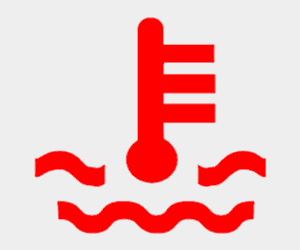
Engine coolant temperature warning
Thermometer over waves: engine overheating.A high coolant-temperature warning means we must stop driving and move to a safe location. Follow the overheating procedure for the vehicle, paying particular attention to steam, coolant leakage and whether the cooling fan is operating.Do not open a hot radiator or coolant reservoir cap. Pressurised coolant can cause serious burns. If the warning returns or coolant is escaping, arrange recovery rather than repeatedly topping up and continuing. Hybrid models can have separate cooling circuits, so identify the correct reservoir before any checks.
Parking brake and brake fluid warning
Brake symbol: parking brake applied or possible low brake fluid.First check whether the parking brake is still applied. If the red warning remains after it is fully released, stop safely and investigate. Low fluid, a leak or another braking problem must not be treated as a routine dashboard nuisance.If braking feels abnormal, the warning stays on or fluid is leaking, do not continue driving. Have the Sorento recovered for inspection. Topping up fluid without finding the reason for the low level can conceal a fault that affects stopping performance.
Charging system warning
Battery symbol: electrical charging problem.On a conventional Sorento, this warning can indicate an alternator or charging-system fault. It does not automatically identify a worn-out battery. Stop safely and seek help, because the car may eventually lose electrical power or become unable to restart.The hybrid’s low-voltage electrical system is separate from the traction battery’s charge display. A high traction-battery reading does not rule out a low-voltage supply problem. Avoid checking belts or moving components with the engine running, and have the correct system diagnosed.
Airbag and restraint-system warning
Seated person and circle: SRS malfunction.The airbag light normally comes on during the startup check and then goes out. If it remains illuminated or returns while driving, the Supplemental Restraint System needs inspection. The light cannot tell us which component is faulty or which protection may be affected.Continue using seat belts correctly and arrange prompt diagnosis. Do not disconnect under-seat wiring or probe airbag connectors to make the lamp disappear. Clearing a code without repairing its cause does not restore the intended protection in a collision.
Seat belt reminder
Belted occupant: check all occupied seats.Make sure the driver and passengers have their belts correctly fastened. Where the display shows individual seating positions, check the relevant rear seat as well as the front seats. A buckle that appears connected may not be fully latched.Heavy objects on a passenger seat can also influence occupant detection. Secure luggage appropriately rather than using a spare buckle to silence the reminder. If the warning persists with the seat empty or the belt properly secured, have the buckle or detection system checked.
Braking, steering and stability-control warnings
ABS warning light
ABS in a circle: anti-lock braking fault.A persistent ABS warning means anti-lock assistance may not be available. Ordinary braking can remain operational, but wheels may lock under heavy braking and steering control can be affected. Reduce speed, increase the gap to traffic and arrange inspection.Do not confuse this with the brief ABS self-check at startup. If the red brake warning also comes on, or stopping performance changes, treat the situation as more serious. Stop safely and obtain assistance instead of assuming it is only a wheel sensor.
ABS and brake warnings together: EBD
Combined warnings: brake-force distribution may be affected.When the ABS and red brake warnings illuminate together, the braking system may not operate normally. Electronic Brake-force Distribution is associated with managing braking between the wheels, so this combination deserves more attention than an isolated amber ABS lamp.Avoid sudden braking and high speeds while bringing the vehicle to a safe stop. If the pedal feels different or there is any doubt about braking performance, arrange recovery. We should not use normal pedal feel as proof that all braking assistance is available.
Electronic parking brake warning
EPB lettering: parking-brake system needs attention.An EPB malfunction lamp differs from the normal red parking-brake-applied indication. Kia also notes that it can appear alongside an ESC problem, so the warning does not necessarily prove the parking-brake hardware itself has failed.Read the accompanying message and arrange diagnosis. Do not force the vehicle to move if the brake will not release. When parking, verify that the car is secured correctly and avoid assuming automatic application has worked if the system is reporting a fault.
Electric power steering warning
Steering wheel and exclamation mark: steering assistance fault.An EPS warning can mean assistance is reduced or unavailable. Steering may become heavier, especially at low speed. Maintain control, reduce speed and stop safely if steering becomes difficult or unpredictable.Have the Sorento checked rather than relying on a restart that temporarily removes the light. An electrical or steering-system problem needs diagnosis before parts are replaced. If other warnings appear at the same time, record them because shared supply or communication faults can affect more than one system.
Electronic Stability Control indicator
Skidding car: intervention or a malfunction.A flashing ESC symbol usually means the system is intervening to help maintain traction or stability. Ease off the accelerator and adapt to the conditions. The flashing lamp is a useful reminder that the tyres are approaching their available grip.A symbol that stays on after the startup check can indicate a fault. Arrange inspection and drive without assuming stability assistance will intervene. ESC cannot overcome excessive speed, worn tyres or abrupt manoeuvres, even when no malfunction warning is present.
ESC OFF indicator
Skidding car with OFF: stability assistance disabled or reduced.This indicator appears when the relevant stability-control setting is switched off. The extent of deactivation depends on the vehicle and how the control was operated, so we should check the handbook rather than assume every stability function is disabled.Restore the normal setting for ordinary road use. If the indication appears unexpectedly or cannot be cleared using the correct control, check for accompanying faults. Switching ESC off is not a repair for repeated traction loss or an illuminated malfunction lamp.
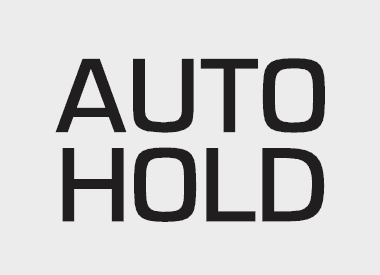
AUTO HOLD indicator
White, green or amber text: standby, holding or fault.On the covered Sorento models, white means AUTO HOLD is selected, green means the system is holding the stopped vehicle, and yellow indicates a malfunction. These colour changes explain why the same wording can appear without anything being wrong.If a fault is shown, keep control with the brake pedal and arrange inspection. AUTO HOLD is a driving convenience, not a substitute for securing the car before getting out. Confirm the parking brake and gear position when leaving the vehicle.
Engine, tyres and general warning symbols
Check engine light
Engine outline: emissions, engine or powertrain malfunction.A steady engine-management light requires diagnosis. The symbol does not identify a particular sensor or prove that one familiar repair will solve it. Record any hesitation, unusual fuel consumption, starting difficulty or loss of power for the workshop.If the lamp flashes, the engine shakes or the Sorento loses substantial power, reduce load and stop safely. Continuing can damage emissions-control components. Avoid towing or hard acceleration with an unresolved warning, and do not repeatedly erase codes before a technician can investigate.
Low tyre pressure and TPMS warning
Tyre outline and exclamation mark: low pressure or monitoring fault.A steady warning can indicate that one or more tyres are significantly underinflated. Pull over safely, inspect for damage and check pressures with a reliable gauge. Use the cold-pressure values on the vehicle label for the tyres and load.A lamp that flashes for about a minute before staying on can indicate a TPMS malfunction on the covered models. Correct pressure does not fix a failed sensor. Avoid searching for a universal reset button; the relearning procedure depends on the Sorento’s year and system.
Master warning triangle
Triangle with an exclamation mark: read the display message.The master warning draws attention to a condition described elsewhere on the instrument display. Depending on specification, this can include lighting or other system problems. The triangle is an invitation to read the message, not a diagnosis by itself.Open the relevant warning information when safely stopped and record its exact wording. A light that disappears after the condition is resolved does not need an unrelated reset. If the message persists, investigate the named system instead of replacing parts based on the triangle alone.
Low fuel warning
Fuel pump: refuel soon.This warning means the tank is nearly empty. Refuel promptly rather than treating the estimated remaining range as a guaranteed distance. Traffic, hills, towing and driving style can change how far the remaining fuel will take us.Hybrid and plug-in hybrid Sorentos still need petrol. Electric range does not make an empty fuel tank harmless under every operating condition. Repeatedly running very low can cause misfiring and damage emissions components, so plan a suitable fuel stop before the gauge reaches empty.
Immobiliser and smart key indicator
Car and key: key recognition or immobiliser status.A brief indication can confirm that the smart key has been recognised. Flashing or a key-not-detected message may instead point to an absent key, a weak key battery or an immobiliser problem. Check the exact display wording.Try the handbook’s backup starting method if the key battery is weak; on supported versions this involves using the smart key against the start button. Keep another authorised key available where possible. Persistent recognition problems need diagnosis rather than repeated attempts to bypass the security system.
LED headlamp warning
Lamp warning: headlight system malfunction.A steady or flashing LED headlamp warning means the lighting system or a related component needs inspection. The pattern can vary with the fault, so note whether it flashes and whether either exterior lamp is visibly affected.Check the actual lights before driving in darkness. A functioning dashboard indicator does not prove the road ahead is adequately illuminated. Avoid a night journey if lighting is unsafe, and do not assume an LED unit can be repaired by fitting an ordinary replacement bulb.
Icy road warning
Snowflake: conditions may allow ice.On covered versions, the icy-road reminder operates around an outside temperature of 4°C or lower. It warns about possible conditions rather than detecting ice directly on the road surface.Reduce speed and leave extra stopping distance, particularly on bridges, shaded bends and exposed roads. Ice can still form when the displayed air temperature is higher, so the absence of a snowflake is not a guarantee of grip. This reminder usually does not indicate a mechanical fault.
Diesel and particulate-filter warning lights
These symbols depend on engine and market. A diesel preheating light is not expected on a petrol hybrid, and SCR equipment is not fitted to every diesel Sorento. Identify the powertrain before following a procedure intended for another version.
Diesel glow plug indicator
Coiled wire: diesel preheating or a related fault.Before a cold diesel start, the glow indicator can illuminate while preheating takes place. Wait as instructed by the handbook. How long it remains on depends on conditions, so a very brief indication in warm weather is not automatically a problem.If it stays on or flashes after the engine is warm or while driving, have the system checked. Do not assume the glow plugs themselves are necessarily the failed parts; the control circuit and associated engine information may need investigation.
Water in diesel fuel filter warning
Filter and water symbol: service the fuel filter promptly.This warning can indicate water has accumulated in the diesel fuel filter. It is different from a routine filter-replacement reminder. Continuing to drive can harm the fuel-injection system, so arrange the appropriate draining or servicing promptly.Do not attempt to cure it by adding more diesel or clearing a code. Water contamination and a faulty detection circuit require different repairs. If the engine also loses power or runs abnormally, stop safely and obtain advice before continuing the journey.
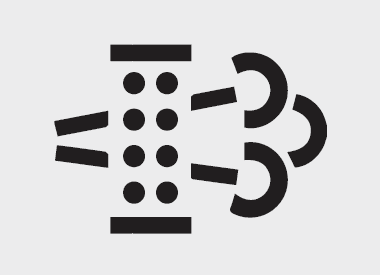
Diesel particulate filter warning
Exhaust filter: soot accumulation or a DPF-system problem.Frequent short journeys can prevent the exhaust reaching the conditions needed to clear soot. On an equipped Sorento, the handbook may specify a driving procedure for an initial DPF warning. Follow the instructions for the exact engine and model year.Do not copy a speed, gear or time from another vehicle. If the lamp flashes, a fault message remains, power is reduced or the prescribed procedure fails, arrange diagnosis. Repeated regeneration attempts are not appropriate for every filter or engine fault.
SCR or AdBlue warning
SCR warning: check the urea-level or emissions-system message.On equipped diesel models, a low-urea warning requires the specified exhaust-treatment fluid. AdBlue belongs in its dedicated reservoir, never the diesel tank. Read any remaining-distance or restart-restriction message carefully and refill before the system reaches that limit.A system-fault warning is different from an ordinary low-level reminder. Filling the reservoir may not resolve it. Use the handbook’s fluid specification and refill instructions, and arrange inspection if the warning remains after the system has had the specified opportunity to recognise the refill.
Petrol particulate filter warning
GPF or PPF exhaust warning: petrol versions where fitted.Some Sorento petrol engines have a particulate filter. An exhaust-filter warning can call for a specific driving procedure, but petrol and diesel instructions are not interchangeable. Check the handbook rather than assuming every exhaust icon is a DPF lamp.Only attempt the specified procedure when traffic, road conditions and the vehicle’s condition allow it safely. A flashing warning or persistent message after the prescribed procedure needs professional inspection. Do not drive aggressively or exceed speed limits in an attempt to force the light off.
AWD and driver-assistance indicators
All-wheel-drive warning
AWD warning: drivetrain system fault, where fitted.A persistent AWD malfunction warning means the system needs inspection. It does not simply confirm that four-wheel traction is working. Avoid demanding off-road conditions or relying on normal torque distribution until the problem has been assessed.Check for other messages and report any vibration, unusual noise or recent tyre changes. Correct tyre specification and matching rolling characteristics matter for AWD operation, but the lamp alone cannot identify the cause. Do not automatically apply AWD instructions to a front-wheel-drive Sorento.
AWD LOCK indicator
AWD LOCK: selected traction mode, where fitted.This indicator normally confirms that the available AWD LOCK mode has been selected. It is distinct from an AWD malfunction warning. Kia’s instructions for the covered system caution against using the mode on dry paved roads or highways.Use it only as described for the vehicle and conditions, then return to the appropriate normal setting. Other Sorento versions use different terrain-mode controls, so the absence of a dedicated AWD LOCK button does not mean a component is missing.
Downhill Brake Control indicator
Vehicle on a slope: DBC selected, operating or faulty.On covered models, the DBC indicator illuminates when selected and flashes during intervention. A yellow indication can mean a malfunction. The system assists with speed control on suitable descents within its operating limits.Confirm its status before starting a descent and remain ready to control the vehicle. If a fault appears, avoid relying on the assistance on a steep slope. DBC cannot create tyre grip, remove obstacles or make an unsuitable surface safe for the Sorento.
Forward Safety warning
Collision-assistance symbol: check the warning message.A Forward Safety warning can indicate a problem with Forward Collision-Avoidance Assist. Other messages may describe temporary unavailability or sensor obstruction, so read the text before concluding that a component has failed.Keep the camera and radar areas clear as the handbook directs. Continue driving only with full manual responsibility and appropriate stopping distance. If the warning persists after visibility is restored, arrange inspection. Never deliberately approach a person or obstacle to test whether automatic braking works.
Lane Keeping Assist indicator
Vehicle and lane markings: lane-assistance status.The lane indicator changes with the selected function and its availability. A yellow indication can signal a malfunction on covered Sorentos. A standby state may instead mean lane markings or other operating conditions are unsuitable.Keep your hands on the wheel and steer normally even when assistance is available. Poor markings, weather and obscured camera views can limit operation. Read persistent warnings and have faults investigated rather than assuming a green or active display guarantees the vehicle will remain centred.
Hybrid and Plug-in Hybrid Sorento symbols
READY indicator
READY: the hybrid vehicle is ready to move.The READY indication confirms that normal driving is available. The petrol engine may be stopped while the vehicle remains capable of moving using electric power, so engine noise is not a reliable guide to whether the Sorento is switched off.If READY does not appear after the correct starting procedure, check the display for a message. Before getting out, select the correct parking state, apply the parking brake and switch the vehicle off. Do not leave it unattended simply because it is quiet.
EV mode indicator
EV lettering: electric operation or engine-off state.The EV indicator identifies an electric-driving or engine-off condition as described in the handbook. It is a normal operating indication rather than evidence that the petrol engine has failed. The hybrid system can change operating state automatically.Heating demand, acceleration and other conditions can cause the engine to start. We should not diagnose a fault solely because EV mode ends. On a plug-in hybrid, also distinguish the selected driving mode from the immediate power source shown by the dashboard.
Regenerative braking warning
Brake warnings: braking assistance may be affected.On the covered hybrid models, a regenerative-brake fault can illuminate a yellow warning together with the red brake warning. The brake pedal may require more effort and stopping distance can increase. Treat the combined warning seriously.Bring the vehicle to a safe stop and obtain assistance, especially if braking feels different. This is not simply a notification that energy recovery is temporarily reduced. Do not assume conventional braking performance remains unchanged or try to repair the issue by fully charging the traction battery.
Charging cable connection indicator
Plug symbol: cable connected on the PHEV.The plug-in hybrid has an indicator for a connected charging cable. In the covered handbook, it can appear red as a connection status; that colour alone does not mean a battery fault. Check the charging display to confirm whether charging is actually progressing.End the session and disconnect using the correct procedure before driving. If charging fails, note both vehicle and charger messages. Never force a locked connector or use damaged equipment. A connected-cable indication and a charging-system fault require different checks.
Hybrid service warning and “Check hybrid system” messages
A hybrid service warning concerns the hybrid control system or hardware; it is not just the scheduled maintenance reminder. The exact service icon differs from a conventional service spanner and from warning artwork used on Kia’s fully electric models.
Read the complete message and follow any instruction to stop. Arrange professional diagnosis if the warning stays on after startup or appears while driving. Do not touch orange high-voltage cables or open battery components. A petrol engine that can still run does not establish that continuing with a hybrid-system fault is safe.
Normal lighting indicators
High beam indicator
Blue headlamp: main beams are on.This symbol normally confirms main-beam operation. It can appear when the lights are selected or when we use the flash-to-pass function. Switch to dipped headlights whenever main beams could dazzle other road users.The blue indicator differs from High Beam Assist being enabled. Automatic assistance can be selected while the actual main beams are off, so check which symbol is illuminated before assuming the lighting system has failed to follow the selected setting.
High Beam Assist indicator
Headlamp with automatic marker: automatic beam assistance selected.High Beam Assist can change between main and dipped beams according to detected traffic and operating conditions. Its indicator confirms the relevant state, while the ordinary blue main-beam symbol shows actual high-beam illumination.We still need to supervise the lights and override them when necessary. Camera obstruction, weather or unusual road layouts can affect detection. If a fault message appears, use the lighting controls manually and arrange inspection when the issue persists.
Dipped beam indicator
Headlamp with downward rays: low beams selected.This green indicator normally confirms dipped-headlight operation. It is an everyday status light rather than a maintenance warning. Check it alongside the lighting switch when entering darkness, tunnels or poor visibility.Do not assume daytime running lights provide the same lighting arrangement. If the dashboard indication is normal but road illumination is poor, inspect the exterior lamps when safely parked. A status symbol does not prove that every bulb, LED unit or lamp surface is in good condition.
Turn signal and hazard indicators
Flashing arrows: direction indicators or hazards operating.A single arrow normally flashes for the selected turn signal, while both flash with the hazard lights. Here, flashing is expected. A much faster pattern, a lamp that stays on or a missing indication can point to a signalling problem.Check the exterior indicators when parked and have any failure repaired. Cancel the signal after the manoeuvre if it has not cancelled automatically. Hazards help alert others, but they do not make it safe to stop in a dangerous location.
What should we do when several warning lights appear?
Several warnings can be related. An electrical supply problem, shared sensor fault or communication issue can affect multiple systems, but we should not dismiss serious brake or steering warnings as “just the battery” without diagnosis.
Maintain control and find a safe stopping place if the vehicle behaves abnormally.
Read the highest-priority message and follow any stop instruction.
Photograph the display once parked, including messages that alternate.
Record whether the fault appeared during startup, driving, charging or after recent work.
Contact a workshop or roadside assistance with that information.
Avoid disconnecting the battery or clearing codes merely to remove the lights. Stored information can help identify the cause. If restarting clears the display temporarily, report that behaviour; it does not prove a permanent repair.
Can we drive with a Kia Sorento warning light on?
The answer depends on the warning and the symptoms. A low-fuel reminder calls for refuelling; an oil-pressure warning calls for a safe stop and engine shutdown. A disabled assistance function may leave manual driving available, while a brake fault can make continued travel unsafe.
There is no universal safe distance. Steam, smoke, strong smells, severe vibration, unpredictable steering or loss of braking change the decision immediately. Follow the vehicle’s message and arrange recovery whenever safe continued operation is uncertain.
Conclusion
Kia Sorento warning lights become easier to understand when we check the symbol, its behaviour and the accompanying text together. Deal promptly with oil pressure, overheating and braking faults, distinguish ordinary operating indicators from malfunctions, and use instructions that match the engine and model year. Diagnosing the cause is more useful than simply switching the light off.
Frequently asked questions
1. What does the triangle with an exclamation mark mean?
It is the master warning light. Read the instrument display for the specific condition; the triangle alone does not identify a failed component. Resolve or diagnose the message it accompanies.
2. Can I keep driving with the oil light on?
Not with a persistent oil-pressure warning while the engine is running. Stop safely and switch off. Check the level as instructed, but remember that adequate oil quantity does not guarantee adequate pressure. Arrange assistance if the warning remains.
3. Why is the tyre-pressure light flashing?
Flashing for around a minute followed by steady illumination can indicate a TPMS malfunction on the covered Sorento models. Check tyre pressures regardless, then have the monitoring system inspected if the fault remains.
4. Is READY on a Sorento Hybrid a warning?
No. It normally means the vehicle is ready to drive, even when the petrol engine is silent. Confirm that the vehicle is switched off and securely parked before leaving the driver’s seat.
5. How do I reset a Kia Sorento warning light?
First identify and resolve its cause. A maintenance reminder, tyre-pressure condition and engine fault need different procedures. Use the correct handbook instructions, and do not erase diagnostic codes as a substitute for repairing an unresolved malfunction.
If you want to know other articles similar to Kia Sorento Warning Lights you can visit the category Service and Parts.
Auto Guide
I show you the best reviews of all car brands, the information we collect and show is verified by our mechanics, we hope that everything you read here is useful to buy the car of your dreams























More content of your interest