
Ford Fiesta Dashboard Warning Lights & Symbols


Ford Fiesta dashboard warning lights tell us about the condition of the car, but an illuminated symbol does not always mean something has failed. A blue headlight indicator is normal when the high beams are on. A red oil-pressure warning with the engine running requires a safe stop.
The key is to check the symbol, its color, whether it is flashing, and any accompanying message. The same general indicator can refer to different conditions, while a familiar icon can have a different meaning on another Fiesta version.
In this illustrated guide, we explain common Ford Fiesta dashboard warning lights and symbols, show each symbol beside its meaning, and outline the next sensible step.
Model coverage: This guide covers common Fiesta indicators described in Ford’s owner documentation, including the 2018 North American manual and selected European-market equipment. It is not an exhaustive chart for every production year. Diesel, ST, transmission, and driver-assistance equipment vary. The monochrome illustrations identify symbol shapes; use the actual color shown in your car. Always follow the manual and message for your exact model.
Content in this publication
- What Do Ford Fiesta Warning Light Colors Mean?
- Why Do Warning Lights Appear Before the Engine Starts?
- Red Warnings and Immediate Safety Reminders
- Engine, Powertrain, and Amber Warning Lights
- 8. Check Engine Light: Malfunction Indicator Lamp
- 9. Wrench or Powertrain Warning Light
- 10. Engine Oil Change Required Indicator
- 11. ABS Warning Light
- 12. Low Tire Pressure Warning Light
- 13. Message Center Indicator: The “i” Symbol
- 14. Stability and Traction Control Indicator
- 15. Stability or Traction Control OFF Indicator
- 16. Low Fuel Level Warning Light
- Diesel-Specific Warning Lights
- Operating, Lighting, and Advisory Indicators
- Important Fiesta Warnings That May Appear as Text
- What Should We Do When Several Warning Lights Come On?
- Can We Reset Ford Fiesta Warning Lights?
- Understanding the Fiesta’s Dashboard
- Frequently Asked Questions
What Do Ford Fiesta Warning Light Colors Mean?
| Color | Typical meaning | What we should do |
|---|---|---|
| Red | Urgent warning or an immediate reminder | Identify it promptly. Stop safely for critical mechanical warnings. |
| Amber / yellow | A fault, caution, or selected function | Read the message and distinguish a malfunction from normal status. |
| Green | A function is operating | Usually informational, such as an automatic engine stop. |
| Blue | High-beam headlights are on | Check that the lighting is appropriate. |
Color is only a starting point. An amber rear-fog indicator can be normal, and a red brake lamp can simply report an applied parking brake. We should identify the specific symbol before judging the situation.
Why Do Warning Lights Appear Before the Engine Starts?
Many lamps illuminate when the ignition is switched on as part of a function check. Some remain on until the engine starts. This can be normal and differs from a warning that appears during a journey.
A light that stays on afterward needs to be interpreted individually. Some indicators are also displayed as messages rather than separate lamps. Check the relevant manual description instead of assuming that every dashboard symbol must disappear after a fixed number of seconds.
Red Warnings and Immediate Safety Reminders
1. Oil Pressure Warning Light
 | Red · Stop safely and switch off the engine. |
The oil-can symbol is one of the most urgent Ford Fiesta dashboard warning lights. If it appears while the engine is running, the lubrication system needs immediate attention. This is different from an oil-change reminder.
We should pull over safely, switch the engine off, and check the oil level according to the manual. Low oil may contribute to the warning, but a correct level does not prove that oil pressure is adequate.
Do not continue the journey just because the dipstick looks normal. Arrange inspection or recovery rather than repeatedly restarting the engine to test whether the warning clears.
2. Engine Coolant Temperature Warning Light
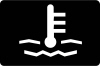 | Red · The engine is overheating. |
A thermometer above waves indicates excessive engine temperature. If this symbol appears during driving, stop as soon as it is safe and switch the engine off.
We should allow the engine to cool and follow the overheating guidance for the vehicle. Never remove a coolant pressure cap while the system is hot; escaping coolant and steam can cause serious burns.
An overheating warning should not be ignored because the car still has power. Equally, adding coolant without investigating a leak or another cooling-system fault may leave the underlying problem unresolved.
3. Brake System and Parking Brake Warning Light
 | Red · Parking brake applied, low brake fluid, or a brake-system fault. |
This warning normally illuminates when the parking brake is engaged and the ignition is on. If it appears while moving, first establish whether the parking brake is fully released.
If the warning remains with the parking brake off, stop safely and arrange immediate inspection. Low fluid or a braking-system problem can reduce stopping performance.
Do not drive against an engaged parking brake or assume that topping up fluid is a complete repair. A changed pedal feel, fluid leak, or poor braking response makes professional assistance especially important.
4. Battery or Ignition Warning Light
 | Red · A charging-system-related malfunction needs checking. |
Ford calls the battery-shaped symbol the ignition warning lamp in some Fiesta manuals. Its appearance while the engine is running indicates a fault that needs attention.
The symbol does not diagnose a worn-out battery by itself. The charging system, connections, and associated components may need testing. Turning on the ignition before starting can illuminate the lamp normally.
If it appears during a journey, move to a safe location and seek advice. Do not assume that the car can cover a predictable distance before electrical power is lost.
5. Airbag Warning Light
 | Red · The restraint system needs inspection. |
The seated-person-and-airbag symbol should take part in the normal ignition-on check. Ford identifies a light that fails to illuminate during that check, keeps flashing, or remains on with the engine running as a possible malfunction.
We should arrange inspection promptly because the warning concerns occupant protection. The dashboard alone cannot identify which restraint-system component is responsible.
Do not probe airbag connectors or disconnect wiring as a trial repair. The airbag warning is also different from a passenger-airbag status display that can indicate intentional deactivation.
6. Seat Belt Reminder
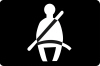 | Red · A monitored occupant needs to fasten a seat belt. |
The seat-belt symbol, often accompanied by a chime, asks the driver or a monitored passenger to buckle up. Make sure every occupant is restrained before moving.
If the reminder continues with the belts properly fastened, check which seating position is identified. The detection arrangement varies by Fiesta version.
We should not silence the reminder with a buckle insert or other workaround. A warning that does not match the actual belt status needs investigation so the safety system can function correctly.
7. Door, Hood, or Tailgate Open Warning
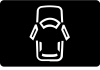 | Open-panel alert · Read the display to identify what is not secure. |
The open-door graphic can accompany information about an unsecured door or hood; the message display may separately identify the luggage compartment.
If it appears while driving, stop safely before checking the indicated panel. Close it correctly and confirm that the warning clears.
Do not reach across the vehicle or try to re-latch a door while moving. If everything appears closed but the alert remains, a latch or detection issue may need inspection rather than repeated forceful closing.
Engine, Powertrain, and Amber Warning Lights
8. Check Engine Light: Malfunction Indicator Lamp
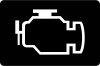 | Amber · The engine-management system has detected a fault. |
The engine-shaped lamp commonly relates to the emissions-control system. It can stay on with the engine running when the onboard diagnostics detect a problem.
A flashing check engine light can indicate misfire, which may raise exhaust temperatures and damage the catalytic converter. Reduce engine load and arrange immediate attention. Stop safely if the engine runs very roughly, power drops substantially, or additional critical warnings appear.
We should have stored fault codes assessed rather than replace parts based on the symbol alone. Clearing the light does not establish that the fault has been repaired.
9. Wrench or Powertrain Warning Light
 | Amber · An engine or transmission-related fault may be present. |
The wrench, also called a spanner, can represent a powertrain warning on applicable Fiestas. Do not automatically dismiss it as a routine service reminder.
Read the accompanying message and note any loss of power, unusual shifting, or rough running. Ford advises prompt inspection; a flashing powertrain warning requires reducing speed and avoiding hard acceleration.
Engine light and powertrain light together: Ford’s applicable guidance calls for stopping safely because reduced power or engine shutdown may follow. Follow the vehicle’s instructions and obtain assistance if the warnings remain.
10. Engine Oil Change Required Indicator
| Maintenance-related on specified versions · Confirm the message. |
Some Fiesta manuals also associate the wrench symbol with an engine oil and filter change requirement. That shared graphic is why we must read the written message and consult the correct manual.
An explicit oil-change reminder calls for the required maintenance. A powertrain malfunction warning needs fault diagnosis. They should not be treated as interchangeable just because the icon looks similar.
We should reset a maintenance reminder only after the service has been completed. This does not reset or repair low oil pressure, an engine malfunction, or a transmission problem.
11. ABS Warning Light
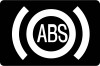 | Amber · Anti-lock braking assistance has a malfunction. |
If the ABS lamp appears while driving, Ford states that normal braking remains available but the anti-lock function may not operate. Have the system checked promptly.
We should drive cautiously and avoid assuming that emergency braking behavior is unchanged. An abnormal brake pedal or a simultaneous red brake warning is a reason to stop safely and seek assistance.
The symbol does not tell us whether the cause is a sensor, wiring, or another component. A diagnostic tool capable of accessing the braking module is needed to investigate correctly.
12. Low Tire Pressure Warning Light
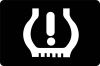 | Amber · Check tire pressures; flashing can indicate a TPMS fault. |
The tire cross-section with an exclamation mark warns of underinflation on equipped models. Stop safely, inspect the tires, and check their pressures with a gauge.
Use the vehicle’s inflation label and the settings appropriate to its tire size and load. Check pressures cold. A monitoring warning does not replace regular manual checks.
On the covered direct-TPMS system, flashing for about a minute followed by steady illumination indicates a fault. Follow the model-specific reset procedure only after correcting pressures or completing the necessary tire work.
13. Message Center Indicator: The “i” Symbol
 | Red or amber · A message needs your attention. |
The information symbol means there is a message in the instrument display. Its color can reflect the seriousness of the reported condition.
We should open or read that message before deciding what to do. The same general indicator can accompany different conditions, so the letter “i” is not a diagnosis.
Acknowledging a message may remove its text from view, but it does not repair the cause. If the display instructs you to stop, follow that instruction instead of trying to clear the indicator.
14. Stability and Traction Control Indicator
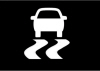 | Flashing · System intervention. Staying on · Possible malfunction. |
The car-with-skid-marks symbol can flash when the system is actively helping manage traction or stability. Ease off the accelerator and adjust speed to the available grip.
If it remains illuminated with the engine running, have the system inspected. Ford also identifies failure to illuminate during the appropriate startup check as a condition requiring attention.
We should distinguish brief intervention on a slippery road from a persistent fault. Do not assume that normal stability assistance remains available when a malfunction warning is present.
15. Stability or Traction Control OFF Indicator
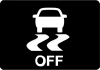 | System disabled · Different from an intervention warning. |
This indicator appears when the applicable stability or traction-control function has been switched off. It may follow a deliberate selection rather than a hardware failure.
Check the settings and restore the normal road-driving configuration when appropriate. Fiesta ST modes and other variants can have different control behavior.
If the feature cannot be re-enabled or a fault message accompanies the indicator, arrange inspection. We should not confuse an OFF indication with the normal flashing that occurs while the system is assisting.
16. Low Fuel Level Warning Light
 | Amber · Refuel as soon as practical. |
The fuel-pump symbol indicates that fuel is running low. Plan a safe refueling stop rather than treating the displayed remaining range as a guarantee.
Actual remaining distance depends on traffic, speed, gradients, and consumption. There is no single reliable distance that applies to every Fiesta after the warning appears.
Use the correct fuel for the engine and do not confuse this symbol with the water-in-fuel warning on certain diesel models. Adding fuel addresses a low level, not contamination in the fuel filter.
Diesel-Specific Warning Lights
17. Diesel Glow Plug or Preheat Indicator
 | Diesel versions · Wait for preheating to finish before starting. |
The coil-shaped lamp indicates diesel preheating. When it illuminates before startup, wait until it goes out as instructed in the owner’s manual.
Its appearance during the normal starting sequence is not the same as an engine fault. Temperature and operating conditions can affect how noticeable the preheat period is.
If it behaves unexpectedly after the engine starts, read any accompanying warning and have the vehicle checked. We should not assume that every diesel starting problem is caused by the glow plugs alone.
18. Water in Fuel Warning Light
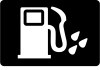 | Selected diesel versions · Excess water in the fuel filter. |
This symbol concerns water accumulation in the diesel fuel filter. On applicable versions, it goes out shortly after startup during normal operation.
If it remains illuminated while the engine runs, arrange inspection promptly. It is not a low-fuel reminder, and filling the tank does not remove the water collected in the filter.
We should use the correct service procedure instead of opening the fuel system experimentally. Availability of this warning varies by engine and market.
Operating, Lighting, and Advisory Indicators
19. Auto-Start-Stop Indicator
 | Green · The engine has stopped automatically. |
The circular-arrow A symbol reports automatic stop/start operation on equipped Fiestas. A green indication can appear when the system stops the engine during a halt.
A flashing indicator or restart message can ask for driver action. Follow the displayed instruction, which may differ between manual and automatic versions.
The engine can remain running because operating conditions are not satisfied, including battery or climate-control demands. Before leaving the vehicle, switch off the ignition and secure it properly; an automatic engine stop is not the same as shutting down the car.
20. Frost Warning Light: Snowflake Symbol
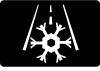 | Low outside temperature · Watch for icy conditions. |
On equipped versions, the snowflake can illuminate when the outside temperature is approximately 4°C (39°F) or lower. It warns of conditions that may allow ice to form.
We should adjust speed, increase following distance, and be particularly cautious on bridges or shaded roads. The symbol measures neither road grip nor the presence of ice at every point.
Roads can still be hazardous above the indicated threshold. This warning is unrelated to engine-coolant temperature and does not mean that the engine is overheating.
21. Cruise Control Indicator
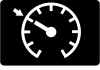 | Operating status · Cruise control is switched on. |
The cruise-control symbol indicates that the system has been selected or enabled. Whether a speed is actually set is shown by the particular display and controls.
We should check the set-speed information rather than assume that every illuminated cruise symbol means the car is actively maintaining speed.
It is normally an operating indicator, not a mechanical fault. A malfunction or unavailable message needs separate attention, and cruise control never removes the need to manage speed for traffic and road conditions.
22. Direction Indicators and Hazard Flashers
 | Flashing arrows · Turn signals or hazard lights are operating. |
The directional arrows flash when the corresponding turn signal is used. Both sides can flash when the hazard warning lights are on.
An unusually fast flash rate can indicate a failed direction-indicator bulb on the covered versions. Check the exterior lamps when safely parked rather than assume that other drivers can see the intended signal.
A normal flashing arrow is not an engine or braking warning. If the indicator behaves irregularly or a lighting message appears, have the affected lighting circuit checked.
23. High-Beam Headlight Indicator
 | Blue · The main-beam headlights are on. |
The headlamp symbol with straight rays confirms high-beam operation. It can also illuminate briefly when the lighting stalk is used to flash the headlights.
Dip the beams when necessary to avoid dazzling approaching traffic or the driver ahead. The blue indicator itself is a normal lighting status.
On versions with automatic lighting assistance, check the actual beam indication rather than assuming the automation always selects the appropriate setting. The driver remains responsible for using the lights correctly.
24. Lamps On Indicator
 | Lighting status · Exterior lighting has been selected. |
This symbol indicates that the applicable low-beam headlights or position and rear lamps are on. The precise lighting state depends on the switch position and vehicle equipment.
We should not use this indicator alone to assume that every required light is working. Check the lighting controls and inspect the exterior lamps if visibility or a warning suggests a problem.
The indicator is normally informational. It should not be confused with the blue high-beam symbol or the separate front and rear fog-light indicators.
25. Front Fog Light Indicator
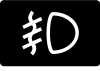 | Normally green · Front fog lamps are on. |
The front-fog symbol appears when the fitted front fog lamps are switched on. It uses a lamp graphic with angled rays and a vertical wavy line.
This is a status indication rather than a fault. Use the lamps only when appropriate to the conditions and local rules.
If your Fiesta does not have front fog lamps, this indicator may not be available. We should not expect every symbol pictured in a general guide to appear in every instrument cluster.
26. Rear Fog Light Indicator
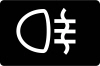 | Normally amber · Rear fog lighting is on. |
The rear-fog indicator uses a lamp graphic facing the opposite direction from the front-fog symbol. Its amber color does not mean that the lighting system has failed.
Rear fog lights make the vehicle more visible in poor conditions but can dazzle following drivers when used unnecessarily. Switch them off when conditions improve.
This is a useful reminder that some amber dashboard symbols report selected equipment rather than a problem requiring repair.
27. Gear Shift Indicator
 | Advisory arrow · A higher gear may be beneficial. |
The upward arrow can suggest changing to a higher gear to improve efficiency, emissions, or driving performance. It is advice, not a transmission-fault warning.
We should choose a gear that also suits traffic, hills, engine load, and the need to accelerate safely. Do not follow the arrow if doing so would make the engine struggle.
The indicator and its availability vary by transmission and version. An actual gearbox malfunction is communicated differently, such as through a powertrain warning or a written transmission message.
Reference sources and symbol illustrations: Ford Fiesta owner’s manual — warning lamps and indicators and 2018 Fiesta owner’s manual. Images identify the symbol shape; lamp color and equipment vary by vehicle.
Important Fiesta Warnings That May Appear as Text
Not every warning has a unique pictogram. The message-center indicator can accompany an explanation of the condition. For example, a steering fault, key-recognition problem, or unavailable hill-start assistance may be reported through text.
Read the entire message before acknowledging it. An instruction to stop because the transmission is overheating needs a different response from a reminder that a key battery is low. If a warning concerns steering or braking and control feels abnormal, stop safely and obtain assistance.
On diesel versions, an exhaust-filter warning may also appear as text. Do not apply a generic high-speed “cleaning run” to every warning. Check the exact instructions for the engine and arrange inspection when a fault or overload message calls for it.
What Should We Do When Several Warning Lights Come On?
Multiple warnings can be related. They do not automatically prove that every named system has developed a separate fault. The safest approach is to prioritize the most serious condition and preserve useful diagnostic information.
- Check for a stop instruction. Oil-pressure, overheating, or serious brake warnings take priority.
- Assess vehicle behavior. Loss of power, rough running, heavy steering, or altered braking increases urgency.
- Park safely before investigating. Do not photograph or operate display menus while driving.
- Record the exact messages. Include whether the lights were steady or flashing and when they appeared.
- Arrange diagnosis. Avoid replacing components solely because their system is named on the dashboard.
Can We Reset Ford Fiesta Warning Lights?
A reset is appropriate only when the correct procedure calls for it. A service reminder can be reset after servicing. A tire-pressure system may require a model-specific reset after pressure adjustment or tire work. An engine or powertrain fault needs diagnosis.
Disconnecting the battery or deleting fault codes can make a warning disappear temporarily while leaving the cause unresolved. We should avoid erasing useful evidence before a technician has assessed the problem.
Understanding the Fiesta’s Dashboard
Ford Fiesta dashboard warning lights become easier to interpret when we separate urgent faults, maintenance reminders, and normal operating indicators. The icon provides a clue, but the message and the way the car behaves complete the picture.
Respond immediately to critical warnings, arrange inspection for persistent faults, and use the correct owner’s manual whenever a symbol differs from the examples shown here. This is especially important for the wrench icon, diesel equipment, and market-specific displays.
Frequently Asked Questions
1. What does the wrench light mean on a Ford Fiesta?
It can indicate a powertrain fault. Some Fiesta versions also use the graphic for an oil-and-filter change requirement, so check the accompanying message and the correct manual. Never assume that a wrench with loss of power is merely a routine service reminder.
2. Can I drive with a flashing check engine light?
A flashing engine light can indicate misfire and possible catalytic-converter damage. Avoid hard acceleration and arrange immediate attention. If the vehicle runs roughly, loses significant power, or shows another serious warning, stop safely and seek assistance.
3. What does the snowflake symbol mean?
It warns that the outside temperature is low enough for potentially icy conditions. On covered versions, it can appear around 4°C (39°F) or below. Drive cautiously; the warning does not measure road grip, and ice can still be possible without it.
4. Why is the tire-pressure light still on after inflation?
Check that all tires are at the correct cold pressures and that there is no leak. Follow the reset procedure for the specific system if required. A flashing-then-steady warning can indicate a monitoring fault rather than simple underinflation.
5. What does the red or amber “i” light mean?
It is the message-center indicator. Read the accompanying information to identify the condition and required action. Clearing the text from the screen does not fix the issue that caused it.
If you want to know other articles similar to Ford Fiesta Dashboard Warning Lights & Symbols you can visit the category Service and Parts.
Nissan Qashqai Fuel Tank Capacity: Complete Guide

Suzuki Swift Fuel Tank Capacity: Complete Guide

Mazda CX-5 Weight (2013–2026): Complete Guide in Pounds and KG

Kia Sportage Dashboard Symbols and Warning Lights

MINI Cooper Weight (2002–2027): Complete Weight Chart & Guide

Toyota RAV4 Engine Sizes: Complete Guide (1994–2026)
Leave a Reply
More content of your interest