
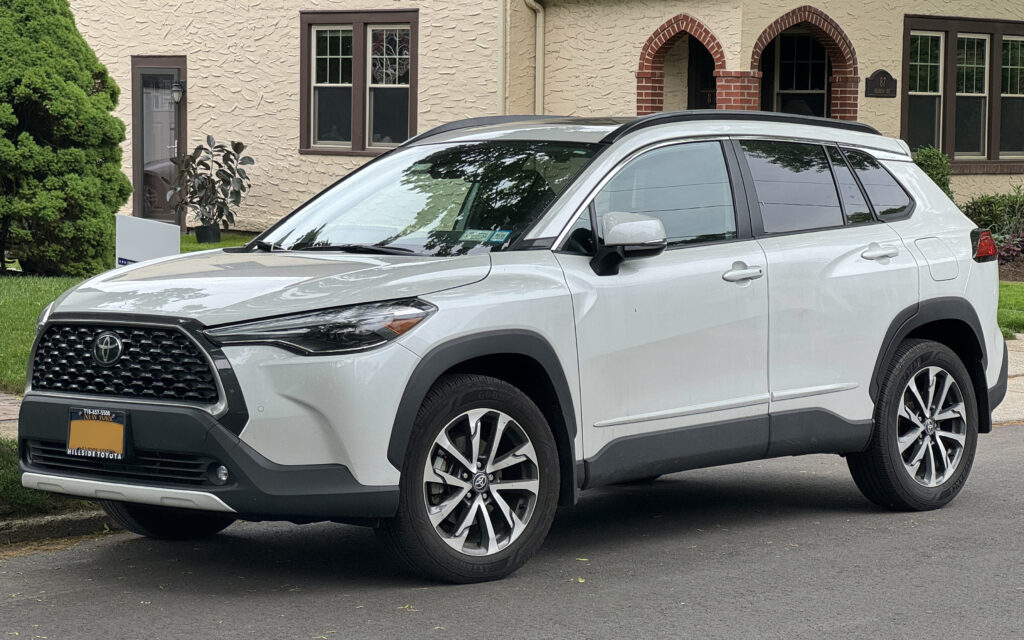
Toyota Corolla Cross Fuel Tank Capacity: The Real-World Guide Drivers Actually Need

We’ve all obsessed over horsepower numbers at some point — and then reality hits during a long drive when the fuel light suddenly turns on 40 km away from the next station. That’s when tank size matters more than torque curves.
The Toyota Corolla Cross fuel tank capacity looks simple on paper… but in real life it shapes range, road-trip comfort, running costs, and even resale value. In this guide we’re not just stating liters — we’re unpacking what those liters mean for everyday driving.
So grab a coffee and imagine we’re planning a weekend escape together. Because that’s exactly how we’ll explore this SUV.
Content in this publication
- What Is the Fuel Tank Capacity of the Toyota Corolla Cross?
- Why Tank Capacity Matters More Than You Think
- Estimated Driving Range by Engine Type
- Why the Hybrid Feels Like a Bigger Tank
- City Driving vs Highway Range
- Fuel Tank Location and Design
- How Many Days Can You Drive Without Refueling?
- Road Trip Example: One Tank Challenge
- Fuel Gauge Behavior Explained
- Real-World Fuel Economy Tips
- Climate Impact on Tank Range
- Fuel Type Requirements
- Comparing Tank Capacity With Rivals
- Does a Bigger Tank Always Mean Better?
- Maintenance and Fuel System Longevity
- Refueling Tips for Long-Term Reliability
- Urban Ownership Experience
- Is the Tank Size Enough for Families?
- Environmental Perspective
- Who Benefits Most From This Tank Capacity?
- Closing Thoughts
- FAQs
What Is the Fuel Tank Capacity of the Toyota Corolla Cross?
Most versions worldwide share a similar tank size:
- Gasoline versions: ~47 liters (12.4 gallons)
- Hybrid versions: ~43–47 liters depending on region
At first glance, that sounds average.
But capacity alone is meaningless without efficiency — and this is where the Corolla Cross plays chess while rivals play checkers.
Why Tank Capacity Matters More Than You Think
People often focus on fuel consumption only. But range equals:
Fuel Tank Size × Fuel Efficiency = Freedom
A small tank with excellent economy can outperform a large tank with thirsty consumption.
Think of it like carrying a backpack on a hike:
- Heavy backpack (big tank) slows you down
- Light backpack with smart packing (efficient engine) goes farther
The Corolla Cross chooses smart packing.
Estimated Driving Range by Engine Type
Gasoline Engine Range
Typical combined consumption: ~6.5–7.5 L/100 km
Estimated range:
- Around 630–720 km per tank
That’s city + highway mixed use — not brochure fantasy numbers.
Hybrid Engine Range
Typical combined consumption: ~4.2–5.0 L/100 km
Estimated range:
- Around 850–1,000 km per tank
Yes — you can realistically drive a full week without refueling in daily commuting.
Why the Hybrid Feels Like a Bigger Tank
Technically the tank may be smaller in some markets.
Practically it behaves larger.
Because efficiency multiplies capacity.
| Version | Tank | Consumption | Real Range |
|---|---|---|---|
| Gasoline | ~47 L | ~7 L/100km | ~670 km |
| Hybrid | ~43–47 L | ~4.5 L/100km | ~900 km |
The hybrid stretches fuel like chewing gum.
City Driving vs Highway Range
Urban Driving
Hybrids shine here.
Stop-and-go traffic lets the electric motor take over — meaning the fuel tank empties slower than expected.
Result:
- You forget the last time you refueled
- Your wallet forgets pain
Highway Driving
Gasoline versions close the gap on highways.
But hybrids still lead because they cruise efficiently at steady speeds.
Fuel Tank Location and Design
Toyota engineered the tank under the rear seats rather than under the cargo floor.
Why this matters
- Better weight distribution
- Improved safety in rear collisions
- Preserved trunk space
- Lower center of gravity
So the tank capacity isn’t huge — but the packaging is clever.
How Many Days Can You Drive Without Refueling?
Let’s simulate a real user.
Daily commute: 35 km per day
| Version | Refuel Frequency |
|---|---|
| Gasoline | Every 18–20 days |
| Hybrid | Every 25–35 days |
The hybrid turns fuel stops into rare events — like dentist appointments you keep postponing.
Road Trip Example: One Tank Challenge
Imagine a 600 km weekend trip.
Gasoline Corolla Cross
You might refuel once depending on driving style.
Hybrid Corolla Cross
You probably won’t stop at all.
That changes travel psychology — fewer stops = calmer driving.
Fuel Gauge Behavior Explained
Many owners notice something interesting:
The first half of the tank lasts longer than the second.
That’s not a defect. It’s intentional calibration.
Toyota programs gauges to:
- Drop slowly at first (comfort)
- Drop faster near empty (warning)
The tank isn’t shrinking — your awareness is increasing.
Real-World Fuel Economy Tips
Want to stretch your tank even further?
Easy habits that actually work
- Maintain steady acceleration
- Use ECO mode
- Keep tire pressure correct
- Avoid unnecessary roof racks
- Anticipate braking
These alone can add 80–120 km per tank.
Climate Impact on Tank Range
Cold Weather
Fuel consumption increases:
- Engine warms up
- Hybrid battery efficiency drops
Range reduction: ~10–18%
Hot Weather
Air conditioning affects range slightly:
- ~5–8% reduction
So if your tank suddenly “shrinks” in winter — it’s physics, not the car.
Fuel Type Requirements
The Corolla Cross is friendly here:
- Regular unleaded gasoline works perfectly
- No premium required
- Hybrid system self-optimizes timing
This keeps running costs predictable — no surprise fuel bills.
Comparing Tank Capacity With Rivals
| Compact SUV | Tank | Typical Range |
|---|---|---|
| Corolla Cross | ~47 L | Very high |
| Typical Turbo SUV | ~50–55 L | Moderate |
| Subcompact crossover | ~40 L | Low |
The Corolla Cross wins not by size — but efficiency engineering.
Does a Bigger Tank Always Mean Better?
Not necessarily.
A bigger tank:
- Adds weight
- Reduces efficiency
- Costs more to fill
Toyota instead built a “smart tank philosophy”:
Optimize consumption, not volume.
It’s like carrying a reusable water bottle instead of hauling a bucket.
Maintenance and Fuel System Longevity
The fuel system benefits from hybrid operation:
- Less engine runtime
- Lower injector wear
- Reduced carbon buildup
Meaning:
The tank lasts longer because it’s used less aggressively.
Refueling Tips for Long-Term Reliability
Avoid common mistakes:
Never do this
- Overfilling after pump click
- Driving frequently under empty
- Mixing questionable fuel quality
Always do this
- Refuel at ¼ tank
- Use consistent fuel stations
- Close cap firmly
Small habits = fewer fuel pump failures later.
Urban Ownership Experience
People don’t realize how lifestyle-changing range is.
You stop planning your week around gas stations.
You stop watching the gauge nervously.
The car simply fades into the background — and that’s the ultimate compliment.
A good car demands attention.
A great car removes worry.
Is the Tank Size Enough for Families?
Yes — and here’s why:
Families don’t need the biggest tank.
They need predictable range.
School runs, groceries, weekend drives…
The Corolla Cross behaves consistently, which matters more than raw numbers.
Environmental Perspective
Smaller tank + high efficiency means:
- Fewer refueling trips
- Lower emissions
- Reduced evaporative losses
It’s not just about saving fuel — it’s about wasting less energy.
Who Benefits Most From This Tank Capacity?
Perfect for:
- Commuters
- Ride-share drivers
- Urban families
- Long-distance travelers
Less relevant for:
- Heavy towing users
- Remote off-grid expeditions
This SUV is a marathon runner, not a mountain climber.
Closing Thoughts
The Toyota Corolla Cross fuel tank capacity may not headline marketing brochures — yet it quietly defines ownership satisfaction.
It’s a masterclass in balance:
- Not oversized
- Not undersized
- Optimized
Instead of brute force, Toyota engineered endurance.
And endurance is what real drivers notice after months, not minutes.
Because the best fuel tank isn’t the biggest one.
It’s the one you forget exists.
FAQs
1. How many liters does the Corolla Cross hold?
About 47 liters for gasoline and roughly 43–47 liters for hybrid models.
2. How far can the Corolla Cross go on a full tank?
Between 630 km and 1,000 km depending on engine and driving conditions.
3. Does the hybrid have a smaller tank?
Sometimes slightly smaller, but significantly longer range due to efficiency.
4. What fuel should I use?
Regular unleaded gasoline — premium is unnecessary.
5. Why does the fuel gauge drop faster near empty?
Intentional calibration to warn drivers early and prevent running out of fuel.
If you want to know other articles similar to Toyota Corolla Cross Fuel Tank Capacity: The Real-World Guide Drivers Actually Need you can visit the category Service and Parts.
Nissan Qashqai Fuel Tank Capacity: Complete Guide

Suzuki Swift Fuel Tank Capacity: Complete Guide
Mazda CX-5 Weight (2013–2026): Complete Guide in Pounds and KG
Kia Sportage Dashboard Symbols and Warning Lights

MINI Cooper Weight (2002–2027): Complete Weight Chart & Guide
Toyota RAV4 Engine Sizes: Complete Guide (1994–2026)
Leave a Reply
More content of your interest