
Mazda CX-30 Versus Hyundai Kona: The Real-World Crossover Showdown

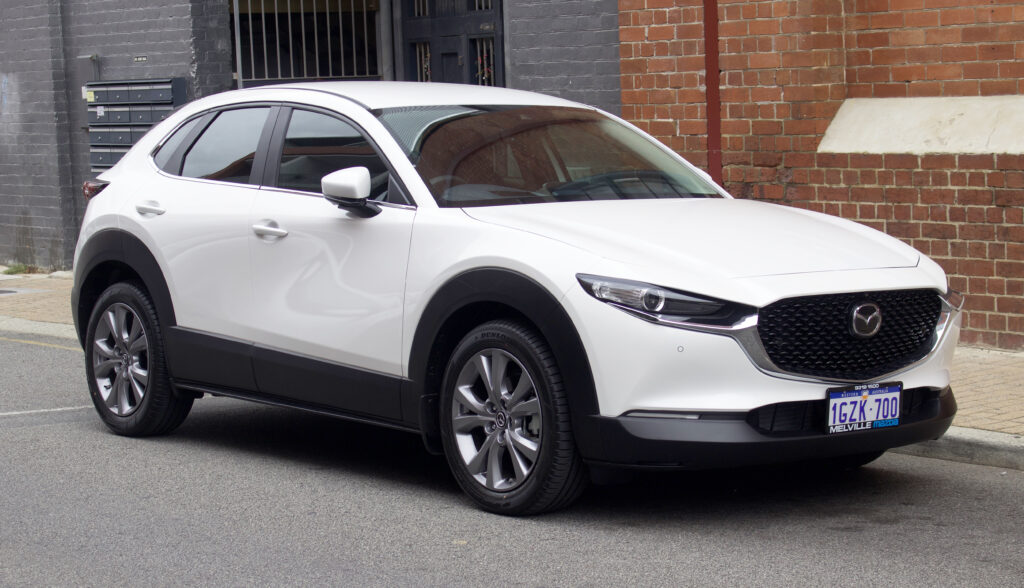
Small crossovers are the modern Swiss Army knives of driving. They commute, they road-trip, they carry IKEA boxes, and occasionally they even pretend to be sporty. Today we park two of the most popular compact crossovers nose-to-nose — the Mazda CX-30 and the Hyundai Kona — and ask a simple question:
If we had to live with one every day, which would we actually choose?
This isn’t a brochure comparison. We’re diving into how they feel, how they age, and how they behave when the honeymoon period ends.
Content in this publication
- First Impressions: Personality Matters More Than Specs
- Exterior Design Philosophy
- Cabin Experience: Where We Actually Live
- Material Quality Comparison
- Driving Position and Comfort
- Engine Options and Performance Feel
- Acceleration Character
- Transmission Behavior
- Handling and Steering Feel
- Ride Comfort on Bad Roads
- Fuel Economy in Real Driving
- Technology and Infotainment
- Safety Systems Comparison
- Boot Space and Practicality
- Ownership Costs
- Driving Enjoyment vs Convenience
- Who Each Car Is Really For
- The Emotional Factor Nobody Talks About
- Long-Term Living Experience
- The Decision Simplified
- Final Verdict: Which Would We Pick?
- Conclusion
- FAQs
First Impressions: Personality Matters More Than Specs
Before numbers, we notice character.
The CX-30 feels like a scaled-down premium SUV — calm, mature, almost European in attitude.
The Kona feels energetic — like a hatchback that hit the gym and started wearing bright sneakers.
Neither is wrong. But they aim at different drivers.
We can summarize their personalities instantly:
- Mazda CX-30: refined, smooth, driver-focused
- Hyundai Kona: playful, tech-forward, urban-friendly
Already, the decision becomes emotional before rational.
Exterior Design Philosophy
Mazda CX-30: Understated Sophistication
Mazda designs cars like they’re sculpting water in motion. Smooth panels, minimal creases, and no fake aggression.
The CX-30 doesn’t shout.
It whispers confidence.
Hyundai Kona: Bold Urban Expression
The Kona does the opposite. Split headlights, cladding contrast, geometric surfaces — it’s almost concept-car styling made production-friendly.
Some people call it futuristic. Others call it busy.
Which Ages Better?
Here’s the truth:
Loud design dates faster.
The CX-30 likely looks modern longer. The Kona looks exciting sooner.
Cabin Experience: Where We Actually Live
We spend 99% of time inside the car — not staring at it.
Mazda CX-30 Interior Philosophy
Mazda treats drivers like adults:
- physical knobs remain
- screen isn’t touch-dominant
- materials feel expensive
- ergonomics prioritize driving
It’s calm. Minimal. Almost Audi-like.
Hyundai Kona Interior Philosophy
Hyundai treats drivers like smartphone users:
- large touchscreens
- bright graphics
- customizable layouts
- more playful design
It’s interactive and tech-centric.
Material Quality Comparison
| Area | CX-30 | Kona |
|---|---|---|
| Dashboard | soft padded | mixed plastics |
| Door trims | stitched accents | hard upper sections |
| Switchgear | heavy click feel | light electronic feel |
| Steering wheel | premium texture | modern but simpler |
Verdict:
CX-30 feels premium.
Kona feels modern.
Different goals — both valid.
Driving Position and Comfort
Seat Comfort Over Long Trips
The Mazda seats support your spine. The Hyundai seats support your posture but feel flatter.
On a 3-hour drive:
- CX-30 = less fatigue
- Kona = more upright visibility
Visibility
The Kona wins here.
Mazda’s thick pillars look cool but slightly block angles. Hyundai prioritizes outward awareness.
Engine Options and Performance Feel
Numbers rarely tell the story. The delivery does.
You may be interested in reading Mazda CX-30 Versus Toyota Corolla Cross: The Driver’s Choice or The Sensible Pick?
Mazda CX-30 Engines
- naturally aspirated petrol
- turbo petrol (market dependent)
- mild hybrid in some regions
Mazda tunes engines for linear response. Press pedal → immediate reaction → predictable power.
Hyundai Kona Engines
- small turbo engines
- hybrid
- electric variant available
The Kona focuses on efficiency and quick bursts rather than sustained pull.
Acceleration Character
CX-30
Feels like climbing a hill with steady strength — smooth torque, no surprises.
Kona
Feels like a city sprinter — quick off the line, less dramatic at highway speeds.
Transmission Behavior
Mazda Automatic
Traditional torque converter:
- smooth shifts
- natural creeping in traffic
- relaxing daily driving
Hyundai Dual-Clutch
- quicker shifts
- occasionally jerky in parking
- efficient but less forgiving
Daily comfort → Mazda wins
Sporty quickness → Hyundai wins
Handling and Steering Feel
Here’s where personalities diverge dramatically.
Mazda CX-30: Driver’s Crossover
Steering weight builds naturally. Cornering feels planted. Body control resembles a hatchback.
We forget it's a crossover.
Hyundai Kona: Agile Urban Car
Lighter steering. Easier parking. Less communicative feedback.
It’s easier — but less engaging.
Ride Comfort on Bad Roads
Let’s talk potholes — the universal test.
| Condition | CX-30 | Kona |
|---|---|---|
| Small bumps | firm but controlled | soft and forgiving |
| Speed bumps | composed | slightly bouncy |
| Broken pavement | stable | more vertical movement |
Mazda prefers stability. Hyundai prefers cushioning.
Fuel Economy in Real Driving
The Kona usually wins on paper — especially hybrid and small turbo models.
But real life changes things.
City Driving
Kona uses less fuel due to lighter feel and hybrid option.
Highway Cruising
Mazda’s steady gearing closes the gap.
Urban commuters → Kona advantage
Mixed driving → nearly equal
Technology and Infotainment
Screen Interaction
Mazda avoids touchscreen dependency while moving — using a rotary controller.
Hyundai embraces touch and large displays.
Two philosophies:
- Mazda reduces distraction
- Hyundai increases convenience
Connectivity
Both offer:
- Apple CarPlay
- Android Auto
- voice commands
Hyundai just feels more gadget-like.
Safety Systems Comparison
Both crossovers include modern safety tech.
- adaptive cruise control
- lane keeping assist
- automatic emergency braking
- blind spot monitoring
Behavior Difference
Mazda intervenes gently.
Hyundai intervenes more actively.
Mazda feels like a co-pilot.
Hyundai feels like a supervisor.
Boot Space and Practicality
We always overestimate cargo needs — until we don’t.
You may be interested in readingMazda CX-30 Versus Toyota Corolla Cross: The Driver’s Choice or The Sensible Pick?You may be interested in reading
 Mazda CX-30 vs MX-30: The Crossover That Thinks vs The Crossover That Feels
| Feature | CX-30 | Kona |
|---|---|---|
| Boot shape | wider | taller |
| Rear legroom | slightly tighter | slightly better |
| Seat folding | flatter floor | higher step |
The Kona carries tall items better.
The Mazda carries luggage more neatly.
Ownership Costs
Maintenance
- Mazda: fewer small turbo parts
- Hyundai: cheaper service visits
Reliability Perception
Mazda: mechanical durability reputation
Hyundai: warranty confidence reputation
Insurance
Usually similar — varies by engine.
Driving Enjoyment vs Convenience
This is the core decision.
We don’t choose only with logic. We choose with habits.
If we enjoy driving → CX-30
If we optimize daily errands → Kona
Who Each Car Is Really For
Choose Mazda CX-30 If We:
- enjoy steering feel
- value interior quality
- do longer drives
- want calm refinement
Choose Hyundai Kona If We:
- drive mostly in the city
- want technology first
- prefer easy visibility
- like bold styling
The Emotional Factor Nobody Talks About
After six months, tech novelty fades.
But steering feel never does.
That’s why some owners love their Mazda years later — and why Kona owners love daily convenience more than weekend drives.
Different kinds of satisfaction.
Long-Term Living Experience
After One Year
- Mazda feels consistent
- Hyundai feels smart
After Three Years
- Mazda feels trustworthy
- Hyundai feels practical
After Five Years
- Mazda often feels special
- Hyundai often feels sensible
The Decision Simplified
If a car is a tool → Kona
If a car is a companion → CX-30
Neither is objectively better. They solve different emotional problems.
Final Verdict: Which Would We Pick?
We imagine two mornings:
Morning A:
We commute, park, shop, repeat — Kona fits perfectly.
Morning B:
We take the long road home just because — CX-30 wins instantly.
So the choice isn’t performance vs economy.
It’s personality vs practicality.
And once we recognize that, the answer becomes obvious — individually.
Conclusion
The Mazda CX-30 and Hyundai Kona are not rivals in spirit — only in segment size.
One is designed around driving pleasure disguised as practicality.
The other is designed around practicality enhanced by technology.
Neither disappoints. But each rewards a different lifestyle.
Choose the one that aligns with how we want to feel behind the wheel, not just what we want on a spec sheet.
FAQs
1. Is the Mazda CX-30 more reliable than the Hyundai Kona?
Both are dependable, but the Mazda’s simpler engine design often ages gracefully, while Hyundai counters with strong warranty coverage.
2. Which has better fuel economy?
The Kona generally uses less fuel, especially in hybrid form, though highway differences are small.
3. Which is more fun to drive?
The CX-30 offers noticeably better steering feel and road feedback.
4. Is the Kona bigger inside?
Rear passenger space and headroom slightly favor the Kona.
5. Which holds value better long term?
The CX-30 often maintains desirability due to driving feel, while the Kona maintains value through practicality and efficiency.
You may be interested in readingMazda CX-30 Versus Toyota Corolla Cross: The Driver’s Choice or The Sensible Pick?You may be interested in reading
Mazda CX-30 vs MX-30: The Crossover That Thinks vs The Crossover That FeelsYou may be interested in reading
 Suzuki Vitara Trim Levels: Complete Guide to Every Model, Features, and Differences
If you want to know other articles similar to Mazda CX-30 Versus Hyundai Kona: The Real-World Crossover Showdown you can visit the category Models.
Mitsubishi Colt Models: A Complete Guide to Every Generation and Variant
BMW 4 Series vs Ford Mustang: Which Performance Coupe Deserves Your Garage?
BMW 4 Series or 6 Series: Which BMW Coupe Is the Better Choice?
BMW 4 Series or Similar: The Ultimate Guide to Stylish Luxury Coupes
BMW 4 Series vs Mercedes E-Class Coupe: Which Luxury Coupe Deserves Your Garage?
BMW 4 Series vs Z4: Which BMW Delivers the Ultimate Driving Experience?
Leave a Reply
More content of your interest