
Jaguar F-Pace Engine Size: Complete Guide to All Engine Options

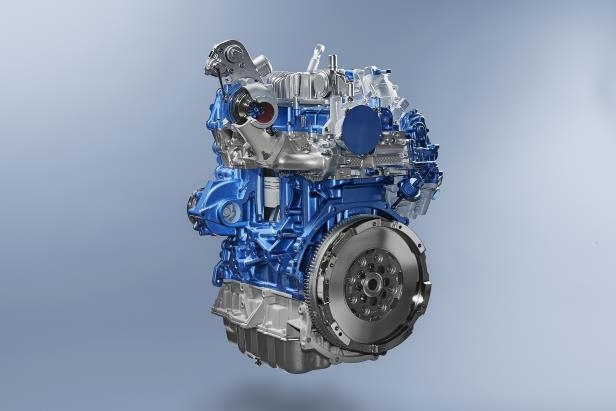
The Jaguar F‑Pace has always stood at the crossroads of elegance and performance. It’s the kind of SUV that feels just as comfortable carving through winding roads as it does cruising through the city at sunset. But beneath its sculpted bonnet lies something that truly defines the driving experience: the engine size and configuration.
When we talk about Jaguar F-Pace engine size, we’re really talking about personality. A compact turbocharged four-cylinder behaves very differently from a roaring V8. Each engine option tells a slightly different story—one focused on efficiency, another on balanced performance, and another on pure adrenaline.
In this guide, we’ll explore every engine size offered in the Jaguar F-Pace, how they compare, which models use them, and what it all means for real-world driving. Whether you're researching for an article, considering ownership, or simply curious about Jaguar engineering, we’ll walk through it all together.
Content in this publication
- Understanding Jaguar F-Pace Engine Sizes
- Overview of Jaguar F-Pace Engine Options
- 2.0-Liter Ingenium Engine
- 3.0-Liter Inline-Six Mild Hybrid Engine
- 3.0-Liter Supercharged V6 Engine
- 5.0-Liter Supercharged V8 Engine
- Petrol vs Diesel Engine Sizes
- How Engine Size Affects Performance
- Fuel Economy by Engine Size
- Engine Size and Insurance Costs
- Reliability of Jaguar F-Pace Engines
- Engine Size Differences Across Model Years
- Which Jaguar F-Pace Engine Size Is Best?
- How Jaguar Designs Its Engines
- Engine Size vs Driving Experience
- Future Engine Sizes for the F-Pace
- Conclusion
- Frequently Asked Questions
Understanding Jaguar F-Pace Engine Sizes
Engine size—often called engine displacement—refers to the total volume of all cylinders inside the engine. It’s typically measured in liters (L) or cubic centimeters (cc).
Why Engine Size Matters
Engine size affects several key factors:
- Power output
- Acceleration
- Fuel efficiency
- Towing capability
- Driving character
Think of engine size like lung capacity for a car. The bigger the lungs, the more air (and fuel) it can inhale and exhale—usually translating to more power.
Overview of Jaguar F-Pace Engine Options
Since its launch in 2016, the Jaguar F-Pace has been offered with a variety of engine sizes.
Main Engine Sizes Available
| Engine Type | Size | Cylinders |
|---|---|---|
| Ingenium Petrol | 2.0L | 4-cylinder |
| Ingenium Diesel | 2.0L | 4-cylinder |
| Mild Hybrid Diesel | 3.0L | Inline-6 |
| Supercharged Petrol | 3.0L | V6 |
| Supercharged Petrol | 5.0L | V8 |
These engines appear across different trim levels and model years.
2.0-Liter Ingenium Engine
The 2.0L engine is the backbone of the F-Pace lineup.
Key Specifications
- Engine size: 2.0 liters (1997cc)
- Cylinders: 4
- Turbocharged
- Power output: 247–296 hp depending on variant
This engine appears in several models including:
- F-Pace P250
- F-Pace P300
- F-Pace D200 (diesel markets)
Driving Character
This engine balances performance and efficiency.
Expect:
- Smooth acceleration
- Decent fuel economy
- Lower running costs
For many drivers, this engine offers the best everyday balance.
3.0-Liter Inline-Six Mild Hybrid Engine
The newer F-Pace models introduced a 3.0-liter straight-six engine.
Engine Technology
This engine combines:
- Turbocharging
- Electric supercharger
- Mild-hybrid system
It’s found in models like:
- F-Pace P400
- F-Pace D300
Specifications
- Engine size: 3.0 liters (2997cc)
- Cylinders: 6
- Power output: 296–395 hp
Why Jaguar Uses a Straight-Six
Inline-six engines are naturally balanced.
Advantages include:
- smoother power delivery
- quieter operation
- improved efficiency
It’s like the difference between a jazz quartet and a full orchestra—both sound good, but the orchestra fills the room.
3.0-Liter Supercharged V6 Engine
Earlier F-Pace models featured a 3.0-liter supercharged V6.
Models Using This Engine
- F-Pace S
- F-Pace R-Sport
- F-Pace S AWD
Performance Figures
- Engine size: 3.0L
- Power output: 340–380 hp
- 0-60 mph: ~5.1 seconds
Driving Experience
This engine feels lively and responsive.
Thanks to the supercharger:
- power comes instantly
- acceleration feels effortless
Drivers often describe it as smooth but aggressive when pushed.
5.0-Liter Supercharged V8 Engine
At the top of the lineup sits the legendary 5.0-liter V8.
This engine transforms the F-Pace from luxury SUV into something closer to a sports car.
Models Featuring the V8
- F-Pace SVR
- F-Pace SVR Edition 1988
Performance Specs
- Engine size: 5.0 liters
- Power output: 542–567 hp
- 0-60 mph: around 3.8 seconds
Why This Engine Stands Out
The V8 delivers:
- thunderous exhaust sound
- explosive acceleration
- track-ready performance
It’s the automotive equivalent of a thunderstorm—impossible to ignore.
Petrol vs Diesel Engine Sizes
The F-Pace has been offered with both petrol and diesel engines.
Petrol Engines
Common petrol sizes include:
- 2.0L turbocharged
- 3.0L supercharged
- 5.0L supercharged V8
Petrol engines typically offer:
- higher power output
- smoother acceleration
Diesel Engines
Diesel options include:
- 2.0L Ingenium diesel
- 3.0L mild hybrid diesel
Diesel engines provide:
- better fuel economy
- stronger low-rpm torque
For long motorway drives, diesel engines often feel effortless.
How Engine Size Affects Performance
Let’s break down how displacement translates to real-world performance.
Acceleration
Larger engines typically accelerate faster.
Example comparison:
| Engine | 0-60 mph |
|---|---|
| 2.0L | ~6.5 sec |
| 3.0L | ~5.0 sec |
| 5.0L | ~3.8 sec |
Towing Capacity
The F-Pace can tow up to 2,400 kg depending on engine.
Generally:
- 2.0L engines tow slightly less
- 3.0L engines tow the maximum
Fuel Economy by Engine Size
Fuel efficiency varies significantly depending on engine displacement.
Typical Fuel Consumption
| Engine | MPG (UK Combined) |
|---|---|
| 2.0L petrol | ~30-35 mpg |
| 2.0L diesel | ~40-50 mpg |
| 3.0L hybrid | ~33 mpg |
| 5.0L V8 | ~20 mpg |
Naturally, bigger engines consume more fuel.
But for many enthusiasts, the performance trade-off is worth it.
Engine Size and Insurance Costs
Larger engines often result in higher insurance groups.
Factors insurers consider include:
- power output
- repair costs
- vehicle value
For example:
- 2.0L models: lower insurance groups
- V8 SVR models: higher insurance groups
Reliability of Jaguar F-Pace Engines
Overall reliability depends on maintenance and driving habits.
Common Considerations
Owners sometimes report:
- timing chain issues on early diesel engines
- coolant leaks
- turbocharger wear in high-mileage cars
However, newer engines tend to be more robust.
Routine servicing is key.
Engine Size Differences Across Model Years
Since its introduction, the F-Pace lineup has evolved.
2016–2019 Models
Common engines:
- 2.0L diesel
- 3.0L V6 petrol
- 3.0L diesel
2020–Present Models
Modern lineup includes:
- 2.0L petrol
- 3.0L mild hybrid
- 5.0L V8 SVR
Jaguar simplified the engine range while increasing power.
Which Jaguar F-Pace Engine Size Is Best?
The answer depends on priorities.
Best for Efficiency
Choose the 2.0L diesel.
Best Balance
The 3.0L mild hybrid offers power with reasonable efficiency.
Best Performance
Without question:
5.0L V8 SVR
It’s thrilling, loud, and unforgettable.
How Jaguar Designs Its Engines
Jaguar’s Ingenium engine family focuses on modular engineering.
Key Design Features
- aluminum construction
- turbocharging
- modular cylinder design
This allows Jaguar to create different engines using shared architecture.
It improves reliability and manufacturing efficiency.
Engine Size vs Driving Experience
Numbers tell one story. Driving tells another.
A 2.0L turbo feels quick and nimble.
A 3.0L straight-six feels smooth and refined.
But the 5.0L V8?
That’s pure theater.
Every press of the throttle feels like opening the gates of a racetrack.
Future Engine Sizes for the F-Pace
The automotive world is moving toward electrification.
Jaguar plans to become an all-electric brand by 2025-2030.
This means future F-Pace models may feature:
- hybrid powertrains
- plug-in systems
- full electric platforms
Engine size may eventually give way to battery capacity and electric motors.
Conclusion
The Jaguar F-Pace offers a fascinating range of engine sizes—from efficient 2.0-liter turbocharged engines to the exhilarating 5.0-liter supercharged V8.
Each engine transforms the SUV into something slightly different.
- The 2.0L engine prioritizes efficiency and daily usability.
- The 3.0L inline-six balances power and refinement.
- The 5.0L V8 delivers breathtaking performance.
Ultimately, choosing the right engine size depends on what kind of driver we are. Do we want economy, balance, or pure excitement?
With the F-Pace, Jaguar ensures there’s an answer for all three.
Frequently Asked Questions
What engine sizes are available in the Jaguar F-Pace?
The Jaguar F-Pace comes with 2.0L, 3.0L, and 5.0L engines, depending on the model year and trim level.
Which Jaguar F-Pace has the biggest engine?
The F-Pace SVR uses a 5.0-liter supercharged V8, the largest engine in the lineup.
Is the Jaguar F-Pace 2.0 engine powerful enough?
Yes. The 2.0L turbo engine produces up to around 296 hp, providing strong everyday performance.
Does the Jaguar F-Pace have a V6 engine?
Yes. Earlier models offered a 3.0-liter supercharged V6, while newer models replaced it with an inline-six mild hybrid.
What is the most efficient F-Pace engine?
The 2.0L diesel engine typically offers the best fuel economy in the F-Pace range.
If you want to know other articles similar to Jaguar F-Pace Engine Size: Complete Guide to All Engine Options you can visit the category Service and Parts.
Nissan Qashqai Fuel Tank Capacity: Complete Guide

Suzuki Swift Fuel Tank Capacity: Complete Guide
Mazda CX-5 Weight (2013–2026): Complete Guide in Pounds and KG
Kia Sportage Dashboard Symbols and Warning Lights

MINI Cooper Weight (2002–2027): Complete Weight Chart & Guide
Toyota RAV4 Engine Sizes: Complete Guide (1994–2026)
Leave a Reply
More content of your interest