
Jaguar F-PACE vs E-PACE: Which Jaguar SUV Should You Choose?

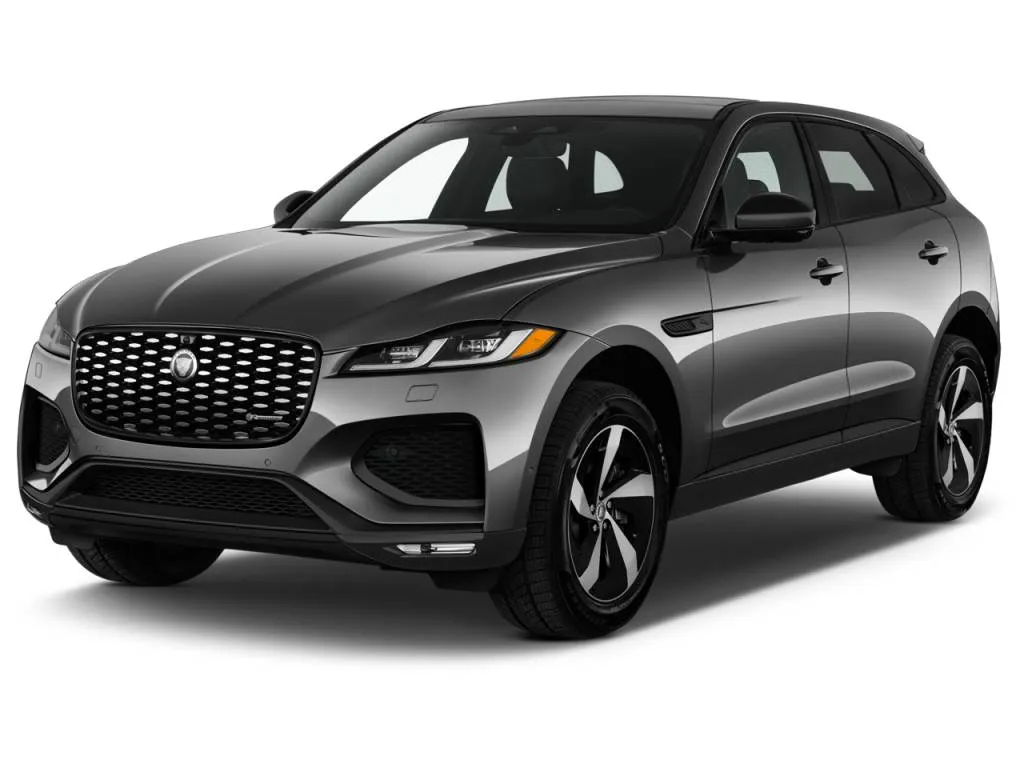
When we step into the world of Jaguar SUVs, two models often steal the spotlight: the Jaguar F-PACE and the Jaguar E-PACE. At first glance, they look like siblings — sleek British design, athletic stance, and a badge that whispers luxury with a hint of rebellion. But dig a little deeper and you’ll discover they cater to very different drivers.
Think of the F-PACE as the confident older sibling: larger, more powerful, and built for long journeys with authority. Meanwhile, the E-PACE feels like the younger, energetic counterpart — compact, agile, and city-friendly.
So which one is actually better for you?
In this comprehensive comparison, we’ll explore design, performance, practicality, technology, reliability, costs, and driving experience to help you decide between these two Jaguar SUVs.
Let’s dive in.
Content in this publication
- Understanding Jaguar’s SUV Lineup
- Quick Comparison: Jaguar F-PACE vs E-PACE
- Exterior Design: Big Cat vs Agile Cub
- Interior Quality and Cabin Experience
- Passenger Space and Comfort
- Boot Space and Cargo Capacity
- Engine Options and Performance
- Driving Experience
- Technology and Infotainment
- Safety and Driver Assistance Features
- Fuel Economy
- Reliability and Ownership Experience
- Maintenance and Running Costs
- Price Comparison
- Who Should Buy the Jaguar F-PACE?
- Who Should Buy the Jaguar E-PACE?
- Jaguar F-PACE vs E-PACE: Key Pros and Cons
- Final Verdict: Which Jaguar SUV Wins?
- FAQs
Understanding Jaguar’s SUV Lineup
Jaguar entered the SUV world relatively late compared with rivals, but when they arrived, they did it with style.
Today, the SUV lineup includes:
- Jaguar E-PACE – compact luxury crossover
- Jaguar F-PACE – midsize luxury SUV
- Jaguar I-PACE – fully electric SUV
The F-PACE, launched in 2016, was Jaguar’s first SUV and quickly became the brand’s best-selling model.
The E-PACE, introduced in 2017, arrived as a smaller and more affordable alternative.
Quick Comparison: Jaguar F-PACE vs E-PACE
Before diving into the details, here’s a snapshot comparison.
| Feature | Jaguar F-PACE | Jaguar E-PACE |
|---|---|---|
| SUV Class | Midsize luxury SUV | Compact luxury SUV |
| Length | ~4,747 mm | ~4,395 mm |
| Engine Range | 2.0L – 5.0L V8 | 2.0L turbo engines |
| Horsepower | 247–550 hp | 246–296 hp |
| Boot Space | ~650 L | ~577 L |
| Performance Model | SVR (550 hp) | None |
| Best For | Space, performance | City driving |
In short:
- F-PACE = bigger, faster, more premium
- E-PACE = smaller, cheaper, more urban-friendly
But the story doesn’t end there.
Exterior Design: Big Cat vs Agile Cub
Jaguar’s design philosophy blends elegance with aggression. Both SUVs follow the same DNA — yet they express it differently.
Jaguar F-PACE Design
The F-PACE feels muscular and sophisticated.
Key design highlights include:
- Wide stance and long wheelbase
- Large grille inspired by Jaguar sports cars
- Slim LED headlights
- Sculpted body lines
- Coupe-like rear styling
The overall impression? A luxury SUV that looks fast even when parked.
Jaguar E-PACE Design
The E-PACE takes that design language and compresses it into a smaller package.
It looks sportier and more playful.
Notable design elements:
- Shorter body with chunkier proportions
- Sportier rear end
- Higher ride stance
- Compact SUV styling
If the F-PACE is a panther, the E-PACE is more like a wild cub ready to pounce.
Interior Quality and Cabin Experience
Step inside either Jaguar and you’ll immediately notice the brand’s attention to detail.
But the experience differs depending on the model.
F-PACE Interior
The F-PACE cabin feels genuinely premium.
Features often include:
- Leather upholstery
- Aluminium or wood trims
- Large curved infotainment display
- Digital driver display
- Ambient lighting
Because of its larger size, the cabin also feels more spacious and luxurious.
E-PACE Interior
The E-PACE interior mirrors the F-PACE design but feels slightly more compact.
Highlights include:
- Driver-focused cockpit
- Sporty dashboard layout
- Touchscreen infotainment
- High-quality materials
However, rear passenger space is a little tighter compared with the F-PACE.
Passenger Space and Comfort
Let’s talk practicality.
F-PACE Space
The F-PACE is noticeably larger.
Passenger advantages include:
- Generous rear legroom
- Comfortable seating for five adults
- Large panoramic roof options
- Better long-distance comfort
It’s built for families and road trips.
You may be interested in reading Jaguar F-PACE vs BMW X3: The Ultimate Luxury SUV Showdown
E-PACE Space
The E-PACE still seats five, but space is more limited.
Rear passengers may notice:
- Less legroom
- Slightly narrower cabin
For city commuting or small families, though, it’s perfectly adequate.
Boot Space and Cargo Capacity
SUV buyers often care deeply about cargo space.
F-PACE Boot Capacity
The F-PACE offers around:
- 650 litres with seats up
- 1,740 litres with seats folded
This makes it ideal for:
- Family travel
- Golf clubs
- Luggage
- Outdoor gear
E-PACE Boot Capacity
The E-PACE provides approximately:
- 577 litres with seats up
- 1,234 litres folded
Still respectable, but clearly smaller.
Engine Options and Performance
Now we arrive at the heart of the comparison: performance.
Jaguar F-PACE Engine Options
The F-PACE offers a wide range of engines:
Petrol Engines
- 2.0L turbo (250 hp)
- 3.0L inline-six (395 hp)
- 5.0L V8 Supercharged SVR (550 hp)
Diesel Engines (earlier models)
- 2.0L diesel
- 3.0L V6 diesel
The SVR model transforms the SUV into a genuine performance monster.
0–60 mph: around 3.8 seconds
That’s sports-car territory.
Jaguar E-PACE Engine Options
The E-PACE keeps things simpler.
Most models use:
- 2.0L turbocharged four-cylinder engines
- Power ranging from 246 hp to 296 hp
Performance is still strong:
0–60 mph: around 6.6 seconds
But it’s clearly tuned more for daily driving than high performance.
Driving Experience
Jaguar vehicles are known for delivering sporty driving dynamics, and both SUVs reflect that philosophy.
F-PACE Driving Feel
Driving the F-PACE feels remarkably athletic for its size.
What stands out:
- Precise steering
- Balanced chassis
- Smooth ride quality
- Powerful acceleration
The SVR model, in particular, feels like a sports car disguised as an SUV.
E-PACE Driving Feel
The E-PACE feels lighter and more nimble.
Advantages include:
- Easier city maneuverability
- Tighter turning radius
- Sporty suspension setup
However, it doesn’t feel quite as refined as the F-PACE at high speeds.
Technology and Infotainment
Jaguar updated both SUVs with its Pivi Pro infotainment system.
Both models offer:
- 11.4-inch curved touchscreen
- Apple CarPlay and Android Auto
- Digital driver display
- Navigation system
- Voice controls
- Wireless charging
The system is fast, intuitive, and modern compared with older Jaguar systems.
Safety and Driver Assistance Features
Modern Jaguars include extensive safety technology.
Typical features include:
You may be interested in readingJaguar F-PACE vs BMW X3: The Ultimate Luxury SUV ShowdownYou may be interested in reading
 Jaguar F-PACE vs Audi Q5: Which Luxury SUV Truly Delivers the Ultimate Driving Experience?
- Adaptive cruise control
- Lane keep assist
- Blind spot monitoring
- Emergency braking
- Traffic sign recognition
- 360-degree cameras
Because the F-PACE is positioned higher, it may offer additional driver aids depending on trim.
Fuel Economy
Fuel efficiency varies depending on engine choice.
F-PACE Fuel Economy
Approximate figures:
- Petrol models: 22–27 mpg
- Mild hybrid engines: up to 30 mpg
Performance models like the SVR are significantly thirstier.
E-PACE Fuel Economy
Because it uses smaller engines, the E-PACE tends to be more efficient.
Typical figures:
- 26–30 mpg
That difference can add up over time.
Reliability and Ownership Experience
Jaguar has historically faced criticism for reliability, though newer models have improved.
Common ownership considerations:
- Electrical glitches occasionally reported
- Higher maintenance costs than mainstream brands
- Strong warranty coverage
Between the two:
- E-PACE may be slightly cheaper to maintain
- F-PACE parts and servicing can be more expensive
Still, both deliver a premium ownership experience.
Maintenance and Running Costs
Let’s talk real-world ownership costs.
Typical Annual Costs
Jaguar F-PACE
- Maintenance: $900–$1,200 per year
- Insurance: higher due to power
- Fuel: moderate to high
Jaguar E-PACE
- Maintenance: $700–$1,000 per year
- Insurance: slightly cheaper
- Fuel: more efficient
So if budget matters, the E-PACE may be the more practical choice.
Price Comparison
Price differences are significant.
Jaguar F-PACE Pricing
Approximate starting price:
- $57,000 (base models)
- $90,000+ for SVR models
Jaguar E-PACE Pricing
Starting price:
- Around $49,000
This makes the E-PACE one of the most affordable Jaguar SUVs.
Who Should Buy the Jaguar F-PACE?
The F-PACE is ideal if you want:
- More interior space
- Strong performance
- Luxury SUV comfort
- Family practicality
- Long-distance capability
It’s the better all-round luxury SUV.
Who Should Buy the Jaguar E-PACE?
The E-PACE makes sense if you want:
- A compact luxury SUV
- Easier city driving
- Lower purchase price
- Good performance without excess power
Think of it as Jaguar’s sporty urban SUV.
Jaguar F-PACE vs E-PACE: Key Pros and Cons
F-PACE Pros
- More powerful engines
- Larger interior
- Better ride comfort
- High-performance SVR version
F-PACE Cons
- Higher price
- Higher fuel consumption
- Larger size for city driving
E-PACE Pros
- More affordable
- Easier to park and drive in cities
- Good performance
- Efficient engines
E-PACE Cons
- Smaller interior
- No high-performance variant
- Slightly less refined ride
Final Verdict: Which Jaguar SUV Wins?
Choosing between the Jaguar F-PACE and E-PACE ultimately comes down to lifestyle.
If we imagine them as animals in Jaguar’s jungle:
- F-PACE is the dominant predator — powerful, confident, and commanding.
- E-PACE is the agile hunter — quick, compact, and perfect for urban environments.
So the real question becomes:
Do you want luxury performance and space, or compact agility and value?
Either way, both SUVs deliver something rare: the soul of a sports car inside a luxury SUV.
FAQs
1. Is the Jaguar F-PACE bigger than the E-PACE?
Yes. The F-PACE is a midsize SUV, while the E-PACE is a compact SUV. This means the F-PACE offers more passenger and cargo space.
2. Which is more reliable: Jaguar F-PACE or E-PACE?
Both models share many components, so reliability is similar. However, the E-PACE may have slightly lower maintenance costs due to smaller engines.
3. Is the Jaguar E-PACE good for families?
Yes, but it’s better suited for small families. The F-PACE is the better option if you regularly carry adults in the back seats.
4. Which Jaguar SUV is faster?
The F-PACE is significantly faster, especially the SVR model, which produces over 550 horsepower.
You may be interested in readingJaguar F-PACE vs BMW X3: The Ultimate Luxury SUV ShowdownYou may be interested in reading
Jaguar F-PACE vs Audi Q5: Which Luxury SUV Truly Delivers the Ultimate Driving Experience?You may be interested in reading
 Jaguar F-PACE vs Range Rover Velar: Which Luxury SUV Truly Delivers?
5. Is the Jaguar F-PACE worth the extra money?
If you value performance, space, and luxury features, the F-PACE is worth the upgrade. If budget and city driving matter more, the E-PACE is a great alternative.
If you want to know other articles similar to Jaguar F-PACE vs E-PACE: Which Jaguar SUV Should You Choose? you can visit the category Models.
Leapmotor C10 vs BYD Sealion 7: Which Electric SUV Makes More Sense?
Leapmotor C10 vs Geely EX5: Which Electric SUV Is Better?
Leapmotor C10 vs Jaecoo J7: Which SUV Should We Choose?
Leapmotor C10 vs Jaecoo 5: Which SUV Makes More Sense?
Leapmotor B10 vs C10: Which Electric SUV Should You Buy?
Toyota Hilux Years to Avoid: The Models We’d Inspect Twice Before Buying
Leave a Reply
More content of your interest