
Alfa Romeo Tonale Weight: Complete Guide by Version

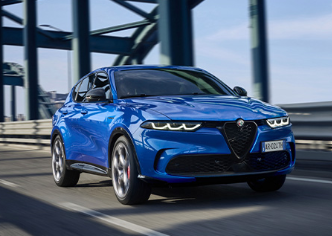
The Alfa Romeo Tonale weight tells us far more about this compact SUV than a number on a specification sheet. Weight influences acceleration, fuel economy, braking, handling, payload, towing ability, tire wear, and even how substantial a vehicle feels from behind the steering wheel.
And the Tonale makes this topic particularly interesting because there isn't one universal weight.
Depending on the powertrain, market, model year, and measurement standard, a Tonale can sit at roughly 1,525 kg to 1,835 kg in DIN kerb-weight terms, while official "mass in running order" figures are higher. Alfa Romeo's latest European technical data, for example, lists 1,525 kg for the 175-hp hybrid and 1,835 kg for the Plug-In Hybrid Q4, with corresponding running-order masses of 1,600 kg and 1,910 kg.
That is a substantial spread for two vehicles wearing essentially the same body.
So, what makes the Tonale heavier or lighter? Is the plug-in hybrid too heavy? And should weight influence which Tonale we buy?
Let's dig into it.
Content in this publication
- How Much Does an Alfa Romeo Tonale Weigh?
- Alfa Romeo Tonale Weight in Pounds and Kilograms
- Kerb Weight vs Mass in Running Order
- Why Does Alfa Romeo Tonale Weight Vary So Much?
- Alfa Romeo Tonale Hybrid Weight
- Alfa Romeo Tonale Plug-In Hybrid Weight
- Alfa Romeo Tonale Diesel Weight
- Why Tonale Weight Differs by Country
- Does Trim Level Change the Tonale's Weight?
- How Weight Affects Tonale Performance
- Does Weight Affect Tonale Handling?
- How Tonale Weight Affects Fuel Economy
- Weight and Braking Performance
- Weight and Tire Wear
- Alfa Romeo Tonale Payload Capacity
- Tonale Weight and Towing Capacity
- Does Alfa Romeo Tonale Weight Affect Cargo Space?
- Is the Alfa Romeo Tonale Heavy for a Compact SUV?
- Is a Lighter Tonale Better?
- Which Tonale Is Best From a Weight Perspective?
- How to Find the Exact Weight of Your Tonale
- Common Mistakes When Researching Tonale Weight
- What the Tonale's Weight Tells Us About Its Engineering
- Should Alfa Romeo Tonale Weight Matter to Buyers?
- Final Thoughts on Alfa Romeo Tonale Weight
- Frequently Asked Questions
How Much Does an Alfa Romeo Tonale Weigh?
The simplest answer is that an Alfa Romeo Tonale weighs approximately 1,525 to 1,835 kg in DIN kerb-weight form, depending primarily on the powertrain.
Recent European technical specifications give us three useful reference points. The 175-hp hybrid has a DIN kerb weight of 1,525 kg, the 130-hp diesel measures 1,580 kg, and the 270-hp Plug-In Hybrid Q4 reaches 1,835 kg. Their running-order masses are 1,600 kg, 1,655 kg, and 1,910 kg respectively.
Converted approximately into pounds, those DIN figures work out to around 3,362 lb, 3,483 lb, and 4,045 lb.
That's quite a difference.
The plug-in Tonale carries roughly 310 kg more than the regular hybrid. That's like permanently bringing several adult passengers along for every drive.
Yet that extra mass isn't simply dead weight. Much of it comes from hardware that gives the Q4 its electric capability, additional performance, and all-wheel-drive functionality.
Quick Alfa Romeo Tonale Weight Comparison
Here are the key recent European figures worth remembering:
- Tonale Hybrid 175 hp: 1,525 kg DIN kerb weight; 1,600 kg mass in running order.
- Tonale Diesel 130 hp: 1,580 kg DIN kerb weight; 1,655 kg mass in running order.
- Tonale Plug-In Hybrid Q4 270 hp: 1,835 kg DIN kerb weight; 1,910 kg mass in running order.
- Approximate PHEV-versus-hybrid difference: 310 kg.
- Maximum payload: up to 610 kg for the hybrid and 560 kg for the Plug-In Hybrid Q4.
- Braked towing capacity: up to 1,500 kg for the regular hybrid and 1,250 kg for the PHEV in the cited European specification.
Those figures are particularly useful because they demonstrate why simply asking, "How much does an Alfa Romeo Tonale weigh?" can lead to conflicting answers online.
Different specifications can all be correct.
Alfa Romeo Tonale Weight in Pounds and Kilograms
For readers jumping between European, British, American, Canadian, or Australian specifications, kilograms versus pounds can quickly turn a straightforward comparison into numerical soup.
Using the current European DIN figures as our baseline, the Tonale's approximate weight works out like this:
| Tonale version | DIN kerb weight | Approx. pounds |
|---|---|---|
| Hybrid 175 hp | 1,525 kg | 3,362 lb |
| Diesel 130 hp | 1,580 kg | 3,483 lb |
| Plug-In Hybrid Q4 270 hp | 1,835 kg | 4,045 lb |
Alfa Romeo separately lists mass in running order at 1,600 kg, 1,655 kg, and 1,910 kg respectively.
The difference between those columns isn't a typo. It comes from the measurement convention being used.
Kerb Weight vs Mass in Running Order
This is where vehicle specifications often become unnecessarily confusing.
We might visit one page and see a Tonale weighing around 1,525 kg. Another source may say 1,600 kg. Neither necessarily has bad information.
They're probably measuring different things.
What Does Kerb Weight Mean?
Kerb weight generally represents the vehicle itself with the fluids necessary for normal operation, although exact definitions vary between regulations and markets.
Alfa Romeo's current technical document explicitly separates DIN kerb/net weight from mass in running order, which makes comparing the figures easier.
Think of kerb weight as the Tonale dressed and ready to leave the house—but without everyone climbing aboard.
What Is Mass in Running Order?
Mass in running order can incorporate additional standardized allowances such as a driver.
An earlier UK Tonale technical specification explicitly described its running-order figure as including a 75 kg driver, illustrating why these numbers can sit above quoted net or DIN kerb figures.
Why This Matters When Comparing Cars
Imagine comparing one manufacturer's DIN figure against another manufacturer's running-order figure.
Suddenly one SUV appears 75 kg heavier even though the actual vehicles might be almost identical in mass.
That's why we shouldn't compare weight figures blindly. Before judging which crossover is lighter, we need to check whether both numbers were measured under the same standard.
Why Does Alfa Romeo Tonale Weight Vary So Much?
Powertrain technology is the biggest reason.
A conventional combustion vehicle mainly needs its engine, transmission, fuel system, and supporting hardware. Add hybrid assistance and we introduce an electric motor, battery, power electronics, and associated components.
Move to a full plug-in hybrid system and the engineering suitcase becomes much fuller.
The current Tonale Plug-In Hybrid Q4 carries a 15.5-kWh lithium-ion battery, whereas the 175-hp hybrid uses a much smaller 0.77-kWh battery. Alfa Romeo gives their battery weights as approximately 125 kg and 15 kg respectively.
That battery difference alone explains roughly 110 kg of the gap.
But there's more.
The PHEV also incorporates additional electric-drive equipment and its Q4 electric all-wheel-drive arrangement. So the final difference between the two Tonales grows substantially beyond the battery itself.
Alfa Romeo Tonale Hybrid Weight
The 175-hp hybrid is the lightweight champion among the current European versions covered by Alfa Romeo's latest technical documentation.
Its figures are:
DIN kerb weight: 1,525 kg
Mass in running order: 1,600 kg
For a modern premium-oriented compact crossover loaded with safety technology, infotainment equipment, electrification hardware, and convenience features, that's a fairly sensible number.
And from a driver's perspective, less mass usually has advantages.
The engine has less inertia to overcome. Brakes have less energy to dissipate. The suspension has less body mass to control. Directional changes can potentially feel more immediate.
Of course, chassis tuning matters enormously. A lighter badly tuned SUV won't automatically drive better than a heavier, beautifully engineered one.
Still, physics never clocks out.
Alfa Romeo Tonale Plug-In Hybrid Weight
Now we arrive at the heavyweight member of the family.
The latest Tonale Plug-In Hybrid Q4 270 hp specification lists:
DIN kerb weight: 1,835 kg
Mass in running order: 1,910 kg.
In pounds, 1,835 kg is approximately 4,045 lb.
That means we're talking about a compact premium crossover that crosses the four-thousand-pound mark in this configuration.
Does that sound heavy?
It is.
But context changes the story.
Why the Tonale PHEV Is Heavier
The PHEV combines a gasoline engine with meaningful electric propulsion rather than merely using a tiny electrical system for assistance.
Its lithium-ion battery has a nominal capacity of 15.5 kWh and weighs approximately 125 kg. The regular hybrid's much smaller battery weighs around 15 kg.
Then we have the electric drive system, related electronics, cooling components, charging hardware, and Q4 architecture.
It's like turning a normal backpack into a camera bag. It's heavier because there's considerably more equipment inside.
Does the Extra Weight Make the PHEV Slow?
Not remotely.
That's where power-to-weight ratio comes into play.
The current European PHEV specification produces 270 CV of combined power and completes 0–100 km/h in a quoted 6.6 seconds. The 175-CV hybrid is lighter but takes a quoted 8.5 seconds.
So while the PHEV carries considerably more mass, it also brings considerably more muscle.
Weight alone never tells the whole performance story.
Alfa Romeo Tonale Diesel Weight
In markets where the diesel remains available, it sits between the regular hybrid and plug-in hybrid.
The current 130-CV diesel is listed at 1,580 kg DIN kerb weight and 1,655 kg mass in running order.
That makes it around 55 kg heavier than the 175-hp hybrid but approximately 255 kg lighter than the PHEV when comparing DIN figures.
It's the middle child of the Tonale weight spectrum.
Why Tonale Weight Differs by Country
Search for "Alfa Romeo Tonale curb weight" and sooner or later we'll encounter figures that don't perfectly match the European numbers above.
There are several reasons.
North American and European versions can use different powertrains. Standard equipment can vary. Wheels, seats, option packages, emissions equipment, drivetrains, and regulatory configurations aren't necessarily identical.
Even the terminology varies.
"Kerb weight," "curb weight," "net weight," and "mass in running order" shouldn't automatically be treated as interchangeable.
That's why the most reliable strategy is simple: compare the exact model year, powertrain, trim, market, and measurement definition.
Does Trim Level Change the Tonale's Weight?
Potentially, yes.
Think about everything we can add to a vehicle: bigger wheels, upgraded seats, premium audio hardware, panoramic roofs, powered equipment, additional electronics, towing hardware, and other accessories.
Individually, some options weigh very little.
Together, they can move the needle.
That means the weight printed in a general Tonale article may not perfectly represent the vehicle sitting at a dealership.
When weight really matters—for towing, loading, transportation, or compliance—the vehicle-specific identification plate and official documentation should take priority over generic online specifications.
How Weight Affects Tonale Performance
Mass acts like an invisible passenger.
Whenever we accelerate, brake, or change direction, the vehicle has to manage it.
But the effect isn't as simple as "lighter equals fast."
Power, gearing, traction, torque delivery, tires, suspension calibration, and aerodynamics all matter.
The Tonale PHEV illustrates this nicely. Despite being the heaviest version, its much stronger combined output allows it to accelerate considerably faster than the lighter hybrid according to Alfa Romeo's published performance figures.
Acceleration and Power-to-Weight Ratio
Imagine two runners.
One carries a heavier backpack but has far stronger legs.
Who wins?
That's essentially the relationship between Tonale variants.
The PHEV must move extra mass, but electric torque and greater system output compensate. The lighter hybrid gives away outright acceleration while benefiting from having less hardware to haul around.
Neither approach is inherently superior. They prioritize different things.
Does Weight Affect Tonale Handling?
Absolutely.
More mass means more inertia, and inertia becomes especially noticeable during rapid changes in direction.
Yet where that weight sits can matter almost as much as how much there is.
Battery packs positioned relatively low in a vehicle can help lower the center of gravity compared with placing the equivalent mass high in the body. Engineers can also alter spring rates, damping, steering calibration, brakes, and tires around a particular drivetrain.
So we shouldn't assume the PHEV feels like somebody poured concrete into the trunk.
The better question is whether Alfa Romeo successfully manages the additional mass.
Given the brand's emphasis on chassis response, steering, and driver involvement, weight management matters particularly strongly here. The Tonale isn't trying merely to be transportation; it wears an Alfa badge, and expectations naturally come with it.
How Tonale Weight Affects Fuel Economy
Every time we accelerate a vehicle, we spend energy moving its mass.
That's why additional weight generally hurts efficiency, particularly in stop-and-go driving.
Yet hybridization complicates this relationship.
A PHEV may be physically heavier while consuming dramatically less gasoline during certain trips because part—or all—of a journey can rely on stored electricity.
So comparing fuel economy purely from curb weight would be misleading.
A driver who frequently charges a Tonale PHEV and covers short daily journeys may experience the benefits of electrification far more often than the penalty of extra mass.
A driver who rarely charges it, on the other hand, may spend considerable time carrying a large battery without taking full advantage of it.
That's an important practical distinction.
Weight and Braking Performance
Stopping a heavier vehicle requires managing more kinetic energy.
That's why manufacturers don't simply install the same hardware and hope for the best.
The latest Alfa Romeo technical specifications show differences in brake equipment between Tonale configurations. The Plug-In Hybrid Q4 specification, for example, lists larger standard front and rear brake discs than the basic brake dimensions shown for the regular hybrid.
This is a perfect example of vehicle engineering working as a system.
We can't judge mass independently from brakes, suspension, tires, and power.
Weight and Tire Wear
Vehicle weight can also affect tire load and wear.
A heavier Tonale asks its tires to handle greater forces during acceleration, braking, and cornering. Add aggressive driving, large wheels, poor alignment, or incorrect tire pressures, and wear can accelerate further.
Does that mean the PHEV will automatically destroy tires?
No.
Tire compounds, dimensions, alignment, driving style, road surfaces, and maintenance can outweigh simple mass differences in real-world ownership.
Still, weight is part of the equation.
Alfa Romeo Tonale Payload Capacity
Kerb weight describes the vehicle itself. Payload tells us how much additional load it can carry within the specified limit.
This distinction is crucial.
Current European specifications list a maximum payload including the driver of 610 kg for the 175-CV hybrid and 560 kg for the PHEV Q4.
Notice what happened.
The heavier PHEV actually has less available payload.
That matters if we're loading several adults, luggage, accessories, and other cargo.
A vehicle may have enough physical space to swallow everything we own, but available space and allowable mass are two different things.
Passengers, Luggage and Accessories Add Up Quickly
Picture five adults heading away for a weekend.
Then add suitcases.
Then a roof box.
Then perhaps bicycles or other accessories.
Suddenly payload capacity isn't an obscure specification anymore.
For normal everyday driving, most owners won't come particularly close to the maximum. But for long family trips or equipment-heavy adventures, knowing the allowable payload is more useful than knowing curb weight alone.
Tonale Weight and Towing Capacity
Here's another interesting twist: the heaviest Tonale isn't necessarily the one with the greatest towing rating.
The latest European technical sheet rates the 175-CV hybrid at up to 1,500 kg maximum trailer weight, while the Plug-In Hybrid Q4 is listed at 1,250 kg.
That reminds us that towing capacity isn't simply determined by how heavy or powerful a vehicle is.
Transmission limits, cooling, chassis loads, braking performance, powertrain design, gross combination limits, and homologation all matter.
So never derive towing capacity from vehicle weight alone.
Use the official specification for the exact vehicle.
Does Alfa Romeo Tonale Weight Affect Cargo Space?
Indirectly, yes—particularly because of the plug-in hybrid hardware.
The latest European specifications list 500 liters of minimum cargo volume for the hybrid versus 385 liters for the PHEV, with maximum volumes of 1,550 and 1,430 liters respectively.
That is an important difference.
Electrification hardware needs somewhere to live.
So when choosing between these models, we're not merely balancing kilograms against horsepower. We're balancing performance, electric capability, practicality, towing capacity, and luggage room.
Cars are always bundles of compromises.
Good engineering simply hides those compromises well.
Is the Alfa Romeo Tonale Heavy for a Compact SUV?
The answer depends entirely on which Tonale we're discussing.
The regular hybrid's roughly 1.5-tonne DIN kerb weight doesn't look outrageous for a contemporary compact crossover incorporating hybrid equipment, extensive crash structures, infotainment systems, sound insulation, driver-assistance technology, and comfort features.
The PHEV is a different animal.
At 1,835 kg DIN, it is undeniably substantial. Yet plug-in hybrid compact SUVs routinely gain significant weight because large batteries and dual propulsion systems aren't made of feathers.
Judging the PHEV against a basic petrol crossover therefore isn't entirely fair.
A more meaningful comparison pits it against similarly equipped plug-in hybrid rivals.
Is a Lighter Tonale Better?
Not automatically.
Lighter vehicles can offer advantages in responsiveness, efficiency, braking demand, and tire loading.
But reducing weight isn't worth much if we sacrifice features we genuinely want.
For someone who values simplicity, lower mass, greater boot capacity, and strong towing capability, the regular hybrid could make more sense.
For someone who can charge regularly and wants stronger acceleration, electric driving capability, and Q4 traction, the additional weight of the PHEV may be an entirely acceptable trade.
Weight is a tool for choosing—not a scoreboard.
Which Tonale Is Best From a Weight Perspective?
If minimizing mass is the priority, the current 175-hp hybrid wins clearly among the latest European variants discussed here.
Its 1,525-kg DIN figure is approximately 310 kg below the PHEV.
That's meaningful.
Yet buying purely on that number would be like choosing shoes only by weighing them on a kitchen scale.
Technically useful?
Sure.
Enough information to make the decision?
Not even close.
We should think about how the vehicle will actually be used.
Urban commuters with easy charging access may find the PHEV's extra mass worthwhile. Long-distance drivers may value other characteristics. Buyers wanting maximum luggage room will notice the hybrid's larger boot. Drivers prioritizing towing should pay particular attention to the model-specific limits.
How to Find the Exact Weight of Your Tonale
Online figures are excellent for comparison, but they aren't always sufficient when an exact number is required.
Check the vehicle's official documentation and identification labels, particularly when calculating maximum permissible loads or towing arrangements.
Remember that aftermarket accessories also add mass.
Roof systems, tow bars, larger replacement wheels, cargo organizers, protection equipment, and other modifications don't float in another dimension. Their weight becomes part of the vehicle.
And once passengers and luggage arrive, the final operating weight can look very different from the neat kerb-weight number printed in a brochure.
Common Mistakes When Researching Tonale Weight
One of the biggest mistakes is taking the first Google result and assuming it applies globally.
It might not.
A US-specification Tonale, European hybrid, European diesel, and PHEV Q4 can be mechanically different vehicles beneath similar-looking bodywork.
Another mistake is confusing kerb weight with gross vehicle weight.
Kerb weight tells us approximately what the vehicle itself weighs under a specified measurement method. Gross vehicle weight represents something fundamentally different: the allowable mass once occupants and cargo are involved.
Likewise, payload shouldn't be added casually to an unrelated weight figure from another measurement standard.
Precision matters.
What the Tonale's Weight Tells Us About Its Engineering
Perhaps the most interesting thing about the Tonale isn't that the PHEV weighs over 300 kg more than the regular hybrid.
It's where those kilograms went.
A battery.
Electric propulsion hardware.
Q4 capability.
Greater combined performance.
This perfectly illustrates the challenge facing modern automakers.
We want SUVs to be safer, quieter, quicker, cleaner, more connected, more luxurious, and more efficient.
Every new system wants its own little seat at the dinner table.
Engineers then have to claw mass back through smarter materials, component integration, structural design, and packaging.
The result is a modern crossover that may weigh far more than a small family car from decades ago but also performs jobs that older vehicles could barely imagine.
Should Alfa Romeo Tonale Weight Matter to Buyers?
Yes—but probably not for the reason we initially expect.
We wouldn't reject a Tonale simply because one version weighs 1,835 kg rather than 1,525 kg.
Instead, weight should help us understand what changes between the models.
The heavier PHEV trades additional mass for electrification, performance, and Q4 capability.
The lighter hybrid offers greater cargo capacity in the cited specification, less mass, and a higher European maximum trailer rating.
Those compromises influence daily ownership much more than the raw number itself.
If we drive both and one simply feels better for our lifestyle, the scale shouldn't overrule the steering wheel.
Final Thoughts on Alfa Romeo Tonale Weight
The Alfa Romeo Tonale weight varies significantly according to drivetrain and measurement method.
Current European technical specifications place the 175-hp hybrid at 1,525 kg DIN, the 130-hp diesel at 1,580 kg, and the 270-hp Plug-In Hybrid Q4 at 1,835 kg. Alfa Romeo's corresponding running-order figures are 1,600 kg, 1,655 kg, and 1,910 kg.
That means the PHEV carries roughly 310 kg more than the regular hybrid in DIN form.
But treating those extra kilograms as inherently bad misses the point.
They're partly the physical price of its larger battery, stronger electrified powertrain, and Q4 system.
For buyers, the useful question isn't simply, "Which Tonale weighs less?"
It's this:
What are we getting in exchange for the weight?
Once we ask that question, the numbers suddenly make much more sense.
Frequently Asked Questions
1. How much does an Alfa Romeo Tonale weigh?
Recent European specifications list DIN kerb weights of approximately 1,525 kg for the 175-hp hybrid, 1,580 kg for the 130-hp diesel, and 1,835 kg for the 270-hp Plug-In Hybrid Q4. The exact figure depends on drivetrain, market, model year, equipment, and measurement standard.
2. How much does the Alfa Romeo Tonale weigh in pounds?
Using those DIN kerb figures, the regular hybrid weighs approximately 3,362 lb, the diesel roughly 3,483 lb, and the Plug-In Hybrid Q4 about 4,045 lb.
3. Why is the Tonale Plug-In Hybrid heavier?
The PHEV carries substantially more electrification hardware. Its current 15.5-kWh battery alone is listed at around 125 kg, compared with approximately 15 kg for the smaller 0.77-kWh battery in the regular hybrid.
4. Does the heavier Tonale PHEV accelerate more slowly?
No. Despite its greater mass, the current 270-CV Plug-In Hybrid Q4 is quoted at 6.6 seconds from 0–100 km/h, compared with 8.5 seconds for the 175-CV hybrid. Its greater system output more than compensates for the additional weight in straight-line acceleration.
5. Which Alfa Romeo Tonale is the lightest?
Among the recent European variants covered here, the 175-hp hybrid is the lightest, at 1,525 kg DIN kerb weight. Exact specifications can differ by country and model year, so local documentation should always be checked before making a direct comparison.
If you want to know other articles similar to Alfa Romeo Tonale Weight: Complete Guide by Version you can visit the category Service and Parts.
Nissan Qashqai Fuel Tank Capacity: Complete Guide

Suzuki Swift Fuel Tank Capacity: Complete Guide
Mazda CX-5 Weight (2013–2026): Complete Guide in Pounds and KG
Kia Sportage Dashboard Symbols and Warning Lights

MINI Cooper Weight (2002–2027): Complete Weight Chart & Guide

Toyota RAV4 Engine Sizes: Complete Guide (1994–2026)
Leave a Reply
More content of your interest