

BMW 2 Series Tyre Pressure: PSI, Bar, Checks, and Reset Guide

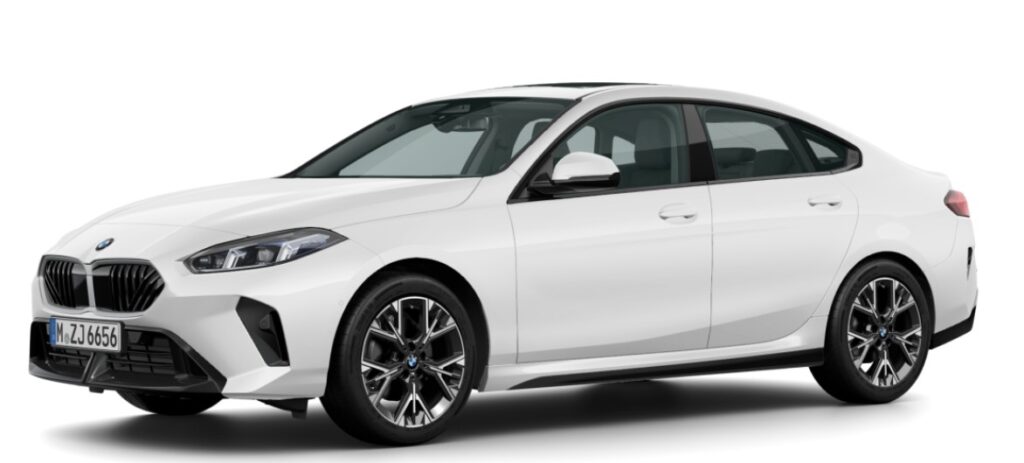
Getting the BMW 2 Series tyre pressure right may seem like a tiny maintenance job, yet those few pounds of air influence nearly everything happening between the car and the road. Steering response, braking distance, tyre wear, fuel consumption, ride comfort, and even the behaviour of the tyre-pressure warning system can change when inflation is incorrect.
The tricky part is that there is no single pressure figure suitable for every BMW 2 Series.
A 218i Active Tourer on matching 17-inch tyres may require different pressures from an M240i Coupé with staggered 19-inch wheels. The correct setting can also change depending on passenger load, luggage, driving speed, tyre type, and whether the tyres are cold or warm.
As a broad reference, many BMW 2 Series configurations operate somewhere around 32–38 PSI under normal conditions, although certain rear tyres and fully loaded settings may require more than 40 PSI. That is only a general range—not a replacement for the pressure label fitted to your own vehicle.
BMW states that the vehicle-specific tyre pressures are shown on a sticker on the driver-side B-pillar, visible when the driver’s door is open. That placard should always outrank generic charts found online.
In this guide, we will explain how to identify the right pressure, interpret the door sticker, inflate the tyres correctly, reset the monitoring system, and avoid the common mistakes that quietly shorten tyre life.
Content in this publication
- What Is the Correct BMW 2 Series Tyre Pressure?
- Why BMW 2 Series Pressure Figures Vary
- Where to Find the BMW 2 Series Tyre Pressure Sticker
- BMW 2 Series Tyre Pressure Chart
- BMW 2 Series Active Tourer Tyre Pressure
- BMW 2 Series Gran Tourer Tyre Pressure
- BMW 2 Series Coupé Tyre Pressure
- BMW M235i and M240i Tyre Pressure
- Should Tyre Pressure Be Checked Hot or Cold?
- How Often Should We Check the Pressure?
- How Temperature Affects BMW Tyre Pressure
- Run-Flat Tyres and BMW 2 Series Pressure
- How to Check BMW 2 Series Tyre Pressure
- How to Reset the BMW 2 Series Tyre Pressure Monitor
- Why the Tyre Pressure Warning Light Stays On
- Signs of Underinflated Tyres
- Signs of Overinflated Tyres
- Does Correct Pressure Improve Fuel Economy?
- Tyre Pressure Before a Long Journey
- Common BMW 2 Series Pressure Mistakes
- When Should a Tyre Be Professionally Inspected?
- Can We Drive With the Tyre Pressure Warning On?
- Final Thoughts on BMW 2 Series Tyre Pressure
- Frequently Asked Questions
What Is the Correct BMW 2 Series Tyre Pressure?
The correct BMW 2 Series tyre pressure is the figure printed on your vehicle’s tyre-information label. Depending on the country and model, the same information may also appear in the owner’s handbook or within the vehicle’s infotainment system.
For many everyday 2 Series variants, owners commonly encounter recommendations beginning near:
- 32 PSI
- 2.2 bar
- 220 kPa
For example, published fitment data for several earlier BMW 2 Series configurations with 18-inch wheels lists approximately 32 PSI or 2.2 bar at both ends under specified conditions. However, other models—especially convertibles, performance variants, staggered wheel setups, or heavily loaded cars—may require substantially higher rear pressures.
Think of 32 PSI as a familiar starting point, not a universal answer carved into stone.
Typical BMW 2 Series Pressure Range
The following table offers a practical overview rather than a vehicle-specific prescription:
| Driving condition | Common approximate range |
|---|---|
| Light load, everyday driving | 32–36 PSI |
| Larger or low-profile tyres | 33–39 PSI |
| Fully loaded vehicle | 36–44 PSI |
| Certain performance rear tyres | 38–45 PSI |
| High-speed pressure setting | Refer to the door placard |
BMW specialists note that pressures across the wider BMW range often fall between roughly 32 and 45 PSI, but the exact requirement depends on model, trim, tyres, and axle.
The key word is exact. Your door sticker knows whether the car left the factory as a front-wheel-drive Active Tourer, a rear-wheel-drive Coupé, an xDrive model, or an M Performance version. A generic internet chart usually does not.
Why BMW 2 Series Pressure Figures Vary
BMW uses the 2 Series name across several vehicles that share a badge but not necessarily the same platform, weight distribution, drivetrain, or intended use.
The family has included:
- 2 Series Coupé
- 2 Series Convertible
- 2 Series Gran Coupé
- 2 Series Active Tourer
- 2 Series Gran Tourer
- M235i models
- M240i models
- Front-wheel-drive variants
- Rear-wheel-drive variants
- xDrive all-wheel-drive variants
That is quite a crowd under one umbrella.
A seven-seat Gran Tourer carrying passengers and luggage places different demands on its tyres than a two-door Coupé carrying one driver. Likewise, a powerful M240i may use wider rear tyres designed to transfer considerably more torque to the road.
Wheel and Tyre Size
BMW 2 Series wheel sizes may range from relatively modest everyday wheels to large M Sport alloys with low-profile tyres.
A tyre marked 225/45 R17 does not behave exactly like a 245/35 R19 tyre. The second tyre has a wider tread and a shorter sidewall. Its pressure requirements may differ because its construction, load rating, air volume, and role on the vehicle are different.
Front and Rear Axle Loads
Some 2 Series models use equal-size tyres front and rear. Others use a staggered arrangement, meaning the rear tyres are wider than the fronts.
With staggered wheels, we should never assume the same pressure belongs on both axles. The door placard may call for a noticeably higher pressure at the rear, particularly when the car is loaded.
Passenger and Luggage Load
BMW commonly provides more than one pressure recommendation:
- A normal-load setting for everyday driving.
- A full-load setting for several passengers and luggage.
Using the light-load pressure while carrying a full cabin and packed boot may leave the tyres underinflated for the weight they are supporting. The sidewalls flex more, heat builds, and the car can feel less stable—rather like running in soft shoes while carrying a suitcase.
Maximum Driving Speed
Certain BMW tyre placards also distinguish between ordinary road use and prolonged high-speed driving. Higher speeds generate more heat and place greater stress on the tyre structure, so a higher cold inflation pressure may be specified.
We should follow the speed-related setting only when it appears on the vehicle label or in the official handbook.
Where to Find the BMW 2 Series Tyre Pressure Sticker
Open the driver’s door and look toward the vertical body pillar behind it. This is the B-pillar.
BMW confirms that its tyre-pressure sticker is normally positioned there and becomes visible when the driver’s door is open.
The label may include:
- Approved front tyre sizes
- Approved rear tyre sizes
- Normal-load pressure
- Full-load pressure
- Passenger symbols
- Luggage symbols
- PSI, bar, or kPa values
- Summer tyre information
- Winter tyre information
- High-speed recommendations
How to Read the Sticker
At first glance, the label can resemble a tiny railway timetable. Slow down and match each column carefully.
Step 1: Identify Your Tyre Size
Read the markings on the tyre sidewall. A typical size might look like:
225/40 R18 92Y
This means:
- 225: tyre width in millimetres
- 40: sidewall height as a percentage of width
- R: radial construction
- 18: wheel diameter in inches
- 92: load index
- Y: speed rating
Step 2: Match Front and Rear Sizes
Do not assume the rear tyres match the front. Check both axles, especially on Coupé, Convertible, M Sport, M235i, and M240i versions.
Step 3: Choose the Correct Load Condition
A symbol showing a few occupants normally represents everyday loading. A second row with more occupants and luggage represents maximum or near-maximum loading.
Step 4: Read Front and Rear Values Separately
The front pressure may appear first, followed by the rear pressure. Confirm the orientation using the small vehicle or axle symbols on the sticker.
BMW 2 Series Tyre Pressure Chart
Because BMW produced numerous 2 Series combinations, no universal chart can safely cover every car. Nevertheless, the following examples illustrate the sort of figures owners may encounter.
| Example tyre setup | Front reference | Rear reference |
|---|---|---|
| 205/55 R17 matching setup | Around 32 PSI | Around 32 PSI |
| 225/40 R18 front and 245/35 R18 rear | Around 32–35 PSI | Around 32–41 PSI |
| Larger staggered performance wheels | Around 34–39 PSI | Around 38–45 PSI |
| Fully loaded vehicle | Usually higher | Often significantly higher |
Historical third-party fitment data lists 32 PSI for some 2015 BMW 2 Series models using 205/55 R17 tyres and for several 2016–2018 staggered 18-inch configurations. The same sources advise checking the vehicle handbook for the exact figure.
Meanwhile, owner-manual discussions involving particular M240i Convertible configurations have reported values such as 33 PSI front and 41 PSI rear for normal-speed use, demonstrating why one-size-fits-all recommendations can be misleading.
Use examples to understand the pattern, but use the B-pillar label to inflate the car.
BMW 2 Series Active Tourer Tyre Pressure
The BMW 2 Series Active Tourer is designed around practicality, cabin space, and everyday family use. Depending on generation, engine, wheel package, and load, many versions use pressures in the low-to-mid 30 PSI range during lightly loaded driving.
However, the pressure may need to increase when the car carries:
- Four or five adults
- A full boot
- Child seats and family luggage
- Heavy equipment
- A trailer, where permitted
- Sustained motorway loads
Because Active Tourer models may use various approved summer and winter wheel packages, we should match the actual tyre size to the sticker rather than searching only by model name.
BMW 2 Series Gran Tourer Tyre Pressure
The Gran Tourer may carry more occupants and cargo than most other members of the 2 Series family. That extra capability makes load-specific inflation particularly important.
When the third row is occupied and the luggage area is carrying weight, the full-load pressures on the placard may be considerably higher than the normal setting.
Before a long family journey:
- Check the tyres while cold.
- Select the full-load figures from the sticker.
- Inspect the tread and sidewalls.
- Confirm the monitoring system recognises the new pressures.
- Revert to the ordinary-load setting later when appropriate.
Leaving the tyres at the higher loaded pressure after returning to solo urban use is not usually an emergency, but the ride may become firmer and centre tread wear may increase over time.
BMW 2 Series Coupé Tyre Pressure
The 2 Series Coupé can use a rear-wheel-drive layout, staggered tyres, and sport-oriented suspension tuning. For this reason, different pressures between the front and rear axles are common on some configurations.
A Coupé may feel especially sensitive to pressure changes because its chassis communicates clearly through the steering wheel. Just two or three PSI can alter:
- Turn-in response
- Ride firmness
- Rear traction
- Tramlining
- Steering weight
- Wet-road confidence
Do not lower the pressure merely to soften an M Sport ride. The apparent comfort gain may come at the expense of heat control, steering precision, and tyre durability.
BMW M235i and M240i Tyre Pressure
Performance versions demand extra care because they may combine powerful engines with wide, low-profile tyres.
The correct M235i or M240i pressure depends on:
- Coupé, Gran Coupé, or Convertible body
- Rear-wheel drive or xDrive
- Wheel diameter
- Standard or optional performance tyres
- Summer or winter fitment
- Vehicle load
- Intended speed
Certain models may require a much higher rear pressure than a regular 218i. That is not a mistake. The rear axle may carry more dynamic load and transmit substantial engine power.
Can We Use the Same PSI on All Four Tyres?
Only when the placard says so.
Even when all four tyres display the same physical size, BMW may specify different front and rear pressures because axle loads and handling targets are not identical.
Should Tyre Pressure Be Checked Hot or Cold?
Check BMW 2 Series tyre pressure when the tyres are cold.
A tyre is normally considered cold when the vehicle:
- Has been parked for several hours
- Has not been driven recently
- Has travelled only a very short distance at low speed
- Has not been sitting in strong direct heat
Driving warms the air inside the tyre and raises the displayed pressure. If we release air from a warm tyre until it matches the cold recommendation, the pressure may become too low after the tyre cools.
What If the Tyres Are Already Warm?
Avoid bleeding air unless the pressure is clearly excessive for another reason.
Instead:
- Record the readings.
- Allow the vehicle to cool.
- Recheck later.
- Adjust according to the cold figures.
The warm reading may be several PSI higher than the cold setting. That rise is normal.
How Often Should We Check the Pressure?
A useful routine is to check the tyres:
- At least once a month
- Before long motorway journeys
- Before carrying heavy loads
- After a sharp temperature change
- After hitting a pothole
- When steering feels unusual
- When the warning light appears
- After tyre replacement or rotation
BMW’s tyre-pressure monitoring system is an excellent safety net, but it should not replace manual checks. A monitoring system may warn us after pressure has fallen; a gauge helps us correct it before the warning becomes necessary.
How Temperature Affects BMW Tyre Pressure
Tyre pressure usually falls as ambient temperature drops and rises as temperature increases.
A rough real-world rule is that pressure may change by around 1 PSI for every 10°F, or approximately 0.07 bar for every 5–6°C, although actual changes vary.
This explains a familiar winter scene: we start the car on a cold morning, and the tyre-pressure warning suddenly appears even though no obvious puncture exists.
The warning still deserves attention. Cold weather may have exposed tyres that were already close to the lower threshold.
Should We Add Extra Air in Winter?
Use the cold pressure specified by BMW for the fitted winter tyres. Do not randomly add several extra PSI “for winter” unless the placard or handbook instructs us to do so.
BMW notes that approved summer and winter tyre pressures are included on the vehicle’s pressure sticker.
Run-Flat Tyres and BMW 2 Series Pressure
Many BMW 2 Series vehicles were supplied with run-flat tyres, although equipment varies by market and model year.
Run-flats have reinforced sidewalls that may allow limited driving after pressure loss, subject to the tyre manufacturer’s restrictions. However, they are not maintenance-free.
A run-flat tyre can look reasonably normal even when badly underinflated. Its stiff sidewall may hide the problem like a poker face. That makes regular gauge checks and a functioning monitoring system especially valuable.
Never assume that a tyre is correctly inflated simply because it does not look flat.
How to Check BMW 2 Series Tyre Pressure
You will need a reliable tyre-pressure gauge and access to an inflator.
Step-by-Step Procedure
- Park the car on level ground.
- Allow the tyres to cool.
- Find the recommended values on the B-pillar sticker.
- Remove the valve cap from the first tyre.
- Press the gauge firmly onto the valve.
- Compare the reading with the correct axle figure.
- Add air in short bursts when pressure is low.
- Release a small amount when pressure is too high.
- Recheck the reading.
- Refit the valve cap.
- Repeat for all four tyres.
- Check the spare tyre when the vehicle has one.
- Reset or initialise the monitoring system if required.
PSI, Bar, and kPa Conversion Table
| PSI | Bar | kPa |
|---|---|---|
| 30 | 2.07 | 207 |
| 32 | 2.21 | 221 |
| 33 | 2.28 | 228 |
| 34 | 2.34 | 234 |
| 35 | 2.41 | 241 |
| 36 | 2.48 | 248 |
| 38 | 2.62 | 262 |
| 40 | 2.76 | 276 |
| 42 | 2.90 | 290 |
| 44 | 3.03 | 303 |
Small rounding differences are normal. For instance, 32 PSI is commonly shown as 2.2 bar or 220 kPa.
How to Reset the BMW 2 Series Tyre Pressure Monitor
After adjusting pressures, replacing tyres, or changing wheel sets, the vehicle may need to relearn or initialise the settings.
The menu wording varies according to the BMW iDrive or Operating System version.
For BMW Operating System 7, BMW describes a route through:
CAR → Vehicle status → Tyre Pressure Monitor → Tyre settings
For Operating Systems 8, 8.5, and 9, the corresponding path starts through:
Apps → Vehicle → Vehicle status → Tyre Pressure Monitor → Tyre settings
Depending on the vehicle, we may then select the installed tyre type or size and save the setting. The car begins measuring while driving.
Typical Reset Procedure
- Inflate every tyre correctly.
- Switch on the ignition.
- Open the vehicle-status menu.
- Select Tyre Pressure Monitor.
- Check or enter the tyre configuration.
- Choose reset, initialise, or save settings.
- Begin driving.
- Allow the progress indicator to complete.
The reset should be performed only after confirming the pressures manually. Resetting an underinflated tyre teaches the system the wrong baseline.
Why the Tyre Pressure Warning Light Stays On
The warning may remain illuminated for several reasons:
- One tyre is still below specification
- The system has not been reset
- The car has not travelled far enough to complete calibration
- The wrong tyre size was selected
- A slow puncture is present
- A valve is leaking
- A wheel sensor is damaged
- A sensor battery is weak
- Temperatures dropped overnight
- The replacement wheel lacks a compatible sensor
What Does a Sudden Warning Mean?
If the warning appears while driving, reduce speed smoothly and avoid hard steering or braking. Stop in a safe place and inspect the tyres.
A rapid pressure-loss alert may indicate a puncture, damaged wheel, split sidewall, or failed valve. Do not continue simply because the vehicle uses run-flat tyres. Check the handbook for permitted distance and speed, and arrange professional inspection.
Signs of Underinflated Tyres
Underinflation often develops quietly. Common signs include:
- Heavy or vague steering
- Increased fuel consumption
- Excess wear on both tread shoulders
- Reduced stability
- More road noise
- Excessive tyre heat
- Sluggish acceleration
- A soft, wallowing feel
- Repeated monitoring warnings
An underinflated tyre bends more with every rotation. Imagine repeatedly folding a plastic card: eventually, heat and fatigue become the real enemies.
Signs of Overinflated Tyres
Overinflation can also cause trouble:
- Harsh ride quality
- Reduced impact absorption
- Excess centre-tread wear
- Nervous steering
- Less grip on uneven roads
- Greater vulnerability to pothole damage
- Reduced tyre contact area
We should not inflate tyres to the maximum PSI moulded onto the sidewall. That figure normally represents the tyre’s rated maximum under specified conditions, not the vehicle manufacturer’s recommended everyday pressure.
The B-pillar value is the target.
Does Correct Pressure Improve Fuel Economy?
Correct inflation helps the tyre roll as intended. When pressure is too low, rolling resistance increases, meaning the engine must work harder to move the car.
The difference may not feel dramatic during one journey, but over thousands of miles, persistent underinflation can increase fuel or energy use and accelerate tyre wear.
On plug-in hybrid 2 Series Active Tourer models, correct pressure can also help preserve electric efficiency and estimated range.
Tyre Pressure Before a Long Journey
Before a motorway trip, holiday, or airport run, check more than the dashboard display.
Use this simple checklist:
- Inspect every sidewall
- Measure each tyre cold
- Choose the correct load setting
- Check the tread
- Remove visible stones or debris
- Confirm valve caps are fitted
- Inspect for nails or screws
- Reset the monitoring system if necessary
- Recheck after unloading the vehicle
Do not forget that the higher full-load setting may apply even when there are only two occupants if the boot is carrying substantial weight.
Common BMW 2 Series Pressure Mistakes
Using a Google Result Instead of the Door Sticker
Search results often mix generations, body styles, markets, and wheel sizes. A figure that is correct for a 2017 Coupé may be unsuitable for a newer Active Tourer.
Checking Immediately After Driving
Warm readings are naturally higher. Releasing air at that moment may create underinflation later.
Ignoring the Rear Tyre Size
Performance models frequently use wider rear tyres. Always read all four sidewalls.
Resetting the System Without Adding Air
The reset function does not inflate tyres. It only establishes or confirms monitoring parameters.
Using the Sidewall Maximum
The sidewall maximum is not an everyday target.
Leaving Full-Load Pressure Forever
Higher loaded settings are useful when carrying weight but may make the empty vehicle unnecessarily firm.
Trusting the Visual Appearance
Modern radial tyres—and run-flats in particular—can lose considerable pressure without looking obviously flat.
When Should a Tyre Be Professionally Inspected?
Arrange an inspection when:
- One tyre repeatedly loses pressure
- The warning returns after reset
- The wheel has hit a deep pothole
- A sidewall has a cut or bulge
- A nail or screw is visible
- The valve stem is damaged
- The car vibrates after impact
- The tread is wearing unevenly
- Pressure drops several PSI within days
Continually topping up a leaking tyre is not a repair. It is merely pressing the snooze button on a problem that is still awake.
Can We Drive With the Tyre Pressure Warning On?
That depends on the cause, but we should never ignore it.
A small temperature-related drop may only require careful adjustment. A rapid-loss warning may signal an active puncture. Since the dashboard cannot always tell us the exact physical condition of the tyre, the safest response is to reduce speed and inspect it promptly.
Stop immediately when:
- The car pulls strongly to one side
- Steering becomes unstable
- A tyre is visibly flat
- You hear flapping or knocking
- The vehicle vibrates severely
- A red warning accompanies the alert
Final Thoughts on BMW 2 Series Tyre Pressure
The right BMW 2 Series tyre pressure is not simply “32 PSI” or any other universal number. It is the pressure BMW assigned to your particular combination of body style, drivetrain, wheel size, tyre specification, passenger load, and driving conditions.
For some 2 Series cars, 32 PSI may indeed be correct. Others need higher rear pressures, different full-load settings, or separate recommendations for high-speed driving.
Our best routine is straightforward:
- Open the driver’s door.
- Read the B-pillar label.
- Match the exact tyre sizes.
- Choose the correct load row.
- Measure the tyres cold.
- Adjust front and rear separately.
- Reset the monitoring system properly.
- Investigate repeated pressure loss.
Air is invisible, but its effects are not. The correct pressure gives the BMW its intended balance—sharp enough to feel alive, comfortable enough for daily use, and stable when the road stretches toward the horizon.
Frequently Asked Questions
1. What PSI should a BMW 2 Series have?
Many BMW 2 Series variants use pressures beginning around 32 PSI or 2.2 bar, but the correct figure depends on the model, wheel size, load, and axle. Check the sticker on the driver-side B-pillar for the exact cold pressure.
2. Should BMW 2 Series front and rear tyres have the same pressure?
Not necessarily. Some versions use equal pressures, while others—particularly staggered-wheel and performance models—require a higher rear pressure. Follow the separate front and rear figures on the tyre placard.
3. How do we reset the BMW 2 Series tyre-pressure warning?
Inflate all tyres correctly, open the Vehicle Status or Tyre Pressure Monitor menu, select the installed tyre configuration when requested, and choose reset or initialise. Drive the car until the calibration finishes.
4. Why does the BMW tyre-pressure warning appear in cold weather?
Cold air reduces tyre pressure. A significant overnight temperature drop may push a tyre below the monitoring threshold. Check all tyres with a gauge rather than assuming the warning is caused only by weather.
5. Is 40 PSI too high for a BMW 2 Series?
It may be too high for some light-load configurations but completely normal for the rear tyres or full-load setting of certain models. Compare it with the exact B-pillar recommendation instead of judging the number in isolation.
If you want to know other articles similar to BMW 2 Series Tyre Pressure: PSI, Bar, Checks, and Reset Guide you can visit the category Service and Parts.
Kia Sorento Service Reset: How to Reset the Service Light
Kia Sorento Fuel Tank Capacity: Gallons, Litres and Model Differences
Kia Sorento Tyre Pressure: Recommended PSI, Bar and Complete Guide
Kia Sorento Boot Space: How Much Luggage Space Does It Really Have?
Kia Sorento Towing Capacity: How Much Can a Sorento Tow?

Honda Passport Payload Capacity: How Much Weight Can It Carry?
Leave a Reply
More content of your interest