
BMW i7 Battery Capacity: Size, Usable Energy, Range, and Charging Explained

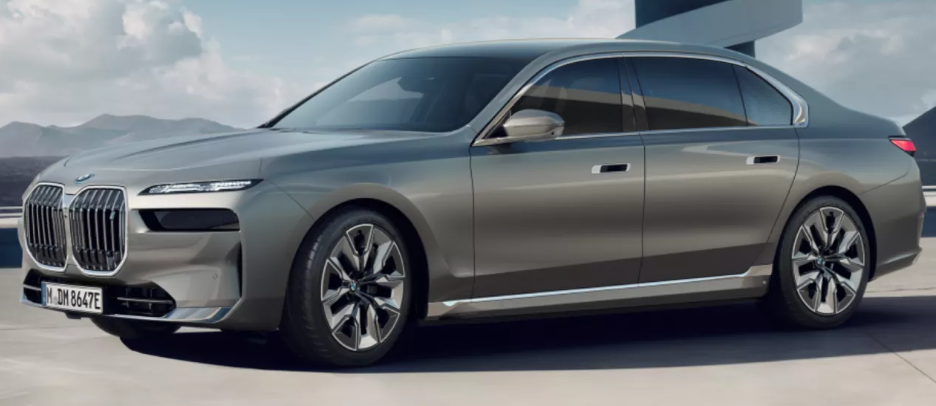
When we look at the BMW i7, it is easy to become distracted by the giant screens, limousine-like rear seats, air suspension, silent acceleration, and almost absurd amount of technology packed inside. Yet underneath all that luxury sits the component that makes the entire electric flagship possible: a seriously large high-voltage battery.
So, what exactly is the BMW i7 battery capacity?
The straightforward answer is 105.7 kWh gross capacity, while BMW technical documentation identifies approximately 101.7 kWh as usable energy. BMW installs the high-voltage lithium-ion battery underneath the vehicle floor, helping create the low center of gravity expected from a large luxury EV.
Those two battery figures—105.7 kWh and 101.7 kWh—often cause confusion. They are not contradictory. One describes the entire physical energy capacity of the battery pack, while the other represents the portion generally available to the driver.
And that distinction matters much more than it initially appears.
Let's dig into the BMW i7 battery size, charging speed, usable capacity, range, efficiency, battery protection, and what those numbers actually mean when we're living with the car instead of simply reading a specification sheet.
Content in this publication
- What Is the BMW i7 Battery Capacity?
- Why Doesn't BMW Let Us Use All 105.7 kWh?
- Do All BMW i7 Models Use the Same Battery Size?
- How Much Range Does a 101.7 kWh Usable Battery Provide?
- How Fast Can the BMW i7 Battery Charge?
- BMW i7 AC Home Charging
- How Efficient Is the BMW i7 Battery System?
- Where Is the BMW i7 Battery Located?
- How Long Will a BMW i7 Battery Last?
- Does Fast Charging Damage the BMW i7 Battery?
- BMW i7 Battery Capacity vs Real-World Usability
- What Affects BMW i7 Battery Range the Most?
- Is the BMW i7 Battery Big Enough for Road Trips?
- Is the BMW i7 Battery Capacity Good?
- Conclusion: Understanding the BMW i7 Battery Capacity
- Frequently Asked Questions About BMW i7 Battery Capacity
What Is the BMW i7 Battery Capacity?
The BMW i7 has a 105.7 kWh high-voltage battery capacity according to current BMW technical specifications. BMW's more detailed engineering documentation gives the pack as 105.7 kWh gross and 101.7 kWh net/usable.
That makes the i7 battery one of the larger packs fitted to a mainstream premium electric sedan.
It needs to be.
The BMW i7 is not a lightweight electric city car. It is a full-size luxury sedan filled with sound insulation, electric motors, displays, comfort equipment, sophisticated suspension systems, large wheels, and enough cabin technology to make some hotel rooms look poorly equipped.
Moving all of that mass efficiently requires plenty of stored energy.
BMW i7 Gross vs Usable Battery Capacity
Here's the easiest way to understand the numbers:
| Battery measurement | BMW i7 capacity |
|---|---|
| Gross battery capacity | 105.7 kWh |
| Approximate usable capacity | 101.7 kWh |
| Battery type | Lithium-ion |
| Installation | Underbody |
| Maximum DC charging power | Up to 195 kW |
| DC charging 10–80% | About 34 minutes under BMW test conditions |
BMW's current technical pages quote the 105.7 kWh battery capacity and a maximum DC charging rate of 195 kW, while BMW engineering information identifies 101.7 kWh of usable energy.
Think of gross capacity like the physical size of a water tank. Usable capacity is the portion the system actually lets us regularly draw from.
BMW doesn't normally allow the battery to operate continuously from its absolute chemical minimum to absolute chemical maximum. A protective reserve remains outside the driver's normal operating window.
That buffer helps protect the high-voltage battery.
Why Doesn't BMW Let Us Use All 105.7 kWh?
At first glance, reserving several kilowatt-hours might seem wasteful.
We've paid for a 105.7 kWh battery, so why shouldn't every last electron be available?
Because lithium-ion batteries generally prefer not to spend their lives sitting at extreme states of charge.
BMW's battery management system controls how much of the pack is available, helping prevent conditions that could accelerate degradation or compromise battery performance.
It's a little like an engine that could technically rev higher than its electronic limiter allows. The limit isn't there because the manufacturer forgot how to unlock the final few revolutions. It's there because reliability matters.
The Battery Buffer Works Behind the Scenes
The buffer essentially provides breathing room.
We don't normally see it. The dashboard simply tells us the battery percentage available for everyday operation.
Behind that percentage sits an elaborate battery management system monitoring the pack and adjusting charging, thermal management, and available performance.
For owners, this means there's no need to obsess over the difference between gross and net capacity every morning.
For shoppers comparing EVs, however, usable battery capacity is often the more meaningful specification.
Why Usable Capacity Matters More for Range
Suppose two electric cars both advertise batteries close to 105 kWh.
If one provides 102 kWh usable while another offers only 95 kWh usable, their effective energy reserves are different even though their headline battery sizes look almost identical.
That's why we prefer looking at usable capacity alongside efficiency rather than judging an EV purely by its gross battery number.
A huge battery doesn't automatically create huge range.
Efficiency is half the story.
Do All BMW i7 Models Use the Same Battery Size?
The i7 family has included variants such as the i7 eDrive50, i7 xDrive60, and i7 M70 xDrive, depending on the market.
The major difference between them is not simply battery size. Their drivetrains, power outputs, driven wheels, performance targets, wheel combinations, and resulting energy consumption can differ.
BMW's current technical information continues to list a 105.7 kWh battery capacity for the i7, while its detailed M70 documentation identifies 101.7 kWh usable from that battery.
That means we'd make a mistake by assuming the fastest i7 necessarily carries a dramatically larger battery.
Instead, the models extract different combinations of performance and range from essentially the same substantial energy reservoir.
BMW i7 eDrive50 Battery Capacity
The eDrive50 is the efficiency-oriented side of the i7 family in markets where it is offered.
A rear-wheel-drive configuration avoids the continuous hardware requirements of a second driven axle, helping the car stretch its available energy.
For the 2026 U.S. model year, BMW publishes an estimated range of approximately 301 to 314 miles for the i7 eDrive50, depending on configuration and testing conditions.
That makes an important point: a battery's capacity tells us how much energy the vehicle can store, but it doesn't independently determine how far the vehicle travels.
BMW i7 xDrive60 Battery Capacity
The xDrive60 adds dual-motor all-wheel-drive capability and delivers the sort of effortless acceleration we'd expect from BMW's electric flagship.
BMW's current technical specifications list the battery at 105.7 kWh, with up to 195 kW DC charging and a quoted 10–80% DC charging time of around 34 minutes under suitable conditions.
BMW USA lists the 2026 i7 xDrive60 at roughly 296 to 311 miles of estimated range, depending on configuration.
For something this large, luxurious, and powerful, that's substantial road-trip capability.
BMW i7 M70 xDrive Battery Capacity
Then we reach the wild member of the family.
The i7 M70 xDrive takes the luxury-limousine formula and pours performance into it.
Yet BMW still identifies 101.7 kWh of usable battery energy for the M70. Its technical documentation lists a gross/net relationship of 105.7/101.7 kWh, with up to 195 kW DC fast charging.
Because the M70 prioritizes dramatically stronger performance, its range is naturally different.
For the 2026 U.S. model, BMW gives an estimated range of approximately 268 to 285 miles, with the exact figure depending on specification and other factors.
The battery is the pantry. The motors decide how aggressively we're cooking.
How Much Range Does a 101.7 kWh Usable Battery Provide?
Here's where EV discussions become interesting.
Battery capacity does not translate into a fixed number of miles.
A 101.7 kWh usable battery might provide excellent range in one situation and noticeably less in another.
BMW itself warns that EV range varies depending on model, wheel and tire selection, driving style, traffic, accessories, outside temperature, and charging conditions.
In other words, the battery isn't changing size. The rate at which we're drinking from it is changing.
Driving Speed Has a Major Impact
Highway speed can dramatically affect electric-car efficiency because aerodynamic drag rises quickly as speed increases.
The i7 is streamlined, but physics doesn't hand out VIP passes just because we're sitting in a luxury BMW.
Drive smoothly at moderate speeds and the battery may feel enormous.
Spend hours travelling quickly on the motorway or interstate and energy consumption rises.
Weather Can Change the Picture
Battery temperature matters too.
Cold conditions can reduce available efficiency because the car may need energy to warm the battery and cabin.
Hot climates can also require energy for battery and cabin cooling.
BMW equips the i7 with sophisticated thermal management and a heat-pump-based heating and cooling system designed to manage the cabin and electric powertrain efficiently. BMW has specifically highlighted thermal management as one of the technologies supporting the i7's efficiency.
Cabin Comfort Uses Energy
Luxury has an electrical appetite.
Climate control, heated seats, ventilated seats, entertainment systems, lighting, and other accessories all consume power.
Usually their impact is far smaller than propulsion at highway speed, but in severe weather the difference can become noticeable.
That's one reason estimated range constantly moves while we drive.
The car isn't guessing blindly. It's responding to changing conditions.
How Fast Can the BMW i7 Battery Charge?
Battery capacity tells us how large the fuel tank is.
Charging speed tells us how quickly we can refill it.
The BMW i7 supports DC fast charging at up to 195 kW according to current BMW technical specifications. BMW lists a 10–80% charging time of approximately 34 minutes when conditions allow the car to reach its intended charging performance.
That combination matters.
A huge battery with painfully slow charging would become frustrating on long journeys. Conversely, a smaller battery with fast charging might require more frequent stops.
The i7 tries to balance both sides of the equation.
Why the BMW i7 Doesn't Stay at 195 kW
A maximum charging rate is exactly that: a maximum.
We shouldn't expect the display to show 195 kW from the moment we plug in until the moment we unplug.
EV charging follows a curve.
Power generally rises or reaches its peak when conditions are favorable and the battery is at a suitable state of charge. As the battery fills, charging power eventually decreases to protect the cells and control heat.
That's normal.
A battery charging from 10% toward 50% behaves differently from one already sitting at 90%.
BMW i7 10–80% Charging Time
BMW quotes around 34 minutes for a 10–80% DC fast charge under its specified conditions.
That 10–80% window is particularly useful when discussing road trips because drivers rarely need to charge to 100% at every rapid-charging stop.
Stopping at 80%, driving again, and charging later can sometimes make more sense than waiting for the slower upper portion of the charging curve.
We can think of the final part of rapid charging like boarding an airplane. The first passengers may walk on quickly; getting every final person seated, luggage stored, and cabin ready takes disproportionately longer.
BMW i7 AC Home Charging
Most charging doesn't need to happen beside a motorway charger.
For many owners, the easiest way to live with an i7 is simply plugging it in at home.
Current BMW North American technical data lists AC charging capability around 11 to 11.5 kW, depending on market specification, and BMW USA lists roughly 10 hours for an AC 0–100% charge under its stated Level 2 charging conditions.
That's important because we rarely arrive home every evening with a completely empty battery.
If we drive 40 miles during the day, we're not replacing an entire 101.7 kWh usable battery overnight. We're replacing only the energy consumed.
Home Charging Changes How We Think About Range
Gasoline cars encourage a particular habit.
Drive until the gauge becomes low. Find a filling station. Fill the tank.
An EV can work differently.
With home charging, we can start many mornings with plenty of battery already available.
It's closer to charging a smartphone than visiting a petrol station.
That doesn't eliminate the importance of public fast charging, particularly for apartment dwellers and frequent long-distance travelers, but it changes the ownership rhythm dramatically.
How Efficient Is the BMW i7 Battery System?
Battery size by itself isn't an efficiency measurement.
Imagine carrying a massive backpack full of water while hiking. Yes, we have plenty of water—but we're also carrying more weight.
Large EV batteries create the same engineering tension.
They store more energy, yet they also add mass.
BMW has therefore used other techniques to improve the i7's overall efficiency, including regenerative braking, aerodynamic optimization, thermal management, and adaptive energy recuperation.
The aim isn't simply to build the biggest battery possible.
It's to get useful distance from the battery without compromising the luxury, performance, and refinement expected from a 7 Series.
Regenerative Braking Returns Energy to the Battery
One of the cleverest parts of an electric drivetrain is regenerative braking.
When we slow down, the electric motors can operate as generators and convert some kinetic energy back into electrical energy.
That electricity returns to the battery rather than being entirely wasted as heat through conventional friction braking.
BMW uses adaptive recuperation in the i7, adjusting regeneration according to driving conditions and available information. BMW says the system can account for factors such as traffic situations and route conditions.
We won't recover every kilowatt-hour used for acceleration—perpetual motion remains stubbornly unavailable—but regeneration can meaningfully improve real-world efficiency.
Where Is the BMW i7 Battery Located?
The high-voltage battery sits underneath the passenger compartment in the vehicle floor.
BMW describes the i7 battery as an extremely slim unit installed low in the underbody.
That location brings several advantages.
- It keeps a huge amount of mass low in the vehicle.
- It helps distribute weight across the chassis.
- It avoids filling the trunk with battery modules.
- It contributes to a low center of gravity.
- It allows the battery structure to be integrated into the overall vehicle platform.
The result is interesting because the i7 is physically massive, yet placing so much weight beneath us helps avoid the top-heavy sensation we might expect from a vehicle carrying such an enormous battery.
Battery Placement and Interior Space
One potential drawback of floor-mounted batteries is packaging.
The battery has to fit beneath passengers without making the entire vehicle feel awkwardly tall.
The i7's dimensions make this easier. It is already a large flagship sedan, giving BMW plenty of wheelbase in which to package battery modules while preserving the spacious rear cabin expected from a luxury limousine.
How Long Will a BMW i7 Battery Last?
Battery longevity is one of the biggest concerns potential EV buyers have, and understandably so.
A high-voltage battery is not something we'd want to treat like a disposable phone accessory.
Fortunately, EV batteries aren't simply giant versions of consumer-electronics batteries. Their thermal management, cell monitoring, charging controls, and operating buffers are far more sophisticated.
That doesn't mean degradation is impossible.
All lithium-ion batteries gradually lose capacity with age and use.
But battery health depends on numerous factors, including temperature exposure, charging behavior, mileage, time, and how frequently the vehicle experiences extreme states of charge.
Should We Charge the BMW i7 to 100% Every Day?
For everyday driving, we generally don't need 100% unless our journey requires it.
The vehicle itself provides charging-management tools that allow owners to plan charging around their needs.
When we're preparing for a long journey, using more of the battery's available capacity makes obvious sense.
For ordinary commuting, a lower daily charging target can reduce the amount of time the battery spends sitting at a very high state of charge.
The key is practicality rather than paranoia.
A BMW i7 is designed to be driven, not kept in a climate-controlled garage while its owner anxiously studies battery percentages.
Does Fast Charging Damage the BMW i7 Battery?
Occasional DC rapid charging is exactly what the i7 was designed to handle.
The car actively manages battery temperature and charging power to protect the pack.
However, lithium-ion batteries generally experience more thermal stress during very high-power charging than during slower AC charging.
That doesn't mean we should avoid fast chargers.
It simply means there is little reason to rapid-charge constantly when convenient home AC charging is available.
Use DC charging when it solves a problem—particularly during road trips—and AC charging when time is plentiful.
That's usually the most natural ownership pattern anyway.
BMW i7 Battery Capacity vs Real-World Usability
A specification sheet says 105.7 kWh gross.
What does that actually feel like?
It feels like an electric sedan designed around long-distance capability rather than short urban hops.
The i7 has enough usable capacity that we don't need to approach every journey as a mathematical exercise. BMW's 2026 U.S. estimates extend above 300 miles in some i7 configurations, while the performance-focused M70 trades some range for significantly stronger output.
That's exactly how we should interpret the battery.
Not as an isolated number, but as part of a system.
The battery works with the motors, aerodynamics, regenerative braking, navigation, thermal management, charging software, wheels, tires, and even our right foot.
Is 105.7 kWh a Large Battery?
Yes.
A gross capacity exceeding 100 kWh puts the i7 firmly into large-battery territory.
But context matters.
The i7 needs that capacity because it is a large luxury sedan rather than a compact efficiency-focused EV.
If BMW had simply dropped a small battery into a heavy flagship limousine, highway range would have suffered.
The 105.7 kWh pack gives the car enough energy storage to deliver the long-distance character expected from a 7 Series.
What Affects BMW i7 Battery Range the Most?
We can simplify the biggest variables into a few practical factors: speed, temperature, wheel and tire choice, climate-control demand, elevation, traffic, payload, acceleration habits, and battery temperature.
BMW itself highlights many of these variables when explaining why actual range can differ from published figures.
The interesting part is that some factors work in opposite directions.
Stop-and-go traffic is terrible for gasoline efficiency, yet an EV can recover energy through regenerative braking.
Highway driving seems effortless, yet aerodynamic resistance can make sustained high-speed travel energy intensive.
Electric cars rewrite some of the driving assumptions we've carried for decades.
Large Wheels Can Reduce Range
Huge alloy wheels look fantastic on a flagship sedan.
Physics is less impressed.
Larger wheels and performance-oriented tires can increase rolling resistance, aerodynamic drag, or rotating mass depending on the configuration.
That's why BMW publishes ranges rather than pretending every possible i7 specification travels exactly the same distance.
When maximum range matters more than appearance, wheel choice deserves attention.
Is the BMW i7 Battery Big Enough for Road Trips?
For most journeys, yes.
The combination of approximately 101.7 kWh usable capacity and up to 195 kW DC fast charging makes the i7 fundamentally suitable for long-distance use where charging infrastructure supports it. BMW's own technical documentation emphasizes the i7's long-distance capability.
The more important road-trip question isn't simply, “How big is the battery?”
It's also, “Where are the chargers?”
A 400-mile theoretical battery is less useful when the route has poor charging infrastructure than a shorter-range EV traveling along a corridor packed with reliable high-power chargers.
Planning still matters.
But with more than 100 kWh of total battery capacity beneath us, the i7 starts the conversation with a sizeable advantage.
Is the BMW i7 Battery Capacity Good?
As an energy-storage system for a luxury flagship, the i7's battery capacity is substantial.
The numbers tell the story clearly: 105.7 kWh gross, around 101.7 kWh usable, and up to 195 kW DC fast charging.
Yet the clever part isn't simply installing a giant battery.
BMW has paired that battery with regenerative braking, thermal management, energy-efficient drive technology, navigation-based charging tools, and software designed to manage both performance and range.
That's what makes the pack useful.
A battery is only a reservoir.
The engineering around it determines whether we sip from that reservoir carefully or empty it like someone kicked the plug out of a bathtub.
Conclusion: Understanding the BMW i7 Battery Capacity
The BMW i7 battery capacity is 105.7 kWh gross, with approximately 101.7 kWh usable according to BMW's technical documentation. That difference exists because the vehicle protects a portion of the battery rather than exposing its entire chemical capacity to normal everyday use.
The pack sits beneath the vehicle floor and works with BMW's electric motors, regenerative braking, battery-conditioning system, and charging software.
Current technical specifications also show DC fast charging at up to 195 kW, with a quoted 10–80% charging time of around 34 minutes under suitable conditions.
For 2026 U.S. models, estimated range varies considerably by version: BMW publishes approximately 301–314 miles for the i7 eDrive50, 296–311 miles for the i7 xDrive60, and 268–285 miles for the i7 M70. Those figures reinforce the lesson running through this entire discussion: battery capacity matters enormously, but capacity alone doesn't determine range.
Efficiency, performance, weather, wheels, speed, and driving habits all get a vote.
So when someone asks us, “How big is the BMW i7 battery?” the simple answer is 105.7 kWh.
The more useful answer is that BMW gives the i7 roughly 101.7 kWh of usable energy and surrounds that battery with enough hardware and software to make a two-and-a-half-ton luxury electric sedan surprisingly capable of covering serious distances.
Frequently Asked Questions About BMW i7 Battery Capacity
1. What is the BMW i7 battery capacity in kWh?
The BMW i7 uses a 105.7 kWh gross high-voltage battery. BMW's detailed technical documentation gives approximately 101.7 kWh of usable energy, with the remaining capacity effectively serving as part of the battery's protected operating margins.
2. What is the usable battery capacity of the BMW i7?
The usable battery capacity is approximately 101.7 kWh. This is the figure that is particularly useful when discussing how much energy the car can actually draw upon for driving.
3. How long does a BMW i7 battery take to fast-charge?
BMW quotes approximately 34 minutes to charge from 10% to 80% using suitable DC fast-charging equipment and under appropriate battery and environmental conditions. Maximum DC charging power is listed at 195 kW.
4. How far can a BMW i7 travel on one charge?
It depends on the version and configuration. For the 2026 U.S. lineup, BMW lists estimated ranges of roughly 301–314 miles for the eDrive50, 296–311 miles for the xDrive60, and 268–285 miles for the M70. Actual range can vary with temperature, speed, wheels, driving style, traffic, and accessory use.
5. Is the BMW i7 battery 101.7 kWh or 105.7 kWh?
Both figures can be correct because they describe different measurements. 105.7 kWh represents the gross or total battery capacity, while approximately 101.7 kWh represents usable energy according to detailed BMW engineering specifications. When comparing driving capability between EVs, the usable figure is generally the more informative one.
If you want to know other articles similar to BMW i7 Battery Capacity: Size, Usable Energy, Range, and Charging Explained you can visit the category Service and Parts.
Volvo S90 Engine Oil: Type, Capacity & Change Guide
Volvo S90 Boot Space: Size, Capacity and Practicality
SEO Title: Volvo S90 Oil Capacity: Complete Guide by Engine

Kia Sorento Oil Type: Complete Guide by Year & Engine
Kia Sorento Engine Capacity: Complete Guide by Year
Peugeot 308 Clutch Replacement Cost: Complete UK Guide for 2026
Leave a Reply
More content of your interest