
BMW i7 Weight: How Heavy Is BMW’s Electric Luxury Sedan?

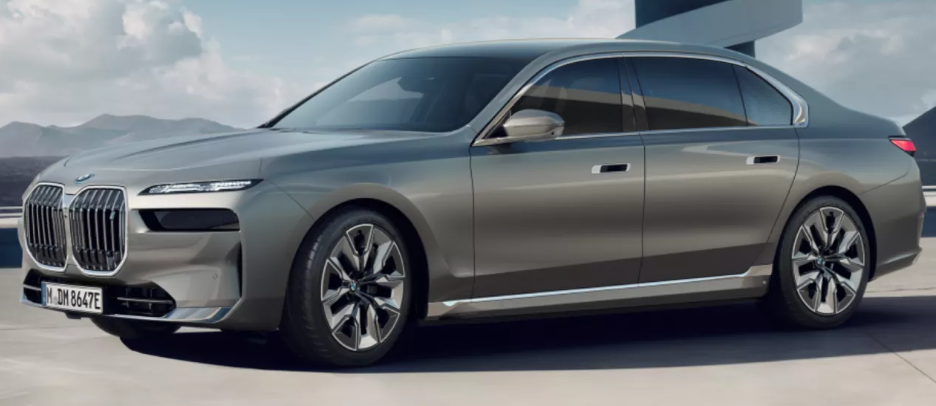
The BMW i7 weight is one of those specifications that can make us do a double take. BMW's flagship electric sedan looks elegant, glides down the road almost silently, and can accelerate with sports-car urgency, yet underneath all that polished luxury sits a seriously substantial machine.
Depending on the model year and version, an i7 can weigh well beyond 5,500 pounds, with some versions crossing the 6,000-pound mark. That makes the i7 heavier than most conventional luxury sedans and even some large SUVs.
But simply calling the BMW i7 "heavy" misses half the story.
Its substantial curb weight comes from a combination of a large high-voltage battery, electric motors, luxury equipment, structural reinforcement, sound insulation, sophisticated suspension hardware, and the sheer dimensions of the 7 Series platform. BMW then has to make all that mass accelerate, corner, brake, and ride like a proper flagship.
So, how much does a BMW i7 actually weigh? Why does the number vary so much between versions? And does the extra mass matter when we're behind the wheel?
Let's break it down.
Content in this publication
- How Much Does a BMW i7 Weigh?
- 2027 BMW i7 Weight: What Changed?
- Why Is the BMW i7 So Heavy?
- The BMW i7 Is Also a Very Large Car
- Luxury Equipment Adds Up Quickly
- BMW i7 vs BMW 7 Series Weight
- Where the BMW i7 Carries Its Weight Matters
- Does the BMW i7 Feel Heavy to Drive?
- How BMW Manages the i7's Weight
- Does BMW i7 Weight Affect Acceleration?
- Does Weight Reduce BMW i7 Range?
- BMW i7 Weight and Braking
- Does BMW i7 Weight Increase Tire Wear?
- Does Passenger Weight Matter in an i7?
- BMW i7 Weight Distribution and Stability
- Parking a BMW i7: Weight Isn't the Biggest Problem
- Is the BMW i7 Too Heavy?
- How the Updated BMW i7 Addresses Efficiency
- Should BMW i7 Weight Affect Your Buying Decision?
- Which BMW i7 Is the Lightest?
- Which BMW i7 Is the Heaviest?
- BMW i7 Weight: The Numbers That Matter Most
- Closing Thoughts: Heavy, but Cleverly Engineered
- Frequently Asked Questions About BMW i7 Weight
How Much Does a BMW i7 Weigh?
For the 2026 U.S.-market lineup, BMW lists curb weights ranging from approximately 5,635 pounds to 6,191 pounds, depending on the drivetrain.
The figures published by BMW USA are:
| BMW i7 version | Curb weight | Approx. kilograms |
|---|---|---|
| 2026 BMW i7 eDrive50 | 5,635 lb | 2,556 kg |
| 2026 BMW i7 xDrive60 | 5,975 lb | 2,710 kg |
| 2026 BMW i7 M70 | 6,191 lb | 2,808 kg |
BMW USA lists the 2026 i7 eDrive50 at 5,635 pounds, the xDrive60 at 5,975 pounds, and the i7 M70 at 6,191 pounds.
That's a difference of more than 550 pounds between the lightest and heaviest versions.
Think about that for a moment. The difference between two i7 configurations can roughly equal the combined weight of several adult passengers and their luggage.
BMW i7 Weight in Pounds
If we're shopping in the United States, curb weight will generally appear in pounds.
The important numbers to remember are roughly:
- 5,600 lb for the lighter rear-wheel-drive i7 eDrive50
- 6,000 lb for the dual-motor i7 xDrive60
- 6,200 lb for the performance-focused i7 M70
Those are substantial figures even by modern EV standards.
BMW i7 Weight in Kilograms
For readers outside North America, the same vehicles sit at approximately:
- 2,556 kg — i7 eDrive50
- 2,710 kg — i7 xDrive60
- 2,808 kg — i7 M70
However, we should be careful when comparing BMW specifications from different countries.
European specifications may use DIN or EU weight definitions, while American specifications typically list U.S.-market curb weight. Equipment levels and measurement methods can differ, so converting a U.S. figure into kilograms does not necessarily produce the exact number shown on BMW's European website.
That's why apparently conflicting BMW i7 weight figures online aren't always actually contradictory.
2027 BMW i7 Weight: What Changed?
BMW unveiled an extensively updated 7 Series for the 2027 model year in April 2026. The revised electric range initially consists of the i7 50 xDrive and i7 60 xDrive, both using two electric motors and all-wheel drive.
BMW USA's current technical data lists:
| Updated BMW i7 | Curb weight |
|---|---|
| BMW i7 50 xDrive | 5,975 lb |
| BMW i7 60 xDrive | 6,089 lb |
The updated i7 50 xDrive is listed at 5,975 pounds, while the i7 60 xDrive reaches 6,089 pounds.
So if you're researching BMW i7 weight, always check the model year and full trim name.
A search result saying "BMW i7 weighs 5,635 pounds" may be correct for a 2026 eDrive50, while another saying "6,089 pounds" can also be correct for the newer i7 60 xDrive.
Same model family. Different configuration.
Why Is the BMW i7 So Heavy?
Here's where things get interesting.
The i7 isn't heavy because BMW somehow forgot that mass matters. Its weight is largely the consequence of creating a huge electric luxury sedan capable of delivering long range, exceptional refinement, huge power, and limousine-style comfort at the same time.
That's quite a balancing act.
The High-Voltage Battery Is a Major Factor
The most obvious contributor is the battery.
EV batteries contain thousands of individual components packaged into a strong protective enclosure underneath the passenger compartment. Besides the battery cells themselves, the system includes cooling hardware, electrical connections, control electronics, crash protection, structural components, and mounting hardware.
The updated BMW i7 takes this even further.
BMW says the latest i7 adopts sixth-generation cylindrical battery cells with higher volumetric energy density and up to 112.5 kWh of usable battery capacity. The company says the updated battery and drivetrain improvements help increase range while supporting substantially faster charging.
More stored energy gives us greater touring capability, but energy storage doesn't come without mass.
It's like carrying an enormous invisible fuel tank under the floor—except the "fuel tank" itself weighs a great deal even when it's empty.
Dual Electric Motors Add More Weight
The drivetrain also matters.
The 2026 i7 eDrive50 uses rear-wheel drive, helping explain why it is significantly lighter than the dual-motor versions.
Move to an xDrive model and we gain another drive unit along with the associated hardware necessary to power both axles.
That's why the weight jumps from:
5,635 pounds in the 2026 eDrive50
to
5,975 pounds in the 2026 xDrive60.
That's approximately 340 additional pounds.
Of course, we're not carrying that weight around for nothing. We also gain all-wheel-drive traction and much stronger performance.
The M70 Takes Things Even Further
Then we reach the i7 M70.
At 6,191 pounds in 2026 U.S. specification, it's the heavyweight champion of that i7 lineup.
BMW gives the M70 two powerful electric motors, performance-oriented chassis hardware, enormous output, luxury equipment, and the structural and cooling capability required to support that performance.
Yet BMW says it can still accelerate from 0–60 mph in around 3.5 seconds.
That's the part that bends our brains a little.
We have a luxury sedan weighing more than three tons in U.S. short-ton terms moving away from a stoplight like a sports car.
Modern EV performance can feel almost like someone rewrote the laws of physics—although, of course, they merely learned how to exploit them remarkably well.
The BMW i7 Is Also a Very Large Car
Battery weight receives most of the attention, but we shouldn't ignore the elephant in the room: the i7 itself is enormous.
The 2026 model stretches roughly 212.2 inches long with a 126.6-inch wheelbase.
That's more than 17.5 feet from nose to tail.
A vehicle that long requires plenty of body structure, glass, wiring, interior trim, safety equipment, suspension hardware, seats, electronics, and sound insulation.
We're essentially dealing with an executive lounge that happens to have wheels.
Luxury Equipment Adds Up Quickly
A stripped-out performance EV could obviously weigh less.
But nobody buys a BMW i7 because they want roll-up windows and cloth seats.
The i7 is designed to sit at the very top of BMW's sedan hierarchy. Depending on configuration, its cabin can contain power-adjustable comfort seats, sophisticated climate systems, extensive sound insulation, premium audio hardware, multiple displays, electric door systems, rear-seat entertainment technology, elaborate ambient lighting, and numerous motors controlling everything from seats to sunshades.
Individually, each component might seem insignificant.
Add them together and the scale starts moving.
The Theater Screen Doesn't Float
One of the i7's signature features is its giant rear entertainment display.
Then we have speakers, amplifiers, power seats, door mechanisms, acoustic glass, computers, sensors, driver-assistance hardware, ventilation systems, heating elements, and luxury materials.
The i7 is basically carrying a five-star hotel room around with it.
Naturally, the hotel room isn't weightless.
BMW i7 vs BMW 7 Series Weight
One of the best ways to understand the BMW i7 weight is to compare it with its gasoline-powered 7 Series relatives.
For example, BMW lists the 2026 740i xDrive at 4,855 pounds, while the 2026 i7 xDrive60 weighs 5,975 pounds.
That's a difference of approximately:
1,120 pounds.
Suddenly the battery's influence becomes crystal clear.
BMW i7 xDrive60 vs 740i xDrive
| Model | Curb weight | Difference |
|---|---|---|
| BMW 740i xDrive | 4,855 lb | — |
| BMW i7 xDrive60 | 5,975 lb | +1,120 lb |
The two cars share the same fundamental luxury-sedan concept, yet electrification adds a substantial amount of mass.
Still, this isn't necessarily a disadvantage in every situation.
The EV carries much of that additional weight very low in the chassis.
And that's important.
Where the BMW i7 Carries Its Weight Matters
Imagine balancing a heavy suitcase.
Holding it over your head feels awkward.
Place it close to the floor and suddenly it's easier to control.
Cars aren't exactly the same, but the basic idea helps explain the importance of battery placement.
Because the i7's battery sits underneath the passenger compartment, a significant portion of the vehicle's mass remains low to the ground.
That helps reduce the top-heavy sensation we might expect from such a heavy car.
Low Center of Gravity Helps Handling
The i7 still can't hide physics completely.
More mass means greater inertia, and inertia must be controlled whenever the car accelerates, brakes, or changes direction.
But placing major components low in the chassis helps.
Instead of feeling like a tall SUV leaning onto its outside tires through every bend, the i7 can feel remarkably planted.
BMW's chassis engineers can then use suspension geometry, adaptive dampers, air suspension, steering technology, stability systems, and software to control how that weight moves.
The result is much more graceful than the raw curb-weight number suggests.
Does the BMW i7 Feel Heavy to Drive?
Yes—and no.
That's perhaps the most accurate answer.
At low speeds, the electric motors deliver torque immediately, so the i7 doesn't feel sluggish when we press the accelerator.
Quite the opposite.
Even though it weighs thousands of pounds, it can surge forward effortlessly.
That's one of the great tricks of powerful electric drivetrains.
There's no slow buildup of revs. No waiting for a gearbox to find the perfect ratio. The car simply goes.
You Notice the Weight More When Changing Direction
Where mass becomes harder to disguise is during aggressive directional changes.
A heavy vehicle wants to continue traveling in whatever direction it was already moving. That means suspension, tires, brakes, and electronic systems all work hard when we suddenly ask the car to turn.
Push an i7 hard enough and physics eventually taps us on the shoulder.
But that's hardly surprising.
The i7 isn't pretending to be an M2.
It's a luxury flagship built primarily around refinement, effortless speed, stability, and long-distance comfort.
How BMW Manages the i7's Weight
BMW throws a substantial amount of chassis technology at the problem.
And that's exactly what we'd expect.
When engineers know a car will be heavy, they don't simply install bigger wheels and hope for the best.
They design the entire driving experience around that mass.
Air Suspension
Air suspension allows the vehicle to maintain controlled body movement while still delivering the plush ride expected from a 7 Series.
Without sophisticated suspension tuning, a car this heavy could either feel too soft and floaty or unpleasantly firm.
The challenge is finding the middle ground.
Rear-Wheel Steering
Integral active steering can also dramatically change the way a large sedan feels.
At lower speeds, rear-wheel steering can help a long vehicle turn more tightly and feel smaller around parking garages and city streets.
At higher speeds, steering strategies can enhance stability.
That's valuable when our luxury sedan is more than 212 inches long and weighs around three tons.
Electronic Chassis Control
Modern BMW chassis systems constantly coordinate steering, suspension, traction, braking, and power delivery.
We're essentially driving a vehicle whose mechanical systems and computers are having a constant conversation behind the scenes.
We turn the wheel.
The i7 quietly handles the physics.
Does BMW i7 Weight Affect Acceleration?
Absolutely.
All else being equal, additional mass requires more energy to accelerate.
But "all else" is certainly not equal here.
Electric motors produce enormous torque immediately, and powerful versions of the i7 have enough output to overcome their weight spectacularly.
The 2026 i7 M70 is the best example.
Despite its 6,191-pound curb weight, BMW quotes approximately 3.5 seconds from 0–60 mph.
That's absurdly quick for something this large.
It's like watching an office building win a sprint.
Power-to-Weight Ratio Still Matters
Of course, adding power doesn't make weight disappear.
If the same drivetrain were installed in a substantially lighter car, acceleration would likely become even stronger.
But BMW's target isn't minimal weight.
The goal is blending:
- effortless acceleration
- luxury
- quietness
- range
- passenger comfort
- stability
- technology
That requires compromise.
Does Weight Reduce BMW i7 Range?
Vehicle mass affects energy consumption, particularly during acceleration and in stop-and-go driving.
Every time we accelerate, the motors must move thousands of pounds of vehicle.
Yet weight isn't the only factor affecting electric range.
Aerodynamic drag becomes especially important at highway speeds, while tire choice, temperature, driving speed, HVAC use, elevation changes, wheel size, and driving style can all influence efficiency.
Interestingly, an EV can recover some kinetic energy during deceleration through regenerative braking.
Regenerative Braking Helps Recover Energy
In a traditional combustion car, much of the vehicle's kinetic energy becomes heat when the friction brakes slow us down.
An EV can instead use its motors as generators during deceleration.
The i7 therefore has an opportunity to recover part of the energy previously used to move its substantial mass.
Not all of it, obviously. Physics doesn't offer refunds without processing fees.
But regeneration helps make heavy electric vehicles far more efficient in urban driving than their size might suggest.
BMW i7 Weight and Braking
A heavier vehicle carries more kinetic energy at a given speed than a lighter one.
That means braking performance becomes extremely important.
BMW addresses this through powerful braking hardware combined with regenerative braking from the electric drivetrain.
Under ordinary driving conditions, regeneration can handle a meaningful portion of deceleration.
When stronger stopping power is necessary, the friction brakes join the party.
Why Tires Matter More Than We Think
Brakes don't actually stop the car by themselves.
Ultimately, stopping force must pass through four patches of rubber touching the road.
That's why tire quality, condition, pressure, and specification matter enormously on a vehicle as heavy and powerful as the i7.
Installing unsuitable tires simply to save money isn't something we'd recommend.
The vehicle needs tires designed to handle its combination of mass, torque, speed, and load.
Does BMW i7 Weight Increase Tire Wear?
Potentially, yes.
Heavy vehicles place greater loads on their tires, while instant electric torque can accelerate wear if we constantly use the accelerator like an on/off switch.
Driving style therefore matters.
Smooth acceleration and proper tire pressure can make a noticeable difference.
Other factors include:
- wheel alignment
- tire compound
- wheel diameter
- road surface
- temperature
- vehicle load
- rotation practices
- acceleration habits
Large wheels with low-profile performance tires may look fantastic, but they're rarely the cheapest combination to replace.
Luxury has a sense of humor like that.
Does Passenger Weight Matter in an i7?
Yes, although the effect can seem relatively small compared with the car itself.
Suppose four passengers and luggage add another 700 pounds.
A 5,975-pound i7 xDrive60 could then be moving well over 6,500 pounds of total real-world mass.
That additional load can influence acceleration, braking distances, energy consumption, handling, and tire loading.
Curb Weight Is Not Maximum Vehicle Weight
This is an important distinction.
Curb weight describes the vehicle itself under the manufacturer's defined ready-to-drive conditions.
It is not the same as gross vehicle weight rating, which represents the maximum allowable total weight of the vehicle plus occupants, luggage, and other permitted load.
When carrying several passengers and a fully packed trunk, we should follow the load limits printed on the vehicle certification and tire-information labels rather than relying on curb weight alone.
BMW i7 Weight Distribution and Stability
A luxury EV has one major advantage when it comes to mass placement: engineers have considerable freedom to position the battery between the axles and low in the chassis.
That's useful for balance.
Instead of placing an enormous engine entirely over the front axle, an EV can distribute major drivetrain components across the vehicle.
The result can provide a stable, planted sensation even when the scale reading looks intimidating.
Highway Driving Is Where the Weight Can Feel Beneficial
On a highway, mass isn't automatically the enemy.
Once the car reaches a steady cruising speed, the substantial chassis can contribute to the solid, planted feeling expected from a flagship luxury sedan.
Crosswinds, road imperfections, and small steering inputs can feel less dramatic than they might in a lighter car.
Combine that with sound insulation, air suspension, and a long wheelbase, and the i7 can feel more private jet than ordinary automobile.
That's exactly the experience BMW is chasing.
Parking a BMW i7: Weight Isn't the Biggest Problem
When parking, we're unlikely to notice the i7's 6,000-pound mass directly.
We'll notice its dimensions.
At more than 17 feet long, this is a lot of car.
Fortunately, cameras, parking sensors, steering assistance, and available automated parking technology help compensate.
The electric drivetrain is also remarkably easy to control at crawling speeds.
So while maneuvering an i7 through a narrow parking structure can feel like steering a yacht into a bathtub, the electronics make the process less stressful than the dimensions suggest.
Is the BMW i7 Too Heavy?
That's the question many enthusiasts eventually ask.
If we're judging purely from a lightweight sports-car perspective, then yes—the i7 is extremely heavy.
But that's not really a fair comparison.
The i7 is trying to combine the capabilities of several vehicles at once:
- Luxury limousine
- High-performance sedan
- Long-range EV
- Technology showcase
- Quiet executive cruiser
Doing all five simultaneously requires hardware.
And hardware has mass.
Weight Is the Price of Capability
A lighter i7 would certainly offer advantages.
Less mass could improve efficiency, reduce tire loads, help braking, and make the car more agile.
But removing hundreds of pounds might also mean reducing battery capacity, equipment, insulation, structural components, motors, or comfort features.
Suddenly our wonderfully luxurious i7 isn't quite so luxurious anymore.
The real engineering challenge isn't simply making the car light.
It's making its weight feel manageable.
And that is where the i7 becomes impressive.
How the Updated BMW i7 Addresses Efficiency
BMW's newer i7 technology shows that manufacturers aren't simply accepting EV mass forever.
The updated model uses sixth-generation cylindrical battery cells with higher energy density, while BMW says its revised electrical architecture can reduce wiring-harness weight by around 30 percent compared with the previous approach.
Higher energy density is particularly important.
In simple terms, engineers want more usable energy without having to keep increasing battery volume and mass proportionally.
That's one of the keys to future electric cars.
The Long-Term Goal Is More Energy From Less Mass
Battery development is essentially a race to improve:
- energy density
- charging speed
- thermal performance
- durability
- manufacturing cost
- packaging
- weight
When energy density rises, manufacturers gain options.
They can increase range without dramatically increasing battery size—or potentially maintain existing range with a smaller, lighter battery.
For big luxury EVs like the i7, those improvements could eventually transform the weight equation.
Should BMW i7 Weight Affect Your Buying Decision?
For most buyers, curb weight alone shouldn't determine whether the BMW i7 is a good choice.
Instead, we should consider what the weight changes in real life.
Ask ourselves:
- Do we care about maximum efficiency?
- Are tire replacement costs important?
- Do we frequently drive aggressively on twisty roads?
- Will we regularly carry four or five passengers?
- Do we prioritize comfort over agility?
- Do we have a garage or parking structure with unusual weight restrictions?
- Are we comparing the i7 with a lighter gasoline 7 Series?
If maximum agility is our priority, there are far lighter BMWs available.
If quietness, luxury, smooth acceleration, stability, and rear-seat comfort matter more, the i7's weight becomes much easier to justify.
Which BMW i7 Is the Lightest?
Among the 2026 U.S. models discussed here, the BMW i7 eDrive50 is the lightest at approximately 5,635 pounds.
Its single rear electric motor eliminates the additional front drive motor used by the xDrive variants.
That makes it particularly interesting for drivers who want an i7 but don't necessarily need maximum performance or all-wheel drive.
The lighter configuration may also appeal to anyone focused on efficiency.
Which BMW i7 Is the Heaviest?
The 2026 BMW i7 M70 sits at the other end of the scale.
BMW USA lists its curb weight at approximately 6,191 pounds.
That's around:
- 556 pounds heavier than the 2026 eDrive50
- 216 pounds heavier than the 2026 xDrive60
Yet the M70 transforms that additional performance hardware into astonishing acceleration.
So yes, it's heavy.
But it isn't slow.
Not even remotely.
BMW i7 Weight: The Numbers That Matter Most
If we want the short version, here it is.
For 2026 U.S. models:
- BMW i7 eDrive50: 5,635 lb / about 2,556 kg
- BMW i7 xDrive60: 5,975 lb / about 2,710 kg
- BMW i7 M70: 6,191 lb / about 2,808 kg
For the updated i7 lineup shown by BMW USA:
- BMW i7 50 xDrive: 5,975 lb
- BMW i7 60 xDrive: 6,089 lb
Always match the weight figure to the model year, trim, market, and measurement standard before comparing specifications.
That single step prevents most of the confusion surrounding BMW i7 curb weight.
Closing Thoughts: Heavy, but Cleverly Engineered
There's no escaping the basic conclusion: the BMW i7 is a heavy car.
Very heavy.
Depending on the version, we're looking at roughly 5,600 to more than 6,100 pounds of luxury sedan.
But focusing exclusively on that number is like judging an airplane by the weight printed on its specification sheet. What matters is what engineers accomplish with that mass.
The i7 uses its battery location, enormous electric torque, sophisticated suspension, regenerative braking, advanced steering systems, and electronic chassis controls to make thousands of pounds feel surprisingly cooperative.
Would a lighter i7 be more efficient and agile? Almost certainly.
Does the existing i7 drive like an uncontrolled three-ton brick? Absolutely not.
BMW has essentially taken a heavyweight boxer and taught it ballet.
And that's what makes the BMW i7 weight story much more interesting than the number on the scale.
Frequently Asked Questions About BMW i7 Weight
1. How much does a BMW i7 weigh?
The BMW i7 weighs roughly 5,600 to 6,200 pounds, depending on model year and version. BMW lists the 2026 i7 eDrive50 at 5,635 pounds, the xDrive60 at 5,975 pounds, and the M70 at 6,191 pounds.
2. What is the BMW i7 weight in kg?
Using the 2026 U.S. curb-weight specifications, the i7 eDrive50 is approximately 2,556 kg, the i7 xDrive60 approximately 2,710 kg, and the i7 M70 approximately 2,808 kg. European official figures can differ because of measurement standards and specifications.
3. Why is the BMW i7 so heavy?
The i7 combines a large high-voltage battery, electric motors, a large luxury body, extensive sound insulation, sophisticated suspension technology, structural reinforcement, premium seating, displays, entertainment systems, and numerous electronic features. The battery and EV drivetrain are major reasons it weighs considerably more than a gasoline-powered 7 Series.
4. Is the BMW i7 heavier than the regular 7 Series?
Yes. For example, BMW lists the 2026 740i xDrive at around 4,855 pounds compared with 5,975 pounds for the 2026 i7 xDrive60. That's roughly a 1,120-pound difference.
5. Does the BMW i7's weight hurt performance?
Mass affects acceleration, braking, handling, tire loads, and energy consumption, but powerful electric motors and sophisticated chassis technology compensate remarkably well. The clearest example is the 2026 i7 M70: despite weighing more than 6,000 pounds, BMW quotes a 0–60 mph time of around 3.5 seconds.
If you want to know other articles similar to BMW i7 Weight: How Heavy Is BMW’s Electric Luxury Sedan? you can visit the category Service and Parts.
Volvo S90 Engine Oil: Type, Capacity & Change Guide
Volvo S90 Boot Space: Size, Capacity and Practicality
SEO Title: Volvo S90 Oil Capacity: Complete Guide by Engine

Kia Sorento Oil Type: Complete Guide by Year & Engine
Kia Sorento Engine Capacity: Complete Guide by Year
Peugeot 308 Clutch Replacement Cost: Complete UK Guide for 2026
Leave a Reply
More content of your interest