
BMW M5 Engine Specs: Complete Guide to Every Generation

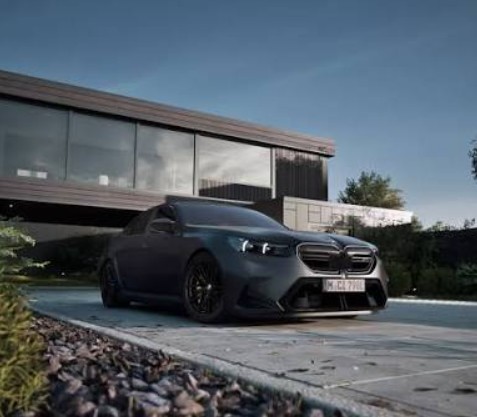
Few performance sedans have an engine history as colorful as the BMW M5. Over four decades, the M5 has gone from a hand-built inline-six-powered executive car to a twin-turbocharged V8 plug-in hybrid capable of producing more than 700 horsepower. Somewhere in between, BMW gave us a naturally aspirated V8, a screaming V10, several turbocharged V8s, and some of the most memorable engines ever fitted to a four-door sedan.
That evolution is exactly what makes BMW M5 engine specs so interesting. We aren't simply comparing horsepower figures. We're watching BMW M reinvent its idea of the perfect performance engine generation after generation.
The current seventh-generation M5, known internally as the G90, takes the biggest technological leap yet. Instead of relying entirely on gasoline power, it combines a 4.4-liter twin-turbocharged V8 with an electric motor. In European specification, BMW quotes a combined 727 hp and 1,000 Nm of torque, while BMW USA lists the current U.S.-market model at 717 hp and 738 lb-ft.
But raw output is only part of the story.
Let's dig into the engines that transformed the M5 from a discreet Autobahn missile into today's electrified super sedan.
Content in this publication
- BMW M5 Engine Specs at a Glance
- Current BMW M5 Engine Specs: G90 M5
- BMW M5 G90 Performance Specs
- BMW M5 F90 Engine Specs
- BMW M5 F10 Engine Specs
- BMW M5 E60 Engine Specs
- BMW M5 E39 Engine Specs
- BMW M5 E34 Engine Specs
- BMW M5 E28 Engine Specs
- How BMW M5 Engine Technology Has Changed
- Which BMW M5 Has the Biggest Engine?
- Which BMW M5 Has the Most Horsepower?
- Which BMW M5 Engine Is the Best?
- Which M5 Engine Is Best for Tuning?
- BMW M5 Engine Reliability: What Matters Most?
- BMW M5 Engine Sound by Generation
- What Makes an M5 Engine Different From a Regular BMW Engine?
- The Evolution of the M5 in One Sentence
- Conclusion: BMW M5 Engine Specs Tell an Incredible Story
- Frequently Asked Questions
BMW M5 Engine Specs at a Glance
Before getting deep into individual generations, here's a useful overview of the major M5 powertrains.
| M5 Generation | Engine | Displacement | Configuration | Output |
|---|---|---|---|---|
| E28 | M88/3 / S38 | 3.5L | Naturally aspirated inline-6 | Up to 286 hp |
| E34 | S38 | 3.6L–3.8L | Naturally aspirated inline-6 | 315–340 hp |
| E39 | S62 | 4.9L | Naturally aspirated V8 | 400 hp |
| E60 | S85 | 5.0L | Naturally aspirated V10 | 507 hp |
| F10 | S63 | 4.4L | Twin-turbo V8 | 560–575+ hp |
| F90 | S63 | 4.4L | Twin-turbo V8 | 600–635 hp depending on version |
| G90 | S68 + electric motor | 4.4L | Twin-turbo V8 plug-in hybrid | Up to 727 hp system output |
The table shows how dramatically the philosophy changed. Early cars chased responsiveness and mechanical character through naturally aspirated engines. Modern M5s rely on turbocharging, sophisticated all-wheel drive, electronics, and now electrification.
Yet there is a common thread: every M5 engine was engineered to deliver far more performance than we'd normally expect from a practical four-door luxury car.
Current BMW M5 Engine Specs: G90 M5
The G90 BMW M5 marks perhaps the most controversial change in M5 history.
For the first time, the M5 is a plug-in hybrid.
Under the hood remains something reassuringly familiar: a 4.4-liter twin-turbocharged V8. BMW combines it with an electric motor integrated into the eight-speed M Steptronic transmission.
The result is BMW's M HYBRID system.
G90 BMW M5 Engine Specifications
Important specifications include:
- 4.4-liter twin-turbocharged V8 gasoline engine
- High-performance electric motor
- Eight-speed M Steptronic automatic transmission
- M xDrive all-wheel drive
- Up to 535 kW, or 727 hp, combined system output in European specification
- 1,000 Nm combined system torque
- Plug-in hybrid battery system
- 0–100 km/h in approximately 3.5 seconds
- Up to 305 km/h with the optional M Driver's Package
BMW describes the combustion engine as a high-revving V8 using M TwinPower Turbo technology. The engine includes two twin-scroll turbochargers, High Precision Injection operating at up to 350 bar, VALVETRONIC variable valve lift, and Double-VANOS variable camshaft timing.
In the United States, BMW lists the current M5 at 717 hp and 738 lb-ft of torque. Regional horsepower measurement conventions explain why figures published by BMW's international and U.S. sites aren't identical.
Why Does the New M5 Use Hybrid Power?
This isn't an efficiency-first hybrid in the traditional sense.
The electric motor acts almost like an enormous torque filler. Electric motors provide torque virtually instantly, while turbocharged combustion engines need airflow and engine speed to reach their strongest output.
Combine the two and the powertrain can deliver an unusually broad wall of acceleration.
Think of the electric motor as filling the tiny gaps where the V8 isn't yet producing everything it has.
That creates a remarkably immediate response despite the size and complexity of the drivetrain.
How Powerful Is the G90 M5 V8 by Itself?
The system number attracts most of the headlines, but it's important to understand that the gasoline engine and electric motor contribute separately.
The V8 remains the dominant source of sustained high-speed power, while the electric motor strengthens low-speed response and total system output.
This architecture follows the general philosophy of BMW's other M HYBRID applications and connects road-car electrification with technology BMW M has associated with its endurance-racing program. BMW explicitly describes the latest M5 system as following a principle similar to the M Hybrid V8 racing machine.
What the Electric Motor Changes
Traditional M5 acceleration depended heavily on engine rpm, gearing, traction, and turbo response.
Hybrid assistance changes that equation.
We now get:
- Immediate electric torque
- Stronger low-speed acceleration
- Less obvious turbo lag
- Electric-only driving capability
- Regenerative braking
- Greater combined power
- More complicated thermal and power-management systems
It's a completely different engineering recipe from the original M5.
BMW M5 G90 Performance Specs
The M HYBRID system produces enough thrust to move the M5 from zero to 100 km/h in approximately 3.5 seconds.
Zero to 200 km/h takes about 10.9 seconds according to BMW's European specifications. Maximum speed is electronically limited, although the optional M Driver's Package raises the ceiling to 305 km/h.
Those figures are impressive, although they reveal something interesting.
The G90 isn't necessarily about smashing every acceleration number established by previous M5 variants. Hybrid hardware adds significant weight.
Instead, BMW has built a broader performance package combining enormous power, electric operation, everyday drivability, traction, and sustained high-speed ability.
BMW M5 F90 Engine Specs
Before hybridization arrived, the F90 represented the ultimate evolution of the turbocharged conventional M5 formula.
Its heart was another version of BMW's S63 4.4-liter twin-turbo V8.
The standard F90 M5 initially produced around 600 hp, while the M5 Competition increased output to approximately 625 hp in European specification.
BMW lists the Competition version at 460 kW, or 625 hp, with 750 Nm of torque.
That alone was serious power.
But the F90's defining technical change wasn't simply the engine.
It was traction.
F90 M5 and M xDrive
Earlier mainstream M5 generations were rear-wheel drive.
The F90 introduced M xDrive.
Purists initially worried that all-wheel drive would make the M5 feel less playful, but BMW created an adjustable system capable of operating in different configurations, including rear-drive-oriented settings.
Suddenly the M5 could deploy massive V8 torque without turning every full-throttle launch into a tire-smoking experiment.
The result was staggering acceleration.
BMW quotes the M5 Competition at around 3.3 seconds from 0–100 km/h.
BMW M5 CS Engine Specs
Then BMW turned the dial further.
The M5 CS became the wildest factory-built version of the F90.
Its 4.4-liter twin-turbo V8 produced roughly 635 hp, making it the most powerful production BMW M car at the time.
Yet the CS wasn't just an engine upgrade.
BMW reduced weight, sharpened the chassis, altered suspension calibration, and created an M5 that felt more like an oversized sports car.
This matters because horsepower figures don't tell us how an engine actually feels.
A lighter car with sharper transmission programming and better traction can feel considerably faster than another vehicle producing almost identical numbers.
BMW M5 F10 Engine Specs
The F10 M5 represented one of the biggest philosophical shifts in M5 history.
Its predecessor used a naturally aspirated V10.
The F10 replaced it with a 4.4-liter twin-turbocharged V8.
At the time, some enthusiasts wondered whether turbocharging would rob the M5 of its character.
The answer was complicated.
Yes, the soundtrack changed.
Yes, the throttle response felt different.
But torque exploded.
F10 S63 Twin-Turbo V8
BMW's official historical overview lists the F10 with:
- 4,395 cc displacement
- Twin-turbocharged V8 configuration
- 560 hp in early versions
- Up to approximately 575 hp in the Competition model
- 680 Nm of torque
- Approximately 4.2–4.3 seconds from 0–100 km/h
Compared with the E60's 520 Nm, the jump to 680 Nm was enormous.
You didn't have to chase the redline to wake the car up anymore.
Press the accelerator and the torque arrived like someone opening a floodgate.
Hot-V Turbocharger Layout
One particularly important feature was the engine's turbocharger positioning.
Rather than hanging the turbochargers outside the cylinder banks, BMW positioned them in the valley of the V8.
This is commonly called a hot-V layout.
Why do that?
Shorter exhaust paths help the turbochargers respond quickly. Packaging becomes more compact, and the engine can produce strong boost response.
BMW specifically highlights the twin-scroll turbochargers positioned within the V configuration when discussing the F10's dramatic torque increase.
Why the F10 Engine Matters
The F10 effectively established the basic engine architecture modern M5 buyers recognize today.
From this point onward, the M5 became a turbocharged torque monster.
The days of waiting for 7,000-plus rpm to access the engine's personality were over.
BMW M5 E60 Engine Specs
If the M5 engine story has one truly eccentric chapter, this is it.
The E60 BMW M5 uses the legendary S85 5.0-liter naturally aspirated V10.
Yes, a V10.
In a four-door luxury sedan.
The concept sounds almost ridiculous today, and that's exactly why enthusiasts continue talking about it.
BMW's technical data lists:
- Engine: S85
- Configuration: V10
- Displacement: 4,999 cc
- Bore: 92.0 mm
- Stroke: 75.2 mm
- Four valves per cylinder
- Output: 507 hp at 7,750 rpm
- Torque: 520 Nm
- Very high engine-speed capability
BMW's historical M5 material notes that the V10 could reach approximately 8,250 rpm, helping give the E60 a character unlike practically any executive sedan before or since.
Why the E60 M5 V10 Is Legendary
Modern turbo engines make much more torque.
Modern M5s accelerate significantly harder.
Yet numbers struggle to explain the S85.
The engine doesn't simply deliver acceleration. It builds toward it.
At lower rpm, the V10 feels relatively restrained. Push harder, let the tachometer climb, and the engine changes personality.
The upper rev range becomes increasingly aggressive until the sedan sounds less like a luxury car and more like something escaped from a racing paddock.
BMW itself connected the concept to the V10 era of Formula 1, noting that F1 cars were also using ten-cylinder engines around the time the E60 appeared.
S85 Power per Liter
Producing 507 hp from 5.0 liters without turbochargers means roughly 100 hp per liter.
That was a serious achievement for a road engine of its era.
Today, forced induction makes 600 or 700 horsepower relatively accessible.
Doing it naturally aspirated is another matter entirely.
The Trade-Off
There is always another side.
A highly specialized V10 brings complexity.
Maintenance costs can be substantial, and buyers of used E60 M5s should pay close attention to service history and known wear points.
That's why an E60 purchased cheaply can become expensive quickly.
Still, when judged purely for theater, sound, and engineering ambition, the S85 remains one of BMW M's defining engines.
BMW M5 E39 Engine Specs
If the E60 is the wild child, the E39 is often remembered as the sweet spot.
Its engine is the S62B50, a naturally aspirated V8.
BMW lists:
- 4,941 cc displacement
- V8 configuration
- 400 hp
- 500 Nm of torque
- Approximately 5.3 seconds from 0–100 km/h
The important historical point is that the E39 became the first M5 powered by a V8.
The previous two generations relied on inline-six engines.
Why the S62 V8 Feels Special
The E39 arrived before massive turbocharged torque became the norm.
Its performance therefore feels progressive and mechanical.
Throttle inputs translate naturally into acceleration.
The engine needs revs, but not quite as dramatically as the later V10.
It's muscular without feeling artificially boosted.
That balance contributes heavily to the E39 M5's enduring reputation.
There's enough power to feel genuinely fast, yet not so much that electronics dominate the conversation.
The S62 Beyond the M5
BMW also used the S62 engine in the BMW Z8, which only increased the engine's legendary status. BMW's historical M5 documentation specifically notes this connection.
Imagine the same V8 serving two very different cars: one an understated four-door sedan, the other a retro-inspired roadster.
That's versatility.
BMW M5 E34 Engine Specs
The second-generation E34 M5 stayed faithful to the inline-six formula.
Early models used the S38B36, while later versions received the larger S38B38.
BMW's official historical material gives the progression clearly.
The 3,535 cc S38B36 produced 315 hp. After the 1992 update, displacement increased to 3,795 cc and output climbed to 340 hp. Torque increased as well, reaching up to roughly 400 Nm depending on specification.
S38B36 vs S38B38
The changes weren't merely electronic.
BMW increased both bore and stroke for the later engine.
The 3.8-liter version used:
- 94.6 mm bore
- 90 mm stroke
- Individual throttle bodies
- Naturally aspirated induction
- 340 hp maximum output
Individual throttle bodies are particularly interesting.
Instead of every cylinder sharing one conventional throttle opening far upstream, each cylinder gets its own throttle control.
That helps create the sharp response enthusiast engines are famous for.
The E34 Touring Connection
Another milestone appeared during the E34 era: the M5 Touring.
BMW says fewer than 1,000 E34 M5 Touring models left the M factory, making it exceptionally rare today.
Performance wagon fans can therefore thank the E34 for establishing a formula BMW would revisit decades later.
BMW M5 E28 Engine Specs
Everything started with the E28.
Introduced in 1985, the first M5 looked remarkably discreet.
Underneath, however, lived an engine related to the legendary BMW M1 supercar.
BMW identifies it as the M88/3, a 3.5-liter naturally aspirated inline-six producing 286 hp and 340 Nm in European specification.
Key specifications included:
- 3,453 cc displacement
- Inline-six configuration
- Naturally aspirated induction
- Four-valve cylinder head
- 286 hp at 6,500 rpm
- 340 Nm torque
- 0–100 km/h around 6.5 seconds
- Approximately 245 km/h maximum speed
Those figures might not look terrifying next to a modern 700-hp sedan.
Context changes everything.
This was 1985.
A practical luxury sedan producing performance comparable with serious sports cars felt revolutionary.
BMW M1 DNA
The M88 engine family was developed around BMW's motorsport ambitions and the M1.
That connection immediately gave the first M5 unusual credibility.
BMW wasn't simply tuning a regular 5 Series engine.
It was putting motorsport-derived hardware inside an executive sedan.
That recipe became the foundation for virtually every M5 that followed.
How BMW M5 Engine Technology Has Changed
Looking across seven generations, we can divide M5 engine development into three broad eras.
Naturally Aspirated Era
The E28, E34, E39, and E60 relied on naturally aspirated engines.
That gave us:
- Inline-six engines
- V8 power
- A high-revving V10
- Sharp throttle response
- Increasingly exotic engine architecture
Power climbed from 286 hp to more than 500 hp without turbocharging.
That's extraordinary progress.
Turbocharged Era
The F10 and F90 switched the formula toward turbocharged V8 power.
Advantages included:
- Much more torque
- Better low-rpm acceleration
- Greater tuning potential
- Improved performance across a wider rpm range
- Easier power increases without dramatically increasing displacement
The personality changed as well.
Earlier M5s encouraged us to chase the redline.
Turbo M5s encourage us to surf a huge wave of midrange torque.
Hybrid Era
The G90 adds a third ingredient: electricity.
Now we're combining:
V8 power + turbocharging + electric torque + all-wheel-drive traction.
That's a long way from the hand-built E28.
Whether enthusiasts prefer it is subjective.
From an engineering standpoint, however, the progression is fascinating.
Which BMW M5 Has the Biggest Engine?
The largest-displacement M5 engine is essentially the 5.0-liter S85 V10 in the E60.
Its official displacement is 4,999 cc.
The E39's S62 is close at 4,941 cc.
Later M5 generations stepped down to approximately 4.4 liters because turbocharging allowed BMW to produce substantially more torque and horsepower without increasing capacity.
Engine size therefore stopped being a reliable indicator of performance.
A 4.4-liter F90 can dramatically outperform an older 5.0-liter M5.
Which BMW M5 Has the Most Horsepower?
Among regular production generations, the modern G90 M5 has the highest combined system output.
BMW lists up to 727 hp and 1,000 Nm for the M HYBRID system in its international specifications.
For comparison:
E28: roughly 286 hp.
E39: 400 hp.
E60: 507 hp.
F10: around 560–575 hp.
F90 Competition: 625 hp.
G90: up to 727 hp combined.
We've gained more than 400 horsepower since the first generation.
That's almost another entire E39 M5's worth of power.
Which BMW M5 Engine Is the Best?
This is where specifications stop being enough.
If we want pure character, we'd probably gravitate toward the E60's S85 V10.
If we value classic balance and mechanical simplicity, the E39's S62 V8 makes a compelling case.
For old-school BMW straight-six character, the E28 and E34 are difficult to beat.
Want devastating real-world acceleration? The F90 is extraordinary.
Want the most technologically advanced M5 powertrain ever produced? That's the G90.
There's no universally correct answer because these engines represent different ideas of performance.
Which M5 Engine Is Best for Tuning?
Turbocharged M5s generally provide the easiest route to dramatic power increases.
That makes the F10 and especially F90 attractive platforms for enthusiasts chasing additional horsepower.
Turbocharged engines can often respond strongly to changes involving:
- Engine software
- Boost control
- Intake airflow
- Exhaust flow
- Cooling
- Fuel delivery
But more power isn't free.
Additional cylinder pressure, heat, transmission load, drivetrain stress, and cooling requirements all increase.
A heavily modified 800-hp car might look incredible on a dyno sheet while being less pleasant to own than a carefully maintained stock example.
For most drivers, reliability should be part of the performance equation.
BMW M5 Engine Reliability: What Matters Most?
We shouldn't judge reliability solely by engine code.
Age matters enormously.
An E39 may be mechanically robust but is now an older performance car.
An E60's V10 is spectacular but complex.
Turbocharged models introduce additional heat and forced-induction hardware.
Hybrid versions add battery, electric-drive, cooling, and high-voltage systems.
For a used M5, we would focus heavily on:
- Complete maintenance records
- Correct oil-change history
- Cooling-system condition
- Evidence of previous modifications
- Proper warm-up habits
- Diagnostic scans
- Oil or coolant leaks
- Transmission behavior
- Unusual engine noises
- A specialist pre-purchase inspection
A cheaper M5 isn't necessarily a bargain.
Sometimes the expensive one with meticulous records is the cheaper car to own.
BMW M5 Engine Sound by Generation
Sound might be impossible to quantify, but it strongly shapes the M5 experience.
The E28 and E34 deliver that classic metallic BMW inline-six tone.
The E39 introduces a deeper V8 growl.
Then the E60 turns everything upside down with its exotic V10 scream.
The F10 and F90 sound heavier and more forceful, although turbochargers naturally soften some exhaust character.
The G90 adds another layer because the gasoline engine can work alongside electric propulsion.
If sound is your priority, the E60 probably remains the poster child.
If torque is your priority, modern turbocharged and hybrid cars win without much argument.
What Makes an M5 Engine Different From a Regular BMW Engine?
BMW M engines aren't simply ordinary engines with more aggressive software.
Depending on generation, M-specific engineering may involve:
- Different cylinder heads
- Revised turbochargers
- Unique intake systems
- Stronger internal components
- Advanced cooling systems
- Specialized oil-management systems
- Individual throttle bodies
- Higher-performance fuel systems
- More aggressive camshaft strategies
- Unique exhaust systems
- Motorsport-inspired lubrication
- Dedicated engine-control software
The exact recipe changes by era.
But the objective remains consistent: sustained high performance, not merely a short burst of extra horsepower.
The Evolution of the M5 in One Sentence
Here's perhaps the easiest way to understand 40-plus years of BMW M5 engines.
The E28 and E34 were motorsport-inspired inline-six sedans, the E39 added V8 muscle, the E60 chased rpm with a V10, the F10 and F90 embraced turbocharged torque, and the G90 combines that V8 formula with electric power.
BMW confirms that the M5 lineage began with the E28 in 1985 and now spans seven generations through the G90 introduced in 2024.
That's not simply evolution.
It's almost an automotive history lesson.
Conclusion: BMW M5 Engine Specs Tell an Incredible Story
The BMW M5 engine specs chart might look like a simple progression from 286 horsepower to more than 700 horsepower.
Look closer and something much richer appears.
Each generation captures the engineering priorities of its era.
The E28 proved that a motorsport-flavored engine could transform a luxury sedan.
The E34 refined the inline-six.
The E39 brought V8 muscle.
The E60 gave us one of the craziest production-sedan engines ever conceived.
The F10 introduced serious turbocharging.
The F90 perfected the combination of turbo V8 power and sophisticated all-wheel-drive traction.
And the G90 has now pushed the M5 into electrification with a twin-turbo V8 plug-in hybrid drivetrain delivering up to 727 hp in BMW's international specification.
Some enthusiasts will always prefer the naturally aspirated cars. Others will happily trade nostalgia for breathtaking modern acceleration.
We don't necessarily need to choose.
The fascinating thing about the M5 is that practically every generation gives us a different answer to the same question:
How much performance can BMW hide inside a practical executive sedan?
Apparently, the answer keeps changing.
Frequently Asked Questions
1. What engine does the current BMW M5 have?
The current G90 BMW M5 uses a 4.4-liter M TwinPower Turbo V8 combined with an electric motor in a plug-in-hybrid M HYBRID system. BMW's international specifications quote up to 727 hp and 1,000 Nm of combined system torque, while the U.S. model is listed at 717 hp and 738 lb-ft.
2. Does the BMW M5 have a V10 engine?
Only the E60-generation M5 used a production V10. Its S85 5.0-liter naturally aspirated engine produced 507 hp and 520 Nm and became famous for its extremely high-revving character.
3. Which BMW M5 has a V8 engine?
Several generations use V8 engines. The E39 introduced the naturally aspirated S62 V8, while the F10, F90, and G90 use 4.4-liter turbocharged V8 architectures. The G90 adds an electric motor to create its M HYBRID powertrain.
4. What is the most powerful BMW M5 engine?
The latest G90 provides the highest total factory system output of a regular M5 generation. BMW quotes up to 535 kW, or 727 hp, from the combined V8 and electric drive system in international specification.
5. Which BMW M5 engine is considered the most iconic?
There's no objective winner, but the E60's S85 V10 and E39's S62 V8 are frequently the engines enthusiasts find most memorable. The V10 stands out for its exotic high-rpm character, while the E39 V8 blends response, torque, sound, and simplicity in a more traditional sports-sedan package.
If you want to know other articles similar to BMW M5 Engine Specs: Complete Guide to Every Generation you can visit the category Service and Parts.
Nissan Qashqai Fuel Tank Capacity: Complete Guide

Suzuki Swift Fuel Tank Capacity: Complete Guide
Mazda CX-5 Weight (2013–2026): Complete Guide in Pounds and KG
Kia Sportage Dashboard Symbols and Warning Lights

MINI Cooper Weight (2002–2027): Complete Weight Chart & Guide
Toyota RAV4 Engine Sizes: Complete Guide (1994–2026)
Leave a Reply
More content of your interest