

Cupra Formentor Weight: A Complete Guide to Performance, Handling, and Real-World Impact

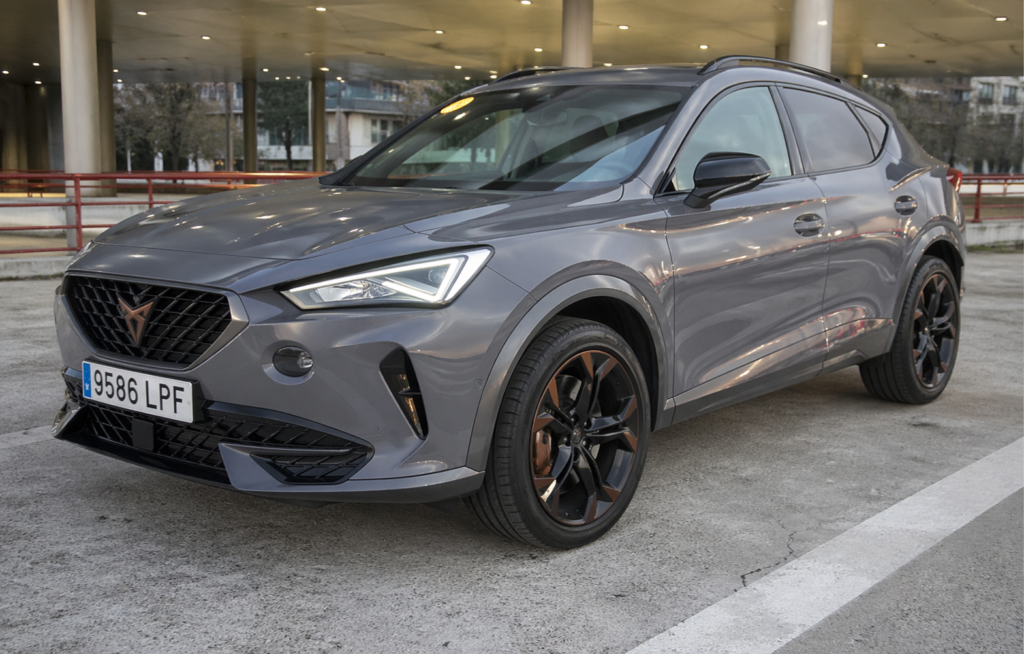
When we talk about performance SUVs, weight is one of those hidden factors that quietly shapes everything—acceleration, fuel economy, handling, and even braking. And when it comes to the Cupra Formentor, weight plays a surprisingly nuanced role.
So let’s unpack it together. How heavy is the Cupra Formentor? Why does it matter? And more importantly—how does it feel behind the wheel?
Content in this publication
- Understanding the Cupra Formentor’s Weight Basics
- Why Weight Matters More Than You Think
- Weight Differences Across Engine Variants
- How Cupra Formentor Weight Affects Performance
- Weight vs Competitors: Where Does It Stand?
- Weight Distribution: The Hidden Advantage
- Does Weight Affect Fuel Economy?
- Impact on Braking Performance
- Towing and Load Capacity
- How Weight Feels in Real Driving
- Lightweight vs Heavy: Which Should You Choose?
- Engineering Tricks That Hide the Weight
- Does Weight Affect Insurance and Costs?
- Future Trends: Will the Formentor Get Heavier?
- Common Misconceptions About Car Weight
- Is the Cupra Formentor Too Heavy?
- Final Thoughts: Weight Is Just Part of the Story
- Conclusion
- FAQs
Understanding the Cupra Formentor’s Weight Basics


Kerb Weight Explained
The Cupra Formentor typically weighs between 1,400 kg and 1,700 kg, depending on the engine and trim level.
- Entry-level petrol models: ~1,400–1,500 kg
- Mid-range trims: ~1,500–1,600 kg
- High-performance variants (like VZ models): ~1,600–1,700+ kg
Kerb weight includes:
- Fluids (oil, coolant, fuel)
- Standard equipment
- No passengers or cargo
Think of it as the car ready to drive—but without your luggage or weekend road trip snacks.
Why Weight Matters More Than You Think
The Physics Behind It All
Weight affects how a car behaves in almost every situation:
- Acceleration: Heavier cars need more power
- Braking: More mass = longer stopping distances
- Fuel efficiency: Heavier vehicles consume more energy
- Handling: Extra weight can dull agility
In simple terms, weight is like carrying a backpack. A light one? You sprint. A heavy one? You think twice.
Weight Differences Across Engine Variants
Petrol Models
Most petrol-powered Formentors sit in the lower weight range.
1.5 TSI Models
- Approx. 1,420–1,470 kg
- Lightweight and efficient
- Ideal for city and everyday driving
2.0 TSI Models (VZ)
- Approx. 1,550–1,650 kg
- Added performance hardware increases weight
- Still feels agile thanks to tuning
Plug-in Hybrid (PHEV) Models
The hybrid versions are noticeably heavier.
1.4 e-Hybrid
- Approx. 1,650–1,750 kg
- Extra weight comes from:
- Battery pack
- Electric motor
- Additional cooling systems
It’s like adding a second powertrain—because you are.
How Cupra Formentor Weight Affects Performance


Acceleration and Power Delivery
Heavier versions—especially hybrids—can feel slightly less eager off the line. But thanks to electric torque, the PHEV still delivers quick bursts.
- Lighter petrol: more responsive
- Heavier hybrid: smoother, torque-rich
Handling and Cornering
Here’s where things get interesting.
Despite its weight, the Formentor:
- Uses a well-balanced chassis
- Offers adaptive suspension (on higher trims)
- Maintains a low center of gravity
So even at 1,600+ kg, it doesn’t feel clumsy. It’s more like a well-trained athlete—not the lightest, but incredibly composed.
Weight vs Competitors: Where Does It Stand?
Let’s compare the Cupra Formentor with rivals:
- Volkswagen Tiguan: ~1,500–1,700 kg
- BMW X1: ~1,500–1,750 kg
- Audi Q3: ~1,500–1,700 kg
Verdict
The Formentor sits right in the middle—neither featherweight nor overly heavy.
Balanced Engineering
Cupra engineers didn’t just add weight—they distributed it smartly.
- Front-heavy (like most SUVs), but controlled
- Battery placement (in PHEV) lowers center of gravity
- AWD versions improve balance
Why It Matters
Better weight distribution means:
- More stable cornering
- Predictable handling
- Enhanced driver confidence
Does Weight Affect Fuel Economy?
Absolutely—and here’s how.
Petrol Models
- Lighter = better fuel efficiency
- Ideal for long-distance driving
Hybrid Models
- Heavier, but offset by electric driving
- Can achieve excellent economy in urban settings
It’s a trade-off:
- Weight increases consumption
- Electrification reduces it
Impact on Braking Performance
More weight = more force required to stop.
But the Formentor compensates with:
- Large brake discs
- Advanced ABS and stability systems
- Optional performance brakes on VZ models
So while physics doesn’t change, engineering helps balance it out.
Towing and Load Capacity
Maximum Load Considerations
Weight also influences how much you can carry or tow.
- Towing capacity: up to ~1,800 kg (varies by engine)
- Payload capacity: typically ~500–600 kg
Heavier versions often have slightly reduced payload due to their own mass.
How Weight Feels in Real Driving


Here’s the honest truth: numbers don’t always tell the full story.
In the City
- Feels solid, planted
- Not too bulky for urban use
On Highways
- Weight adds stability
- Smooth, confident cruising
On Twisty Roads
- Surprisingly agile
- Feels lighter than it is
It’s like wearing a tailored suit—you don’t notice the weight because it fits so well.
Lightweight vs Heavy: Which Should You Choose?
Choose Lighter Models If You Want:
- Better fuel economy
- Sharper handling
- Lower running costs
Choose Heavier Models If You Want:
- Hybrid efficiency
- More features and tech
- Smoother power delivery
Engineering Tricks That Hide the Weight
Cupra uses several techniques to mask weight:
- Adaptive chassis control
- Progressive steering
- Torque vectoring (on AWD models)
- Lightweight materials in key areas
These systems work together like a symphony—each one compensating for the others.
Does Weight Affect Insurance and Costs?
Indirectly, yes.
- Heavier, more powerful models = higher insurance groups
- Hybrid systems = higher repair costs
- Fuel savings can offset weight penalties
So while weight isn’t listed on your insurance form, it influences the overall picture.
Future Trends: Will the Formentor Get Heavier?
With electrification, weight is almost guaranteed to increase.
- Larger batteries = more mass
- More tech = more components
But expect:
- Improved energy density
- Lightweight materials
- Smarter engineering
The goal? More performance without feeling heavier.
Common Misconceptions About Car Weight
Let’s clear a few myths:
- Heavier = safer? Not always
- Lighter = faster? Not necessarily
- Weight doesn’t matter? It absolutely does
The truth lies somewhere in between.
Is the Cupra Formentor Too Heavy?
Short answer: no.
Long answer: it’s perfectly balanced for its class.
It delivers:
- Strong performance
- Solid stability
- Everyday usability
Without feeling like a burden.
Final Thoughts: Weight Is Just Part of the Story
At the end of the day, weight is just one piece of a much bigger puzzle.
The Cupra Formentor proves that smart engineering can turn numbers into something you feel—not something you worry about.
So whether you choose a lightweight petrol or a heavier hybrid, the driving experience remains engaging, refined, and unmistakably Cupra.
Conclusion
Weight shapes the character of the Cupra Formentor, but it doesn’t define it. With a range between 1,400 kg and 1,700+ kg, it strikes a careful balance between performance, efficiency, and practicality. Thanks to clever engineering, it feels lighter than the scale suggests—delivering a driving experience that’s both dynamic and composed.
FAQs
1. What is the exact weight of the Cupra Formentor?
It ranges from about 1,400 kg to over 1,700 kg depending on the engine and trim.
2. Which Cupra Formentor is the heaviest?
The plug-in hybrid (e-Hybrid) models are the heaviest due to battery and electric components.
3. Does the weight affect performance?
Yes, but powerful engines and smart engineering minimize the impact.
4. Is the Cupra Formentor heavier than competitors?
No, it’s very similar in weight to rivals like the Volkswagen Tiguan and BMW X1.
5. Should I worry about the weight when buying one?
Not really. The Formentor is designed to handle its weight efficiently, so it rarely feels heavy in real driving.
If you want to know other articles similar to Cupra Formentor Weight: A Complete Guide to Performance, Handling, and Real-World Impact you can visit the category Service and Parts.
Nissan Rogue Oil Change Cost: Prices, Service Options, and What to Expect
Nissan Rogue Key Battery Replacement: Easy Step-by-Step Guide
Nissan Rogue Oil Change Interval: Complete Guide by Model Year
Nissan Rogue Brake Pads and Rotors Cost: Complete 2026 Guide

Kia Sorento Service Reset: How to Reset the Service Light
Kia Sorento Fuel Tank Capacity: Gallons, Litres and Model Differences
Leave a Reply
More content of your interest