
Dacia Jogger Tyre Size: Complete Sizing and Buying Guide

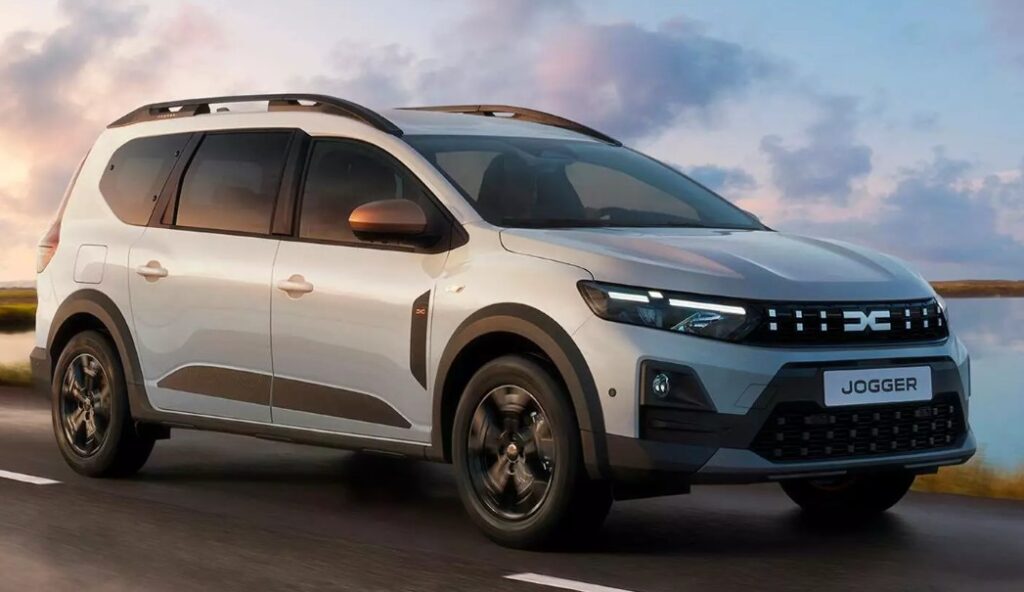
Choosing the correct Dacia Jogger tyre size sounds simple until we start comparing trims, engines, model years, load ratings, speed symbols, seasonal tyres, and replacement options. Suddenly, a string such as 205/60 R16 92H looks less like a tyre specification and more like a password we have forgotten.
Fortunately, it is easier to understand than it appears.
For the current UK-specification Dacia Jogger, the principal factory tyre size listed by Dacia is 205/60 R16 92H. However, specifications can differ according to the vehicle’s market, production date, engine, wheel design, and homologation. That is why we should always confirm the size printed on the existing tyre and the vehicle information label before ordering replacements.
In this guide, we will explain what the numbers mean, where to find the approved size, whether different wheel diameters can be fitted, and how to choose tyres that suit the Jogger’s practical, family-focused character.
Content in this publication
- What Is the Standard Dacia Jogger Tyre Size?
- Dacia Jogger Tyre Size Chart
- How to Read 205/60 R16 92H
- Where Can We Find the Correct Jogger Tyre Size?
- Why Jogger Tyre Sizes Can Vary
- Can We Fit 17-Inch Tyres to a Dacia Jogger?
- 16-Inch Versus 17-Inch Jogger Tyres
- Can We Fit Wider Tyres?
- Maintaining the Correct Rolling Diameter
- Best Tyre Type for a Dacia Jogger
- Choosing Tyres for Seven-Seat Use
- Tyre Pressure and Tyre Size Are Connected
- How Incorrect Tyre Size Affects the Jogger
- Should All Four Tyres Match?
- How Often Should Jogger Tyres Be Replaced?
- Why Uneven Wear Appears
- Wheel Alignment After Tyre Replacement
- Dacia Jogger Spare Wheel Size
- How to Buy the Correct Replacement Tyres
- Common Dacia Jogger Tyre-Size Mistakes
- Is 205/60 R16 the Best Size for the Jogger?
- Final Thoughts on Dacia Jogger Tyre Size
- Frequently Asked Questions
What Is the Standard Dacia Jogger Tyre Size?
The standard tyre specification currently shown for the UK Dacia Jogger is:
205/60 R16 92H
Dacia lists this size in the technical specifications for the Jogger, making it the most relevant starting point for current UK models. The same size is also widely recognised by major tyre manufacturers as a common Jogger fitment.
In plain English, this means:
- 205: the tyre is approximately 205 millimetres wide.
- 60: the sidewall height equals 60% of the tyre width.
- R: the tyre uses radial construction.
- 16: it fits a 16-inch wheel.
- 92: the tyre carries a load index of 92.
- H: the tyre has an H speed rating.
For many Jogger owners, replacing the tyres with the same specification is the simplest and safest approach. It preserves the intended rolling diameter, ground clearance, speedometer behaviour, ride quality, and load capability.
However, we should not buy tyres from the model name alone. A Jogger registered in another European country, an earlier production vehicle, or a car fitted with optional wheels may use a different approved specification.
Dacia Jogger Tyre Size Chart
The following table provides a practical overview of sizes associated with the Jogger. It should be treated as a shopping reference rather than a substitute for the tyre placard or registration documents.
| Tyre size | Wheel diameter | Typical relevance | Important note |
|---|---|---|---|
| 205/60 R16 92H | 16 inches | Main current UK specification | Confirm load and speed ratings |
| 195/55 R16 | 16 inches | Listed for certain engine or market combinations | Do not assume compatibility |
| 205/55 R17 | 17 inches | Associated with some alternative or upgraded wheel configurations | Requires approved 17-inch wheels |
| 215/50 R17 | 17 inches | Appears in some fitment databases | Approval varies by market and version |
| 185/65 R15 | 15 inches | Reported for selected European configurations | Verify wheel, brake, and homologation compatibility |
For example, Michelin’s vehicle selector presents a 195/55 R16 fitment for certain Jogger configurations, while Dacia’s current UK technical page specifies 205/60 R16 92H. This difference demonstrates why the exact engine and regional specification matter.
We should never conclude that every tyre appearing in an online database is automatically legal or suitable for every Jogger.
How to Read 205/60 R16 92H
Understanding the tyre code gives us more control when comparing replacements.
205: Tyre Width
The first number represents the nominal width of the tyre in millimetres. A 205 tyre is approximately 205 mm wide from sidewall to sidewall when mounted on an appropriate wheel.
A wider tyre can provide a larger contact patch, but wider does not automatically mean better. Extra width may affect:
- Steering weight
- Road noise
- Fuel consumption
- Wet-weather performance
- Aquaplaning resistance
- Clearance inside the wheel arch
Dacia selected the original width as part of a complete vehicle setup. Changing it is not simply a matter of choosing a tyre that looks sportier.
60: Aspect Ratio
The number 60 is the tyre’s aspect ratio. It tells us that the sidewall height is approximately 60% of the 205 mm width.
The calculation is:
205 × 0.60 = 123 mm
Therefore, the sidewall is roughly 123 mm tall.
That relatively generous sidewall suits the Jogger well. It behaves like a small cushion between the road and the cabin, helping the vehicle glide over potholes, broken surfaces, and speed bumps without turning every imperfection into a drumbeat.
R: Radial Construction
The letter R means radial. Nearly all modern passenger-car tyres use radial construction, with internal cords arranged radially across the tyre.
This design supports predictable handling, durability, and efficient heat control.
16: Wheel Diameter
The number 16 means the tyre fits a 16-inch wheel.
A 205/60 R16 tyre cannot be installed on a 15-inch or 17-inch wheel. The wheel diameter and tyre diameter must correspond exactly.
92: Load Index
The load index indicates how much weight one properly inflated tyre can carry under standardised conditions.
A load index of 92 corresponds to a maximum load capacity of 630 kg per tyre.
That does not mean we can simply multiply 630 kg by four and load the Jogger up to that figure without restriction. The vehicle’s permitted gross weight, axle limits, seating capacity, luggage load, tyre pressure, and towing conditions still apply.
The Jogger can carry several passengers and their luggage, so load rating matters. Installing a lower-rated tyre may compromise safety and could breach local regulations or insurance conditions.
H: Speed Rating
The H symbol indicates a tyre rated for speeds up to 210 km/h, or approximately 130 mph, under specified test conditions.
This does not encourage us to drive at that speed. It simply describes the tyre’s tested performance category.
Replacement tyres should generally meet or exceed the speed rating required by the vehicle, except where specific regulations allow seasonal tyres with a different rating.
Where Can We Find the Correct Jogger Tyre Size?
The safest answer is already attached to the vehicle.
Check the Existing Tyre Sidewall
The complete specification is moulded into the outer sidewall. We may see something like:
205/60 R16 92H
Check all four tyres rather than reading just one. A previous owner could have fitted an incorrect tyre, mixed specifications, or replaced only one axle.
Read the Vehicle Tyre Label
The tyre-information label usually provides the approved tyre size and recommended pressure. Its exact location may differ, but it is commonly found around a door opening or door pillar.
The Jogger manual explains that the vehicle label identifies the tyre size fitted to the vehicle and the recommended front and rear pressures.
Consult the Owner’s Manual
The manual is especially useful when we need instructions about:
- Tyre-pressure adjustment
- Full-load pressures
- Spare-wheel pressure
- Pressure monitoring
- Tyre rotation
- Emergency repair equipment
The manual may direct us back to the vehicle label because pressures and sizes can vary between configurations.
Check the Registration or Approval Documents
Depending on the country, approved tyre and wheel combinations may appear in the registration certificate, certificate of conformity, technical inspection records, or homologation documents.
These records are particularly important when fitting a different wheel diameter.
Why Jogger Tyre Sizes Can Vary
We often expect every version of one model to use identical tyres. In reality, manufacturers may approve several combinations.
Different Engines and Powertrains
The Jogger has been offered with petrol, LPG, and hybrid powertrains. These versions do not necessarily have identical axle weights or braking components.
The hybrid system adds components that can influence the vehicle’s weight distribution and tyre requirements. Consequently, a size approved for one engine should not automatically be transferred to another.
Trim Levels and Wheel Designs
Essential, Expression, Extreme, and other market-specific versions may use different wheel covers or alloy-wheel designs.
Sometimes two trims share the same tyre dimensions despite appearing to have different wheels. In other cases, an upgraded trim may receive a different diameter or tyre profile.
Regional Specifications
A Jogger sold in the United Kingdom may not match one delivered in France, Germany, Ireland, North Africa, or another region.
Manufacturers adapt vehicle specifications to:
- Local regulations
- Available engine options
- Climate requirements
- Supplier availability
- Trim structures
- Type-approval rules
This is why a foreign tyre retailer can display a valid Jogger size that is not approved for our particular car.
Model-Year Updates
The Jogger range has evolved since its introduction, including updates to engines, equipment, and hybrid systems. A current specification page may not describe a vehicle manufactured several years earlier.
The registration year is helpful, but the production date and exact vehicle identification are more reliable.
Can We Fit 17-Inch Tyres to a Dacia Jogger?
Potentially, but only when the complete 17-inch wheel-and-tyre package is approved for the exact vehicle.
Moving from 16-inch to 17-inch wheels usually requires a lower-profile tyre to maintain a similar overall diameter. For example, databases may show combinations such as 205/55 R17 or 215/50 R17 for certain Jogger versions. These listings are not universal approvals.
Before changing to 17-inch wheels, verify:
- Approved tyre dimensions
- Wheel width
- Wheel offset
- Bolt pattern
- Centre-bore dimensions
- Brake clearance
- Load rating
- Speed rating
- Overall rolling diameter
- Tyre-pressure monitoring compatibility
- Local legal requirements
A wheel can physically bolt onto the hub yet still be unsuitable. Incorrect offset, for instance, can push the wheel too far inward or outward, affecting suspension clearance, bearing loads, steering geometry, and bodywork clearance.
16-Inch Versus 17-Inch Jogger Tyres
Neither size is automatically superior. Each offers a different balance.
Advantages of 16-Inch Tyres
The standard 16-inch configuration is likely to suit most owners because it generally offers:
- A taller, more forgiving sidewall
- Better pothole protection
- Comfortable urban driving
- Lower replacement costs
- A broad choice of tyre models
- Less risk of wheel damage
- Good suitability for family trips
The Jogger is designed around practicality rather than racetrack aggression. A taller sidewall complements that personality like sturdy walking boots complement a long hike.
Possible Advantages of 17-Inch Tyres
An approved 17-inch setup may provide:
- A sharper visual appearance
- More immediate steering response
- Reduced sidewall movement
- Access to certain premium tyre ranges
However, it may also bring:
- Higher tyre prices
- A firmer ride
- Greater pothole vulnerability
- More expensive wheel repairs
- Potentially more road noise
- Less rim protection
For a vehicle frequently carrying children, luggage, camping equipment, or seven occupants, comfort may be more valuable than cosmetic drama.
Can We Fit Wider Tyres?
A modestly wider tyre may fit certain approved wheels, but width changes should never be improvised.
Wider tyres can alter:
- Rolling resistance
- Fuel economy
- Steering response
- Aquaplaning behaviour
- Suspension clearance
- Road noise
- Speedometer accuracy
- Tyre weight
They can also rub against the wheel arch or suspension when the steering is fully turned, the vehicle is heavily loaded, or the suspension compresses over a bump.
The correct question is not, “Will this wider tyre go onto the wheel?” It is, “Is the complete combination approved and safe throughout the vehicle’s entire operating range?”
Maintaining the Correct Rolling Diameter
When changing tyre size, we should keep the overall rolling diameter close to the original specification.
The diameter affects:
- Speedometer readings
- Odometer readings
- Gear ratios
- Engine speed
- Electronic stability systems
- Traction control
- Anti-lock braking
- Ground clearance
A tyre that is significantly larger travels farther with each rotation. The vehicle may therefore move faster than the speedometer suggests. A substantially smaller tyre creates the opposite effect and increases engine revolutions at a given road speed.
Even when a commonly used percentage tolerance is suggested by tyre calculators, approval still depends on local regulations and the vehicle manufacturer’s specifications.
Best Tyre Type for a Dacia Jogger
The correct size is only half the decision. Tyre construction and intended use matter just as much.
Summer Tyres
Summer tyres are designed to perform well in mild and warm conditions. They generally offer:
- Strong dry-road handling
- Effective wet braking
- Good fuel efficiency
- Stable high-temperature performance
They may remain appropriate throughout the year in regions where winter temperatures rarely fall low enough to require dedicated winter rubber.
All-Season Tyres
All-season tyres can make sense for owners who encounter mixed weather but do not regularly face severe snow or ice.
They offer a practical compromise for:
- Urban commuting
- Family journeys
- Occasional cold-weather travel
- Drivers who prefer one set all year
The compromise is important. An all-season tyre will rarely match the finest summer tyre in hot conditions or the finest winter tyre in deep snow.
Winter Tyres
Winter tyres use compounds and tread patterns designed for colder conditions. They can provide better traction and braking on:
- Snow
- Slush
- Ice
- Cold wet roads
Drivers travelling through regions with mandatory winter-equipment laws should check local rules before departure.
Reinforced or XL Tyres
Some replacement options carry an XL, or extra-load, marking.
An XL tyre can carry greater loads at specified pressures than a standard tyre of the same nominal size. However, the marking alone does not make it automatically necessary or suitable.
We should match or exceed the vehicle’s required load index and follow professional advice when choosing between standard-load and reinforced versions.
Choosing Tyres for Seven-Seat Use
The Jogger’s ability to carry up to seven people changes how we should think about tyres.
A lightly loaded car making short solo journeys places different demands on its tyres than a vehicle carrying seven occupants, suitcases, a roof box, and holiday equipment.
For frequent full-load driving, prioritise:
- Correct load index
- Stable wet braking
- Strong sidewalls
- Predictable handling
- Low heat build-up
- Appropriate full-load pressure
- Good durability
Budget tyres can be tempting because the Jogger itself represents value. Yet value and cheapness are not identical twins.
A well-chosen mid-range or premium tyre may provide stronger wet braking, lower noise, better mileage, and more consistent performance as it wears. The cheapest purchase can become expensive when replacement arrives early or grip disappears in heavy rain.
Tyre Pressure and Tyre Size Are Connected
The correct tyre size does not guarantee correct performance if the pressure is wrong.
Tyre pressure influences:
- Load capacity
- Steering response
- Braking
- Fuel consumption
- Tread wear
- Heat generation
- Ride comfort
The owner’s manual instructs us to use the tyre-pressure label for the correct front and rear settings. Pressure may need adjustment when the vehicle is heavily loaded or travelling at sustained higher speeds.
Why We Should Not Copy a Generic Pressure
Online lists often provide a single pressure figure without identifying the engine, tyre specification, load condition, or market.
The vehicle label is more authoritative because it relates to the specific configuration.
Check Pressure When Tyres Are Cold
Tyres heat up as we drive, and pressure rises naturally. For a meaningful reading, check them before a long journey or after the vehicle has been parked long enough for the tyres to cool.
Do not release air from a hot tyre simply because the reading exceeds the cold-pressure recommendation.
How Incorrect Tyre Size Affects the Jogger
Using the wrong size can create more than a cosmetic mismatch.
Speedometer Error
An altered circumference changes the distance travelled per wheel rotation. The speedometer and odometer may no longer behave as intended.
Reduced Clearance
A larger tyre can touch:
- Suspension components
- Inner wheel-arch liners
- Bodywork
- Mud flaps
- Brake hoses
The rubbing may only appear during full steering lock or when the vehicle carries a heavy load.
Poor Handling
A tyre that is too wide, too narrow, or mounted on an unsuitable wheel width can distort the intended contact patch and sidewall shape.
The car may feel nervous, vague, heavy, or unpredictable.
Electronic-System Confusion
Modern safety systems compare wheel speeds and vehicle behaviour. Major diameter differences can interfere with the assumptions used by ABS, stability control, and traction control.
Insurance and Inspection Problems
An undeclared or unapproved tyre modification may cause complications with insurers, vehicle inspections, warranty claims, or roadside enforcement.
Local rules vary, so documentation matters.
Should All Four Tyres Match?
Ideally, all four tyres should share the same:
- Size
- Load index
- Speed rating
- Construction
- Tread model
- Seasonal category
- Similar wear level
At minimum, tyres on the same axle should match closely and comply with local law.
Mixing a summer tyre with an all-season tyre, or fitting significantly different tread designs front and rear, can create an uneven response in wet conditions.
Because the Jogger is front-wheel drive, the front tyres handle steering, braking, and propulsion. They may therefore wear faster. Nevertheless, when fitting only two new tyres, many tyre professionals recommend placing the new pair on the rear axle to improve rear stability in wet conditions.
How Often Should Jogger Tyres Be Replaced?
There is no universal mileage because wear depends on:
- Driving style
- Road conditions
- Tyre pressure
- Alignment
- Vehicle load
- Tyre compound
- Climate
- Rotation practices
- Storage conditions
Replace a tyre when it reaches the legal tread limit, shows damage, or no longer provides dependable performance.
Do not wait for the tread to become almost invisible. Wet-weather capability often declines before a tyre reaches its absolute legal minimum.
Warning Signs We Should Never Ignore
Inspect the tyres for:
- Cracks
- Bulges
- Exposed cords
- Cuts
- Embedded objects
- Uneven shoulder wear
- Flat spots
- Repeated pressure loss
- Vibration
- Excessive age-related hardening
A sidewall bulge is particularly serious. It can indicate internal structural damage and should be examined immediately.
Why Uneven Wear Appears
Uneven wear tells a story. We simply need to read it.
Wear on Both Outer Edges
This pattern commonly suggests underinflation. The tyre bends excessively, placing greater load on the shoulders.
Wear in the Centre
Excessive centre wear may indicate overinflation, although tyre construction and vehicle usage can also contribute.
Wear on One Edge
One-sided wear often points toward wheel-alignment or suspension issues.
Cupping or Scalloping
Repeated high and low spots may indicate worn dampers, imbalance, alignment problems, or looseness in the suspension.
Replacing the tyre without fixing the underlying cause is like repainting a wall while the roof still leaks.
Wheel Alignment After Tyre Replacement
Alignment is not automatically required every time tyres are replaced, but it is wise when:
- The old tyres wore unevenly
- The steering wheel sits off-centre
- The car pulls to one side
- The vehicle recently hit a pothole
- Suspension components were replaced
- A new wheel-and-tyre size was professionally approved and fitted
Correct alignment helps protect the new tyres and restores predictable handling.
Dacia Jogger Spare Wheel Size
Spare-wheel equipment varies by version and powertrain.
Some Joggers may use:
- A full-size spare
- A temporary spare
- A tyre-inflation kit
- No conventional spare wheel
Hybrid components and luggage-area packaging can affect the available space. We should not assume the spare matches the road tyres.
If a temporary spare is fitted, follow the speed and distance restrictions printed on it. Its pressure may also differ significantly from the normal road tyres.
The owner’s manual and tyre label provide guidance for the emergency spare where applicable.
How to Buy the Correct Replacement Tyres
A careful buying process prevents expensive mistakes.
Step 1: Read the Full Sidewall Code
Record the complete code, including:
- Width
- Aspect ratio
- Wheel diameter
- Load index
- Speed rating
- XL marking, when present
Step 2: Check the Vehicle Label
Make sure the sidewall specification agrees with the official vehicle information.
Step 3: Identify the Exact Version
Have the following information ready:
- Registration number
- Model year
- Engine
- Trim
- Fuel type
- Wheel diameter
- Vehicle identification number, when requested
Step 4: Compare Performance Labels
In markets using tyre labels, compare:
- Fuel efficiency
- Wet grip
- External noise
- Snow certification
- Ice certification, where applicable
For a family vehicle, wet grip deserves serious attention. A small difference in purchase price can be insignificant compared with shorter emergency braking distances.
Step 5: Include Fitting Costs
The advertised tyre price may not include:
- Installation
- Balancing
- New valves
- Tyre disposal
- Alignment
- Pressure-monitoring service
- Mobile fitting
Compare the complete fitted price rather than the rubber alone.
Common Dacia Jogger Tyre-Size Mistakes
We can avoid most tyre problems by steering clear of a few familiar traps.
Buying by Registration Number Without Checking the Car
Vehicle databases are useful, but errors and optional equipment exist. Confirm the result against the actual tyre and vehicle label.
Matching Only 205/60 R16
The dimensional code is incomplete without the load and speed ratings.
A 205/60 R16 tyre with an insufficient load index is not an equivalent replacement for 205/60 R16 92H.
Replacing One Tyre With a Different Model
A single mismatched tyre may behave differently during emergency braking or heavy rain.
Choosing Appearance Over Approval
A dramatic alloy wheel may look impressive while creating clearance, offset, load, or insurance problems.
Ignoring Full-Load Pressure
A seven-seat holiday journey is not the same as a lightly loaded commute. Use the vehicle’s prescribed loaded pressure when applicable.
Is 205/60 R16 the Best Size for the Jogger?
For a Jogger factory-approved with 205/60 R16 92H, it is usually the most balanced choice.
It offers a useful combination of:
- Ride comfort
- Wheel protection
- Replacement availability
- Stable family-car handling
- Suitable load capacity
- Reasonable running costs
- Adequate ground clearance
A lower-profile alternative may sharpen the appearance, but the practical gains are often limited. The Jogger’s charm comes from its ability to swallow people and luggage without behaving like an oversized luxury SUV. Its tyres should support that mission rather than fight it.
Final Thoughts on Dacia Jogger Tyre Size
The main current UK Dacia Jogger tyre size is 205/60 R16 92H, but that does not mean every Jogger worldwide uses the same specification. Engine type, model year, country, trim level, and optional wheels can all influence the approved fitment.
Before buying, we should compare three sources:
- The tyre sidewall
- The vehicle tyre-information label
- The owner’s or registration documentation
When all three agree, we can shop with confidence.
The correct tyre preserves more than the vehicle’s appearance. It protects its braking behaviour, load capacity, fuel efficiency, ride comfort, electronic safety systems, and legal compliance. Tyres are the Jogger’s only contact with the road—four patches of rubber doing the work of an entire vehicle.
That makes the right size a small detail with enormous responsibility.
Frequently Asked Questions
1. What is the standard Dacia Jogger tyre size?
The current UK Dacia Jogger specification lists 205/60 R16 92H. Nevertheless, owners should confirm the exact specification on the vehicle label because sizes may vary by market, engine, trim, and model year.
2. Can I put 17-inch wheels on a Dacia Jogger?
An approved 17-inch package may be possible on certain versions, but the tyre size, wheel width, offset, load capacity, brake clearance, and overall diameter must all be compatible. Check the vehicle’s approval documents and consult a qualified wheel specialist before changing sizes.
3. What does 92H mean on a Jogger tyre?
The number 92 is the load index and corresponds to a maximum standardised capacity of 630 kg per tyre. The letter H is the speed rating, indicating a tested category of up to 210 km/h under specified conditions.
4. Can I fit 195/55 R16 tyres instead of 205/60 R16?
Not without checking approval for the exact vehicle. Although 195/55 R16 appears for some Jogger engine and market combinations, it has a different width and rolling diameter from 205/60 R16. Use only a size approved for the specific car.
5. Where is the Dacia Jogger tyre-pressure label?
The label is generally located around a door opening or pillar and states the fitted tyre size and recommended front and rear pressures. Check the owner’s manual if it is not immediately visible.
If you want to know other articles similar to Dacia Jogger Tyre Size: Complete Sizing and Buying Guide you can visit the category Service and Parts.
Vauxhall Mokka Tyre Pressure Reset: Complete Guide
How to Reset the Tire Pressure System on Your Hyundai Tucson
Hyundai Kona Tire Pressure: Complete PSI Guide
Vauxhall Corsa Timing Belt Replacement Cost UK 2026
Mazda CX-5 Tire Size Chart: 2013–2026 Guide
How to Reset a Honda Civic: Complete Step-by-Step Guide
Leave a Reply
More content of your interest