Fiat Punto warning lights help us distinguish a normal operating indication from a problem that needs attention. Some tell us that the headlights or CITY steering mode are switched on. Others warn about low oil pressure, overheating or a braking fault that can make continuing the journey unsafe.
The most useful approach is to read the symbol, its colour, whether it flashes and the accompanying message together. On certain diesel Puntos, for example, a flashing oil warning can request an oil change, while a steady oil-pressure warning requires us to stop the engine. Treating the two as interchangeable can lead to the wrong response.
This illustrated guide covers common Punto, Grande Punto and Punto Evo dashboard indications. Equipment varies by generation, engine, market and trim: not every car has a diesel particulate filter, tyre-pressure monitoring, Dualogic transmission or the same instrument display. The pictures are recognition references shown in monochrome; check the actual colour and message in your car. Some warnings appear as a lamp beside a gauge rather than a separate pictogram.
Read the message immediately and stop safely when required.
Amber or yellow
A fault, maintenance requirement or selected function
Identify the system and follow its specific instructions.
Green
A function is switched on
Usually no repair is needed.
Blue
Main-beam headlights are on
Dip the lights when needed to avoid dazzling others.
Flashing
System intervention or a particular warning condition
Interpret the individual lamp; flashing has no single universal meaning.
Several warning lights illuminate briefly when we turn the key to MAR, the ignition-on position. This is normally a check. Depending on the system, a light should then go out after a few seconds or once the engine starts. A lamp that remains on, appears during driving or fails its expected check deserves attention.
Red Fiat Punto Warning Lights: When to Stop and Investigate
Brake Fluid Low or Handbrake Engaged
Typical colour: red. Action: check the handbrake; stop for a persistent brake warning.The exclamation mark inside a circle has two important uses. It can simply show that the handbrake is applied, but it can also warn that brake fluid has fallen below the required level. We should fully release the handbrake before driving and confirm that the lamp goes out.If it stays on or appears while driving with the handbrake released, stop safely and obtain assistance. Low fluid can indicate a leak, so topping up is not proof that the system is safe. A soft pedal, reduced braking or fluid underneath the car makes further driving especially inappropriate.
Low Engine Oil Pressure
Typical colour: red. Action: stop safely and switch off the engine.A steady oil-can warning with the engine running can indicate insufficient lubrication pressure. We should stop as soon as it is safe, turn off the engine and arrange assistance. Driving slowly to a garage is not a safe workaround for confirmed low pressure.Check the level using the handbook's procedure once conditions are safe, but remember that oil level and oil pressure are different. A correct dipstick reading does not rule out a pressure problem. Do not repeatedly restart the engine to see whether the warning disappears, and do not assume that adding oil has repaired the cause.
Flashing Oil Light on a Multijet Diesel: A Different Meaning
Certain Multijet versions with a DPF use a flashing oil warning and a corresponding message to indicate degraded engine oil. This calls for an oil change and the appropriate service procedure, rather than automatically adding more oil. Arrange the service promptly; continuing to postpone it can lead to damage or restricted performance.
We should only interpret the flashing light this way when the model handbook and message confirm it. If the meaning is unclear, or the warning reports pressure loss, stop the engine and get advice. Short journeys and repeatedly interrupted regeneration can contribute to earlier oil degradation on these versions.
Low Engine Oil Level
Typical colour: red on applicable versions. Action: check and correct the level before continuing.Some Puntos have a separate low-oil-level indication, illustrated here with a dipstick-style symbol. It is not fitted to every version. Read the message to distinguish it from the oil-pressure warning.Park safely on level ground, switch off and use the checking procedure specified for the engine. Add approved oil gradually if needed, avoiding overfilling. If the measured level is correct or the warning returns after correction, have the system inspected. Neither the warning lamp nor an estimated top-up quantity replaces a proper level check.
Engine Coolant Overheating Warning
Typical colour: red, beside the temperature gauge on some clusters. Action: stop safely.The picture represents the warning lamp associated with the coolant temperature gauge; some displays use a temperature symbol instead. If it illuminates during normal driving, pull over safely, switch off and allow the engine to cool. Do not open a hot cooling-system cap or approach escaping steam.Check coolant only when it is safe to do so. Some Punto handbooks describe a different short cooling procedure after unusually demanding use, so follow the instructions for your exact version. Persistent or recurring overheating needs professional attention. Refilling coolant without checking why it was lost may leave the underlying fault unresolved.
Battery or Charging Warning
Typical colour: red. Action: seek assistance promptly if it remains on with the engine running.The battery-shaped lamp normally illuminates before the engine starts and then goes out. If it stays on or returns during driving, the electrical charging system needs checking. It does not prove that the battery itself is the only faulty component.Switch off unnecessary electrical loads while keeping essential safety equipment operating. We should not assume the car will restart after being switched off or that it can complete a long journey. If other systems begin failing, lights dim or a stop instruction appears, park safely and arrange help.
Dualdrive Electric Power Steering Fault
Typical colour: red. Action: stop somewhere safe and assess steering control.The steering-wheel warning indicates a problem with electric steering assistance. The wheel may become much heavier, especially during parking and low-speed manoeuvres. Mechanical steering can remain possible, but the additional effort can make the car difficult to control.We should avoid continuing unless we can steer safely and the handbook permits it, and arrange inspection promptly. If control is difficult, use recovery assistance. The red warning is different from the normal CITY indicator. Since Dualdrive is an electric assistance system, looking for a power-steering fluid top-up is not the appropriate response to this warning.
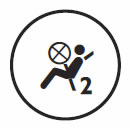
Airbag and Seat Belt Pretensioner Fault
Typical colour: red. Action: have the restraint system checked immediately.The seated person with an airbag symbol should behave as described in the ignition check. If it stays on, appears while driving or fails to illuminate when expected, the restraint system may have a fault.Airbags or pretensioners may not operate correctly in a collision. We should obtain professional advice before continuing and never assume the light is just an inconvenience. Avoid probing airbag wiring or unplugging connectors to clear the warning. Repairs and diagnostic work require the correct procedures and equipment.
Seat Belt Reminder
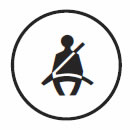
Typical colour: red. Action: fasten the relevant seat belt.The belted-person symbol reminds us to secure a seat belt. Depending on the version and whether the car is moving, it may stay on, flash or be accompanied by a chime.Check that every occupied seat has its belt properly fastened and that the buckle has engaged. If the reminder continues despite correct use, arrange inspection of the buckle or reminder system. We should not use dummy buckles or place the belt behind an occupant to silence it.
Door, Boot or Bonnet Open
Typical colour: red or a display message. Action: stop and secure the indicated opening.The open-door symbol warns that a monitored opening is not properly closed. Coverage varies: some versions identify a door, while others also report the boot or bonnet through the display.Pull over safely before checking. Open and close the relevant panel properly and make sure the latch holds. If the warning remains after everything is securely shut, a switch or latch may need inspection. Do not assume the panel is safe simply because it looks closed, particularly when the bonnet is involved.
Amber Fiat Punto Warning Lights: Faults and Checks
Check Engine, Injection or EOBD Warning
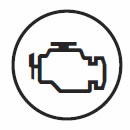
Typical colour: amber. Action: arrange diagnosis; respond more urgently to flashing or severe symptoms.The engine-shaped lamp covers injection or engine-management monitoring, depending on the engine and version. A steady light can accompany reduced performance, rough running or higher fuel consumption. If the car remains safe and the handbook permits it, drive gently and obtain diagnosis promptly.On petrol models, flashing can warn of conditions that could damage the catalytic converter. Ease off the accelerator. If flashing or rough running persists, stop safely and seek assistance. We should not keep accelerating to test the fault. A diagnostic scan is useful, but a fault code still needs checking before parts are replaced.
ABS Warning and Combined EBD Fault
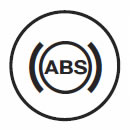
Typical colour: amber for ABS. Action: drive cautiously only when safe; take a combined brake warning seriously.An isolated ABS warning means anti-lock assistance may be unavailable, although conventional braking can remain. Avoid abrupt braking, allow more space and arrange inspection promptly.If the ABS light appears together with the red brake warning while the engine is running, it can indicate an electronic brake-force distribution fault. The car may become unstable under hard braking. We should stop safely, check the message and obtain advice before continuing. Do not treat that combination as merely an ABS sensor inconvenience, especially if the brake pedal or stopping response has changed.
Front Brake Pad Wear
Typical colour: amber. Action: arrange a brake inspection and replacement as needed.The circle with segmented arcs indicates worn front brake pads on equipped versions. It tells us that attention is needed, not how many miles remain before replacement becomes essential.Have the brakes inspected soon and avoid postponing the work until a grinding sound develops. The warning does not monitor every possible brake problem. If braking performance changes, there is a strong vibration or a red brake warning also appears, stop and obtain help rather than assuming the issue is limited to routine pad wear.
Generic Warning Triangle
Typical colour: amber. Action: read the associated message.The triangle with an exclamation mark is a general warning indicator. Depending on equipment, it can accompany an oil-pressure sensor fault, Start&Stop problem, parking-sensor issue, fuel cut-off intervention or another detected fault.The triangle itself does not identify the repair. We should read the message before clearing or dismissing it, then address the system named. A sensor warning should not be confused with a confirmed pressure warning, and a fuel cut-off message after an impact needs a different response from a failed parking sensor. Record the wording for diagnosis.
ESP or ASR Stability and Traction Control
Typical colour: amber. Action: distinguish intervention from a persistent fault.The illustrated circular-arrow warning is used on some Punto clusters for ESP-related indications. A flashing lamp while driving can mean that stability or traction control is intervening. Reduce the demand on the tyres and adapt to the available grip.A steady lamp or an accompanying failure message can indicate that assistance is unavailable. Check whether ASR has deliberately been switched off, then arrange inspection if normal operation cannot be restored. We should avoid assuming that the car still has its usual electronic assistance on wet roads or during sudden manoeuvres.
Hill Holder Fault
Typical colour: amber. Action: use the brakes normally and arrange inspection.The car-on-a-slope symbol indicates a Hill Holder problem on equipped versions. Some clusters use the ESP warning instead. The temporary brake-holding assistance for pulling away on a slope may no longer be available.We should be ready to prevent rollback using the footbrake and handbrake with the normal starting procedure. Do not test the fault by releasing the brake on a steep hill. A Hill Holder warning does not automatically mean the main brakes have failed, but additional braking warnings require separate, urgent attention.
Tyre Pressure Warning
Typical colour: amber. Action: slow down smoothly and inspect the tyres.The tyre-shaped symbol with an exclamation mark warns about pressure or a monitoring-system issue. Stop somewhere safe, look for damage and measure the tyre pressures. Do not continue on a flat tyre.Correct the pressures to the values specified for the vehicle and load, preferably when the tyres are cold. Punto monitoring systems differ: some versions use wheel sensors, while others use an indirect system. Follow the matching handbook for any reset or relearning procedure. Resetting before checking can hide a problem rather than solve it, and the system does not replace regular pressure checks.
Glow Plug Preheating or Preheating Fault
Typical colour: amber. Action: wait before starting; investigate unexpected flashing.The coil-shaped lamp belongs to diesel versions. It normally illuminates during preheating and goes out when the engine is ready to start. In warm conditions, it may appear only briefly.Flashing can indicate a fault in the preheating system. If the engine starts and runs normally, follow the handbook's guidance and arrange inspection as soon as possible. We should not assume that every flashing diesel warning is a DPF problem, or that a coil symbol identifies which individual glow plug needs replacing.
Water in the Diesel Fuel Filter
Typical colour: amber. Action: obtain prompt assistance; stop the engine if it appears just after refuelling.The filter-and-water symbol warns that water has been detected in the diesel fuel system. Contaminated fuel can damage injection components, so this is not a reminder to postpone until the next scheduled service.Have the system checked and drained using the correct procedure. If the warning appears immediately after refuelling, Fiat's instructions call for switching off the engine and contacting assistance. We should avoid further starting attempts until advised. This warning applies to relevant diesel versions, not petrol Puntos.
Diesel Particulate Filter Cleaning Required
Typical colour: amber. Action: follow the regeneration guidance for your diesel version.The filter with particles indicates that the DPF needs a suitable opportunity to complete regeneration. It does not automatically mean the filter has failed, and the light does not necessarily appear during every normal cleaning cycle.If this is the only relevant warning and the car otherwise behaves normally, follow the handbook's driving conditions when safe and legal. Do not attempt to complete regeneration by revving the car while parked. Repeatedly interrupting cleaning can contribute to oil degradation. Persistent warnings, restricted performance or additional engine lights require diagnosis rather than repeated attempts at a regeneration drive.
Fiat CODE Immobiliser or Vehicle Protection Fault
Typical colour: amber. Action: check key recognition and obtain help if the warning persists.The key or padlock-style warning relates to the Fiat CODE vehicle protection system. If the key is not recognised, the engine may not start. Some versions also use related messages for alarm-system faults.Try the handbook's normal ignition procedure and, if appropriate, the spare key supplied with the car. If the warning remains, arrange diagnosis. We should not keep cranking the engine or assume a new remote-control battery will necessarily fix an immobiliser-recognition problem. Remote locking and engine authorisation are related features but are not the same function.
Exterior Light Failure
Typical colour: amber. Action: identify and repair the affected light.The bulb-shaped warning indicates that an exterior-light fault has been detected. Depending on the version, the general warning triangle may appear instead, with a message identifying the lamp.Check the brake lights, indicators, sidelights and other lights named by the display. Use the specified replacement bulb where it is owner-serviceable; wiring or fuse faults may also require attention. We should prioritise lights needed for visibility and signalling. A warning that disappears intermittently can still indicate a connection problem and should not simply be ignored.
Low Fuel Reserve
Typical colour: amber, beside the fuel gauge. Action: refuel soon.The picture represents the reserve warning lamp on the fuel gauge. It is not the overheating lamp, even if both appear as a small illuminated point on their respective gauges. Position and colour help distinguish them.We should refuel promptly rather than rely on a fixed remaining distance. The reserve quantity and usable range depend on the version and conditions. On some Puntos, a flashing reserve lamp indicates a system fault rather than an ordinary low-fuel warning. Check the handbook if the indication behaves unusually.
Passenger Airbag Deactivated
Typical colour: amber. Action: confirm that the selected airbag status is appropriate.The crossed passenger-airbag symbol can indicate intentional deactivation. That is a status indication, unlike the red airbag-system fault lamp. Check that the setting is correct for the occupant and seating arrangement.Never place a rear-facing child restraint in front of an active passenger airbag. Follow the vehicle and child-seat instructions for any permitted installation. Unexpected flashing or an indication that differs from the normal startup sequence needs inspection, because some versions use this lamp to report a warning-light fault as well.
Gearbox and Other Version-Specific Messages
Automatic or Dualogic Gearbox Fault
Typical colour: red on applicable displays. Action: stop safely if normal gear selection or drive is lost.The transmission warning applies only to the relevant gearbox-equipped versions. Punto models have used different transmission designs, so we should consult the supplement for the actual gearbox rather than apply one reset procedure to every automatic Punto.Read the message and avoid forcing repeated gear selections. If the car will not engage a gear, drops unexpectedly into neutral or cannot move predictably, secure it safely and arrange assistance. A gearbox warning identifies a system needing diagnosis; it does not, by itself, prove that the entire transmission needs replacement.
Start&Stop Unavailable or Fault Message
Start&Stop may leave the engine running because operating conditions are not suitable, such as insufficient battery charge or a need to maintain cabin comfort. That alone does not establish a failure. A specific fault message, sometimes accompanied by the general warning triangle, should be investigated.
We should switch the ignition fully off before working under the bonnet. An engine stopped by Start&Stop can restart automatically and must not be treated as safely switched off for maintenance.
Service Due and Possible Ice Messages
A service reminder tells us that scheduled maintenance is approaching or due. It is different from a low-pressure oil warning, and clearing the reminder does not carry out the service. Use the schedule for the engine and market.
A possible-ice message or snowflake concerns low outside temperature. It is a prompt to adjust driving, not an engine fault. We should remain alert for slippery surfaces even if no temperature warning is displayed.
Green and Blue Indicators: Normal Operating Functions
CITY Dualdrive Steering Mode
Typical colour: green or a display indication. Meaning: CITY assistance is selected.CITY indicates the selected Dualdrive steering mode, which provides additional assistance for low-speed manoeuvres. It is normally a convenience feature, not a fault.Use the control to change the setting as required. We should distinguish the CITY indication from the red steering-wheel warning: the latter needs investigation, even if CITY mode can still be selected.
Sidelights, Dipped Beam and Follow Me Home
Typical colour: green. Meaning: the relevant lighting function is active.This indicator accompanies sidelights or dipped-beam operation on applicable clusters. It can also appear when the Follow Me Home lighting function is active.Check the switch position and exterior lights rather than assuming that a green lamp confirms every bulb works. Follow Me Home intentionally keeps lighting on temporarily after leaving the car under its operating conditions.
Main-Beam Headlights
Typical colour: blue. Meaning: high beams are illuminated.The headlamp with straight rays indicates main-beam operation. We should dip the headlights for approaching traffic or when following another vehicle closely enough to cause glare.If it appears unexpectedly, check the lighting stalk. The blue indicator normally reports a selected function and does not mean the headlamp system has developed a fault.
Front Fog Lights
Typical colour: green. Meaning: front fog lights are on.The fog-lamp symbol with downward-sloping rays indicates front fog lights on equipped cars. Use them only when appropriate to visibility and local requirements.Switch them off when no longer needed. We should not confuse the green front-fog indication with the amber rear-fog indication, which operates a different light.
Rear Fog Light
Typical colour: amber. Meaning: the rear fog light is on.The rear-fog indicator is a useful reminder that amber does not always mean a malfunction. The rear light is bright and can dazzle following drivers when visibility improves.Check the control and turn it off when conditions no longer justify it. A rear-fog bulb failure may generate a separate exterior-light warning.
Left and Right Direction Indicators
Typical colour: flashing green. Meaning: a turn signal or hazard lights are operating.A flashing arrow identifies the selected direction signal. Both arrows flash when the hazard lights operate. Cancel the signal once the manoeuvre is complete if it has not cancelled automatically.If the flashing pattern changes or another driver reports a failed signal, inspect the exterior lamps. The dashboard arrow alone is not a complete check of the lighting system.
What We Should Do Before Resetting a Fiat Punto Warning Light
Record the Warning and the Driving Conditions
Once safely parked, note the symbol, colour, exact message and whether it was steady or flashing. Record whether it appeared during starting, after refuelling, on a hill or after recent maintenance. Those details help narrow down the investigation without guessing at parts.
Check Simple Causes Without Dismissing Serious Warnings
An applied handbrake, unfastened belt or open door may have an immediate explanation. Oil pressure, overheating and brake-system warnings need a more cautious response. Never continue driving simply because a light disappears after restarting if the same serious warning has been recurring.
Diagnose the Cause Before Clearing Codes
A suitable diagnostic tool can retrieve useful information from the affected system. A basic engine-code reader may not cover airbags, steering or transmission faults. We should confirm the cause and repair before clearing codes, then check that normal operation has returned. Disconnecting the battery is not a universal reset method and can remove useful diagnostic evidence.
Conclusion
Fiat Punto dashboard symbols become easier to understand when we combine the picture with its colour, behaviour and message. Prioritise oil pressure, overheating, braking and steering concerns; distinguish diesel oil degradation from low pressure; and remember that CITY, headlights and indicators normally describe functions in use. Use the handbook for your exact Punto and investigate recurring warnings instead of relying on resets.
Frequently Asked Questions
1. Can We Drive a Fiat Punto With an Amber Warning Light?
Sometimes, but only after identifying it. A rear-fog indicator is normal operation, whereas an engine or tyre-pressure warning requires action. Read the message, check for symptoms and follow the applicable instructions. Stop if the car cannot be driven safely, regardless of the lamp's colour.
2. Why Is the Oil Light Flashing on a Diesel Punto?
On certain Multijet models with a DPF, flashing accompanied by the appropriate message means the engine oil needs changing. It does not automatically mean the oil level is low. Confirm the meaning in the handbook; a pressure warning requires stopping the engine, and an ambiguous warning needs professional advice.
3. Is the CITY Light a Power Steering Fault?
No. CITY normally indicates that the additional steering-assistance mode is selected. The red steering-wheel warning is the fault indication. If steering suddenly becomes heavy or unpredictable, stop safely and have the system checked even if the CITY display is also visible.
4. What Does the Yellow Triangle Mean on a Fiat Punto?
It is a general warning indicator whose meaning depends on the accompanying message and equipment. It can refer to several different systems. Read and record the text rather than assuming it always means a failed bulb, sensor or service reminder.
5. Will Disconnecting the Battery Clear the Warning Permanently?
Not if the underlying problem remains. Some warnings may disappear temporarily, while others return when the relevant system is checked again. We should diagnose the cause, carry out the repair and use the correct reset procedure only where needed. A cleared lamp is not proof that the vehicle is repaired.
If you want to know other articles similar to Fiat Punto Warning Lights: The Complete Guide to Dashboard Symbols and Their Meanings you can visit the category Service and Parts.
Auto Guide
I show you the best reviews of all car brands, the information we collect and show is verified by our mechanics, we hope that everything you read here is useful to buy the car of your dreams

































More content of your interest