

Ford Edge Gas Type: What Fuel Should You Use?

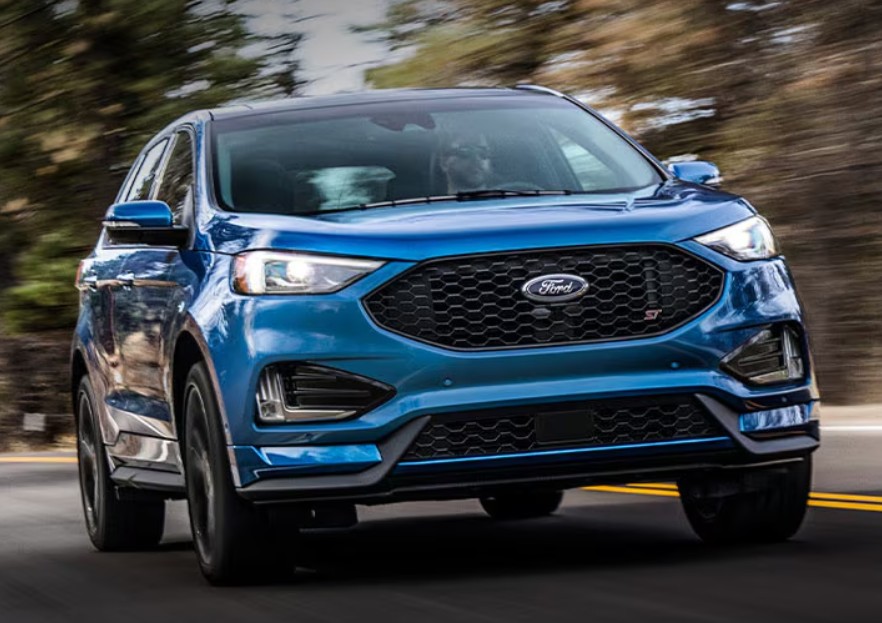
Pulling into a gas station with a Ford Edge should be simple. Yet the moment we see regular, mid-grade, premium, E15, E85, and several octane numbers staring back at us, a basic fuel stop can suddenly feel like a chemistry exam.
So, what gas type does a Ford Edge use?
For most Ford Edge models sold in the United States, the straightforward answer is regular unleaded gasoline with a minimum 87-octane rating. Ford confirms that recent Edge models are designed to operate on regular unleaded 87-octane gasoline. Premium gasoline is generally not required, although 91-octane or higher fuel can provide better performance under demanding conditions.
That distinction matters. There's a big difference between required fuel and recommended for maximum performance fuel.
In this guide, we'll break down the Ford Edge gas type by engine, explain whether premium is worth paying for, look at ethanol compatibility, discuss EcoBoost engines, and clear up several fuel myths that can quietly drain our wallets.
Content in this publication
- What Gas Does a Ford Edge Take?
- Ford Edge Gas Type Quick Answer
- Why Does the Ford Edge Run on 87 Octane?
- Does the Ford Edge Need Premium Gas?
- Ford Edge EcoBoost Gas Type
- What About Older Ford Edge Models?
- Can We Put 89 Octane in a Ford Edge?
- Can We Put 91 Octane in a Ford Edge?
- Can a Ford Edge Use 93 Octane?
- Does Premium Gas Give a Ford Edge More Horsepower?
- Does Premium Gas Improve Ford Edge MPG?
- Can the Ford Edge Use E10 Gasoline?
- Can a Ford Edge Use E15 Gas?
- Can a Ford Edge Use E85?
- What Happens If We Accidentally Put E85 in a Ford Edge?
- Can We Put Diesel in a Ford Edge?
- Should We Use Top Tier Gas in a Ford Edge?
- Does Gas Brand Matter?
- Can Cheap Gas Damage a Ford Edge?
- Why Does My Ford Edge Knock on Regular Gas?
- Best Gas for Ford Edge in Hot Weather
- Best Ford Edge Gas Type for Towing
- Does Higher Altitude Change the Ford Edge Gas Requirement?
- What Gas Should We Use for Everyday Driving?
- Ford Edge Fuel Mistakes to Avoid
- How to Find the Exact Gas Type for Your Ford Edge
- Regular vs Premium Gas in a Ford Edge
- Is Premium Gas Worth It in a Ford Edge?
- Conclusion: Which Ford Edge Gas Type Is Best?
- Frequently Asked Questions
What Gas Does a Ford Edge Take?
The majority of gasoline-powered Ford Edge models can run on:
87-octane regular unleaded gasoline.
Ford's 2024 Edge owner's documentation states that the vehicle operates on regular unleaded gasoline with a minimum pump octane rating of 87 using the (R+M)/2 method, the standard octane measurement displayed at U.S. gas stations.
That means when we're standing at the pump and see:
- Regular — 87
- Mid-grade — 89
- Premium — 91 or 93
We can normally choose 87 regular unleaded and drive away without worrying that we're harming the engine.
The Edge isn't secretly begging us for premium every time we fill the tank.
However, there's more nuance once EcoBoost turbocharged engines, towing, extreme heat, and performance enter the conversation.
Ford Edge Gas Type Quick Answer
For drivers who simply want the answer before filling up:
| Ford Edge Fuel Question | Answer |
|---|---|
| Standard fuel | Regular unleaded gasoline |
| Minimum octane | 87 |
| Premium required? | No, on most Edge models |
| Premium beneficial? | Potentially, especially under heavy load |
| Recommended premium octane | 91 or higher where Ford specifies |
| E10 gasoline | Yes |
| E15 gasoline | Generally acceptable on applicable newer models |
| E85 | No, unless a specific vehicle is explicitly labeled Flex Fuel |
| Diesel | Never |
| Leaded gasoline | Never |
Ford's 2024 guidance allows unleaded gasoline containing up to 15% ethanol, while warning owners not to use inappropriate fuels that could damage the engine or emissions system.
Always check the owner's manual for the exact model year because fuel requirements can evolve.
Why Does the Ford Edge Run on 87 Octane?
Octane doesn't measure how powerful gasoline is.
That's one of the most persistent misconceptions at fuel stations.
Octane measures a fuel's resistance to premature combustion, commonly called engine knock or detonation.
Think of gasoline combustion like a carefully timed drumbeat. The spark plug should initiate combustion at precisely the right moment. If the fuel-air mixture ignites unpredictably, the rhythm becomes chaotic.
Modern engines use sensors and electronic controls to manage combustion timing.
The Ford Edge is calibrated so that regular 87-octane gasoline can safely satisfy its minimum fuel requirement.
What Does 87 Octane Actually Mean?
In the United States and Canada, pump octane normally uses the Anti-Knock Index, calculated as:
(Research Octane Number + Motor Octane Number) ÷ 2
That's why American fuel pumps often show:
(R+M)/2
Different countries may display Research Octane Number, or RON, instead.
So we shouldn't automatically compare a European 95 RON label with American 95-octane fuel. They're using different measurement systems.
For most Ford Edge models, premium gas is not required.
That's the key takeaway.
Ford specifically states that recent Edge models can operate on regular unleaded gasoline with at least 87 octane. However, Ford has also recommended premium gasoline of 91 octane or higher for the best overall engine performance on various model years.
Those statements aren't contradictory.
Imagine regular fuel as a comfortable pair of everyday shoes and premium fuel as performance footwear. We don't need racing shoes to walk through the grocery store, but under demanding conditions they may provide an advantage.
Premium may be worth considering when we're:
- Towing a trailer
- Driving aggressively
- Climbing long mountain grades
- Traveling in very hot weather
- Carrying heavy loads
- Frequently accelerating at full throttle
- Trying to obtain maximum engine performance
Ford specifically notes that premium fuel's performance benefits can become more noticeable in hot weather and when towing.
Premium Is Different From Mandatory Premium
This distinction is critical.
If an engine requires premium, using regular can potentially create performance or durability problems.
If an automaker merely recommends premium for best performance, the engine can still operate safely on the permitted lower-octane gasoline.
The Edge usually falls into that second category.
Ford Edge EcoBoost Gas Type
EcoBoost is Ford's name for its family of turbocharged gasoline engines.
Because turbochargers compress more air into an engine, people naturally assume every EcoBoost engine needs premium gasoline.
Not necessarily.
Ford Edge EcoBoost engines have generally been designed to operate on 87-octane regular unleaded gasoline.
For example, Ford's technical specifications for the 2021 Edge list a minimum recommendation of 87 octane while noting that 91 octane or higher is recommended, with advertised maximum power achieved using higher-octane fuel.
That's an important detail.
The engine doesn't suddenly become unsafe on 87.
Instead, its electronic control system can adjust operating parameters according to conditions and fuel quality.
2.0L EcoBoost Ford Edge Fuel
The 2.0-liter EcoBoost has powered a large number of Edge models.
For normal everyday driving, 87-octane gasoline is generally sufficient.
Owners who mostly commute, shop, drive kids around, and take highway trips probably won't find a compelling financial reason to fill every tank with premium.
Premium becomes more interesting when we consistently ask the turbocharged engine to work hard.
2.7L EcoBoost Ford Edge ST Fuel
The Edge ST's 2.7-liter twin-turbo V6 naturally creates more questions.
Surely a sporty turbocharged V6 must demand premium, right?
Again, not necessarily.
Ford's published 2021 Edge specifications listed 87 octane as the minimum for the 2.7-liter engine while recommending 91 octane or higher and noting that rated power was achieved using 93-octane gasoline.
If we bought an ST because we enjoy its performance, premium may therefore make more sense than it would in an Edge driven gently around town.
It's somewhat like buying a powerful laptop and permanently running it in battery-saving mode. It works perfectly well, but we aren't necessarily extracting everything it can offer.
What About Older Ford Edge Models?
Older Edge models used several naturally aspirated and turbocharged engines, including:
- 3.5L V6
- 3.7L V6
- 2.0L EcoBoost
- 2.7L EcoBoost
Fuel recommendations vary somewhat by year and engine, so checking the manual remains the safest strategy.
Still, 87-octane regular gasoline has been common throughout the Edge lineup.
Ford's 2013 Edge specifications, for example, list minimum 87-octane gasoline for the 3.5-liter V6, 3.7-liter V6, and 2.0-liter EcoBoost engines.
That means the Edge's ability to use regular fuel isn't some recent development.
Can We Put 89 Octane in a Ford Edge?
Yes.
If the vehicle accepts 87 or higher, 89-octane gasoline is perfectly acceptable.
The bigger question is whether it's worth paying extra.
Usually, 89 sits awkwardly between regular and premium. If our Edge runs perfectly on 87 and we're simply commuting, mid-grade may offer little meaningful benefit.
If we're deliberately choosing higher octane for demanding use, moving to the 91-octane-or-higher fuel recommended by Ford for enhanced performance may make more sense than stopping halfway at 89.
Fuel pricing varies, though, so the math isn't identical everywhere.
Can We Put 91 Octane in a Ford Edge?
Absolutely.
Using 91-octane premium gasoline won't harm a Ford Edge designed for 87 octane or higher.
In some situations it may improve performance.
Ford has explicitly recommended 91-octane-or-higher gasoline for optimal performance on certain Edge models, particularly when the vehicle experiences demanding conditions.
What premium won't necessarily do is magically transform fuel economy.
If premium costs substantially more per gallon, a tiny mileage improvement—assuming we see one at all—might not recover the extra expense.
Can a Ford Edge Use 93 Octane?
Yes.
If 93-octane gasoline is available locally, it's safe for Edge engines designed for 87 octane or higher.
The Edge ST is an especially interesting example because Ford has published horsepower figures achieved using 93-octane gasoline on certain model years.
That doesn't mean every Edge owner should immediately start buying 93.
Consider how we actually drive.
An everyday Edge cruising at 65 mph isn't continuously demanding maximum turbo boost. Paying premium prices simply because the number on the pump is larger can become an expensive habit with little practical return.
Potentially, particularly in turbocharged versions whose engine management can take advantage of increased knock resistance.
Higher-octane fuel allows an engine to operate with more aggressive ignition strategies under certain conditions without encountering knock.
That's one reason Ford distinguishes between minimum acceptable octane and fuel recommended for maximum performance.
But let's keep expectations realistic.
Pouring premium gasoline into the tank isn't equivalent to installing a bigger turbocharger.
We shouldn't expect the vehicle to suddenly feel dramatically faster during an ordinary grocery run.
The difference is more likely to emerge under high-load conditions.
Can We Feel the Difference?
Some drivers may notice:
- Stronger acceleration under load
- More consistent performance in hot weather
- Better responsiveness
- Reduced tendency toward light knock
- Smoother performance while towing
Others may notice absolutely nothing.
Both experiences can be legitimate because driving conditions matter tremendously.
Possibly—but don't count on enough improvement to justify the price automatically.
Fuel economy depends on:
- Driving speed
- Acceleration habits
- Traffic
- Tire pressure
- Weather
- Vehicle load
- Terrain
- Engine condition
- Wheel and tire setup
- Fuel formulation
If premium improves efficiency by a tiny amount while costing considerably more, our cost per mile can still increase.
A Better Way to Test It
Rather than trusting internet anecdotes, we can run our own experiment.
Fill several consecutive tanks with 87 and record:
- Gallons added
- Miles driven
- Calculated MPG
- Fuel price
- Driving conditions
Then repeat using premium.
Calculate fuel cost per mile, not merely miles per gallon.
That's the number our wallet actually feels.
Can the Ford Edge Use E10 Gasoline?
Yes, gasoline containing up to 10% ethanol—commonly called E10—is widely used and appropriate for gasoline-powered Ford Edge models designed for modern unleaded fuel.
In many parts of the United States, ordinary regular gasoline is already E10.
Most owners use it without even thinking about it.
Can a Ford Edge Use E15 Gas?
Many newer Edge models can use gasoline containing up to 15% ethanol, provided the owner's manual specifies that allowance.
Ford's 2024 Edge documentation permits unleaded fuel blended with up to 15% ethanol.
Because older vehicles can have different requirements, owners shouldn't assume the same limit applies universally.
Check the fuel section of the manual for the specific year.
Can a Ford Edge Use E85?
Normally, no.
E85 contains a much higher percentage of ethanol and is designed specifically for Flex Fuel Vehicles.
Ford's guidance for applicable Edge models specifically warns against gasoline containing more than 15% ethanol and E85 where the vehicle isn't designed for it.
E85 and E15 sound almost identical.
They're anything but.
One misplaced digit can represent an enormous difference in ethanol concentration.
How Do We Know If a Vehicle Is Flex Fuel?
True Flex Fuel Vehicles are typically identified through labeling around the filler inlet, fuel door, badging, or owner's documentation.
Never assume a vehicle accepts E85 simply because it accepts E10 or E15.
When uncertain, use the manufacturer's approved gasoline specification.
What Happens If We Accidentally Put E85 in a Ford Edge?
If the Edge isn't Flex Fuel compatible and a significant amount of E85 goes into the tank, don't treat the situation casually.
A tiny accidental mixture and a nearly full tank of E85 are very different scenarios.
If we've filled most of the tank with an incompatible fuel, the prudent approach is to avoid driving unnecessarily and consult Ford or a qualified repair facility regarding the specific vehicle and amount added.
Running inappropriate fuel can cause poor operation and potentially damage fuel-system or emissions-related components.
Can We Put Diesel in a Ford Edge?
No.
A gasoline-powered Ford Edge should never be filled with diesel.
Diesel and gasoline engines use fundamentally different combustion systems.
If diesel is accidentally added to a gasoline Edge, don't start the engine.
Starting the vehicle circulates contaminated fuel farther through the system and can turn a manageable mistake into a much larger repair bill.
Fuel mistakes are like spilling coffee on a desk: catching the problem before it reaches the electronics makes life much easier.
Should We Use Top Tier Gas in a Ford Edge?
Where available, quality detergent gasoline can be a sensible choice.
Ford has recommended Top Tier detergent gasoline in relevant owner guidance to help reduce engine deposits and maintain vehicle and engine performance.
Notice that Top Tier and premium aren't the same thing.
Top Tier describes a detergent standard.
Premium describes octane.
We can buy Top Tier 87-octane regular gasoline.
For many Edge owners, that combination is arguably more sensible than purchasing lower-quality premium fuel simply because the pump displays a bigger octane number.
Does Gas Brand Matter?
Brand matters less than fuel quality and proper formulation.
We don't need to develop loyalty to one fuel station as though we're supporting a football team.
Instead, prioritize:
- Reputable, busy stations
- Correct octane
- Proper ethanol content
- Quality detergent gasoline
- Clean and well-maintained facilities
High-volume stations can also be advantageous because their underground fuel inventory turns over frequently.
Can Cheap Gas Damage a Ford Edge?
Cheap gasoline isn't automatically bad gasoline.
A station can sell perfectly appropriate fuel for less because of location, business strategy, membership pricing, or local competition.
The bigger concern is fuel quality.
Extremely questionable stations, contaminated fuel, excessive ethanol, or inappropriate additives can create problems regardless of price.
Ford warns against fuels containing certain metallic additives, methanol, lead, or ethanol concentrations exceeding the vehicle's permitted specification.
So our goal isn't necessarily to buy expensive gasoline.
It's to buy the correct gasoline.
Why Does My Ford Edge Knock on Regular Gas?
An occasional faint knock can occur under certain conditions, but persistent or heavy knocking deserves attention.
Ford notes that light occasional knocking isn't necessarily a concern, while heavy knocking with the recommended octane should be inspected to prevent engine damage.
Potential contributors include:
- Poor-quality fuel
- Excessive engine load
- Carbon buildup
- High temperatures
- Incorrect ignition behavior
- Engine-management problems
- Mechanical issues
Trying one tank of reputable 91- or 93-octane gasoline can sometimes help distinguish a fuel-related issue from something deeper, but persistent knocking shouldn't simply be masked indefinitely with expensive gas.
Best Gas for Ford Edge in Hot Weather
Extreme heat increases the demands placed on an engine.
Turbocharged engines can be particularly sensitive because compressed intake air generates additional heat.
Ford specifically identifies hot weather as one situation where the benefits of premium gasoline may become more noticeable.
So if we're crossing Arizona in August with passengers, luggage, and the air conditioning working overtime, premium fuel may be more defensible than it would be during a relaxed spring commute.
Best Ford Edge Gas Type for Towing
This is another situation where premium makes more sense.
Towing increases engine load considerably, especially while:
- Climbing hills
- Accelerating onto highways
- Driving in high temperatures
- Carrying passengers and cargo simultaneously
Ford recommends premium fuel for improved performance during severe-duty usage such as trailer towing in applicable Edge models.
That doesn't necessarily mean 87 becomes forbidden.
Rather, higher octane gives the engine additional knock resistance when we're asking much more from it.
Does Higher Altitude Change the Ford Edge Gas Requirement?
Some high-altitude stations sell regular gasoline with an octane rating below 87.
That doesn't automatically make it suitable for an Edge.
Ford specifically warns that gasoline below the required 87-octane minimum may cause engine damage, and such damage may not be covered under warranty.
So even in mountain regions, follow the vehicle's minimum octane requirement instead of assuming whatever is labeled "regular" must be acceptable.
The word regular matters less than the actual octane number.
What Gas Should We Use for Everyday Driving?
For the average Ford Edge owner, our recommendation is remarkably simple:
Use good-quality 87-octane regular unleaded gasoline unless the owner's manual for your specific model says otherwise.
That delivers the value proposition Ford designed into the Edge.
We don't need premium because we drove to work.
We don't need premium because the vehicle has a turbocharger.
And we don't need premium because a friend said their car "runs cleaner" on it.
Consider higher octane when our driving conditions actually justify it.
Our Practical Ford Edge Fuel Strategy
Here's an easy approach:
- Use 87-octane regular unleaded for ordinary driving.
- Buy gasoline from reputable stations.
- Prefer detergent-rich Top Tier fuel where practical.
- Consider 91+ octane during towing, extreme heat, mountain driving, or sustained heavy loads.
- Owners seeking maximum performance—especially Edge ST drivers—can experiment with premium.
- Avoid E85 unless the specific vehicle explicitly supports it.
- Never use gasoline below the manufacturer's minimum octane.
- Follow the owner's manual when its recommendations differ from general guidance.
Simple beats complicated.
Ford Edge Fuel Mistakes to Avoid
Sometimes knowing what not to do saves more money than chasing performance improvements.
Using Less Than 87 Octane
Don't assume lower-octane mountain gasoline is acceptable simply because it's sold as regular.
Follow Ford's minimum requirement.
Higher octane isn't automatically better for every driving situation.
If the engine doesn't need the additional knock resistance, premium can become little more than expensive peace of mind.
Confusing E15 With E85
They're radically different fuels.
Check the ethanol label before filling.
Using Random Octane Boosters
Ford warns against certain metallic fuel additives, including manganese-based compounds such as MMT, in applicable models.
Unless Ford specifically approves an additive, we generally shouldn't treat the fuel tank like a chemistry experiment.
Ignoring Persistent Engine Knock
If the engine repeatedly knocks heavily despite using the correct gasoline, don't simply keep increasing octane forever.
Have the vehicle inspected.
How to Find the Exact Gas Type for Your Ford Edge
When we want absolute certainty, especially with an older used Edge, we have several places to check.
Check the Fuel Door
Fuel information may appear around the filler opening or on nearby labels.
Read the Owner's Manual
This is the most reliable source because recommendations can vary according to year, country, and engine.
Identify the Engine
Knowing whether our Edge has a 2.0L EcoBoost, 2.7L EcoBoost, 3.5L V6, or another engine helps narrow down the correct specification.
Use the VIN
A VIN lookup through Ford or a dealer can confirm the vehicle's equipment when we're uncertain about the engine.
Let's reduce the entire debate to a practical comparison.
| Factor | 87 Regular | 91/93 Premium |
| Safe for most Ford Edge models | Yes | Yes |
| Lowest operating cost | Usually | No |
| Everyday commuting | Excellent choice | Usually unnecessary |
| Maximum performance | Adequate | Better choice |
| Towing | Acceptable where approved | Often preferable |
| Extreme heat | Acceptable | May improve performance |
| Edge ST performance driving | Works | More suitable |
| Required for most models | Yes, as minimum | No |
That's why declaring that "the Ford Edge needs premium" oversimplifies the issue.
It generally can use regular but may perform better on premium.
For most Edge owners?
Probably not for every tank.
If we drive gently and cover thousands of ordinary commuting miles, regular 87 keeps operating costs down while satisfying Ford's minimum specification.
Premium becomes more logical if we:
- Own an Edge ST
- Tow regularly
- Drive aggressively
- Live in extremely hot conditions
- Frequently travel through mountains
- Want maximum available performance
It's a tool, not a requirement.
Think of premium fuel like using sport mode. Nice when circumstances call for it, but hardly essential for sitting in Monday-morning traffic.
Conclusion: Which Ford Edge Gas Type Is Best?
Choosing the correct Ford Edge gas type is easier than the wall of options at the pump makes it appear.
For most Ford Edge models, 87-octane regular unleaded gasoline is the correct everyday choice. Ford's published guidance for recent Edge models confirms a minimum 87-octane requirement, while premium gasoline of 91 octane or higher may provide improved performance under conditions such as hot weather, towing, or other heavy-load driving.
EcoBoost doesn't automatically mean premium-only.
An Edge ST doesn't automatically mean premium-only either.
For ordinary commuting, quality regular gasoline provides the balance of affordability and proper operation that most drivers need. If we're towing, pushing the engine harder, or simply want to extract maximum performance from a turbocharged Edge, premium becomes a reasonable upgrade.
The golden rule remains wonderfully boring: follow the fuel specification in the owner's manual for your exact model year and engine.
Sometimes boring advice saves the most money.
Frequently Asked Questions
1. What kind of gas does a Ford Edge take?
Most Ford Edge models use regular unleaded gasoline with a minimum 87-octane rating. Ford allows higher-octane gasoline as well, and premium fuel can improve performance in demanding driving conditions. Always verify the requirement for your specific model year.
Generally, no. Ford Edge EcoBoost engines can typically run on 87-octane regular gasoline. However, Ford has recommended 91-octane or higher gasoline for improved performance on various EcoBoost-equipped Edge models, especially during hot weather or heavy-duty operation.
3. Can I put 93 octane in my Ford Edge?
Yes. Using 93-octane gasoline is safe in an Edge designed for 87 octane or higher. Certain performance figures for turbocharged Edge engines have even been achieved using 93-octane fuel. However, the added cost may not provide a noticeable benefit during ordinary driving.
4. Can a Ford Edge use E85 gas?
Most Ford Edge models should not use E85 unless the specific vehicle is explicitly designated as a Flex Fuel Vehicle. Newer Edge guidance typically permits gasoline containing no more than 15% ethanol. Check the owner's manual and fuel-filler labeling before using high-ethanol fuel.
5. What is the best gas for a Ford Edge ST?
For normal driving, an Edge ST can generally operate on the manufacturer's approved minimum of 87-octane regular gasoline. Drivers seeking maximum turbocharged performance, particularly during aggressive driving, towing, mountain travel, or extreme heat, may benefit from 91- or 93-octane premium gasoline.
If you want to know other articles similar to Ford Edge Gas Type: What Fuel Should You Use? you can visit the category Service and Parts.
Vauxhall Mokka Tyre Pressure Reset: Complete Guide

How to Reset the Tire Pressure System on Your Hyundai Tucson

Hyundai Kona Tire Pressure: Complete PSI Guide

Vauxhall Corsa Timing Belt Replacement Cost UK 2026

Mazda CX-5 Tire Size Chart: 2013–2026 Guide

How to Reset a Honda Civic: Complete Step-by-Step Guide
Leave a Reply
More content of your interest