
Ford Edge Towing Capacity: How Much Can a Ford Edge Really Tow?

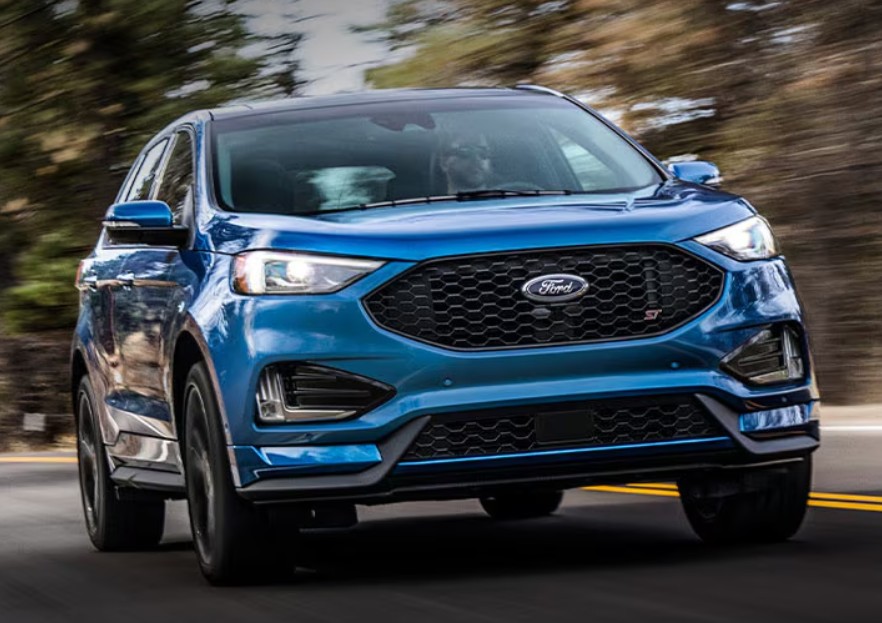
The Ford Edge towing capacity can reach 3,500 pounds when properly equipped, which is surprisingly capable for a two-row midsize crossover designed more for commuting, family trips, and highway cruising than heavy hauling. That figure puts the Edge comfortably in the territory of small campers, utility trailers, jet skis, lightweight boats, and some compact travel trailers.
But here's where things get interesting: simply owning a Ford Edge does not automatically mean we can hook up a 3,500-pound trailer.
Depending on the model year, engine, drivetrain, factory towing equipment, passengers, cargo, and even the aerodynamic profile of the trailer, the usable towing limit can be considerably lower. On the 2024 Ford Edge, for example, Ford lists a maximum loaded trailer weight of 1,500 pounds for a 2.0L EcoBoost AWD model without the Class II Trailer Tow Package and up to 3,500 pounds when appropriately equipped. The Edge ST with its 2.7L EcoBoost V6 is also rated for as much as 3,500 pounds.
So, how much can your Edge tow?
Let's unravel the numbers without turning this into an engineering textbook.
Content in this publication
- What Is the Ford Edge Towing Capacity?
- Ford Edge Towing Capacity by Year
- 2024 Ford Edge Towing Capacity
- Ford Edge 2.0 EcoBoost Towing Capacity
- Ford Edge 2.7 EcoBoost Towing Capacity
- Ford Edge 3.5L V6 Towing Capacity
- What Is Included in the Ford Edge Trailer Tow Package?
- Ford Edge Hitch Rating and Tongue Weight
- What Can a Ford Edge Tow?
- Can a Ford Edge Tow a Camper?
- Can a Ford Edge Tow 3,500 Pounds?
- What Is GCWR and Why Does It Matter?
- Trailer Frontal Area Matters More Than We Think
- Does AWD Increase Ford Edge Towing Capacity?
- How Altitude Affects Ford Edge Towing
- How to Find Your Exact Ford Edge Towing Capacity
- Ford Edge Towing Safety Tips
- Is the Ford Edge a Good Vehicle for Towing?
- Ford Edge Towing Capacity vs Everyday Reality
- Conclusion: How Much Can a Ford Edge Tow?
- Frequently Asked Questions
What Is the Ford Edge Towing Capacity?
For many Ford Edge model years, the headline maximum towing capacity is:
Up to 3,500 pounds (1,588 kg) when properly equipped.
That number has appeared repeatedly throughout the Edge's history. Even the original 2007 model offered a Class II configuration capable of towing as much as 3,500 pounds.
A properly equipped 2010 Edge also carried a maximum rating of 3,500 pounds.
The important words, however, are "when properly equipped."
Think of the 3,500-pound rating like the maximum occupancy sign in an elevator. It's the upper boundary under specific conditions—not necessarily the number we should aim for every time we hitch something behind the SUV.
For recent models, towing capacity generally falls into two useful categories:
| Ford Edge configuration | Typical maximum trailer weight |
|---|---|
| Edge without required tow equipment | Around 1,500 lb |
| Properly equipped Edge | Up to 3,500 lb |
| 2024 2.0L EcoBoost AWD without Class II package | 1,500 lb |
| 2024 2.0L EcoBoost AWD with Class II package | 3,500 lb |
| 2024 Edge ST 2.7L EcoBoost AWD | 3,500 lb |
| 2024 factory hitch maximum tongue load | 350 lb |
Ford specifies that towing more than 1,500 pounds in a 2024 Edge requires AWD and the Class II Trailer Tow Package. The ST includes that package as standard equipment.
Ford Edge Towing Capacity by Year
Ford introduced the Edge for the 2007 model year, and towing capability has remained remarkably consistent at the upper end.
The exact rating, though, can change according to engine, trim, drivetrain, and equipment.
A broad look at the model's history looks like this:
| Model years | Maximum towing capacity when properly equipped |
| 2007–2010 | Up to 3,500 lb |
| 2011–2014 | Up to 3,500 lb |
| 2015–2018 | Up to approximately 3,500 lb depending on configuration |
| 2019–2020 | Up to 3,500 lb |
| 2021–2022 | Up to 3,500 lb |
| 2023 | Up to 3,500 lb |
| 2024 | Up to 3,500 lb |
Independent towing databases compiled from manufacturer documentation likewise show a 3,500-pound maximum for most Edge model years, although particular trims and configurations can carry lower ratings.
That last sentence matters more than the table itself.
When we're buying a used Edge for towing, we shouldn't shop only by model year. We need to identify the specific powertrain and towing equipment installed on the vehicle.
2024 Ford Edge Towing Capacity
The 2024 Edge provides one of the clearest examples of how equipment changes towing capability.
2024 Ford Edge 2.0L EcoBoost Towing Capacity
The standard 2.0-liter EcoBoost four-cylinder is paired with all-wheel drive.
Ford lists two possible towing limits:
1,500 pounds without the appropriate Class II towing configuration and 3,500 pounds when equipped with the Class II Trailer Tow Package.
The corresponding gross combined weight rating, or GCWR, rises from approximately 6,300 pounds to 8,300 pounds in the towing-equipped configuration.
That is a massive difference.
In other words, adding a hitch to an Edge that wasn't configured for heavier towing doesn't magically transform it into a 3,500-pound tow vehicle.
2024 Ford Edge ST Towing Capacity
The Edge ST uses the more powerful 2.7L EcoBoost V6.
Its maximum loaded trailer rating is 3,500 pounds, and Ford lists a GCWR of approximately 8,500 pounds. The Class II Trailer Tow Package is standard on this version.
Interestingly, the stronger engine doesn't increase the official trailer maximum beyond 3,500 pounds.
Why?
Because towing capacity isn't determined by horsepower alone. Cooling, suspension, brakes, chassis design, hitch structure, transmission durability, tongue weight, and vehicle weight all play their part.
The engine may be the heart, but towing is a whole-body workout.
Ford Edge 2.0 EcoBoost Towing Capacity
The 2.0L EcoBoost became an important part of the Edge lineup during the second generation.
It offers good low-end torque for a four-cylinder engine, making it surprisingly competent with modest trailers.
Still, owners need to be especially careful about assuming that every 2.0 EcoBoost Edge has the full rating.
For example, Ford's 2020 towing guide lists the Edge at 1,500 pounds in a standard configuration and as much as 3,500 pounds with the required Class II Trailer Tow Package. Ford also specifies AWD for trailers exceeding 1,500 pounds.
So if we're browsing used listings and see "2.0 EcoBoost," that's not enough information.
We need to ask: Does it have the factory tow package?
Ford Edge 2.7 EcoBoost Towing Capacity
The twin-turbocharged 2.7L EcoBoost V6 appeared in performance-oriented versions such as the Edge Sport and later Edge ST.
With significantly more power and torque than the standard four-cylinder, it feels much more relaxed when accelerating with additional weight behind it.
Yet maximum towing capacity remains around 3,500 pounds in properly equipped versions.
That tells us something useful.
The 2.7L Edge's advantage isn't necessarily that it can legally pull a heavier trailer. Rather, it may feel less strained while pulling the same trailer, especially during acceleration, highway merging, or climbing grades.
More Power Does Not Override the Tow Rating
This deserves its own reminder because it's such an easy trap.
A powerful engine cannot legally or safely increase the manufacturer's towing capacity.
Even if the vehicle feels capable of dragging 5,000 pounds down the road, the chassis, receiver, cooling system, brakes, tires, transmission, and gross combined weight limits were not necessarily engineered or certified for that load.
Ford Edge 3.5L V6 Towing Capacity
Older Ford Edge models frequently used Ford's naturally aspirated 3.5L V6.
These vehicles can also be surprisingly capable.
The original 2007 Edge, for example, could be configured for Class II towing up to 3,500 pounds, while another configuration carried a lower 2,000-pound limit.
By 2010, published specifications commonly listed a maximum towing capacity of 3,500 pounds.
That means an older V6 Edge can still be a useful tow vehicle today—provided its mechanical condition is excellent.
Age changes the conversation.
A 15-year-old SUV may technically retain its original rating, but worn suspension bushings, old cooling components, tired brakes, neglected transmission fluid, rusty hitch hardware, or aging tires can make towing near the upper limit a very different experience.
What Is Included in the Ford Edge Trailer Tow Package?
On recent Edge models, the Class II Trailer Tow Package is the key that unlocks the higher towing rating.
For the 2024 Edge, Ford lists equipment including a hitch receiver, four-pin trailer wiring harness, and trailer sway control.
That's important because the factory package isn't simply a decorative receiver sticking through the rear bumper.
It represents a vehicle configuration Ford has approved for the higher towing load.
A dealer-installed or aftermarket hitch may be perfectly useful, but the hitch's rating does not increase the vehicle's towing rating.
We always obey the lowest applicable limit.
If a hitch says 4,000 pounds but the vehicle says 1,500 pounds, our limit is 1,500.
If the vehicle allows 3,500 pounds but the hitch is rated for 2,000, our limit is 2,000.
Ford Edge Hitch Rating and Tongue Weight
Trailer weight gets most of the attention, but tongue weight can stop us long before the trailer reaches its theoretical maximum.
For the 2024 Edge, Ford lists the factory receiver at:
3,500 pounds maximum trailer capacity and 350 pounds maximum tongue load.
Tongue weight is the downward force the trailer places on the hitch.
A conventional trailer commonly needs roughly 10% of its loaded weight on the tongue for stable towing, although the trailer manufacturer's recommendations should always control.
A 3,000-pound loaded trailer at approximately 10% tongue weight would place around 300 pounds on the hitch.
Add a cargo carrier, bikes, luggage behind the rear seats, passengers, and other equipment, and we're suddenly juggling several weight restrictions at once.
Why Payload Matters While Towing
Payload is one of towing's quiet troublemakers.
Imagine loading the Edge with four adults, luggage, a cooler, camping supplies, and then attaching a trailer.
Everything inside the SUV contributes toward the vehicle's allowable load.
So does trailer tongue weight.
This is why a vehicle can theoretically be rated to pull a certain trailer yet exceed another weight limit once passengers and cargo climb aboard.
Maximum towing capacity should never be viewed in isolation.
What Can a Ford Edge Tow?
At a 3,500-pound maximum rating, a properly equipped Ford Edge can handle a useful selection of recreational and utility trailers.
Depending on the trailer's actual loaded weight, possibilities may include:
- Small utility trailers
- Lightweight enclosed cargo trailers
- One or two personal watercraft on an appropriate trailer
- Small fishing boats
- Lightweight aluminum boats
- Motorcycle trailers
- Small teardrop campers
- Compact pop-up campers
- Some lightweight travel trailers
Notice that we said some lightweight travel trailers.
That's deliberate.
A camper advertised as "2,900 pounds" may weigh substantially more once we add propane, batteries, water, dishes, bedding, food, outdoor furniture, gear, and accessories.
Travel trailers gain weight the way our suitcases do the night before a flight—quietly, then all at once.
Can a Ford Edge Tow a Camper?
Yes, a properly equipped Ford Edge can tow certain campers.
But this is where shopping by "dry weight" can get us into trouble.
Suppose a small camper has:
Dry weight: 2,700 pounds
That sounds comfortably below 3,500 pounds.
Then we add:
Battery, propane, camping equipment, water, food, cookware, clothing, and accessories.
Suddenly our 2,700-pound trailer might weigh 3,200 pounds or more.
Now we're much closer to the Edge's ceiling.
A Comfortable Trailer Weight for the Ford Edge
There isn't a universal rule that says we must stay a certain percentage below the manufacturer's tow rating.
Still, leaving meaningful capacity in reserve can make everyday towing more comfortable, particularly when we're dealing with mountains, heat, passengers, cargo, or a large trailer profile.
Rather than shopping for a camper whose loaded weight sits exactly at 3,500 pounds, we'd rather choose one that leaves breathing room.
The difference often appears in acceleration, braking confidence, transmission workload, and overall stability.
Can a Ford Edge Tow 3,500 Pounds?
Yes—if the specific Edge is rated for it and properly equipped.
For the 2024 model, Ford explicitly gives properly configured 2.0L EcoBoost AWD models and the 2.7L Edge ST a maximum loaded trailer weight of 3,500 pounds.
But "can tow 3,500 pounds" doesn't mean we can place exactly 3,500 pounds on a random trailer, fill the Edge with five passengers and luggage, and drive into the mountains without checking anything else.
We also need to remain within:
GCWR, GVWR, axle ratings, hitch rating, tongue-weight limit, tire ratings, trailer limits, and applicable regulations.
What Is GCWR and Why Does It Matter?
GCWR means Gross Combined Weight Rating.
It's essentially the maximum permitted combined weight of the loaded vehicle and loaded trailer.
Ford's 2024 Edge towing chart illustrates why this number matters.
The 2.0L EcoBoost configuration with the lower towing rating has a GCWR of about 6,300 pounds, while the properly configured 3,500-pound towing version reaches 8,300 pounds. The ST is listed at approximately 8,500 pounds.
Two visually similar Edge SUVs can therefore have very different towing envelopes.
That's another reason the badge on the liftgate doesn't tell the whole story.
Trailer Frontal Area Matters More Than We Think
Weight isn't the only enemy when towing.
Air is invisible, but at highway speeds it behaves like a wall.
Ford specifies a maximum trailer frontal area of 20 square feet without the Class II Trailer Tow Package and 30 square feet with it for the 2024 Edge. Ford warns that exceeding the limitation can significantly reduce towing performance.
That explains why towing a tall, box-shaped camper can feel harder than pulling a lower-profile trailer of similar weight.
Aerodynamic drag rises dramatically with speed.
A relatively light travel trailer can therefore work the powertrain much harder than its scale weight suggests.
Does AWD Increase Ford Edge Towing Capacity?
On some Edge configurations, AWD is part of the equipment required to achieve the higher tow rating.
Ford's 2020 towing material states that towing trailers over 1,500 pounds requires the Class II Trailer Tow Package and AWD. The same basic requirement appears in Ford's 2024 guidance.
AWD also provides useful traction when pulling a trailer from wet ramps, loose surfaces, or steep campsites.
However, AWD should not be confused with a towing-capacity multiplier.
If Ford rates a specific combination at 3,500 pounds, AWD doesn't allow us to exceed that figure.
How Altitude Affects Ford Edge Towing
Mountains add another layer to towing.
Naturally aspirated engines lose noticeable power as elevation rises because thinner air contains less oxygen.
Turbocharged EcoBoost engines can compensate better than naturally aspirated engines, but high elevations still create demanding operating conditions.
Ford's earlier towing guidance recommended reducing gross combined weight as altitude increased, and its general towing literature has historically emphasized the effects of elevation on performance.
The practical takeaway is simple.
If we're towing through mountain country, we'd rather have reserve capacity than spend every climb sitting at the vehicle's absolute limits.
How to Find Your Exact Ford Edge Towing Capacity
This is the part we'd follow before buying any trailer.
First, identify the exact model year, engine, drivetrain, and trim. Next, determine whether the vehicle has the factory towing package or other required towing equipment. Then consult the owner's manual and Ford's towing guide for that model year. Check the labels on the vehicle and hitch receiver, confirm payload and weight ratings, and calculate the trailer's loaded weight rather than relying only on its dry or empty weight.
Ford maintains an archive of towing guides covering vehicle model years going back to 1996, making the manufacturer's information the best starting point for an individual Edge.
Don't Identify a Tow Package by the Hitch Alone
A receiver under the bumper doesn't necessarily prove the vehicle left the factory with a tow package.
Aftermarket hitches are common.
Ford even sells a hitch accessory for 2019–2024 Edge models while warning that towing capacity can still be limited by the vehicle's powertrain.
If we're buying used, the VIN, build information, original window sticker, dealer records, or model-specific equipment documentation can help confirm what we're dealing with.
Ford Edge Towing Safety Tips
The Edge is capable, but towing changes the way any crossover behaves.
Acceleration becomes slower. Braking distances grow. Sharp steering movements matter more. Crosswinds become more noticeable. Transmission temperatures and engine loads can rise.
Ford's towing guidance recommends proper trailer weight distribution, securely fastening cargo, allowing extra stopping distance, practicing turning and backing before traveling, checking tire pressures, and rechecking the hitch and electrical connections shortly after beginning a trip.
We'd add one broader idea: don't treat the maximum rating as a target.
A towing limit is a boundary, not a challenge.
Is the Ford Edge a Good Vehicle for Towing?
For light towing, yes.
The Edge occupies a useful middle ground.
It's more comfortable and maneuverable than a body-on-frame truck for everyday driving, yet properly equipped versions can tow substantially more than many small crossovers.
Its 3,500-pound maximum makes sense for occasional recreational towing rather than serious heavy-duty work.
That's its sweet spot.
If we're towing a jet ski on weekends, hauling landscaping materials occasionally, transporting motorcycles, or taking a lightweight camper on vacation, an appropriately configured Edge can work very well.
If we're towing a large travel trailer every weekend, however, we're asking the wrong vehicle to do the job.
An Explorer, Expedition, pickup truck, or another vehicle with considerably greater towing and payload capacity will provide more margin.
Ford Edge Towing Capacity vs Everyday Reality
Numbers on a specification sheet are clean.
Real life isn't.
Real towing involves passengers arguing over snacks, a trunk full of bags, a cooler that somehow weighs as much as a small refrigerator, bikes, camping equipment, a full propane cylinder, perhaps water in the camper, and a headwind that wasn't mentioned in the brochure.
That's why the best towing setup isn't simply the combination that technically fits beneath the rating.
It's the one that gives us enough margin to travel comfortably.
The Ford Edge can be a surprisingly useful little tow vehicle when we respect what it was designed to do.
Ask it to pull a lightweight camper or small boat, and it's in its element.
Ask it to impersonate an F-150, and the numbers quickly remind us otherwise.
Conclusion: How Much Can a Ford Edge Tow?
The headline answer is straightforward: Ford Edge towing capacity reaches up to 3,500 pounds when properly equipped.
But the smarter answer has a few more words attached.
Some configurations are rated closer to 1,500 pounds, while the higher rating may require AWD, the correct powertrain, and Ford's Class II Trailer Tow Package. For the 2024 Edge, Ford specifically rates properly configured 2.0L EcoBoost AWD models and the 2.7L EcoBoost Edge ST for as much as 3,500 pounds, with a factory receiver tongue-load maximum of 350 pounds.
So before hitching anything behind an Edge, we'd verify the specific model rather than relying on a generic Google number.
Then we'd calculate loaded trailer weight, tongue weight, vehicle payload, GCWR, and equipment requirements.
Do that, and the Edge reveals one of its underrated talents: beneath the comfortable crossover personality sits a vehicle capable of pulling a surprisingly useful amount of gear.
Frequently Asked Questions
1. What is the maximum Ford Edge towing capacity?
The maximum towing capacity for many properly equipped Ford Edge models is 3,500 pounds. Actual capacity depends on model year, engine, drivetrain, and towing equipment. The 2024 Edge, for example, reaches 3,500 pounds with the appropriate configuration.
2. Can a Ford Edge tow a 3,000-pound camper?
A Ford Edge rated for 3,500 pounds may be capable of towing a camper that weighs 3,000 pounds fully loaded, provided all other vehicle, hitch, tongue-weight, payload, and GCWR limits are respected. Don't confuse a camper's dry weight with its real traveling weight.
3. Does the Ford Edge need a tow package to tow 3,500 pounds?
On recent models, generally yes. Ford states that the 2024 2.0L EcoBoost Edge requires the Class II Trailer Tow Package to reach its 3,500-pound rating. The Edge ST includes the package as standard equipment.
4. What is the Ford Edge maximum tongue weight?
For the 2024 factory-installed Class II hitch receiver, Ford lists a maximum tongue load of 350 pounds. Exact limits for other model years and aftermarket hitches should be verified individually.
5. Can a Ford Edge tow a boat?
Yes. A properly equipped Edge can tow many small fishing boats, aluminum boats, personal watercraft, and similar setups as long as the combined loaded weight of the boat and trailer remains within the vehicle's rating. Remember to account for fuel, batteries, fishing equipment, coolers, and anything else carried in the boat.
If you want to know other articles similar to Ford Edge Towing Capacity: How Much Can a Ford Edge Really Tow? you can visit the category Service and Parts.
Nissan Qashqai Fuel Tank Capacity: Complete Guide

Suzuki Swift Fuel Tank Capacity: Complete Guide
Mazda CX-5 Weight (2013–2026): Complete Guide in Pounds and KG
Kia Sportage Dashboard Symbols and Warning Lights

MINI Cooper Weight (2002–2027): Complete Weight Chart & Guide
Toyota RAV4 Engine Sizes: Complete Guide (1994–2026)
Leave a Reply
More content of your interest