
Ford Fiesta Engine Size: Complete Guide by Model

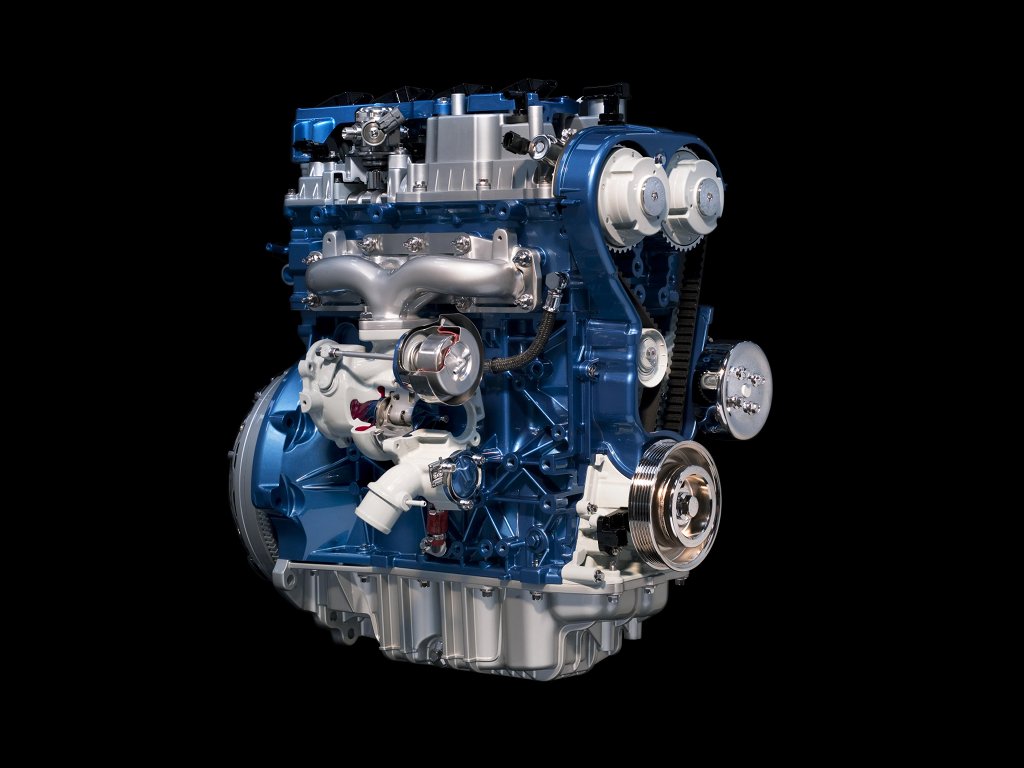
The Ford Fiesta engine size varies depending on the model year, generation, fuel type, and trim level. Over its long production history, the Fiesta has featured a wide range of petrol and diesel engines, from small 1.0-litre units designed for everyday efficiency to larger turbocharged engines developed for sporty performance.
Whether we're considering a used Ford Fiesta, comparing different versions, or simply trying to identify the engine fitted to our car, understanding the available engine sizes can help us make a better decision.
Some of the most common Ford Fiesta engine sizes include 1.0L, 1.1L, 1.25L, 1.4L, 1.5L, and 1.6L. Older models were also available with larger engines, including the 2.0-litre petrol engine fitted to the Fiesta ST150.
In this guide, we'll explore Ford Fiesta engine capacities by generation, compare petrol and diesel options, explain the differences between EcoBoost and naturally aspirated engines, and identify which engine sizes are best suited to different driving needs.
Content in this publication
- What Engine Size Is a Ford Fiesta?
- Ford Fiesta Engine Sizes by Generation
- Ford Fiesta 1.0 EcoBoost Engine Size
- Ford Fiesta 1.1 Engine Size
- Ford Fiesta 1.25 Engine Size
- Ford Fiesta 1.4 Engine Size
- Ford Fiesta 1.5 Engine Size
- Ford Fiesta 1.6 Engine Size
- Ford Fiesta 2.0 Engine Size
- Ford Fiesta Petrol vs Diesel Engine Sizes
- Ford Fiesta Engine Size and Fuel Economy
- Ford Fiesta Engine Size and Performance
- Ford Fiesta Engine Size by Model Year
- How to Find Your Ford Fiesta Engine Size
- What Does Ford Fiesta Engine CC Mean?
- Does Ford Fiesta Engine Size Affect Insurance?
- Which Ford Fiesta Engine Size Is Best?
- Common Ford Fiesta Engine Problems
- Frequently Asked Questions
- Conclusion: Choosing the Right Ford Fiesta Engine
What Engine Size Is a Ford Fiesta?
The Ford Fiesta does not have one standard engine size. Its engine capacity depends on the specific version and production year.
For example, a 2015 Ford Fiesta could have a 1.0-litre EcoBoost petrol engine, a 1.25-litre naturally aspirated petrol engine, or a 1.5-litre diesel engine, depending on the market and specification.
Meanwhile, the final-generation Fiesta ST uses a 1.5-litre turbocharged petrol engine producing approximately 200 PS.
Here is a quick overview of the main Ford Fiesta engine sizes.
| Engine size | Engine type | Typical application |
|---|---|---|
| 1.0L | Petrol, naturally aspirated | Selected older entry-level models |
| 1.0L EcoBoost | Turbocharged petrol | Modern Fiesta models |
| 1.0L EcoBoost Hybrid | Turbocharged mild-hybrid petrol | Later-generation models |
| 1.1L Ti-VCT | Naturally aspirated petrol | 2017–2023 generation |
| 1.25L Duratec | Naturally aspirated petrol | Older Fiesta models |
| 1.3L | Naturally aspirated petrol | Earlier generations |
| 1.4L Duratec | Naturally aspirated petrol | Older petrol models |
| 1.5L TDCi | Turbocharged diesel | Economy-focused versions |
| 1.5L EcoBoost | Turbocharged petrol | Latest-generation Fiesta ST |
| 1.6L Duratec | Naturally aspirated petrol | Older and selected international models |
| 1.6L EcoBoost | Turbocharged petrol | Previous-generation Fiesta ST |
| 1.6L TDCi | Turbocharged diesel | Older diesel models |
| 2.0L Duratec | Naturally aspirated petrol | Fiesta ST150 |
Not every engine was offered in every country or model year.
Ford Fiesta Engine Sizes by Generation
The Ford Fiesta was introduced in 1976 and remained in production until July 2023.
Throughout its history, Ford continually updated the available engines to improve fuel economy, performance, and emissions.
Understanding the different generations is particularly helpful when shopping for a used Fiesta.
Ford Fiesta Mk6 Engine Sizes (2002–2008)
The generation introduced in 2002 offered several petrol and diesel engines.
Common engine options included:
- 1.25-litre Duratec petrol
- 1.3-litre petrol
- 1.4-litre Duratec petrol
- 1.6-litre Duratec petrol
- 1.4-litre TDCi diesel
- 1.6-litre TDCi diesel
- 2.0-litre petrol for the Fiesta ST150
The 1.25-litre petrol engine was particularly popular among drivers looking for affordable running costs and straightforward mechanical construction.
Drivers wanting stronger performance could choose the 1.6-litre petrol engine, while the 2.0-litre ST150 was designed for enthusiasts.
The diesel engines offered improved efficiency for drivers regularly covering longer distances.
Ford Fiesta Mk7 Engine Sizes (2008–2017)
The Fiesta generation introduced in 2008 brought more modern engines and improved efficiency.
Popular engine options included:
| Engine | Fuel | Characteristics |
|---|---|---|
| 1.0L Ti-VCT | Petrol | Small naturally aspirated engine |
| 1.0L EcoBoost | Petrol | Turbocharged three-cylinder engine |
| 1.25L Duratec | Petrol | Simple four-cylinder design |
| 1.4L Duratec | Petrol | Traditional petrol engine |
| 1.6L Ti-VCT | Petrol | Higher-displacement petrol option |
| 1.4L TDCi | Diesel | Economy-focused diesel |
| 1.5L TDCi | Diesel | Efficient turbo diesel |
| 1.6L TDCi | Diesel | Larger diesel option |
| 1.6L EcoBoost | Petrol | High-performance Fiesta ST |
One of the biggest developments was the introduction of the 1.0 EcoBoost engine.
Despite its small displacement, turbocharging allowed this engine to deliver performance comparable to some larger naturally aspirated engines.
Ford offered the 1.0 EcoBoost with different power outputs, including approximately 100 PS, 125 PS, and 140 PS in selected European versions.
The 1.25-litre Duratec remained attractive to drivers who preferred conventional engine technology.
Ford Fiesta Mk8 Engine Sizes (2017–2023)
The final European generation of the Ford Fiesta concentrated on smaller, more efficient petrol engines.
Its principal engine options included:
- 1.0-litre EcoBoost petrol
- 1.0-litre EcoBoost mild-hybrid petrol
- 1.1-litre Ti-VCT petrol
- 1.5-litre TDCi diesel
- 1.5-litre EcoBoost petrol for the Fiesta ST
The 1.0 EcoBoost became one of the most recognisable engines in this generation.
Later versions introduced 48-volt mild-hybrid technology, offering electrical assistance during certain driving conditions.
The 1.1-litre Ti-VCT was a naturally aspirated alternative, while the performance-focused ST used a 1.5-litre turbocharged three-cylinder engine.
It's worth mentioning that generation names can vary between markets. The 2008–2017 Fiesta is commonly called the Mk7 in the UK, while the 2017–2023 model is called the Mk8.
Ford Fiesta 1.0 EcoBoost Engine Size
The Ford Fiesta 1.0 EcoBoost is one of the best-known engines in the model's history.
Although marketed as a 1.0-litre engine, its actual displacement is approximately 999 cc.
It features three cylinders and turbocharging, allowing it to produce relatively strong performance from a compact engine.
Ford Fiesta 1.0 EcoBoost Specifications
| Specification | Details |
|---|---|
| Engine displacement | 999 cc |
| Engine capacity | 1.0 litre |
| Cylinders | 3 |
| Fuel type | Petrol |
| Turbocharged | Yes |
| Common power outputs | 100, 125 and 140 PS |
| Higher-output hybrid version | Up to 155 PS in selected models |
The exact figures depend on the production year and engine calibration.
Is the 1.0 EcoBoost Engine Powerful Enough?
For most everyday driving situations, the 1.0 EcoBoost offers a useful balance between power and fuel economy.
The turbocharger helps generate torque at relatively low engine speeds, which can make the car feel more responsive than its small engine capacity suggests.
It's particularly suitable for:
- Urban commuting
- Regular motorway driving
- Small families
- Drivers wanting reasonable fuel economy
- Drivers who prefer responsive acceleration
However, actual performance depends on which version we choose.
A 100 PS model will not accelerate as quickly as a 140 PS version, even though both have the same engine displacement.
Ford Fiesta 1.0 EcoBoost Reliability
Engine size alone doesn't determine reliability.
The 1.0 EcoBoost has specific maintenance requirements, and certain versions have been associated with concerns involving cooling systems and oil-immersed timing belt components.
The timing drive configuration varies by engine version and production date, so it's important not to assume every 1.0 EcoBoost uses exactly the same system.
When considering a used example, we should examine the maintenance history, verify the correct oil specification, check the cooling system, and confirm the applicable timing belt or chain service requirements.
A well-documented maintenance history is especially important for this engine.
Ford Fiesta 1.1 Engine Size
The 1.1-litre Ti-VCT petrol engine was introduced with the final European Fiesta generation.
It has an actual displacement of approximately 1,084 cc and uses a three-cylinder configuration.
Unlike the 1.0 EcoBoost, the 1.1 Ti-VCT does not rely on a turbocharger.
It was available with different power outputs, including versions producing approximately 70, 75, and 85 PS, depending on the year.
Is the Ford Fiesta 1.1 a Good Engine?
The 1.1-litre engine is best suited to drivers who prioritise straightforward everyday transport.
Its naturally aspirated design avoids some of the additional complexity associated with turbocharged engines.
However, it generally produces less torque than the 1.0 EcoBoost, particularly at lower engine speeds.
This difference becomes more noticeable when carrying several passengers, climbing steep hills, or accelerating onto fast roads.
For primarily urban driving, the 1.1 can be a sensible option.
Ford Fiesta 1.25 Engine Size
The Ford Fiesta 1.25 has been a popular engine option across several generations.
Its actual displacement is approximately 1,242 cc, and it uses a naturally aspirated four-cylinder petrol design.
Depending on the generation and specification, it was offered with power outputs of approximately 60 PS and 82 PS, alongside other versions in earlier models.
Advantages of the Ford Fiesta 1.25
The 1.25-litre engine is often appreciated for its conventional design.
Its main attractions include relatively simple mechanical construction, predictable power delivery, and suitability for everyday use.
Compared with more powerful turbocharged engines, it generally has fewer performance-related components.
However, simplicity does not guarantee reliability. Age, maintenance, cooling system condition, and timing belt history all matter.
Ford Fiesta 1.25 vs 1.0 EcoBoost
Both engines can work well for everyday driving, but they offer different characteristics.
| Feature | Fiesta 1.25 | Fiesta 1.0 EcoBoost |
|---|---|---|
| Displacement | 1,242 cc | 999 cc |
| Cylinders | 4 | 3 |
| Turbocharger | No | Yes |
| Power delivery | More dependent on revs | Stronger low-speed torque |
| Complexity | Generally simpler | More sophisticated |
| Driving character | Conventional | More responsive |
The 1.0 EcoBoost generally provides stronger acceleration, while the 1.25 appeals to drivers who prefer naturally aspirated technology.
Ford Fiesta 1.4 Engine Size
The 1.4-litre petrol engine was another common option in older Ford Fiesta generations.
Its actual capacity is approximately 1,388 cc.
This four-cylinder engine provides a relatively conventional driving experience, with performance positioned between smaller entry-level engines and larger 1.6-litre versions.
Depending on the model, it could offer around 80–96 PS.
The 1.4 petrol engine can suit drivers looking for a used Fiesta with reasonable performance and established mechanical technology.
Ford also offered 1.4-litre TDCi diesel engines in older models.
Although they share the same nominal capacity, the petrol and diesel engines are mechanically different.
Ford Fiesta 1.5 Engine Size
A 1.5-litre Ford Fiesta could have either a diesel engine or a high-performance petrol engine.
These options are very different.
Ford Fiesta 1.5 TDCi Diesel
The 1.5 TDCi was designed primarily for fuel efficiency.
It uses turbocharging and diesel technology to deliver useful torque while keeping fuel consumption relatively low.
Depending on the generation and market, versions were available with outputs such as 75, 85, 95, and 120 PS.
For motorists who regularly travel long distances, the diesel engine can offer advantages in fuel economy.
However, diesel maintenance costs need consideration, particularly on higher-mileage vehicles.
Ford Fiesta 1.5 EcoBoost ST
The 1.5 EcoBoost fitted to the final-generation Fiesta ST is an entirely different engine.
It has an actual displacement of approximately 1,497 cc and produces around 200 PS in the standard ST specification.
Its turbocharged three-cylinder design was developed to provide strong performance and responsive acceleration.
The engine also incorporates advanced technologies, including cylinder deactivation under suitable operating conditions.
This makes it one of the most powerful engines fitted to a production Ford Fiesta.
Ford Fiesta 1.6 Engine Size
The 1.6-litre engine appeared in numerous Ford Fiesta versions, including naturally aspirated petrol models, diesel models, and high-performance ST variants.
Its exact mechanical design depends on the version.
Ford Fiesta 1.6 Petrol Engine
The naturally aspirated 1.6-litre petrol engine commonly has a displacement of approximately 1,596 cc.
It was offered in several international markets and generations.
For example, the 2019 American-market Ford Fiesta S, SE, and ST-Line used a 1.6-litre Ti-VCT four-cylinder engine producing 120 hp.
This makes it important to distinguish American Fiesta specifications from British and European models.
Ford Fiesta 1.6 TDCi Diesel
The 1.6 TDCi diesel engine was a popular choice in older European Fiesta models.
It offers useful torque and was particularly attractive to drivers covering substantial annual mileage.
The engine appeared in several power configurations, including approximately 90 and 95 PS versions.
Diesel particulate filter condition, maintenance records, and the fuel injection system deserve attention when purchasing a used example.
Ford Fiesta 1.6 EcoBoost ST
The previous-generation Fiesta ST used a turbocharged 1.6-litre four-cylinder petrol engine.
The standard European ST produced around 182 PS, while the ST200 edition increased output to approximately 200 PS.
This engine helped establish the Fiesta ST as a popular performance hatchback.
In the United States, the 2019 Fiesta ST was rated at 197 hp.
Despite these differences in quoted power, these vehicles use the same nominal 1.6-litre engine capacity.
Ford Fiesta 2.0 Engine Size
One of the largest engines fitted to a road-going production Fiesta was the 2.0-litre petrol engine used in the Fiesta ST150.
This version belonged to the generation sold during the 2000s.
It featured a naturally aspirated four-cylinder engine producing approximately 150 PS.
Unlike later Fiesta ST models, the ST150 did not use turbocharging.
Instead, it relied on a larger displacement and naturally aspirated performance characteristics.
Today, the ST150 remains an interesting option for enthusiasts who enjoy older performance hatchbacks.
Ford Fiesta Petrol vs Diesel Engine Sizes
Choosing between a petrol and diesel Ford Fiesta depends on how we drive.
Petrol engines generally suit drivers who travel shorter distances or use their cars mainly in urban environments.
Diesel engines traditionally appeal to drivers covering longer journeys because they can deliver strong fuel efficiency.
| Characteristic | Petrol Fiesta | Diesel Fiesta |
|---|---|---|
| Common capacities | 1.0–1.6L | 1.4–1.6L |
| Short journeys | Generally more suitable | Less suitable for some DPF-equipped models |
| Motorway driving | Good | Often particularly economical |
| Engine noise | Generally quieter | More noticeable diesel sound |
| Maintenance considerations | Vary by engine | DPF, EGR and fuel system |
| Typical driving character | Smooth or responsive | Strong low-rev torque |
Although a diesel Fiesta may achieve better fuel economy, that doesn't automatically make it cheaper to own.
We should consider annual mileage, local fuel prices, servicing costs, emissions restrictions, and potential repairs.
Ford Fiesta Engine Size and Fuel Economy
Engine displacement influences fuel consumption, but it isn't the only factor.
A smaller engine doesn't always use less fuel than a larger one.
Driving conditions, turbocharging, transmission, vehicle weight, and driving style can make a substantial difference.
For example, a 1.0 EcoBoost may use relatively little fuel during relaxed driving but consume considerably more when accelerating frequently or maintaining high engine loads.
Similarly, a 1.5 TDCi diesel could provide excellent motorway efficiency while being less practical for repeated short journeys.
Which Ford Fiesta Engine Is Most Economical?
There isn't one engine that is automatically the most economical for every driver.
The 1.0 EcoBoost and EcoBoost Hybrid versions can be attractive for mixed driving.
The 1.1 Ti-VCT offers another option for drivers who want a simple petrol car.
Meanwhile, a well-maintained diesel Fiesta may be economical for regular long-distance journeys.
For a meaningful comparison, we should use fuel consumption figures measured under the same testing procedure and consider real-world owner experience.
Ford Fiesta Engine Size and Performance
Larger displacement does not always mean better acceleration.
Turbocharging can significantly change how an engine performs.
A smaller turbocharged engine may produce more torque and power than a larger naturally aspirated engine.
For example, the 1.0 EcoBoost can outperform the older 1.25 petrol engine despite having a smaller capacity.
The performance-focused 1.5 EcoBoost Fiesta ST provides an even stronger example, producing approximately 200 PS from just three cylinders.
Which Ford Fiesta Has the Most Powerful Engine?
Among regular European production versions, the later Fiesta ST and the previous ST200 are notable for their approximately 200 PS outputs.
The final-generation 1.5 EcoBoost ST also benefits from sophisticated turbocharging and modern engine control technology.
However, performance is not determined by horsepower alone.
Gear ratios, vehicle weight, torque delivery, tyre condition, and traction also affect acceleration.
Ford Fiesta Engine Size by Model Year
The following table provides a simplified guide to commonly available engine capacities in different production periods.
| Model year | Common engine sizes |
|---|---|
| 2005 | 1.25, 1.3, 1.4, 1.6, 2.0L |
| 2008 | 1.25, 1.4, 1.6L |
| 2010 | 1.25, 1.4, 1.6L |
| 2012 | 1.0, 1.25, 1.4, 1.6L |
| 2014 | 1.0, 1.25, 1.5, 1.6L |
| 2016 | 1.0, 1.25, 1.5, 1.6L |
| 2018 | 1.0, 1.1, 1.5L |
| 2020 | 1.0, 1.1, 1.5L |
| 2022 | 1.0, 1.1, 1.5L |
| 2023 | 1.0, 1.1, 1.5L in selected versions |
The table includes petrol and diesel engines where applicable and is intended as a general overview rather than an exhaustive catalogue.
Availability differs by country, production date, body style, and trim.
A Fiesta sold in North America may have a different engine from a European Fiesta of the same model year.
How to Find Your Ford Fiesta Engine Size
If we already own a Fiesta, identifying the engine capacity is relatively straightforward.
However, it's important to use reliable vehicle information rather than guessing from exterior badges.
Check the Vehicle Registration Document
In the United Kingdom, the V5C registration certificate normally includes the engine capacity.
Look for the P.1 field, which records engine displacement in cubic centimetres.
For example:
- 999 cc indicates approximately 1.0 litre.
- 1,084 cc indicates approximately 1.1 litres.
- 1,242 cc indicates approximately 1.25 litres.
- 1,388 cc indicates approximately 1.4 litres.
- 1,596 cc indicates approximately 1.6 litres.
Check the Owner's Manual
The owner's manual may contain engine specifications and maintenance information.
Keep in mind that some manuals cover multiple engine variants.
Therefore, we should confirm which specifications apply to our exact vehicle.
Use the Vehicle Identification Number
The VIN is one of the most reliable ways to identify a specific Fiesta configuration.
A Ford dealer or an appropriate vehicle identification service can use the VIN to help determine the original engine specification.
This is particularly useful when ordering mechanical parts.
Look Under the Bonnet
Engine covers, identification labels, and manufacturer markings may provide information about the engine.
However, engine appearance alone is not always enough to distinguish similar versions.
A physical inspection should be supported by official vehicle records whenever possible.
What Does Ford Fiesta Engine CC Mean?
Engine capacity is commonly expressed in litres or cubic centimetres, abbreviated as cc.
Both measurements describe engine displacement.
One litre equals 1,000 cubic centimetres.
For example:
| Advertised engine size | Approximate displacement |
|---|---|
| 1.0L | 999 cc |
| 1.1L | 1,084 cc |
| 1.25L | 1,242 cc |
| 1.4L | 1,388 cc |
| 1.5L EcoBoost ST | 1,497 cc |
| 1.6L | 1,596 cc |
These values apply to representative Fiesta engine families. Exact displacement can differ between engines sharing the same advertised capacity.
Manufacturers round the figures to make engine sizes easier to understand.
Therefore, a 999 cc engine is normally advertised as a 1.0-litre engine.
Engine capacity describes the combined swept volume of the cylinders, not the total volume of oil or fuel contained in the engine.
Does Ford Fiesta Engine Size Affect Insurance?
Engine size can influence insurance premiums, but it is only one part of the calculation.
Insurers also consider factors such as the vehicle's power output, performance, repair costs, security features, and claims history.
The driver's age, location, experience, and driving record can also affect the premium.
A high-performance Fiesta ST may attract a higher premium than a standard 1.1 or 1.25 petrol model.
However, a smaller engine does not automatically guarantee cheaper insurance.
We should compare quotations for the exact vehicle before purchasing.
Which Ford Fiesta Engine Size Is Best?
The best engine depends on our priorities.
If we mainly drive in the city, a naturally aspirated 1.1 or 1.25 petrol engine may be sufficient.
If we regularly use motorways and want better acceleration, the 1.0 EcoBoost could be more suitable.
For drivers covering substantial annual mileage, a diesel version may make sense if its maintenance history and emissions equipment are in good condition.
Enthusiasts seeking strong performance may prefer the Fiesta ST.
Best for City Driving
The 1.1-litre Ti-VCT and older 1.25-litre Duratec are sensible choices for everyday urban use.
Their naturally aspirated designs provide predictable power delivery without a turbocharger.
Best for Mixed Driving
The 1.0-litre EcoBoost is a strong all-round option.
It offers a combination of compact engine size, reasonable performance, and potentially good fuel efficiency.
The 125 PS version can provide a particularly useful balance for drivers who regularly alternate between city roads and motorways.
Best for Long-Distance Driving
The 1.5 TDCi and older 1.6 TDCi are worth considering for longer journeys.
Their diesel characteristics can suit motorway use, although maintenance and emissions-system condition must be considered.
Best for Performance
The 1.5 EcoBoost Fiesta ST is one of the strongest choices for drivers who prioritise acceleration and sporty handling.
Its approximately 200 PS output gives it substantially more performance than the standard naturally aspirated Fiesta engines.
Common Ford Fiesta Engine Problems
Before choosing a used Fiesta, understanding engine-specific maintenance issues can be just as important as comparing displacement.
The potential problems vary considerably between engine families.
1.0 EcoBoost Maintenance Concerns
Certain EcoBoost versions require particular attention to their timing drive and lubrication systems.
Incorrect oil specifications, neglected servicing, and cooling-system faults can increase the risk of expensive damage.
We should verify the applicable service requirements for the exact engine code and production year.
Naturally Aspirated Petrol Engine Issues
Older 1.25, 1.4, and 1.6 petrol engines may experience age-related problems involving ignition components, cooling-system parts, sensors, or oil leaks.
Although these engines are often considered mechanically straightforward, proper maintenance remains essential.
Diesel Engine Issues
Diesel versions may encounter problems involving exhaust gas recirculation components, injectors, turbochargers, or diesel particulate filters.
Repeated short journeys can be particularly problematic for vehicles equipped with a DPF because the filter may not complete regeneration as intended.
Before buying, we should inspect the service history and consider a professional mechanical assessment.
Frequently Asked Questions
1. What Is the Standard Ford Fiesta Engine Size?
There is no single standard Ford Fiesta engine size. Depending on the generation, common petrol engines include 1.0, 1.1, 1.25, 1.4, and 1.6 litres. Diesel versions have included 1.4, 1.5, and 1.6-litre engines.
2. Is the Ford Fiesta 1.0 or 1.25 Better?
The 1.0 EcoBoost generally offers stronger performance and better low-speed torque thanks to turbocharging. The older 1.25 Duratec has a simpler naturally aspirated design. Which is better depends on driving needs, maintenance history, and running costs.
3. What Engine Size Is the Ford Fiesta ST?
The final-generation Ford Fiesta ST uses a 1.5-litre turbocharged three-cylinder EcoBoost engine. The previous-generation ST uses a 1.6-litre turbocharged four-cylinder engine, while the older ST150 has a naturally aspirated 2.0-litre engine.
4. How Many CC Is a Ford Fiesta 1.0 EcoBoost?
The Ford Fiesta 1.0 EcoBoost has an engine displacement of approximately 999 cc. Although the capacity is slightly below 1,000 cc, it is marketed as a 1.0-litre engine.
5. Which Ford Fiesta Engine Is the Most Reliable?
Reliability depends on the engine version, maintenance history, age, and condition. Older naturally aspirated petrol engines, including the 1.25 Duratec, are often attractive because of their relatively simple construction. However, no engine can be considered universally reliable without assessing its individual history.
Conclusion: Choosing the Right Ford Fiesta Engine
The Ford Fiesta engine size has changed considerably throughout the model's history, with options ranging from compact 1.0-litre petrol engines to larger 2.0-litre performance engines.
For everyday driving, the 1.0 EcoBoost offers an appealing balance of efficiency and power, while the 1.1 and 1.25 naturally aspirated engines provide simpler alternatives.
Drivers who frequently travel longer distances may prefer a well-maintained diesel Fiesta, while the 1.5 and 1.6 EcoBoost ST models appeal to those who want more performance.
Ultimately, engine displacement is only one factor worth considering.
Before purchasing a Ford Fiesta, we should check the exact engine specification, review its service history, investigate model-specific maintenance requirements, and consider how the vehicle will be used.
By comparing these factors alongside engine size, we can choose a Fiesta that better matches our driving needs and ownership budget.
If you want to know other articles similar to Ford Fiesta Engine Size: Complete Guide by Model you can visit the category Service and Parts.
MG HS Tyre Pressure Guide: Correct PSI and TPMS
Toyota Yaris Cross Dashboard Symbols

BMW 3 Series Warning Lights: The Complete Guide to Understanding Every Dashboard Symbol
Nissan Qashqai Fuel Tank Capacity: Complete Guide

Suzuki Swift Fuel Tank Capacity: Complete Guide
Mazda CX-5 Weight (2013–2026): Complete Guide in Pounds and KG
Leave a Reply
More content of your interest