

Ford Fiesta Wet Belt Replacement Cost: 2026 Guide

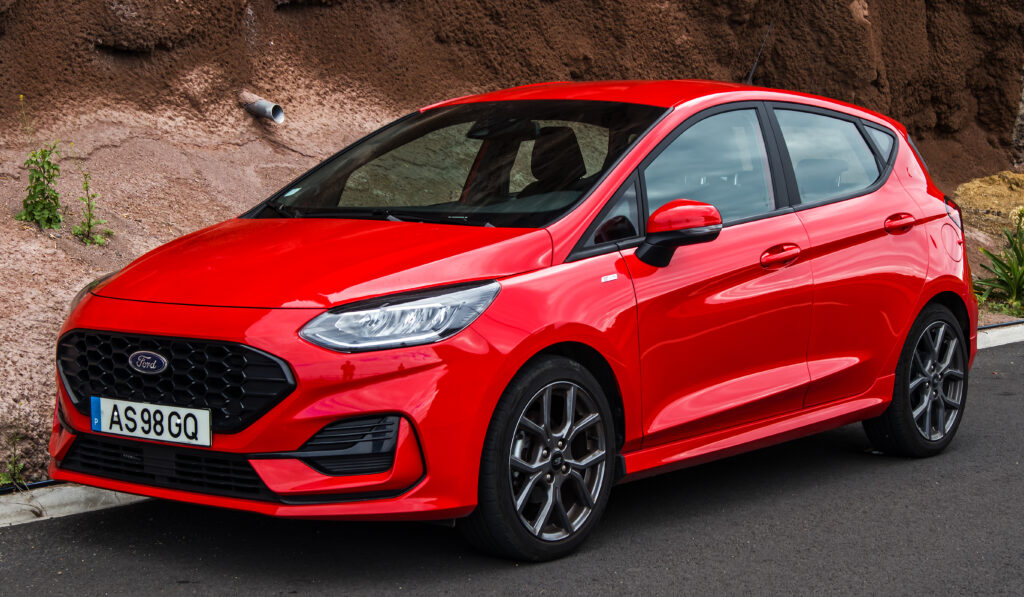
If you own a Ford Fiesta with a 1.0 EcoBoost engine, you have probably heard about the infamous wet belt. While the Ford Fiesta remains one of the UK's most popular small cars, replacing its wet timing belt can be surprisingly expensive.
So, how much does a Ford Fiesta wet belt replacement cost in the UK?
In 2026, we can generally expect to pay between £800 and £1,200 for a comprehensive Ford Fiesta 1.0 EcoBoost wet belt replacement at an independent garage or specialist. Some basic services cost less, while main dealerships and particularly extensive repairs can exceed £1,500.
The exact price depends on the engine version, garage location, replacement parts and whether additional components need attention.
In this guide, we'll explore replacement prices, explain why this repair is expensive, identify affected Fiesta engines and discuss how to prevent potentially serious engine damage.
Content in this publication
- Ford Fiesta Wet Belt Replacement Cost in the UK
- What Is a Ford Fiesta Wet Belt?
- Which Ford Fiesta Models Have a Wet Belt?
- Why Is Ford Fiesta Wet Belt Replacement So Expensive?
- Ford Fiesta Wet Belt Replacement Labour Cost
- How Often Should a Ford Fiesta Wet Belt Be Replaced?
- Ford Fiesta Wet Belt Failure Symptoms
- What Happens If the Ford Fiesta Wet Belt Breaks?
- Ford Fiesta Wet Belt Replacement: Main Dealer vs Independent Garage
- How to Save Money on Ford Fiesta Wet Belt Replacement
- Which Engine Oil Should We Use in a Ford Fiesta 1.0 EcoBoost?
- Can You Replace a Ford Fiesta Wet Belt Yourself?
- Is It Worth Replacing the Wet Belt on an Older Fiesta?
- Buying a Used Ford Fiesta: Check the Wet Belt
- How Long Does a Ford Fiesta Wet Belt Replacement Take?
- How to Find a Reliable Ford Wet Belt Specialist
- Ford Fiesta Wet Belt Replacement Cost by Year
- Frequently Asked Questions
- 1. How Much Does a Ford Fiesta 1.0 EcoBoost Wet Belt Replacement Cost?
- 2. At What Mileage Should a Ford Fiesta Wet Belt Be Changed?
- 3. Can a Ford Fiesta Wet Belt Fail Without Warning?
- 4. Does a Ford Fiesta Wet Belt Replacement Include the Oil Pump Belt?
- 5. Is the Ford Fiesta 1.0 EcoBoost Reliable After Wet Belt Replacement?
- Final Thoughts: Is Ford Fiesta Wet Belt Replacement Worth the Cost?
Ford Fiesta Wet Belt Replacement Cost in the UK
The following table provides an estimated breakdown of replacement costs for the Ford Fiesta 1.0 EcoBoost.
| Service Type | Estimated UK Cost |
|---|---|
| Basic wet timing belt replacement | £550–£900 |
| Timing belt and oil pump belt replacement | £650–£1,100 |
| Comprehensive independent specialist package | £950–£1,400 |
| Ford main dealer replacement | £1,200–£1,900 |
| Inspection and sump removal | £150–£300 |
These are indicative estimates rather than guaranteed quotes. Prices vary between garages, and not every later Fiesta engine has a wet camshaft timing belt.
What Is Included in a Typical Wet Belt Replacement?
A comprehensive replacement package may include:
- Main wet timing belt, where fitted.
- Oil pump drive belt.
- Timing belt tensioner and associated components.
- Engine oil and oil filter replacement.
- Sump removal and cleaning.
- Oil pickup strainer inspection and cleaning.
- Necessary seals, bolts and gaskets.
- Water pump replacement, where appropriate.
- Engine timing adjustment and final testing.
We should always request a detailed quotation rather than choosing the cheapest advertised price.
A £700 repair that excludes essential work may ultimately cost more than a £1,050 package that includes both belts, oil-system cleaning and replacement components.
What Is a Ford Fiesta Wet Belt?
A wet belt, also called a belt-in-oil timing belt, is a reinforced rubber belt that operates inside the engine and is exposed to engine oil.
Unlike a traditional timing belt, which generally runs outside the engine's lubricated components, a wet belt operates in an oil-rich environment.
Ford introduced this technology in its 1.0-litre EcoBoost engine to improve efficiency, reduce friction and make the engine more compact.
However, the system has developed a reputation for premature deterioration in certain applications.
How Does the Wet Belt Work?
In earlier Ford Fiesta 1.0 EcoBoost engines, the wet timing belt synchronises the movement of the crankshaft and camshafts.
This coordination ensures that the engine valves open and close at the correct moments.
A separate belt drives the oil pump, which circulates engine oil to critical components.
Both systems are important, although their maintenance requirements and replacement procedures can differ.
Why Can Wet Belts Cause Problems?
Over time, some wet belts can deteriorate and release rubber particles into the engine oil.
These particles may accumulate around the oil pickup strainer, restricting oil circulation.
Insufficient lubrication can damage important engine components, including:
- Crankshaft bearings.
- Camshafts and associated components.
- Turbocharger bearings.
- Other internal engine components.
In severe cases, oil starvation can result in complete engine failure.
This is why checking the condition of the belt and maintaining the correct engine oil are particularly important.
Which Ford Fiesta Models Have a Wet Belt?
Not every Ford Fiesta uses the same timing system.
The engine design changed during the Fiesta's production life, so identifying the exact engine is essential before arranging a replacement.
| Ford Fiesta Version | Timing System |
|---|---|
| Earlier 1.0 EcoBoost, approximately 2012–2017 | Wet timing belt and oil pump belt |
| 1.0 EcoBoost during the 2018–2020 transition | Depends on engine version |
| Later 1.0 EcoBoost, including mild hybrids | Timing chain for camshafts, with a wet oil pump belt on relevant versions |
| 1.25 Duratec petrol | Conventional timing belt |
| 1.1 Ti-VCT petrol | Conventional timing belt |
| Fiesta ST 1.6 EcoBoost | Conventional timing belt |
| Fiesta ST 1.5 EcoBoost | Timing chain |
The revised 1.0 EcoBoost engine introduced chain-driven camshafts but retained a separate oil pump belt running in oil. The changeover cannot reliably be determined from registration year alone.
Does a 2015 Ford Fiesta Have a Wet Belt?
If we own a 2015 Ford Fiesta fitted with the original 1.0 EcoBoost petrol engine, it generally uses a wet timing belt.
This makes replacement history particularly important as the vehicle ages.
A 2015 Fiesta with its original wet belt is now approximately 11 years old in 2026.
Even if the mileage is relatively low, belt age should not be ignored.
Does a 2018 Ford Fiesta Have a Wet Belt?
A 2018 Ford Fiesta 1.0 EcoBoost may have the earlier wet timing belt arrangement or a revised engine, depending on its production specification.
Therefore, we should not assume that every 2018 Fiesta requires the same repair.
A Ford dealer or experienced independent specialist can identify the correct engine configuration using the vehicle identification number (VIN) and engine code.
Do Newer Ford Fiestas Still Have Wet Belts?
Some later 1.0 EcoBoost engines use a timing chain to drive the camshafts rather than the original wet timing belt.
However, the presence of a timing chain does not automatically mean that the engine has no belt operating in oil.
Certain later engines retain a wet oil pump drive belt.
We should confirm the engine specification before deciding that wet belt maintenance is unnecessary.
Why Is Ford Fiesta Wet Belt Replacement So Expensive?
The Ford Fiesta wet belt replacement cost is considerably higher than a conventional timing belt replacement because the procedure requires extensive engine disassembly.
With many traditional timing belts, technicians can access the belt relatively easily after removing external covers and related components.
On the wet-belt EcoBoost engine, access is more complicated.
1. Labour-Intensive Replacement
A complete wet belt replacement can require approximately six to ten hours of labour, depending on the engine, the garage's procedure and any additional work discovered.
Technicians may need to remove or reposition several engine components to access the timing system.
Specialist locking tools are also required to maintain correct engine timing.
2. Oil System Cleaning
Cleaning the lubrication system is an important part of a comprehensive repair.
If the belt has started deteriorating, rubber debris can collect inside the sump and oil pickup strainer.
Simply replacing the belt without dealing with contamination could leave the engine vulnerable to lubrication problems.
3. Additional Replacement Parts
A proper repair may involve more than installing a new belt.
Depending on the engine and package, the garage may also replace the oil pump drive belt, seals, bolts, tensioner and other associated components.
Fresh engine oil and an oil filter are also normally required.
4. Specialist Equipment and Experience
Incorrect installation can cause serious engine damage.
For this reason, garages experienced with Ford EcoBoost engines may provide better overall value than workshops unfamiliar with the procedure.
We should pay attention to the work included and the garage's experience, not just the total invoice.
Ford Fiesta Wet Belt Replacement Labour Cost
Labour represents a substantial proportion of the overall repair bill.
Let's consider an illustrative example.
| Expense | Estimated Cost |
|---|---|
| Timing belt kit and associated parts | £180 |
| Oil pump belt and related components | £75 |
| Labour: 8 hours at £65 | £520 |
| Engine oil and filter | £75 |
| Seals, cleaning materials and consumables | £50 |
| Illustrative total | £900 |
These figures illustrate how a repair bill can reach £900. They are not a fixed garage quote, and actual prices depend on labour rates, parts and whether VAT is included.
Some specialist packages also include water pump replacement, additional cleaning and other preventive work.
How Often Should a Ford Fiesta Wet Belt Be Replaced?
Replacement intervals are among the most confusing aspects of Ford Fiesta wet belt maintenance.
For certain earlier 1.0 EcoBoost engines, the commonly quoted UK service interval was 10 years or 150,000 miles, whichever came first.
However, Ford's published schedules can vary by model year and market. Some maintenance schedules specify shorter replacement intervals.
We should therefore verify the latest applicable interval for our exact vehicle through Ford or the manufacturer's service information.
Should We Replace the Wet Belt Earlier?
Some independent EcoBoost specialists recommend more conservative replacement intervals because belt degradation has been reported before the traditionally quoted maximum.
Depending on vehicle history and condition, a specialist may recommend replacement around six to eight years or 60,000–100,000 miles.
These are precautionary recommendations, not a universal Ford maintenance schedule.
Factors influencing the decision include:
- Vehicle age.
- Mileage.
- Engine oil change history.
- Correct oil specification.
- Frequent short journeys.
- Previous signs of low oil pressure.
- Evidence of belt deterioration.
If our Fiesta has incomplete service records, an earlier inspection may be sensible.
Ford Fiesta Wet Belt Failure Symptoms
One difficult aspect of wet belt deterioration is that it does not always produce obvious warning signs.
Some engines operate normally until oil circulation becomes restricted.
Nevertheless, there are symptoms we should take seriously.
1. Low Oil Pressure Warning
An illuminated oil pressure warning can indicate a potentially serious lubrication problem.
A deteriorating belt may release particles that restrict the oil pickup strainer.
However, low oil pressure can also have other causes, so a proper diagnosis is necessary.
If the red oil pressure warning appears while driving, we should stop safely, switch off the engine and arrange professional assistance. Continuing to drive can cause extensive damage.
2. Unusual Engine Noises
Mechanical rattling, knocking or other unfamiliar engine noises can indicate lubrication or timing-related problems.
These symptoms do not necessarily prove that the wet belt is failing.
However, they should prompt an inspection, especially if the vehicle is approaching its replacement interval.
3. Loss of Engine Performance
A deteriorating lubrication or timing system may be associated with:
- Reduced engine performance.
- Hesitation during acceleration.
- Unusual engine behaviour.
- Engine management warning lights.
Because these symptoms have multiple possible causes, diagnostic testing is important.
4. Rubber Debris in the Engine Oil
Pieces of deteriorated belt material may collect inside the sump or oil pickup strainer.
A mechanic may identify this contamination during an appropriate inspection.
Finding belt fragments is a serious warning that further investigation is required.
5. Sudden Engine Failure
In severe cases, belt or lubrication-system failure can cause the engine to stop operating.
Unfortunately, the first obvious symptom may occur only after damage has already developed.
Preventive maintenance is therefore more reliable than waiting for warning signs.
What Happens If the Ford Fiesta Wet Belt Breaks?
The consequences depend on whether the timing belt breaks, loses its integrity or deteriorates sufficiently to contaminate the lubrication system.
A broken main timing belt can disrupt the relationship between the crankshaft and camshafts.
This can result in piston-to-valve contact and significant internal damage.
Alternatively, a deteriorating belt may release debris that restricts oil circulation.
How Much Does Wet Belt Failure Cost to Repair?
If belt deterioration causes serious engine damage, the repair cost may be substantially greater than preventive replacement.
| Repair | Approximate UK Cost |
|---|---|
| Preventive comprehensive wet belt replacement | £800–£1,200 |
| Additional oil-system repairs | Depends on damage |
| Reconditioned or replacement engine installation | £2,500–£4,500+ |
| Severe engine damage requiring extensive work | Potentially £5,000+ |
These are planning estimates, not guaranteed repair prices. The final cost depends on the extent of the damage and the replacement engine selected.
For an older Fiesta, a major engine repair can represent a significant percentage of the vehicle's market value.
Ford Fiesta Wet Belt Replacement: Main Dealer vs Independent Garage
One of the most important decisions is where to have the work completed.
Both Ford dealerships and independent workshops can perform the repair, provided they have the relevant expertise.
Ford Main Dealer
Potential advantages include access to manufacturer repair information, genuine Ford parts and manufacturer-specific diagnostic equipment.
A dealership can also check whether any applicable service campaign or manufacturer support is available.
However, labour charges may be higher than those at independent garages.
Independent Ford Specialist
An experienced independent specialist can be an attractive alternative.
Some workshops regularly replace 1.0 EcoBoost wet belts and offer comprehensive fixed-price packages.
This can make pricing more predictable while ensuring that important components are addressed.
Before booking, we should confirm precisely what the package includes.
How to Save Money on Ford Fiesta Wet Belt Replacement
A wet belt replacement is not an ideal repair for cutting corners. Nevertheless, we can reduce unnecessary costs with careful planning.
Compare Several Detailed Quotes
We recommend requesting quotes from at least three garages experienced with Ford EcoBoost engines.
Compare the following:
- Total price including VAT.
- Main timing belt replacement, where applicable.
- Oil pump belt replacement.
- Oil pickup strainer cleaning.
- Engine oil and filter.
- New seals, bolts and associated components.
- Warranty coverage.
A detailed quotation makes it easier to determine whether two garages are offering equivalent services.
Choose a Comprehensive Package
A comprehensive service can be better value than a basic belt-only replacement.
If the engine requires additional work later, paying for repeated disassembly could become expensive.
It is worth comparing the additional cost of replacing appropriate components while the engine is already accessible.
Book Replacement Before Failure
Preventive replacement is usually considerably cheaper than repairing an engine damaged by timing or lubrication failure.
For this reason, it makes sense to plan for the cost rather than postpone maintenance indefinitely.
Maintain the Engine Correctly
Following the correct service schedule and using approved engine oil may reduce the risk of premature deterioration.
Oil maintenance is especially important because the belt operates in direct contact with the engine lubricant.
Which Engine Oil Should We Use in a Ford Fiesta 1.0 EcoBoost?
Many earlier Ford Fiesta 1.0 EcoBoost engines specify SAE 5W-20 oil meeting Ford specification WSS-M2C948-B.
However, Ford oil specifications can differ between engine generations and model years.
We should always check the owner's manual or confirm the appropriate oil through the vehicle's VIN.
Why Is Using the Correct Oil Important?
Wet belts are designed to operate with compatible engine lubricants.
Using oil that does not meet the required specification may negatively affect belt durability and engine performance.
Regular oil changes also help control contamination and maintain proper lubrication.
For long-term reliability, we should:
- Use oil meeting the exact Ford specification.
- Follow the correct oil service interval.
- Replace the oil filter when required.
- Avoid repeatedly delaying scheduled servicing.
- Investigate any oil pressure warning immediately.
Correct oil maintenance does not guarantee that a wet belt will never deteriorate, but it is an important preventive measure.
Can You Replace a Ford Fiesta Wet Belt Yourself?
Technically, wet belt replacement is possible for someone with substantial mechanical experience and the necessary equipment.
However, we would not recommend it as a typical DIY project.
The procedure requires accurate engine timing, specialist tools, correct tightening procedures and careful handling of internal engine components.
Mistakes can cause expensive damage.
Tools and Skills Required
A professional repair may require:
- Engine timing locking tools.
- Appropriate torque equipment.
- Engine support equipment.
- Specialised tools for associated components.
- Correct sealing materials.
- Manufacturer repair instructions.
The exact equipment depends on the EcoBoost engine version.
Even if replacing the belt yourself reduces labour expenses, the financial risk of incorrect installation can be substantial.
For most Fiesta owners, an experienced specialist is the safer option.
Is It Worth Replacing the Wet Belt on an Older Fiesta?
Whether the repair makes financial sense depends on the vehicle's overall condition and market value.
A well-maintained Fiesta with a healthy engine, good bodywork and no major mechanical problems may be worth keeping.
However, the decision becomes more complicated when the vehicle also needs expensive repairs elsewhere.
Example: Ford Fiesta Worth £4,500
Imagine we own a Fiesta worth approximately £4,500.
A comprehensive wet belt replacement costs £1,000.
That represents around 22% of the vehicle's estimated market value.
Although this is significant, replacing the car could cost considerably more.
If the Fiesta is otherwise reliable, preventive replacement might be financially reasonable.
When Replacement May Not Be Worthwhile
We might reconsider the repair if the car also has:
- Serious engine damage.
- Major gearbox problems.
- Significant corrosion.
- Multiple expensive outstanding repairs.
- A very low market value.
We should compare the combined repair cost with the price of a suitable replacement vehicle rather than focusing only on the wet belt.
Buying a Used Ford Fiesta: Check the Wet Belt
If we are planning to buy a used Ford Fiesta 1.0 EcoBoost, wet belt maintenance deserves particular attention.
An inexpensive used Fiesta can become a costly purchase if a major timing system repair is overdue.
Ask for Proof of Replacement
We should request documentation showing when the wet belt was replaced.
Ideally, the invoice should identify:
- The date of replacement.
- Vehicle mileage.
- Parts installed.
- Whether the oil pump belt was replaced.
- Whether the sump and oil pickup were cleaned.
- The workshop responsible.
A verbal assurance that the belt has been changed is less useful than a detailed invoice.
Check the Full Service History
A complete service history is particularly valuable on older EcoBoost engines.
We should examine the frequency of oil changes and whether the correct lubricant was used.
Missing oil service records may increase uncertainty about the belt's condition.
Negotiate Based on Upcoming Maintenance
If the Fiesta is approaching its applicable replacement interval and has no documented belt replacement, we should account for the expense when negotiating the purchase price.
For example, a vehicle advertised at £5,500 that requires a £1,000 wet belt service effectively represents a potential £6,500 commitment before other ownership expenses.
This does not automatically make the car a poor purchase, but it should influence our decision.
How Long Does a Ford Fiesta Wet Belt Replacement Take?
A comprehensive Ford Fiesta EcoBoost wet belt replacement may require most of a working day.
Depending on the workshop, engine configuration and additional work, the vehicle may need to remain at the garage longer.
The procedure can involve:
- Preparing and supporting the engine.
- Removing necessary components.
- Accessing the timing system.
- Removing the existing belt or belts.
- Inspecting associated components.
- Cleaning relevant lubrication-system parts.
- Installing replacement components.
- Setting and checking engine timing.
- Refilling the engine with correct fluids.
- Testing for leaks and proper operation.
If the garage discovers damaged components or significant oil-system contamination, additional repair time may be necessary.
How to Find a Reliable Ford Wet Belt Specialist
Choosing a garage that regularly works on the 1.0 EcoBoost engine can make a meaningful difference.
We should look for workshops that can explain their replacement procedure and provide a clear breakdown of the service.
Useful questions include:
- Have you replaced wet belts on this exact Fiesta engine before?
- Does the quotation include the oil pump drive belt?
- Will you inspect and clean the oil pickup strainer?
- Which replacement parts and oil specification will you use?
- Is the quotation inclusive of VAT?
- What warranty applies to the repair?
A professional garage should be able to explain the proposed work without relying on vague descriptions.
Ford Fiesta Wet Belt Replacement Cost by Year
The registration year alone does not determine replacement cost.
The most important factor is the engine configuration.
| Fiesta Model Year | What to Check |
|---|---|
| 2013 | Earlier 1.0 EcoBoost wet timing belt |
| 2014 | Earlier 1.0 EcoBoost wet timing belt |
| 2015 | Earlier 1.0 EcoBoost wet timing belt |
| 2016 | Earlier 1.0 EcoBoost wet timing belt |
| 2017 | Wet timing belt on relevant EcoBoost versions |
| 2018 | Verify exact EcoBoost engine version |
| 2019 | Verify whether the engine uses a belt or chain cam drive |
| 2020 | Revised chain-driven EcoBoost versions increasingly common |
| 2021–2023 | Check chain-driven camshaft system and oil pump belt requirements |
The table applies to the relevant 1.0 EcoBoost petrol engines, not every Fiesta engine offered in those years.
For accurate repair pricing, we should supply the registration number and VIN to the garage.
Frequently Asked Questions
1. How Much Does a Ford Fiesta 1.0 EcoBoost Wet Belt Replacement Cost?
A comprehensive wet timing belt replacement typically costs approximately £800–£1,200 at a UK independent garage or specialist.
Some services cost less, while extensive specialist packages and Ford main dealer repairs can cost £1,500 or more.
The final price depends on the engine specification, included components and labour charges.
2. At What Mileage Should a Ford Fiesta Wet Belt Be Changed?
For some earlier UK 1.0 EcoBoost engines, the historically quoted maximum was 150,000 miles or 10 years.
However, replacement schedules differ by market and engine version, and some specialists recommend earlier preventive replacement.
We should confirm the current schedule for our vehicle using its VIN and maintenance documentation.
3. Can a Ford Fiesta Wet Belt Fail Without Warning?
Yes. Wet belt deterioration can occur without obvious symptoms.
In some cases, belt material accumulates in the lubrication system before the driver notices a problem.
This is why regular maintenance and replacement at the appropriate interval are important.
4. Does a Ford Fiesta Wet Belt Replacement Include the Oil Pump Belt?
Not necessarily.
Some comprehensive packages include both belts, while cheaper quotations may exclude components or cleaning work.
We should ask the garage to confirm exactly what is included before approving the repair.
5. Is the Ford Fiesta 1.0 EcoBoost Reliable After Wet Belt Replacement?
A properly maintained 1.0 EcoBoost engine can continue providing dependable service after a professionally completed wet belt replacement.
However, replacement alone cannot guarantee reliability, especially if the engine has already suffered lubrication damage.
Correct oil maintenance, appropriate servicing and prompt attention to warning symptoms remain essential.
Final Thoughts: Is Ford Fiesta Wet Belt Replacement Worth the Cost?
The Ford Fiesta wet belt replacement cost is higher than many owners expect, particularly for a small petrol hatchback.
However, the expense needs to be considered alongside the potential consequences of belt deterioration or engine damage.
For an earlier 1.0 EcoBoost Fiesta in good mechanical condition, spending approximately £800–£1,200 on a comprehensive preventive replacement can be more economical than risking a major engine repair.
Our main recommendations are to verify the exact engine version, confirm the applicable replacement schedule, maintain the correct oil specification and obtain detailed quotations from experienced Ford specialists.
Most importantly, we should not assume that every Fiesta uses the same timing system. Some later 1.0 EcoBoost engines use timing chains for the camshafts while retaining a separate oil pump belt.
Ultimately, checking the correct engine configuration and maintaining it properly are the best ways to manage Ford Fiesta wet belt replacement expenses and protect the vehicle over the long term.
If you want to know other articles similar to Ford Fiesta Wet Belt Replacement Cost: 2026 Guide you can visit the category Service and Parts.
MG HS Tyre Pressure Guide: Correct PSI and TPMS
Toyota Yaris Cross Dashboard Symbols

BMW 3 Series Warning Lights: The Complete Guide to Understanding Every Dashboard Symbol
Nissan Qashqai Fuel Tank Capacity: Complete Guide

Suzuki Swift Fuel Tank Capacity: Complete Guide
Mazda CX-5 Weight (2013–2026): Complete Guide in Pounds and KG
Leave a Reply
More content of your interest