
Ford Ranger Towing Capacity Australia: Complete Guide

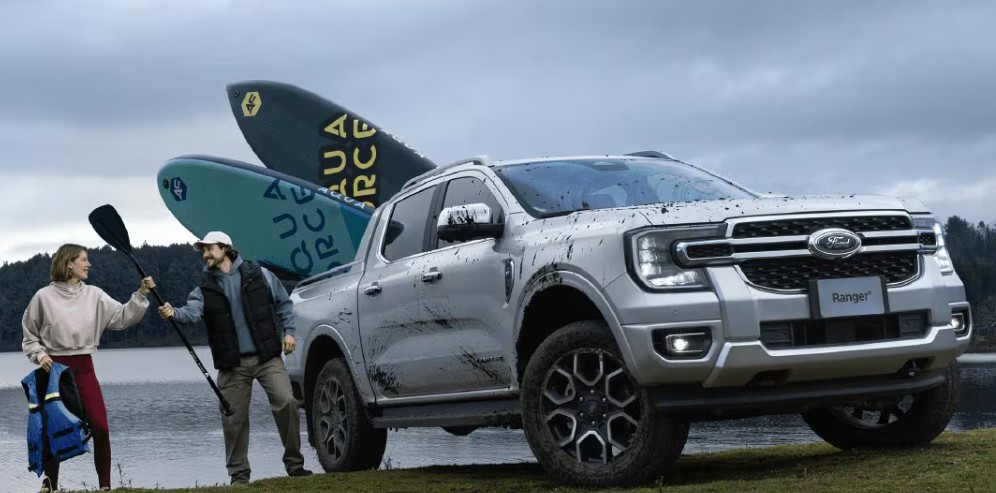
The Ford Ranger towing capacity is one of the main reasons this ute remains a popular choice among Australian drivers. Whether we are pulling a caravan along the coast, transporting machinery between worksites, launching a fishing boat, or carrying a loaded box trailer, the Ranger promises the muscle needed to get the job done.
However, the headline towing figure does not tell the whole story.
A Ford Ranger may advertise a maximum braked towing capacity of 3,500 kg, but that does not automatically mean we can load a 3.5-tonne caravan, fill the tray with camping equipment, seat five adults and remain within every legal weight limit. Towing capacity is only one piece of a larger puzzle involving payload, tow-ball download, Gross Vehicle Mass and Gross Combined Mass.
Most current Australian Ford Ranger variants offer up to 3,500 kg of braked towing capacity when correctly equipped with the appropriate Ford tow pack. The performance-focused Ranger Raptor is rated lower, while the heavy-duty Ranger Super Duty raises the ceiling considerably. Ford also states that state and territory regulations apply and that vehicle loads may need to be restricted to remain within GVM and GCM limits.
In this guide, we will break down what those numbers actually mean, compare major Ranger variants and explain how to calculate a safe real-world towing setup.
Content in this publication
- What Is the Ford Ranger Towing Capacity in Australia?
- Ford Ranger Towing Capacity by Model
- Ford Ranger XL Towing Capacity
- Ford Ranger XLS Towing Capacity
- Ford Ranger XLT Towing Capacity
- Ford Ranger Sport Towing Capacity
- Ford Ranger Wildtrak Towing Capacity
- Ford Ranger Platinum Towing Capacity
- Ford Ranger Raptor Towing Capacity
- Ford Ranger Plug-in Hybrid Towing Capacity
- Ford Ranger Super Duty Towing Capacity
- Ford Ranger Engine Options and Towing Performance
- The Weight Terms Every Ranger Owner Must Know
- Why 3,500 kg Does Not Always Mean 3,500 kg
- How to Calculate Your Real Ford Ranger Towing Capacity
- Best Ford Ranger for Towing a Caravan
- Ford Ranger Towing Technology
- How Towing Affects Fuel Consumption
- Safe Ford Ranger Towing Tips
- Common Ford Ranger Towing Mistakes
- Is the Ford Ranger a Good Tow Vehicle?
- Conclusion
- Frequently Asked Questions
What Is the Ford Ranger Towing Capacity in Australia?
The standard Ford Ranger range can tow up to 3,500 kg with trailer brakes when fitted with suitable genuine Ford towing equipment. That figure covers many current diesel models and also applies to the Ford Ranger Plug-in Hybrid.
The major exceptions are the Ranger Raptor and Ranger Super Duty.
| Ford Ranger version | Maximum braked towing capacity |
|---|---|
| Most regular Ranger variants | Up to 3,500 kg |
| Ranger Plug-in Hybrid | Up to 3,500 kg |
| Ranger Raptor | Up to 2,500 kg |
| Ranger Super Duty | Up to 4,500 kg |
Ford lists the regular Ranger at up to 3,500 kg, the Ranger Raptor at up to 2,500 kg and the Ranger Super Duty at up to 4,500 kg when properly equipped. The exact limit always depends on the model, body style, equipment and compliance plate of the individual vehicle.
These figures refer to braked towing capacity. In other words, the trailer must have its own effective braking system.
A small unbraked garden trailer operates under a much lower limit. Rather than assuming a universal figure, we should check the towing section of the owner’s manual and the vehicle’s official specifications because limits can vary by model year and configuration.
Ford Ranger 3,500 kg Towing Capacity Explained
The familiar 3,500 kg figure refers to the maximum permitted mass of a braked trailer under specified conditions.
It does not mean the Ranger can carry 3,500 kg in its tray. It also does not refer to the empty weight of the trailer.
For towing calculations, we normally work with the trailer’s Aggregate Trailer Mass, commonly shortened to ATM. This is the trailer’s total loaded mass when it is not connected to the vehicle.
That includes:
- The empty trailer
- Water in its tanks
- Gas bottles
- Food and luggage
- Batteries
- Solar equipment
- Tools and accessories
- Bikes, generators or outdoor equipment
- Everything else carried inside or attached to it
A caravan with a tare weight of 2,800 kg can easily approach or exceed 3,500 kg after its tanks, accessories and holiday gear are added. Tare weight is therefore only the opening chapter, not the ending.
Braked Versus Unbraked Towing
A braked trailer has brakes that help slow the trailer when the Ranger brakes. These may be electric, hydraulic or mechanical, depending on the trailer and its design.
An unbraked trailer relies almost entirely on the tow vehicle’s braking system. Consequently, its permitted mass is considerably lower.
This distinction matters because a 3,500 kg towing claim always refers to a properly braked trailer. Attempting to tow a heavy trailer without functioning brakes would be like asking one person to stop a charging rugby team. The Ranger’s brakes may be strong, but physics does not negotiate.
Ford Ranger Towing Capacity by Model
Ford offers the Ranger in numerous combinations of engines, drivetrains, cabs and trim levels. Names and specifications may change with each model year, so buyers should never rely only on the badge attached to the tailgate.
The compliance plate, owner’s manual and official specification sheet for the exact vehicle remain the final references.
Ford Ranger XL Towing Capacity
The Ranger XL is commonly chosen for trade, fleet and agricultural use. Depending on its engine, drivetrain and body configuration, a correctly equipped current model may offer up to 3,500 kg of braked towing capacity.
Its practical interior and work-focused positioning make it attractive to drivers who care more about usable capability than decorative extras.
However, the XL badge alone does not confirm the limit. An XL may be available as a cab chassis, Super Cab, Double Cab, 4x2 or 4x4. Each configuration has its own kerb weight and payload implications.
A cab-chassis vehicle also gains additional weight when a tray, canopy, service body or tool storage system is fitted. That permanent equipment reduces the remaining payload before we load a single toolbox.
Ford Ranger XLS Towing Capacity
The Ranger XLS blends work-focused engineering with additional comfort and convenience features. Properly equipped examples can generally tow up to 3,500 kg braked.
The important question is not simply, “Can the XLS tow 3.5 tonnes?”
A better question is:
Can this exact XLS tow our fully loaded trailer while carrying our passengers, accessories and cargo without exceeding GVM, GCM or axle limits?
That longer question may sound less exciting, but it is the one that keeps a combination legal and stable.
Ford Ranger XLT Towing Capacity
The Ranger XLT is a popular option for drivers who use one vehicle for weekday work and weekend touring. Its cabin equipment, towing-oriented features and broad range of configurations make it suitable for caravans, boats and work trailers.
Many current XLT configurations are rated for up to 3,500 kg braked towing when fitted with the required towing equipment.
Nevertheless, optional accessories still count against payload. A canopy, bull bar, long-range tank, roof platform, auxiliary battery and drawer system may quietly consume hundreds of kilograms.
Individually, each accessory appears harmless. Together, they can eat payload like a flock of seagulls attacking hot chips.
Ford Ranger Sport Towing Capacity
The Ranger Sport combines visual upgrades with serious towing credentials. Depending on the applicable model specifications, it may provide the same headline 3,500 kg braked capacity as many mainstream Ranger versions.
The Sport can therefore suit touring families who want a more distinctive ute without stepping into the specialised Raptor.
When comparing it with an XLT or Wildtrak, we should examine more than engine output. Kerb weight, tyre choice, suspension behaviour, payload and standard equipment all influence the towing experience.
Ford Ranger Wildtrak Towing Capacity
The Wildtrak sits among the Ranger’s more premium touring-oriented variants. In current Australian specifications, properly equipped versions can offer up to 3,500 kg of braked towing capacity.
Its comfort and towing technology may make long-distance caravan travel less tiring. Yet the Wildtrak’s additional standard equipment can increase kerb weight compared with a simpler model.
A heavier base vehicle may leave less payload under the same GVM. That does not necessarily make it a poor tow vehicle; it simply means we must perform the calculations instead of judging capability by the brochure headline.
Ford Ranger Platinum Towing Capacity
The Ranger Platinum uses a 3.0-litre V6 turbo-diesel producing 184 kW and 600 Nm in current Australian specifications. Ford pairs it with a ten-speed automatic transmission and full-time four-wheel drive.
Its strong torque output and premium cabin make it appealing for long-distance towing. Properly equipped models can tow up to the regular Ranger maximum of 3,500 kg braked.
Still, power is only one component of towing performance. The vehicle must also manage cooling, braking, stability, axle loads and combined mass.
The V6 may pull a large caravan with reassuring ease, but effortless acceleration does not erase the weight limits printed by the manufacturer.
Ford Ranger Raptor Towing Capacity
The Ford Ranger Raptor has a maximum braked towing capacity of approximately 2,500 kg, rather than the 3,500 kg offered by most regular Ranger variants. Ford lists this lower capacity in its Australian towing guidance.
Why is the Raptor rated lower despite having a powerful engine?
Because it was designed primarily for high-performance off-road driving. Its suspension, tyres, chassis tuning and overall engineering priorities differ from those of a conventional load-hauling Ranger.
This is an excellent reminder that engine power and towing capacity are not the same thing. A vehicle may sprint like an athlete yet carry less than a slower, work-focused alternative.
The Raptor can still tow:
- Many camper trailers
- Small and medium boats
- Jet skis
- Motorbike trailers
- Horse floats within the applicable loaded limit
- Light caravans
However, buyers planning to tow a caravan approaching three tonnes should select a different Ranger configuration.
Ford Ranger Plug-in Hybrid Towing Capacity
The Ford Ranger Plug-in Hybrid retains a maximum braked towing capacity of 3,500 kg when fitted with the appropriate optional genuine Ford tow pack.
Ford Australia lists a combined output of 697 Nm, a towing capacity of 3,500 kg and payload exceeding 800 kg for applicable variants. Ford also warns that occupants, accessories, cargo and tow-ball download all form part of payload and that vehicles should be weighed to confirm compliance with GVM, GCM and axle ratings.
That makes the Ranger PHEV particularly interesting. It can provide electric driving for some everyday journeys without surrendering the headline towing rating expected from a serious Australian ute.
Does the Battery Reduce Its Towing Ability?
The battery and hybrid hardware add weight, but Ford has engineered the complete vehicle around that drivetrain. The official rating already considers the factory configuration.
The more relevant issue is payload. Because drivetrain components affect kerb weight, owners must check the exact payload of their selected PHEV version.
Towing may also increase petrol consumption and reduce the distance that can be driven using battery power. That is not a defect; it is the natural result of moving several tonnes through wind resistance, hills and traffic.
Ford Ranger Super Duty Towing Capacity
The Ford Ranger Super Duty changes the conversation completely.
Ford Australia rates it for up to 4,500 kg of braked towing capacity when fitted with genuine Ford towing equipment. It uses a specially calibrated 3.0-litre V6 turbo-diesel and a redesigned cooling system intended to support heavy-load operation.
This version targets drivers who have outgrown the limits of an ordinary dual-cab ute. Potential users include:
- Farmers
- Mining operators
- Emergency services
- Civil contractors
- Remote-area workers
- Heavy caravan owners
- Drivers towing large equipment trailers
A 4,500 kg rating is impressive, but it should never be confused with permission to ignore weight calculations. Ford explicitly notes that transported loads may need to be reduced to stay below GVM and GCM.
The larger towing allowance simply gives us a bigger envelope. We still have to remain inside it.
Ford Ranger Engine Options and Towing Performance
The current Australian Ranger range includes different powertrains, including four-cylinder turbo-diesel, V6 turbo-diesel, plug-in hybrid and the Raptor’s petrol performance engine.
Ford currently lists the 2.0-litre turbo-diesel at 125 kW and 405 Nm, while the 3.0-litre V6 turbo-diesel produces 184 kW and 600 Nm. The Ranger Plug-in Hybrid combines a 2.3-litre EcoBoost petrol engine with an electric motor for a stated combined output of 207 kW and 697 Nm.
Is the V6 Ranger Better for Towing?
For frequent heavy towing, the V6 turbo-diesel is likely to feel more relaxed than a less powerful engine.
Its additional torque may provide:
- Easier hill starts
- Stronger overtaking response
- Less frequent downshifting
- More relaxed acceleration
- Better performance with a heavily loaded trailer
However, “better” depends on the job.
A four-cylinder Ranger may be entirely sufficient for a 1,600 kg boat or 2,000 kg camper. Paying for more engine than we need does not automatically improve the ownership experience.
The V6 becomes more compelling when the trailer is heavy, the terrain is hilly or towing occurs frequently.
Does More Torque Increase Legal Towing Capacity?
Not by itself.
Torque influences how easily the vehicle pulls a load, but towing capacity is determined by the manufacturer after considering the complete vehicle.
Relevant factors include:
- Frame and chassis strength
- Engine cooling
- Transmission durability
- Brake capacity
- Suspension design
- Axle ratings
- Tyres
- Stability
- Towbar design
- Gross Combined Mass
This explains why the Raptor’s powerful petrol V6 does not give it the highest towing rating. The vehicle’s intended purpose matters as much as the engine.
The Weight Terms Every Ranger Owner Must Know
Towing language can feel like alphabet soup: ATM, GTM, GVM, GCM and TBM. Once we understand each term, the calculations become far less intimidating.
Tare Mass
Tare mass is generally the empty weight of the trailer as supplied, although the precise definition and included equipment should be checked on the trailer’s documentation.
It does not usually represent the mass of a trailer prepared for a real trip.
Water, gas, batteries, food and personal belongings can add substantial weight.
Aggregate Trailer Mass
Aggregate Trailer Mass is the total loaded mass of the trailer when it is standing independently and not connected to the Ranger.
For a standard Ranger rated to tow 3,500 kg, the trailer’s actual ATM must not exceed the lower of:
- The Ranger’s permitted towing capacity
- The trailer’s own ATM rating
- The towbar or towing equipment limit
- Any applicable legal restriction
The weakest limit wins.
Gross Trailer Mass
Gross Trailer Mass is the weight supported by the trailer’s wheels while the trailer is connected to the vehicle.
Because part of the trailer’s mass presses downward on the tow ball, GTM is normally lower than ATM.
A simplified relationship is:
GTM = ATM − tow-ball download
If a loaded caravan has an ATM of 3,000 kg and places 280 kg on the tow ball, its approximate GTM is 2,720 kg.
Tow-Ball Mass
Tow-ball mass, also called tow-ball download, is the downward force the trailer applies to the Ranger’s towbar.
Ford has previously listed a maximum tow-ball weight of 350 kg for applicable Rangers fitted with a genuine Ford tow pack. The exact permitted figure should be confirmed for the individual vehicle, towbar and trailer.
A common mistake is thinking tow-ball mass floats outside the vehicle’s weight calculations.
It does not.
Once the caravan is attached, its ball download becomes weight carried by the Ranger. It therefore consumes payload and contributes to the load placed on the vehicle and its axles.
Gross Vehicle Mass
Gross Vehicle Mass is the maximum legal mass of the Ranger itself when loaded.
It includes:
- The vehicle
- Driver and passengers
- Fuel
- Cargo
- Accessories
- Canopy or tray
- Tools
- Fridge and auxiliary battery
- Tow-ball download
Ford defines GVM as the maximum allowable vehicle weight, including the load transported and trailer tow-ball down weight, but excluding the trailer itself.
Gross Combined Mass
Gross Combined Mass is the maximum allowable total mass of the loaded Ranger and loaded trailer together.
A simple calculation is:
Actual vehicle mass + actual trailer mass = combined mass
The result must remain below the applicable GCM.
GCM is often the number that spoils an apparently perfect 3,500 kg towing plan. A ute may be technically allowed to tow a 3,500 kg trailer, but loading the vehicle to its maximum GVM at the same time may push the combined mass beyond its limit.
Why 3,500 kg Does Not Always Mean 3,500 kg
Imagine that we have a Ranger with the correct equipment and a 3,500 kg braked towing rating.
We add:
- A bull bar
- A winch
- A canopy
- Storage drawers
- A fridge
- Recovery equipment
- Two adults
- Two children
- Camping supplies
- A 320 kg tow-ball download
The Ranger may still be able to pull the trailer, but its available payload could be exhausted before the trailer reaches the advertised maximum.
This is why towing discussions must move beyond “What can it pull?”
The better question is, “What can the complete combination legally carry?”
Payload Disappears Faster Than Expected
Suppose a hypothetical Ranger has 950 kg of available payload before accessories.
We then add:
| Item | Example mass |
| Driver and three passengers | 280 kg |
| Bull bar and winch | 85 kg |
| Canopy and drawers | 150 kg |
| Fridge and battery system | 65 kg |
| Tools and recovery gear | 90 kg |
| Caravan tow-ball download | 300 kg |
| Total added mass | 970 kg |
In this example, the vehicle would already exceed its theoretical payload before we add loose luggage, food or other equipment.
The numbers are illustrative rather than model-specific, but the lesson is real: accessories and ball weight must be counted.
How to Calculate Your Real Ford Ranger Towing Capacity
The safest method is to work through the combination step by step.
Step 1: Identify the Exact Ranger
Record the following:
- Model year
- Variant
- Cab type
- Pick-up or cab chassis
- Engine
- Transmission
- 4x2 or 4x4
- Factory options
- Compliance plate details
Do not borrow specifications from another Ranger that merely looks similar.
Step 2: Find Every Official Limit
Locate the vehicle’s:
- Maximum braked towing capacity
- Maximum unbraked towing capacity
- GVM
- GCM
- Front axle rating
- Rear axle rating
- Maximum tow-ball download
- Towbar rating
Check the owner’s manual, official Ford documents, compliance information and towing-equipment labels.
Step 3: Weigh the Ranger Ready for Travel
The Ranger should be weighed in the same condition in which it will tow.
That means including:
- Occupants
- Full or normal fuel level
- Permanent accessories
- Cargo
- Tools
- Pets
- Food and luggage
A public weighbridge can provide a much more useful answer than a spreadsheet filled with optimistic guesses.
Step 4: Weigh the Loaded Trailer
Weigh the caravan, boat or trailer after loading it for a normal journey.
A caravan weighed empty at the dealership tells us little about its holiday-ready mass.
Fill the water tanks as they will normally be used. Load the gas bottles, batteries, food, clothes, chairs, bikes and generator. Reality is heavier than imagination.
Step 5: Measure Tow-Ball Download
Use a suitable tow-ball weight scale or professional weighing service.
Too little ball weight may contribute to trailer instability. Too much can overload the Ranger’s rear axle, consume payload and lighten the front axle.
The ideal distribution depends on the trailer, so we should follow its manufacturer’s guidance rather than applying an arbitrary percentage to every design.
Step 6: Check GVM, GCM and Axle Loads
After connecting the trailer, verify that the combination remains within:
- Vehicle GVM
- Vehicle GCM
- Front axle rating
- Rear axle rating
- Trailer ATM
- Trailer GTM
- Towbar capacity
- Tow-ball limit
- Tyre load ratings
Passing one test does not excuse failing another.
Best Ford Ranger for Towing a Caravan
For many caravan owners, a V6 turbo-diesel Ranger provides an appealing combination of torque, refinement and 3,500 kg maximum braked towing capacity.
The best version still depends on the caravan and the way we travel.
For a Lightweight Camper Trailer
A four-cylinder Ranger may offer more than enough performance. There is little reason to chase the largest engine when the trailer weighs well below the vehicle’s limits.
For a Medium Caravan
A mainstream Ranger with the appropriate towing package can be a strong option. Payload should become a central part of the buying decision, especially when accessories and several occupants are involved.
For a Heavy Caravan Near 3,500 kg
A V6 Ranger may provide a more relaxed driving experience, but careful weight management becomes essential.
For a trailer that genuinely weighs close to 3,500 kg loaded, we should leave a sensible safety margin rather than planning to operate on every maximum number simultaneously.
For a Trailer Above 3,500 kg
A standard Ranger is not suitable when the trailer’s loaded mass exceeds its rated towing capacity.
The Ranger Super Duty may accommodate up to 4,500 kg braked when correctly equipped, but licensing, registration, trailer braking, GCM and state regulations still need to be checked.
Ford Ranger Towing Technology
Modern Rangers may offer several systems that make towing easier, depending on the variant and equipment.
Integrated Trailer Brake Controller
An integrated trailer brake controller helps coordinate the operation of compatible electric trailer brakes.
Correct adjustment matters. If the gain is too low, the trailer may push the vehicle under braking. If it is too high, the trailer wheels may lock or braking may feel abrupt.
Tow/Haul Driving Mode
Tow/Haul mode adjusts vehicle behaviour for towing. It may hold gears differently, improve engine braking and reduce unnecessary transmission hunting.
It does not increase the legal towing capacity.
Think of it as choosing the right shoes for a long hike. It helps the vehicle perform the task, but it does not make the mountain smaller.
Trailer Sway Control
Trailer sway control can detect instability and intervene through braking or engine management.
It is a valuable backup, not permission to ignore loading, tyre pressures, speed or weather conditions.
Pro Trailer Backup Assist
Ford’s available Pro Trailer Backup Assist allows the driver to guide the trailer using a control in the cabin while the vehicle manages the steering response. Ford also describes supporting camera views intended to improve visibility while reversing.
This can reduce the stress of backing a caravan into a narrow campsite. Even so, drivers should practise in a clear area before attempting a difficult manoeuvre.
How Towing Affects Fuel Consumption
A Ford Ranger will use more fuel while towing. The increase depends on:
- Trailer mass
- Trailer height and shape
- Road speed
- Headwinds
- Terrain
- Tyre pressure
- Driving style
- Traffic
- Engine choice
- Roof-mounted equipment
Aerodynamic drag can matter as much as weight. A tall, square caravan pushes through the air like a garden shed in a wind tunnel.
Reducing speed slightly may improve fuel consumption and stability. Smooth acceleration, early observation and sensible following distances also reduce mechanical stress.
Safe Ford Ranger Towing Tips
Before every major journey, we should complete a basic inspection.
Pre-Departure Checklist
- Confirm the coupling is properly locked
- Attach safety chains correctly
- Connect the breakaway system where required
- Test trailer lights
- Test trailer brakes
- Check tyre pressures when cold
- Inspect tyres for damage and age
- Secure every external hatch
- Retract stabiliser legs and jockey wheel
- Lock loose items inside the trailer
- Confirm mirrors provide adequate rearward vision
- Check the load has not shifted
- Verify the number plate is visible
- Recheck the coupling after the first short stop
On the Road
Leave more distance for braking and avoid sudden steering inputs.
Heavy combinations build momentum like a train. The Ranger may feel stable and powerful, but emergency stopping distances still increase.
Slow down before corners rather than braking hard during them. Use lower gears on long descents when appropriate, and stop periodically to inspect tyres, hubs, straps and couplings.
Crosswinds and passing trucks can disturb a caravan. Keep steering inputs calm and gradual rather than trying to wrestle the trailer back into line.
Common Ford Ranger Towing Mistakes
Using Tare Weight Instead of Loaded Weight
The empty trailer figure is rarely the number we tow in real life. Always account for water, gas, accessories and cargo.
Ignoring Tow-Ball Weight
Tow-ball download counts against the Ranger’s payload. A large caravan can place hundreds of kilograms on the rear of the vehicle.
Assuming Every Ranger Tows 3,500 kg
The Raptor is a clear exception, older models may differ and individual configurations can have their own restrictions.
Forgetting Accessories
Steel bars, canopies, roof racks, drawers, spare wheels and long-range tanks are not weightless simply because they are bolted to the vehicle.
Exceeding the Rear Axle Rating
A vehicle may remain under GVM but still overload its rear axle due to tow-ball download and cargo placement.
Treating Driver-Assistance Systems as Autopilot
Technology can support the driver, but Ford notes that driver-assistance features do not replace attention, judgment or control.
Is the Ford Ranger a Good Tow Vehicle?
For Australian conditions, the Ranger offers a strong combination of towing capacity, engine choice, towing technology and everyday usability.
Most regular models can handle large braked trailers up to 3,500 kg when properly equipped, while the Plug-in Hybrid retains the same headline figure. The Super Duty extends capacity to 4,500 kg for specialised heavy work, and the Raptor trades some towing ability for off-road performance.
Its greatest strength may be versatility. A Ranger can take tools to a worksite during the week and tow a family caravan on Friday afternoon.
Yet no ute defeats mathematics.
The ideal tow vehicle is not simply the one with the largest advertised number. It is the one that can manage our actual trailer, passengers, equipment and accessories with sensible margins under every applicable limit.
Conclusion
The Ford Ranger towing capacity reaches up to 3,500 kg for most regular Australian variants when the trailer is braked and the vehicle carries the correct towing equipment.
The Ranger Plug-in Hybrid also offers up to 3,500 kg, demonstrating that electrification does not necessarily remove serious towing capability. The Ranger Raptor is limited to around 2,500 kg because its engineering prioritises high-performance off-road driving, while the Ranger Super Duty raises the maximum braked capacity to 4,500 kg for heavier commercial and recreational applications.
Those headline numbers are useful, but they are only the doorway.
Before towing, we need to calculate payload, tow-ball download, GVM, GCM and axle loads. We must count passengers, accessories, fuel, cargo and every item loaded into the trailer. Ideally, we should confirm the completed setup on a weighbridge.
When the numbers fit comfortably, the Ranger can be a capable and confident towing partner. When they do not, extra engine power, clever cameras and a shiny towbar cannot make the combination legal.
Tow with a margin, not merely a maximum.
Frequently Asked Questions
1. What is the maximum Ford Ranger towing capacity in Australia?
Most current regular Ford Ranger variants can tow up to 3,500 kg with a braked trailer when fitted with the required towing equipment. The exact capacity depends on the model, body style, model year and vehicle specifications.
2. Can a Ford Ranger tow a 3,500 kg caravan?
A correctly equipped Ranger with a 3,500 kg rating may tow a caravan with an ATM of up to 3,500 kg. However, the vehicle must also remain within its GVM, GCM, axle ratings, payload allowance and maximum tow-ball download. In practice, operating slightly below the absolute limit provides a healthier margin.
3. What is the Ford Ranger Raptor towing capacity?
The Australian Ford Ranger Raptor has a maximum braked towing capacity of approximately 2,500 kg. Its lower rating reflects its specialised suspension and off-road performance focus rather than a lack of engine power.
4. Does the Ford Ranger Plug-in Hybrid tow 3,500 kg?
Yes. Ford Australia states that the Ranger Plug-in Hybrid can tow up to 3,500 kg braked when fitted with the appropriate genuine Ford tow pack. Payload, GVM, GCM and axle restrictions still apply.
5. Which Ford Ranger has the highest towing capacity?
The Ranger Super Duty has the highest official towing capacity in the Australian Ranger family, offering up to 4,500 kg of braked towing capacity when properly equipped. Standard Rangers generally top out at 3,500 kg, while the Raptor is rated at 2,500 kg.
If you want to know other articles similar to Ford Ranger Towing Capacity Australia: Complete Guide you can visit the category Service and Parts.
Vauxhall Mokka Tyre Pressure Reset: Complete Guide
How to Reset the Tire Pressure System on Your Hyundai Tucson
Hyundai Kona Tire Pressure: Complete PSI Guide
Vauxhall Corsa Timing Belt Replacement Cost UK 2026
Mazda CX-5 Tire Size Chart: 2013–2026 Guide
How to Reset a Honda Civic: Complete Step-by-Step Guide
Leave a Reply
More content of your interest