

Ford Taurus Head Gasket Replacement Cost Canada: Complete 2026 Guide

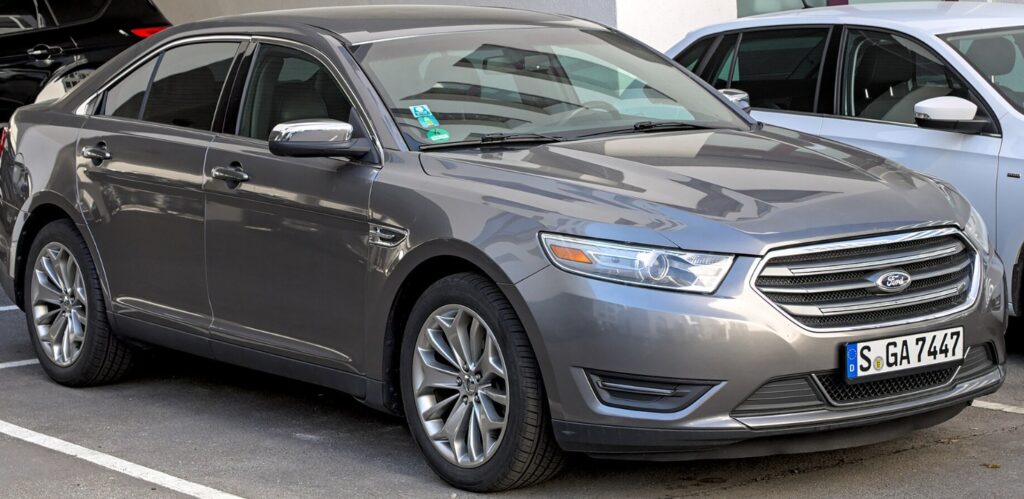
A Ford Taurus head gasket replacement in Canada typically costs C$3,000 to C$5,500 before tax, although simpler repairs on older models may land near C$2,200, while a severely overheated engine could push the final bill beyond C$7,000.
That is a wide range, but head gasket work is not a simple remove-and-replace job. The gasket itself may look like an inexpensive sheet of layered metal, yet reaching it requires a technician to dismantle a large portion of the engine. It is a little like replacing a cracked pipe hidden behind a finished bathroom wall: the small damaged component is not the expensive part—getting to it is.
Current Ford Taurus estimates from RepairPal place the average replacement at US$2,319 to US$3,058, with labour representing US$1,540 to US$2,259 of that amount. Those figures exclude taxes, location adjustments, and related repairs. Once we account for Canadian labour rates, currency differences, machine-shop work, taxes, and potential cooling-system damage, a Canadian invoice can climb considerably higher.
In this guide, we will break down realistic Canadian prices, explain what changes the estimate, examine the warning signs, and help determine whether repairing an older Taurus still makes financial sense.
Content in this publication
- How Much Does a Ford Taurus Head Gasket Replacement Cost in Canada?
- Why Is Head Gasket Replacement So Expensive?
- Ford Taurus Head Gasket Cost Breakdown
- How Model Year and Engine Type Affect the Price
- Older Ford Taurus Models
- 2010–2019 Ford Taurus Models
- Symptoms of a Failing Ford Taurus Head Gasket
- How a Mechanic Confirms Head Gasket Failure
- What Causes a Ford Taurus Head Gasket to Fail?
- Can We Keep Driving With a Blown Head Gasket?
- Head Gasket Sealer: Cheap Solution or Expensive Gamble?
- Additional Repairs That Can Increase the Bill
- Independent Shop vs Ford Dealership
- Questions to Ask Before Approving the Repair
- How to Compare Canadian Repair Quotes Properly
- Should We Repair the Head Gasket or Replace the Engine?
- Is Head Gasket Replacement Worth It on an Older Ford Taurus?
- How Long Does a Replaced Head Gasket Last?
- How Long Will the Repair Take?
- Can We Replace a Ford Taurus Head Gasket at Home?
- How to Reduce the Replacement Cost Without Cutting Corners
- Preventing Another Head Gasket Failure
- Final Verdict on Ford Taurus Head Gasket Replacement Cost in Canada
- Frequently Asked Questions
- 1. What is the average Ford Taurus head gasket replacement cost in Canada?
- 2. Is it cheaper to replace the engine instead of the head gasket?
- 3. Can a Ford Taurus run with a blown head gasket?
- 4. How many labour hours does a Ford Taurus head gasket require?
- 5. Is a head gasket sealer a permanent repair?
How Much Does a Ford Taurus Head Gasket Replacement Cost in Canada?
For most owners, a reasonable planning budget is:
| Repair situation | Estimated cost before tax |
|---|---|
| Early-stage leak with minimal damage | C$2,200–C$3,200 |
| Typical independent-shop repair | C$3,000–C$4,500 |
| Dealership repair | C$4,000–C$6,000 |
| Warped cylinder heads or extensive overheating | C$4,500–C$7,000+ |
| Replacement used engine installed | C$3,500–C$7,500+ |
| Remanufactured engine installed | C$6,000–C$10,000+ |
These are planning ranges rather than fixed quotations. The model year, engine, province, shop rate, cylinder-head condition, and number of related parts replaced can shift the result by thousands of dollars.
Canadian independent repair shops may charge roughly C$130 to C$220 per hour, while dealership rates can reach C$180 to C$290 or more, according to a 2026 Canadian labour-rate guide. Rates can be lower in smaller communities and noticeably higher in major metropolitan areas.
A Practical Canadian Price Example
Imagine that a shop quotes the following for a 2014 Ford Taurus:
- Labour: 15 hours at C$165 per hour — C$2,475
- Head gasket set — C$350
- New cylinder-head bolts — C$180
- Cylinder-head inspection and resurfacing — C$450
- Engine oil, filter, coolant, and shop supplies — C$250
- Thermostat and miscellaneous seals — C$180
The subtotal would be approximately C$3,885 before tax. In Ontario, for example, a 13% HST charge would bring the total to about C$4,390.
If the machine shop finds a cracked cylinder head, however, that same repair can quickly cross C$5,500.
Why Is Head Gasket Replacement So Expensive?
The head gasket seals the joint between the engine block and cylinder head. It must contain combustion pressure while keeping engine oil and coolant in their correct passages. It works in an environment filled with heat, pressure, vibration, and constant expansion and contraction.
When it fails, the technician cannot simply pull it out from the side of the engine. The intake components, exhaust connections, valve covers, timing components, electrical connectors, fuel-system parts, cooling hoses, and cylinder head may all need to be removed first.
A typical head gasket job commonly consumes eight to 12 or more labour hours, while complicated engines can require substantially longer.
The Gasket Is Only One Piece of the Repair
A professional repair may include:
- Complete head gasket set
- Intake and exhaust manifold gaskets
- Valve-cover gaskets
- New torque-to-yield cylinder-head bolts
- Coolant and engine oil
- Oil filter
- Spark plugs, when contaminated
- Thermostat, when overheating contributed to the failure
- Cylinder-head pressure testing
- Cylinder-head resurfacing
- Cooling-system flushing
- Inspection of the water pump and radiator
- Timing-chain or timing-belt components when accessible
This is why an online gasket priced at C$100 does not translate into a C$500 repair. The gasket is the ticket to the show; labour and engine machining are the main event.
Ford Taurus Head Gasket Cost Breakdown
Labour: C$1,500 to C$4,500
Labour is normally the largest part of the invoice. RepairPal’s general Ford Taurus estimate attributes roughly two-thirds or more of the total to labour.
Older Taurus engines may be less densely packaged than newer versions, but age creates a different problem. Rusted exhaust fasteners, brittle hoses, damaged electrical connectors, and seized bolts can slow the job.
A newer Taurus with a transverse V6 may require more disassembly and tighter access. Turbocharged SHO models add further plumbing, heat shields, intake components, and potential complications.
Why Book Time and Actual Time May Differ
Most shops quote labour using an industry labour guide. If the guide lists 14 hours, the customer may pay 14 hours even when an experienced technician finishes sooner. Conversely, the shop may add authorized labour when rust, broken bolts, previous repairs, or additional damage goes beyond normal procedures.
That does not necessarily mean the estimate is unfair. Flat-rate pricing allows shops to quote consistently, but we should always ask whether additional time requires approval.
Head Gasket Set: C$200 to C$700
A gasket set may include more than the main head gasket. Depending on the engine and kit, it can contain valve-cover seals, manifold gaskets, valve-stem seals, O-rings, and other components disturbed during disassembly.
Budget aftermarket kits sit near the lower end. Premium aftermarket or original-equipment parts cost more.
Saving C$100 on a questionable gasket set rarely makes sense when we are paying several thousand dollars for labour. A low-quality gasket buried deep in the engine is a false economy.
Cylinder-Head Bolts: C$100 to C$350
Many engines use torque-to-yield head bolts. These bolts stretch during installation to create precise clamping force and generally should not be reused.
A quote that excludes new head bolts deserves a question. Reusing stretched bolts can compromise clamping force and threaten the entire repair.
Machine-Shop Work: C$300 to C$1,200
Once removed, the cylinder head should be checked for:
- Warping
- Surface damage
- Cracks
- Valve leakage
- Worn guides
- Damaged threads
- Corrosion around coolant passages
Basic pressure testing and resurfacing may cost a few hundred dollars. Repairs involving valves, guides, welding, or extensive machining cost more.
Skipping cylinder-head inspection can turn a C$4,000 repair into a short-lived experiment. Installing a new gasket against a warped surface is like placing a fresh seal on a bent jar lid—it may look complete, but it cannot seal correctly.
Fluids and Shop Supplies: C$150 to C$400
The engine normally needs fresh oil, an oil filter, coolant, cleaning solvents, sealants, and disposal services.
When coolant has mixed with oil, the shop may recommend an additional oil change after a short driving interval. That adds cost, but it can help remove residual contamination.
How Model Year and Engine Type Affect the Price
Ford produced the Taurus across several generations, using different V6 engines and layouts. The exact engine matters more than the Taurus badge alone.
Older Ford Taurus Models
Earlier models—including many Tauruses from the 1990s and 2000s—may have lower parts costs and somewhat simpler layouts. Historical location-specific RepairPal estimates for certain mid-2000s models have been much lower than estimates for later cars. For example, its 2006 Taurus estimate in Austin showed approximately US$1,379 to US$1,853, while a 2008 example was estimated much higher at US$2,870 to US$3,716.
The difficulty is economic rather than purely mechanical. A clean older Taurus may still be useful, but a C$3,000 repair can exceed its market value.
The 3.0-Litre V6
Older Tauruses frequently used a 3.0-litre V6 in different configurations. Labour requirements vary by exact engine and model year. One published estimate for removing and replacing the cylinder heads on a 2007 3.0-litre Taurus cited approximately 8.9 hours, although a Canadian shop may quote additional time for diagnosis, machining, cleaning, reassembly complications, and cooling-system service.
Age-Related Complications
On an older car, technicians may discover:
- Corroded exhaust hardware
- Brittle plastic fittings
- Oil leaks from nearby seals
- Aging coolant hoses
- A weak radiator
- Worn engine mounts
- Poor compression in another cylinder
- Previous use of cooling-system sealant
Every discovery creates a decision: repair it now while access is open, or reinstall an aging component and risk paying for overlapping labour later.
2010–2019 Ford Taurus Models
Later Taurus models commonly use versions of Ford’s 3.5-litre V6. Access can be tighter, and the amount of equipment surrounding the engine increases labour time.
A current RepairPal estimate across Ford Taurus models is US$2,319 to US$3,058 before taxes and location adjustments. A location-specific estimate for a 2016 Taurus in Los Angeles was substantially higher at US$4,015 to US$5,417, demonstrating how labour markets and location can transform the bill.
Canadian owners should therefore treat low online estimates as reference points—not promises.
Ford Taurus SHO
The high-performance Taurus SHO uses a twin-turbocharged EcoBoost V6. Its additional turbo hardware, cooling lines, intake plumbing, and tighter packaging can increase complexity.
A head gasket issue on an SHO also deserves especially careful diagnosis. White exhaust smoke, coolant loss, or overheating does not automatically prove that the gasket itself has failed. Turbocharger coolant lines, cooling-system leaks, internal engine damage, and other faults can imitate some of the same symptoms.
Because SHO repairs can become expensive, a leak-down test and cooling-system pressure test are worth paying for before authorizing major engine work.
Symptoms of a Failing Ford Taurus Head Gasket
A head gasket can fail in several ways. It may allow combustion gases into the cooling system, coolant into a cylinder, oil into the coolant, or coolant into the crankcase.
Common Warning Signs
Watch for:
- Repeated engine overheating
- Unexplained coolant loss
- Thick white exhaust smoke after warm-up
- Sweet-smelling exhaust
- Bubbles in the coolant reservoir
- Hard upper radiator hose shortly after a cold start
- Milky residue in the engine oil
- Misfires during startup
- Rough running after the car sits overnight
- Low compression in one or more cylinders
- Cooling-system pressure with no visible external leak
- Check-engine light with misfire codes
No single symptom proves the head gasket has failed. Condensation can create brief white vapour in cold Canadian weather, and a small amount of beige residue under the oil cap may result from short trips rather than coolant contamination.
That is why testing matters.
How a Mechanic Confirms Head Gasket Failure
A competent diagnosis may combine several procedures.
Cooling-System Pressure Test
The cooling system is pressurized while the engine is off. If pressure falls, the technician looks for external leaks and may inspect the cylinders for coolant intrusion.
Combustion-Gas Test
A chemical tester checks for combustion gases in the cooling system. A positive result can strongly suggest a leak between a combustion chamber and coolant passage.
Compression Test
The technician measures pressure produced by each cylinder. Two neighbouring cylinders with unusually low compression may indicate gasket failure between them.
Cylinder Leak-Down Test
Compressed air is introduced into an individual cylinder. Bubbles appearing in the coolant reservoir can indicate that air is escaping through the head gasket or a crack.
Borescope Inspection
A small camera allows the technician to inspect the cylinders. One unusually clean piston can suggest that leaking coolant has effectively steam-cleaned the combustion chamber.
Oil and Coolant Inspection
The shop checks for cross-contamination, although a head gasket can fail without producing the classic “milkshake” appearance.
Do Not Approve the Repair Based on Guesswork
A written diagnosis should explain why the shop believes the head gasket has failed. Ask which tests were performed and what the results showed.
Replacing a head gasket because “the car overheated” is like replacing a roof because the floor is wet. The conclusion may be correct, but we still need to locate the actual leak.
What Causes a Ford Taurus Head Gasket to Fail?
Severe Overheating
Overheating is the most common pathway. Excessive temperature can distort the cylinder head, weaken the gasket, and destroy the seal.
The original cause might be:
- Low coolant
- Failed water pump
- Stuck thermostat
- Radiator blockage
- Cooling-fan failure
- Broken hose
- Faulty pressure cap
- Air trapped in the system
- External coolant leak
Replacing the head gasket without repairing the original overheating problem invites another failure.
Repeated Heat Cycles
Engines expand when hot and contract when cold. After years of Canadian winters, summer traffic, short trips, and highway driving, the gasket and surrounding surfaces endure thousands of thermal cycles.
Detonation or Abnormal Combustion
Persistent spark knock or excessive cylinder pressure can damage the gasket’s fire ring. This is less common than overheating but still possible.
Poor Previous Repair
Incorrect bolt torque, reused head bolts, dirty sealing surfaces, improper machining, or low-quality components can lead to premature failure.
Cooling-System Neglect
Old coolant gradually loses its corrosion protection. Internal rust and corrosion can damage sealing surfaces and restrict flow, making overheating more likely.
Can We Keep Driving With a Blown Head Gasket?
Driving should be minimized or avoided.
A mild leak can suddenly become severe. Continued operation may:
- Warp the cylinder head
- Crack the cylinder head or block
- Wash oil from cylinder walls
- Damage bearings with coolant-contaminated oil
- Overheat the catalytic converters
- Hydrolock the engine
- Turn a repairable engine into scrap
A tow bill is frustrating, but it is usually cheaper than an engine.
If the temperature gauge rises above normal, the heater suddenly blows cold air, warning lights appear, or the engine begins misfiring heavily, pull over safely and shut it down.
Head Gasket Sealer: Cheap Solution or Expensive Gamble?
Pour-in sealers are marketed as quick fixes. They may temporarily slow certain small leaks, but they do not restore a warped cylinder head, cracked casting, damaged gasket fire ring, or contaminated bearings.
Sealant can also clog:
- Heater cores
- Radiator passages
- Thermostats
- Small coolant channels
- Diagnostic equipment
For a car headed to the scrapyard, a temporary product may look tempting. For a Taurus we intend to keep, it can complicate proper repair and increase cleaning time.
A bottle should not be confused with a mechanical repair.
Additional Repairs That Can Increase the Bill
Once the engine is open, the shop may recommend related work.
Thermostat Replacement: C$150 to C$450
A thermostat that stuck closed may have caused the overheating. Replacing it during the repair is often sensible.
Water Pump Replacement: C$500 to C$2,500+
The price varies dramatically by engine and pump location. Some Ford V6 configurations have water pumps that are labour-intensive to reach.
A failing pump must be addressed before the repaired engine returns to service.
Radiator Replacement: C$600 to C$1,300
A blocked or leaking radiator can undermine the entire repair.
Cooling-Fan Repair: C$300 to C$1,200
The problem may involve a motor, control module, relay, wiring, or complete fan assembly.
Cylinder-Head Replacement: C$1,000 to C$3,000 Additional
A cracked or excessively warped head can push the total well beyond the initial estimate.
Catalytic Converter Replacement: C$1,200 to C$3,500+
Burning coolant can contaminate the catalytic converters. If the engine has been driven with a major leak, exhaust-system damage should be considered.
Independent Shop vs Ford Dealership
Independent Repair Shop
A reputable independent engine specialist will often provide the best value.
Potential advantages include:
- Lower hourly rates
- Greater flexibility with aftermarket parts
- Direct access to the technician
- Experience rebuilding older engines
- Willingness to coordinate with local machine shops
The key is choosing a shop that routinely performs internal engine work. A business can be excellent at brakes and suspension yet have limited experience with cylinder-head repairs.
Ford Dealership
A dealership may offer:
- Factory service information
- Ford-specific diagnostic equipment
- Original-equipment parts
- Familiarity with technical procedures
- Stronger support for newer models
The drawback is cost. At Canadian dealership rates that may reach C$180 to C$290 or more per hour, even a small increase in quoted labour time has a major effect on the invoice.
Which One Should We Choose?
For an older Taurus, an established independent engine shop usually makes the most financial sense. For a newer, low-mileage, unusually valuable, or warranty-adjacent vehicle, a Ford dealership may be worth considering.
Questions to Ask Before Approving the Repair
Ask the shop:
- Which diagnostic tests confirmed gasket failure?
- Is the quotation based on my exact engine and VIN?
- Does the estimate include both cylinder banks where applicable?
- Are new cylinder-head bolts included?
- Will the heads be pressure-tested and measured for warpage?
- Is resurfacing included or billed separately?
- Which gasket brand will be used?
- Are coolant, oil, filter, and system flushing included?
- What caused the original overheating?
- Which related repairs might be discovered?
- Will additional work require my authorization?
- What labour and parts warranty is provided?
- Does the warranty cover machine-shop work?
- How long should the first oil remain in the engine after repair?
A detailed estimate protects both the customer and the shop. Vague language such as “head gasket job—C$3,500” leaves too much room for surprise.
How to Compare Canadian Repair Quotes Properly
The lowest number is not automatically the least expensive solution.
One quote may include machining, bolts, premium gaskets, fluids, and a two-year warranty. Another may include only labour and the basic gasket. Comparing the bottom line alone would be like comparing airline tickets without checking whether one includes luggage.
Create a simple comparison using these categories:
| Item | Shop A | Shop B | Shop C |
| Diagnostic testing | |||
| Labour hours and rate | |||
| Gasket set | |||
| New head bolts | |||
| Machine-shop testing | |||
| Resurfacing | |||
| Oil and coolant | |||
| Related cooling repairs | |||
| Warranty | |||
| Total before tax |
Requesting two or three written quotations can save money, but avoid repeatedly driving an overheating car between shops. Tow it when necessary.
Should We Repair the Head Gasket or Replace the Engine?
This is where the decision becomes less mechanical and more financial.
Repair the Existing Engine When:
- The engine ran well before the failure
- The car was stopped quickly after overheating
- Compression and oil pressure were previously healthy
- The cylinder block is undamaged
- The vehicle has manageable mileage
- The transmission and body are in good condition
- The repair includes proper machining and a warranty
- The Taurus otherwise meets our needs
Consider a Used Engine When:
- The engine overheated severely
- Coolant contaminated the oil for an extended period
- The cylinder heads or block are cracked
- Bearing damage is suspected
- The repair estimate keeps growing
- A tested low-mileage engine is available
- Installation comes with a meaningful warranty
A used engine carries uncertainty. We may not know how it was maintained, whether it overheated previously, or how long it sat in storage.
Ask for the donor mileage, vehicle identification information, compression results when available, and written warranty terms.
Consider Selling or Scrapping the Car When:
- Repair costs exceed the vehicle’s realistic market value
- The transmission also needs major work
- Structural rust is present
- The car has multiple warning lights and deferred repairs
- The estimate exceeds our replacement budget
- Reliability is more important than keeping the vehicle
Is Head Gasket Replacement Worth It on an Older Ford Taurus?
Use this basic equation:
Vehicle value after repair minus repair cost minus near-term repairs = financial benefit
Suppose a Taurus would be worth C$6,000 in dependable running condition. The head gasket repair costs C$4,500, and it also needs C$1,500 in tires, brakes, and suspension work.
That leaves no meaningful financial cushion.
However, market value is not the only consideration. Replacing the car may require taxes, registration, financing, inspections, and the risk of buying another used vehicle with hidden problems. A properly repaired Taurus that we already know may still be the less risky choice.
A Useful 50% Guideline
When a repair approaches 50% of the vehicle’s reliable post-repair value, pause and evaluate the complete car.
This is not a rigid rule. A rust-free, well-maintained Taurus with a rebuilt transmission may justify a larger repair. A neglected car with severe corrosion may not justify even a modest one.
How Long Does a Replaced Head Gasket Last?
A properly completed repair can last for the remaining life of the engine.
Longevity depends on:
- Correct diagnosis
- Flat, crack-free sealing surfaces
- Proper machining
- Quality gasket materials
- New bolts where required
- Correct torque procedure
- A clean cooling system
- Repair of the original overheating cause
- Regular coolant maintenance
- Avoiding future overheating
A new gasket installed without correcting a blocked radiator or failing water pump may fail again quickly.
How Long Will the Repair Take?
The physical labour may require one to several working days, but real-world turnaround can be longer because the shop must:
- Diagnose the engine
- Obtain authorization
- Disassemble it
- Send the cylinder heads to a machine shop
- Wait for test results
- Order additional parts
- Reassemble the engine
- Refill and bleed the cooling system
- Test-drive and recheck it
Parts availability and machine-shop scheduling can influence completion more than wrench time.
Can We Replace a Ford Taurus Head Gasket at Home?
Technically, an experienced home mechanic can perform the job. Practically, it is one of the least forgiving do-it-yourself repairs.
The work may require:
- Accurate torque wrenches
- Engine-support equipment
- Timing tools
- Fuel-line tools
- Harmonic-balancer tools
- Straightedge and feeler gauges
- Cooling-system pressure tester
- Compression or leak-down tester
- Detailed factory procedures
- A clean, organized workspace
One timing error, dirty sealing surface, incorrect bolt sequence, or missed crack can destroy the repair.
DIY work makes sense only when we possess strong engine-rebuilding experience, proper information, and enough time to handle complications. It is not an ideal first major automotive project.
How to Reduce the Replacement Cost Without Cutting Corners
Get an Accurate Diagnosis First
Spending C$150 to C$350 on proper testing can prevent a mistaken C$4,000 repair.
Choose an Engine Specialist
A shop that performs head gasket and cylinder-head work regularly may operate more efficiently than a general repair facility.
Use Quality Aftermarket Parts
Premium aftermarket gasket sets can provide good value. Avoid unknown bargain kits.
Replacing accessible seals, hoses, or timing components can prevent duplicate labour later. The goal is not to replace everything blindly but to take advantage of existing access.
Request Approval Limits
Tell the shop not to exceed the estimate by a specified amount without contacting you.
Ask About the Warranty
A slightly higher quote with strong parts-and-labour coverage may be cheaper in the long run than a bare-minimum repair with little protection.
Preventing Another Head Gasket Failure
After the repair:
- Check coolant regularly
- Investigate any coolant loss immediately
- Use the correct coolant specification
- Do not mix incompatible coolant types
- Replace coolant at the recommended interval
- Watch the temperature gauge
- Repair weak fans, hoses, and caps promptly
- Change contaminated oil as recommended
- Avoid driving an overheating engine
- Return to the shop if bubbles, smoke, or misfires reappear
Canadian winters create another concern: coolant must provide adequate freeze protection. Improper dilution can allow freezing, corrosion, or reduced boiling protection.
Final Verdict on Ford Taurus Head Gasket Replacement Cost in Canada
For most Canadian Ford Taurus owners, a head gasket replacement will cost approximately C$3,000 to C$5,500 before tax. An uncomplicated older model may cost less, while a late-model V6, turbocharged SHO, warped cylinder head, damaged cooling system, or dealership repair can take the total beyond C$6,000 or C$7,000.
The central lesson is simple: do not judge the repair by the price of the gasket. Labour, machining, diagnosis, fluids, bolts, cooling-system repairs, and hidden heat damage create the real bill.
Before authorizing the work, we should confirm the failure through testing, obtain an itemized quotation, identify what caused the overheating, and compare the repair cost with both the vehicle’s condition and the price of a realistic replacement car.
When completed correctly, a head gasket replacement can return a solid Taurus to dependable service. When approached as the cheapest possible patch, however, it can become a money pit wearing a fresh coat of sealant.
Frequently Asked Questions
1. What is the average Ford Taurus head gasket replacement cost in Canada?
A typical Canadian price is approximately C$3,000 to C$5,500 before tax. Older models with limited damage may cost around C$2,200 to C$3,200, while major overheating damage can raise the bill beyond C$7,000.
2. Is it cheaper to replace the engine instead of the head gasket?
Sometimes. A used engine may be more economical when the existing engine has cracked heads, block damage, contaminated bearings, or severe overheating. Compare complete installed prices, donor mileage, parts included, and warranty coverage—not just the engine’s advertised purchase price.
3. Can a Ford Taurus run with a blown head gasket?
It may still run, but continued driving can warp the cylinder heads, damage bearings, ruin catalytic converters, or destroy the entire engine. Towing the vehicle is usually the safer and ultimately cheaper decision.
4. How many labour hours does a Ford Taurus head gasket require?
Depending on the model year and engine, the job may require roughly nine to 20 or more labour hours. Diagnosis, broken fasteners, turbo equipment, machine-shop work, cooling-system repairs, and reassembly complications can increase the billed time.
5. Is a head gasket sealer a permanent repair?
No. Sealers may temporarily reduce a minor leak, but they cannot correct a warped head, cracked casting, damaged gasket, or contaminated engine bearings. They may also restrict radiators, heater cores, and coolant passages.
If you want to know other articles similar to Ford Taurus Head Gasket Replacement Cost Canada: Complete 2026 Guide you can visit the category Service and Parts.
Volvo S90 Engine Oil: Type, Capacity & Change Guide
Volvo S90 Boot Space: Size, Capacity and Practicality
SEO Title: Volvo S90 Oil Capacity: Complete Guide by Engine

Kia Sorento Oil Type: Complete Guide by Year & Engine
Kia Sorento Engine Capacity: Complete Guide by Year

Peugeot 308 Clutch Replacement Cost: Complete UK Guide for 2026
Leave a Reply
More content of your interest