

GMC Sierra 1500 Towing Capacity: Complete Canada Guide

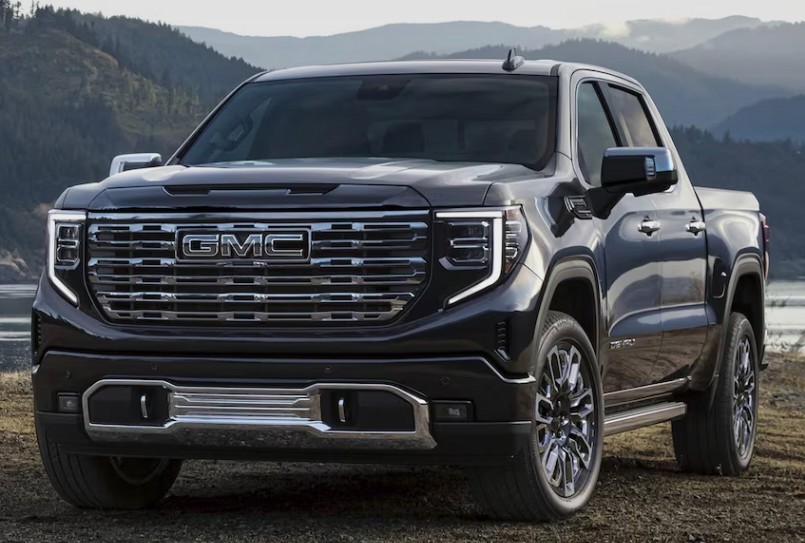
The GMC Sierra 1500 towing capacity is one of the main reasons Canadian buyers put this full-size pickup on their shortlist. It can pull recreational trailers, boats, construction equipment, snowmobiles and sizeable utility trailers, yet it remains easier to drive every day than a heavy-duty truck.
For the 2026 model year, a properly equipped GMC Sierra 1500 can tow up to 6,032 kg, or 13,300 lb, with the available 3.0-litre Duramax turbo-diesel engine. That headline number sounds impressive—and it is—but it does not apply to every Sierra sitting on a dealership lot. Cab style, bed length, drivetrain, engine, axle ratio, wheels, trim level and towing packages all influence the final rating.
That is where truck shopping gets slightly tricky. Two Sierra 1500 models can look nearly identical from across the parking lot while having dramatically different towing limits. One may confidently pull a large travel trailer, while the other is better suited to a fishing boat or lightweight camper.
In this guide, we will break down the numbers, explain the engines, compare useful configurations and show Canadian buyers how to choose a Sierra that fits their real towing needs—not just an attractive maximum printed in a brochure.
Content in this publication
- What Is the GMC Sierra 1500 Towing Capacity?
- Why Towing Capacity Varies Between Sierra 1500 Models
- GMC Sierra 1500 Towing Capacity by Engine
- TurboMax 2.7L Towing Capacity
- 5.3L V8 Towing Capacity
- 6.2L V8 Towing Capacity
- 3.0L Duramax Diesel Towing Capacity
- 2026 Sierra 1500 Conventional Towing Ratings
- Fifth-Wheel and Gooseneck Towing Capacity
- How the Max Trailering Package Changes Capacity
- Crew Cab vs Double Cab vs Regular Cab
- Two-Wheel Drive vs Four-Wheel Drive for Towing
- Payload Is Just as Important as Towing Capacity
- Understanding Tongue Weight
- What Can a GMC Sierra 1500 Tow?
- Towing Technology in the Sierra 1500
- Canadian Towing Conditions to Consider
- Should We Tow at the Maximum Rating?
- How to Calculate the Right Towing Capacity
- Common Towing Mistakes Buyers Make
- Best Sierra 1500 Configuration for Different Buyers
- Is the GMC Sierra 1500 a Good Tow Vehicle?
- When Should We Choose a Sierra HD Instead?
- Final Thoughts on GMC Sierra 1500 Towing Capacity
- Frequently Asked Questions
What Is the GMC Sierra 1500 Towing Capacity?
The maximum 2026 GMC Sierra 1500 towing capacity is 13,300 lb, or approximately 6,032 kg, when the truck is equipped with the 3.0-litre Duramax turbo-diesel engine and the configuration required to achieve the maximum rating.
Maximum conventional towing capacities by engine can reach approximately:
| Engine | Maximum towing capacity | Approximate metric capacity |
|---|---|---|
| TurboMax 2.7L turbocharged four-cylinder | 9,500 lb | 4,309 kg |
| 5.3L EcoTec3 V8 | 11,200 lb | 5,080 kg |
| 6.2L EcoTec3 V8 | 13,100 lb | 5,942 kg |
| 3.0L Duramax turbo-diesel | 13,300 lb | 6,032 kg |
These are maximum ratings for specific configurations, not universal numbers for every truck fitted with that engine. GMC states that passengers, cargo, accessories and optional equipment can reduce the amount a particular truck can tow.
Think of the maximum rating as the summit of a mountain. The engine gets most of the attention, but the cab, drivetrain, axle, suspension and equipment are the trail that actually takes us there.
Why Towing Capacity Varies Between Sierra 1500 Models
A pickup’s towing rating is not decided by horsepower alone. It reflects how the entire vehicle manages weight, acceleration, braking, cooling, stability and long-term mechanical stress.
The main factors include:
- Engine and transmission
- Two-wheel drive or four-wheel drive
- Regular, Double or Crew Cab
- Short, standard or long cargo bed
- Rear axle and suspension equipment
- Max Trailering Package availability
- Wheel and tire selection
- Trim level
- Factory-installed accessories
- Payload rating
- Gross combination weight rating
This explains why simply saying “the Sierra tows 13,300 lb” can be misleading. A well-optioned luxury or off-road version may weigh more and have a lower trailer rating than a lighter work-oriented model.
The Maximum Is Not the Typical Rating
Most Sierra 1500 trucks sold in Canada will not carry the maximum possible rating. Crew Cab 4WD models are popular because they combine passenger space with all-weather traction, but that equipment adds weight.
A four-wheel-drive system, larger wheels, skid plates, luxury seating, running boards and off-road hardware all consume part of the truck’s available weight capacity. None of those features makes the truck weak; they simply change the equation.
For many buyers, a Sierra rated to tow between 8,500 and 11,500 lb is more useful than an extreme maximum configuration. It may offer a better combination of comfort, traction, price and daily practicality.
GMC Sierra 1500 Towing Capacity by Engine
Choosing the engine is the natural starting point. Each Sierra powertrain has its own personality, and the strongest engine on paper is not automatically the best match for every buyer.
TurboMax 2.7L Towing Capacity
The standard TurboMax engine is a turbocharged four-cylinder producing 310 horsepower and 430 lb-ft of torque. In the Canadian-market Sierra 1500, it can support maximum towing of up to 9,500 lb, or 4,309 kg, when properly equipped. It is standard on the Pro, SLE and Elevation trims.
That is serious capability from an engine with only four cylinders. Its generous low-end torque makes it feel far stronger than the engine size suggests.
The TurboMax can be a smart choice for:
- Utility trailers
- Landscaping equipment
- Small and medium boats
- Compact travel trailers
- Snowmobile trailers
- ATVs and side-by-sides
- Lightweight construction equipment
It also offers a more accessible entry point into the Sierra lineup. Buyers who tow occasionally may find it gives them everything they need without paying for a larger engine.
Who Should Choose the TurboMax?
We would consider the TurboMax when the expected loaded trailer weight remains comfortably below its maximum rating. It makes particular sense for commuters, contractors carrying moderate loads and recreational buyers who pull smaller trailers several times per year.
However, buyers expecting to tow close to 9,500 lb frequently may prefer the calmer performance and greater reserve of a V8 or diesel. A truck working near its ceiling can do the job, but it may need more throttle on hills and feel more sensitive to wind, cargo placement and steep grades.
5.3L V8 Towing Capacity
The available 5.3-litre EcoTec3 V8 can tow up to 11,200 lb, or roughly 5,080 kg, in the right configuration with the Max Trailering Package. GMC’s detailed chart shows that many ordinary configurations carry lower ratings, often falling somewhere in the 9,100-to-11,200-lb range.
This engine represents the traditional middle ground. It delivers familiar V8 power, broad availability and enough capacity for a wide range of Canadian towing duties.
The 5.3-litre V8 is suited to:
- Medium and larger travel trailers
- Enclosed work trailers
- Larger fishing boats
- Car trailers
- Equipment trailers
- Horse trailers within the truck’s ratings
- Recreational loads that exceed TurboMax comfort levels
Its towing strength is only part of the appeal. Many buyers like the predictable response and relaxed sound of a naturally aspirated V8. It does not need to feel dramatic to move a trailer; it simply gets on with the work.
Why the 5.3L V8 Is a Balanced Choice
The 5.3-litre often hits the sweet spot between purchase price, availability and capability. It can be found across several trims and configurations, including practical and premium versions.
For a buyer who does not need the absolute maximum rating but still wants strong towing confidence, the 5.3-litre is easy to recommend. It is the sensible pair of work boots in the Sierra engine lineup: not flashy, but ready for most jobs.
6.2L V8 Towing Capacity
The 6.2-litre EcoTec3 V8 offers maximum conventional towing of up to 13,100 lb, or approximately 5,942 kg, with the correct Crew Cab, two-wheel-drive configuration, Max Trailering Package and wheel specification.
This engine delivers 420 horsepower and 460 lb-ft of torque, producing stronger acceleration than the smaller V8 and giving the truck an effortless feel when merging or climbing.
The 6.2-litre V8 is an appealing option for drivers who want:
- High conventional towing capacity
- Strong passing power
- Quick unloaded performance
- A premium gasoline powertrain
- More reserve for hills and highway merging
- A high-output engine without choosing diesel
The engine is available on selected upper trims, including versions of the SLT, AT4, AT4X, Denali and Denali Ultimate. Availability varies by trim and configuration.
Is the 6.2L Better Than the Diesel for Towing?
That depends on the job.
The 6.2-litre V8 feels responsive and powerful, particularly when the truck is unloaded or accelerating at higher engine speeds. The Duramax diesel develops its strength differently, delivering abundant low-rpm torque and generally more relaxed behaviour under sustained trailer loads.
Buyers who tow heavy trailers regularly over long distances may prefer the diesel. Buyers who want a powerful, quick gasoline truck and tow less frequently may gravitate toward the 6.2-litre.
Neither choice is universally superior. They are two different tools shaped for slightly different hands.
3.0L Duramax Diesel Towing Capacity
The 3.0-litre Duramax turbo-diesel provides the highest advertised towing capacity in the 2026 Canadian Sierra 1500 range: up to 13,300 lb, or 6,032 kg.
The detailed chart shows that the maximum is achieved with a specific Double Cab, standard-bed, two-wheel-drive configuration equipped with the Max Trailering Package and appropriate wheels. Other Duramax versions range significantly lower, particularly off-road trims or configurations without the maximum-towing equipment.
The Duramax is attractive because it combines:
- Strong low-speed torque
- Excellent high-load drivability
- A 10-speed automatic transmission
- Competitive highway efficiency
- Long cruising range
- Reduced engine strain during steady towing
- The Sierra’s highest available diesel tow rating
It is especially well suited to Canadian buyers who travel long distances with campers, boats or work trailers.
Why Diesel Torque Matters
Torque is the twisting force that gets a heavy load moving. With a trailer attached, low-rpm torque helps the truck pull away smoothly without constantly chasing higher revs.
On long grades, a diesel can feel like a strong current carrying a canoe downstream. The effort remains present, but the delivery is calm and steady.
That does not mean diesel ownership is perfect. The engine costs more, diesel fuel prices fluctuate and modern emissions systems add complexity. Buyers should weigh those costs against how often they tow and how far they travel.
2026 Sierra 1500 Conventional Towing Ratings
Conventional towing uses a receiver hitch behind the rear bumper. This is the setup most owners use for travel trailers, boats, utility trailers and recreational equipment.
Examples from GMC’s 2026 conventional trailering chart include:
| Configuration example | Maximum conventional towing |
|---|---|
| TurboMax Regular Cab, long bed, 2WD | Up to 9,400 lb |
| TurboMax Crew Cab, short bed, 2WD | Up to 9,100 lb |
| 5.3L V8 Crew Cab, short bed, 2WD with Max Trailering | Up to 11,200 lb |
| 6.2L V8 Crew Cab, short bed, 2WD with Max Trailering and 20-inch wheels | Up to 13,100 lb |
| 3.0L Duramax Double Cab, standard bed, 2WD with Max Trailering and 20-inch wheels | Up to 13,300 lb |
| 3.0L Duramax Crew Cab, short bed, 2WD with Max Trailering and 20-inch wheels | Up to 13,100 lb |
The chart also contains ratings for other drivetrains, beds and equipment combinations. Canadian buyers should verify the label and documentation for the exact truck rather than assuming that every similar-looking model shares these values.
Fifth-Wheel and Gooseneck Towing Capacity
The Sierra 1500 can also support certain fifth-wheel or gooseneck applications, although its ratings are often lower than its highest conventional towing figures.
That may sound surprising. Fifth-wheel and gooseneck trailers place a larger percentage of their weight directly in the truck bed. This can improve stability, but it also consumes payload quickly.
According to GMC’s 2026 chart, maximum fifth-wheel or gooseneck ratings can reach approximately:
- 9,300 lb with TurboMax
- 9,900 lb with the 5.3-litre V8
- 8,200 lb with the 6.2-litre V8
- 8,900 lb with the 3.0-litre Duramax
The exact result depends heavily on cab, drivetrain and bed configuration.
Why Fifth-Wheel Capacity Can Be Payload-Limited
A conventional travel trailer may place roughly 10 to 15 percent of its loaded weight on the hitch. A fifth-wheel trailer can place around 15 to 25 percent in the bed.
Imagine a 9,000-lb fifth-wheel with a 20-percent pin weight. That places approximately 1,800 lb on the truck before passengers, cargo and hitch hardware are counted.
Even when the trailer weight fits within the published tow rating, the truck may exceed its payload or rear axle rating. This is why half-ton fifth-wheel shopping demands careful arithmetic.
For larger fifth-wheel campers, a Sierra 2500HD is often the more appropriate choice.
How the Max Trailering Package Changes Capacity
The available Max Trailering Package is central to reaching the Sierra’s higher ratings. On the 2026 Sierra 1500, GMC says the package includes:
- A 9.76-inch rear axle
- Enhanced cooling radiator
- Revised shock tuning
- Heavy-duty rear springs
- A 220-amp alternator
It is available on selected SLE, Elevation and SLT configurations.
These upgrades help the truck manage heat, weight and stability. The package does not simply change a number in a computer. It equips the truck with hardware designed for more demanding towing.
Do All Sierra Trims Offer Maximum Towing?
No. A premium or off-road trim may offer impressive power without achieving the highest tow rating.
AT4 and AT4X models include equipment intended for rough terrain, such as four-wheel drive, suspension lifts, skid plates, off-road tires and locking differentials. That hardware improves trail capability but adds weight and can alter towing ratings.
Likewise, Denali and Denali Ultimate models add luxury features, larger wheels and comfort equipment. They remain capable tow vehicles, but the maximum-capacity champion is usually a more purpose-built configuration.
Crew Cab vs Double Cab vs Regular Cab
Cab selection changes both usability and towing capability.
Regular Cab
The Regular Cab is the lightest body style and can offer strong payload and towing ratings. It works well for commercial operators and buyers who rarely carry rear passengers.
Its disadvantages are obvious: limited seating and less secure interior storage.
Double Cab
The Double Cab provides rear seating while remaining lighter and shorter than many Crew Cab versions. Interestingly, the maximum 13,300-lb diesel rating is associated with a Double Cab, standard-bed, two-wheel-drive configuration in GMC’s 2026 chart.
For buyers who want high capability without needing limousine-like rear space, it can be a practical compromise.
Crew Cab
The Crew Cab is likely the most appealing choice for families and recreational buyers. It offers generous rear passenger space and works well for long trips.
Its larger body adds weight, and that can slightly reduce payload or towing capacity. Still, properly equipped Crew Cab models can deliver outstanding ratings, including up to 13,100 lb with certain Duramax and 6.2-litre configurations.
Two-Wheel Drive vs Four-Wheel Drive for Towing
Two-wheel-drive Sierra models often achieve the largest towing figures because they weigh less. Four-wheel drive adds a transfer case, front driveline components and related hardware.
However, towing is not a brochure contest. Canadian conditions matter.
Four-wheel drive can provide useful traction when launching a boat on a slippery ramp, crossing a muddy campground, climbing a snowy driveway or towing through a winter storm. A slightly lower rating may be a worthwhile trade for the environments in which the truck will operate.
Which Drivetrain Makes Sense in Canada?
Choose two-wheel drive when:
- Maximum rating is the priority
- Roads are mostly dry and paved
- The truck operates in flatter or milder regions
- Lower purchase cost matters
- Extra traction is rarely needed
Choose four-wheel drive when:
- Winter travel is common
- Boat ramps may be slippery
- Worksites are muddy or uneven
- The trailer reaches remote campsites
- All-season traction matters more than the last few hundred pounds of capacity
For many Canadian owners, 4WD is the more useful real-world choice even when it does not produce the largest number.
Payload Is Just as Important as Towing Capacity
Towing capacity gets the spotlight, but payload often decides whether a truck-trailer combination is legal and safe.
Payload includes everything added to the truck:
- Driver and passengers
- Tools
- Luggage
- Bed cargo
- Accessories
- Trailer hitch
- Trailer tongue or pin weight
Suppose a Sierra has a payload rating of 1,700 lb. A travel trailer creates 1,050 lb of tongue weight, four passengers weigh 650 lb combined and the bed contains 150 lb of cargo.
The total load becomes 1,850 lb. Even if the trailer remains under the maximum towing capacity, the truck is already 150 lb over payload.
Where to Find the Exact Payload Rating
Check the Tire and Loading Information label on the driver’s door jamb. It identifies the maximum combined weight of occupants and cargo for that particular vehicle.
That label is more useful than a generic online specification because it reflects the actual factory build.
Understanding Tongue Weight
Tongue weight is the downward force the trailer places on the hitch.
For many conventional trailers, a common target is approximately 10 to 15 percent of the trailer’s loaded weight. A 7,000-lb travel trailer might therefore place 700 to 1,050 lb on the hitch.
Too little tongue weight can make the trailer sway. Too much can overload the truck’s rear axle, suspension or payload capacity.
The trailer should be loaded as evenly and predictably as possible, with heavy items secured and positioned according to the manufacturer’s guidance.
What Can a GMC Sierra 1500 Tow?
The following examples are broad estimates. Actual weights vary dramatically, especially after water, propane, batteries, equipment and personal cargo are added.
Small Travel Trailers
Typical loaded weight: 2,500 to 5,000 lb
Almost any properly equipped Sierra 1500 can handle trailers in this range. The TurboMax should provide comfortable performance in many cases.
Medium Travel Trailers
Typical loaded weight: 5,000 to 8,000 lb
All Sierra engines may be suitable depending on configuration. Buyers should pay close attention to tongue weight, payload and trailer frontal area.
Large Travel Trailers
Typical loaded weight: 8,000 to 11,000 lb
The 5.3-litre V8, 6.2-litre V8 or 3.0-litre Duramax will usually be the better choices. A weight-distributing hitch, trailer brake controller and careful payload calculation become increasingly important.
Boats
Typical trailer-and-boat weight: 2,000 to 10,000 lb
The Sierra can handle anything from personal watercraft to sizeable cabin boats, depending on equipment. Four-wheel drive may be particularly valuable at wet or algae-covered ramps.
Car Trailers
Typical combined weight: 5,000 to 8,500 lb
Remember to include the trailer, vehicle, fuel, spare tires, tools and tie-down equipment.
Construction and Equipment Trailers
Typical loaded weight: 4,000 to more than 12,000 lb
Commercial buyers should weigh the trailer after loading rather than relying on equipment brochures. Attachments, buckets, fuel and extra materials can add substantial weight.
Towing Technology in the Sierra 1500
Modern towing is not only about springs and torque. The Sierra offers technology designed to make hitching, monitoring and manoeuvring easier.
Depending on trim and equipment, available features include:
- ProGrade Trailering System
- Integrated trailer brake controller
- In-vehicle trailering app
- Trailer profiles
- Hitch guidance
- Multiple camera views
- Trailer tire-pressure monitoring compatibility
- Trailer lighting checks
- Blind-zone features designed to account for trailer length
- Transparent Trailer View with the required accessory camera
GMC advertises up to 14 available camera views on certain 2026 Sierra 1500 models, although the exact number varies by trim and equipment.
Integrated Trailer Brake Controller
The available integrated trailer brake controller works with the truck’s antilock braking system to provide measured braking signals to compatible electric trailer brakes.
This is preferable to many aftermarket solutions because the controls and vehicle systems are designed to work together.
Canadian Towing Conditions to Consider
Canada adds environmental challenges that a simple capacity chart cannot capture.
Mountain Grades
Long climbs in British Columbia or Alberta increase engine and transmission temperatures. Descents place heavy demands on the brakes.
Choose a configuration with enough capacity in reserve, use tow/haul mode and select lower gears when needed. Do not ride the brakes continuously on a long descent.
Winter Roads
Snow and ice reduce traction and extend stopping distances. Four-wheel drive helps the truck move, but it does not magically shorten braking distance.
Winter-rated tires and slower speeds matter more than horsepower.
Prairie Crosswinds
A tall travel trailer can act like a sail across open highways. Wind pressure may cause sway even when the trailer is under the maximum rating.
A properly adjusted weight-distributing hitch and sway control can make a major difference.
Remote Travel
In northern or rural areas, fuel stations and repair facilities may be far apart. Diesel efficiency and range can become valuable, but fuel availability should also be considered for the planned route.
Should We Tow at the Maximum Rating?
A truck can legally tow at its published rating when every related limit is respected. That does not always mean doing so will be comfortable.
Operating at the ceiling leaves little room for:
- Additional passengers
- Unexpected cargo
- Trailer upgrades
- Strong winds
- Steep climbs
- High summer temperatures
- Water or supplies added after purchase
Many experienced owners prefer a buffer between the loaded trailer weight and the truck’s maximum rating.
There is no universal percentage that suits every situation, but choosing a trailer comfortably below the limit generally makes loading decisions easier and the driving experience more relaxed.
How to Calculate the Right Towing Capacity
Before buying a truck or trailer, follow this process:
- Find the trailer’s gross vehicle weight rating.
- Estimate its actual loaded weight.
- Calculate expected tongue or pin weight.
- Check the Sierra’s vehicle-specific tow rating.
- Check payload on the door-jamb label.
- Add passengers, hitch equipment and truck cargo.
- Verify gross axle weight ratings.
- Verify gross vehicle weight rating.
- Verify gross combination weight rating.
- Leave room for real-world additions.
Do not use the trailer’s dry weight as the final number. Dry weight usually excludes at least some fluids, batteries, propane, accessories and personal cargo.
A camper that looks comfortably light in a brochure can gain hundreds or even thousands of pounds by departure morning.
Common Towing Mistakes Buyers Make
Shopping by Engine Alone
An engine badge does not reveal the complete tow rating. The same Duramax or V8 can have several different capacities.
Ignoring Payload
This is perhaps the most common mistake among travel-trailer owners. The truck runs out of payload before it runs out of advertised towing capacity.
Using Dry Trailer Weight
The truck tows the trailer as loaded, not as it left the factory.
Forgetting Accessories
Running boards, bed covers, toolboxes, aftermarket bumpers and hitches all add weight.
Assuming 4WD Always Tows More
Four-wheel drive improves traction, but the added hardware often reduces maximum capacity slightly.
Buying Too Close to the Limit
A combination that works mathematically may still feel stressful in wind, traffic or mountains.
Best Sierra 1500 Configuration for Different Buyers
Best for Occasional Light Towing
A TurboMax SLE or Elevation can be a strong choice for trailers below roughly 6,000 to 7,000 lb when the specific truck’s ratings support the load.
It offers useful torque, modern technology and a lower entry cost.
Best All-Round Towing Choice
A 5.3-litre V8 Crew Cab 4WD offers a familiar balance of passenger comfort, winter traction and towing strength.
It may not win the maximum-capacity contest, but it suits a large number of Canadian households.
Best for Long-Distance Heavy Towing
The 3.0-litre Duramax is our standout choice for regular highway towing. Its low-rpm torque, available 13,300-lb maximum rating and long-distance efficiency make it especially attractive for RV and boat owners.
Best Gasoline Performance Choice
The 6.2-litre V8 suits buyers who want serious towing power and lively unloaded acceleration without moving to diesel.
Best for Off-Road Recreation
The AT4 or AT4X brings additional trail capability, but buyers must accept lower towing ratings than the most optimized road-focused configurations.
Is the GMC Sierra 1500 a Good Tow Vehicle?
Yes. The Sierra 1500 combines strong engine choices, useful towing packages, advanced camera systems and a broad selection of cab and bed layouts.
Its maximum rating places it among the most capable light-duty pickups, but the deeper advantage is flexibility. We can configure one as a basic work truck, a family-friendly tow vehicle, an off-road adventure pickup or a luxury highway cruiser.
The main weakness is not unique to GMC: the option list can make capacity difficult to understand. Buyers must check the exact truck rather than relying on a general model-page figure.
When Should We Choose a Sierra HD Instead?
A Sierra 2500HD or 3500HD deserves consideration when:
- The trailer regularly exceeds 10,000 to 11,000 lb
- Tongue or pin weight approaches the Sierra 1500’s payload limit
- A large fifth-wheel is planned
- Heavy towing occurs daily
- Commercial equipment is frequently moved
- More braking, cooling and axle capacity are desired
- Future trailer upgrades are likely
A lightly loaded HD truck may ride more firmly and cost more, but towing well below its limits can feel calmer than pushing a half-ton close to the edge.
Final Thoughts on GMC Sierra 1500 Towing Capacity
The 2026 GMC Sierra 1500 can tow up to 13,300 lb or 6,032 kg in Canada when properly configured with the 3.0-litre Duramax turbo-diesel. The 6.2-litre V8 can reach 13,100 lb, the 5.3-litre V8 can reach 11,200 lb and the TurboMax engine can reach 9,500 lb.
Those figures make the Sierra impressively capable, but the best tow vehicle is not necessarily the one with the biggest number. It is the one whose engine, cab, drivetrain, payload and equipment align with the trailer we actually intend to pull.
Before buying, inspect the vehicle-specific labels, request the detailed towing information for the truck’s VIN and calculate the loaded trailer weight. That extra homework may feel tedious, but it prevents expensive mistakes.
A properly matched Sierra and trailer should feel like a coordinated team—not a tug-of-war where both sides are fighting for control.
Frequently Asked Questions
1. What is the maximum GMC Sierra 1500 towing capacity in Canada?
The 2026 GMC Sierra 1500 can tow up to 13,300 lb, or 6,032 kg, with the properly equipped 3.0-litre Duramax turbo-diesel configuration. Individual trucks may have lower ratings.
2. How much can a GMC Sierra 1500 with the 5.3L V8 tow?
A properly equipped 2026 Sierra 1500 with the 5.3-litre V8 can tow up to 11,200 lb, or approximately 5,080 kg. The exact limit depends on cab, bed, drivetrain and towing equipment.
3. Which Sierra 1500 engine is best for towing?
The 3.0-litre Duramax is generally the strongest option for frequent long-distance towing because it offers the highest maximum rating and abundant low-rpm torque. The 6.2-litre V8 is an excellent alternative for buyers who prefer gasoline power.
4. Can a GMC Sierra 1500 tow a large travel trailer?
Yes, but the trailer’s loaded weight, tongue weight and frontal area must fit within the truck’s specific ratings. Payload is often the limiting factor with large travel trailers, especially after passengers and bed cargo are added.
5. Does the AT4 tow as much as other Sierra 1500 trims?
Usually not. The AT4 includes four-wheel drive, a factory suspension lift and off-road equipment that add weight. It remains capable, but road-focused configurations equipped with the Max Trailering Package generally achieve higher maximum ratings.
If you want to know other articles similar to GMC Sierra 1500 Towing Capacity: Complete Canada Guide you can visit the category Service and Parts.
Kia Sorento Service Reset: How to Reset the Service Light
Kia Sorento Fuel Tank Capacity: Gallons, Litres and Model Differences
Kia Sorento Tyre Pressure: Recommended PSI, Bar and Complete Guide
Kia Sorento Boot Space: How Much Luggage Space Does It Really Have?
Kia Sorento Towing Capacity: How Much Can a Sorento Tow?

Honda Passport Payload Capacity: How Much Weight Can It Carry?
Leave a Reply
More content of your interest