

Haval Jolion Engine Capacity: Petrol and Hybrid Explained

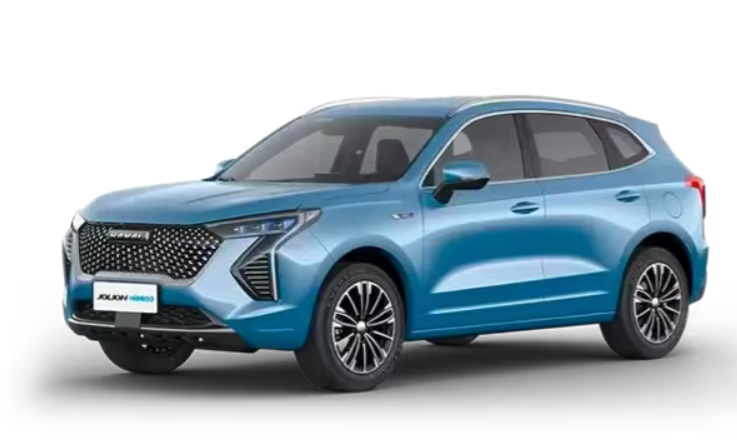
If we are looking at the Haval Jolion engine capacity, the short answer is simple: the Haval Jolion uses a 1.5-litre engine across its main petrol and hybrid versions.
However, things become more interesting when we look at the actual displacement figures. Depending on the variant and market, the Jolion's 1.5L engine may have a displacement of approximately 1,497 cc or 1,499 cc.
In Australia, for example, some Jolion petrol variants use a 1,497 cc 1.5-litre turbocharged petrol engine, while higher-output versions can use a 1,499 cc engine. Jolion hybrid versions also use a 1,497 cc petrol engine as part of their petrol-electric powertrain.
So, while all of these engines are commonly described simply as "1.5L," there are important differences in turbocharging, power output, compression ratio and hybrid assistance.
Content in this publication
- What Is the Haval Jolion Engine Capacity?
- Is the Haval Jolion a 1.5L Engine?
- Haval Jolion Engine Capacity in CC
- Haval Jolion Petrol Engine Capacity
- Haval Jolion 1.5 Turbo Engine
- Haval Jolion Hybrid Engine Capacity
- Haval Jolion Hybrid Petrol Engine vs Electric Motor
- Haval Jolion Engine Size vs Engine Capacity
- How Many Cylinders Does the Haval Jolion Have?
- Haval Jolion 1.5L Engine Power
- Does the Haval Jolion Have a 2.0L Engine?
- Haval Jolion Engine Capacity and Fuel Economy
- Haval Jolion Engine Compression Ratio
- Haval Jolion Bore and Stroke
- Is the Haval Jolion Engine Turbocharged?
- What Transmission Does the Haval Jolion Use?
- Is the 1.5L Haval Jolion Good for Highway Driving?
- Haval Jolion Engine Capacity by Country
- Haval Jolion Engine Capacity vs Competitors
- Is a Bigger Engine Always Better?
- Which Haval Jolion Engine Should We Choose?
- Haval Jolion Engine Capacity: Key Numbers
- Frequently Asked Questions
- Final Thoughts
What Is the Haval Jolion Engine Capacity?
The Haval Jolion's engine capacity is approximately 1.5 litres.
Depending on the version, typical specifications include:
| Haval Jolion version | Engine capacity | Engine type |
|---|---|---|
| Jolion Petrol | 1,497 cc | 1.5L turbo petrol |
| Higher-output Petrol | 1,499 cc | 1.5L turbo petrol |
| Jolion Hybrid | 1,497 cc | 1.5L petrol hybrid |
In everyday terms, we can simply refer to all of them as 1.5-litre engines.
Is the Haval Jolion a 1.5L Engine?
Yes. The Haval Jolion is predominantly offered with a 1.5L petrol engine.
Depending on the model, that engine can be used in two main configurations:
- 1.5L turbocharged petrol
- 1.5L petrol-electric hybrid
Therefore, seeing "1.5T," "1.5 Turbo" or "1.5 Hybrid" in Jolion specifications does not mean that the vehicle has dramatically different engine capacities.
The differences mainly relate to how the engine produces and delivers power.
Haval Jolion Engine Capacity in CC
Many owners search for the Haval Jolion engine capacity in cc rather than litres.
The conversion is straightforward:
1 litre = approximately 1,000 cc
Therefore:
- 1.5 litres ≈ 1,500 cc
- 1,497 cc = 1.497 litres
- 1,499 cc = 1.499 litres
Manufacturers round those numbers and advertise both engines as 1.5L.
Why Isn't It Exactly 1,500 CC?
Engine names such as 1.5L, 2.0L or 3.0L are generally rounded classifications.
A 1.5-litre engine therefore does not necessarily have an exact displacement of 1,500 cc.
An engine measuring 1,497 cc can legitimately be marketed as a 1.5L engine, just as a 1,499 cc engine is also described as 1.5L.
Haval Jolion Petrol Engine Capacity
The regular petrol-powered Haval Jolion uses a 1.5-litre turbocharged four-cylinder petrol engine in many markets.
Some versions have a displacement of 1,497 cc and produce approximately 105 kW and 210 Nm.
Higher-output petrol versions can use a 1,499 cc configuration producing around 130 kW and 270 Nm.
That makes engine capacity alone a poor way of judging performance.
A 1,497 cc Jolion and a 1,499 cc Jolion essentially belong to the same displacement class, yet their outputs can be significantly different.
Haval Jolion 1.5 Turbo Engine
The turbocharger is one of the most important parts of the petrol Jolion's powertrain.
Instead of relying solely on engine displacement to produce power, the turbocharger forces additional air into the combustion chambers.
That allows a relatively small 1.5L engine to provide the torque required for a compact SUV without needing a larger naturally aspirated engine.
Is a 1.5L Engine Too Small for the Haval Jolion?
Not necessarily.
Modern turbocharged engines can generate considerably more performance per litre than older naturally aspirated engines.
For everyday activities such as:
- city driving,
- commuting,
- highway cruising,
- overtaking,
- carrying passengers,
the Jolion's turbocharged 1.5L engine is designed to offer a balance between performance and fuel consumption.
The exact driving experience nevertheless depends on which 1.5L version we choose.
Haval Jolion Hybrid Engine Capacity
The Haval Jolion Hybrid also uses a 1.5-litre petrol engine, with a displacement of approximately 1,497 cc in many versions.
However, we should not compare it with the petrol Jolion simply by looking at engine capacity.
The hybrid combines the petrol engine with an electric motor and a Dedicated Hybrid Transmission.
This means propulsion can come from:
- the petrol engine,
- the electric motor,
- or a combination of both.
Some Jolion Hybrid versions produce approximately 140 kW of combined power and 375 Nm of combined torque, despite having essentially the same engine capacity as lower-output petrol models.
Haval Jolion Hybrid Petrol Engine vs Electric Motor
One common misunderstanding is that the hybrid's advertised combined output comes entirely from its 1.5L petrol engine.
It does not.
Typical specifications can include:
Petrol engine output: 70 kW
Electric motor output: 115 kW
Combined system output: 140 kW
Combined torque: 375 Nm
The individual maximum outputs cannot simply be added together because they do not necessarily occur at exactly the same operating point.
The manufacturer therefore provides a separate combined system figure.
Does the Electric Motor Increase Engine Capacity?
No.
Adding an electric motor does not increase engine displacement.
The Jolion Hybrid still has a roughly 1.5L petrol engine.
Engine capacity refers specifically to the internal combustion engine's cylinder displacement.
The electric motor has no cylinder displacement, so it is measured primarily in terms of electrical output rather than litres or cubic centimetres.
Haval Jolion Engine Size vs Engine Capacity
"Engine size" and "engine capacity" are often used interchangeably.
When somebody asks about the Haval Jolion engine size, they usually want to know its displacement.
Therefore:
Haval Jolion engine size = approximately 1.5 litres
Haval Jolion engine capacity = approximately 1,497–1,499 cc depending on variant
However, "engine size" can occasionally refer more broadly to the physical dimensions of the engine, so displacement is technically the more precise term.
How Many Cylinders Does the Haval Jolion Have?
The Jolion's 1.5-litre petrol engines use a four-cylinder layout.
This is extremely common among compact SUVs because four-cylinder engines generally provide a useful compromise between:
- power,
- fuel efficiency,
- manufacturing cost,
- packaging,
- refinement,
- and overall vehicle weight.
Combined with turbocharging or hybrid assistance, a four-cylinder 1.5L engine can provide considerably stronger performance than its displacement might initially suggest.
Haval Jolion 1.5L Engine Power
Engine capacity tells us how much volume the engine's cylinders displace, but it does not tell us exactly how powerful the vehicle is.
This distinction is particularly noticeable across the Jolion range.
1.5L Petrol
Some Jolion petrol variants produce approximately:
105 kW
210 Nm
Higher-Output 1.5L Petrol
Other versions increase output to around:
130 kW
270 Nm
1.5L Hybrid
The hybrid powertrain can provide approximately:
140 kW combined
375 Nm combined
These differences show why two vehicles with almost identical engine capacities can perform very differently.
Does the Haval Jolion Have a 2.0L Engine?
For the mainstream Jolion range, no—the vehicle generally uses a 1.5L engine rather than a 2.0L engine.
People sometimes confuse the Jolion with larger Haval models or other GWM vehicles that may use bigger engines.
If we are buying a used Jolion from another country, however, we should always verify the specification using the VIN, registration documentation or owner's manual because powertrain availability can vary by country and model year.
Haval Jolion Engine Capacity and Fuel Economy
A relatively small engine capacity can help reduce fuel consumption, particularly when paired with efficient turbocharging or hybrid technology.
Typical combined fuel-consumption figures can be around:
- Petrol Jolion: approximately 6.5–6.7 L/100 km
- Hybrid Jolion: approximately 4.8 L/100 km
These are official-style combined figures and should not be treated as guaranteed real-world consumption.
Actual fuel use will depend on:
- traffic,
- temperature,
- driving style,
- tyre pressure,
- vehicle load,
- road conditions,
- and average speed.
Why Is the Hybrid More Economical With the Same Engine Capacity?
Because capacity is only one part of the equation.
The hybrid can rely on its electric motor in situations where an internal combustion engine is relatively inefficient.
It can also recover some kinetic energy during deceleration through regenerative braking.
This is particularly beneficial in urban environments with frequent acceleration and braking.
Haval Jolion Engine Compression Ratio
Another difference hidden behind the identical "1.5L" badge is compression ratio.
Depending on the engine configuration, compression ratios can vary considerably.
Some turbo petrol versions use a compression ratio around 9.3:1, while more powerful petrol versions may use approximately 11:1.
The hybrid petrol engine can use a much higher compression ratio of around 13:1.
This highlights why displacement alone does not tell us how an engine is designed or how efficiently it operates.
Haval Jolion Bore and Stroke
Bore and stroke determine much of the engine's displacement.
Typical figures can include:
1,497 cc engine: approximately 75 × 84.7 mm
1,499 cc engine: approximately 75 × 84.9 mm
The extremely small difference in stroke helps explain why one engine is listed as 1,497 cc while another is 1,499 cc.
For most owners, this difference has little practical significance.
Is the Haval Jolion Engine Turbocharged?
It depends on the version.
Petrol Jolion
The conventional petrol Jolion generally uses a 1.5L turbocharged petrol engine.
Turbocharging allows the engine to generate more torque and power without requiring a larger displacement.
Hybrid Jolion
The Jolion Hybrid uses a 1.5L petrol engine integrated with an electric drive system and Dedicated Hybrid Transmission.
Therefore, when comparing vehicles online, we should not assume that every 1.5-litre Jolion has an identical powertrain.
What Transmission Does the Haval Jolion Use?
The transmission also varies depending on the engine configuration.
Petrol versions commonly use a 7-speed dual-clutch transmission, often abbreviated as 7DCT.
Hybrid versions use a Dedicated Hybrid Transmission, or DHT.
The DHT is specifically designed around the interaction between the petrol engine and electric motor.
This is another reason why the Hybrid can feel quite different from the conventional petrol Jolion despite both having a 1.5L combustion engine.
Is the 1.5L Haval Jolion Good for Highway Driving?
Yes, the engine capacity itself should not prevent the Jolion from being suitable for highway use.
Modern turbocharged petrol and hybrid engines are capable of delivering substantial power from relatively small displacement.
For motorway driving, we would pay more attention to:
- total power,
- torque,
- transmission behaviour,
- vehicle weight,
- fuel consumption,
- cabin refinement,
- and overtaking performance.
The hybrid's strong combined torque output shows how electric assistance can provide substantial performance without requiring a large-displacement engine.
Haval Jolion Engine Capacity by Country
This is an important consideration.
Haval sells the Jolion in numerous markets, and specifications can differ between countries.
Different regions may offer several 1.5-litre configurations, including:
- lower-output petrol engines,
- higher-output turbo petrol engines,
- and hybrid powertrains.
Therefore, specifications from one country should not automatically be applied to a Jolion sold somewhere else.
Even vehicles carrying the same trim name may have different outputs or equipment.
How to Confirm Your Exact Jolion Engine
If we need the exact capacity of a particular vehicle, the most reliable sources are:
- Vehicle registration documents.
- VIN-specific manufacturer information.
- The owner's manual.
- The engine identification plate.
- An authorised GWM or Haval dealer.
This becomes especially important when ordering:
- engine oil,
- oil filters,
- spark plugs,
- air filters,
- or other mechanical components.
Haval Jolion Engine Capacity vs Competitors
A 1.5L engine is completely normal in the modern compact SUV segment.
Manufacturers increasingly use smaller turbocharged or electrified engines instead of relying on 2.0L or larger naturally aspirated engines.
What matters more than displacement alone is how the entire powertrain works.
For example, we should consider:
- horsepower or kilowatt output,
- peak torque,
- turbo response,
- hybrid assistance,
- transmission calibration,
- fuel economy,
- vehicle weight.
A 1.5L turbo engine may easily outperform a larger naturally aspirated engine depending on how each is engineered.
Is a Bigger Engine Always Better?
No.
A larger engine can provide benefits, particularly for heavy towing or sustained high-load driving, but it can also increase:
- fuel consumption,
- weight,
- emissions,
- and potentially operating costs.
The Jolion's 1.5L configuration reflects the trend toward getting more performance from smaller engines using turbocharging and electrification.
For many compact-SUV buyers, this approach provides a better compromise between performance and efficiency than simply increasing engine displacement.
Which Haval Jolion Engine Should We Choose?
The best option depends more on our driving requirements than on engine capacity because both petrol and hybrid versions essentially use 1.5L engines.
Choose the Petrol Jolion If
We may prefer the petrol model if:
- the purchase price is our main concern;
- we do fewer kilometres each year;
- most driving involves longer, steady-speed journeys;
- we prefer a conventional petrol drivetrain.
Choose the Jolion Hybrid If
The hybrid becomes particularly attractive if:
- we frequently drive in urban traffic;
- fuel economy is a priority;
- we want stronger combined torque;
- we like smoother electric-assisted take-offs;
- we expect to keep the vehicle long enough for fuel savings to matter.
Engine capacity, surprisingly, is not the deciding factor because both options remain within the same 1.5-litre class.
Haval Jolion Engine Capacity: Key Numbers
For anyone simply looking for the specifications, these are the figures to remember:
Engine size: 1.5 litres
Typical displacement: 1,497 cc
Alternative petrol displacement: 1,499 cc
Cylinder configuration: Four-cylinder
Petrol version: 1.5L turbo petrol
Hybrid version: 1.5L petrol-electric hybrid
Petrol output: Up to approximately 130 kW depending on variant
Hybrid system output: Approximately 140 kW
Hybrid combined torque: Approximately 375 Nm
The precise specification should always be matched to the market, model year and trim level.
Frequently Asked Questions
What is the Haval Jolion engine capacity?
The Haval Jolion has approximately a 1.5-litre engine. Depending on the exact version, displacement can be around 1,497 cc or 1,499 cc.
How many cc is the Haval Jolion?
Most versions use approximately 1,497 cc, while some petrol variants may use a 1,499 cc engine. Both are marketed as 1.5-litre engines.
Is the Haval Jolion a 1.5 or 2.0 engine?
The mainstream Haval Jolion uses a 1.5L engine, not a 2.0L engine.
What engine does the Haval Jolion Hybrid have?
The Jolion Hybrid uses a 1.5L petrol engine combined with an electric motor and Dedicated Hybrid Transmission.
Depending on the market, combined system output can be approximately 140 kW.
Is the Haval Jolion 1.5 engine turbocharged?
Conventional petrol Jolion models generally use a 1.5L turbocharged petrol engine.
Hybrid models use a different 1.5L petrol-electric powertrain.
Final Thoughts
The Haval Jolion engine capacity is 1.5 litres, or roughly 1,500 cc, across the major petrol and hybrid configurations.
The exact figure can be 1,497 cc or 1,499 cc depending on the model, but that tiny difference is far less important than the way each powertrain is configured.
Regular petrol Jolions use turbocharging to extract useful performance from their compact engine, while the Jolion Hybrid combines its 1.5L petrol engine with an electric motor to deliver stronger combined torque and better fuel economy.
So, when comparing Haval Jolion engines, we should look beyond capacity alone. Power, torque, hybrid assistance, transmission and fuel economy tell us much more about how each Jolion will actually perform on the road.
If you want to know other articles similar to Haval Jolion Engine Capacity: Petrol and Hybrid Explained you can visit the category Service and Parts.
Kia Sorento Windscreen Replacement Cost: Complete 2026 Price Guide
Kia Sorento Tyre Pressure Reset: Complete TPMS Guide
Kia Sorento Hybrid Towing Capacity: Complete Guide
Kia Sorento Engine Size: Complete Guide to All Engines
Kia Sorento Service Cost: Complete 2026 Maintenance Guide
Kia Sorento Key Fob Battery Replacement: Complete DIY Guide
Leave a Reply
More content of your interest