
Honda Jazz Dimensions: Size, Width & Boot Space

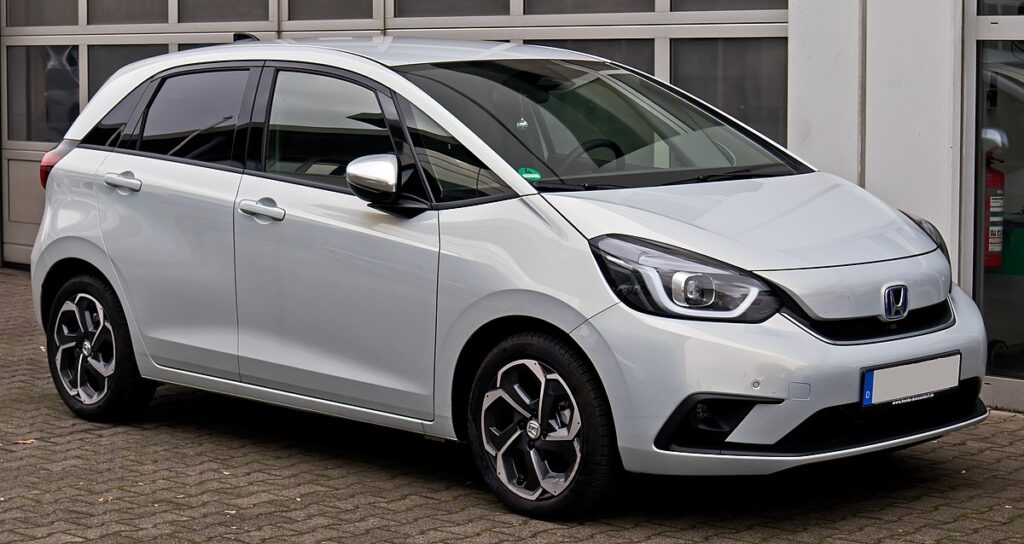
The Honda Jazz has earned a reputation for being one of the most practical small cars on the market. Despite its compact exterior, it offers a surprisingly spacious interior, flexible seating arrangements, and an impressive amount of usable storage space.
But exactly how big is the Honda Jazz?
If we're considering buying one, checking its dimensions can help us determine whether it will fit in our garage, accommodate our family, or provide enough luggage space for everyday activities.
The modern Honda Jazz measures 4,089 mm long, 1,694 mm wide, and 1,526 mm high in its standard UK specification. Its clever interior layout means it can accommodate five occupants while maintaining the compact proportions that make it particularly suitable for urban driving.
In this comprehensive guide, we'll explore Honda Jazz dimensions, boot capacity, interior measurements, ground clearance, and the differences between generations. We'll also compare the regular Jazz with the Jazz Crosstar and Toyota Yaris.
Content in this publication
- Honda Jazz Dimensions at a Glance
- Honda Jazz Length: How Long Is It?
- Honda Jazz Width: Including Mirrors
- Honda Jazz Height
- Honda Jazz Wheelbase
- Honda Jazz Boot Dimensions and Capacity
- Honda Jazz Boot Space With Seats Down
- Honda Jazz Interior Dimensions and Passenger Space
- Honda Jazz Magic Seats: A Practical Advantage
- Honda Jazz Crosstar Dimensions
- Honda Jazz Ground Clearance
- Honda Jazz Turning Circle
- Honda Jazz Dimensions by Generation
- Honda Jazz Hybrid Dimensions
- Honda Jazz vs Toyota Yaris Dimensions
- Is the Honda Jazz Big Enough for a Family?
- Honda Jazz Parking and Garage Dimensions
- Advantages of the Honda Jazz's Compact Dimensions
- Honda Jazz Dimensions: Potential Disadvantages
- Frequently Asked Questions About Honda Jazz Dimensions
- Conclusion: Is the Honda Jazz the Right Size?
Honda Jazz Dimensions at a Glance
The current-generation Honda Jazz is a compact five-door hatchback designed to maximise interior space without becoming difficult to park or manoeuvre.
Here are the main exterior dimensions of the standard Jazz hybrid.
| Measurement | Honda Jazz |
|---|---|
| Length | 4,089 mm |
| Width (excluding mirrors) | 1,694 mm |
| Width (including mirrors) | 1,966 mm |
| Width (mirrors folded) | 1,814 mm |
| Height | 1,526 mm |
| Wheelbase | 2,517 mm |
| Ground clearance (with driver) | 136 mm |
| Turning circle (at body) | 10.1–10.7 m |
| Boot capacity (rear seats up) | 304 litres |
| Boot capacity (rear seats down, to roof) | 1,205 litres |
| Seating capacity | 5 passengers |
Figures refer to current-generation UK specifications. Some measurements vary by trim, model year, and market.
These measurements explain why the Jazz appeals to drivers looking for a practical vehicle that is easy to use in towns and cities.
Although it belongs to the small-car category, its upright body and clever cabin design make it feel more spacious than its exterior dimensions initially suggest.
Honda Jazz Length: How Long Is It?
The standard Honda Jazz measures 4,089 mm (4.09 metres) in length.
That makes it compact enough for most conventional parking spaces while providing enough room for a useful boot and a comfortable passenger compartment.
Is the Honda Jazz Easy to Park?
Its relatively short body is a major advantage when parking in crowded urban environments.
We can expect several practical benefits:
- Easier manoeuvring in supermarket car parks.
- Less difficulty finding suitable on-street parking spaces.
- Better practicality in narrow residential streets.
- Reduced space requirements compared with larger family hatchbacks.
- Easier positioning when reversing into a parking bay.
The car's dimensions are particularly appealing for drivers who regularly travel through busy city centres.
However, parking convenience is not determined by vehicle length alone. Visibility, steering response, turning circle, and available parking assistance also make a difference.
Honda Jazz Length in Feet
For readers who prefer imperial measurements, the current standard Jazz is approximately:
- 13.4 feet long.
- 161 inches long.
- 4.09 metres long.
This relatively compact length contributes to the Jazz's reputation as a practical city car.
Honda Jazz Width: Including Mirrors
Vehicle width is particularly important when we need to navigate narrow roads, garage entrances, or tight parking spaces.
The standard Honda Jazz measures 1,694 mm wide without its door mirrors.
However, the overall width increases when the mirrors are included.
| Width Measurement | Size |
|---|---|
| Body width | 1,694 mm |
| Width with mirrors extended | 1,966 mm |
| Width with mirrors folded | 1,814 mm |
The difference between body width and overall width is important.
When comparing cars or checking garage dimensions, manufacturers typically provide the width excluding door mirrors as their headline measurement.
However, the overall width including mirrors is more relevant when determining whether a vehicle can safely pass through a narrow opening.
Will a Honda Jazz Fit in a Narrow Garage?
In many cases, yes.
The Jazz's narrow body makes it suitable for a wide variety of residential garages, including some older properties with relatively restricted access.
Nevertheless, we recommend measuring the actual entrance rather than relying exclusively on the manufacturer's body-width figure.
For example, a garage opening measuring exactly 2 metres would leave very little room around a Jazz with its mirrors extended.
Folding the mirrors reduces the overall width, but drivers still need enough clearance for safe manoeuvring.
We should also consider whether the garage provides sufficient space to open the doors after parking.
Honda Jazz Height
The standard Honda Jazz stands 1,526 mm (1.53 metres) tall when unladen.
This makes it taller than some conventional low-profile hatchbacks, although it remains considerably lower than most SUVs.
The relatively upright roofline is one reason why the Jazz offers such good interior headroom.
Why Does Vehicle Height Matter?
A taller body can provide important everyday advantages.
First, it can make entry and exit more comfortable, particularly for passengers who dislike sitting close to the ground.
Second, the relatively upright cabin provides useful headroom for adults.
Third, the additional vertical space allows Honda to create a flexible passenger compartment without needing a significantly longer vehicle.
Despite these advantages, the Jazz remains compact enough for typical multi-storey car parks.
Drivers should still check height restrictions, especially when roof-mounted accessories are fitted.
Honda Jazz Wheelbase
The standard Honda Jazz has a wheelbase of 2,517 mm.
The wheelbase is the distance between the centres of the front and rear wheels.
Although it may seem like a relatively technical measurement, it has a significant influence on how spacious a vehicle feels.
A well-designed wheelbase can help manufacturers create more passenger room without making the vehicle excessively long.
How Does the Wheelbase Affect Interior Space?
The Honda Jazz uses its available platform space efficiently.
Rather than relying on a large exterior, Honda prioritises passenger accommodation and flexible seating.
This approach helps provide:
- Generous rear legroom for a small hatchback.
- A comfortable driving position.
- Useful space between the front and rear seats.
- Good passenger accessibility.
- Versatile luggage arrangements.
Of course, wheelbase alone does not determine cabin space.
Seat design, floor height, dashboard positioning, and the location of mechanical components are also important.
Honda Jazz Boot Dimensions and Capacity
One of the most important measurements for prospective Honda Jazz buyers is boot capacity.
The current standard Honda Jazz offers 304 litres of luggage space with the rear seats upright.
When the rear seats are folded, the available capacity increases significantly.
| Boot Configuration | Capacity |
|---|---|
| Rear seats upright | 304 litres |
| Rear seats folded, loaded to window level | 844 litres |
| Rear seats folded, loaded to roof | 1,205 litres |
These figures use the VDA measurement method, which provides a standardised way of calculating luggage volume.
The distinction between loading to the window line and loading to the roof is particularly important.
The larger 1,205-litre figure represents the maximum cargo volume with the rear seats folded and the available space measured up to the roof.
It does not mean we should load unsecured luggage to the roof while driving.
Is the Honda Jazz Boot Big Enough?
For normal everyday use, the boot is practical.
Its 304-litre capacity can accommodate typical shopping, school bags, everyday luggage, and various smaller household items.
The amount of equipment we can fit will naturally depend on its shape and dimensions.
A large rigid suitcase, for example, may occupy more usable space than several soft bags of equivalent total volume.
The Jazz becomes particularly useful when the rear seats are folded, creating a substantially larger loading area.
Honda Jazz Boot Width and Depth
Boot volume is useful, but it doesn't tell us everything about the actual dimensions of the luggage compartment.
Independent measurements of the fourth-generation Jazz have recorded approximately:
| Interior Boot Measurement | Approximate Size |
|---|---|
| Boot depth with seats upright | 59–65 cm |
| Boot width | 101–117 cm |
| Height below parcel shelf | 57.5 cm |
| Loading lip height above ground | 62 cm |
These are measured reference figures rather than universal guarantees for every trim or model year.
In practice, the precise usable width depends on where the measurement is taken, particularly around the wheel arches and interior trim.
If we're planning to transport a specific suitcase, wheelchair, pushchair, or other bulky object, measuring the actual vehicle is always worthwhile.
Honda Jazz Boot Space With Seats Down
Folding the rear seats transforms the Jazz from an ordinary small hatchback into a surprisingly versatile vehicle.
With the seats folded and the available space measured up to the roof, the boot capacity increases to 1,205 litres.
This is a substantial improvement over the standard 304-litre arrangement.
The larger loading area can be useful for:
- Moving small pieces of furniture.
- Carrying several suitcases.
- Transporting sports equipment.
- Collecting flat-packed furniture.
- Accommodating bulky household purchases.
Nevertheless, maximum volume and maximum object dimensions are different things.
A long or unusually shaped item may not fit even when its total volume is smaller than the advertised luggage capacity.
Can You Fit a Bicycle in a Honda Jazz?
Depending on the bicycle's frame size and the seating configuration, it may be possible to transport a bicycle inside the Jazz.
Removing the front wheel can make loading significantly easier.
However, full-size adult bicycles vary considerably in length, handlebar width, and frame geometry.
We recommend checking the bicycle's dimensions before assuming it will fit.
A protective cover is also useful for preventing damage to interior surfaces.
Honda Jazz Interior Dimensions and Passenger Space
The Honda Jazz is especially impressive when we consider how much interior room it provides relative to its exterior size.
Although it is classified as a small hatchback, its tall body and intelligent packaging help create a cabin that feels larger than expected.
We can comfortably describe the Jazz as a vehicle designed around practical passenger accommodation.
Front Seat Space
The front compartment benefits from a relatively upright dashboard design and good forward visibility.
The seats provide a practical driving position, while the available headroom helps accommodate taller occupants.
The positioning of the windscreen and dashboard also creates a sense of openness.
This is particularly useful for drivers who prefer a commanding view of the road without moving to an SUV.
Rear Legroom
Rear passenger accommodation is one of the Jazz's strongest qualities.
Independent measurements of the fourth-generation car have recorded around 76 cm of rear legroom under a defined front-seat reference position.
However, this is not the maximum possible knee clearance, and the available space changes when the front seats are moved.
The important point is that two adults can generally travel in the rear seats without feeling as restricted as they might in some similarly sized hatchbacks.
Rear Headroom
The upright roofline also benefits rear passengers.
Independent cabin measurements have recorded approximately 91 cm of rear headroom under a defined measuring procedure.
Actual head clearance depends on occupant height, posture, and seating position.
For a relatively compact vehicle, the Jazz makes efficient use of its available cabin height.
Can Three Adults Sit in the Back?
The Honda Jazz has five seats, including three rear seating positions.
However, accommodating three adults across the rear bench is less comfortable than carrying two.
The car's relatively narrow body naturally limits available shoulder room.
For occasional short journeys, three rear occupants may be manageable, but we would not expect the same comfort as a wider family vehicle.
For families with several child seats, checking the actual seat widths and restraint compatibility is particularly important.
Honda Jazz Magic Seats: A Practical Advantage
One of the Honda Jazz's best-known features is its Magic Seats system.
This seating arrangement allows the rear passenger area to adapt to different types of cargo.
Instead of only folding the rear backrests down, the Jazz also allows the rear seat cushions to be raised.
This creates additional vertical storage space inside the passenger compartment.
Tall Mode
In Tall Mode, the rear seat cushions are lifted upwards.
This arrangement creates a tall storage area behind the front seats.
It can be especially useful when transporting objects that are easier to carry upright.
Examples include certain plants, tall boxes, and other items that may be awkward to place in the boot.
Utility Mode
Utility Mode involves folding the rear seats down to expand the luggage area.
This is the configuration we would normally use for larger cargo.
It creates additional loading length and makes the Jazz more practical when transporting multiple bags or household objects.
Why Are Magic Seats Useful?
The main advantage is flexibility.
Traditional hatchbacks usually require us to choose between carrying passengers and folding the rear seats to increase cargo capacity.
The Jazz provides additional ways to configure its interior.
This can be particularly convenient for drivers who regularly transport different types of equipment.
However, luggage should always be secured appropriately, regardless of the seating arrangement.
Honda Jazz Crosstar Dimensions
The Honda Jazz Crosstar is a crossover-inspired version of the regular Jazz.
It has distinctive exterior styling and a slightly different body profile.
Although both vehicles share the same basic platform, the Crosstar is marginally longer, wider, and taller.
Honda Jazz vs Honda Jazz Crosstar Size
| Dimension | Honda Jazz | Jazz Crosstar |
|---|---|---|
| Length | 4,089 mm | 4,105 mm |
| Body width | 1,694 mm | 1,725 mm |
| Height | 1,526 mm | 1,556 mm |
| Wheelbase | 2,517 mm | 2,520 mm |
| Width with mirrors | 1,966 mm | 1,966 mm |
| Ground clearance (with driver) | 136 mm | 146 mm |
| Boot capacity (2023 facelift specification) | 304 L | 304 L |
| Maximum boot capacity to roof | 1,205 L | 1,205 L |
The Crosstar is therefore:
- 16 mm longer.
- 31 mm wider across the body.
- 30 mm taller.
- 3 mm longer in wheelbase.
- Approximately 10 mm higher in the specified ground-clearance measurement.
These differences are relatively modest.
The Crosstar looks more rugged, but it remains a compact car rather than a traditional SUV.
Note: Earlier 2020 Crosstar specifications quoted 298 litres of boot space and 1,199 litres with the rear seats folded. The 2023 facelift specification lists 304 and 1,205 litres respectively. Dimensions and capacities should always be checked against the exact model year.
Is the Crosstar More Spacious Inside?
Not necessarily.
Although the Crosstar is slightly larger externally, the additional dimensions do not translate into a dramatic increase in passenger accommodation.
Both models share a fundamentally similar cabin layout.
The differences are mainly related to exterior styling, ride height, and equipment.
If maximum interior space is our priority, the regular Jazz already offers much of the practicality found in the Crosstar.
Honda Jazz Ground Clearance
Ground clearance measures the distance between the lowest relevant point underneath the vehicle and the road surface.
For the current UK-specification Jazz, Honda quotes approximately:
| Version | Ground Clearance With Driver |
|---|---|
| Standard Honda Jazz | 136 mm |
| Honda Jazz Crosstar | 146 mm |
Ground clearance decreases when the vehicle is heavily loaded.
For example, the standard Jazz has a quoted fully loaded clearance of approximately 105 mm, depending on the specification.
Is the Honda Jazz Too Low for Speed Bumps?
For ordinary urban driving, the Jazz is designed to handle typical paved roads and appropriately designed speed bumps.
However, unusually steep ramps, damaged road surfaces, or large obstacles can create clearance problems.
We should approach aggressive speed bumps carefully, especially with passengers and luggage on board.
The Crosstar provides a small advantage in ride height, but the difference is not enough to make it suitable for serious off-road driving.
Neither model should be treated as a conventional off-road SUV.
Honda Jazz Turning Circle
The turning circle describes how much space a car needs to complete a full turn.
For the current-generation Honda Jazz, the turning circle measured at the vehicle body is approximately 10.1 to 10.7 metres, depending on the version.
This relatively compact turning circle contributes to its urban practicality.
Why Is a Small Turning Circle Helpful?
A manageable turning circle can make several driving situations easier:
- Performing U-turns where legally permitted.
- Manoeuvring in narrow residential streets.
- Parking in restricted spaces.
- Navigating multi-storey car parks.
- Changing direction in tight areas.
We should remember that turning circle figures can be measured at the wheels or the vehicle body.
Those measurement methods do not produce identical results.
For practical manoeuvring, the body measurement is often more representative of the space needed to avoid obstacles.
Honda Jazz Dimensions by Generation
The Honda Jazz has evolved considerably since its introduction.
Although its overall design philosophy has remained consistent, each generation has introduced changes to its exterior dimensions and interior packaging.
The following table provides a useful comparison of selected UK and European specifications.
| Generation | Length | Width | Height | Wheelbase |
|---|---|---|---|---|
| First generation (2002–2008) | Approx. 3,845 mm | 1,675 mm | 1,525 mm | 2,450 mm |
| Second generation (2008–2015) | 3,900 mm | 1,695 mm | 1,525 mm | 2,500 mm |
| Third generation (2015–2020) | 3,995 mm | 1,694 mm | 1,550 mm | 2,530 mm |
| Fourth generation (2020 onward, current UK spec) | 4,089 mm | 1,694 mm | 1,526 mm | 2,517 mm |
Figures are representative of selected standard models. Exterior styling packages, market specifications, and model-year updates can change individual measurements.
First-Generation Honda Jazz Dimensions
The original Jazz was notably compact.
With a length of approximately 3.85 metres, it was especially suited to city driving.
Despite its short body, Honda prioritised interior flexibility from the beginning.
Its innovative packaging helped establish the Jazz as an alternative to more conventional small hatchbacks.
Second-Generation Honda Jazz Dimensions
The second generation arrived with a longer body and increased wheelbase.
Its standard dimensions were approximately 3,900 mm long, 1,695 mm wide, and 1,525 mm high.
This represented a relatively modest increase in exterior size.
However, Honda used the additional space to improve passenger accommodation and everyday practicality.
Certain second-generation versions offered approximately 399 litres of boot capacity, although figures vary depending on the model and measurement method.
Third-Generation Honda Jazz Dimensions
The third-generation Jazz introduced another increase in length, reaching approximately 3,995 mm in its original standard configuration.
It also offered an especially generous boot for its class.
Typical luggage capacity figures were:
- 354 litres with rear seats upright.
- Up to 1,314 litres with the rear seats folded and the load area measured to the roof.
This makes the third-generation model an interesting choice for used-car buyers who prioritise luggage space.
Some later variants with different exterior styling have slightly different overall lengths.
Fourth-Generation Honda Jazz Dimensions
The fourth-generation Jazz was introduced in 2020 and brought a redesigned exterior and hybrid-focused powertrain.
The latest UK specification measures 4,089 mm long.
Although it is longer than the original third-generation car, its wheelbase is slightly shorter.
Nevertheless, the interior remains extremely practical.
The current Jazz offers 304 litres of boot space with the rear seats in place.
This is smaller than the 354-litre figure quoted for many third-generation models.
However, the flexible Magic Seats arrangement continues to be a major advantage.
Honda Jazz Hybrid Dimensions
The current UK Honda Jazz range uses Honda's e hybrid system.
An important question is whether the hybrid powertrain significantly affects interior space.
Fortunately, Honda has packaged the hybrid components to preserve the vehicle's practical cabin layout.
The regular Jazz hybrid maintains the following principal dimensions:
- Length: 4,089 mm.
- Width: 1,694 mm.
- Height: 1,526 mm.
- Wheelbase: 2,517 mm.
- Boot capacity: 304 litres.
The hybrid system does not prevent the vehicle from offering flexible rear seating arrangements.
For drivers considering a compact hybrid, this is a notable benefit.
Does the Hybrid Battery Reduce Boot Space?
Compared with the previous-generation petrol Jazz, the newer hybrid has a smaller quoted boot capacity.
However, we should not assume that the entire difference is caused by the hybrid battery.
Changes in vehicle architecture, component packaging, body design, and measurement details can all influence luggage capacity.
The key practical fact is that the current UK hybrid retains a 304-litre boot and the Magic Seats system.
Honda Jazz vs Toyota Yaris Dimensions
The Toyota Yaris is one of the Honda Jazz's most obvious competitors.
Both models are compact hatchbacks available with efficient hybrid powertrains.
However, their proportions are different.
The Jazz prioritises an upright body and passenger flexibility, while the Yaris has a shorter overall body.
The following comparison uses the standard current-generation Jazz and Toyota's published UK Yaris hatchback measurements.
| Dimension | Honda Jazz | Toyota Yaris |
|---|---|---|
| Length | 4,089 mm | 3,940 mm |
| Width | 1,694 mm | 1,745 mm |
| Height | 1,526 mm | 1,500 mm |
| Wheelbase | 2,517 mm | 2,560 mm |
| Boot capacity | 304 L | 286 L |
| Maximum boot capacity to roof | 1,205 L | 947 L |
| Seats | 5 | 5 |
Which Car Is Longer?
The Honda Jazz is approximately 149 mm longer than the Toyota Yaris.
This difference may be noticeable when parking in particularly restricted spaces, although both remain compact hatchbacks.
Which Car Is Wider?
The Toyota Yaris is approximately 51 mm wider across its body.
However, width alone does not determine interior comfort.
Door design, seat positioning, and interior packaging also influence usable passenger space.
Which Car Has the Bigger Boot?
The Honda Jazz offers 304 litres of boot capacity compared with 286 litres in the Yaris.
That gives the Jazz an advantage of 18 litres with the rear seats upright.
The difference becomes more substantial when the rear seats are folded and capacity is measured to the roof.
In this configuration, the Jazz provides up to 1,205 litres compared with 947 litres for the Yaris.
This gives the Honda a 258-litre advantage on the quoted specifications.
For drivers who frequently carry bulky objects, the Jazz's larger maximum cargo volume and Magic Seats could be particularly appealing.
Is the Honda Jazz Big Enough for a Family?
Despite its compact exterior, the Jazz can work well as a family vehicle.
Its passenger compartment provides useful room for adults and children, while the rear seating arrangement adds flexibility.
The upright body also helps with accessibility.
However, family suitability depends on individual requirements.
Honda Jazz for Families With Children
For families with one or two children, the Jazz can be a practical everyday choice.
The rear passenger area accommodates child seats, subject to the appropriate restraint specifications and installation requirements.
The boot can also carry everyday family equipment.
However, pushchairs vary significantly in size.
We recommend measuring larger travel systems before buying, particularly when the rear seats need to remain upright.
Honda Jazz for Tall Drivers
The Jazz's upright cabin can suit taller drivers, but individual comfort depends on more than headroom.
Important considerations include:
- Seat adjustment range.
- Steering wheel position.
- Legroom behind the pedals.
- Head clearance.
- Visibility through the windscreen.
- Comfort during longer journeys.
A test drive remains the most reliable way to determine whether the cabin suits a particular driver.
Honda Jazz for Older Passengers
The relatively upright seating position may appeal to passengers who find low sports-style seats uncomfortable.
The car's compact dimensions also make it convenient for drivers who prefer a manageable vehicle rather than a larger SUV.
However, ease of access should be assessed individually, particularly where mobility limitations are involved.
Honda Jazz Parking and Garage Dimensions
Before buying a Jazz, checking the available parking space is worthwhile.
The car's official measurements provide a useful starting point.
| Parking Consideration | Honda Jazz Measurement |
|---|---|
| Overall length | 4.09 m |
| Body width | 1.69 m |
| Width including mirrors | 1.97 m |
| Height | 1.53 m |
| Width with mirrors folded | 1.81 m |
A parking space must be larger than the vehicle itself to provide usable clearance.
How Much Garage Space Does a Honda Jazz Need?
There is no universal minimum garage dimension that guarantees convenient parking.
We should allow additional room for:
- Opening the driver's door.
- Walking around the vehicle.
- Accessing the boot.
- Manoeuvring without touching walls.
- Allowing for mirrors and accessories.
A garage may technically accommodate the Jazz but still be inconvenient if the door cannot open comfortably.
Before committing to a purchase, we should measure the narrowest point of the entrance and the usable internal width.
Is the Honda Jazz Good for City Driving?
Yes, its dimensions are well suited to city use.
The relatively compact body, manageable turning circle, and practical visibility contribute to its appeal.
Compared with a larger SUV, the Jazz generally requires less parking space and is easier to position in confined areas.
Its cabin also provides more flexibility than its modest exterior size might suggest.
Advantages of the Honda Jazz's Compact Dimensions
The Honda Jazz combines several qualities that are useful in everyday driving.
1. Easy Urban Manoeuvrability
The compact exterior makes it easier to navigate busy streets and smaller parking areas.
2. Efficient Interior Packaging
The cabin uses the available space effectively, particularly around the rear passenger compartment.
3. Flexible Cargo Arrangements
Magic Seats provide loading options that are uncommon in traditional small hatchbacks.
4. Practical Passenger Access
The upright body and relatively tall cabin can make entering and leaving the vehicle easier for many occupants.
5. Manageable Exterior Width
At 1,694 mm wide across the body, the standard Jazz is relatively narrow.
This can be especially helpful when travelling through older urban streets or restricted parking areas.
Honda Jazz Dimensions: Potential Disadvantages
Although the Jazz offers impressive practicality, its dimensions also involve compromises.
Limited Width for Three Rear Passengers
Three adults can use the rear seating positions, but the narrow cabin may feel cramped on longer journeys.
Smaller Boot Than Some Older Jazz Models
The current 304-litre capacity is lower than the 354 litres offered by many third-generation examples.
Not Designed for Heavy Off-Road Use
The standard Jazz has relatively modest ground clearance.
Even the Crosstar does not provide the clearance or drivetrain capabilities associated with dedicated off-road vehicles.
Large Objects Still Require Measuring
Despite the impressive maximum luggage capacity, not every bulky object will fit through the boot opening.
Shape and physical dimensions matter just as much as volume.
Frequently Asked Questions About Honda Jazz Dimensions
1. What Are the Dimensions of the Honda Jazz?
The current standard Honda Jazz measures 4,089 mm in length, 1,694 mm in width excluding mirrors, and 1,526 mm in height. Its wheelbase measures 2,517 mm. Dimensions can vary according to generation, trim, and market.
2. How Wide Is a Honda Jazz With Mirrors?
The current UK-specification Honda Jazz measures 1,966 mm wide with its door mirrors extended. With the mirrors folded, the overall width is 1,814 mm. The body itself measures 1,694 mm wide.
3. How Big Is the Honda Jazz Boot?
The current Honda Jazz offers 304 litres of boot space with the rear seats upright. Folding the seats increases capacity to 844 litres when measured to window level, or 1,205 litres when loaded to the roof.
4. Is the Honda Jazz Crosstar Bigger Than the Jazz?
Yes. The Jazz Crosstar measures approximately 4,105 mm long, 1,725 mm wide, and 1,556 mm high. This makes it slightly longer, wider, and taller than the standard Jazz. However, both share a broadly similar interior layout.
5. Is the Honda Jazz Bigger Than the Toyota Yaris?
The Honda Jazz is longer and taller than the Toyota Yaris, while the Yaris has a wider body. The Jazz also offers a larger quoted boot, with 304 litres compared with 286 litres in the UK Yaris specification used here.
Conclusion: Is the Honda Jazz the Right Size?
The Honda Jazz demonstrates that a small car does not necessarily need to compromise on practicality.
With a length of 4,089 mm, a width of 1,694 mm, and a height of 1,526 mm, the current standard model remains compact enough for everyday urban driving while providing a surprisingly versatile interior.
Its 304-litre boot is suitable for many daily activities, while the available capacity of up to 1,205 litres with the rear seats folded makes it useful for larger loads.
The Magic Seats system is another major advantage, allowing us to configure the cabin in ways that conventional small hatchbacks often cannot match.
The Jazz Crosstar offers slightly larger exterior dimensions and additional ground clearance, although the differences in interior practicality are relatively small.
Meanwhile, older Jazz generations remain worth considering, particularly the third-generation model with its generous quoted boot capacity.
Overall, if we're looking for a compact hatchback that combines manageable exterior dimensions, comfortable passenger accommodation, and flexible luggage space, the Honda Jazz remains a compelling option.
Its greatest strength is not simply how much space it provides, but how intelligently that space can be used.
If you want to know other articles similar to Honda Jazz Dimensions: Size, Width & Boot Space you can visit the category Service and Parts.
Volvo S90 Engine Oil: Type, Capacity & Change Guide
Volvo S90 Boot Space: Size, Capacity and Practicality
SEO Title: Volvo S90 Oil Capacity: Complete Guide by Engine
Kia Sorento Oil Type: Complete Guide by Year & Engine
Kia Sorento Engine Capacity: Complete Guide by Year
Peugeot 308 Clutch Replacement Cost: Complete UK Guide for 2026
Leave a Reply
More content of your interest