
Honda Passport Cargo Space: Dimensions, Capacity, and Real-World Usability

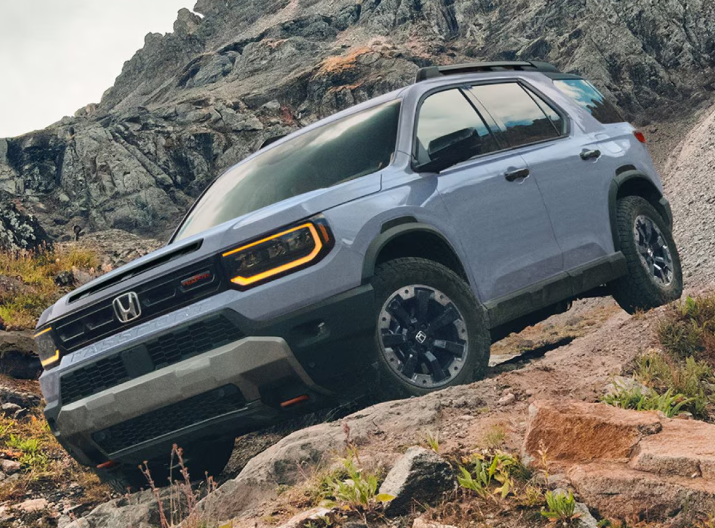
If there is one thing the Honda Passport has never been shy about, it is carrying stuff. Camping gear, suitcases, coolers, groceries, golf clubs, dog crates, muddy hiking boots—we can throw a surprising amount into the back of this midsize SUV without turning packing day into a game of three-dimensional Tetris.
And with the redesigned model, Honda Passport cargo space continues to be one of the SUV's strongest practical advantages.
For the 2026 Honda Passport, Honda lists 44.0 cubic feet of cargo volume behind the second row. Fold the rear seats and the standard cargo measurement rises to approximately 83.2 to 83.8 cubic feet, depending on trim. Honda also publishes a maximum measurement of approximately 104.4 to 104.6 cubic feet behind the front row.
Those are impressive numbers, but cubic feet tell only half the story.
What actually matters is whether we can slide in camping equipment without performing gymnastics, carry four passengers and their luggage, hide smaller items under the floor, fold one rear seat while leaving another passenger comfortable, or turn the back into a makeshift sleeping area for a weekend adventure.
So, rather than simply throwing specifications at the wall, let's explore how much space the Honda Passport really gives us and how useful that space can be.
Content in this publication
- How Much Cargo Space Does the Honda Passport Have?
- Why Do Honda Passport Cargo Space Numbers Differ Online?
- 2026 Honda Passport Cargo Space Is About More Than Cubic Feet
- 60/40 Split-Folding Rear Seats Add Flexibility
- Honda Passport Underfloor Storage
- Can You Sleep in a Honda Passport?
- How Practical Is the Passport Cargo Area for Families?
- Honda Passport Cargo Space for Dogs
- Honda Passport Cargo Space for Bikes
- Cargo Space and the Passport Power Tailgate
- Cargo Power Outlets Add Another Layer of Utility
- 2026 Honda Passport vs 2025 Passport Cargo Space
- Does the Honda Passport Have More Cargo Space Than the Pilot?
- How to Get More Usable Cargo Space From a Honda Passport
- Accessories That Can Improve Passport Cargo Utility
- Who Will Appreciate Honda Passport Cargo Space Most?
- Is Honda Passport Cargo Space Actually Good?
- What Should We Measure Before Buying a Passport?
- Conclusion: The Passport Turns Cargo Space Into a Real Strength
- Frequently Asked Questions
How Much Cargo Space Does the Honda Passport Have?
Let's begin with the numbers most shoppers are looking for.
For the current 2026 Honda Passport, the headline cargo specifications are:
| Seating configuration | 2026 Honda Passport cargo volume |
|---|---|
| Behind second row | 44.0 cu ft |
| Behind first row, standard | 83.2–83.8 cu ft |
| Behind first row, maximum | 104.4–104.6 cu ft |
| Seating capacity | 5 passengers |
Honda's published specifications show 44 cubic feet behind the second row across the lineup, while the slight difference in maximum space with the seats folded depends on configuration and trim.
That gives us a useful starting point.
Forty-four cubic feet means the Passport isn't merely offering a small luggage compartment behind a roomy passenger cabin. Its cargo area feels like a proper storage bay.
Fold the second row and the personality changes again. Suddenly we're dealing with the sort of space that can accommodate bicycles, bulky outdoor equipment, flat-packed furniture, or enough luggage for a very ambitious road trip.
Honda Passport Cargo Space Behind the Second Row
With all five seating positions available, we get 44.0 cubic feet behind the rear seats in the 2026 Passport.
This is arguably the most important measurement because it represents how most owners will use the vehicle most of the time.
We can carry passengers without sacrificing the entire luggage area.
In everyday terms, this is the space we'd use for things such as:
- Several medium or large suitcases
- Grocery bags for a large weekly shop
- Camping equipment
- Sports bags and equipment
- A stroller plus additional bags
- Coolers and folding chairs
- Pet equipment
- Boxes and household supplies
- Hiking or climbing gear
The Passport's two-row layout helps here. Instead of sacrificing a big chunk of the rear compartment to third-row seats, Honda can dedicate that space to cargo.
That's one reason two-row midsize SUVs can make so much sense for buyers who rarely need seating for six, seven, or eight people.
Honda Passport Cargo Space With Seats Down
Fold the second-row seatbacks and the cargo area expands dramatically.
Honda lists approximately 83.8 cubic feet of standard cargo volume behind the first row on most 2026 Passport configurations, with certain versions listed at 83.2 cubic feet. When measured using Honda's maximum-volume specification, the figures reach approximately 104.4 to 104.6 cubic feet.
That's a huge transformation.
Instead of simply having a large trunk, we effectively have a long cargo deck extending toward the front seats.
This configuration is especially helpful when carrying:
- Bicycles with wheels removed
- Camping mattresses
- Ski or snowboard equipment
- Large boxes
- Furniture pieces
- Home-improvement supplies
- Musical equipment
- Photography or production equipment
- Large pet crates
It's also where the Passport starts showing why an SUV can be more practical than a conventional sedan even if we don't regularly drive off-road.
One Saturday trip to the hardware store can make all those cubic feet suddenly feel very relevant.
Why Do Honda Passport Cargo Space Numbers Differ Online?
This is where things get confusing.
Search for Honda Passport cargo capacity and we may encounter dramatically different figures. One website might say around 44 cubic feet. Another might show more than 50. Another may advertise approximately 84 cubic feet with the seats folded, while somewhere else we see more than 100.
No, somebody hasn't misplaced a measuring tape.
There are two major reasons.
Different Model Years Have Different Cargo Measurements
The Passport was substantially redesigned for 2026.
The previous-generation 2025 Honda Passport officially listed:
| Configuration | 2025 cargo volume |
|---|---|
| Behind second row, standard | 41.2 cu ft |
| Behind second row, maximum | 50.5 cu ft |
| Behind first row, standard | 77.5–77.7 cu ft |
| Behind first row, maximum | 100.7–100.8 cu ft |
Those figures come from Honda's 2025 model information.
Meanwhile, Honda lists 44.0 cubic feet behind the second row for the redesigned 2026 vehicle and up to 104.6 cubic feet in its maximum behind-first-row measurement.
So when researching a used Passport, always check the model year before comparing numbers.
Standard and Maximum Measurements Are Not the Same Thing
Honda has also published both standard and maximum cargo-volume figures.
This is why simply saying that a Passport has "100 cubic feet of cargo space" can be misleading without context.
Which measurement?
Which model year?
Which seating configuration?
Does the figure incorporate every usable storage area counted under the manufacturer's measurement method?
Those details matter.
For practical shopping purposes, we prefer focusing primarily on the behind-second-row figure with the seats upright and the standard behind-first-row figure with the seats folded. They provide an easier picture of the cargo area we are likely to use regularly.
2026 Honda Passport Cargo Space Is About More Than Cubic Feet
Picture two rooms with identical square footage.
One is a neat rectangle.
The other has pillars, awkward corners, a staircase running through the middle, and a door the width of a cereal box.
Technically, they have the same area. Practically, they're completely different.
Vehicle cargo compartments work the same way.
What makes the Passport interesting isn't merely its volume. It's how Honda has designed the surrounding storage system.
A Two-Row Layout Makes Cargo More Useful
The Passport seats five rather than trying to squeeze in a third seating row.
For some families, that's a disadvantage. If we routinely transport six people, a Honda Pilot immediately makes more sense.
But if five seats are enough?
The equation flips.
Instead of carrying folded third-row seats beneath the floor or losing space behind an upright third row, the Passport dedicates its rear section to passengers and cargo.
It's refreshingly straightforward.
Five people in front of the tailgate. Their belongings behind it.
60/40 Split-Folding Rear Seats Add Flexibility
One feature we particularly like is the 60/40 split-folding second-row seatback, which Honda includes in the current Passport.
Why does that matter?
Because life rarely divides itself neatly between "all passengers" and "all cargo."
Sometimes we need both.
Fold One Side and Keep Passenger Space
Suppose three of us are heading to the mountains with skis.
Instead of folding the entire rear row, we can lower only part of it and slide long equipment through the cabin while preserving a rear seating position.
The same principle works for:
- Fishing rods
- Snowboards
- Flat-packed furniture
- Long tools
- Camping poles
- Photography stands
- Small ladders
That 60/40 arrangement transforms the cargo area from one giant box into something much more adaptable.
Why Flexibility Can Matter More Than Maximum Volume
Maximum cargo capacity makes a great headline.
But how often do we actually drive around with every rear seat folded?
For many owners, almost never.
The more useful question is whether the interior adapts to awkward combinations of passengers and possessions.
Here, the split rear seat is arguably just as important as the cubic-foot figure itself.
Honda Passport Underfloor Storage
Open the rear cargo area and the story doesn't stop at the visible floor.
The current Passport includes hidden cargo bins beneath the load floor, providing storage for smaller equipment and items we'd rather keep organized or out of sight. Honda specifically highlights the underfloor area as a place for everyday items, emergency equipment and repair tools.
This is one of those features that doesn't sound exciting in a brochure.
Then we start using it.
Suddenly we're wondering why every SUV doesn't do the same thing.
What Can We Keep Under the Cargo Floor?
This hidden space can be particularly useful for things such as:
- Jumper cables
- First-aid supplies
- Work gloves
- Flashlights
- Reusable shopping bags
- Small tools
- Tie-down equipment
- Cleaning supplies
- Emergency clothing
- Small outdoor accessories
Keeping those items below the floor means the main luggage compartment remains clear.
No more watching a flashlight roll from one side of the trunk to the other at every roundabout.
Another benefit is discretion.
Leaving electronics, tools or smaller valuables sitting visibly in the cargo compartment is never ideal.
An underfloor compartment won't replace sensible security precautions, of course, but it gives us somewhere less obvious to store smaller belongings.
It's the automotive equivalent of putting clutter into a drawer before guests arrive.
The room instantly feels cleaner.
Can You Sleep in a Honda Passport?
For many adventure-focused buyers, this is the fun question.
Honda itself describes the folded rear-seat configuration as capable of creating a versatile sleeping space.
And given the Passport's generous cargo area, using the rear cabin for overnight camping is entirely plausible.
Fold the rear seats, arrange an appropriate mattress or sleeping pad, move the front seats as necessary, and the back can become a remarkably useful shelter.
Honda Passport Camping Setup
A simple setup might include:
- Fold the second-row seatbacks.
- Move loose equipment into the front footwells or outside storage.
- Lay down a protective cargo liner.
- Add a camping mattress or thick sleeping pad.
- Keep frequently used items in the underfloor compartments.
- Organize lighting and charging equipment near accessible outlets.
Suddenly the SUV isn't merely transporting our campsite.
It is part of the campsite.
Sleeping Space Versus Tent Camping
Would we choose it instead of a tent every time?
Probably not.
But when rain starts attacking the campground sideways at 2 a.m., a solid roof, proper doors and a dry cargo floor begin looking like luxury accommodations.
For solo travelers and couples especially, the Passport's interior flexibility can be a significant advantage.
How Practical Is the Passport Cargo Area for Families?
Very.
And the reason isn't complicated.
Family cargo tends to multiply like socks in a dryer.
One stroller becomes a stroller plus diaper bag. The diaper bag joins groceries. Groceries meet a scooter. Somebody adds a backpack. Then another child decides a stuffed animal roughly the dimensions of a Labrador absolutely must come along.
Cargo space disappears quickly.
With 44 cubic feet available behind the second row in the 2026 Passport, there is substantial room before we even start folding seats.
Road Trips
For a four- or five-person road trip, the rear compartment should be one of the Passport's most appealing characteristics.
We can use the main floor for suitcases while reserving smaller storage areas for emergency supplies and miscellaneous equipment.
Soft duffel bags can also be packed around rigid luggage more efficiently than large hard-shell cases.
Think of them as packing putty—they fill the weird gaps.
Strollers and Baby Equipment
Parents quickly discover that a stroller can behave like an SUV-owning parasite.
It moves into the trunk and refuses to leave.
Fortunately, the Passport's cargo bay leaves considerably more room around bulky equipment than we'd expect from smaller compact crossovers.
That makes it easier to carry a stroller without surrendering every remaining inch to it.
Honda Passport Cargo Space for Dogs
Large cargo areas aren't useful only for luggage.
Dog owners know the rear of an SUV can become an entire mobile ecosystem.
Crate. Water. Blanket. Food. Towels. Toys. Leash. Another towel because the first one somehow became muddy before we reached the trail.
The Passport's broad rear compartment gives us plenty of flexibility for pet travel.
Using a Dog Crate
Whether a particular crate fits depends on its exact external dimensions, so we would always measure before purchasing.
Don't rely purely on cargo volume.
A 40-cubic-foot space doesn't automatically accept every object totaling less than 40 cubic feet. Door opening dimensions, wheel-arch intrusion, crate height and shape all matter.
Measure twice.
Order the enormous dog palace once.
Honda Passport Cargo Space for Bikes
Cyclists have several options.
With the second row folded, smaller bicycles or bikes with the front wheel removed may fit inside depending on frame size and positioning.
Interior storage has obvious advantages:
- Better weather protection
- Reduced exposure to road debris
- Lower theft visibility
- No external rack required for some trips
However, two or more adult mountain bikes can quickly turn the interior into a complicated puzzle.
At that point, a hitch-mounted rack may be more convenient—particularly if we still need the rear seats for passengers.
Cargo Space and the Passport Power Tailgate
Cargo capacity matters less if accessing it is awkward.
The 2026 Passport includes a power tailgate, while higher configurations offer hands-free access and Walk Away Close functionality. Honda also provides programmable tailgate-height settings.
This is exactly the kind of feature we might dismiss until both hands are full.
Then it feels brilliant.
Hands-Free Access Makes Loading Easier
Imagine returning to the vehicle carrying two grocery bags, a backpack and the confidence of someone who definitely should have grabbed a shopping cart.
Being able to activate the tailgate without first putting everything on the ground becomes genuinely useful.
It's not a glamorous feature.
It's simply one that solves a problem.
Those are often the best ones.
Cargo Power Outlets Add Another Layer of Utility
Honda also equips certain 2026 Passport configurations with 115-volt power outlets, including an outlet in the rear cargo area, while multiple 12-volt power sources are part of the vehicle's utility strategy.
For outdoor use, this expands what the cargo area can do.
Potential applications include compatible:
- Camping equipment
- Small electronics
- Camera equipment
- Work devices
- Portable lighting
- Charging accessories
Naturally, we should always stay within the vehicle's specified electrical limits.
Still, integrating power directly into the cargo area makes the Passport feel less like a large box and more like a mobile base camp.
2026 Honda Passport vs 2025 Passport Cargo Space
The redesigned 2026 model deserves special attention because many articles and used-car listings still refer to the previous generation.
Here's the clearest comparison:
| Measurement | 2025 Passport | 2026 Passport |
|---|---|---|
| Behind second row, standard | 41.2 cu ft | 44.0 cu ft |
| Behind second row, published maximum | 50.5 cu ft | Honda lists 44.0 cu ft |
| Behind first row, standard | 77.5–77.7 cu ft | 83.2–83.8 cu ft |
| Behind first row, maximum | 100.7–100.8 cu ft | 104.4–104.6 cu ft |
Honda's own specifications support these model-year differences.
The important lesson isn't merely that one number is larger.
It's that the published measurement structure changed, too.
So we shouldn't automatically compare a "maximum" number from one model year with a "standard" number from another.
Apples should meet apples, not watermelons.
Does the Honda Passport Have More Cargo Space Than the Pilot?
This comparison is more interesting than it first appears.
The Honda Pilot is the larger, three-row sibling.
Honda lists up to roughly 59.5–60.1 cubic feet behind the Pilot's second row, depending on configuration, and more than 110 cubic feet under its maximum behind-first-row measurement.
So the Pilot ultimately offers greater maximum cargo potential.
However, the Passport follows a different philosophy.
It eliminates the third row and packages the vehicle around five passengers, generous second-row space and a large dedicated rear cargo area.
Passport or Pilot for Cargo?
We'd think about it this way:
Choose the Passport if five seats are enough and we value a simple, adventure-oriented two-row layout.
Consider the Pilot if we need substantially more passenger flexibility, a third row or the greatest possible interior hauling capacity.
Neither answer is universally correct.
The right choice depends on whether our extra space needs to carry people or things.
How to Get More Usable Cargo Space From a Honda Passport
Even a huge cargo area can become useless when packed badly.
A few simple habits make a surprising difference.
Use Soft Bags Where Possible
Rigid suitcases create empty gaps.
Soft-sided luggage compresses and fills corners more efficiently.
For camping trips, duffel bags often make better use of the Passport's cargo space than a lineup of giant hard cases.
Put Heavy Items Low and Forward
Heavy cargo should generally stay low and be properly secured.
Apart from improving organization, this helps prevent objects from becoming dangerous projectiles under sudden braking.
Always follow Honda's loading instructions and the vehicle's actual payload limits.
Cargo volume and cargo weight capacity are not the same thing.
Use the Underfloor Storage Strategically
Emergency equipment doesn't need to consume prime cargo real estate.
Place smaller, infrequently accessed objects beneath the floor and reserve the main compartment for larger luggage.
Take Advantage of the 60/40 Seats
Don't fold the whole second row just because one item is long.
Lower the narrower or wider section as necessary and preserve the remaining passenger positions.
It's obvious advice.
It's also surprisingly easy to forget when we're standing in a parking lot staring at an oversized box.
Accessories That Can Improve Passport Cargo Utility
Honda offers several cargo-focused accessories for the Passport, including items such as a cargo cover, seatback protectors, all-season floor mats, a MOLLE panel system and a multifunction tailgate table shelf. Honda states that its accessory tailgate table shelf can support up to 44 pounds when used as intended.
Accessories won't magically create additional interior volume.
They can, however, make existing space far easier to organize.
Cargo Cover
A cover helps conceal luggage from casual view and keeps the load area visually cleaner.
Seatback Protectors
Anyone regularly carrying muddy outdoor gear should immediately understand the appeal.
Fold the seats, slide in dirty equipment and worry slightly less about turning the interior into an archaeological record of every trail we've visited.
MOLLE Panels
Honda's available MOLLE panel system can provide attachment points for smaller gear in the rear compartment.
For camping and outdoor enthusiasts, vertical organization is especially useful because it keeps frequently needed items from disappearing underneath larger bags.
Roof Storage for Oversized Equipment
When the interior isn't enough, Honda also offers exterior cargo-management accessories, including a roof platform.
That can be useful for bulky outdoor items that would otherwise consume valuable passenger or luggage space.
Just remember that roof loads affect vehicle height, weight distribution, aerodynamics and fuel consumption.
Measure that parking-garage entrance before confidently driving toward it.
Who Will Appreciate Honda Passport Cargo Space Most?
The Passport makes particular sense for people who routinely need to carry more than a compact SUV comfortably accommodates but don't necessarily want a three-row family vehicle.
That includes:
- Campers
- Hikers
- Cyclists
- Dog owners
- Small families
- Couples who road-trip frequently
- Photographers
- Outdoor-sports enthusiasts
- Homeowners regularly hauling supplies
- Drivers who simply hate cramped trunks
It occupies an interesting middle ground.
It's not a pickup.
It's not a minivan.
It's not trying to squeeze seven seats into every available corner.
Instead, it gives us a roomy five-seat cabin followed by a cargo compartment that appears designed by someone who has actually tried packing for a weekend away.
Is Honda Passport Cargo Space Actually Good?
Yes, particularly if we're judging it as a five-seat midsize SUV.
But the raw number isn't the only reason.
The combination matters:
44 cubic feet behind the second row. A 60/40 folding rear seat. More than 80 cubic feet of standard space with those seats folded. Hidden underfloor bins. A power tailgate. Available hands-free access. Cargo-focused accessories.
Individually, none is revolutionary.
Together, they create a genuinely useful cargo system.
And that's the distinction we care about.
Big numbers look nice in specification tables.
Useful space makes Tuesday evening easier when we're loading groceries in the rain.
What Should We Measure Before Buying a Passport?
Here's one final piece of advice.
If you're purchasing the Passport specifically to transport one unusually large object—a dog crate, wheelchair, bicycle, cooler, toolbox or piece of professional equipment—don't buy based only on cubic feet.
Bring a tape measure.
Check:
- Cargo opening width.
- Cargo opening height.
- Floor width between interior structures.
- Usable floor length with rear seats upright.
- Floor length with seats folded.
- Height from cargo floor to headliner.
- Shape of the object being transported.
Volume describes how much three-dimensional space exists.
It doesn't tell us whether our particular rectangular thing will pass through that particular opening.
That's a crucial difference.
Conclusion: The Passport Turns Cargo Space Into a Real Strength
The Honda Passport cargo space is more than a specification buried halfway down a brochure.
It's one of the reasons the vehicle makes sense.
The current 2026 Passport provides 44.0 cubic feet behind its second row and roughly 83.2 to 83.8 cubic feet using Honda's standard behind-first-row measurement. Under Honda's maximum-volume measurement, that figure can reach approximately 104.4 to 104.6 cubic feet, depending on configuration.
But what makes the area genuinely useful is everything surrounding those numbers.
We get five-passenger seating, split-folding rear seats, hidden storage bins, a broad range of cargo-management possibilities and available convenience features such as a hands-free power tailgate.
That's the difference between having a big trunk and having a genuinely flexible SUV.
If our weekends involve tents, bicycles, coolers and hiking boots—or our weekdays involve strollers, groceries, boxes and backpacks—the Passport gives us room to breathe.
And sometimes that's exactly what we want from an SUV: fewer packing compromises and more space for wherever we're going next.
Frequently Asked Questions
1. How much cargo space does the 2026 Honda Passport have?
The 2026 Honda Passport provides 44.0 cubic feet of cargo space behind the second row. With the rear seats folded, Honda lists approximately 83.2–83.8 cubic feet under its standard measurement and up to about 104.4–104.6 cubic feet using its maximum-volume measurement, depending on trim.
2. Do the Honda Passport rear seats fold flat?
The Passport uses a 60/40 split-folding second-row seatback, allowing us to expand the cargo floor considerably while choosing whether to lower all or only part of the rear seating area. Honda also promotes the folded configuration for carrying gear and creating a sleeping area.
3. Can you sleep in the back of a Honda Passport?
Yes, the Passport can work well for vehicle camping after the second-row seats are folded. Honda specifically describes the folded rear area as suitable for creating a versatile sleeping space. The comfort of the setup will depend on occupant height, mattress dimensions and how equipment is organized.
Yes. The current Passport includes hidden storage bins beneath the cargo floor. These compartments are useful for emergency supplies, tools, smaller accessories and everyday items we don't want rolling around the main cargo area.
5. Why do some websites say the Honda Passport has 50.5 cubic feet of cargo space?
That figure generally refers to the previous-generation 2025 Honda Passport, for which Honda published a maximum measurement of 50.5 cubic feet behind the second row. The redesigned 2026 Passport has different published cargo specifications, including 44.0 cubic feet behind the second row, so checking the model year is essential when comparing figures.
If you want to know other articles similar to Honda Passport Cargo Space: Dimensions, Capacity, and Real-World Usability you can visit the category Service and Parts.
Volvo S90 Engine Oil: Type, Capacity & Change Guide
Volvo S90 Boot Space: Size, Capacity and Practicality
SEO Title: Volvo S90 Oil Capacity: Complete Guide by Engine

Kia Sorento Oil Type: Complete Guide by Year & Engine
Kia Sorento Engine Capacity: Complete Guide by Year
Peugeot 308 Clutch Replacement Cost: Complete UK Guide for 2026
Leave a Reply
More content of your interest