
Hyundai Palisade Boot Space: Size, Seats and Cargo Guide

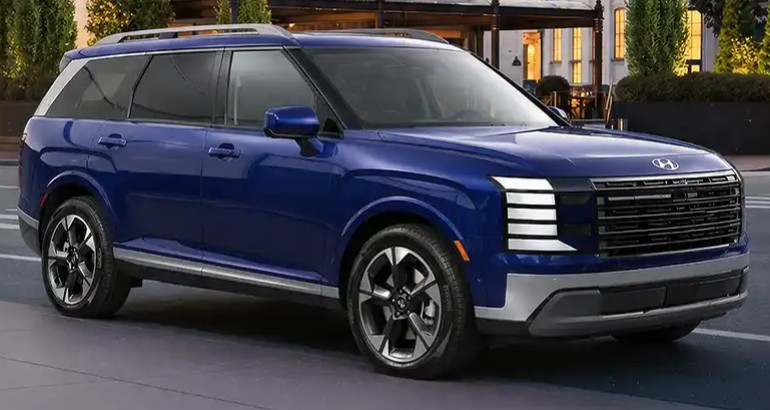
When we shop for a large three-row SUV, horsepower figures and touchscreen sizes are easy to obsess over. But once the family is packed, the stroller is unfolded, and three suitcases are waiting beside the driveway, another specification suddenly matters much more: Hyundai Palisade boot space.
The Palisade has always been designed around family practicality, but cargo capacity varies significantly depending on the model year, market, measurement standard, powertrain, and—most importantly—how many rows of seats we are using.
The latest-generation Palisade makes a particularly strong case for itself. Hyundai's 2026 specifications show as much as 2,081 litres of VDA cargo capacity with the rear seats folded in the hybrid version sold in Australia, while official U.S.-spec measurements use a different SAE standard and quote substantially larger numerical figures.
Confusing? A little.
Useful? Absolutely, once we understand what those numbers actually mean.
In this guide, we'll break down Palisade cargo capacity row by row, look at what fits in the real world, explain why published figures sometimes appear contradictory, and decide whether this Hyundai truly has enough boot space for family life.
Content in this publication
- How Much Boot Space Does the Hyundai Palisade Have?
- Hyundai Palisade Boot Space With All Seats Up
- Hyundai Palisade Boot Space With the Third Row Folded
- How Useful Is 712 Litres in Real Life?
- Hyundai Palisade Maximum Boot Space
- Hyundai Palisade Seven-Seater Boot Space
- Hyundai Palisade Eight-Seater Boot Space
- 2026 Hyundai Palisade Boot Space
- VDA Versus SAE Cargo Measurements
- Previous-Generation Hyundai Palisade Boot Space
- What Can You Fit in a Hyundai Palisade Boot?
- Hyundai Palisade Boot Space for Families
- Is the Hyundai Palisade Boot Big Enough for a Stroller?
- Can the Palisade Carry Luggage for Seven People?
- The Shape of the Palisade Cargo Area Matters
- Does the Hybrid Lose Boot Space?
- Palisade Boot Space for Road Trips
- How to Make Better Use of Hyundai Palisade Cargo Space
- Hyundai Palisade Boot Space Versus Overall Vehicle Size
- Is the Hyundai Palisade Good for Camping?
- Is the Hyundai Palisade Boot Space Good for Dogs?
- Power Tailgate and Everyday Convenience
- Should Boot Space Decide Whether You Buy a Palisade?
- Who Will Appreciate Palisade Boot Space Most?
- Potential Limitations of the Hyundai Palisade Boot
- Hyundai Palisade Boot Space: The Bottom Line
- Frequently Asked Questions About Hyundai Palisade Boot Space
- 1. How much boot space does the Hyundai Palisade have with seven or eight seats in use?
- 2. How much cargo space does the Palisade have with the third row folded?
- 3. What is the maximum Hyundai Palisade boot capacity?
- 4. Why do Hyundai Palisade cargo-space figures differ between websites?
- 5. Is the Hyundai Palisade boot big enough for a family?
How Much Boot Space Does the Hyundai Palisade Have?
For the latest-generation Palisade, Hyundai Australia quotes 300 litres behind the third row, 712 litres behind the second row, and 2,081 litres behind the first row for the hybrid model using the VDA measurement standard.
Those figures tell us something important immediately.
With every seat occupied, the Palisade provides useful rather than enormous luggage capacity. Fold the third row, however, and the SUV suddenly becomes much more accommodating. Fold both rear seating rows and we're dealing with a genuinely substantial cargo hold.
Here is the easiest way to picture the current hybrid model:
| Seating configuration | Cargo capacity (VDA) |
|---|---|
| Behind third row | 300 L |
| Behind second row | 712 L |
| Behind first row | 2,081 L |
Hyundai's own Australian specifications use these figures for both the seven- and eight-seat configurations.
That versatility is ultimately what makes the Palisade interesting. It doesn't simply give us a big rectangular box. It allows us to trade passenger capacity for cargo volume as circumstances change.
Taking seven people to dinner? Keep the third row upright.
Going on holiday with four passengers and piles of luggage? Drop row three.
Moving a flat-packed desk home? Fold almost everything.
The cabin works a little like an adjustable backpack: expand the part you need when you need it.
Hyundai Palisade Boot Space With All Seats Up
Let's begin with the configuration families are most likely to worry about.
When all three rows are upright in the latest Australian-spec Palisade Hybrid, Hyundai lists 300 litres of VDA cargo space behind the third row.
At first glance, 300 litres may sound modest for such a physically large SUV.
That's because three-row SUVs face an unavoidable packaging problem. The third-row passengers need somewhere to put their legs, and the suspension, body structure, fuel system, rear axle components, and crash structure all compete for space beneath and around the cargo floor.
So while the Palisade is enormous compared with a small crossover, keeping every seat available inevitably reduces luggage capacity.
Is 300 Litres Enough for Everyday Use?
For daily family life, usually yes.
A supermarket run, school bags, backpacks, a few sports bags, or several smaller pieces of luggage should be manageable without folding seats.
Where things become trickier is when we try to combine a full passenger load with bulky holiday equipment.
Seven or eight occupants plus large suitcases is a different challenge from seven people plus a few backpacks.
This distinction matters because litres can be deceptive. A suitcase isn't liquid. We cannot pour our bags neatly into every recess behind the third row.
The shape of the cargo area matters nearly as much as its theoretical volume.
Full Passenger Load Versus Full Holiday Load
Imagine we're collecting relatives from the airport.
Every seat is occupied.
Now add several full-size suitcases.
Suddenly, even a big three-row SUV begins to feel surprisingly small.
That's not a Palisade-specific weakness. It happens with almost every vehicle in this class because the third seating row occupies the same general area that would otherwise become cargo space.
For occasional seven- or eight-person journeys, the Palisade works well.
For routinely transporting eight people and eight large suitcases simultaneously, we would want to consider a roof box, trailer, or genuinely larger vehicle.
Hyundai Palisade Boot Space With the Third Row Folded
This is where the Palisade starts flexing its practical muscles.
With the third row folded, Hyundai Australia quotes 712 litres of VDA cargo capacity for the current hybrid Palisade.
That is a major increase over the all-seats-up configuration.
More importantly, we gain a much longer load floor.
Instead of stacking bags vertically behind the third-row seatbacks like a game of luggage Tetris, we can spread larger objects across the cargo area.
For many families, this is likely to become the default configuration during road trips.
Five people can travel comfortably in an eight-seat Palisade while the entire space behind the second row is devoted to luggage. With the seven-seat version, four occupants can enjoy the captain's chairs while retaining the same basic cargo area behind them.
How Useful Is 712 Litres in Real Life?
A cargo figure around this level moves the Palisade beyond ordinary shopping-duty practicality and into genuine family-holiday territory.
We can realistically start thinking about multiple medium or large suitcases, camping equipment, a folded stroller, sports gear, supermarket shopping, or several storage boxes.
Of course, exact fit depends on the shape of whatever we are carrying.
A pushchair with awkward wheels may consume more usable room than its theoretical volume suggests. Meanwhile, soft duffel bags can be squeezed around harder luggage and use irregular spaces much more efficiently.
That's why we'd never judge an SUV entirely from its litre figure.
Still, 712 litres gives us plenty to work with.
Hyundai Palisade Maximum Boot Space
Need to turn the family SUV into something closer to a small moving van?
Fold the second and third rows.
The latest Australian Palisade Hybrid provides up to 2,081 litres of VDA cargo capacity behind the front seats.
Now we're talking about serious space.
Large boxes, flat-packed furniture, bicycles with some disassembly, bulky camping equipment, household supplies, and other awkward loads become considerably easier to accommodate.
Hyundai itself highlights the Palisade's ability to offer 2,081 litres when the second and third rows are folded, emphasizing the flexibility of both seven- and eight-seat versions.
Why Maximum Capacity Matters Even If We Rarely Use It
Most owners probably won't drive around with every rear seat folded every day.
That's not the point.
Maximum cargo capacity is useful because it gives us options.
We might need the entire cabin only a handful of times each year—moving house, buying furniture, transporting sports equipment, collecting something bulky—but having that flexibility means we may not need to borrow another vehicle.
It's like owning a large dining table with extension leaves. We don't need the extra length every night, but we're glad it's there when guests arrive.
Hyundai Palisade Seven-Seater Boot Space
The current Palisade is available in seven-seat form in certain markets, including Australia.
The seven-seat arrangement replaces the conventional second-row bench with two individual captain's chairs. Hyundai states that both seven- and eight-seat versions retain the same advertised rear cargo capacities of 300 litres behind the third row, 712 litres behind the second, and 2,081 litres behind the first row in Australian specifications.
That gives the seven-seater an interesting personality.
We sacrifice one passenger position but gain easier movement between the second and third rows.
For families who rarely need eight seats, the trade-off can make sense.
Do Captain's Chairs Increase Boot Space?
Not according to Hyundai's published overall cargo-volume figures.
Their bigger advantage is passenger accessibility.
Children can sometimes move between captain's chairs toward row three without tilting or sliding an entire bench section. Adults in the second row also gain a more individual seating environment.
From a luggage perspective, though, don't buy the seven-seater expecting dramatically more conventional boot capacity.
Hyundai Palisade Eight-Seater Boot Space
Choose the eight-seat layout and the second row becomes a bench.
For larger families, that extra seating position may be invaluable.
The interesting part is that Hyundai still quotes the same cargo-volume figures for the Australian seven- and eight-seat configurations.
So we're not necessarily sacrificing published boot capacity simply because we choose the bench seat.
What changes is how we use the interior.
A second-row bench can accommodate three passengers, meaning we could potentially carry five people while leaving the third row completely folded for luggage.
That's a very practical arrangement.
2026 Hyundai Palisade Boot Space
The newest Palisade deserves special attention because cargo specifications changed with the new generation.
Hyundai's 2026 U.S. owner's information lists 19.06 cubic feet behind the third row, 46.26 cubic feet behind the second row, and 86.69 cubic feet behind the first row under the SAE measurement system.
Those numbers may look wildly different from the VDA figures we discussed earlier.
They are.
But that doesn't mean one Hyundai website is wrong.
Why U.S. and Australian Palisade Cargo Figures Differ
Different markets often use different cargo measurement standards.
In official U.S. data, Hyundai lists both SAE and VDA figures for the 2026 Palisade. Under the VDA method, the same documentation quotes 317 litres behind the third row, 729 litres behind the second, and 2,098 litres behind the first row for the non-hybrid version.
The hybrid uses slightly different VDA figures: 300 litres, 712 litres, and 2,081 litres, respectively.
So when we see two websites claiming dramatically different Palisade cargo capacities, we shouldn't immediately assume someone made a mistake.
We first need to ask: Which measurement method are they using?
VDA Versus SAE Cargo Measurements
This sounds technical, but the basic idea is simple.
VDA measurements traditionally calculate luggage volume using standardized blocks. SAE measurements can use a different methodology to determine available cargo volume.
As a result, the exact same luggage compartment may receive noticeably different published figures.
That's why comparing a U.S.-spec SUV's SAE cargo number directly against a European or Australian VDA number can be misleading.
We should compare like with like whenever possible.
It's a bit like measuring fuel economy in miles per gallon and litres per 100 kilometres. Both describe efficiency, but the numbers look nothing alike.
Previous-Generation Hyundai Palisade Boot Space
The earlier Palisade was already a roomy SUV.
For the 2025 U.S.-spec model, Hyundai's owner documentation lists 18 cubic feet behind the third row, 45.8 cubic feet behind the second, and 86.4 cubic feet behind the first row using the SAE standard.
Compare that with the 2026 model's published SAE figures of 19.06, 46.26, and 86.69 cubic feet, and we can see that the newer generation adds useful cargo capacity, particularly behind the third row.
The difference isn't transformational with the seats folded, but every little bit counts when we're packing around a full passenger load.
Has the New Palisade Become More Practical?
Yes, although cargo volume is only one part of the story.
The new Palisade also grew physically. Hyundai Australia's 2026 specification sheet lists a length of approximately 5,060 mm, stretching to 5,065 mm on Calligraphy versions, with a 2,970 mm wheelbase.
A longer wheelbase can help engineers distribute passenger and cargo space more effectively.
But bigger exterior dimensions don't automatically guarantee a proportionally larger boot. Interior packaging is what ultimately decides whether those centimetres become useful space.
What Can You Fit in a Hyundai Palisade Boot?
Published capacity gives us a scientific comparison point.
Real life is messier.
Instead of asking only, "How many litres does the Palisade hold?" we'd ask, "What am I actually trying to carry?"
Typical cargo might include:
- A weekly supermarket shop with all rows upright.
- School bags, backpacks, and smaller sports equipment.
- Several cabin-size bags behind the third row.
- Multiple larger suitcases with the third row folded.
- A folded stroller or pushchair, depending on its dimensions.
- Camping equipment for a family trip.
- Golf bags with strategic seat folding.
- Flat-packed furniture with the second and third rows down.
- Boxes and household items during a small move.
- Large pet crates where dimensions allow.
The crucial phrase there is where dimensions allow.
Volume alone cannot tell us whether a particular item fits through the tailgate or between the wheel arches.
Hyundai Palisade Boot Space for Families
This SUV makes the most sense when we view its cargo compartment as part of a flexible family cabin rather than an isolated boot.
Need all the seats Monday through Friday?
Keep them available.
Heading away for the weekend with four children and too many bags?
Fold whichever third-row position isn't required.
Going shopping as a couple?
Drop the rear rows and enjoy a cargo area that feels cavernous compared with an ordinary crossover.
That flexibility is the Palisade's real trick.
Boot Space With Children and Child Seats
Families using child restraints should think beyond the headline cargo number.
Imagine we install two child seats in row two.
We may not want to remove them every time we need to fold seats.
That can limit how dynamically we configure the cabin.
Similarly, a rear-facing child seat may affect second-row seat positioning, while accessing row three could become less convenient depending on where restraints are installed.
Before buying any large family SUV, we'd bring our actual child seats to the dealership and test the configuration.
A brochure cannot simulate Tuesday morning with three children, backpacks, a stroller, and somebody suddenly remembering their football kit.
Is the Hyundai Palisade Boot Big Enough for a Stroller?
For many conventional folded strollers, it should be.
But stroller dimensions vary enormously.
A compact travel stroller can occupy surprisingly little room, whereas a full-size double stroller can resemble folding garden furniture with wheels.
Behind the third row, we'd want to test a larger stroller physically before assuming it fits comfortably alongside other luggage.
With the third row down and 712 litres of VDA cargo volume in the current Australian-spec hybrid, the equation becomes considerably easier.
That is where the Palisade begins feeling genuinely relaxed rather than merely adequate.
Can the Palisade Carry Luggage for Seven People?
Yes, but the answer depends heavily on luggage size.
Seven passengers carrying small bags for an overnight trip is one thing.
Seven passengers each bringing a full-size suitcase for a two-week holiday is another.
With every row upright, we are working within the relatively compact area behind row three.
Soft bags help because we can fill odd spaces.
Large hard-shell suitcases are less forgiving.
For serious long-distance family travel, we'd consider carefully whether every passenger really needs a large suitcase or whether additional external storage would be useful.
The Shape of the Palisade Cargo Area Matters
Boot capacity numbers are helpful because they let us compare vehicles quickly.
But numbers don't tell the entire story.
A well-shaped 700-litre boot may be more useful than an awkward 750-litre boot.
Why?
Because real cargo has edges.
Boxes need flat surfaces. Suitcases need rectangular space. Dogs need usable floor area. Strollers need both width and height.
We care about loading height, tailgate opening, floor shape, wheel-arch intrusion, seat-folding angles, and whether the load surface becomes reasonably flat.
This is why seeing the boot in person remains valuable even after reading every specification online.
Does the Hybrid Lose Boot Space?
In the latest Palisade, there is a small difference between published VDA figures for the conventional petrol version and hybrid in some official Hyundai documentation.
Hyundai's 2026 U.S. information lists the non-hybrid model at 317 litres behind row three, 729 litres behind row two, and 2,098 litres behind row one under the VDA standard.
The hybrid is listed at 300, 712, and 2,081 litres, respectively.
That's a difference of 17 litres at each measurement point.
In everyday use, that's unlikely to transform whether we love or hate the vehicle, but it's worth knowing if we're comparing specifications line by line.
Palisade Boot Space for Road Trips
The Palisade feels particularly well suited to road-trip duty when we don't need every seat.
Imagine five travellers using an eight-seat model.
Fold row three.
Now we have the second-row bench for three passengers plus the two front occupants, while 712 litres of VDA capacity remains available in the current hybrid model.
That's a much more appealing setup than cramming luggage into a narrow strip behind an occupied third row.
For families regularly travelling with four or five people, this may be the sweet spot.
How to Make Better Use of Hyundai Palisade Cargo Space
Good packing can make an SUV feel one size larger.
Instead of filling the boot randomly, we want heavy and rectangular items positioned first, followed by softer objects that can fill gaps.
Hard suitcases create the foundation.
Duffel bags squeeze around them.
Fragile objects stay protected.
Items needed during the journey stay near the tailgate.
It's simple, but the difference can be dramatic.
We should also resist stacking heavy objects excessively high. Anything loose inside the passenger compartment can become dangerous during sudden braking or a collision.
The biggest boot in the world isn't useful if we pack it like a falling Jenga tower.
Hyundai Palisade Boot Space Versus Overall Vehicle Size
The newest Palisade is unapologetically large.
At roughly 5.06 metres long in current Australian specifications, it occupies serious driveway space.
Naturally, we'd expect a vehicle of this size to provide substantial interior versatility.
And it does.
Yet its most impressive cargo figure—more than 2,000 litres under VDA measurements—requires us to fold both rear rows.
This highlights an important lesson about three-row SUVs: exterior size does not automatically translate into a giant boot when every seat is occupied.
Passenger space and luggage space are constantly negotiating with each other.
Is the Hyundai Palisade Good for Camping?
For family camping, the Palisade is a compelling option.
With the third row folded, there is substantial room for tents, sleeping bags, coolers, chairs, cooking equipment, clothing, and other weekend gear.
Fold both rear rows and the cargo area becomes dramatically larger.
The limiting factor may eventually become payload rather than physical volume, particularly if we're loading multiple passengers, heavy equipment, accessories, and perhaps towing at the same time.
So while cargo volume answers "Will it fit?", vehicle payload answers "Can we safely carry the weight?"
Both matter.
Is the Hyundai Palisade Boot Space Good for Dogs?
Large-SUV buyers often need space for four-legged passengers too.
With the third row folded, the Palisade gives dogs considerably more floor area than when all seats are being used.
That can allow space for a suitable travel crate or secure restraint system, depending on the dog's size.
Again, we'd measure the specific crate rather than relying exclusively on litres.
A 712-litre boot could theoretically have plenty of overall volume while still failing to accept an especially tall or wide crate through its opening.
Dimensions beat assumptions.
Power Tailgate and Everyday Convenience
Boot practicality isn't only about how much we can carry.
It's also about how easily we can access the space.
Anyone who has stood in a supermarket car park with both hands full knows this.
A large tailgate, sensible opening height, and powered operation can transform the experience of loading groceries or luggage.
This is where we'd evaluate the Palisade as a complete family tool rather than simply memorizing cargo numbers.
The best boot isn't necessarily the one with the highest specification.
It's the one that causes the fewest arguments while we're loading it.
Should Boot Space Decide Whether You Buy a Palisade?
It should be an important factor, but not the only one.
If we regularly carry six, seven, or eight occupants, we'd pay close attention to behind-third-row space because that becomes our everyday boot.
If we usually carry four or five people, the Palisade's cargo flexibility becomes much more impressive because row three can remain folded.
If we frequently haul bulky objects, maximum cargo capacity matters.
And if our needs involve a specific stroller, wheelchair, dog crate, bicycle, musical instrument, or work equipment, we'd measure that item before even visiting a dealership.
Specifications narrow the shortlist.
Physical testing makes the final decision.
Who Will Appreciate Palisade Boot Space Most?
The Palisade works especially well for buyers whose passenger and cargo requirements change throughout the week.
On Monday, it can behave like a school shuttle.
On Saturday, it becomes a family road-trip machine.
On Sunday afternoon, the seats disappear into the floor and we're collecting furniture.
That adaptable character is more valuable than simply possessing the largest possible boot.
We are essentially buying several cabin configurations in one vehicle.
Potential Limitations of the Hyundai Palisade Boot
No SUV escapes compromise.
The Palisade's main cargo limitation appears when we insist on using every seat while simultaneously carrying a large amount of luggage.
Behind-third-row capacity is perfectly useful, but it cannot compete with the enormous space available once row three disappears.
That's physics more than engineering failure.
The other issue is comparing published numbers across markets. U.S. SAE figures and Australian VDA figures can look dramatically different, even when referring to similar vehicles. Using one measurement standard consistently prevents misleading comparisons.
Hyundai Palisade Boot Space: The Bottom Line
The Hyundai Palisade boot space story is really a story about versatility.
In current Australian specifications, the Palisade Hybrid provides 300 litres behind the third row, 712 litres behind the second row, and up to 2,081 litres behind the front seats under the VDA standard.
The U.S. 2026 model is rated differently under the SAE system, reaching 19.06 cubic feet behind the third row, 46.26 cubic feet behind the second, and 86.69 cubic feet behind the first row.
Whichever measurement system we're using, the practical lesson is the same.
With all three rows occupied, luggage space is useful but naturally limited by the Palisade's passenger capacity.
Fold the third row and the SUV becomes considerably more accommodating.
Fold both rear rows and the cargo area turns into a genuinely substantial loading space.
For large families, road-trip lovers, campers, and anyone whose cargo requirements constantly change, that's exactly what we want from a big three-row SUV.
The Palisade isn't merely a vehicle with a large boot.
It's a vehicle whose boot can grow and shrink with the day ahead—and that flexibility may ultimately matter more than any single number on a specification sheet.
Frequently Asked Questions About Hyundai Palisade Boot Space
1. How much boot space does the Hyundai Palisade have with seven or eight seats in use?
The latest Australian-spec Palisade Hybrid provides 300 litres of VDA cargo capacity behind the third row. Hyundai lists the same figure for its available seven- and eight-seat configurations.
2. How much cargo space does the Palisade have with the third row folded?
The current Australian Palisade Hybrid provides 712 litres of VDA cargo capacity when the third row is folded. This configuration is particularly useful for family holidays because we retain the second-row seats while gaining significantly more luggage room.
3. What is the maximum Hyundai Palisade boot capacity?
Hyundai quotes up to 2,081 litres of VDA cargo volume for the latest hybrid model with the second and third rows folded. The non-hybrid 2026 model is listed at 2,098 litres under VDA measurements in U.S. owner documentation.
4. Why do Hyundai Palisade cargo-space figures differ between websites?
One major reason is the measurement method. Hyundai publishes SAE figures in cubic feet for the U.S. while also providing VDA measurements in litres. Australian specifications typically emphasize VDA capacity. Because the methods differ, we should avoid directly comparing an SAE number with a VDA number.
5. Is the Hyundai Palisade boot big enough for a family?
For most families, yes. Its greatest advantage is flexibility. The space behind the third row handles ordinary daily cargo, while folding row three dramatically expands luggage capacity. Families who regularly travel with every seat occupied and several large suitcases, however, should test their luggage physically before buying.
If you want to know other articles similar to Hyundai Palisade Boot Space: Size, Seats and Cargo Guide you can visit the category Service and Parts.
Vauxhall Mokka Tyre Pressure Reset: Complete Guide
How to Reset the Tire Pressure System on Your Hyundai Tucson
Hyundai Kona Tire Pressure: Complete PSI Guide
Vauxhall Corsa Timing Belt Replacement Cost UK 2026
Mazda CX-5 Tire Size Chart: 2013–2026 Guide
How to Reset a Honda Civic: Complete Step-by-Step Guide
Leave a Reply
More content of your interest