
Hyundai Santa Fe Cargo Space: How Much Room Do You Really Get?

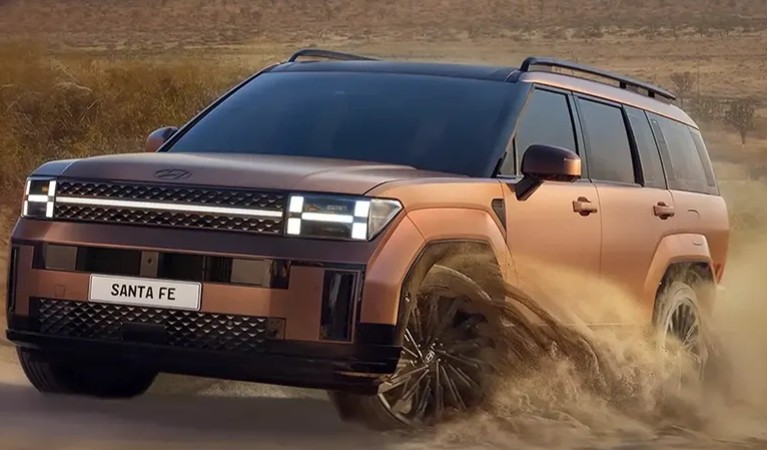
The Hyundai Santa Fe cargo space is one of the SUV’s strongest selling points, especially for families who need something that can swallow groceries on Monday, sports equipment on Saturday, and half the house when vacation time finally arrives.
And the latest Santa Fe takes that idea seriously.
In the U.S., the 2026 Hyundai Santa Fe provides 14.6 cubic feet of cargo space behind the third row, 40.5 cubic feet behind the second row, and up to 79.6 cubic feet behind the front seats when the rear seating is folded.
Those numbers tell us plenty, but they don't tell the whole story.
Cargo space isn't just about how many cubic feet appear in a specification sheet. A cargo area can look impressive on paper yet become frustrating if the opening is narrow, the floor is awkwardly shaped, or folded seats leave annoying steps in the loading area.
So, how practical is the Santa Fe in everyday life?
Let's open the tailgate and find out.
Content in this publication
- Hyundai Santa Fe Cargo Space at a Glance
- How Much Cargo Space Does the Hyundai Santa Fe Have?
- Hyundai Santa Fe Cargo Space Behind the Second Row
- Maximum Hyundai Santa Fe Cargo Capacity
- Is the Santa Fe Cargo Area Actually Practical?
- Hyundai Santa Fe Cargo Space With Seats Down
- Hyundai Santa Fe Cargo Space in Litres
- Hyundai Santa Fe Cargo Space by Generation
- Santa Fe Gas vs Hybrid Cargo Space
- What Can You Fit in a Hyundai Santa Fe?
- Can You Fit Luggage for Seven People?
- Is There Enough Room for a Stroller?
- Is the Hyundai Santa Fe Good for Dogs?
- Hyundai Santa Fe Cargo Space for Camping
- How the Santa Fe Cargo Space Compares With a Traditional Two-Row SUV
- How to Get More Usable Cargo Space From a Santa Fe
- Does the Hyundai Santa Fe Have Hidden Storage?
- Hyundai Santa Fe Cargo Space vs Passenger Space
- Who Will Appreciate the Santa Fe Cargo Area Most?
- Who Might Need Something Bigger?
- What to Check Before Buying a Santa Fe for Cargo Space
- Is Hyundai Santa Fe Cargo Space Good Overall?
- Conclusion: The Santa Fe Makes Its Space Work Hard
- Frequently Asked Questions
Hyundai Santa Fe Cargo Space at a Glance
For the current U.S.-specification Santa Fe, Hyundai lists the following cargo capacities.
| Seating configuration | Cargo capacity |
|---|---|
| Behind third row | 14.6 cu. ft. |
| Behind second row | 40.5 cu. ft. |
| Behind front seats | 79.6 cu. ft. |
Those are substantial numbers for a three-row SUV.
The important detail is how dramatically the Santa Fe changes personality depending on which seats we use.
With every seat occupied, we have a relatively modest luggage compartment. Fold the third row and suddenly the vehicle becomes much easier to live with for a family of four or five. Fold the second row as well and it turns into something closer to a small moving van.
That's exactly what good SUV cargo design should accomplish.
How Much Cargo Space Does the Hyundai Santa Fe Have?
The straightforward answer for a current U.S. Santa Fe is 14.6 to 79.6 cubic feet, depending on the seating arrangement.
That enormous range exists because the newest Santa Fe is configured as a three-row SUV.
Behind the third row, the cargo compartment works best for everyday items rather than a week's worth of luggage for a large family.
Drop that row, though, and we get 40.5 cubic feet.
That's the configuration many owners will probably use most frequently. It gives us passenger seating in the first two rows while opening a broad rear compartment for luggage, groceries, boxes, strollers, pet carriers, camping equipment, or whatever else life throws at us.
With both rear rows folded, maximum cargo capacity reaches 79.6 cubic feet.
At that point, the Santa Fe feels less like a conventional family SUV and more like a giant backpack on wheels.
Cargo Space Behind the Third Row
Let's start with the smallest configuration.
The current U.S.-market Santa Fe provides 14.6 cubic feet behind the third-row seats.
Is that huge?
No.
But we need to remember what we're asking the vehicle to do. There are three rows of passenger accommodation squeezed into a midsize-family-SUV footprint, so something has to give.
With the third row upright, we would consider the cargo area suitable for things such as everyday shopping, backpacks, smaller bags, a few pieces of soft luggage, or miscellaneous family gear.
The key phrase here is soft luggage.
Flexible bags are usually easier to arrange than large rigid suitcases because we can use the irregular spaces around them.
Is 14.6 Cubic Feet Enough for a Family Trip?
It depends heavily on how many people are travelling.
If all three rows are occupied by six or seven people and everybody arrives with a big suitcase, the rear cargo area can become crowded very quickly.
That's where rooftop storage, a trailer, or more creative packing may enter the picture.
For shorter journeys, however, it can be entirely manageable.
We wouldn't judge the Santa Fe solely by its behind-third-row figure because the third row itself is part of the flexibility we're buying.
Hyundai Santa Fe Cargo Space Behind the Second Row
Here is where things become far more interesting.
Fold the third row and the cargo capacity rises to 40.5 cubic feet in the current U.S. model.
That's almost three times the space available with all seats upright.
For many households, this is the Santa Fe's sweet spot.
We still have two usable seating rows, but the back of the vehicle becomes genuinely spacious.
A stroller no longer feels like a game of Tetris. Shopping trips become easy. Airport luggage is much less stressful. And bulky purchases don't immediately force us to borrow somebody else's truck.
Why the Two-Row Configuration Is So Useful
Think about how most three-row SUVs actually get used.
Even households that occasionally need the third row don't necessarily use it every day.
A family might leave those seats folded Monday through Friday and raise them only when grandparents, friends, teammates, or extra children come along.
That means the 40.5-cubic-foot configuration can effectively become the vehicle's normal cargo arrangement.
It makes the Santa Fe adaptable instead of merely large.
And adaptability is arguably more valuable than maximum volume.
A refrigerator has plenty of volume too, but we wouldn't want to drive one to work.
Maximum Hyundai Santa Fe Cargo Capacity
When maximum carrying space matters, we can fold both rear seating rows and access 79.6 cubic feet of cargo volume in the current U.S. Santa Fe.
That's serious room.
It allows the Santa Fe to tackle jobs that would be impossible with the rear seats upright.
We're talking about flat-packed furniture, multiple large suitcases, camping equipment, moving boxes, sports equipment, home-improvement supplies, and other bulky objects.
Of course, cubic-foot figures don't guarantee that every 79.6-cubic-foot object will fit. Shape matters enormously.
A long, thin object and a giant square box may occupy similar theoretical volume but behave completely differently when we try pushing them through the tailgate.
That's why cargo design matters almost as much as capacity.
Is the Santa Fe Cargo Area Actually Practical?
This is the question worth asking.
Manufacturers love cargo numbers because numbers are easy to advertise.
Owners live in the real world.
We care about whether the hatch opening is usable, whether the floor is conveniently positioned, how easily seats fold, and whether luggage can be arranged without performing advanced geometry.
The latest Santa Fe's boxier exterior works in its favour here.
Rather than sacrificing rear practicality for a dramatically sloping roofline, Hyundai has created a squared-off shape that visually resembles a large storage box.
That sort of packaging can make the available volume easier to exploit.
A Boxy SUV Can Be a Cargo Lover's Friend
The word "boxy" sometimes sounds like criticism.
For cargo space, it's often a compliment.
Imagine filling two containers with groceries. One is rectangular. The other curves dramatically inward at the top.
Which one is easier to fill?
Exactly.
A squared rear body helps preserve usable room higher in the cargo compartment, which can matter when carrying stacked luggage or tall items.
The current Santa Fe was intentionally redesigned with a more upright, angular body, and Hyundai itself highlighted cargo capacity and tailgate-area usability when introducing this generation.
Hyundai Santa Fe Cargo Space With Seats Down
Folding seats changes everything.
Rather than treating cargo capacity as one fixed number, we should think of the Santa Fe as having several different interiors hidden inside the same vehicle.
With the third row up, it's a passenger-focused SUV.
With the third row folded, it's a roomy family hauler.
With the second and third rows down, it becomes a serious cargo carrier.
That's the beauty of the layout.
Does the Santa Fe Have Fold-Flat Rear Seats?
The rear-seat system is designed to increase cargo flexibility, and regional Hyundai materials specifically promote the ability to fold the rear seating for extra-large loads. Hyundai Australia, for example, describes accessory cargo protection that can follow the seating contours from their normal position through the folded configuration.
For us as buyers, the bigger point is simple: seats that can disappear from the cargo equation dramatically improve an SUV's usefulness.
We might not need 79.6 cubic feet every morning.
But the day we buy a desk, move apartments, take bicycles somewhere, or pack for a long road trip, we'll be glad it's there.
Hyundai Santa Fe Cargo Space in Litres
Things get slightly confusing when we move outside the United States.
Different markets use different measurement methods, equipment specifications, seating configurations, and official testing standards.
For example, Hyundai Australia advertises 642 litres of boot space with all seats up and up to 1,963 litres with the rear seats folded for its current Santa Fe.
Hyundai UK's current Santa Fe Hybrid page quotes an extra-large 725-litre boot capacity and offers six- or seven-seat configurations.
Hyundai's European material provides yet another set of figures depending on configuration, including up to 2,032 litres with the second and third rows folded for some versions.
Why aren't all these numbers identical?
Because regional specifications and measurement standards are not always directly comparable.
Why Cargo Figures Vary by Country
This catches plenty of shoppers.
Someone sees one Santa Fe review quoting cubic feet, another quoting litres, and a third showing a different litre figure entirely.
It doesn't necessarily mean somebody is wrong.
Differences can result from measurement standards, seat configurations, drivetrain variants, trim equipment, spare-wheel arrangements, or the precise points used when measuring the cargo compartment.
So when we're shopping, we should compare vehicles using numbers published for the same market and preferably the same measurement standard.
Otherwise we're comparing apples with suitcases.
Hyundai Santa Fe Cargo Space by Generation
The Santa Fe has evolved considerably over its long life.
Earlier generations weren't simply smaller versions of today's model. Their layouts, rooflines, passenger capacities, and market positioning changed over time.
That's important when shopping used.
A person searching for Hyundai Santa Fe cargo space may be comparing a brand-new three-row model with a previous-generation example that has a different seating arrangement entirely.
2024–2026 Santa Fe Cargo Space
The current-generation Santa Fe represents a major shift toward practicality.
The U.S. version provides standard three-row seating and the previously mentioned capacities of 14.6 cubic feet behind the third row, 40.5 behind the second, and 79.6 behind the first.
The exterior also grew into a distinctly rectangular form.
Hyundai lists the global vehicle at approximately 4,830 mm long and 1,900 mm wide in current-generation specifications for markets such as Australia.
Those dimensions contribute to an interior designed around passenger and cargo versatility.
Previous-Generation Santa Fe Cargo Space
Earlier Santa Fe models can still be excellent cargo haulers, but we shouldn't assume that their figures or layouts match today's vehicle.
Depending on model year and country, older Santa Fe variants might have two rows, three rows, different powertrains, or different floor arrangements.
That can actually work in a used buyer's favour.
If we rarely carry more than five people, a two-row version may provide exactly the sort of practical rear storage we want without asking us to haul around an unused third-row seat.
The best approach is always to verify the specification for the exact model year.
Santa Fe Gas vs Hybrid Cargo Space
Hybrid SUVs sometimes sacrifice luggage space because batteries need somewhere to live.
So does that happen here?
Not in the headline U.S. cargo figures.
Hyundai lists the 2026 Santa Fe Hybrid at the same 79.6 cubic feet behind the front seats, 40.5 cubic feet behind the second row, and 14.6 cubic feet behind the third row as the gasoline Santa Fe.
That's an important practical advantage.
We don't necessarily have to choose between electrified efficiency and luggage capacity simply because we select the hybrid powertrain.
Does Trim Level Change Cargo Capacity?
According to Hyundai USA's current published specifications, the principal cargo-volume figures remain consistent across the Santa Fe trim range.
However, real-world usability can still vary slightly because optional equipment and accessories may occupy space or affect how we use the compartment.
That is another reason a physical inspection is valuable.
Numbers can narrow our shortlist.
Our own suitcase provides the final exam.
What Can You Fit in a Hyundai Santa Fe?
Cargo-volume statistics become easier to understand when we translate them into everyday life.
Depending on which seats are folded, the Santa Fe can reasonably be considered for carrying:
- Grocery bags, backpacks and everyday family items with all rows in use; multiple suitcases, a stroller, sports bags or camping equipment with the third row folded; and larger combinations of boxes, home-improvement supplies, furniture pieces or outdoor gear when both rear rows are folded.
Notice that we're deliberately avoiding promises such as "exactly seven suitcases."
Suitcases aren't standardized. Neither are strollers, golf bags, bicycles, dog crates or camping tents.
One family's "medium suitcase" is another family's portable wardrobe.
Real cargo compatibility depends on the object's width, height and length, not simply its volume.
Can You Fit Luggage for Seven People?
With seven occupants and the third row raised, this becomes the Santa Fe's toughest cargo challenge.
Fourteen-point-six cubic feet isn't tiny, but luggage for seven people can consume it quickly.
For an airport run where everyone carries one compact bag, careful packing may work.
For a two-week family vacation where everyone brings a large suitcase, we'd plan more cautiously.
A rooftop cargo box can become extremely useful in that scenario.
Alternatively, if only five passengers are travelling, folding the third row gives us dramatically more flexibility.
That's where the Santa Fe really shines.
Is There Enough Room for a Stroller?
For many parents, this question matters more than every specification in the brochure.
A stroller is awkward.
It might not be especially heavy, but folded wheels, handles, trays and frames create strange shapes that gobble up space.
Behind the third row, stroller compatibility will depend greatly on the specific stroller.
With the third row folded and 40.5 cubic feet available in U.S.-specification models, the situation becomes considerably easier.
We'd expect that configuration to work much better for the classic combination of stroller plus groceries, diaper bag and miscellaneous family equipment.
Is the Hyundai Santa Fe Good for Dogs?
A large rear cargo area can make an SUV attractive to dog owners, too.
With the third row folded, the Santa Fe provides a substantial area behind the second-row passengers.
The upright rear body is also useful because taller dogs benefit from vertical room rather than merely floor area.
Of course, dogs should be transported using an appropriate restraint, barrier or secured crate rather than being allowed to move freely around the cabin.
For crate users, dimensions become especially important.
Measure the crate.
Measure the opening.
Don't rely solely on cargo volume.
It's the automotive equivalent of checking whether the sofa fits through the front door before buying it.
Hyundai Santa Fe Cargo Space for Camping
This is where the Santa Fe's versatility starts to feel particularly appealing.
Camping equipment rarely arrives in tidy cubes.
We have tents, sleeping bags, cooking equipment, coolers, chairs, backpacks and perhaps enough miscellaneous gear to make us question whether we're camping or permanently relocating.
With the third row folded, 40.5 cubic feet gives current U.S. models a generous luggage area. With both rear rows down, 79.6 cubic feet opens the door to much bulkier arrangements.
The large tailgate area can also make loading and unloading easier at a campsite.
Could You Sleep in a Hyundai Santa Fe?
The maximum cargo area is large enough that some owners may consider sleeping inside the vehicle with the rear seats folded.
Whether that's comfortable depends on height, sleeping arrangement, seat-floor contours, equipment and personal tolerance for turning an SUV into a temporary bedroom.
For occasional camping, though, the broad interior certainly gives us possibilities.
Add an appropriately sized mattress or sleeping pad, manage ventilation safely, and suddenly the Santa Fe becomes more than transportation.
It becomes part of the campsite.
How the Santa Fe Cargo Space Compares With a Traditional Two-Row SUV
There's a fascinating trade-off here.
A dedicated two-row SUV may offer a larger cargo compartment behind its rear seats because it doesn't need to reserve room for a third row.
The Santa Fe takes a different approach.
It gives us extra passenger flexibility, then allows those seats to disappear when they're unnecessary.
So, when comparing specifications, don't look only at "cargo behind rear seat."
Ask which rear seat we're talking about.
A three-row SUV's smallest cargo figure can look disappointing beside a two-row rival until we fold its third row.
Then the comparison changes completely.
How to Get More Usable Cargo Space From a Santa Fe
We don't always need a larger vehicle.
Sometimes we just need smarter packing.
Put dense, heavy objects low and close to the seatbacks. Use soft bags where rigid cases waste awkward corners. Fold only the section of rear seating you actually need, preserving passenger positions wherever possible.
Vertical space matters too.
Many people pack a cargo area as though the floor were the only usable surface, leaving a mountain of air above everything.
Cargo organizers, properly secured stacking and fitted luggage can help us use more of the compartment without turning every braking maneuver into an avalanche.
And remember load safety.
Loose heavy items can become dangerous during sudden stops.
Small storage compartments often matter far more than their volume suggests.
The main cargo floor might be reserved for suitcases, while smaller spaces can keep charging cables, emergency supplies, cleaning products or other items out of sight.
The exact storage arrangement can vary by market, trim and model year, so buyers should inspect the specific vehicle rather than assuming every Santa Fe is identical.
This is especially important with used vehicles, where spare tires, repair kits, accessories or aftermarket equipment may change what's available beneath the floor.
Hyundai Santa Fe Cargo Space vs Passenger Space
One reason the Santa Fe works as a family SUV is that cargo flexibility doesn't exist in isolation.
The current U.S. gasoline Santa Fe lists 152 cubic feet of passenger volume and 166.6 cubic feet of total interior volume, while the hybrid is listed at 151 cubic feet of passenger volume and 165.6 cubic feet total.
Those figures reveal the broader design philosophy.
This isn't simply an enormous trunk with seats attached.
It's a cabin designed to shift priorities.
Need people? Raise the seats.
Need luggage? Lower them.
Need both? Split the difference.
That's exactly what families tend to require.
Who Will Appreciate the Santa Fe Cargo Area Most?
The Santa Fe makes particular sense for buyers whose cargo needs constantly change.
Parents are an obvious example.
Monday requires school bags. Wednesday brings groceries. Saturday brings sports equipment. Sunday brings grandparents.
Then summer arrives and suddenly everyone has suitcases.
Outdoor enthusiasts may appreciate the flexibility for camping, hiking, cycling accessories or other recreational equipment.
Dog owners can make good use of the open rear compartment.
DIY enthusiasts can fold the seats for larger purchases.
Even people who rarely carry much may appreciate knowing they have the capacity when something unexpected happens.
Who Might Need Something Bigger?
Despite its versatility, the Santa Fe isn't magic.
If seven adults regularly travel together and each person needs substantial luggage space, a larger three-row SUV or minivan may make more sense.
The 14.6 cubic feet behind the third row is useful but inherently limited.
That's the trade-off for packaging three seating rows into a comparatively manageable vehicle.
Similarly, people frequently transporting extremely tall, long or bulky equipment should measure the actual cargo opening and floor dimensions rather than relying on total cubic volume.
A bigger number doesn't always mean the right shape.
What to Check Before Buying a Santa Fe for Cargo Space
If cargo practicality is one of our main buying priorities, the dealership visit should include more than sitting behind the steering wheel.
Bring the awkward stuff.
Seriously.
If the stroller is central to your daily routine, take it along.
If you're a musician, measure the instrument cases.
If you're a photographer, measure the equipment boxes.
If you're buying the SUV specifically for a large dog crate, know its external dimensions.
Sales brochures describe theoretical capacity.
Your belongings determine practical capacity.
Check the Exact Model Year
This matters especially with the Santa Fe because the vehicle has changed significantly between generations.
A cargo figure from one generation cannot automatically be applied to another.
Even within a generation, markets can offer different seating layouts and specifications.
Always match the number to the exact year, country and variant you're considering.
Check the Seat Configuration
Six seats? Seven seats? Two-row older model?
Those details influence how the cabin works.
Hyundai currently offers six- and seven-seat Santa Fe configurations in some markets, including the UK.
So two vehicles carrying the same Santa Fe badge may not provide precisely the same ownership experience.
Is Hyundai Santa Fe Cargo Space Good Overall?
Yes.
Cargo versatility is one of the current Santa Fe's strongest qualities.
The headline U.S. numbers tell the story well: 14.6 cubic feet behind the third row, 40.5 behind the second row and 79.6 behind the front seats.
The smallest figure is understandably limited, but that's the price of carrying passengers in all three rows.
Fold the third row and the Santa Fe becomes dramatically more practical.
Fold everything behind the front seats and it offers enough volume for serious hauling.
More importantly, the squared-off body makes the vehicle feel designed around space rather than merely styled around it.
That's a distinction we appreciate every time a suitcase actually fits.
Conclusion: The Santa Fe Makes Its Space Work Hard
The Hyundai Santa Fe cargo space is less about one impressive maximum number and more about flexibility.
With every seat upright, current U.S. models give us 14.6 cubic feet. Fold the third row and we're looking at 40.5 cubic feet. Fold the second row too and the available space expands to 79.6 cubic feet.
That's three very different personalities inside one SUV.
For a large family carrying seven passengers and seven large suitcases every weekend, the cargo area behind the third row may feel restrictive.
For most households, however, the ability to change the cabin according to the day is the real attraction.
School run today. Airport tomorrow. Camping next weekend.
The Santa Fe adapts.
And when we're choosing a family SUV, that kind of flexibility can be worth far more than winning a specification-sheet contest by a couple of cubic feet.
Frequently Asked Questions
1. How much cargo space does a Hyundai Santa Fe have?
The current U.S.-specification 2026 Hyundai Santa Fe offers 14.6 cubic feet of cargo volume behind the third row, 40.5 cubic feet behind the second row and a maximum of 79.6 cubic feet behind the front seats with the rear seating folded.
2. Is the Hyundai Santa Fe cargo space big enough for luggage?
Yes, particularly with the third row folded. The 40.5-cubic-foot space behind the second row gives families considerably more flexibility for suitcases and other travel equipment. With all three rows occupied, the 14.6-cubic-foot cargo compartment requires more careful packing.
3. How much cargo space does the Santa Fe have with the seats down?
Current U.S. Santa Fe models provide up to 79.6 cubic feet of cargo volume behind the front seats when the rear seating is folded.
4. Does the Santa Fe Hybrid have less cargo space?
Not according to Hyundai USA's current specifications. The 2026 Santa Fe Hybrid is listed with the same main cargo figures as the gasoline version: 14.6 cubic feet behind the third row, 40.5 behind the second and 79.6 behind the front seats.
5. How many litres is the Hyundai Santa Fe boot?
The figure varies by market, configuration and measurement method. Hyundai Australia lists 642 litres with all seats up and up to 1,963 litres with the rear seats folded, while Hyundai UK publishes a 725-litre boot figure for its current Santa Fe Hybrid. These regional numbers shouldn't be treated as direct equivalents because specifications and measuring standards can differ.
If you want to know other articles similar to Hyundai Santa Fe Cargo Space: How Much Room Do You Really Get? you can visit the category Service and Parts.
Volvo S90 Engine Oil: Type, Capacity & Change Guide
Volvo S90 Boot Space: Size, Capacity and Practicality
SEO Title: Volvo S90 Oil Capacity: Complete Guide by Engine

Kia Sorento Oil Type: Complete Guide by Year & Engine
Kia Sorento Engine Capacity: Complete Guide by Year
Peugeot 308 Clutch Replacement Cost: Complete UK Guide for 2026
Leave a Reply
More content of your interest