
Hyundai Santa Fe Engine Size: Complete Guide by Generation

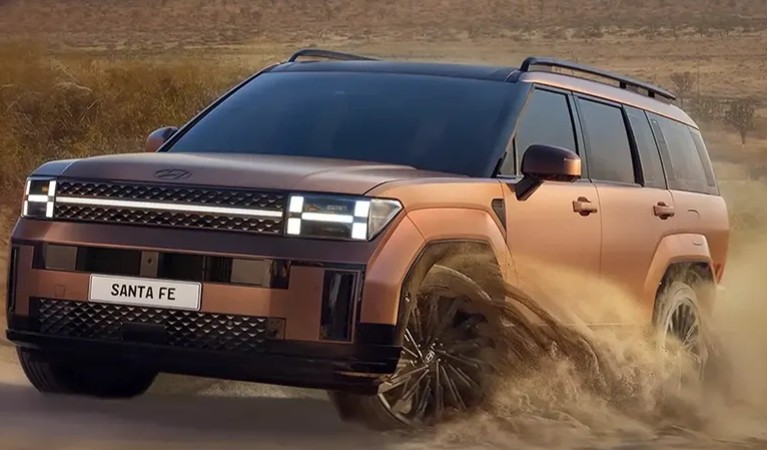
The Hyundai Santa Fe engine size has changed considerably over the SUV’s long life. Depending on where we live, which model year we shop for, and whether we choose gasoline, diesel, hybrid, or plug-in hybrid power, we can find Santa Fe engines ranging from relatively compact turbocharged four-cylinders to muscular V6 units.
That variety is part of what makes the Santa Fe interesting. It has never been locked into one mechanical personality. Older models could feel like traditional midsize SUVs, especially when fitted with large-displacement V6 engines. Newer Santa Fe models approach the same job differently, squeezing substantial performance from smaller turbocharged engines and increasingly combining them with electric motors.
For the current generation, Hyundai offers different powertrains depending on market. Hyundai's global information lists engines including a 2.5-liter naturally aspirated gasoline unit, a 2.5-liter turbo gasoline engine, a 1.6-liter turbo hybrid, and a 1.6-liter turbo plug-in hybrid, although not all are sold in every country.
So, what Hyundai Santa Fe engine size should we choose? Is bigger actually better? And how did we get from relatively thirsty V6s to today's small turbo-hybrid engines?
Let's dig into it.
Content in this publication
- What Is the Hyundai Santa Fe Engine Size?
- Current Hyundai Santa Fe Engine Sizes
- Hyundai Santa Fe Engine Size by Generation
- Hyundai Santa Fe Engine Size in the United States
- Hyundai Santa Fe Engine Size in Australia
- Hyundai Santa Fe Engine Size in Europe
- Gasoline vs Diesel Santa Fe Engine Sizes
- Does Bigger Engine Size Mean More Power?
- 1.6 vs 2.5 Hyundai Santa Fe Engine
- Four-Cylinder vs V6 Hyundai Santa Fe
- Which Hyundai Santa Fe Engine Size Is Best for Towing?
- Which Santa Fe Engine Is Best for Fuel Economy?
- Which Hyundai Santa Fe Engine Is Most Reliable?
- How to Find Your Hyundai Santa Fe Engine Size
- Is a Smaller Santa Fe Engine Cheaper to Run?
- Engine Size and Santa Fe Performance
- Why Hyundai Downsized the Santa Fe Engine
- Should We Avoid a Small 1.6-Liter Santa Fe Engine?
- What Hyundai Santa Fe Engine Size Should We Buy?
- Hyundai Santa Fe Engine Size: Final Thoughts
- Frequently Asked Questions
What Is the Hyundai Santa Fe Engine Size?
There isn't one universal Hyundai Santa Fe engine size.
That's the first thing we need to understand.
The answer depends heavily on the generation, year, trim, drivetrain, and country. Over its history, the Santa Fe has used several gasoline and diesel engines, including four-cylinder and six-cylinder designs.
Broadly speaking, Santa Fe engine capacities have commonly fallen within these ranges:
- Around 1.6 liters for newer turbocharged hybrid and plug-in hybrid models
- Around 2.0 to 2.5 liters for many four-cylinder gasoline and diesel versions
- Around 2.7 to 3.5 liters for several older V6 configurations
Current global specifications demonstrate just how wide the choices can remain. Hyundai identifies 2.5-liter gasoline and turbo-gasoline powertrains as well as electrified models built around a 1.6-liter turbocharged gasoline engine.
In other words, asking for the Santa Fe's engine size is a little like asking how large a house is without mentioning the address. We need a year and market before the number really means anything.
Current Hyundai Santa Fe Engine Sizes
The latest-generation Santa Fe provides a good example of Hyundai's changing philosophy.
Instead of relying on displacement alone, Hyundai uses turbocharging, direct injection, sophisticated transmissions, and electrification to produce the power needed by a relatively large SUV.
2.5-Liter Gasoline Engine
Some markets receive a naturally aspirated 2.5-liter gasoline four-cylinder engine.
Hyundai's global specification information identifies the Theta III 2.5 GDI with maximum engine output of approximately 194 PS in the configuration described by Hyundai.
The naturally aspirated engine follows a fairly traditional formula. It avoids the added boost pressure of a turbocharger and aims to provide predictable, progressive power delivery.
For buyers who value simplicity over maximum acceleration, that approach can be appealing.
The exact availability varies by region, however, so we shouldn't assume a 2.5-liter non-turbo Santa Fe is offered at our local Hyundai dealer simply because it exists globally.
2.5-Liter Turbo Engine
Things become considerably livelier with the 2.5-liter turbocharged gasoline engine.
Hyundai lists the Theta III 2.5T GDI at up to 281 PS and 43.0 kgf·m of torque in its global specifications, paired with an eight-speed dual-clutch transmission in the referenced configuration.
That's an important reminder that displacement tells only half the story.
A turbocharger pushes more air into the cylinders, allowing an engine to burn more fuel and create greater output. Think of it as giving the engine a set of mechanical lungs that can inhale much harder when we press the accelerator.
The result?
A 2.5-liter turbo engine can produce the sort of performance that once demanded a considerably larger six-cylinder engine.
1.6-Liter Turbo Hybrid Engine
Then we reach one of the most interesting Santa Fe engine sizes: 1.6 liters.
Yes, a 1.6-liter gasoline engine can power a vehicle as substantial as the Santa Fe.
The trick is electrification.
Hyundai's current Santa Fe Hybrid uses a 1.6-liter turbocharged gasoline engine working alongside an electric motor. Hyundai Australia, for example, specifies a 1.6 T-GDi Hybrid powertrain with a six-speed automatic transmission, while Hyundai's Korean-market catalog identifies the same basic 1.6-liter turbo-hybrid architecture.
The electric motor assists the combustion engine, especially in situations where immediate torque is useful.
So although 1.6 liters may sound tiny beside the 3.3-liter V6 engines we saw in older Santa Fe models, engine displacement alone no longer tells us how capable the vehicle will feel.
Is 1.6 Liters Too Small for a Santa Fe?
On paper, it can certainly look that way.
We're talking about moving a family SUV using an engine displacement once associated with small hatchbacks.
But that's where hybrid technology changes the equation.
The combustion engine doesn't have to do everything by itself. Electric assistance can fill torque gaps, support acceleration, and allow the gasoline engine to operate more efficiently.
Hyundai lists the newest Korean-market Santa Fe hybrid at 235 PS maximum system power, combining its 1.6 turbo engine with an electric motor.
That's why comparing a modern 1.6-liter hybrid with an older naturally aspirated 1.6-liter engine would be misleading. They're completely different animals.
1.6-Liter Plug-In Hybrid Engine
Some regions have also received Santa Fe plug-in hybrid versions centered around a 1.6-liter turbo gasoline engine.
Hyundai's European launch information identified the Gamma III 1.6T GDI PHEV powertrain for the current-generation Santa Fe in Europe.
Like a conventional hybrid, the plug-in model combines internal combustion with electric propulsion, but its larger rechargeable battery can allow more substantial electric-only operation.
For our engine-size discussion, the key point is simple: the internal combustion portion remains remarkably compact despite the Santa Fe's dimensions.
Hyundai Santa Fe Engine Size by Generation
Looking backward gives us the clearest picture of how dramatically the Santa Fe has evolved.
Each generation reflects the technology and consumer expectations of its era.
First-Generation Hyundai Santa Fe Engine Size
The first-generation Santa Fe arrived when SUVs were rapidly becoming mainstream family vehicles.
Engine offerings differed widely by country, but the lineup included both four-cylinder and V6 gasoline engines, along with diesel options in several international markets.
Typical capacities included engines around:
- 2.0 liters
- 2.4 liters
- 2.7 liters
- 3.5 liters
The larger V6 options mattered because turbocharging and hybrid assistance were far less common in mainstream family SUVs at the time.
Need more power?
The straightforward answer was usually more cylinders and more displacement.
It was wonderfully uncomplicated, although fuel consumption wasn't always quite as charming.
Second-Generation Hyundai Santa Fe Engine Size
The second-generation Santa Fe became more polished and increasingly competitive against established Japanese and American midsize SUVs.
Again, engine choice depended heavily on geography.
Four-cylinder diesel engines became particularly important outside North America, while gasoline V6 engines remained significant in markets such as the United States.
Engine capacities commonly fell somewhere between roughly 2.0 and 3.3 liters, depending on model year and region.
This generation illustrates something worth remembering when shopping used: two Santa Fe vehicles from the same year can have entirely different engines simply because they were originally sold in different countries.
Third-Generation Hyundai Santa Fe Engine Size
By the third generation, downsizing began playing a larger role.
Turbocharged four-cylinder engines increasingly offered an alternative to naturally aspirated six-cylinder power.
That meant buyers no longer automatically needed a large engine to obtain respectable torque.
Depending on market and version, Santa Fe models could use approximately:
- 2.0-liter turbo gasoline engines
- 2.2-liter diesel engines
- 2.4-liter naturally aspirated gasoline engines
- 3.3-liter V6 gasoline engines
This was the transitional period where old-school displacement and modern forced induction shared the showroom floor.
Why the 3.3-Liter V6 Was Popular
There's something naturally satisfying about a larger V6 in a family SUV.
Power delivery tends to feel smooth, there is no waiting for turbo boost, and additional displacement can make highway acceleration feel effortless.
But everything comes with a price.
More displacement generally means more fuel and additional internal components, while increasingly strict fuel-economy and emissions requirements pushed manufacturers toward smaller turbocharged engines.
The V6's days were numbered.
Fourth-Generation Hyundai Santa Fe Engine Size
The fourth generation pushed the Santa Fe decisively toward four-cylinder engines.
Depending on year and market, buyers could encounter naturally aspirated gasoline, turbocharged gasoline, turbo-diesel, hybrid, and plug-in hybrid configurations.
The 1.6-liter turbo hybrid architecture also became an increasingly important part of the Santa Fe family. Hyundai's European information for the preceding Santa Fe generation described a 1.6 T-GDi hybrid with electric assistance and a six-speed automatic transmission.
This generation showed us that Hyundai no longer considered large displacement essential for a midsize SUV.
Technology had started doing the heavy lifting instead.
Fifth-Generation Hyundai Santa Fe Engine Size
The dramatically redesigned fifth-generation Santa Fe takes that strategy further.
Its squared-off body may look rugged and substantial, but beneath the hood Hyundai continues relying primarily on four-cylinder powertrains.
Globally, Hyundai has documented:
- 2.5-liter GDI gasoline
- 2.5-liter turbo GDI gasoline
- 1.6-liter turbo hybrid
- 1.6-liter turbo plug-in hybrid
Availability differs by market.
That last sentence is important enough to repeat mentally whenever we're researching Santa Fe specifications online.
The engine available in Australia might not match the one sold in Canada. European specifications can differ from American ones, and Korean domestic-market models can introduce yet another combination.
Hyundai Santa Fe Engine Size in the United States
American Santa Fe models have historically leaned heavily toward gasoline power.
Older generations offered V6 options, while newer models shifted toward four-cylinder gasoline engines, including turbocharged variants and hybrids.
The latest-generation North American Santa Fe was introduced with both a 2.5-liter turbo gasoline engine and a 1.6-liter turbo hybrid powertrain, according to Hyundai's global launch announcement.
That's a fascinating contrast.
One buyer can choose a conventional high-output turbo engine, while another can select a gasoline engine almost a full liter smaller and let the electric motor help shoulder the workload.
Hyundai Santa Fe Engine Size in Australia
Australia provides another good illustration of regional variation.
The current Santa Fe Hybrid specification published by Hyundai Australia uses a 1.6 T-GDi Hybrid powertrain with six-speed automatic transmission, available in configurations including front-wheel drive and all-wheel drive depending on variant.
Historically, diesel Santa Fe versions have also mattered significantly in Australia, particularly for drivers who value long-distance torque and touring capability.
That's one reason Australian buyers researching an older Santa Fe should pay especially close attention to fuel type as well as displacement.
Hyundai Santa Fe Engine Size in Europe
Europe's emissions environment and customer preferences have produced another distinct engine mix.
Diesel once occupied an especially important position, while hybrid and plug-in hybrid technology have become increasingly prominent.
For the latest Santa Fe, Hyundai's European launch information lists 1.6-liter turbocharged hybrid and plug-in hybrid powertrains.
So someone accustomed to older European Santa Fe diesels may be surprised by just how small the gasoline engine has become.
Gasoline vs Diesel Santa Fe Engine Sizes
Engine capacity doesn't tell us how an engine will behave.
A 2.2-liter diesel and a 2.5-liter gasoline engine may look similar when we compare displacement figures, but the driving experience can be quite different.
Gasoline Engines
Gasoline Santa Fe engines generally favor smoother revving and, depending on configuration, stronger high-rpm performance.
Turbocharged gasoline engines can produce substantial torque while remaining relatively compact.
They're often appealing when our driving includes:
- Short urban journeys
- Mixed city and highway use
- Quieter everyday driving
- Strong acceleration
- Lower annual mileage
Diesel Engines
Diesel engines traditionally produce substantial torque at relatively low engine speeds.
That's exactly the kind of characteristic drivers appreciate when carrying passengers, climbing hills, or towing.
A Santa Fe diesel can therefore feel surprisingly muscular despite having less displacement than an older V6 gasoline model.
However, the suitability of diesel increasingly depends on the country, emissions regulations, fuel prices, and how we actually drive.
Does Bigger Engine Size Mean More Power?
Not anymore.
And that's one of the biggest lessons from Santa Fe history.
Imagine comparing two buckets. One bucket is larger, but water trickles into it slowly. The other is smaller but receives water through a pressurized hose.
Which fills faster?
Modern engines operate on a somewhat similar principle.
Turbocharging lets a smaller engine ingest far more air than its displacement alone suggests. Add direct fuel injection, variable valve timing, sophisticated engine management, and electric assistance, and suddenly displacement becomes just one number among many.
Hyundai's 2.5-liter turbo engine demonstrates the point nicely. Its official maximum output reaches roughly 281 PS in Hyundai's global specifications—serious output for a four-cylinder family SUV engine.
1.6 vs 2.5 Hyundai Santa Fe Engine
At first glance, the 2.5-liter engine sounds clearly superior.
It is roughly 56% larger in displacement than a 1.6-liter engine.
But we're not comparing identical technology.
The modern 1.6-liter Santa Fe is generally associated with hybrid assistance, while the 2.5-liter engine may appear in naturally aspirated or turbocharged configurations depending on market.
Choose the 1.6 Hybrid When We Prioritize
The smaller hybrid setup tends to make most sense when fuel efficiency, urban driving, quiet low-speed operation, and smoother stop-and-go behavior matter more than having the strongest conventional gasoline powertrain.
Electric assistance also helps disguise what otherwise looks like an unusually small engine for such a large SUV.
Choose the 2.5 Turbo When We Prioritize
The 2.5 turbo becomes more attractive when acceleration, sustained conventional-engine performance, and stronger power delivery are higher priorities.
Hyundai lists considerably higher standalone combustion-engine output for the 2.5T than for the gasoline component of the 1.6 hybrid system.
Neither choice is universally better.
They're different tools for different jobs.
Four-Cylinder vs V6 Hyundai Santa Fe
Older Santa Fe buyers may still face this decision on the used market.
Why We Might Want a V6
A naturally aspirated V6 delivers an experience that newer downsized engines don't reproduce exactly.
We may appreciate:
- Smooth acceleration
- Linear throttle response
- Strong highway passing power
- Less dependence on turbocharging
- The sound and feel of six cylinders
For some buyers, that character alone makes an older V6 Santa Fe tempting.
Why the Four-Cylinder Won
Fuel consumption, emissions targets, manufacturing strategy, turbocharger development, and electrification all helped make smaller engines more attractive.
A modern four-cylinder can produce power outputs once associated with six cylinders while occupying less space and integrating more easily into hybrid systems.
So the disappearance of larger Santa Fe engines doesn't necessarily mean modern versions are weaker.
Quite the opposite.
Which Hyundai Santa Fe Engine Size Is Best for Towing?
Here's where we should resist the temptation to look at displacement alone.
Towing capacity depends on far more than engine size.
Transmission design, cooling capacity, suspension, brakes, vehicle weight, drivetrain, axle configuration, software calibration, and local homologation can all matter.
A larger engine may provide stronger performance while towing, but that does not automatically give the vehicle a higher legally rated towing capacity.
Always check the owner's manual and Hyundai's specifications for the exact model year, engine, drivetrain, and country before towing.
Guessing based on engine size is a shortcut we shouldn't take.
Which Santa Fe Engine Is Best for Fuel Economy?
Generally, electrification changes the conversation.
Hybrid Santa Fe models are designed to recover energy during deceleration and use electric assistance to reduce the amount of work demanded from the gasoline engine.
This is why Hyundai can pair a large SUV with a relatively small 1.6-liter turbocharged engine and still create a practical everyday powertrain. Hyundai continues to use this 1.6-liter hybrid configuration in current-market Santa Fe variants.
Actual fuel economy, of course, depends on speed, climate, traffic, load, tires, elevation, driving style, and test methodology.
Our right foot still gets a vote.
Which Hyundai Santa Fe Engine Is Most Reliable?
Engine size alone can't answer this.
A 3.3-liter engine isn't automatically more reliable because it's larger, and a 1.6-liter turbo isn't automatically less reliable because it's smaller and more complicated.
Reliability depends on the exact engine family, maintenance history, operating conditions, production revisions, cooling system health, oil quality, service intervals, and previous ownership.
When buying used, we'd much rather have a well-maintained Santa Fe with the supposedly "less desirable" engine than a neglected example with the engine everyone on the internet recommends.
Service history beats mythology.
Every time.
How to Find Your Hyundai Santa Fe Engine Size
Fortunately, we don't have to guess.
There are several straightforward ways to identify it.
Check the Owner's Manual
The manual should identify the engine specification applicable to the vehicle.
Remember that manuals may cover multiple engines, so we still need to confirm which one our Santa Fe actually has.
Check the VIN
The vehicle identification number can help identify the original build specification.
A Hyundai dealer or reliable vehicle-information service may be able to decode it.
Look at Registration Documents
Depending on the country, registration papers may show displacement in cubic centimeters.
For example:
- 1,598 cc ≈ 1.6 liters
- 1,998 cc ≈ 2.0 liters
- 2,497 cc ≈ 2.5 liters
- 3,342 cc ≈ 3.3 liters
Manufacturers round these figures for marketing purposes.
Why a “2.5-Liter” Engine Isn't Exactly 2,500 cc
Engine names are usually rounded.
Actual displacement results from the dimensions of the cylinders, specifically bore, stroke, and number of cylinders.
So an engine marketed as "2.5 liters" may have a precise capacity slightly below or above 2,500 cubic centimeters.
That's normal.
Is a Smaller Santa Fe Engine Cheaper to Run?
Sometimes—but we shouldn't treat it as a law of physics.
A smaller engine may consume less fuel under certain conditions, particularly when paired with hybrid technology.
However, operating cost also includes:
- Fuel grade
- Insurance
- Oil requirements
- Service costs
- Spark plugs
- Turbocharger-related components
- Hybrid-system maintenance
- Local taxes based on displacement or emissions
- Depreciation
A small engine working hard continuously can also use more fuel than we might expect.
Real-world efficiency depends on the whole powertrain and how we use it.
Engine Size and Santa Fe Performance
When evaluating performance, we'd look beyond liters and consider at least four figures: horsepower, torque, curb weight, and transmission ratios.
Torque tells us a lot about how strongly the vehicle can pull at lower speeds.
Horsepower becomes increasingly important as speed rises.
Vehicle weight determines how much mass those outputs have to move.
And the transmission decides how effectively the engine's output reaches the road.
That's why a spec sheet reading "1.6 liters" tells us surprisingly little by itself.
It's one chapter, not the whole book.
Why Hyundai Downsized the Santa Fe Engine
The trend toward smaller engines isn't unique to Hyundai.
Across the automotive industry, manufacturers have pursued lower emissions and improved efficiency while customers continue demanding stronger performance.
Something had to give.
The solution has been technological density.
Instead of making an engine physically larger, engineers make each liter work harder through turbocharging, optimized combustion, sophisticated injection systems, advanced transmissions, and electric motors.
The Santa Fe's progression from large V6 options toward turbocharged and electrified four-cylinder engines illustrates that broader industry transformation remarkably well.
Should We Avoid a Small 1.6-Liter Santa Fe Engine?
Not simply because of its size.
That's the wrong metric.
A modern 1.6-liter turbo-hybrid engine operates within an integrated powertrain where the electric motor contributes to propulsion. Hyundai specifically engineered and markets this configuration for the Santa Fe, and it remains part of current Santa Fe offerings in markets such as Australia and Korea.
Instead, ask better questions.
Does its performance suit our driving?
Is the fuel economy worthwhile?
Do we regularly tow?
Will most journeys be urban?
Do we plan to keep the vehicle beyond its warranty?
How strong is local dealer support for the hybrid system?
Those questions tell us far more than displacement alone.
What Hyundai Santa Fe Engine Size Should We Buy?
For most buyers, there isn't a magic number.
Someone commuting through heavy traffic may find a hybrid Santa Fe ideal. Someone who regularly travels long highway distances may prioritize different characteristics. Another buyer may simply prefer the punch of the 2.5 turbo.
Used buyers face an entirely different calculation because maintenance history becomes just as important as original specification.
A simple way to think about it is this:
Buy the powertrain that matches the work we actually ask the vehicle to perform, not the engine size that sounds most impressive on paper.
That's the distinction that matters.
Hyundai Santa Fe Engine Size: Final Thoughts
The Hyundai Santa Fe engine size story is really the story of how automotive engineering has changed.
Older Santa Fe generations often relied on displacement. Want more power? Use a bigger engine. Four-cylinder engines handled efficiency duties, while V6 engines sat higher up the performance ladder.
Modern Santa Fe models flip that logic on its head.
Turbocharging lets a 2.5-liter four-cylinder produce strong performance, while electrification allows a seemingly modest 1.6-liter turbo engine to propel a large family SUV effectively. Hyundai's current global Santa Fe specifications illustrate this transition with 2.5-liter gasoline powertrains alongside 1.6-liter hybrid and plug-in hybrid systems.
So should we obsess over engine size?
Probably not.
Displacement still matters, but it no longer defines an engine's personality by itself. Power, torque, forced induction, electric assistance, transmission design, efficiency, and intended use now matter just as much.
The smallest engine on the specification sheet might be attached to one of the smartest powertrains in the range.
And that is perhaps the most interesting thing about how far the Santa Fe has come.
Frequently Asked Questions
1. What engine size does the Hyundai Santa Fe have?
The Hyundai Santa Fe has used several engine sizes depending on generation and market. Current global versions include 2.5-liter gasoline engines and electrified powertrains based around a 1.6-liter turbocharged gasoline engine.
2. Does the Hyundai Santa Fe have a V6 engine?
Older Santa Fe generations were available with V6 gasoline engines in certain markets. Newer generations have moved primarily toward four-cylinder turbocharged and electrified powertrains.
3. Is the 1.6-liter Hyundai Santa Fe engine powerful enough?
The modern 1.6-liter Santa Fe powertrain uses turbocharging and hybrid assistance rather than relying on gasoline-engine displacement alone. Hyundai's Korean-market specification lists maximum system power of 235 PS for its current 1.6 turbo hybrid configuration.
4. What is the biggest Hyundai Santa Fe engine?
The answer depends on generation and country. Earlier Santa Fe models were offered with large V6 gasoline engines, including engines considerably larger than the four-cylinder units used in today's range. Current global Santa Fe specifications focus mainly on 1.6-liter electrified and 2.5-liter gasoline powertrains.
5. Is the 2.5-liter Santa Fe better than the 1.6-liter hybrid?
Not necessarily. The 2.5 turbo prioritizes strong conventional gasoline performance, while the 1.6 hybrid combines a smaller turbo engine with electric assistance and places greater emphasis on efficiency. The better choice depends on driving style, local specifications, towing requirements, fuel costs, and intended use.
If you want to know other articles similar to Hyundai Santa Fe Engine Size: Complete Guide by Generation you can visit the category Service and Parts.
Volvo S90 Engine Oil: Type, Capacity & Change Guide
Volvo S90 Boot Space: Size, Capacity and Practicality
SEO Title: Volvo S90 Oil Capacity: Complete Guide by Engine

Kia Sorento Oil Type: Complete Guide by Year & Engine
Kia Sorento Engine Capacity: Complete Guide by Year
Peugeot 308 Clutch Replacement Cost: Complete UK Guide for 2026
Leave a Reply
More content of your interest