

Hyundai Santa Fe Tire Size: Complete Size and Fitment Guide

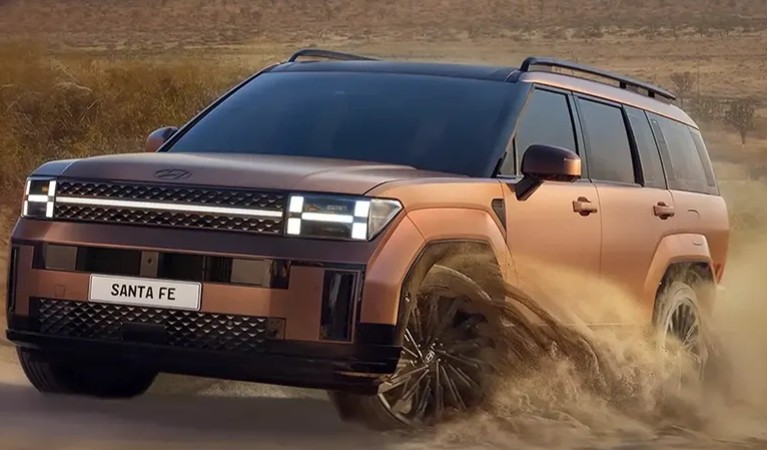
Choosing the correct Hyundai Santa Fe tire size sounds simple until we actually start shopping. One Santa Fe might roll on sensible 18-inch wheels with plenty of sidewall, while another wears sharp-looking 20- or 21-inch alloys. Then we throw different generations, trims, hybrid models, AWD versions, and regional specifications into the mix, and suddenly buying four tires feels more like solving a puzzle.
Fortunately, we do not need to make it complicated.
The safest rule is simple: the correct Santa Fe tire size is the size specified for your exact model year and trim, usually shown on the tire-information label inside the driver's door opening. Hyundai has offered multiple tire sizes across the Santa Fe lineup, so there is no single universal answer.
For example, Hyundai documentation for the fourth-generation Santa Fe lists sizes including 235/65R17, 235/60R18, 235/55R19, and 255/45R20, depending on equipment. On newer fifth-generation models, 18-, 20-, and even 21-inch wheels can appear depending on trim and market. Hyundai's current U.S. Santa Fe Calligraphy, for example, uses 21-inch alloy wheels.
So, which size belongs on your Santa Fe? Let's decode the numbers, compare common factory sizes, and work out what happens when we move up or down in wheel diameter.
Content in this publication
- What Is the Hyundai Santa Fe Tire Size?
- Hyundai Santa Fe Tire Size Chart
- Understanding Hyundai Santa Fe Tire Numbers
- Hyundai Santa Fe 17-Inch Tire Size
- Hyundai Santa Fe 18-Inch Tire Size
- Hyundai Santa Fe 19-Inch Tire Size
- Hyundai Santa Fe 20-Inch Tire Size
- Hyundai Santa Fe 21-Inch Wheels
- Hyundai Santa Fe XRT Tire Size
- Santa Fe Hybrid Tire Size
- How to Find Your Exact Hyundai Santa Fe Tire Size
- What Tire Size Is Best for a Hyundai Santa Fe?
- Can We Put Bigger Tires on a Hyundai Santa Fe?
- Can We Put Smaller Wheels on a Santa Fe?
- 18 vs 20-Inch Hyundai Santa Fe Tires
- Does Tire Size Affect Santa Fe Fuel Economy?
- Does Tire Size Affect Ride Comfort?
- Does Tire Size Affect Handling?
- AWD Hyundai Santa Fe Tire Replacement Rules
- What Tire Pressure Should Santa Fe Tires Use?
- Can Different Tire Brands Be Used on a Santa Fe?
- Best Tire Type for a Hyundai Santa Fe
- How Often Should Hyundai Santa Fe Tires Be Replaced?
- Why Santa Fe Tires Wear Unevenly
- Should We Replace All Four Santa Fe Tires Together?
- Should We Buy the Cheapest Santa Fe Tires Available?
- Hyundai Santa Fe Tire Size Mistakes to Avoid
- How to Choose the Right Replacement Tire
- Is It Worth Changing Santa Fe Wheel Size?
- Final Thoughts: Which Hyundai Santa Fe Tire Size Do You Need?
- Frequently Asked Questions
What Is the Hyundai Santa Fe Tire Size?
There is no single Hyundai Santa Fe tire size covering every vehicle.
Depending on the generation, year, trim level, powertrain, wheel package, and country, common factory sizes can include:
- 235/65R17
- 235/60R18
- 235/55R19
- 255/45R20
- Other 20- and 21-inch configurations on certain newer models and markets
Hyundai officially listed all four of those first sizes for certain fourth-generation Santa Fe configurations.
Newer fifth-generation models have shifted toward larger wheel packages. Hyundai's current Santa Fe Hybrid specification in the United States, for instance, lists 235/60R18 and 255/45R20, depending on configuration.
Think of the Santa Fe tire lineup like shoe sizes. The vehicle name tells us the model, but it does not tell us exactly which shoe fits.
Hyundai Santa Fe Tire Size Chart
The following table gives us a useful overview of tire sizes commonly associated with Santa Fe generations and configurations. Specifications vary by market and trim, so we should always verify the door-jamb label before ordering tires.
| Santa Fe configuration | Common tire size | Wheel diameter |
|---|---|---|
| Certain earlier/lower-wheel trims | 235/65R17 | 17 inches |
| Many standard trims | 235/60R18 | 18 inches |
| Certain premium trims | 235/55R19 | 19 inches |
| Certain upper trims | 255/45R20 | 20 inches |
| New-generation premium versions | Market/trim dependent | Up to 21 inches |
| Certain XRT/off-road packages | 255/60R18 | 18 inches |
Hyundai's Australian XRT package provides a good example of why trim matters: it pairs exclusive 18-inch wheels with 255/60R18 all-terrain tires.
That is quite different from the road-focused 235/60R18 fitted to other configurations.
Understanding Hyundai Santa Fe Tire Numbers
A tire number looks cryptic at first, but once we understand it, the code becomes surprisingly useful.
Take:
235/60R18
Here's what it means.
235: Tire Width
The first number represents the approximate tire width in millimeters.
In this example, the tire is approximately 235 mm wide.
A 255 tire is therefore wider than a 235 tire.
Wider is not automatically better. Wider rubber can improve certain aspects of grip and appearance, but it may also increase cost, rolling resistance, road noise, or susceptibility to hydroplaning depending on the tire design.
60: Aspect Ratio
The second number describes the sidewall height as a percentage of the tire width.
On a 235/60R18 tire, the sidewall height is approximately 60% of 235 mm.
Lower numbers generally mean a shorter sidewall.
That is why a 255/45R20 looks sportier than a 235/60R18. We get more wheel and less visible rubber.
R: Radial Construction
The R means radial construction.
Almost every modern passenger vehicle tire uses radial construction, so this letter is hardly exciting, but it is still part of the specification.
18: Wheel Diameter
The final number tells us the wheel diameter in inches.
So:
235/60R18 = fits an 18-inch wheel.
A 20-inch tire cannot simply be mounted on an 18-inch wheel, and vice versa.
Hyundai Santa Fe 17-Inch Tire Size
Some Santa Fe versions use 235/65R17 tires.
Hyundai has listed this dimension alongside larger sizes on previous-generation Santa Fe specifications.
Seventeen-inch wheels may not deliver the dramatic showroom presence of giant alloys, but they can have practical advantages.
Why Smaller Wheels Can Be Better
A smaller wheel generally allows a taller tire sidewall while maintaining a similar overall tire diameter.
That extra rubber acts almost like a small cushion between the wheel and the road.
We may gain:
- Better absorption of sharp bumps
- More protection against pothole damage
- Lower replacement-tire costs in many cases
- A softer ride
- More forgiving performance on rough roads
For drivers who regularly encounter broken pavement, gravel, or potholes, smaller wheels can actually make a lot of sense.
Sometimes the least glamorous choice is the smartest one.
Hyundai Santa Fe 18-Inch Tire Size
One of the most important Santa Fe sizes is:
235/60R18
Hyundai currently lists this tire size for several newer Santa Fe Hybrid configurations in the U.S. market. It was also used on previous Santa Fe generations in various markets.
Why 18-Inch Wheels Are a Sweet Spot
For many owners, an 18-inch setup strikes a nice balance.
We get enough wheel diameter to look modern without sacrificing too much sidewall.
That usually makes 18-inch wheels appealing for families, commuters, and people who regularly drive long distances.
Compared with larger wheels, they may also offer greater protection against bent rims when the road resembles the surface of the moon.
Hyundai Santa Fe 19-Inch Tire Size
Another factory dimension used on the Santa Fe is:
235/55R19
Hyundai documentation for previous Santa Fe models confirms this as one of the available factory dimensions.
Nineteen-inch wheels sit comfortably between practical 18-inch packages and more aggressive 20-inch setups.
They provide a little more visual presence without going all-in on low-profile rubber.
What Changes With 19-Inch Tires?
Compared with a 235/60R18 setup, we typically get:
- A slightly shorter sidewall
- A sharper visual appearance
- Potentially firmer impact response
- Often higher tire prices
- Less sidewall protection for the wheel
The difference is not night and day, though. Tire construction matters enormously.
A premium touring tire on 19-inch wheels can sometimes ride more comfortably than a stiff performance-oriented tire fitted to smaller wheels.
Hyundai Santa Fe 20-Inch Tire Size
The 255/45R20 dimension is another important Santa Fe tire size.
Hyundai has officially listed it for Santa Fe configurations, including newer Hybrid variants in the U.S. Hyundai's UK accessory documentation also identifies 255/45 R20 as suitable for certain 20-inch Santa Fe wheels.
Twenty-inch wheels transform the Santa Fe visually.
They fill the arches more aggressively and give the SUV a more expensive, planted stance.
But that style comes with trade-offs.
Advantages of 20-Inch Santa Fe Tires
We may appreciate:
- Sportier styling
- Wider tread on certain configurations
- Responsive steering feel
- Strong visual presence
Disadvantages of 20-Inch Tires
Possible drawbacks include:
- Higher tire cost
- Reduced sidewall cushioning
- Greater wheel-damage risk on potholes
- Potentially firmer ride quality
- Heavier replacement wheel-and-tire packages
If we mostly drive on smooth suburban roads, those drawbacks may barely matter.
If our daily commute looks like an off-road endurance test, they might matter a lot.
Hyundai Santa Fe 21-Inch Wheels
The newest Santa Fe generation pushes wheel size even further.
Hyundai's current U.S. Santa Fe Calligraphy specification includes 21-inch alloy wheels. Hyundai materials for other markets also show 21-inch wheel availability on the latest Santa Fe generation.
Twenty-one-inch wheels look spectacular on the boxier fifth-generation Santa Fe.
They suit the vehicle's bold styling like a tailored jacket.
Still, owners should think beyond appearances.
Larger wheels mean shorter-sidewall tires when overall tire diameter stays approximately similar. That makes potholes, curbs, and broken pavement less forgiving.
Hyundai Santa Fe XRT Tire Size
The rugged XRT deserves separate attention because Hyundai changes more than just the appearance.
For example, Hyundai Australia offers an XRT off-road wheel and tire package using:
255/60R18 all-terrain tires
These tires accompany dedicated 18-inch wheels and are intended to provide additional traction on surfaces such as sand, mud, and snow.
Meanwhile, Hyundai's current U.S. Santa Fe XRT also uses 18-inch wheels with all-terrain tires.
That highlights an important lesson: wheel diameter alone does not identify the tire.
Two Santa Fe models can both have 18-inch wheels yet use different widths, profiles, or tire constructions.
Santa Fe Hybrid Tire Size
Hybrid ownership does not automatically mean a unique tire size.
For the 2026 U.S.-market Santa Fe Hybrid, Hyundai lists combinations including:
235/60R18
and
255/45R20
depending on trim.
The exact tire specification matters because hybrid vehicles are relatively heavy and manufacturers calibrate suspension, efficiency systems, ABS, stability control, and speed calculations around approved wheel-and-tire combinations.
We should therefore resist the temptation to choose a random alternative purely because it is cheaper.
How to Find Your Exact Hyundai Santa Fe Tire Size
There are several easy ways to confirm the correct tire size.
Check the Driver's Door Label
This is usually our best starting point.
Open the driver's door and look around the door jamb or pillar.
The tire-information label normally displays the recommended original tire specification and inflation pressures.
Read the Existing Tire Sidewall
We can also look at the tire currently installed.
We might see something like:
235/60R18 103H
The first section gives us the dimensions. The numbers and letters afterward provide load and speed information.
However, there is a catch.
If we bought the vehicle used, someone may have installed non-original tires or aftermarket wheels.
That is why the vehicle label is generally a better reference.
Check the Owner's Documentation
The owner's manual and Hyundai's regional documentation may also contain wheel and tire information.
Remember that specifications can differ by country.
A Santa Fe Calligraphy sold in one market may not use exactly the same wheel-and-tire combination as a vehicle carrying a similar trim name somewhere else.
What Tire Size Is Best for a Hyundai Santa Fe?
For most owners, the best tire size is the original factory-approved size.
It sounds boring, but boring can be wonderful when we're talking about tires.
Factory sizing has already been selected around:
- Suspension geometry
- Braking
- Wheel clearance
- ABS operation
- Traction control
- Speedometer calibration
- Load requirements
- Ride characteristics
- Fuel efficiency
- Steering behavior
Changing sizes is possible, but it should be done carefully.
Can We Put Bigger Tires on a Hyundai Santa Fe?
Potentially, yes.
But simply asking whether a larger tire physically fits is not enough.
A tire can bolt onto the vehicle and still create problems.
We need to consider:
- Overall tire diameter
- Tire width
- Wheel width
- Wheel offset
- Suspension clearance
- Fender clearance
- Steering clearance at full lock
- Load rating
- Speed rating
- AWD compatibility
- Speedometer accuracy
Overall Diameter Matters
When upsizing wheels, we generally try to keep the tire's overall rolling diameter close to the original.
Why?
Because the vehicle effectively measures road speed based on wheel rotation.
If we drastically increase tire diameter, one wheel revolution covers more road.
That can cause the speedometer and odometer to read differently from the vehicle's actual movement.
Electronic systems may also behave differently.
Can We Put Smaller Wheels on a Santa Fe?
Sometimes.
This practice is often known as downsizing.
For example, an owner with large factory wheels might consider a smaller wheel with a taller-sidewall tire for winter driving or poor roads.
But we cannot assume every smaller wheel fits.
The wheel must clear the brake calipers and other suspension components.
This becomes particularly important on high-spec trims that may use different braking hardware.
Before downsizing, verify compatibility using manufacturer specifications or a knowledgeable wheel-and-tire specialist.
18 vs 20-Inch Hyundai Santa Fe Tires
This is probably one of the most useful comparisons for modern Santa Fe owners.
18-Inch Wheels: Better for Comfort
An 18-inch package generally gives us more sidewall.
That can mean:
- Softer impacts
- Better pothole protection
- Possibly cheaper tires
- Better rough-road confidence
20-Inch Wheels: Better for Style
Twenty-inch wheels typically give us:
- More dramatic appearance
- Shorter sidewalls
- More immediate steering response
- Potentially higher replacement costs
Imagine walking across cobblestones.
An 18-inch setup is like wearing comfortable running shoes.
A low-profile 20-inch setup is closer to wearing dress shoes. It can look fantastic, but we'll notice those bumps.
Does Tire Size Affect Santa Fe Fuel Economy?
It can.
Tire efficiency depends on more than diameter alone.
Width, tread pattern, tire compound, construction, inflation pressure, and wheel weight all play roles.
A wider, heavier wheel-and-tire combination can increase rolling resistance and rotational mass.
That does not mean every large wheel destroys fuel economy, but if efficiency is our priority, the largest available wheel is rarely the obvious choice.
This is especially relevant for hybrid owners trying to squeeze maximum range from each tank.
Does Tire Size Affect Ride Comfort?
Absolutely.
One of the biggest differences we feel when moving between Santa Fe wheel sizes is sidewall height.
A taller sidewall flexes more.
That flexibility can absorb impacts before they reach the suspension and cabin.
Low-profile tires transmit more of those sharp edges.
However, tire construction remains important.
Two identical-size tires can ride very differently.
A comfort-oriented touring tire may feel plush, while a reinforced sporty tire of the same dimensions may feel considerably firmer.
Does Tire Size Affect Handling?
Yes, but we should avoid oversimplifying it.
Larger wheels paired with lower-profile tires can reduce sidewall flex.
That can make steering feel quicker and more immediate.
But ultimate handling also depends on:
- Tire compound
- Tread design
- Tire pressure
- Suspension setup
- Temperature
- Road surface
- Tire condition
A premium 18-inch tire can easily outperform a cheap 20-inch tire.
Wheel diameter is only one piece of the puzzle.
AWD Hyundai Santa Fe Tire Replacement Rules
Owners of HTRAC AWD Santa Fe models should be especially cautious about mixing tires.
Ideally, all four tires should match in:
- Brand/model
- Size
- Load rating
- Construction
- General tread depth
AWD systems work by comparing wheel behavior and distributing torque between axles.
Large differences in effective rolling circumference are undesirable.
If one tire is badly damaged while the others are heavily worn, replacing only that tire may not always be the ideal solution.
A tire professional or Hyundai service facility can measure tread-depth differences and determine the best course of action.
What Tire Pressure Should Santa Fe Tires Use?
Tire pressure is not determined simply by reading the maximum PSI printed on the tire.
That number is not our normal inflation target.
Instead, use the inflation pressure listed on the vehicle's tire-information label.
The recommended pressure can differ according to model, load specification, wheel size, and market.
We should normally check tire pressure when the tires are cold.
Why cold?
Because pressure rises as the tire heats up while driving.
Checking immediately after a highway run can therefore give us a misleading number.
Can Different Tire Brands Be Used on a Santa Fe?
Yes, provided the replacement tire meets the required specifications.
Still, we generally prefer matching tires across an axle and ideally across the entire vehicle, particularly on AWD versions.
Mixing different tread designs can result in inconsistent wet grip, braking, steering response, and noise.
Think of it like wearing two different running shoes.
You could technically walk around that way, but nobody would call it ideal.
Best Tire Type for a Hyundai Santa Fe
There is no universally best tire because our driving environment matters enormously.
All-Season Tires
All-season tires suit many Santa Fe owners because they balance:
- Dry grip
- Wet grip
- Longevity
- Comfort
- Moderate cold-weather capability
They are an easy everyday choice in moderate climates.
Summer Tires
Summer tires prioritize warm-weather grip and response.
They can work brilliantly in suitable climates but are not intended for genuinely cold winter conditions.
Winter Tires
Drivers facing snow, ice, and sustained cold temperatures should consider proper winter tires.
Dedicated winter rubber remains flexible in cold conditions and uses tread patterns designed specifically for winter traction.
All-Terrain Tires
Santa Fe XRT owners or adventurous drivers might consider all-terrain tires.
Hyundai itself pairs certain XRT packages with all-terrain rubber, demonstrating the usefulness of this approach for more demanding surfaces.
The trade-offs can include extra road noise, weight, and rolling resistance.
How Often Should Hyundai Santa Fe Tires Be Replaced?
There is no fixed mileage at which every tire suddenly becomes unusable.
Wear depends on:
- Driving style
- Tire compound
- Alignment
- Rotation frequency
- Tire pressure
- Road surface
- Climate
- Vehicle load
- AWD versus FWD use
Inspect the tread regularly rather than relying entirely on mileage.
Cracking, bulges, vibration, irregular wear, exposed cords, or repeated pressure loss deserve immediate attention.
Why Santa Fe Tires Wear Unevenly
Uneven wear can tell us a story.
If the inside edges disappear far faster than the outside, alignment may need attention.
If the center wears quickly, pressure may be excessive.
If both shoulders wear heavily, underinflation may be contributing.
Cupping or scalloped wear can point toward suspension or balance issues.
Ignoring unusual tire wear is like ignoring a strange noise from the engine. The symptom may be telling us something valuable.
Should We Replace All Four Santa Fe Tires Together?
If all four are similarly worn, replacing them together is usually the cleanest solution.
We get consistent:
- Traction
- Braking
- Handling
- Noise
- Tread depth
For HTRAC AWD models, keeping rolling circumference consistent becomes even more important.
If only one tire has been damaged and the others are nearly new, a single replacement may sometimes be reasonable when the replacement closely matches.
The greater the tread-depth difference, however, the more carefully we should evaluate the situation.
Should We Buy the Cheapest Santa Fe Tires Available?
We would not automatically choose tires based solely on price.
Tires are the only components connecting the Santa Fe to the road.
Four contact patches roughly the size of our hands must handle acceleration, cornering, braking, rain, emergency maneuvers, and thousands of kilograms of vehicle momentum.
Cheap tires are not automatically bad, and expensive tires are not automatically perfect.
Instead, compare:
- Wet braking performance
- Noise
- Tread life
- Rolling resistance
- Warranty
- Load rating
- Speed rating
- Independent testing
- Suitability for local weather
Pay for performance we actually need.
Hyundai Santa Fe Tire Size Mistakes to Avoid
Buying tires becomes much easier when we avoid a few common errors:
- Ordering by model name alone. Not every Santa Fe uses the same tires.
- Ignoring the trim level. Calligraphy, XRT, Hybrid, and standard configurations can differ.
- Assuming wheel diameter identifies the full size. Two 18-inch tires can have completely different widths and profiles.
- Using the maximum PSI printed on the tire as normal pressure.
- Changing overall tire diameter significantly without checking compatibility.
- Ignoring load and speed ratings.
- Mixing dramatically different tires on an AWD vehicle.
- Buying aftermarket wheels without checking offset and brake clearance.
These mistakes can turn an inexpensive modification into an expensive headache.
How to Choose the Right Replacement Tire
When replacement time arrives, we can follow a simple process.
First, read the tire-information sticker.
Next, note the full specification, not just the wheel diameter.
Then decide what matters most:
- Comfort
- Long tread life
- Quiet highway driving
- Wet-weather performance
- Snow capability
- Off-road traction
- Fuel efficiency
- Sporty handling
After that, compare reputable tires meeting the required dimensions and ratings.
This approach is much more useful than simply asking, “What's the best Santa Fe tire?”
The best tire is the one that suits both the vehicle and the way we actually drive it.
Is It Worth Changing Santa Fe Wheel Size?
For most owners, probably not unless we have a specific reason.
The factory setup already works.
But there are valid reasons to change.
We might downsize for:
- Winter use
- Rough roads
- Cheaper tires
- Better sidewall protection
- Greater ride comfort
Or upsize for:
- Appearance
- Steering response
- Custom styling
Neither approach is inherently right or wrong.
Just remember that every wheel modification is a compromise.
There is no magic wheel that simultaneously becomes lighter, stronger, cheaper, softer-riding, sportier, quieter, and more beautiful.
Physics always sends us the bill eventually.
Final Thoughts: Which Hyundai Santa Fe Tire Size Do You Need?
The correct Hyundai Santa Fe tire size depends on the exact generation, year, trim, powertrain, and market.
Common factory dimensions across Santa Fe versions include 235/65R17, 235/60R18, 235/55R19, and 255/45R20, while newer premium versions can use 21-inch wheels. Hyundai also offers specialized setups such as 255/60R18 all-terrain tires on certain XRT packages.
If there is one thing we should remember, it is this:
Do not buy tires based only on the words “Hyundai Santa Fe.”
Check the tire-information sticker on the vehicle first.
For most drivers, sticking with the original approved dimensions provides the easiest combination of predictable handling, accurate vehicle calibration, proper clearance, and straightforward replacement.
And when we're choosing between smaller practical wheels and huge stylish alloys? That's where personality enters the equation.
The smaller setup may treat potholes like minor annoyances.
The biggest wheels may make us turn around for one last look every time we park.
Sometimes choosing tires is practical.
Sometimes it is personal.
Usually, it is a bit of both.
Frequently Asked Questions
1. What is the standard Hyundai Santa Fe tire size?
There is no single standard size covering every Santa Fe. Depending on model year and trim, Hyundai has used dimensions such as 235/65R17, 235/60R18, 235/55R19, and 255/45R20. Newer models can also have larger wheel packages. Always verify the tire-information sticker on your particular vehicle.
2. What size tires fit an 18-inch Hyundai Santa Fe wheel?
235/60R18 is a common factory Santa Fe size and remains an official configuration on newer models. However, certain XRT packages use other 18-inch dimensions, including 255/60R18, so wheel diameter alone is not enough to determine compatibility.
3. Can I put 20-inch wheels on my Hyundai Santa Fe?
Potentially, provided the wheels, tires, offset, load rating, brake clearance, and overall rolling diameter are appropriate for the specific Santa Fe. Hyundai itself uses 20-inch wheels with 255/45R20 tires on certain versions. Switching from a smaller factory wheel should nevertheless be checked carefully before purchase.
4. Are 18-inch or 20-inch Santa Fe tires better?
Neither is universally better. An 18-inch setup usually offers more sidewall and can favor comfort, pothole protection, and replacement cost. A 20-inch package tends to emphasize appearance and steering response. The better choice depends on road quality, budget, and personal priorities.
5. Where can I find the correct tire size for my Santa Fe?
Look for the tire-information placard around the driver's door opening. It is the best starting point because it relates directly to your vehicle. We can also consult the owner's documentation and Hyundai's specifications for the exact model year and market.
If you want to know other articles similar to Hyundai Santa Fe Tire Size: Complete Size and Fitment Guide you can visit the category Service and Parts.
Volvo S90 Engine Oil: Type, Capacity & Change Guide
Volvo S90 Boot Space: Size, Capacity and Practicality
SEO Title: Volvo S90 Oil Capacity: Complete Guide by Engine

Kia Sorento Oil Type: Complete Guide by Year & Engine
Kia Sorento Engine Capacity: Complete Guide by Year
Peugeot 308 Clutch Replacement Cost: Complete UK Guide for 2026
Leave a Reply
More content of your interest