
Hyundai Tucson Fuel Tank Capacity: Complete Guide

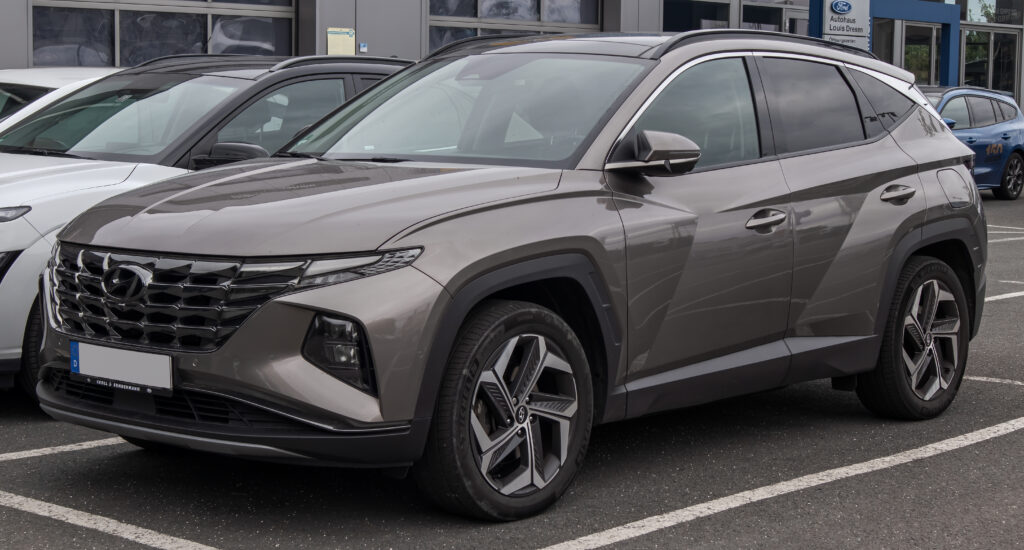
The Hyundai Tucson fuel tank capacity varies depending on the model year, engine, and whether we choose the petrol, hybrid, or plug-in hybrid version. While newer petrol-powered Tucson models generally have a 54-litre (14.3-US-gallon) fuel tank, hybrid versions typically carry 52 litres, and plug-in hybrids have a smaller 42-litre tank.
Understanding the Hyundai Tucson's fuel capacity helps us estimate driving range, calculate refuelling costs, and plan longer journeys without worrying about running out of petrol.
In this comprehensive guide, we'll explore the Hyundai Tucson fuel tank capacity by model year, compare different engine options, explain fuel economy figures, and share practical tips for getting more kilometres or miles from every tank.
Content in this publication
- How Big Is the Hyundai Tucson Fuel Tank?
- Hyundai Tucson Fuel Tank Capacity by Year
- 2026 Hyundai Tucson Fuel Tank Capacity
- 2025 Hyundai Tucson Fuel Tank Capacity
- Hyundai Tucson Hybrid Fuel Tank Capacity
- Hyundai Tucson Plug-in Hybrid Fuel Capacity
- Hyundai Tucson Fuel Tank Capacity in the UK
- Hyundai Tucson Fuel Tank Capacity in Australia
- Older Hyundai Tucson Fuel Tank Capacity
- How Far Can a Hyundai Tucson Travel on a Full Tank?
- How Much Does It Cost to Fill a Hyundai Tucson?
- Does the Hyundai Tucson Have a Fuel Reserve?
- Why Doesn't the Tucson Take Its Full Tank Capacity at the Pump?
- What Fuel Does the Hyundai Tucson Use?
- How to Improve Hyundai Tucson Fuel Economy
- Hyundai Tucson Petrol vs Hybrid: Which Has Better Range?
- Is the Hyundai Tucson Fuel Tank Big Enough for Road Trips?
- How to Check Your Hyundai Tucson Fuel Tank Capacity
- Common Questions About Hyundai Tucson Fuel Tanks
- Frequently Asked Questions
- Conclusion: Hyundai Tucson Fuel Tank Capacity
How Big Is the Hyundai Tucson Fuel Tank?
For the latest Hyundai Tucson models, including the 2025 and 2026 versions, fuel tank capacity generally falls into three categories.
| Hyundai Tucson Version | Capacity (Litres) | US Gallons | UK Gallons |
|---|---|---|---|
| Petrol | 54 L | 14.3 gal | 11.9 gal |
| Hybrid (HEV) | 52 L | 13.7 gal | 11.4 gal |
| Plug-in Hybrid (PHEV) | 42 L | 11.1 gal | 9.2 gal |
These figures apply to the corresponding current-generation configurations sold in markets such as the United States and United Kingdom. Specifications can vary depending on the country, engine, and model year.
The standard petrol Tucson has the largest tank of the three modern powertrain types, but that doesn't necessarily mean it offers the longest driving range.
Because the hybrid consumes less fuel, it can often travel farther between petrol station visits despite having a slightly smaller tank.
Quick Hyundai Tucson Fuel Capacity Facts
Before exploring the individual models, here are the most important things to remember:
- 2026 Hyundai Tucson petrol: approximately 54 litres.
- 2026 Hyundai Tucson Hybrid: approximately 52 litres.
- 2026 Hyundai Tucson Plug-in Hybrid: approximately 42 litres.
- 2016–2021 Hyundai Tucson: commonly 62 litres in US-market petrol models.
- Best potential range: generally the conventional hybrid.
- Fuel tank size: not the same as estimated driving range.
If we're checking an individual vehicle, its owner's manual and market-specific technical specifications remain the most reliable references.
Hyundai Tucson Fuel Tank Capacity by Year
The Tucson has undergone several redesigns, and its fuel tank capacity has changed significantly over time.
Older Tucson models often had larger fuel tanks than the current generation. However, improvements in engine efficiency and hybrid technology mean a smaller tank does not automatically translate into reduced driving range.
Hyundai Tucson Fuel Tank Size Comparison
| Model Year | Engine / Version | Fuel Capacity |
|---|---|---|
| 2016 | Petrol, US specification | 62 L / 16.4 US gal |
| 2017 | Petrol, US specification | 62 L / 16.4 US gal |
| 2018 | Petrol, US specification | 62 L / 16.4 US gal |
| 2019 | Petrol, US specification | 62 L / 16.4 US gal |
| 2020 | Petrol, US specification | 62 L / 16.4 US gal |
| 2021 | Previous-generation petrol, US specification | 62 L / 16.4 US gal |
| 2022 | Petrol, US specification | 54 L / 14.3 US gal |
| 2022 | Hybrid, US specification | 52 L / 13.7 US gal |
| 2023 | Petrol, US specification | 54 L / 14.3 US gal |
| 2024 | Petrol, US specification | 54 L / 14.3 US gal |
| 2025 | Petrol, US specification | 54 L / 14.3 US gal |
| 2025 | Hybrid, US specification | 52 L / 13.7 US gal |
| 2025 | Plug-in Hybrid, US specification | 42 L / 11.1 US gal |
| 2026 | Petrol, US specification | 54 L / 14.3 US gal |
| 2026 | Hybrid, US specification | 52 L / 13.7 US gal |
| 2026 | Plug-in Hybrid, US specification | 42 L / 11.1 US gal |
Note: Capacities are rounded litre equivalents of published US specifications. The 2021 transition to the newer generation occurred at different times worldwide, and some regions offer additional engines, including diesels.
The biggest change came with the arrival of the fourth-generation Hyundai Tucson, which introduced smaller fuel tanks alongside more efficient powertrains.
2026 Hyundai Tucson Fuel Tank Capacity
The 2026 Hyundai Tucson continues to offer several powertrain options, each designed for different driving needs.
2026 Hyundai Tucson Petrol Fuel Tank
The conventional petrol-powered 2026 Tucson sold in the United States features a 14.3-US-gallon fuel tank, equivalent to approximately 54 litres.
This capacity applies to the 2.5-litre petrol engine with either front-wheel drive or available all-wheel drive.
Its main characteristics include:
- Fuel tank capacity: 54 litres.
- US fuel capacity: 14.3 gallons.
- Engine: 2.5-litre four-cylinder petrol.
- Drive configurations: FWD and AWD.
- EPA combined fuel economy: approximately 28 mpg FWD or 26 mpg AWD.
The 54-litre capacity is practical for a compact family SUV. It provides a useful balance between vehicle weight, packaging, and travelling distance.
2026 Hyundai Tucson Hybrid Fuel Tank
The 2026 Tucson Hybrid has a smaller 52-litre fuel tank, equivalent to 13.7 US gallons.
However, this version combines a petrol engine with an electric motor, allowing us to achieve better fuel efficiency.
Depending on trim and drivetrain, US-market models have EPA combined ratings of approximately 36–38 mpg.
Hyundai quotes a range of up to approximately 520 miles for certain 2026 Hybrid configurations.
This makes the hybrid particularly appealing if we frequently travel long distances or commute through traffic.
2026 Hyundai Tucson Plug-in Hybrid Tank
The Hyundai Tucson Plug-in Hybrid uses a 42-litre petrol tank, equivalent to approximately 11.1 US gallons.
This is noticeably smaller than the standard Tucson's tank.
However, the plug-in hybrid can complete some journeys using electricity instead of petrol.
The US-market 2026 Tucson PHEV offers an EPA-estimated electric-only range of approximately 32 miles under the specified test conditions.
Once its usable electric driving range is depleted, it can continue operating using its petrol-hybrid system.
For drivers who charge regularly and complete short daily journeys, the smaller petrol tank may not be a major disadvantage.
2025 Hyundai Tucson Fuel Tank Capacity
The 2025 Hyundai Tucson received a significant facelift, introducing updates to its exterior styling, interior, and technology.
Despite these improvements, fuel tank capacities remained broadly consistent with the fourth-generation design.
For US-market vehicles:
| 2025 Tucson Model | Fuel Tank |
|---|---|
| 2.5L Petrol | 14.3 US gallons |
| 1.6L Turbo Hybrid | 13.7 US gallons |
| 1.6L Turbo Plug-in Hybrid | 11.1 US gallons |
In litres, these capacities correspond to approximately 54, 52, and 42 litres respectively.
The hybrid is especially interesting because it can achieve substantially better fuel consumption while carrying only two litres less petrol than the conventional version.
Hyundai Tucson Hybrid Fuel Tank Capacity
One of the most common questions about the Hyundai Tucson Hybrid concerns its smaller petrol tank.
Why does the hybrid carry less fuel when it can travel farther?
The explanation comes down to energy efficiency.
Traditional petrol engines depend entirely on fuel combustion for propulsion. Hybrid vehicles combine the petrol engine with an electric motor and battery.
How the Hybrid System Saves Fuel
The Tucson Hybrid can improve efficiency through several technologies.
Regenerative braking: When we slow down, the electric motor can recover some kinetic energy and store it in the hybrid battery.
Electric assistance: The electric motor supports the petrol engine during certain driving conditions, reducing fuel consumption.
Automatic engine management: Depending on operating conditions, the system can switch off the petrol engine when its power is unnecessary.
Improved low-speed efficiency: Hybrid systems can be particularly effective in stop-start traffic.
Together, these features help explain why the 52-litre Tucson Hybrid can outperform a conventional petrol model in total driving range.
Does the Tucson Hybrid Need Charging?
The regular Hyundai Tucson Hybrid is a self-charging hybrid.
That means we don't need to connect it to an external charging station.
Its battery is charged through regenerative braking and the petrol engine when necessary.
The plug-in hybrid is different because it includes a larger battery designed to be recharged externally.
This distinction is important when comparing fuel tank sizes and calculating running costs.
Hyundai Tucson Plug-in Hybrid Fuel Capacity
The plug-in hybrid deserves separate consideration because its smaller petrol tank is part of a different approach to vehicle efficiency.
With approximately 42 litres of petrol capacity, the Tucson PHEV is designed to make effective use of electricity.
Why Is the PHEV Fuel Tank Smaller?
The Tucson Plug-in Hybrid accommodates additional electrified powertrain components, including a larger high-voltage battery.
Vehicle packaging and weight management influence the amount of space available for a petrol tank.
Rather than focusing exclusively on carrying more petrol, this version is designed to reduce fuel consumption by replacing some petrol-powered journeys with electric driving.
Is the Smaller Tank a Disadvantage?
That depends on how we use the vehicle.
If we regularly charge the battery and travel relatively short distances, petrol consumption may be very low.
However, if we frequently undertake long motorway journeys without charging, the smaller tank can result in more frequent refuelling stops.
The plug-in hybrid's efficiency advantage therefore depends heavily on charging habits and journey patterns.
Hyundai Tucson Fuel Tank Capacity in the UK
The Hyundai Tucson is popular throughout the United Kingdom, where fuel capacity is usually measured in litres.
Current UK-market specifications generally identify the following capacities:
| UK Tucson Version | Tank Capacity |
|---|---|
| Petrol | 54 litres |
| Hybrid | 52 litres |
| Plug-in Hybrid | 42 litres |
These values are broadly consistent with equivalent versions available in other markets.
However, the UK Tucson engine range differs from the American lineup.
UK buyers can encounter 1.6-litre turbocharged petrol engines, mild-hybrid configurations, full hybrids, and plug-in hybrids.
It's important to check the exact version because the engine and electrification system determine the appropriate specifications.
UK Gallons vs US Gallons
An important detail often causes confusion when comparing international automotive specifications.
One UK imperial gallon is larger than one US gallon.
For example:
- 54 litres equals approximately 11.9 UK gallons.
- The same 54 litres equals approximately 14.3 US gallons.
Therefore, an American website describing a 14.3-gallon Tucson tank and a British website reporting roughly 11.9 gallons may be describing the same capacity.
When comparing different markets, litres are usually the easiest common unit.
Hyundai Tucson Fuel Tank Capacity in Australia
Australian Hyundai Tucson models are also commonly specified with fuel capacities of 54 or 52 litres.
According to Hyundai Australia's MY26 technical specifications:
| Australian Tucson Powertrain | Fuel Tank |
|---|---|
| 2.0L Petrol | 54 L |
| 1.6L Turbo Hybrid | 52 L |
The Australian engine lineup differs from the US offering, so we should not assume identical engines merely because the fuel tanks are the same size.
For example, the Australian MY26 2.0-litre petrol Tucson has a published combined consumption figure of approximately 8.1 L/100 km.
The corresponding hybrid has a published combined figure of approximately 5.3 L/100 km.
These official laboratory figures demonstrate how significant the difference in fuel economy can be.
Actual results depend on road conditions, speed, climate control, loading, and driving style.
Older Hyundai Tucson Fuel Tank Capacity
Older Hyundai Tucson models often carried more petrol than current versions.
This is especially noticeable when comparing the third-generation Tucson with the fourth-generation model.
2016–2021 Hyundai Tucson
For many US-market petrol configurations from 2016 through 2021, the fuel tank capacity was approximately 16.4 US gallons, equivalent to 62 litres.
These vehicles included different engine options depending on year and trim.
Despite having a larger fuel tank, their fuel consumption figures were generally higher than those of the newer Tucson Hybrid.
Why Did the Fuel Tank Become Smaller?
Several factors help explain the change.
First, modern engine technology can deliver better efficiency.
Second, electrification has changed vehicle packaging requirements.
Third, manufacturers balance fuel capacity against weight, space, emissions, and other engineering priorities.
A larger tank also adds weight when filled.
Therefore, reducing fuel capacity does not necessarily make a vehicle less suitable for long-distance driving.
What About First-Generation Tucson Models?
Even older Tucson models can have different capacities depending on their engine.
For example, the 2005 Hyundai Tucson owner's manual lists approximately 58 litres for the 2.0-litre engine and 65 litres for the 2.7-litre engine.
This highlights why we should avoid assuming every Tucson generation has the same fuel capacity.
How Far Can a Hyundai Tucson Travel on a Full Tank?
Fuel tank size is only one factor determining driving range.
The other major factor is fuel efficiency.
We can estimate the theoretical distance a vehicle might travel on a full tank using a simple calculation.
Driving range = Fuel tank capacity × Fuel economy
For vehicles measured in litres per 100 kilometres, we use:
Driving range (km) = Fuel tank capacity (L) ÷ Fuel consumption (L/100 km) × 100
For American specifications, we can multiply US gallons by miles per gallon.
Hyundai Tucson Driving Range Comparison
Using published US-market 2026 fuel economy figures, we can estimate the following theoretical results:
| Tucson Version | Tank | Combined MPG | Calculated Range |
|---|---|---|---|
| Petrol FWD | 14.3 gal | 28 mpg | 400 miles |
| Petrol AWD | 14.3 gal | 26 mpg | 372 miles |
| Hybrid, 38-mpg configuration | 13.7 gal | 38 mpg | 521 miles |
| Hybrid, 36-mpg configuration | 13.7 gal | 36 mpg | 493 miles |
These are arithmetic estimates based on rounded specifications, not guaranteed real-world distances.
In normal driving, we shouldn't plan to use every litre of fuel in the tank.
Weather, terrain, traffic, vehicle condition, and driving style can change the results considerably.
Hyundai Tucson Range in Kilometres
For drivers outside the United States, kilometre-based estimates may be more useful.
Using Hyundai Australia's published MY26 combined fuel consumption figures:
2.0L Petrol Tucson
- Fuel tank: 54 litres.
- Combined consumption: 8.1 L/100 km.
- Calculated full-tank range: approximately 667 km.
1.6L Hybrid Tucson
- Fuel tank: 52 litres.
- Combined consumption: 5.3 L/100 km.
- Calculated full-tank range: approximately 981 km.
These are idealised calculations using laboratory consumption ratings.
Actual achievable range may be lower, particularly during high-speed motorway driving, heavy traffic, steep climbs, or when carrying additional weight.
How Much Does It Cost to Fill a Hyundai Tucson?
The total refuelling cost depends on fuel tank capacity and the price of petrol.
We can calculate it using this formula:
Refuelling cost = Litres added × Price per litre
Imagine petrol costs £1.50 per litre.
| Tucson Version | Tank Size | Full-Tank Cost |
|---|---|---|
| Petrol | 54 L | £81.00 |
| Hybrid | 52 L | £78.00 |
| Plug-in Hybrid | 42 L | £63.00 |
These are illustrative full-capacity calculations rather than actual pump prices or typical refill amounts.
Normally, we'll add less than the vehicle's total tank capacity because some fuel remains when we stop at a petrol station.
Does the Hybrid Cost Less to Run?
In many driving situations, yes.
However, the reason is primarily its lower fuel consumption rather than its slightly smaller tank.
A Tucson Hybrid may cost nearly as much to fill as the petrol version, but it can cover more distance using a similar amount of fuel.
Over thousands of miles, that difference can produce meaningful savings.
To compare running costs properly, we should calculate fuel expenditure per mile or kilometre rather than simply comparing the price of a full tank.
Does the Hyundai Tucson Have a Fuel Reserve?
Like many modern vehicles, the Hyundai Tucson provides a low-fuel warning before the tank is completely empty.
However, we shouldn't treat the warning as a guarantee of a particular number of remaining litres.
The remaining amount can vary depending on the model, instrument calibration, vehicle position, and operating conditions.
Some drivers assume that a low-fuel warning means they can safely travel another 30 or 50 miles.
That isn't a reliable rule.
A more sensible approach is to refuel soon after the warning appears.
Why Running the Tank Empty Is a Bad Idea
Repeatedly driving with very little fuel can create unnecessary risks.
Potential consequences include:
- Unexpectedly running out of petrol.
- Engine hesitation or stalling.
- Additional stress on fuel-delivery components.
- Being stranded in an unsafe or remote location.
- Reduced flexibility during long journeys.
Low fuel levels can also increase the risk of uncovering the fuel pickup during certain vehicle movements or gradients.
We recommend maintaining a comfortable fuel margin, particularly when travelling through rural areas.
Why Doesn't the Tucson Take Its Full Tank Capacity at the Pump?
A common concern arises when drivers see that their Tucson has a 54-litre tank but can only add 45 or 48 litres.
In most cases, that is perfectly normal.
A tank's advertised capacity is not the amount we'll necessarily add during every refuelling stop.
Fuel Remaining in the Tank
Even when the dashboard shows a low fuel level, several litres may remain.
The vehicle is designed to warn us before the tank becomes completely empty.
Consequently, filling it from the low-fuel warning level usually requires less than its official maximum capacity.
Automatic Fuel Pump Shut-Off
Petrol station pumps use automatic shut-off mechanisms intended to stop dispensing fuel when the tank is sufficiently full.
The shut-off point can be affected by nozzle positioning, fuel flow, and tank ventilation.
For this reason, we should not expect every fill-up to be identical.
Fuel Gauge Accuracy
Fuel gauges provide an indication rather than a laboratory-precise measurement.
Tank shape, sensor calibration, and vehicle angle can affect the displayed level.
A Tucson parked on a steep incline may show a slightly different reading from the same vehicle parked on level ground.
What Fuel Does the Hyundai Tucson Use?
The correct fuel depends on the engine and market.
Many US-market petrol and hybrid Tucson models are designed to operate on regular unleaded petrol, with the manufacturer's required octane specification.
In the UK, Tucson petrol models generally use unleaded petrol meeting the relevant Hyundai requirements.
Older diesel-powered Tucson models use diesel fuel instead.
Petrol vs Diesel Tucson
We should never assume that two vehicles with the same model name require the same fuel.
For example, a European Tucson equipped with a CRDi diesel engine has different fuel requirements from a petrol-powered Tucson Hybrid.
Always verify the specification printed in the owner's manual and on any applicable fuel-filler label.
Using premium petrol does not automatically result in a meaningful fuel economy improvement.
If an engine is designed for regular unleaded petrol, purchasing a more expensive grade may offer little practical benefit.
The important factor is using fuel that meets the manufacturer's minimum requirements.
How to Improve Hyundai Tucson Fuel Economy
Even though fuel tank capacity cannot be easily changed, we can influence how far the Tucson travels between refuelling stops.
1. Maintain Correct Tyre Pressure
Underinflated tyres increase rolling resistance.
This means the engine may need additional energy to maintain speed.
Checking tyre pressure regularly helps maintain efficiency, tyre life, and vehicle handling.
2. Accelerate Smoothly
Aggressive acceleration increases fuel consumption.
By gradually building speed and anticipating traffic conditions, we can reduce unnecessary fuel use.
This is particularly useful during urban driving.
3. Avoid Unnecessary Weight
Carrying additional luggage or equipment increases vehicle weight.
Removing unnecessary items can help improve efficiency, especially during frequent acceleration.
4. Reduce Aerodynamic Drag
Roof boxes, roof racks, and external accessories can increase aerodynamic resistance.
At motorway speeds, this may noticeably affect consumption.
Removing accessories when they are not needed is a simple improvement.
5. Use Climate Control Efficiently
Air conditioning requires energy.
We shouldn't sacrifice safety or comfort, but sensible climate-control settings may help reduce unnecessary consumption.
6. Maintain the Vehicle Properly
Regular maintenance can support efficient engine operation.
Important checks include:
- Engine oil condition and correct specification.
- Air filter condition.
- Tyre pressure and alignment.
- Spark plugs where applicable.
- Brake operation.
- Relevant dashboard warning lights.
7. Plan Long Journeys
Efficient routes can reduce stop-start traffic and unnecessary driving distance.
Combining several short journeys into one trip may also reduce repeated cold-engine operation.
For hybrid owners, maintaining smooth speed and anticipating braking can help the system recover energy effectively.
Hyundai Tucson Petrol vs Hybrid: Which Has Better Range?
If our main priority is travelling farther between refuelling stops, the conventional hybrid is often the better choice.
The modern petrol version may have a slightly larger tank, but it generally consumes more fuel.
For example, comparing US-market 2026 combined ratings:
| Feature | Tucson Petrol FWD | Tucson Hybrid (38 mpg) |
|---|---|---|
| Fuel tank | 54 L | 52 L |
| US gallons | 14.3 | 13.7 |
| Combined economy | 28 mpg | 38 mpg |
| Calculated range | 400 miles | 521 miles |
| External charging required | No | No |
The hybrid offers a notable advantage in this particular comparison.
However, the best purchase decision also depends on vehicle price, servicing, driving patterns, insurance, and personal preferences.
We should evaluate total ownership costs rather than fuel economy alone.
Is the Hyundai Tucson Fuel Tank Big Enough for Road Trips?
For most drivers, the Hyundai Tucson offers sufficient fuel capacity for motorway travel, family holidays, and everyday commuting.
Even the conventional petrol model can cover several hundred miles under appropriate conditions.
The hybrid can provide additional range, which is convenient for drivers who frequently complete longer journeys.
However, the amount of usable range depends on several important factors.
Motorway Driving
Sustained high speeds increase aerodynamic resistance.
As speed rises, energy consumption can increase substantially.
Consequently, driving at a steady, moderate speed can help preserve fuel.
Mountain Roads
Climbing steep hills requires additional energy.
Although regenerative braking can recover some energy during descents in hybrid models, it cannot recover everything used during the climb.
Fully Loaded Vehicles
Passengers, luggage, and roof-mounted equipment add weight or drag.
This can increase fuel consumption and reduce real-world range.
Cold Weather
Low temperatures can affect engine efficiency, tyre pressure, and the energy required for cabin heating.
Hybrid and plug-in hybrid performance can also change depending on temperature and battery conditions.
When planning a long trip, we recommend treating dashboard range predictions as estimates rather than promises.
How to Check Your Hyundai Tucson Fuel Tank Capacity
If we're unsure about the exact tank size of our vehicle, several reliable methods are available.
Owner's manual: Look for the technical specifications or recommended capacities section.
Manufacturer specifications: Hyundai publishes market-specific technical information for different versions.
Vehicle identification: The VIN can help a dealer identify the correct model and configuration.
Original sales brochure: This can be especially useful for older Tucson generations.
Official Hyundai dealership: A dealer can confirm specifications for a particular vehicle.
Avoid identifying the tank capacity solely by appearance or trim name, since engine configurations can differ between countries.
Common Questions About Hyundai Tucson Fuel Tanks
Why Does My Tucson Show Fewer Miles After Refuelling?
The distance-to-empty display estimates range using factors such as recent fuel consumption and the detected fuel level.
If we've recently driven in heavy traffic or used more fuel than usual, the display may predict a shorter range.
This doesn't necessarily mean the fuel tank has lost capacity.
Can a Hyundai Tucson Fuel Tank Become Smaller Over Time?
The tank's physical capacity should not normally decrease significantly during ordinary use.
However, problems involving the fuel gauge, tank ventilation, or refuelling system can affect how much fuel appears to fit.
Persistent abnormalities should be inspected by a qualified technician.
Is It Safe to Overfill a Hyundai Tucson?
No. We should stop refuelling when the nozzle automatically shuts off, following the manufacturer's instructions.
Repeatedly topping off the tank can interfere with the evaporative-emissions system and cause fuel spillage.
Does AWD Reduce the Fuel Tank Size?
Not necessarily.
For example, US-market 2026 petrol Tucson FWD and AWD configurations both list a 14.3-US-gallon tank.
However, AWD can affect fuel consumption and consequently driving range.
Frequently Asked Questions
1. How many litres is a Hyundai Tucson fuel tank?
Most modern petrol-powered Hyundai Tucson models have a 54-litre fuel tank. Conventional hybrid versions generally have 52 litres, while plug-in hybrids commonly have 42 litres. Older models may have larger tanks, including 62-litre configurations.
2. What is the Hyundai Tucson fuel tank capacity in gallons?
The modern US-market Hyundai Tucson petrol has a 14.3-US-gallon tank. The Hybrid has 13.7 US gallons, while the Plug-in Hybrid has 11.1 US gallons. UK imperial gallon measurements are different because an imperial gallon is larger than a US gallon.
3. How far can a Hyundai Tucson go on a full tank?
A 2026 US-market petrol Tucson FWD has a calculated combined-cycle range of approximately 400 miles, while certain hybrid configurations have a calculated range of approximately 520 miles. Actual distances vary according to road conditions, speed, driving behaviour, and weather.
4. Does the Hyundai Tucson Hybrid have a smaller fuel tank?
Yes. The current-generation Tucson Hybrid generally has a 52-litre tank, compared with 54 litres for the conventional petrol model. Despite carrying less petrol, the hybrid can achieve a longer driving range thanks to its more efficient powertrain.
5. How much petrol does a 2020 Hyundai Tucson hold?
Many US-market 2020 Hyundai Tucson petrol models have a fuel tank capacity of approximately 16.4 US gallons, equivalent to 62 litres. Specifications should be verified for other markets and engine configurations.
Conclusion: Hyundai Tucson Fuel Tank Capacity
The Hyundai Tucson fuel tank capacity depends on the generation, powertrain, and country in which the vehicle was sold.
For most current-generation configurations, the standard petrol Tucson carries approximately 54 litres, the conventional hybrid holds 52 litres, and the plug-in hybrid has a 42-litre fuel tank.
Older Tucson models, particularly many versions produced between 2016 and 2021, were equipped with larger tanks of approximately 62 litres.
However, tank capacity alone doesn't determine how far we can travel.
Modern hybrid technology allows the Tucson Hybrid to deliver impressive fuel efficiency and potentially greater driving range despite having a smaller tank.
Whether we're choosing a Tucson for daily commuting, family holidays, or long-distance motorway journeys, understanding its fuel capacity and real-world consumption helps us plan refuelling stops, estimate running costs, and choose the version that best suits our needs.
If you want to know other articles similar to Hyundai Tucson Fuel Tank Capacity: Complete Guide you can visit the category Service and Parts.
MG HS Tyre Pressure Guide: Correct PSI and TPMS
Toyota Yaris Cross Dashboard Symbols

BMW 3 Series Warning Lights: The Complete Guide to Understanding Every Dashboard Symbol
Nissan Qashqai Fuel Tank Capacity: Complete Guide

Suzuki Swift Fuel Tank Capacity: Complete Guide
Mazda CX-5 Weight (2013–2026): Complete Guide in Pounds and KG
Leave a Reply
More content of your interest