
Infiniti QX60 Engine Size: Complete Guide by Year and Generation

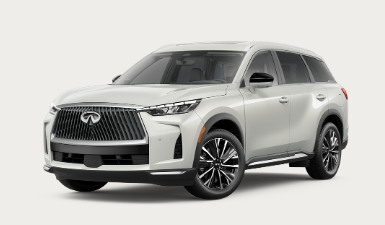
If we are shopping for an Infiniti QX60, one apparently simple question can quickly turn into a surprisingly interesting rabbit hole: what is the Infiniti QX60 engine size?
For many years, the answer was easy. The QX60 was closely associated with Infiniti's naturally aspirated 3.5-liter V6. It was smooth, familiar, reasonably powerful, and well suited to a three-row luxury crossover.
Then Infiniti changed the formula.
Beginning with the 2025 model year in the U.S., the QX60 moved away from its traditional V6 and adopted a 2.0-liter VC-Turbo four-cylinder engine. That sounds like a dramatic downsizing—and technically it is—but engine displacement alone tells only half the story.
The newer engine produces 268 horsepower and 286 lb-ft of torque, while the 2024 QX60's outgoing 3.5-liter V6 generated 295 horsepower and 270 lb-ft. In other words, the smaller turbocharged engine gives up some peak horsepower but actually delivers more torque.
And the story becomes even more interesting when we look farther back. Earlier QX60 generations included multiple versions of the 3.5-liter V6 and even a 2.5-liter supercharged hybrid engine.
So, rather than simply saying "the QX60 has a 2.0-liter engine" or "the QX60 has a 3.5-liter engine," we need to look at the model year.
Let's break everything down.
Content in this publication
- What Is the Infiniti QX60 Engine Size?
- Infiniti QX60 Engine Size by Year
- 2014–2016 Infiniti QX60: 3.5-Liter V6
- 2014–2017 Infiniti QX60 Hybrid Engine Size
- 2017 Infiniti QX60 Engine Upgrade
- 2018–2020 Infiniti QX60 Engine Size
- 2022 Infiniti QX60 Engine Size
- 2023 Infiniti QX60 Engine Size
- 2024 Infiniti QX60 Engine Size
- 2025 Infiniti QX60 Engine Size: The Big Change
- 2026 Infiniti QX60 Engine Size
- What Is Infiniti VC-Turbo Technology?
- 2.0L Turbo vs 3.5L V6: Which QX60 Engine Is Bigger?
- Is the 2.0L QX60 Underpowered?
- Which Infiniti QX60 Engine Is Best?
- Does Engine Size Affect QX60 Reliability?
- Does the Smaller Engine Save More Fuel?
- Does Engine Size Affect Maintenance Costs?
- How to Check Which QX60 Engine You Have
- What Engine Size Should We Choose When Buying Used?
- The Evolution of QX60 Engine Size Tells a Bigger Story
- Conclusion: Understanding the Infiniti QX60 Engine Size
- Frequently Asked Questions
What Is the Infiniti QX60 Engine Size?
The Infiniti QX60 engine size depends primarily on the model year.
Broadly speaking, the QX60 has used three important engine configurations during its history:
- 3.5-liter naturally aspirated V6
- 2.5-liter supercharged four-cylinder hybrid
- 2.0-liter VC-Turbo four-cylinder
For buyers looking at newer vehicles, the dividing line is particularly important.
A 2024 Infiniti QX60 uses a 3.5-liter V6, while the 2025 and 2026 QX60 use a 2.0-liter VC-Turbo four-cylinder in the U.S. market. Infiniti's 2026 brochure lists the 2.0L VC-Turbo engine at 268 hp and 286 lb-ft.
That means two nearly identical-looking second-generation QX60s can have completely different engines beneath the hood.
Infiniti QX60 Engine Size by Year
Here is the easiest way to understand the major changes.
| Model Years | Engine Size | Configuration | Approx. Output |
|---|---|---|---|
| 2014–2016 | 3.5L | Naturally aspirated V6 | 265 hp |
| 2014–2017 Hybrid | 2.5L | Supercharged I4 + electric motor | 250 hp system |
| 2017–2020 | 3.5L | Naturally aspirated V6 | 295 hp |
| 2022–2024 | 3.5L | Naturally aspirated V6 | 295 hp |
| 2025–2026 | 2.0L | VC-Turbo I4 | 268 hp |
The table tells us something important: engine size remained remarkably consistent for most of the QX60's life.
The 3.5-liter V6 was essentially the QX60's signature engine for a decade. Only recently did Infiniti make the leap toward a smaller turbocharged powerplant.
There was also no conventional 2021 QX60 model in the U.S. lineup before the redesigned 2022 generation arrived, which helps explain the jump in many used-vehicle listings from 2020 directly to 2022.
2014–2016 Infiniti QX60: 3.5-Liter V6
The early Infiniti QX60 came with a 3.5-liter DOHC V6 engine.
For the 2014–2016 period, this engine produced approximately:
- 265 horsepower
- 248 lb-ft of torque
- 3.5 liters of displacement
- Six cylinders
- Naturally aspirated induction
Infiniti paired the engine with a continuously variable transmission, or CVT.
The 2016 QX60, for example, was officially rated at 265 hp at 6,400 rpm and 248 lb-ft at 4,400 rpm.
How Does the Early 3.5L V6 Feel?
Think of the early QX60's engine like a large cup of coffee rather than an espresso shot.
It doesn't hit you instantly with turbocharged torque. Instead, power builds progressively as the engine revs.
For everyday family driving, that character can feel pleasant. There's no turbo waiting to spool and no complicated variable-compression system changing its behavior behind the scenes.
You press the accelerator, the engine revs, and the vehicle moves.
Simple.
The CVT is actually more noticeable than the engine itself. Some drivers appreciate its smoothness, while others prefer the more traditional sensation of a conventional automatic transmission.
2014–2017 Infiniti QX60 Hybrid Engine Size
Here's where the QX60 history gets more unusual.
Infiniti offered a hybrid version using a 2.5-liter supercharged inline-four gasoline engine combined with an electric motor.
The gasoline engine displaced 2,488 cc, while the overall hybrid system produced approximately 250 horsepower. The gasoline engine alone was rated at 230 hp, supplemented by a 15 kW electric motor.
Why Did Infiniti Use a Supercharger?
Hybrid vehicles today frequently use naturally aspirated engines optimized almost entirely around efficiency.
The QX60 Hybrid took a different approach.
Its relatively small 2.5-liter engine used a supercharger to help compensate for its reduced displacement.
That matters in a seven-passenger crossover.
A small naturally aspirated four-cylinder would have struggled to provide the low-end response expected in a premium SUV carrying several passengers and luggage.
The supercharger effectively helped the smaller engine breathe like a bigger one.
Is the 2.5L Hybrid Faster Than the 3.5L V6?
Not necessarily.
Its mission was efficiency rather than outright performance.
The hybrid system's approximately 250-hp output sat close enough to the early 265-hp V6 to provide acceptable everyday performance without fundamentally changing the QX60's family-oriented personality.
When shopping used, however, we should remember that the hybrid introduces considerably more drivetrain complexity than a conventional V6.
That doesn't automatically make it a bad choice. It simply means service history becomes especially important.
2017 Infiniti QX60 Engine Upgrade
The 2017 model year brought one of the most important upgrades to the original-generation QX60.
Engine displacement stayed at 3.5 liters, but the engine itself received significant revisions.
Infiniti introduced direct fuel injection and other changes that raised output from 265 horsepower to 295 horsepower and torque from 248 lb-ft to 270 lb-ft.
That is a considerable improvement without increasing displacement.
Same Engine Size, More Power
This is a great example of why liters alone do not tell us how powerful an engine is.
Both engines were labeled 3.5L.
Yet one made 265 hp and the other produced 295 hp.
The later VQ35DD engine used direct injection and other engineering revisions to squeeze significantly more performance from essentially the same displacement.
What Does VQ35DD Mean?
The 2017 QX60's engine belongs to Nissan and Infiniti's well-known VQ engine family.
The important specifications included:
- 3,498 cc displacement
- V6 configuration
- Aluminum block and heads
- DOHC design
- 24 valves
- Direct gasoline injection
- Naturally aspirated induction
Official specifications list the engine at 3.5 liters or 3,498 cc.
For buyers searching used QX60s, the 2017 change therefore matters more than the displacement number suggests.
2018–2020 Infiniti QX60 Engine Size
The QX60 continued using the upgraded 3.5-liter VQ35DD V6 through the later years of the first generation.
The 2018 specifications, for example, show:
- 3.5L displacement
- 3,498 cc
- V6 configuration
- 295 horsepower
- 270 lb-ft
- Direct injection
- Naturally aspirated induction
By this stage, the 295-hp V6 had become one of the defining mechanical characteristics of the QX60.
Why Many Used Buyers Like the 3.5L V6
There's a reason people continue searching specifically for V6 luxury crossovers.
A naturally aspirated six-cylinder engine can deliver a smooth, linear feeling that is increasingly rare.
There's no dramatic turbo surge. There is no four-cylinder soundtrack pretending to be something larger. The engine simply climbs through the rev range with a relatively consistent power curve.
That character fits a luxury three-row crossover rather nicely.
For some shoppers, it is like choosing an old mechanical watch over a smartwatch. The newer device may be more technologically sophisticated, but the traditional one carries a certain smoothness and familiarity.
2022 Infiniti QX60 Engine Size
The QX60 was completely redesigned for the 2022 model year.
The exterior changed.
The interior changed.
The transmission changed.
But surprisingly, the engine size did not.
Infiniti retained the 3.5-liter naturally aspirated V6 producing 295 hp and 270 lb-ft.
The Bigger Change Was the Transmission
Instead of pairing the V6 with a CVT, Infiniti installed a nine-speed automatic transmission.
This dramatically changed the personality of the drivetrain.
The engine itself remained familiar, but its partnership with a conventional geared automatic created more recognizable shifts and a more traditional driving feel.
2022 QX60 3.5L Engine Specifications
Important specifications include:
- Engine code: VQ35DD
- Displacement: 3,498 cc
- Configuration: V6
- Aspiration: Naturally aspirated
- Horsepower: 295 hp
- Torque: 270 lb-ft
- Transmission: Nine-speed automatic
For someone who likes the simplicity and sound of a V6 but dislikes CVTs, the 2022–2024 QX60 can therefore represent an appealing middle ground.
2023 Infiniti QX60 Engine Size
The 2023 QX60 continued with the same fundamental powertrain formula introduced with the redesign.
We're still dealing with the 3.5-liter naturally aspirated V6.
There was no drastic displacement change or switch to turbocharging.
For shoppers comparing 2022, 2023 and 2024 examples, differences in condition, mileage, trim and equipment may therefore matter more than engine size.
2024 Infiniti QX60 Engine Size
The 2024 QX60 became the final U.S. model year for the familiar 3.5-liter V6 before Infiniti changed direction.
Its engine produced:
- 295 horsepower
- 270 lb-ft of torque
- 3.5 liters of displacement
It remained paired with the nine-speed automatic transmission.
This makes the 2024 model particularly interesting in the used market.
Why?
Because it represents the mature version of the V6-powered second-generation QX60.
We get the newer body, modern interior and traditional automatic transmission while retaining the six-cylinder engine.
2025 Infiniti QX60 Engine Size: The Big Change
And then Infiniti flipped the table.
Beginning with the 2025 Infiniti QX60, the 3.5L V6 disappeared from the U.S. model and was replaced by a 2.0-liter VC-Turbo inline-four.
The numbers initially look strange:
- Old V6: 3.5L
- New engine: 2.0L
- Old V6: 295 hp
- New engine: 268 hp
At first glance, it appears Infiniti simply downsized the engine and sacrificed power.
But look at torque.
The new VC-Turbo produces 286 lb-ft, compared with 270 lb-ft from the previous V6. Infiniti retained the nine-speed automatic.
Suddenly the change makes more sense.
Why Did Infiniti Replace a 3.5L V6 With a 2.0L Engine?
The automotive industry has steadily moved toward smaller turbocharged engines because manufacturers are trying to balance several competing goals:
- Performance
- Fuel efficiency
- Emissions
- Low-speed torque
- Packaging
- Regulatory requirements
A turbocharger allows a smaller engine to force considerably more air into its cylinders.
So although a 2.0-liter engine physically displaces much less air than a 3.5-liter naturally aspirated engine during normal atmospheric operation, turbocharging changes the equation.
The result can be big-engine performance from a relatively small displacement.
2026 Infiniti QX60 Engine Size
The 2026 Infiniti QX60 continues with the 2.0-liter VC-Turbo four-cylinder engine.
Infiniti lists output at:
- 268 horsepower
- 286 lb-ft of torque
- 2.0 liters
- Four cylinders
- Turbocharged induction
- Nine-speed automatic transmission
So anyone buying a current QX60 should no longer expect a V6.
That era ended after 2024 in the U.S. market.
What Is Infiniti VC-Turbo Technology?
The term VC-Turbo stands for variable compression turbo.
This is not simply marketing language slapped onto a conventional turbocharged engine.
Infiniti's system can physically alter the engine's compression ratio.
Traditional engines operate with a fixed relationship between the maximum and minimum volume inside each cylinder.
VC-Turbo technology changes that geometry.
Variable Compression Explained Simply
Imagine riding a bicycle with gears.
When climbing a hill, we want a gear that makes producing force easier.
When cruising quickly on flat ground, we want another gear that maximizes efficiency.
Infiniti's VC-Turbo concept applies a similar philosophy inside the engine.
The system can use a lower compression ratio when greater performance is required and a higher ratio when efficiency becomes the priority.
Infiniti describes its VC-Turbo design as varying compression from approximately 8:1 to 14:1.
Does the QX60 Engine Actually Change Size?
This is where things get fascinating.
Technically, the engine's changing stroke also slightly changes its swept displacement.
Infiniti documentation for the 2.0L VC-Turbo engine family describes displacement ranging from roughly 1,970 cc to 1,997 cc, depending on the compression configuration.
For practical purposes, however, we simply call it a 2.0-liter engine.
Nobody walks into a dealership asking for the "1.970-to-1.997-liter QX60."
At least, we hope not.
2.0L Turbo vs 3.5L V6: Which QX60 Engine Is Bigger?
Physically and in displacement, the V6 wins easily.
A 3.5-liter engine has approximately 75% more nominal displacement than a 2.0-liter engine.
But bigger does not automatically mean better.
3.5L V6 Advantages
The V6 offers several qualities some owners may prefer:
- More cylinders
- Higher peak horsepower
- Naturally aspirated throttle response
- Smoother traditional engine character
- No turbocharger
- Long-established QX60 powertrain history
For drivers who value refinement and mechanical simplicity, the V6 is easy to understand.
Press the accelerator and the response builds naturally.
2.0L VC-Turbo Advantages
The newer engine answers with technology.
Potential advantages include:
- More peak torque
- Strong low- and mid-range response
- Smaller displacement
- Variable-compression technology
- Modern efficiency-focused engineering
- Less need to rev aggressively for useful torque
The engine develops 286 lb-ft versus the previous V6's 270 lb-ft.
That difference may be more noticeable during ordinary acceleration than the V6's horsepower advantage.
Is the 2.0L QX60 Underpowered?
On paper, 268 horsepower in a three-row luxury crossover doesn't sound outrageous.
But horsepower alone doesn't determine whether an SUV feels responsive.
Torque delivery, gearing and transmission behavior matter enormously.
The 2.0L VC-Turbo's extra torque helps compensate for its lower horsepower figure, particularly during everyday situations such as:
- Accelerating away from traffic lights
- Entering highways
- Passing at moderate speeds
- Driving up hills
- Carrying passengers
At higher engine speeds, however, some drivers may still prefer the freer-revving feel and sound of the V6.
This becomes less a question of "good versus bad" and more one of personality.
Do we want smooth six-cylinder progression or turbocharged four-cylinder punch?
Which Infiniti QX60 Engine Is Best?
There isn't one universal winner.
Our ideal engine depends on what we expect from the vehicle.
Best for Traditional V6 Fans: 2022–2024
If we want a modern second-generation QX60 while keeping the naturally aspirated V6, the 2022–2024 models deserve serious attention.
We get:
- 3.5L V6
- 295 hp
- Nine-speed automatic
- Modern cabin
- Newer exterior design
For many used buyers, this may be the sweet spot.
Best for Modern Technology: 2025 and Newer
If we prefer the newest powertrain engineering, the 2.0L VC-Turbo is the obvious direction.
Its variable-compression system is far more technologically ambitious than the old V6.
It also produces more torque despite giving away 1.5 liters of displacement.
Best for Simplicity on a Budget: Older 3.5L Models
Older first-generation V6 examples can offer significant value.
But age, mileage and maintenance history matter much more here.
A beautifully maintained older QX60 can be a far smarter purchase than a neglected newer one.
Engine displacement doesn't protect us from poor maintenance.
Does Engine Size Affect QX60 Reliability?
Not directly.
It is tempting to assume:
Bigger engine = simpler engine = more reliable vehicle.
Reality isn't quite that neat.
Reliability depends on dozens of factors, including:
- Engine design
- Cooling
- Lubrication
- Turbocharger durability
- Transmission design
- Maintenance intervals
- Driving habits
- Manufacturing quality
- Previous owner care
The 3.5L V6 has the advantage of a long history across Nissan and Infiniti products.
The VC-Turbo, meanwhile, uses considerably more sophisticated hardware.
That doesn't automatically mean it will be unreliable, but buyers planning extremely long-term ownership may understandably place extra value on proven designs.
Does the Smaller Engine Save More Fuel?
This is another case where engine displacement can mislead us.
A 2.0-liter engine consumes less air and fuel under many operating conditions than a 3.5-liter engine.
But when its turbocharger is producing substantial boost, fuel consumption can rise quickly.
That means a turbocharged 2.0L can be economical during relaxed cruising yet consume considerably more when repeatedly asked for maximum performance.
Driving style matters.
Think of the turbocharger as opening a second tap.
Drive gently and the flow can stay modest.
Keep demanding boost and the tap opens wider.
Does Engine Size Affect Maintenance Costs?
Sometimes.
A naturally aspirated engine eliminates several components associated with turbocharging.
The newer VC-Turbo architecture is also mechanically more sophisticated because of its variable-compression system.
That doesn't mean the 3.5L automatically costs less to maintain, because vehicle age matters too.
A ten-year-old V6 QX60 may require:
- Cooling-system work
- Oil-seal repairs
- Engine mounts
- Sensors
- Hoses
- Ignition components
Meanwhile, a newer turbocharged QX60 may still be covered by factory warranty.
So we should compare entire vehicles, not just engine designs.
How to Check Which QX60 Engine You Have
If we're unsure which engine sits under the hood, model year usually gives us the answer.
But there are several ways to confirm.
Check the Model Year
For U.S.-spec vehicles, the quick guide is:
- 2014–2020 conventional QX60: typically 3.5L V6
- Early QX60 Hybrid: 2.5L supercharged four-cylinder hybrid
- 2022–2024: 3.5L V6
- 2025 onward: 2.0L VC-Turbo four-cylinder
Check the VIN or Vehicle Documentation
The VIN and build information provide the most precise identification.
Insurance documents, service records and dealer databases can also confirm the installed powertrain.
Look Under the Hood
A modern engine bay may be covered in enough plastic to resemble expensive luggage, but the engine cover usually provides useful clues.
VC-Turbo branding makes newer models relatively easy to identify.
What Engine Size Should We Choose When Buying Used?
Let's forget brochures for a moment.
When buying a used QX60, displacement should rarely be our first filter.
Instead, we should prioritize:
- Maintenance history
- Accident history
- Mileage
- Transmission behavior
- Engine condition
- Service documentation
- Ownership history
- Model year
- Trim and equipment
- Engine preference
A perfectly maintained 3.5L QX60 with 60,000 miles can be far more attractive than a poorly maintained example with half the mileage.
Likewise, a newer 2.0L turbo model may appeal to someone who wants current technology, warranty coverage and stronger torque delivery.
The Evolution of QX60 Engine Size Tells a Bigger Story
The QX60's engine history is almost a miniature version of the entire automotive industry's evolution.
We started with a large naturally aspirated six-cylinder engine.
Then Infiniti experimented with a smaller supercharged hybrid.
The V6 became stronger through direct injection.
A conventional nine-speed automatic eventually replaced the CVT.
Finally, displacement dropped dramatically as turbocharging and variable compression entered the picture.
And yet performance hasn't disappeared.
That is the fascinating part.
Twenty years ago, reducing an engine from 3.5 liters and six cylinders to 2.0 liters and four cylinders in a luxury SUV might have sounded like an obvious downgrade.
Today, clever engineering allows the smaller engine to generate more torque than the larger engine it replaced.
The badge may say 2.0L, but that number tells far less of the story than it once did.
Conclusion: Understanding the Infiniti QX60 Engine Size
So, what size engine does the Infiniti QX60 have?
For most of its history, the answer has been a 3.5-liter V6.
Early 2014–2016 versions produced around 265 horsepower, while the upgraded 2017–2020 engine increased output to 295 horsepower. When the redesigned QX60 arrived for 2022, Infiniti retained the 3.5L V6 but paired it with a nine-speed automatic.
The unusual exception was the early QX60 Hybrid, which combined a 2.5-liter supercharged four-cylinder with an electric motor.
Then came the biggest transformation.
Starting with the 2025 U.S. model, the QX60 switched to a 2.0-liter VC-Turbo four-cylinder producing 268 hp and 286 lb-ft. The 2026 model continues with that configuration.
Which is better?
That depends on what we value.
The 3.5L V6 delivers traditional six-cylinder smoothness, proven architecture and higher peak horsepower. The 2.0L VC-Turbo brings stronger torque, smaller displacement and far more sophisticated engine technology.
Neither specification should be judged by liters alone.
In the modern QX60, engine size is merely the opening chapter. The real story lies in how that engine produces and delivers its power.
Frequently Asked Questions
1. What engine size does the Infiniti QX60 have?
Newer 2025 and 2026 U.S.-spec Infiniti QX60 models use a 2.0-liter VC-Turbo four-cylinder engine producing 268 horsepower and 286 lb-ft of torque. Most older QX60 models use a 3.5-liter V6.
2. Does the Infiniti QX60 have a V6 engine?
Yes, many QX60 models have a V6. Conventional 2014–2020 QX60 models used a 3.5L V6, and the redesigned 2022–2024 QX60 continued with a 3.5L V6 producing 295 horsepower. Beginning in 2025, Infiniti replaced it with a turbocharged four-cylinder in the U.S.
3. Is the Infiniti QX60 a 4-cylinder or 6-cylinder?
It depends on the year. Most older QX60s have six-cylinder engines. The early QX60 Hybrid used a 2.5L four-cylinder engine with electric assistance, while 2025-and-newer conventional models use a 2.0L turbocharged four-cylinder.
4. Is the 2.0L Infiniti QX60 less powerful than the 3.5L V6?
It produces less peak horsepower but more torque. The 2024 3.5L V6 made 295 hp and 270 lb-ft, while the newer 2.0L VC-Turbo produces 268 hp and 286 lb-ft. That extra torque can help the smaller engine feel responsive during normal driving.
5. Which Infiniti QX60 engine should we buy?
For buyers who prefer a naturally aspirated V6 and conventional automatic transmission, the 2022–2024 QX60 is particularly appealing. Buyers wanting the newest engine technology should consider the 2025-and-newer 2.0L VC-Turbo models. For any used QX60, maintenance history and overall condition should carry more weight than engine size alone.
If you want to know other articles similar to Infiniti QX60 Engine Size: Complete Guide by Year and Generation you can visit the category Service and Parts.
Volvo S90 Engine Oil: Type, Capacity & Change Guide
Volvo S90 Boot Space: Size, Capacity and Practicality
SEO Title: Volvo S90 Oil Capacity: Complete Guide by Engine

Kia Sorento Oil Type: Complete Guide by Year & Engine
Kia Sorento Engine Capacity: Complete Guide by Year
Peugeot 308 Clutch Replacement Cost: Complete UK Guide for 2026
Leave a Reply
More content of your interest