

Jaguar XE Warning Lights: Complete Guide to Dashboard Symbols and Their Meanings


Jaguar XE warning lights tell us when a system is operating, when maintenance or diagnosis is needed, and when we should stop the car. The quickest way to interpret a warning is to read its symbol, colour and accompanying message together. An amber indicator can identify a fault, but it can also confirm that a feature such as the speed limiter is active.
In this guide, we explain the main Jaguar XE dashboard symbols with images, urgency levels and practical actions. We cover engine and brake warnings, tyre-pressure monitoring, driver-assistance indicators and the diesel-specific messages that can be easy to misunderstand.
The detailed reference is the early XE owner handbook, with additional Jaguar guidance for diesel emissions systems. Later instrument clusters, model years, markets and optional equipment can show different artwork or wording. Some recognition images are monochrome, so use the stated colour and your own display when matching them. Always follow the message and handbook for your particular car.
Content in this publication
- Jaguar XE Warning Light Colours Explained
- Red Jaguar XE Warning Lights: Urgent Attention
- Amber Jaguar XE Warning Lights: Faults and Advisories
- Diesel XE Messages: DPF and AdBlue
- Driver-Assistance Symbols That Usually Describe System Status
- Exterior Lighting Indicators
- Other Jaguar XE Messages We Should Not Ignore
- What We Should Do When Several Warning Lights Appear
- Conclusion
- Frequently Asked Questions
Jaguar XE Warning Light Colours Explained
| Colour | Usual purpose | Our first action |
|---|---|---|
| Red | A critical warning, urgent safety reminder or important status indication | Read the message immediately and stop safely when instructed. |
| Amber or yellow | A fault needing attention, an advisory or an active function | Identify the system before deciding whether to continue. |
| Green | A system is active or a relevant operating condition is recognised | Normally no repair is required. |
| Blue | High-beam headlights are illuminated | Dip the lights when necessary. |
| Grey or white | Availability, standby or another display state, depending on the system | Check the specific function and its message. |
Colour is a starting point, not a complete diagnosis. The red parking-brake light while parked is very different from a red oil-pressure warning while driving. Likewise, a flashing stability-control lamp usually indicates intervention, while a flashing engine warning requires urgent attention.
Why Several Lights Come On When We Start the Car
The ignition triggers a warning-lamp check. In the early XE handbook, the general check lasts around three seconds, while the airbag check lasts longer. Some lamps, such as the charging indicator, remain on until the engine starts. Not every indicator participates in the same check.
We should investigate lamps that remain illuminated unexpectedly, appear during driving or behave differently from their prescribed check. Do not assume that a light is harmless merely because it has appeared before.
Red Jaguar XE Warning Lights: Urgent Attention
Red or Amber Warning Triangle
 | Meaning: a message needs attention. Urgency depends on the colour and text.The triangle with an exclamation mark directs us to the message centre. A red triangle accompanies a critical warning; amber can accompany a non-critical warning or information message. The triangle does not identify a single faulty component.Read the full text and any additional symbols before dismissing the alert. A message about engine protection, braking or a requirement to stop takes priority over a convenience-system warning. Photograph or write down the message once safely parked, especially if it disappears before a workshop can inspect the car. |
Low Engine Oil Pressure
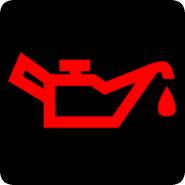 | Typical colour: red. Action: stop safely and switch off the engine immediately.The red oil can warns about insufficient engine oil pressure. If it illuminates or flashes while driving, we should stop as soon as safety permits and turn off the engine. Continuing to run an engine without adequate lubrication can cause serious damage.Check the oil level only using the correct procedure and when safe. A normal level does not prove that oil pressure is satisfactory. Follow the exact message and obtain qualified help before continuing; do not repeatedly restart the engine to test the warning. A pressure warning is different from a routine oil-level check or service reminder. |
Engine Temperature or Overheating Warning
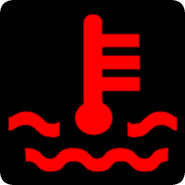 | Typical colour: red. Action: stop safely and obtain assistance before continuing.The thermometer above waves indicates excessive engine temperature. The message centre may also identify engine overheating. We should pull over safely and follow any instruction to switch off rather than continue towards a workshop with the warning active.Never remove a coolant cap while the system is hot or pressurised. Steam, coolant loss or a strong hot smell makes it particularly important to keep clear until the system cools. Replenishing coolant, when appropriate and safe, does not establish why the engine overheated. A recurring warning needs diagnosis, not repeated top-ups. |
Brake System Warning: Red and Yellow Mean Different Things
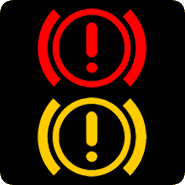 | Action: stop for a red fault warning; arrange prompt inspection for a yellow wear warning.A red brake symbol while driving can indicate low brake fluid or a fault involving electronic brake-force distribution. Stop safely, read the message and obtain help if the warning persists. Do not continue with abnormal braking or assume that topping up fluid has repaired a possible leak.A yellow brake warning can accompany a brake-pad wear message. On the reference XE, illumination without that message can indicate a brake-wear monitoring fault. We should drive carefully only if braking remains normal and arrange inspection promptly. Yellow does not tell us how much pad material remains or guarantee a safe remaining distance. |
Electric Parking Brake Indicator and Fault
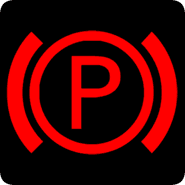 | Typical colour: red. Action: distinguish a steady applied indication from a flashing fault warning.The P inside a circle normally confirms that the electric parking brake is applied. It should clear after the brake is properly released. A flashing parking-brake lamp indicates a detected problem and requires urgent attention.If the brake will not release, do not force the car to move against it. If application cannot be confirmed, do not leave the vehicle assuming it is securely held. Choose a safe, level stopping place where possible and follow the handbook's securing procedure. The parking-brake indicator is separate from the main brake-system warning. |
Battery Charging Warning
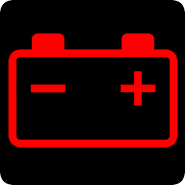 | Typical colour: red. Action: seek qualified assistance urgently if it stays on after starting.The battery-shaped lamp is expected during the ignition check and should go out once the engine runs. Illumination during driving indicates a charging-system fault, normally with an associated message.This does not establish that the battery itself is the only problem. Switch off unnecessary electrical consumers while retaining lights and other equipment required for safety. We should not assume the engine will restart after being switched off or that enough electrical power remains for a long journey. Park safely and seek help if other functions begin failing. |
Seat Belt Reminder
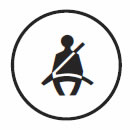 | Typical colour: red. Action: secure the relevant seat belt.The seated figure with a diagonal belt warns that a monitored occupied seat needs its belt fastened. A chime may accompany the reminder while the car is moving.Check passengers as well as the driver, and confirm that each buckle has latched correctly. Objects on the front passenger seat can activate the reminder, so move luggage to a suitable secure location. If the warning remains despite correct belt use and an appropriate seat load, have the system checked. Never use a dummy buckle to silence it. |
Amber Jaguar XE Warning Lights: Faults and Advisories
Check Engine or Engine/Transmission Warning
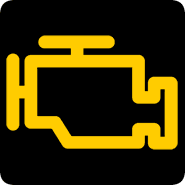 | Typical colour: amber. Action: arrange diagnosis; flashing requires urgent attention.The engine-shaped lamp can indicate an emissions-related problem involving the engine or transmission. A steady warning may be accompanied by reduced performance or a restricted operating mode. Read the message and avoid demanding acceleration.If the lamp flashes, reduce speed and seek qualified help urgently. Persistent rough running, severe power loss, smoke or unusual noises are reasons to stop safely rather than continue testing the car. We should not diagnose a specific sensor or transmission component from the symbol alone. Diagnostic information and appropriate checks are needed to establish the cause. |
Anti-Lock Braking System Warning
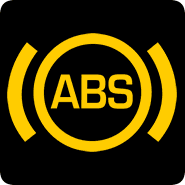 | Typical colour: amber. Action: avoid heavy braking and obtain urgent inspection.An ABS warning that remains on or appears during driving indicates a fault in the anti-lock system. Braking may still be available, but anti-lock assistance should not be relied upon.Increase the space ahead, avoid sudden inputs and have the car inspected. If the red brake warning appears too, or the pedal and stopping response feel abnormal, stop safely and obtain assistance before continuing. We should treat a combination of braking warnings more seriously than an isolated amber ABS indication with otherwise normal operation. |
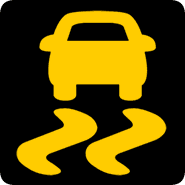 | Typical colour: amber. Action: interpret flashing, steady illumination and the message together.The skidding-car symbol flashes when Dynamic Stability Control, or DSC, is intervening. Ease off and adapt to the grip available. This brief flashing does not normally mean that a component has failed.A steady warning with a DSC-unavailable message indicates that stability assistance cannot be relied upon. A DSC OFF indication instead confirms that the function has been switched off. Restore normal assistance when appropriate for ordinary road driving, and arrange diagnosis if it cannot be restored or a fault message persists. Avoid abrupt steering and acceleration when assistance is unavailable. |
Airbag Warning
 | Typical colour: amber. Action: arrange professional inspection promptly.The seated figure facing a circle relates to the airbag system. If it remains illuminated after the expected check or comes on while driving, the system has detected a fault.We should not assume that all restraint functions remain available. Continue using seat belts correctly and obtain qualified assistance promptly. Do not probe airbag connectors or remove components to try to clear the lamp. A passenger-airbag deactivation status message, where provided, is a separate indication and must be interpreted using the relevant seating and child-restraint instructions. |
Tyre Pressure Monitoring System Warning
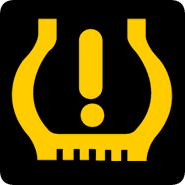 | Typical colour: yellow. Action: stop safely and check the tyres and pressures.The tyre outline with an exclamation mark warns that one or more tyres are significantly under-inflated. Slow down smoothly, find a safe place to stop and inspect for damage. Inflate to the recommended cold pressures for the car's tyre specification and load.Flashing can indicate a monitoring-system fault rather than an ordinary low-pressure condition. On equipped XEs, a temporary spare or a wheel without the appropriate sensor can affect monitoring. Read the message and follow the handbook. Do not use a reset to conceal a puncture, and do not assume a plausible displayed pressure proves the tyre is undamaged. |
Diesel Glow Plug Indicator
 | Typical colour: amber. Meaning: diesel preheating is operating.The coil-shaped symbol illuminates when the glow plugs are active. It is relevant to diesel engines, not the normal starting sequence of a petrol XE. Follow the starting instructions for the car and allow the automatic sequence to complete.If the indication remains unexpectedly, starting becomes difficult or another fault message appears, obtain diagnosis. We should not identify a particular failed glow plug from this icon alone. The lamp's normal role is preheating; an engine-management warning or other diesel message needs its own interpretation. |
Adaptive Front Lighting System Fault
 | Typical colour: amber. Action: have the lighting system inspected.The headlamp-related AFS symbol indicates a fault in the Adaptive Front Lighting System on equipped vehicles. The headlights may still illuminate, but the adaptive feature may not operate correctly.We should arrange inspection and take extra care at night, particularly on bends and unlit roads. Working bulbs do not prove that beam control is functioning normally. If visibility is insufficient, stop somewhere safe rather than relying on high beam as a workaround. Available headlight systems vary with model year and specification. |
Low Outside Temperature or Ice Warning
 | Typical colour: amber. Meaning: road ice may be possible.The snowflake advises that the outside temperature is low enough for ice to be a concern. It is not an engine-cooling fault and does not mean the air conditioning needs repair.Reduce speed where conditions require it, leave more following distance and avoid abrupt braking or steering. Bridges, shaded areas and exposed roads can be slippery even when nearby surfaces look clear. We should not treat the absence of the snowflake as proof that every part of the road is ice-free. |
Diesel XE Messages: DPF and AdBlue
Diesel Particulate Filter Warning: Amber Versus Red
 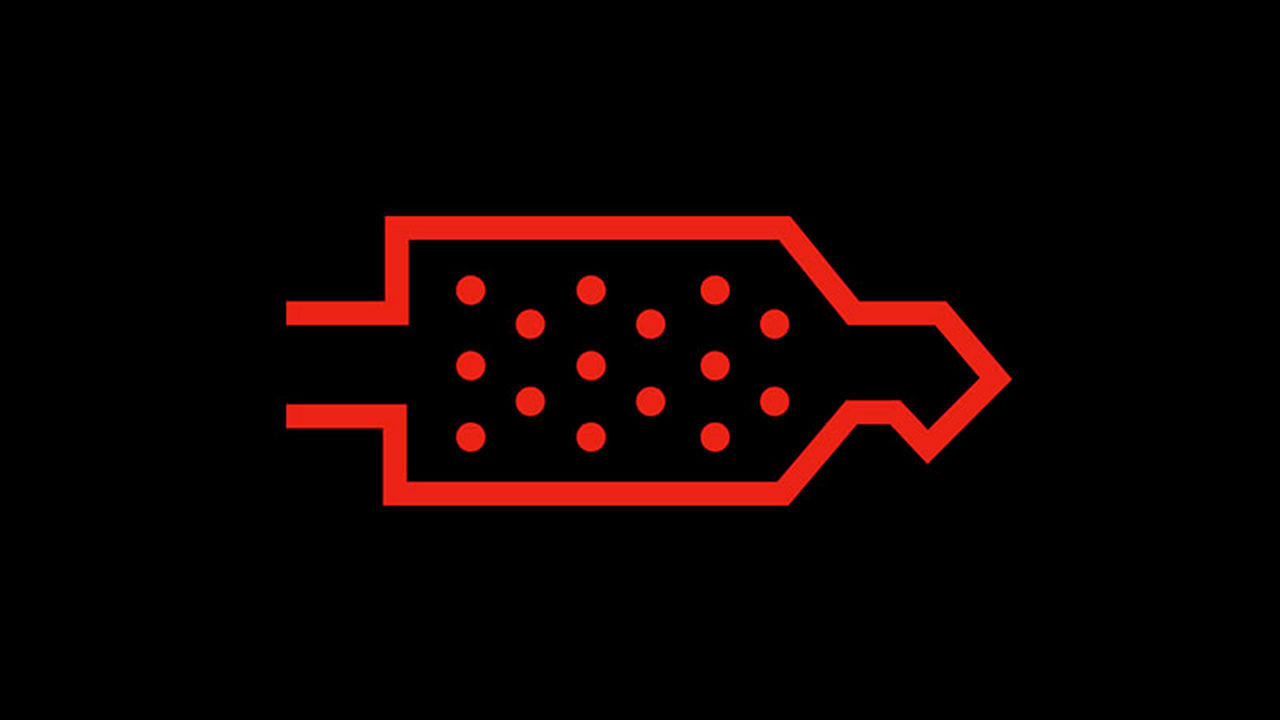 | Action: follow regeneration guidance for amber; contact a repairer promptly for red.An amber DPF warning means that the exhaust filter needs an opportunity to regenerate. Frequent short trips and slow traffic can prevent the engine and exhaust from reaching suitable conditions. If there are no additional serious warnings, follow the model-specific handbook procedure when road conditions and speed limits permit.A red DPF warning indicates that the situation has progressed and needs prompt attention from a Jaguar retailer or qualified repairer. Do not repeatedly attempt regeneration drives after a red warning. The images show Jaguar's filter warning examples; some XE clusters instead display a warning triangle with a DPF message. Persistent warnings or restricted performance need diagnosis. |
How to Respond to an Amber DPF Message
We should first confirm that the message concerns regeneration and that the car otherwise operates normally. Consult the correct handbook for the required driving conditions. Plan a suitable route rather than trying to reproduce a speed or duration in traffic where it is unsafe.
Do not rev the engine while parked as a substitute for the recommended procedure. If the message does not clear after the applicable drive, returns repeatedly or changes to red, arrange inspection. Avoid parking over dry grass or other combustible material because the exhaust can become very hot.
DEF or AdBlue Low: Act Before the Restart Countdown Reaches Zero
Diesel Exhaust Fluid, commonly called AdBlue, belongs in its own reservoir on equipped diesel XEs. A low-level message can progress to a distance countdown and ultimately a warning that the engine cannot restart after it is switched off.
Arrange a correct refill before the countdown expires. The quantity and procedure needed to restore operation depend on the vehicle, so use its instructions. Do not pour DEF into the diesel fuel tank. If it is added to the wrong tank, do not start the engine; obtain assistance.
DEF Quality or System Malfunction Is Different From Low Level
A message reporting incorrect fluid quality or a DEF-system malfunction does not necessarily mean the reservoir is empty. Topping up may not resolve it. Record the exact wording and seek diagnosis, particularly if a restart restriction is approaching.
We should distinguish these messages from a DPF warning. Both involve diesel emissions systems, but they concern different functions and can require different actions. A motorway drive intended to support DPF regeneration is not a general remedy for an AdBlue fault.
Driver-Assistance Symbols That Usually Describe System Status
Lane Departure Warning: Green, Grey and Red
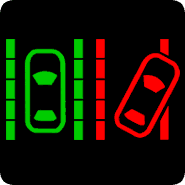 | Meaning: lane recognition and departure status, depending on the display.On the reference XE, green indicates that a lane marking has been recognised, while grey can indicate that the system is enabled but markings have not been recognised. If the car crosses a detected marking without the appropriate indicator, the relevant lane can turn red and the steering wheel may vibrate.We should check the road and correct our position safely. This red lane indication is an immediate driving alert, not automatically a mechanical fault. Poor markings and visibility can limit detection. Later lane-assistance systems may use different graphics or additional states, so check the equipment fitted. |
Automatic Speed Limiter Indicator
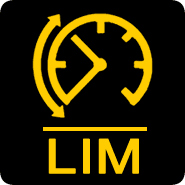 | Typical colour: amber. Meaning: the speed limiter is active.The speedometer-style LIM symbol can confirm that the Automatic Speed Limiter is operating. Its amber colour does not, by itself, indicate a failure.Check the selected limit and understand how the controls work before relying on the feature. We remain responsible for observing road signs and controlling speed in changing conditions. If a separate unavailable or fault message appears, follow that instruction rather than treating it as the normal active indicator. |
Adaptive Cruise Control Follow Mode
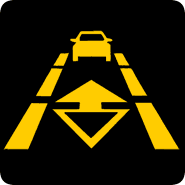 | Typical colour: amber. Meaning: adaptive cruise control is in Follow mode.The vehicle-and-distance graphic indicates that the adaptive cruise system is operating in its following mode. It is a status indication rather than a general engine or brake warning.We should continue monitoring the road, maintain a suitable selected following gap and be ready to brake. The icon is not a guarantee that every obstacle will be detected. If visibility, weather or a system message makes assistance unavailable, take full control and follow the handbook's guidance. |
All Surface Progress Control Indicator
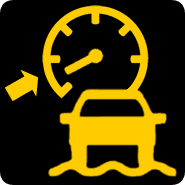 | Typical colour: amber on the reference system. Meaning: progress control is enabled.The progress-control symbol confirms that the relevant low-speed assistance feature has been enabled on an equipped XE. Despite the amber colour, normal illumination does not necessarily mean a fault.Use it only within its intended operating conditions and remain responsible for steering and assessing the surface. It cannot create grip where the tyres have none. A separate failure or unavailable message should be investigated independently from the normal enabled indication. |
Cruise Control Indicator
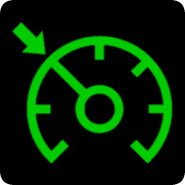 | Typical colour: green. Meaning: cruise control or adaptive cruise control is active.The green speedometer symbol confirms an active cruise-control function. Check the set speed and, where applicable, the following-distance setting rather than relying on the lamp alone.We still need to brake or cancel the system when traffic and road conditions require it. A standard cruise-control indicator should not be interpreted as proof that the vehicle has adaptive braking or every other available assistance feature; equipment differs between XEs. |
Forward Alert Indicator
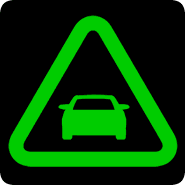 | Typical colour: green. Meaning: Forward Alert is active on equipped vehicles.The triangular car symbol indicates that the Forward Alert function is active. It does not mean that a collision is occurring at that moment, and it is not a substitute for observing traffic.We should understand the warnings and limitations described in the handbook. The absence of an alert does not prove that a closing gap is safe. If the system reports that it is unavailable or obstructed, respond to the message and continue driving with full attention. |
Intelligent Stop/Start Indicator
 | Typical colour: green. Meaning: the engine has been stopped automatically.The A with a circular arrow illuminates when the Intelligent Stop/Start system has shut down the engine in its normal operating sequence. This is different from an unexpected engine stall.The system may leave the engine running when conditions are unsuitable for an automatic stop. That alone is not proof of a fault. Follow any specific malfunction message, and remember that an automatically stopped engine can restart. Switch the ignition fully off before maintenance or working under the bonnet. |
Gear Shift Recommendation
 | Typical colour: green. Meaning: an upshift is recommended where the indicator is provided.The upward-pointing gear-change symbol advises an appropriate shift point. It is a driving aid, not a gearbox-failure warning, and its availability depends on transmission and operating conditions.We should consider traffic, gradient and acceleration needs before changing gear. The recommendation does not override the driver's judgement. If the car reports a transmission fault or cannot select a gear normally, treat that separate message as a problem requiring attention. |
Exterior Lighting Indicators
High-Beam Headlights
 | Typical colour: blue. Meaning: high beams are on or being flashed.The headlamp with straight horizontal rays confirms main-beam operation. Dip the headlights when approaching other traffic or when they could dazzle a driver ahead.If the light appears unexpectedly, check the stalk position and any automatic lighting settings. High-beam assistance has its own operating conditions and display states; the blue indicator tells us that the high beams themselves are illuminated. |
Side Lamps
 | Typical colour: green. Meaning: the side lamps are switched on.The paired-lamp symbol confirms side-lamp operation. It does not automatically mean that dipped-beam headlights are on or that the car has enough illumination for night driving.We should check the lighting selector and actual conditions. Daytime running lights, side lamps and dipped beams have different purposes. An indicator confirming a selected lighting function is also not a substitute for checking that exterior bulbs are working. |
Rear Fog Lamps
 | Typical colour: amber. Meaning: the rear fog lights are selected.The fog-lamp symbol is another example of an amber status indication. Rear fog lights are deliberately bright and can dazzle following drivers once visibility improves.Switch them off when they are no longer appropriate. Do not confuse the normal rear-fog indicator with an adaptive-lighting fault or a message identifying a failed exterior lamp. The correct response depends on which symbol and message are present. |
Direction Indicators and Hazard Lights
  | Typical colour: flashing green. Meaning: a turn signal or hazards are operating.The relevant arrow flashes with the selected turn signal; both sides operate with the hazard lights. Confirm that the indication matches the manoeuvre and cancel it when necessary.If the flashing pattern changes or an exterior lamp is reported faulty, check the lamps. A dashboard arrow alone does not establish that every external indicator is working. Trailer indicators, where applicable, may have a separate monitoring indication. |
Other Jaguar XE Messages We Should Not Ignore
Restricted Performance or Gearbox Fault
Restricted performance describes a limitation, not a diagnosis. It can accompany an engine-related fault and may substantially affect acceleration. Avoid situations requiring rapid merging or overtaking and arrange diagnosis promptly.
If the gearbox will not select drive, behaves unpredictably or the message tells us to stop, secure the car safely and obtain assistance. Do not force repeated gear selections or assume that restarting permanently repairs the problem.
Low Fuel, Washer Fluid and Service Reminders
Refuel promptly after a low-fuel message rather than planning a journey around the last few miles of estimated range. Replenish washer fluid to maintain visibility and arrange scheduled maintenance when a service reminder appears.
These messages have different purposes. Clearing a service reminder does not complete the maintenance, and a service date never overrides an urgent oil-pressure, overheating or braking warning.
What We Should Do When Several Warning Lights Appear
First, assess whether the car remains controllable and whether any message instructs us to stop. Deal with braking, steering, overheating and lubrication concerns before convenience or assistance-system messages. Find a safe stopping place if the situation is unclear.
Once parked, record the wording and the circumstances: cold start, recent tyre work, refuelling, heavy rain or a noticeable change in performance. Systems can share information and electrical supplies, so several warnings do not necessarily mean several unrelated failures. Equally, we should not assume that every cluster of warnings is caused by the battery.
A suitable diagnostic scan helps locate the affected systems. An engine-only reader may not provide the information needed for airbags, braking or other modules. Confirm the cause and repair before clearing codes. Disconnecting the battery or repeatedly restarting can hide useful evidence without fixing the fault.
Conclusion
Jaguar XE dashboard symbols are most useful when we read the image, colour and message together. Stop for urgent engine-protection or braking warnings, distinguish amber faults from active assistance features, and act early on diesel emissions messages. Match the guide to your XE's year and equipment, and investigate recurring warnings rather than relying on resets.
Frequently Asked Questions
1. Can We Drive a Jaguar XE With an Amber Warning Light?
It depends on the symbol and message. An active speed limiter is normal, while an ABS or engine warning needs attention. Continue only when the instructions permit it and the vehicle remains safe. Severe symptoms or a stop instruction take priority over the colour.
2. What Does the Red Triangle Mean on a Jaguar XE?
It means a critical message is available in the message centre. Read that text to identify the system and required action. The triangle alone cannot tell us which part has failed, and dismissing the message does not resolve the underlying condition.
3. Why Does the XE's Tyre-Pressure Light Stay On After Inflation?
Possible explanations include an incorrect pressure for the load, continuing pressure loss, a monitoring issue or a wheel configuration the system cannot monitor normally. Check the tyres and specified cold pressures, then follow the model's instructions. Do not assume every persistent warning only needs a reset.
4. Is an AdBlue Warning the Same as a DPF Warning?
No. AdBlue messages concern the diesel exhaust-fluid system, while DPF messages concern the particulate filter and its cleaning process. Low AdBlue can lead to a restart restriction. Follow the specific message rather than applying the same remedy to both systems.
5. Does a Green Stop/Start Light Mean the Engine Has Failed?
No. It normally confirms an automatic engine stop by the Stop/Start system. An unexpected stall or a specific malfunction message needs separate investigation. Always switch the ignition fully off before maintenance because an automatic stop does not prevent the engine from restarting.
If you want to know other articles similar to Jaguar XE Warning Lights: Complete Guide to Dashboard Symbols and Their Meanings you can visit the category Service and Parts.
MG HS Tyre Pressure Guide: Correct PSI and TPMS

Toyota Yaris Cross Dashboard Symbols

BMW 3 Series Warning Lights: The Complete Guide to Understanding Every Dashboard Symbol

Nissan Qashqai Fuel Tank Capacity: Complete Guide

Suzuki Swift Fuel Tank Capacity: Complete Guide

Mazda CX-5 Weight (2013–2026): Complete Guide in Pounds and KG
Leave a Reply
More content of your interest