
Kia Carnival Fuel Tank Size: Capacity, Range, and Refueling Guide

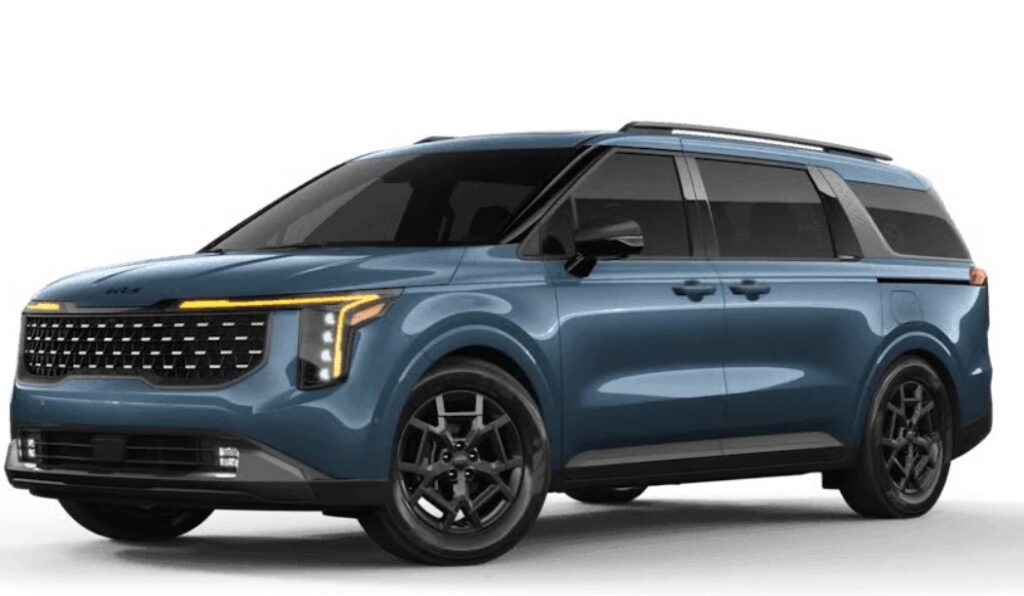
If we are shopping for a family vehicle, fuel tank capacity probably isn't the first specification that grabs our attention. Seating space, cargo room, engine power, safety equipment, and fuel economy usually steal the spotlight. Yet the Kia Carnival fuel tank size becomes surprisingly important once we start living with the vehicle.
Why? Because tank capacity affects how frequently we stop for fuel, how comfortably we can tackle long road trips, and how useful the Carnival feels when carrying an entire family across hundreds of miles.
For current U.S.-market models, the answer is pleasantly straightforward: the 2026 Kia Carnival has a 19.0-US-gallon fuel tank, equivalent to approximately 72 liters. Kia lists this capacity across all gasoline Carnival trims, from LX through SX Prestige.
Interestingly, the Carnival Hybrid doesn't shrink the tank dramatically to make room for its electrified hardware. The 2026 Carnival HEV also carries 19.0 gallons of fuel according to Kia's specifications.
That simple number, however, tells only part of the story. Fuel-tank sizes can differ between generations and international markets, while usable range varies enormously depending on the engine, traffic, driving style, passengers, weather, and load.
So let's dig deeper.
Content in this publication
- What Is the Kia Carnival Fuel Tank Size?
- Kia Carnival Fuel Tank Capacity in Gallons
- Kia Carnival Fuel Tank Size in Liters
- Does Every Kia Carnival Have a 72-Liter Tank?
- 2026 Kia Carnival Fuel Tank Size
- Kia Carnival Hybrid Fuel Tank Size
- How Far Can a Kia Carnival Travel on a Full Tank?
- Why Your Distance-to-Empty Figure Keeps Changing
- City Driving Versus Highway Range
- How Passenger and Cargo Weight Affect Range
- Does Air Conditioning Reduce Kia Carnival Range?
- When Does the Kia Carnival Low-Fuel Light Come On?
- Why a 19-Gallon Tank May Not Accept 19 Gallons at the Pump
- What Fuel Does the Kia Carnival Use?
- Kia Carnival V6 Versus Hybrid: Which Goes Farther?
- How Much Does It Cost to Fill a Kia Carnival?
- How Often Will We Need to Refuel?
- Can Tire Pressure Affect Fuel Range?
- Does Towing Change Fuel Consumption?
- Plan Fuel Stops More Conservatively While Towing
- Older Kia Carnival Fuel Tank Sizes
- How to Find Your Exact Carnival Fuel Capacity
- Is a 72-Liter Fuel Tank Big Enough for the Carnival?
- Ways to Get More Distance From Every Tank
- Is the Kia Carnival Good for Long Road Trips?
- Final Thoughts on Kia Carnival Fuel Tank Capacity
- Frequently Asked Questions
What Is the Kia Carnival Fuel Tank Size?
For the current-generation Kia Carnival sold in North America, the headline capacity is:
- Fuel tank capacity: 19.0 US gallons
- Approximate metric capacity: 72 liters
- Gasoline V6: 19.0 gallons
- Carnival Hybrid: 19.0 gallons
- Recommended U.S. V6 fuel: regular unleaded gasoline, 87 octane or higher
- Drivetrain: front-wheel drive on current U.S. gasoline models
Kia's official 2026 specifications confirm the 19-gallon figure across the gasoline LX, LXS, EX, SX, and SX Prestige trims.
Canadian specifications express the same basic capacity metrically, listing 72 liters for both V6 and hybrid configurations.
In other words, if someone asks us, "How big is a Kia Carnival gas tank?", the quickest answer for a current North American vehicle is roughly 72 liters or 19 US gallons.
But always check the specifications for the exact model year and country before ordering parts, calculating range, or assuming an older Carnival shares the same tank.
Kia Carnival Fuel Tank Capacity in Gallons
A capacity of 19 US gallons puts the Carnival exactly where we would expect a large family MPV to sit.
It isn't trying to carry an enormous truck-sized reservoir. Nor is its tank so small that we're searching for a gas station every afternoon.
That balance matters.
A Carnival is often used differently from a small commuter sedan. We might load it with six or seven passengers, luggage, children's equipment, groceries, sports gear, or everything required for a weekend away.
A reasonable tank capacity gives us enough flexibility to travel substantial distances without turning every journey into a game of "Where's the next gas station?"
Why 19 Gallons Works Well in a Family Vehicle
Think of fuel capacity like the battery size in a phone. Capacity alone isn't everything. Efficiency determines what we can actually do with it.
Two vehicles can hold exactly 19 gallons but travel dramatically different distances.
The Carnival's tank therefore needs to be considered alongside its fuel economy. The regular V6 consumes more fuel than the hybrid, meaning the hybrid can stretch essentially the same tank considerably farther.
That is where things become interesting.
Kia Carnival Fuel Tank Size in Liters
For drivers outside the United States, gallons are about as intuitive as measuring a swimming pool with coffee mugs.
The easier figure is approximately 72 liters.
Kia Canada officially lists a 72-L fuel tank for its 2026 Carnival V6 and Carnival Hybrid comparison.
Converting between units can occasionally produce slight differences because U.S. gallons, imperial gallons, liters, rounding conventions, and published manufacturer specifications aren't interchangeable.
That's why we'd rely on the manufacturer's figure for the market where the vehicle was originally sold instead of mechanically converting a specification found on an overseas website.
US Gallons Versus Imperial Gallons
This distinction catches people surprisingly often.
A U.S. gallon is smaller than an imperial gallon. Therefore, a specification quoted as 19 U.S. gallons won't translate into 19 imperial gallons.
For everyday ownership, that barely matters if we simply use the unit displayed in our owner's manual and local fuel station.
It matters much more when comparing specifications online.
A British, Australian, Canadian, and American webpage may describe essentially the same volume using different conventions. Comparing the raw numbers without checking the units is like comparing miles with kilometers and wondering why one car suddenly seems twice as fast.
Does Every Kia Carnival Have a 72-Liter Tank?
No, and this is an important distinction.
The Kia Carnival name has existed across multiple generations and international markets. Older versions can have different engines, platforms, specifications, and consequently different tank capacities.
For example, historical Australian Carnival specifications have listed an 80-liter fuel tank on older Carnival and Grand Carnival variants.
That doesn't contradict the current 72-liter figure. It simply illustrates why the model year matters.
A search result saying "Kia Carnival tank size 80 L" may be perfectly accurate for one generation while being wrong for a current vehicle.
Model Year Matters More Than Many Owners Realize
Automakers redesign vehicles over time. A new generation can bring changes to virtually everything beneath the body: platform dimensions, suspension layout, engines, emissions systems, hybrid equipment, packaging, and fuel storage.
Consequently, we shouldn't assume a specification from a 2008 Grand Carnival applies to a 2026 Carnival.
When accuracy matters, identify three things first: model year, engine, and original market.
That little habit eliminates most confusion.
2026 Kia Carnival Fuel Tank Size
The 2026 Kia Carnival gasoline model has a 19.0-gallon fuel tank across its U.S. trim lineup.
Kia also specifies a naturally aspirated 3.5-liter V6 producing roughly 287 horsepower and recommends regular unleaded gasoline rated at 87 octane or higher.
So there is no hidden SX Prestige tax here where the luxurious trim suddenly requires a dramatically different tank.
LX or SX Prestige, the published tank capacity remains 19 gallons.
Does Trim Level Change the Fuel Capacity?
For current U.S. gasoline versions, no.
Kia's specification comparison lists 19.0 gallons for LX, LXS, EX, SX, and SX Prestige.
That's convenient for buyers because range comparisons between trims aren't muddied by substantially different fuel capacities.
Real-world range can still vary slightly because wheel size, vehicle weight, equipment, traffic, and driving behavior affect consumption.
The container holding the fuel, however, remains the same nominal size.
Kia Carnival Hybrid Fuel Tank Size
Here's where we might expect a surprise.
Hybrid vehicles need room for batteries, electric motors, electronics, and associated hardware. Sometimes that packaging reduces fuel capacity.
Not here.
The 2026 Kia Carnival HEV also has a 19.0-gallon fuel tank in U.S. specifications.
The major difference is therefore not how much gasoline the vehicle can carry. It is how efficiently it can use that gasoline.
Same Tank, Potentially Much Greater Range
This is the hybrid's party trick.
Picture two runners carrying identical bottles of water. One takes huge gulps every mile; the other sips carefully. Both started with the same amount, but one travels considerably farther before the bottle empties.
The V6 and hybrid relationship works somewhat like that.
Kia Canada's 2026 comparison quotes combined fuel consumption of 11.3 L/100 km for the V6 and 7.2 L/100 km for the hybrid. Those are official Canadian figures rather than guarantees of what every owner will achieve, but they demonstrate how the same 72-liter tank can deliver very different theoretical driving ranges.
How Far Can a Kia Carnival Travel on a Full Tank?
Now we reach the question that matters more than tank capacity itself.
How far will it actually go?
There's no single universal answer.
Range depends on fuel consumption. Fuel consumption depends on conditions. If we spend an afternoon crawling through stop-and-go traffic with the air conditioning blasting and seven people onboard, we shouldn't expect the same result as a steady highway run with a light load.
Still, basic math helps us understand the relationship.
Calculating Approximate Driving Range
The formula is beautifully simple.
For MPG figures:
Tank capacity × fuel economy = theoretical range
Suppose a Carnival returned 25 mpg during a particular journey.
A 19-gallon tank would theoretically produce:
19 × 25 = 475 miles
At 30 mpg:
19 × 30 = 570 miles
But these are mathematical illustrations, not guaranteed Carnival range ratings.
Why the gap between theory and reality?
Because we normally refuel before consuming every last drop.
The vehicle also preserves a fuel reserve, and actual efficiency continuously changes according to conditions.
Why Your Distance-to-Empty Figure Keeps Changing
We've all experienced it.
We leave home and the dashboard says 410 miles remaining. Twenty minutes later, somehow it shows 365 even though we've barely gone anywhere.
Is the Carnival secretly leaking fuel?
Probably not.
Distance-to-empty calculations usually adapt to recent consumption patterns. Hammer the accelerator uphill through heavy traffic and the estimate can fall quickly. Settle into a calm highway cruise and the predicted range may stabilize or even appear more optimistic.
The display is an estimate, not a contractual promise.
Driving Style Makes a Big Difference
A heavy right foot can make even a generous tank feel tiny.
Strong acceleration demands more energy. High-speed cruising increases aerodynamic drag. Repeated braking throws away momentum that we later have to rebuild by consuming more fuel.
Smooth driving isn't merely gentler on passengers. It's usually gentler on the fuel gauge too.
Think of the accelerator as a faucet. We don't need it fully open every time we want water.
City Driving Versus Highway Range
The Carnival's range can look dramatically different depending on where it spends its life.
Traditional gasoline engines generally perform better during steady highway travel than during constant urban acceleration and idling.
The hybrid changes the equation because electrification can recover energy during deceleration and reduce the amount of gasoline required in many stop-and-go situations.
Kia Canada's published 2026 figures illustrate that difference clearly. It lists combined consumption of 11.3 L/100 km for the V6 versus 7.2 L/100 km for the hybrid.
Why Highway Trips Can Feel Easier on Fuel
Once we reach a steady cruising speed, the engine doesn't repeatedly need to accelerate thousands of pounds of vehicle mass from a standstill.
That's why a long motorway journey can sometimes deliver unexpectedly respectable economy from a large family vehicle.
Of course, speed matters.
Driving considerably faster increases aerodynamic resistance. A Carnival has a large body pushing through the atmosphere, so at high speeds the air begins behaving like an invisible wall.
How Passenger and Cargo Weight Affect Range
The Carnival exists to carry people.
Naturally, putting those people inside changes the equation.
Seven adults plus luggage represent substantially more mass than one driver carrying a backpack. The engine has to accelerate that additional weight, climb hills with it, and keep the vehicle moving.
Don't panic, though. We bought a people mover to move people.
The point isn't to leave the kids at home to improve fuel economy. It's simply to understand why a heavily loaded road-trip Carnival might consume more fuel than the same vehicle during an empty weekday commute.
Roof Boxes Can Matter More Than Expected
Cargo mounted outside the vehicle can create another penalty: aerodynamic drag.
A roof box, bicycle rack, or bulky exterior carrier disturbs airflow. At urban speeds the effect may be modest. At sustained highway speeds it can become more noticeable.
It's a bit like jogging with an open umbrella.
If we don't need the roof equipment between trips, removing it can help reduce unnecessary drag.
Does Air Conditioning Reduce Kia Carnival Range?
Yes, although the extent varies.
Climate control requires energy. In hot weather, keeping a large cabin comfortable can demand substantial cooling, particularly after the vehicle has been parked under direct sunlight.
The Carnival's sizable interior is wonderful for passengers but represents plenty of air to heat or cool.
We shouldn't stop using climate control merely to chase a slightly better consumption number. Comfort is part of the reason we bought this kind of vehicle.
Still, extreme temperature settings and extended idling can influence fuel use.
When Does the Kia Carnival Low-Fuel Light Come On?
Drivers sometimes try to turn the fuel warning into an exact secondary fuel gauge.
That's risky.
Rather than assuming the light always means an exact number of gallons remains, we should treat it as what it is: a warning that refueling should happen soon.
Vehicle angle, fuel movement in the tank, sensor behavior, driving conditions, and calibration can influence indicated levels.
Don't Treat the Reserve as Extra Range
Technically, we might be able to continue driving after the warning appears.
Practically, routinely pushing until the vehicle is almost dry isn't a clever fuel-saving strategy.
Running out of fuel beside a highway with a van full of passengers makes that last skipped gas station look suddenly very attractive.
Refueling with a reasonable margin is the less stressful approach.
Why a 19-Gallon Tank May Not Accept 19 Gallons at the Pump
This confuses owners all the time.
Suppose the specification says 19 gallons, yet the pump clicks off after adding only 16 gallons when the dashboard was nearly empty.
Where did the other three gallons go?
They didn't vanish.
A published tank capacity is the tank's nominal total capacity. The dashboard warning and "empty" indication are intentionally conservative. Fuel may still remain when the gauge reaches its lower limit.
Additionally, pump shutoff behavior varies according to nozzle position, fueling speed, tank ventilation, vehicle angle, and other factors.
Should We Keep Pumping After the Nozzle Clicks?
Generally, repeatedly topping off beyond the automatic shutoff is unnecessary.
The system is designed with fuel expansion and vapor management in mind. Trying to squeeze every possible drop into the filler neck doesn't magically give us meaningful extra range.
When the nozzle properly shuts off, that's normally a sensible place to stop.
What Fuel Does the Kia Carnival Use?
For the current U.S. 3.5-liter V6 Carnival, Kia specifies regular unleaded gasoline, 87 octane or higher.
That's good news for operating costs.
A large family vehicle already consumes a meaningful amount of fuel, so avoiding an unnecessary premium-fuel requirement can make ownership less painful.
Higher octane isn't an energy potion.
If an engine is designed to operate on regular fuel, simply buying a more expensive premium grade doesn't automatically produce a dramatic improvement in power, efficiency, or range.
The correct approach is straightforward: follow the fuel recommendation provided for the exact engine and market.
Different Carnival generations and engines can have different requirements, particularly internationally, so the owner's manual remains the final authority.
Kia Carnival V6 Versus Hybrid: Which Goes Farther?
Assuming both versions carry the same nominal 72-liter/19-gallon capacity, the hybrid has a clear theoretical range advantage whenever its fuel economy is significantly better.
That's simple physics and arithmetic.
The V6 has different strengths. Kia Canada's 2026 comparison, for example, emphasizes its greater horsepower and higher towing capacity relative to the hybrid while showing the hybrid's sizeable fuel-consumption advantage.
So the best powertrain depends on what we value.
A family spending most of its time navigating city traffic may appreciate the hybrid's efficiency. Someone prioritizing straightforward V6 performance or greater towing capability may see the conventional engine differently.
Tank Size Doesn't Tell Us Which Powertrain Is Better
This is why specifications shouldn't be read in isolation.
A 72-liter tank isn't inherently good or bad.
We need to ask what engine is feeding from it, how efficiently that engine operates, what work the vehicle is doing, and how much fuel costs where we live.
Only then does tank capacity become meaningful.
How Much Does It Cost to Fill a Kia Carnival?
Fuel prices move constantly, so any fixed dollar figure becomes obsolete quickly.
Fortunately, calculating the cost is easy.
Multiply the amount of fuel needed by the local price per gallon or liter.
If the tank is half empty, we obviously aren't purchasing the full 19 gallons. Likewise, an indicated "empty" tank may still contain fuel, so an actual fill from the warning level won't necessarily equal the complete published capacity.
For budgeting, we can use the nominal 19-gallon or 72-liter capacity as a conservative maximum reference.
How Often Will We Need to Refuel?
This depends more on driving distance and efficiency than tank size.
Someone traveling 15 miles a day could go quite a while between fill-ups. A driver covering 100 highway miles every weekday obviously won't.
Family routines also create unusual consumption patterns.
Monday might involve school runs and traffic. Wednesday might mean an empty commute. Friday could involve seven passengers and baggage. Saturday could become a 300-mile interstate drive.
That's why our personal average matters more than a single published fuel-economy number.
Track Several Tanks Instead of One
One tank tells us very little.
Maybe there was unusually heavy traffic. Maybe the weather was terrible. Perhaps we idled for an hour or took a long highway journey.
Tracking several complete fill-up cycles gives us a much clearer understanding of real-world consumption.
Divide distance traveled by fuel added, or use liters per 100 kilometers depending on the measurement system we prefer.
Over time, patterns emerge.
Can Tire Pressure Affect Fuel Range?
Absolutely.
Underinflated tires increase rolling resistance. In simple terms, the engine has to work harder to push the vehicle along.
A Carnival loaded with passengers, luggage, and incorrectly inflated tires can therefore consume more fuel than expected.
Correct tire pressure also matters for tire wear, handling, and safety, so this isn't merely an efficiency trick.
Use the recommended cold-tire pressure shown for the specific vehicle rather than copying an arbitrary pressure found online.
Does Towing Change Fuel Consumption?
Yes—sometimes significantly.
Pulling a trailer adds both weight and aerodynamic resistance.
The V6 Carnival can be configured for towing within its manufacturer limits, but we shouldn't expect unloaded fuel economy while dragging a trailer behind it.
The size and shape of the trailer can matter enormously. A relatively light but tall trailer can create considerable aerodynamic drag, especially at highway speeds.
It's like the difference between pulling a compact suitcase and pulling a parachute.
Plan Fuel Stops More Conservatively While Towing
When towing, don't base a route on the maximum range we achieved during normal commuting.
Leave a larger fuel margin.
Fuel stations can be farther apart in rural areas, and not every station provides convenient maneuvering space when a trailer is attached.
Range planning becomes part of trip planning.
Older Kia Carnival Fuel Tank Sizes
Here's another reason an article about the Kia Carnival fuel tank size needs context.
Older Carnivals don't necessarily match current vehicles.
Historical Australian Kia Carnival and Grand Carnival documentation, for instance, listed an 80-liter tank on certain older models.
So if we own an older Carnival and discover that its owner's manual says 80 liters, there isn't necessarily an error.
We're simply dealing with a different generation.
Why Online Fuel Tank Figures Sometimes Conflict
Several things cause contradictory search results.
Different countries receive different engines. Generations change. Some websites convert gallons into liters and round the result. Others accidentally reuse specifications from an earlier model.
And sometimes a page simply contains incorrect data.
That's why we'd prioritize information in this order: the exact vehicle's owner's manual, the manufacturer's specifications for the correct market and year, and then trustworthy secondary databases.
A random number in a search snippet should never outrank documentation for the actual vehicle sitting in our driveway.
How to Find Your Exact Carnival Fuel Capacity
If we're dealing with an older, imported, or unusual Carnival configuration, identifying the precise specification is fairly easy.
Start with the model year. Then determine the engine and original sales market. Check the owner's manual and official Kia specification documentation matching those details.
This is particularly important for imported vehicles because the registration year in one country isn't always identical to the original model-year designation.
A little detective work beats filling the wrong assumptions into a range calculator.
Is a 72-Liter Fuel Tank Big Enough for the Carnival?
For most families, yes.
A 72-liter tank offers a sensible compromise. It's large enough to provide useful touring range without burdening the vehicle with an unnecessarily enormous fuel reservoir.
Remember that gasoline itself has weight. Carrying more of it isn't free.
Manufacturers balance range, packaging, weight, crash protection, emissions equipment, interior space, and production cost when sizing the tank.
With the Carnival, 72 liters works particularly well because buyers can choose between the conventional V6 and a considerably more economical hybrid while retaining the same nominal current North American tank capacity.
Ways to Get More Distance From Every Tank
We don't need hypermiling tricks or a laboratory driving style to improve range.
Smooth acceleration, sensible highway speeds, correct tire pressures, timely maintenance, reduced unnecessary idling, and removal of unused exterior cargo accessories can all help.
Perhaps the biggest improvement is simply anticipation.
If we see traffic stopping ahead, there is little reason to accelerate hard toward it. If we're descending a hill, we can let momentum do some of the work. If we're carrying something heavy in the vehicle for months without using it, taking it out removes needless mass.
Small choices accumulate.
Efficiency is rarely one enormous trick. It's a collection of tiny ones.
Is the Kia Carnival Good for Long Road Trips?
Fuel capacity is only one ingredient, but the Carnival makes considerable sense as a long-distance family vehicle.
Its MPV design prioritizes passenger and cargo practicality, while a roughly 19-gallon tank reduces the need for excessively frequent fuel stops.
In the hybrid, improved consumption can make that same capacity feel even more generous.
Of course, anyone traveling with children knows that the vehicle's theoretical fuel range may be irrelevant. The Carnival might be able to continue another 150 miles, but the passengers may demand snacks, coffee, bathrooms, and a stretch long before then.
Sometimes the human tank is smaller than the gasoline tank.
Final Thoughts on Kia Carnival Fuel Tank Capacity
For current North American models, remembering the Kia Carnival fuel tank size is easy: think 19 US gallons or approximately 72 liters.
The 2026 gasoline Carnival uses a 19-gallon tank across its U.S. trim range, and the 2026 Carnival Hybrid carries the same nominal capacity.
That doesn't mean every Carnival ever produced holds 72 liters. Older generations and market-specific versions can differ, with some historical Carnival models carrying larger tanks.
More importantly, capacity alone doesn't determine how often we'll visit a fuel station.
The hybrid can make substantially more efficient use of the available gasoline, while traffic, weather, load, towing, speed, tire pressure, and driving habits can transform real-world range.
Think of the tank as the size of our wallet and fuel economy as how quickly we're spending what's inside. A bigger wallet helps, sure—but spending wisely matters just as much.
Frequently Asked Questions
1. How many gallons does a Kia Carnival hold?
Current U.S.-market 2026 Kia Carnival gasoline models have a 19.0-US-gallon fuel tank. Kia lists the same 19-gallon capacity for the 2026 Carnival Hybrid.
2. How many liters is the Kia Carnival fuel tank?
The current North American Carnival's capacity is approximately 72 liters. Kia Canada officially lists a 72-L tank for both the 2026 V6 and hybrid versions.
3. Does the Kia Carnival Hybrid have a smaller gas tank?
Not on the 2026 U.S. model. Kia lists a 19.0-gallon tank for the Carnival HEV, matching the nominal capacity of the regular gasoline Carnival.
4. Do all Kia Carnival model years have the same fuel tank size?
No. Fuel tank capacity can change between generations and markets. For example, historical Australian Carnival specifications listed an 80-liter tank on certain older Carnival and Grand Carnival models, compared with roughly 72 liters for current North American versions.
5. Why can't I put 19 gallons into my Kia Carnival when the gauge says empty?
The published 19-gallon figure represents nominal tank capacity. The dashboard's empty indication and low-fuel warning generally provide a safety margin rather than meaning literally every usable drop has disappeared. Refueling behavior can also vary with pump shutoff, vehicle angle, and conditions, so the amount added at the pump will not necessarily equal the tank's complete rated capacity.
If you want to know other articles similar to Kia Carnival Fuel Tank Size: Capacity, Range, and Refueling Guide you can visit the category Service and Parts.
Volvo S90 Engine Oil: Type, Capacity & Change Guide
Volvo S90 Boot Space: Size, Capacity and Practicality
SEO Title: Volvo S90 Oil Capacity: Complete Guide by Engine

Kia Sorento Oil Type: Complete Guide by Year & Engine
Kia Sorento Engine Capacity: Complete Guide by Year
Peugeot 308 Clutch Replacement Cost: Complete UK Guide for 2026
Leave a Reply
More content of your interest