Mazda BT-50 warning lights tell us about faults, maintenance requirements, safety reminders and the systems currently operating. We need to consider the symbol, its colour, whether it flashes and any accompanying message. A red oil-pressure warning requires a safe stop; a four-wheel-drive lamp may simply show a selected drive mode.
This guide explains 30 common warning and indicator symbols, with an illustration and practical next steps for each. We cover the powertrain warning, water-in-fuel light, oil-change reminder, DPF warning and the difference between normal drivetrain indications and faults.
Model scope: the main reference is Mazda’s second-generation BT-50 handbook, publication 8FX5-EI-17DT, covering the pre-2020 design. Later BT-50 models use different displays, engine-management arrangements and driver-assistance features. The illustrations are representative standard symbols, including artwork shared with other vehicles, rather than exact reproductions of every BT-50 cluster. Match the meaning and procedure to your vehicle’s year, engine and market.
An urgent fault or safety condition, such as low oil pressure, a brake warning or an unfastened belt. Some status indicators also use red.
Amber or orange
A fault, service requirement, low level, unavailable function or selected operating mode.
Green or blue
Usually confirmation that a feature or lighting function is operating.
Flashing
Meaning varies: stability control may be intervening, a drive mode may be changing or a system may have a fault.
Many lamps briefly illuminate when we switch on the ignition. That normal check is different from a light remaining on after starting or appearing during driving. If a safety-system lamp never appears during its expected check, the system may also need inspection. Stop safely before reading the handbook or photographing a warning.
Red warning lights and immediate safety concerns
Engine oil pressure warning
Red — oil canAn oil-pressure light with the engine running can indicate inadequate lubrication pressure. It is separate from the oil-change reminder, and a correct dipstick level does not prove that pressure is safe.What to do: stop safely, switch off the engine and check the oil level using the handbook’s procedure. Mazda specifically warns against resuming the journey when the light appears despite a correct level. Obtain assistance instead of repeatedly restarting or allowing the engine to idle while the warning remains.
Brake system and parking brake warning
Red — brake symbolThis lamp normally illuminates when the parking brake is applied. If it appears during driving with the parking brake released, it indicates a braking-system problem requiring immediate attention.What to do: reduce speed gradually, use the brakes carefully and stop as soon as safe. Arrange an immediate check. Do not continue with reduced braking, an unusual pedal or an unresolved red warning. Topping up brake fluid without identifying why it is low is not a complete repair.
Battery or ignition warning light
Red — battery symbolThe handbook calls this the ignition warning lamp. If it appears during driving, the charging or electrical supply needs checking; the icon does not establish that the battery itself has failed.What to do: switch off unnecessary electrical equipment and arrange immediate attention. Pull over safely if other symptoms appear or continued operation is uncertain. Do not assume a long drive will recharge the battery when the charging system may be faulty. Diagnose the circuit before replacing parts.
Airbag warning light
Red — person and airbagAn airbag warning during driving indicates a restraint-system malfunction. The related protection may not operate as intended in an accident. It should not be treated as a routine service reminder.What to do: have the system checked promptly by a qualified repairer. Avoid probing connectors, unplugging seat wiring or trying an unrelated airbag-light reset. We should continue using seat belts correctly while arranging the repair, but recognise that a lit warning means the restraint system needs attention.
Seat belt reminder
Red — seat belt symbolThe seat belt reminder tells us that a monitored occupant is not correctly buckled in. Depending on the specification, it may be accompanied by a warning sound once the vehicle moves.What to do: secure every occupant before setting off. If the alert appears incorrectly, stop and check the belt latch and any items resting on a monitored seat. Persistent false warnings need investigation; using a spare buckle to silence the system does not address the cause.
Door open warning
Red — open-door symbol; design variesThis lamp indicates that a monitored door has not been closed properly. Some versions use a vehicle diagram to identify the affected opening. It can appear with a buzzer or another display message.What to do: stop safely and check the doors before continuing. Do not attempt to close or investigate a door while driving. If the warning remains with every opening securely latched, have the latch or detection circuit checked instead of assuming the dashboard lamp is harmless.
Engine, powertrain and diesel-system warnings
Check engine light: malfunction indicator
Amber — engine-shaped lampThe engine lamp indicates a detected engine or emissions-control fault. On the referenced generation, either the engine lamp or the separate powertrain warning can accompany reduced engine power. The shape alone cannot identify the failed component.What to do: arrange an immediate check. If it flashes, reduce speed and avoid hard acceleration or deceleration. If both engine and powertrain lamps illuminate, stop safely as the handbook instructs. Severe shaking, overheating or major power loss also makes continuing inappropriate.
Powertrain warning light
Amber — gear with an exclamation mark on relevant modelsThe powertrain warning is broader than a simple service reminder. On the referenced BT-50, it can indicate a fault affecting engine or powertrain operation. Reduced power may accompany it, so we should not automatically diagnose a failed transmission from the gear-shaped artwork.What to do: reduce load and obtain prompt diagnosis. If it flashes, slow down and avoid abrupt acceleration. If it appears together with the engine malfunction lamp, stop safely and follow the handbook before attempting further travel.
Oil change reminder
Amber — service/wrench-style indication; older dieselsOn the referenced diesel BT-50, this indicator requests an engine oil change because excessive soot has accumulated in the oil. That specific meaning is different from the red oil-pressure warning and from a generic calendar reminder.What to do: arrange the required oil service promptly using the correct specification. Reset the relevant maintenance information only after the service is completed. We should not keep driving indefinitely because the oil level looks normal: oil quantity and oil condition are separate matters.
Water-in-fuel warning
Amber — diesel fuel-filter/water symbolThe water-in-fuel light means excess water has collected in the fuel filter. Mazda’s referenced handbook calls for the water to be drained immediately. This is not a low-fuel or coolant-level warning.What to do: have the water trap serviced promptly using the correct procedure. If you are not familiar with that exact filter and its priming requirements, use a qualified repairer. Do not continue through repeated journeys or open an unidentified fuel fitting simply to extinguish the lamp.
Diesel particulate filter warning
Amber — DPF/filter symbol; equipped dieselsA DPF warning can mean the filter needs conditions that support regeneration. On the referenced older BT-50, an isolated warning has a specified driving procedure. A persistent warning or a DPF lamp accompanied by the engine malfunction light requires inspection.What to do: use the instructions for your exact model. Do not apply one generation’s driving or manual-regeneration procedure to another. Avoid regeneration attempts with serious symptoms or additional fault warnings. Keep the vehicle away from combustible material when hot exhaust temperatures are expected.
Glow plug or diesel preheat indicator
Amber — coil symbolThe glow plug indicator normally shows that diesel preheating is taking place before starting. A brief appearance during the normal starting sequence is not evidence that a glow plug has failed.What to do: follow the handbook’s diesel-starting instructions. If the light behaves abnormally, starting becomes difficult or another warning appears, arrange diagnosis. We should not confuse this coil with the DPF symbol or assume that every diesel warning requires the same repair.
Braking, stability and tyre-pressure indicators
ABS warning light
Amber — anti-lock braking systemAn ABS warning while driving indicates a malfunction. In an ABS-only fault on the referenced model, ordinary braking remains but anti-lock assistance is unavailable. That can change wheel-lock behaviour during an emergency stop.What to do: allow additional distance and have the system checked promptly. If the red brake light also appears or braking feels abnormal, stop safely and seek assistance. Do not extend the ABS-only reassurance to a combination of warnings that may indicate a broader brake problem.
Dynamic Stability Control indicator
Amber — car with skid marksFlashing during driving normally means DSC is actively intervening. If the lamp remains illuminated, or does not perform its expected ignition check, the system may have a malfunction and may switch off.What to do: ease off and adjust speed to the surface when the lamp flashes during intervention. Arrange a check for a persistent warning. Electronic stability assistance does not eliminate the effect of tyre condition, speed, towing load or a slippery road.
DSC OFF indicator
Amber — stability control disabledThis indicator confirms that Dynamic Stability Control has been switched off on equipped versions. It is separate from the flashing intervention indication. If the OFF state is unexpected, the selected setting and accompanying warnings need checking.What to do: restore the normal setting when appropriate, using your handbook. If the system will not reactivate or a fault remains, arrange diagnosis. We should not assume the vehicle has its normal electronic stability assistance while the OFF indication is displayed.
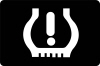
Low tyre pressure warning
Amber — tyre outline with exclamation mark; equipped modelsThis warning calls for checking tyre pressures. On the referenced generation, flashing also requires a monitoring-system check. The system does not replace routine pressure measurements or inspection for tyre damage.What to do: reduce speed smoothly and inspect the tyres safely. Measure cold pressures against the vehicle’s label, accounting for the recommended load setting. Repair a leak or puncture before following any required reset procedure. Do not initialise the system merely to hide a warning without checking the tyres.
Four-wheel-drive and differential-lock indicators
On a BT-50, drivetrain lamps often describe a selected mode rather than a breakdown. The key is whether a change has completed. We should not rely on a requested mode until its indicator confirms engagement, and the exact transfer-control procedure must come from the matching handbook.
Four-wheel-drive indicator
4WD status — equipped modelsThe referenced handbook states that the indicator illuminates in 4H or 4L and flashes while engagement is taking place. Persistent flashing can mean the request has not completed and needs further attention.What to do: follow the correct speed and transmission conditions for the change. Do not force the selector or assume four-wheel drive is engaged while the lamp continues to flash. On part-time systems, avoid locked four-wheel-drive operation on high-grip roads where prohibited by the handbook.
Low-range four-wheel-drive indicator
4L/4LO — low range; artwork variesThe low-range lamp confirms the low-speed transfer setting. On the referenced BT-50 it flashes while 4L engagement is in progress. Low range is intended for suitable low-speed conditions rather than normal high-speed driving.What to do: perform the shift exactly as the handbook requires and wait for the correct confirmation. If the transition does not complete, stop trying unrelated shift sequences and investigate. A flashing low-range lamp should not be interpreted as confirmation that the selected gearing is already available.
Electronic locking differential indicator
Rear differential lock — colour/design varies by generationA steady indication confirms that the rear differential is locked on the referenced model. Flashing can mean an error or an engagement or disengagement request that cannot be completed.What to do: check the specified operating conditions and do not rely on the lock until its state is confirmed. Use it only in the conditions allowed by the handbook and disengage it when no longer required. Avoid high-grip-road operation with the differential locked, and have persistent flashing investigated.
Other reminders and operating indicators
Low fuel warning
Amber — fuel pump symbolThe fuel-pump light means the fuel reserve is low. Any remaining-distance estimate depends on consumption, terrain and load, so it should not be treated as a guaranteed range. The small arrow beside a fuel-pump graphic may identify the filler side.What to do: refuel promptly, particularly before remote driving or towing. Running a diesel completely dry can require a model-specific restart or priming procedure. We should not plan the next fuel stop around the final displayed kilometre of range.
Low washer fluid indicator
Amber — windscreen and sprayThis lamp indicates that the windscreen washer-fluid level is low on equipped versions. It is different from the coolant warning and does not mean fluid should be added to the radiator.What to do: refill the correct washer reservoir with suitable fluid when parked safely. Maintaining washer operation matters when road spray, mud or dust reduces visibility. If the lamp remains on with the reservoir correctly filled, have the level-sensing system checked.
Ice and frost warning
Orange or red — snowflake; equipped older modelsThe referenced BT-50 uses orange between approximately 0°C and 4°C and red below 0°C. It warns about low outside temperature rather than measuring tyre grip or confirming that ice is actually present.What to do: allow extra distance and avoid abrupt inputs. Bridges, shaded roads and exposed surfaces can behave differently from the air-temperature reading. A temperature above the warning threshold does not guarantee that the road is free of ice or other weather hazards.
Immobiliser or security indicator
Red — vehicle and lock; representative illustrationOn the referenced generation, blinking with the key removed can be normal immobiliser status. The indicator can also blink when an incorrect key is inserted. Its meaning depends on whether the vehicle is parked or refusing to start.What to do: use the correct programmed key and follow the handbook’s starting checks if the engine will not start. Do not interpret normal parked blinking as a mechanical fault or attempt to bypass the security system.
Gear shift indicator
Shift arrow — manual transmission versionsThe gear-change indicator recommends a different gear under suitable conditions. It is an economy-driving prompt, not a transmission-fault warning. The illustration may show only an arrow, while some dashboards display additional gear information.What to do: choose a gear appropriate to speed, load and terrain. We should not follow an upshift suggestion blindly when climbing, towing or needing engine braking. A warning about powertrain operation is a separate matter and needs diagnosis.
Cruise control indicator
Normally green when operating; display variesThe cruise-control indicator shows system status on equipped models. It should not be confused with an engine-management lamp. Later adaptive-cruise systems can use additional standby, active and warning displays.What to do: confirm the set speed and stay ready to brake. If cruise control does not behave normally or a fault message appears, stop using it and arrange a check. Always identify which cruise system is fitted before applying advice from a different BT-50 generation.
Lighting and signalling indicators
High beam indicator
Blue — main beam headlightsThe blue headlamp symbol confirms that main beam is on. It is a normal lighting indication rather than a fault in the engine or electrical system.What to do: dip the headlights whenever they could dazzle other road users. Check the stalk position if the indicator remains on unexpectedly. We should not rely solely on automatic lighting features, where fitted, to select the right beam for every situation.
Direction indicators and hazard lights
Green flashing arrowsThe direction arrows flash when a turn signal is selected, and both sides flash when the hazard warning lights operate. This normal flashing has a different meaning from a flashing powertrain warning.What to do: cancel indicators after the manoeuvre and investigate an unusual flash rate or suspected lamp failure. Check exterior lamps while safely parked. During a breakdown, use the hazard lights as appropriate for the location and circumstances.
Front fog lamp indicator
Green — front fog lights selectedThis lamp confirms that the front fog lights are switched on. Not every BT-50 trim has identical lighting equipment, and the status lamp does not indicate that a bulb has failed.What to do: use fog lamps when conditions and local rules justify them, then switch them off when no longer needed. If an exterior fog lamp does not work despite the dashboard indication, inspect the lighting separately once safely parked.
Rear fog lamp indicator
Amber — rear fog light selected; equipped marketsThe rear-fog lamp is an example of an amber indicator that normally reports a selected lighting function. It is not automatically a warning about engine or brake trouble.What to do: switch it off when visibility improves. Rear fog lamps can dazzle following traffic when used unnecessarily. If you are unsure which fog-light function is selected, compare the icon and its colour with the controls and the matching handbook.
Dipped beam or low-beam indicator
Green — equipped display designsThe dipped-beam indication confirms low-beam headlight operation on a dashboard that uses this symbol. Some BT-50 versions use a broader lamps-on indication instead, so the exact design is not universal.What to do: make sure the selected lighting suits visibility and road conditions. Daytime running lights are not always equivalent to full dipped-beam lighting. Check actual exterior illumination if something appears wrong, rather than assuming the status lamp proves every lamp is working.
Why the BT-50 model year matters
The later TF-generation BT-50 has a different instrument layout and additional systems compared with the older handbook used for most entries here. Its warning messages, differential-lock indicator colour, diesel-filter instructions and assistance-system displays must be read using its own manual. A BT-50 badge does not make every reset or regeneration procedure interchangeable.
Newer equipped models may also display lane-support, blind-spot monitoring, emergency-braking, adaptive-cruise or parking-assistance warnings. Read whether the function is switched off, temporarily unavailable or faulty. Keep control of steering and braking, and have a persistent fault checked instead of assuming the older dashboard explanation covers it.
What to do when several BT-50 warning lights appear together
One fault can affect several systems. That does not prove that every system has failed independently, or that the battery must be responsible. The combination of lights, their timing and the vehicle’s behaviour are more useful than guessing from the number of illuminated symbols.
For the referenced older BT-50, the engine malfunction and powertrain lamps together call for stopping safely. Other combinations need their own instructions. Once parked, record the complete display and note whether the problem appeared during starting, acceleration, braking, a gear change or four-wheel-drive selection. Do not photograph the cluster while driving.
Should we reset Mazda BT-50 warning lights?
A reset belongs after the relevant work. Complete the required oil change before resetting its reminder. Correct tyre pressures and repair leaks before any specified pressure-system initialisation. Drain or service a water-contaminated filter using the correct procedure. An engine, restraint or brake fault needs diagnosis instead of simply clearing its light.
Disconnecting the battery or deleting fault codes can remove useful evidence while leaving the underlying issue unchanged. A basic engine-code reader may not access every brake, restraint or drivetrain module. Preserve the warnings and use diagnostic equipment suitable for the affected system when the cause is unclear.
Conclusion
We can understand Mazda BT-50 warning lights more accurately by combining the symbol, colour, flashing behaviour and model-specific instructions. Stop for urgent mechanical warnings, act promptly on diesel contamination and oil-service requests, and recognise normal drivetrain or lighting indications. The handbook for the actual vehicle is essential whenever the display or procedure differs from these representative examples.
References and illustrations: core meanings checked against Mazda’s official BT-50 handbook 8FX5-EI-17DT, particularly the warning-lamp, diesel-filter and driving-system sections. Mazda also publishes a separate TF-generation handbook. Illustrations are representative standard-symbol artwork from DASH-LIGHTS and manufacturer reference illustrations; some originate from other vehicles and differ from the exact BT-50 display.
Frequently Asked Questions
1. What does the powertrain warning light mean on a Mazda BT-50?
On the relevant older generation, it indicates a powertrain-related fault and may accompany reduced power. It does not prove that the transmission itself has failed. Arrange prompt diagnosis, and stop safely if it appears together with the engine malfunction lamp.
2. Can I keep driving with the water-in-fuel light on?
The referenced handbook calls for the water to be drained immediately. Arrange the correct filter service promptly rather than continuing through repeated journeys. Follow the exact model’s drain and priming instructions or use a qualified repairer.
3. Is the oil-change light the same as the oil-pressure light?
No. The oil-change reminder on the referenced diesel concerns oil condition and the need for a service. The red pressure light can indicate inadequate lubrication pressure and requires stopping safely and switching off the engine.
4. Why is the 4WD or 4L light flashing?
Flashing can occur while a mode change is in progress. If it persists, engagement may not have completed. Follow the correct procedure for your vehicle and do not rely on the selected mode until the display confirms it.
5. Do newer BT-50 models use the same warning lights?
Many basic symbols are similar, but the later generation has different displays, systems and procedures. Match the handbook to the vehicle, especially for diesel-filter regeneration, driver assistance, transmission warnings and service resets.
If you want to know other articles similar to Mazda BT-50 Warning Lights you can visit the category Service and Parts.
Auto Guide
I show you the best reviews of all car brands, the information we collect and show is verified by our mechanics, we hope that everything you read here is useful to buy the car of your dreams



























.png)

More content of your interest