

MG HS Dashboard Warning Lights and Symbols


MG HS dashboard warning lights and symbols tell us about faults, safety reminders and functions that are currently selected. To interpret a light properly, we need its shape, colour, whether it is flashing and the message shown beside it. A red oil-pressure warning needs immediate action, while a blue high-beam indicator simply confirms a lighting setting.
This guide explains 27 common symbols with an image and a practical next step for each. We cover engine and brake warnings, tyre pressure, electronic safety systems, parking functions and exterior lighting. We also explain why petrol and plug-in hybrid owners must use the handbook that matches their vehicle.
Applicability: graphics, colours and available systems vary by year, market and specification. Illustrations are representative shared MG or standard dashboard symbols; they are not screenshots of every HS cluster. Some artwork is monochrome. The colour description and your vehicle’s message take priority. Model-specific details below identify the referenced HS plug-in hybrid/EHS manual where relevant; newer HS and Hybrid+ displays can differ.
Content in this publication
- How to read MG HS warning light colours
- Urgent engine, brake and occupant-safety warnings
- Yellow warning lights and system faults
- Engine emissions warning: check engine light
- Tyre pressure monitoring warning
- Anti-lock braking system warning
- Stability control and traction control warning
- Stability control OFF indicator
- System fault message indicator: yellow triangle
- Anti-theft or key-recognition warning
- Electronic parking brake fault warning
- Petrol particulate filter warning
- Parking, cruise control and driving-status symbols
- MG HS headlight and exterior-light symbols
- MG HS petrol and hybrid warnings: important differences
- Why are several MG HS warning lights on at once?
- What should we do when a warning appears?
- Understanding your MG HS dashboard
- Frequently asked questions
How to read MG HS warning light colours
| Colour or behaviour | What it usually tells us |
|---|---|
| Red | Often an urgent fault or safety reminder. A parking brake that is deliberately applied is a normal exception. |
| Yellow or amber | A fault, limitation or condition needing attention. Some yellow indicators show standby or a selected function. |
| Green or blue | Usually confirmation that lighting, assistance or another function is operating. |
| Flashing | Meaning depends on the symbol. Stability-control intervention and an urgent mechanical warning must not be treated alike. |
Colour alone does not tell us whether we can continue. A yellow engine malfunction warning can call for stopping, while a yellow rear fog indicator is normal. If braking, steering or engine behaviour changes, respond to those symptoms as well as the lamp. Read the display only when it is safe to do so.
Urgent engine, brake and occupant-safety warnings
These lights deserve prompt attention. Several appear briefly during a startup check, but an unexpected warning that persists or appears while driving needs its cause identified.
Low engine oil pressure warning
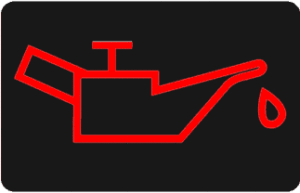 | Red · Oil canAn oil can that stays illuminated with the engine running indicates inadequate oil pressure. We should stop somewhere safe and switch off the engine immediately. Low pressure can damage internal engine parts even if the engine still sounds normal. Check the oil level using the handbook’s procedure and contact an MG repairer. Adding oil only helps when the level is low; a normal level does not rule out a pump, lubrication or pressure-sensing problem. |
Engine coolant temperature warning
 | Red warning · Thermometer over wavesThe thermometer symbol warns that the engine is too hot when it illuminates as an overheating warning. On the referenced HS plug-in hybrid, it can flash as temperature rises further. Stop safely, switch off the engine and obtain assistance. We should not continue just because the car can still accelerate. Never remove a cooling-system pressure cap while hot. Allow the system to cool before any handbook-approved check, and investigate the cause rather than repeatedly topping up coolant. |
Brake system malfunction warning
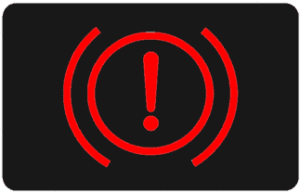 | Red · Exclamation mark inside a circleThe brake warning can indicate fluid loss, an electronic brake-force distribution problem or another braking fault. This is separate from a normal parking-brake-applied indicator. Stop safely, switch off and check the brake-fluid level only as directed in the handbook. Contact an MG repairer immediately. If braking feels weak, the pedal is unusually soft, fluid is leaking or the warning remains unexplained, arrange recovery. We should not regard a fluid top-up as proof that the brakes are safe. |
12-volt battery charging warning
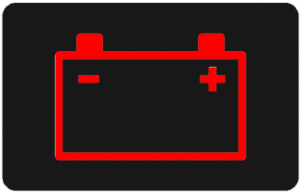 | Red · Battery outlineThis symbol concerns the 12-volt charging system. It is not the same as a plug-in hybrid’s traction-battery charge level. If it remains on after starting or appears during driving, the electrical supply may not be maintained correctly. Reach a safe stopping place and contact an MG repairer promptly. We should avoid assuming that the battery itself is the only possible cause: charging equipment, wiring and connections also need proper diagnosis, with different hardware used across powertrains. |
Electric power steering or steering-lock warning
 | Yellow or red · Steering wheel and exclamation markThe steering warning has several meanings depending on colour and behaviour. The referenced EHS manual associates steady yellow with reduced assistance, while red and flashing indications can identify other steering or steering-lock faults. Stop safely if assistance changes or controlling the car becomes difficult, and seek professional advice. We should not apply one restart routine to every version. A persistent or flashing warning needs the exact cluster message checked, especially when accompanied by a chime. |
Engine malfunction warning
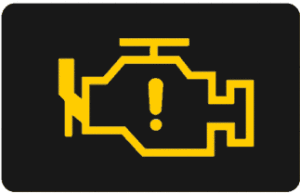 | Yellow · Engine outline with an exclamation markSome MG HS displays distinguish an engine malfunction symbol from the ordinary emissions warning. In the referenced HS plug-in hybrid manual, this engine-fault warning calls for a safe stop, switching off the engine and contacting an MG repairer immediately. It is therefore important not to dismiss it simply because it is yellow. Read the accompanying message and look at the icon carefully. We should avoid heavy acceleration or continued driving while trying to guess the defective component. |
Airbag and restraint system warning
 | Red · Seated person with an airbagThis light indicates a problem in the supplementary restraint system or an associated seat-belt system when it remains illuminated. Airbags or other restraint components may not provide their intended protection during a collision. The referenced EHS handbook instructs the driver to stop safely, switch off and contact a repairer. Keep wearing seat belts, and arrange prompt diagnosis. We should not confuse this fault lamp with a passenger-airbag OFF status indication or try to bypass a seat-occupancy sensor. |
Seat belt reminder
 | Red · Seated figure wearing a beltA steady or flashing seat-belt reminder tells us that an occupant’s belt is not fastened. Secure all passengers before moving, and check any seat-specific information shown on the display. If everyone is correctly belted, look for a heavy bag on a passenger seat or an obstruction around a buckle. Do not use dummy buckle inserts to silence the warning. If it persists without an obvious cause, have the restraint system checked. |
Yellow warning lights and system faults
A persistent fault light needs diagnosis. We should use the message and vehicle behaviour to decide whether to stop immediately or arrange an inspection, rather than guessing from the colour.
Engine emissions warning: check engine light
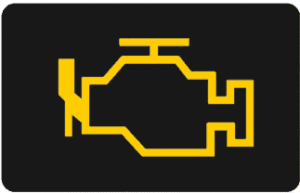 | Yellow · Engine outlineThe plain engine outline generally identifies an emissions-related engine fault. Arrange diagnosis as soon as possible; this symbol cannot tell us whether the issue is a sensor, ignition fault or another component. If it flashes or appears with rough running, overheating, major power loss or a stop instruction, pull over safely and seek assistance. Keep the distinction from MG’s separate engine malfunction warning in mind. Clearing the code without repairing the cause can hide useful diagnostic evidence. |
Tyre pressure monitoring warning
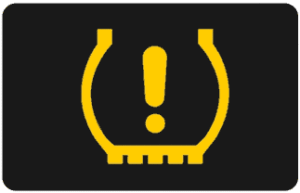 | Yellow · Tyre outline and exclamation markA steady TPMS light usually means a tyre pressure is low. Park safely, inspect the tyres and measure every pressure against the cold-pressure label fitted to the car. Do not use the maximum figure on the tyre sidewall as the recommended setting. If the lamp flashes before remaining on, the monitoring system may have a fault. We should check pressures manually even then, because an unavailable sensor does not tell us whether its tyre is properly inflated. |
Anti-lock braking system warning
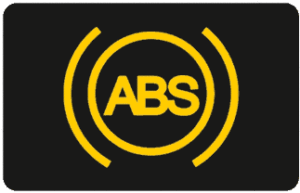 | Yellow · ABSAn illuminated ABS fault lamp means anti-lock assistance may be unavailable. The referenced HS manual explains that normal braking can remain available, but wheels may lock during hard braking. Increase the following distance, avoid abrupt braking and arrange inspection promptly. A red brake warning appearing at the same time makes the situation more serious. We should stop safely and obtain advice rather than assuming the braking system is healthy because the pedal initially feels normal. |
Stability control and traction control warning
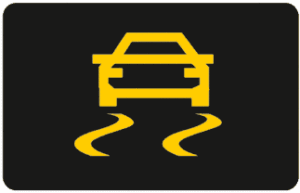 | Yellow · Car with skid marksFlashing during driving can mean the stability or traction system is actively helping manage grip. Ease off and drive smoothly, particularly on wet or slippery roads. A light that remains on can indicate a fault and needs diagnosis. MG commonly refers to these functions as SCS and TCS. We should not confuse normal intervention with a malfunction, but repeated intervention on a dry straight road or a persistent warning deserves attention. |
Stability control OFF indicator
 | Yellow · Skidding car with OFFThis indicator shows that stability or traction control has been manually switched off, subject to the equipment and setting. For normal road driving, we generally want the system enabled. Check whether its control was pressed and restore the normal setting using the handbook. If the light will not clear, or a separate stability fault remains, arrange inspection. The OFF indicator does not mean extra grip is available; it means some electronic assistance has been disabled. |
System fault message indicator: yellow triangle
 | Yellow · Triangle with an exclamation markThe triangle alerts us to a warning recorded in the instrument-pack message system. It does not identify one particular mechanical fault. Open the relevant message display when parked and read the full wording before deciding what to do. A sensor obstruction, an assistance-system fault and an urgent powertrain message require different responses. Photograph the message while stationary so the workshop can see it even if it disappears after the next start. |
Anti-theft or key-recognition warning
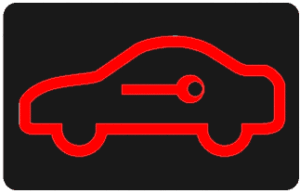 | Red · Car and keyOn the referenced EHS, a steady red warning can mean that a valid key has not been detected, while flashing can indicate a low remote-key battery in the relevant operating state. Make sure the correct smart key is inside the vehicle. If necessary, use the alternative starting procedure in your own handbook; the key’s backup position varies by model. We should avoid repeated guessing and request assistance if the vehicle still cannot recognise an authorised key. |
Electronic parking brake fault warning
 | Usually yellow · Parking-brake fault symbolA parking-brake fault indication is different from the ordinary red P showing that the brake is applied. The exact graphic varies, and some displays use a crossed or fault-marked parking symbol. Read the message and arrange inspection if the system reports a failure. We should not assume the vehicle is securely held when the parking brake has not confirmed engagement. Park on level ground where possible and follow the handbook’s securing instructions; never force a stuck brake to release. |
Petrol particulate filter warning
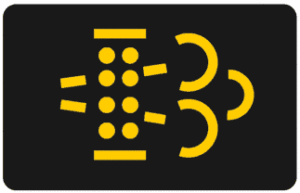 | Yellow · Filter with particlesWhere fitted, this warning means the exhaust particulate filter needs attention. A steady lamp can call for regeneration under the specific driving conditions in the handbook, while a flashing lamp can indicate a more serious restriction requiring a repairer. We should not copy a regeneration speed or duration from a different MG engine. If there are other engine warnings, substantial power loss or an unsafe driving situation, seek advice before attempting a regeneration drive. |
Parking, cruise control and driving-status symbols
These indicators can describe normal operation. A changed colour, flashing state or accompanying fault message can change their meaning.
Parking brake applied and Auto Hold status
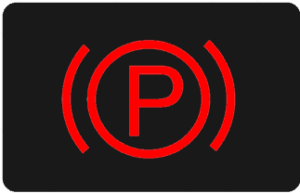 | Red or green · Parking-brake status indicationOn the referenced EHS cluster, red confirms that the electronic parking brake is applied, while green indicates Auto Hold is holding the vehicle. A flashing red indication requires attention rather than being treated as normal engagement. Release the parking brake as instructed before moving. Auto Hold is a convenience when temporarily stopped; it is not a substitute for correctly parking and securing the vehicle before leaving the driver’s seat. |
Hill descent control indicator
 | Green or yellow · Vehicle descending a slopeOn equipped versions, steady green means hill descent control is in standby, while flashing green indicates that it is actively helping control the descent. Yellow can indicate a fault. The referenced EHS manual also associates flashing yellow with overheated brakes and disabled operation. We should choose a suitable speed and maintain control ourselves. If the system is unavailable, do not continue down a difficult slope on the assumption that it will automatically manage braking. |
Cruise control indicator
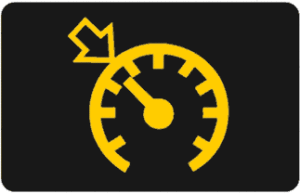 | Green or yellow · Speedometer-style symbolCruise-control graphics differ between conventional and adaptive systems. Yellow commonly identifies a selected or standby state, while green indicates active control, but the exact message matters. A fault warning is a separate condition that needs attention. We should keep watching traffic and be ready to brake at all times. Adaptive cruise can also become unavailable when relevant sensors are obstructed; a displayed cruise icon does not mean the vehicle can drive independently. |
Low fuel warning
 | Yellow · Fuel pumpThe fuel-pump symbol means the remaining fuel is low. Refuel soon rather than relying on a fixed reserve distance. On the referenced EHS, the lamp can flash as the level falls further. Hills, road conditions and consumption affect the displayed range. Plug-in hybrid owners should also take the petrol warning seriously: having battery charge available does not make it sensible to ignore a nearly empty tank or an instruction to refuel. |
MG HS headlight and exterior-light symbols
Lighting indicators help us confirm what has been selected. Check the actual lamps if visibility is poor or another road user reports a problem.
Main beam or high beam indicator
 | Blue · Headlamp with straight raysThe blue headlamp confirms that the high beams are on, including when we flash them. It is a normal status indicator rather than a fault. Dip the headlights as needed to avoid dazzling other road users. Vehicles with automatic main beam have a separate indication for that function. We should still monitor actual lighting and intervene when conditions require, because an automatic system cannot make every visibility judgement for us. |
Dipped beam indicator
 | Green · Headlamp with downward raysWhere the cluster displays it, this symbol confirms that the dipped headlights are on. It does not mean the high beams are selected. We should distinguish proper headlights from daytime running lights, especially in rain, fog or fading light. If the road is poorly lit despite the indicator, check the actual lamps and lighting settings. A dashboard status light cannot guarantee that every exterior bulb or LED unit is functioning correctly. |
Side lamp indicator
 | Green · Two outward-facing lampsThis symbol confirms that the side lamps are switched on. Side lamps make the vehicle more visible but are not a substitute for dipped headlights when we need to illuminate the road. If this is the only lighting indicator visible at night, check the lighting control and the actual headlamps. Automatic lighting settings still need supervision when weather or ambient light changes, particularly where daytime running lights can give a misleading impression of full lighting. |
Front fog lamp indicator
 | Green · Fog lamp symbolWhere front fog lamps are fitted, the green symbol shows that they are switched on. Use them according to visibility and local requirements. The fog-lamp graphic includes a wavy line that distinguishes it from the ordinary dipped-beam symbol. We should not assume that every HS trim has separate front fog lamps; lighting equipment changes across generations and markets. A selected light is normally a status condition, not an electrical-system fault. |
Rear fog lamp indicator
 | Yellow · Rear fog symbolThe rear fog indicator is yellow even when the lamp is operating normally. It confirms that the high-intensity rear fog light is on, rather than reporting a fault. Switch it off when visibility improves to avoid dazzling following drivers. Front and rear fog symbols differ, so check which control is selected. We should use the actual conditions and local rules when deciding whether rear fog lighting is appropriate. |
Direction indicators and hazard lights
 | Green · Left and right arrowsA flashing arrow follows the selected turn signal. Both arrows flash when the hazard lights are operating. An unusually rapid flash can indicate a failed turn-signal lamp, although some repeater failures do not change the rate. Check the exterior lights when safely parked and repair any fault. We should cancel an unintended indicator promptly, because other road users may interpret it as a planned turn even if our vehicle keeps moving straight ahead. |
MG HS petrol and hybrid warnings: important differences
Identify the powertrain before following advice
An HS plug-in hybrid has a petrol engine as well as an electric drive system. Engine warnings still matter even when we often drive using battery power. Its 12-volt charging warning also differs from information about the high-voltage battery. Hybrid+ and plug-in hybrid versions should not be treated as identical: charging arrangements, operating logic and displayed warnings can differ.
Read electric-drive and charging messages exactly
Plug-in models add readiness, charging and electric-powertrain information that is not included in the common-symbol catalogue above. A vehicle can be ready to move while its petrol engine is silent. In the referenced EHS manual, a yellow power-system fault indicates limited power, while a red power-system fault calls for a safe stop, switching off and immediate assistance. Use the exact message and your handbook for these warnings. Do not touch orange high-voltage cables or attempt electrical repairs.
Why are several MG HS warning lights on at once?
Multiple warnings do not necessarily mean that every named system has failed independently. A fault affecting shared information or electrical supply can make several features unavailable. However, that is a possibility for diagnosis, not a reason to assume every cluster of warnings is “just the battery”. Note all messages, any change in vehicle behaviour and whether the problem started after maintenance, a flat battery or poor weather.
When a brake or steering warning accompanies assistance-system warnings, deal with the control-related warning first. Once safely parked, take clear photographs of the display. A workshop can then check the appropriate systems and stored fault codes. A basic engine-code reader may not provide access to every brake, restraint, body or driver-assistance module.
What should we do when a warning appears?
Find a safe place before investigating
Keep control of the vehicle, avoid sudden inputs and stop safely when the warning or symptoms require it. Do not try to navigate instrument menus or take photographs while driving. Smoke, a burning smell, impaired braking, overheating or substantial loss of power makes prompt action more important, regardless of the lamp colour.
Separate the startup check from a persistent fault
Many lamps illuminate briefly when the vehicle is switched on. Some stay on until the engine starts, the drive system becomes ready or a normal condition is cleared. We should investigate a lamp that remains on unexpectedly, reappears during a journey or is accompanied by a fault message. There is no single self-test duration that applies to all symbols and generations.
Check simple causes and preserve fault information
When parked, we can check seat belts, tyre pressures, fuel level, selected lighting and visible sensor obstructions. Driver-assistance warnings may relate to a dirty or obscured sensor, but the display should guide the check. Do not clear codes or disconnect the battery simply to make the lights disappear. Record the warning first and arrange proper diagnosis if it persists.
Understanding your MG HS dashboard
We get the most reliable interpretation by matching the symbol with its colour, behaviour and message. Respond immediately to urgent engine or braking warnings, investigate persistent system faults and learn which indicators simply confirm a selected function. Keep the correct owner’s manual available so an unfamiliar MG HS dashboard symbol can be matched to the exact vehicle rather than a similar-looking cluster.
Frequently asked questions
1. What does the yellow triangle mean on an MG HS?
It is generally the system fault message indicator, drawing attention to a warning stored in the instrument display. Read the accompanying message to identify the cause. The triangle alone does not tell us which part has failed or whether it is safe to continue driving.
2. Can we drive an MG HS with an engine warning light on?
The exact symbol matters. MG distinguishes an engine malfunction warning from an emissions-related warning on some HS versions. The referenced EHS manual calls for stopping safely and switching off for the engine malfunction warning. Persistent emissions warnings also need diagnosis, and severe symptoms or a stop instruction mean we should obtain assistance.
3. Why is the MG HS tyre pressure light still on after inflation?
Check all tyres using the vehicle’s cold-pressure label and inspect for a continuing leak. Follow the update or learning procedure specified for that model. A lamp that flashes before remaining illuminated can indicate a TPMS fault. Do not assume that every HS uses the same reset button or menu sequence.
4. Is a red parking brake light always a fault?
No. A steady red parking-brake indicator normally confirms that the brake is applied. On the referenced EHS, a flashing red indication can mean a fault, while green can indicate Auto Hold operation. If the brake will not release, the vehicle moves unexpectedly or a fault message appears, secure the car and seek assistance.
5. How do we reset MG HS dashboard warning lights?
The underlying condition must be resolved first. A seat-belt reminder clears when the belt is properly fastened, while a mechanical or electrical fault needs diagnosis and repair. A service-interval reset is not a repair for a fault lamp. Use the model-specific handbook and avoid repeatedly clearing codes without finding the cause.
Reference and image notes: Model-specific interpretations checked against the MG HS 2023 owner’s manual and the MG EHS English owner’s manual, especially its warning-light section. Obtain the matching handbook through MG’s owner-manual service for other generations. Representative shared MG artwork is from DASH-LIGHTS; standard seat-belt, lighting, fuel and stability-OFF symbols use manual-reference artwork. Illustrations are for recognition and do not establish that a feature is fitted to every HS.
If you want to know other articles similar to MG HS Dashboard Warning Lights and Symbols you can visit the category Service and Parts.
Volvo S90 Engine Oil: Type, Capacity & Change Guide
Volvo S90 Boot Space: Size, Capacity and Practicality
SEO Title: Volvo S90 Oil Capacity: Complete Guide by Engine

Kia Sorento Oil Type: Complete Guide by Year & Engine
Kia Sorento Engine Capacity: Complete Guide by Year

Peugeot 308 Clutch Replacement Cost: Complete UK Guide for 2026
Leave a Reply
More content of your interest