

Nissan Frontier Gas Type: Complete Fuel Guide for Every Generation

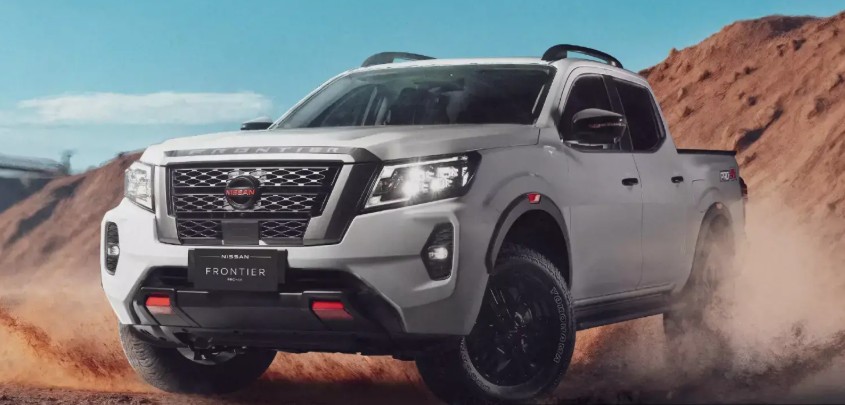
Choosing the correct Nissan Frontier gas type sounds like one of those questions that should have a five-second answer. Pull into the station, choose regular, fill the tank, and drive away. Easy, right?
Usually, yes. But when we look across every Nissan Frontier generation, the answer becomes a little more interesting. Different engines, changing fuel standards, flexible-fuel versions, ethanol compatibility, and even different octane-labeling systems around the world can turn a simple trip to the pump into a surprisingly confusing exercise.
For most U.S.-market Nissan Frontiers, regular unleaded gasoline is the practical answer, and many models specify at least 87 AKI octane, equivalent to approximately 91 RON in countries that use the Research Octane Number system. Nissan's own Frontier documentation confirms an 87-AKI/91-RON minimum for numerous model years.
However, there are exceptions and historical wrinkles. Some older engines had different recommendations, certain Frontier models were manufactured as Flexible Fuel Vehicles, ethanol limits have changed between engines, and Frontiers sold outside the United States may have completely different powertrains—including diesel engines.
So rather than giving you a one-line answer that works most of the time, we're going to cover the Nissan Frontier fuel question properly.
Content in this publication
- What Gas Does a Nissan Frontier Take?
- Understanding 87 AKI vs 91 RON
- Nissan Frontier Gas Type by Generation
- Third-Generation Nissan Frontier Gas Type
- Does a Nissan Frontier Need Premium Gas?
- Can You Put 89 Octane in a Nissan Frontier?
- Can You Put 91 or 93 Octane in a Nissan Frontier?
- Nissan Frontier and Ethanol Fuel
- What About Diesel Nissan Frontiers?
- What Happens If You Use Lower-Octane Gas?
- What If You Accidentally Put Premium in the Tank?
- What If You Accidentally Use E85?
- Does Towing Mean You Should Use Premium Fuel?
- Does High Altitude Change the Recommended Gas Type?
- Does Regular Gas Mean Cheap Gas?
- Should We Use Fuel Additives in a Nissan Frontier?
- How to Find the Correct Fuel for Your Exact Frontier
- Nissan Frontier Gas Type for Used-Truck Buyers
- Is 87 Octane the Best Gas for a Nissan Frontier?
- Best Fuel Habits for Nissan Frontier Owners
- Does Fuel Type Affect Nissan Frontier Reliability?
- Nissan Frontier Gas Type: The Bottom Line
- Frequently Asked Questions About Nissan Frontier Gas Type
What Gas Does a Nissan Frontier Take?
For the majority of gasoline-powered Nissan Frontiers, regular unleaded gasoline with at least 87 AKI octane is appropriate.
That corresponds to roughly 91 RON, which is important because fuel pumps aren't labeled the same way everywhere. American and Canadian stations generally display AKI, while many countries in Europe, Latin America, Australia, and elsewhere display RON.
Nissan's 2013 Frontier owner's manual, for example, explicitly specifies regular unleaded gasoline rated at least 87 AKI, equivalent to 91 RON.
That gives us our basic rule:
| Frontier situation | Typical fuel choice |
|---|---|
| Most U.S. gasoline Frontiers | Regular unleaded |
| Common minimum octane | 87 AKI |
| Approximate RON equivalent | 91 RON |
| Premium 91–93 AKI | Usually unnecessary unless specifically recommended |
| Leaded gasoline | Never |
| E85 | Only designated Flex Fuel versions |
| Diesel Frontier | Diesel only |
| Modified/tuned engine | Follow tuner requirements |
The owner's manual and fuel-filler information for your exact truck always outrank a general chart like this. Nissan itself maintains an extensive archive of Frontier owner's manuals covering models dating from the 1990s through current trucks.
Understanding 87 AKI vs 91 RON
Here's where Frontier owners outside the United States sometimes get unnecessarily worried.
Someone reads online that the truck requires "87 octane." They arrive at their local station and see nothing lower than 91 or 95. Suddenly it looks as though the fuel recommendations make no sense.
They do. The measuring systems are simply different.
What Does AKI Mean?
AKI stands for Anti-Knock Index. It is the octane-number system commonly displayed on fuel pumps in the United States and Canada.
When we talk about:
87 regular, 89 mid-grade, and 91 or 93 premium
we're normally talking about AKI.
What Does RON Mean?
RON means Research Octane Number.
Many countries advertise gasoline using this measurement instead. A fuel labeled 91 RON isn't equivalent to American 91-octane premium.
Instead, approximately:
87 AKI ≈ 91 RON.
Nissan illustrates exactly this relationship in its Frontier documentation, specifying 87 AKI alongside 91 RON.
Why This Matters When Traveling
If you've imported a U.S.-spec Frontier or are reading an American owner's manual outside North America, don't blindly match the number printed online to the number at your local pump.
Match the octane measurement system first.
Otherwise, you're comparing inches with centimeters and wondering why the ruler looks wrong.
Nissan Frontier Gas Type by Generation
The Frontier name has covered several generations and a considerable variety of powertrains. For a reader researching a used truck, looking at the generation matters more than simply asking whether "the Frontier takes regular."
First-Generation Nissan Frontier Gas Type
The North American Frontier appeared for the 1998 model year and evolved significantly during its first generation.
Engines varied and included four-cylinder and V6 configurations, while some trucks also received supercharged engines.
This is the period where we should be most cautious about universal fuel advice.
Later Nissan guidance and dealer material commonly identify modern Frontiers as regular-fuel trucks, while some older V6 configurations had different premium-fuel recommendations. Therefore, owners of early Frontiers—particularly unusual or supercharged versions—should verify the fuel requirement printed in the truck's original manual rather than assuming today's 87-octane recommendation applies retroactively. Nissan's official publications archive contains Frontier manuals dating back to 1996/1997-era documentation and the earliest Frontier-branded model years.
If you're buying a twenty-plus-year-old Frontier, checking this costs nothing and prevents an avoidable mistake.
Second-Generation Nissan Frontier Gas Type
The second-generation Frontier is where the situation becomes much easier.
For many models from this era, Nissan specifies 87 AKI regular unleaded gasoline, or approximately 91 RON.
The 2013 Frontier owner's manual explicitly states that requirement. Nissan repeated the same 87-AKI recommendation in its 2016 Frontier documentation.
This generation offered engines including the QR25DE four-cylinder and VQ40DE V6 during portions of its production run.
For the everyday owner, that means expensive premium fuel usually isn't necessary simply because the truck has a V6.
And that's useful because a Frontier may drink a respectable amount of fuel when towing, carrying cargo, driving off-road, or fighting city traffic. Paying extra per gallon for octane the engine doesn't require is like buying hiking boots for your sofa: impressive perhaps, but not particularly useful.
2019 Frontier Fuel Differences Worth Knowing
The 2019 Frontier owner's manual reveals an important detail that shows why ethanol compatibility can't always be generalized across an entire generation.
Nissan gave different ethanol guidance depending on engine.
The manual states that VQ40DE models should not use E15 or E85, while QR25DE guidance allows different ethanol compatibility. It also distinguishes properly labeled Flexible Fuel Vehicle versions capable of operating on E85.
That's exactly why we shouldn't treat "87 octane" and "ethanol percentage" as the same question.
Your gasoline can meet the correct octane rating yet still contain an ethanol blend your particular Frontier wasn't designed to use.
Third-Generation Nissan Frontier Gas Type
The redesigned modern Frontier uses Nissan's 3.8-liter V6 in the U.S. market.
Regular gasoline remains the normal choice for modern Frontier ownership. Nissan continues to publish dedicated owner's manuals for the latest Frontier model years, including 2024, 2025, and 2026, through its official technical-publications system.
For owners, the important lesson isn't complicated:
Use the grade prescribed by your model-year manual rather than assuming that a powerful V6 automatically demands premium.
Modern engine management can deliver strong truck performance without requiring sports-car fuel.
The PRO-4X badge may sound as though the truck needs premium.
It doesn't automatically mean that.
PRO-4X describes an off-road-oriented Frontier configuration, not a special high-octane fuel requirement in itself. Current Frontier guidance continues to center around regular gasoline rather than making premium fuel part of the PRO-4X ownership experience. Recent Nissan-dealer guidance likewise identifies newer Frontier models as designed around 87-octane gasoline.
So don't see aggressive tires, skid plates, and off-road styling and assume the pump needs to say "premium."
The engine—not the badge—determines the fuel requirement.
For most Frontier owners, no.
If your manual calls for regular 87 AKI gasoline, filling the tank with 91 or 93 doesn't magically unlock hidden horsepower.
Octane measures a fuel's resistance to abnormal combustion or knocking. It is not a general measurement of gasoline quality.
That distinction matters.
In a Frontier designed specifically for regular fuel, don't expect meaningful performance improvement simply from choosing premium gasoline.
The engine is calibrated around its intended fuel requirements.
Higher octane becomes valuable when an engine's compression, boost, ignition timing, or calibration requires greater knock resistance. Otherwise, you're paying more for a property the engine may not need.
Think of octane like sunscreen SPF. More isn't automatically useful in every situation just because the number is larger.
Using higher-octane unleaded gasoline normally isn't the same kind of mistake as using an incompatible fuel.
But if your Frontier only asks for regular, premium mostly risks hurting your wallet.
Over twelve months of frequent driving, that price difference can become surprisingly large.
Can You Put 89 Octane in a Nissan Frontier?
If your Frontier's minimum is 87 AKI, using 89-octane gasoline exceeds that minimum.
The more relevant question is: why would we?
If 87 from a reputable station is available and meets Nissan's specifications, 89 doesn't usually offer a compelling reason to spend more.
There may be practical situations where 89 is simply what's available, and choosing a higher octane than the stated minimum avoids going below the requirement.
But we shouldn't confuse "safe to use" with "worth paying extra for."
Can You Put 91 or 93 Octane in a Nissan Frontier?
Again, a higher octane number isn't automatically a problem when we're talking about compatible unleaded gasoline.
But unless your particular engine, modification, tune, or owner's manual calls for it, the financial benefit is questionable.
If your Frontier requires only 87, we would normally choose quality 87-octane gasoline over premium merely for the sake of buying premium.
Nissan Frontier and Ethanol Fuel
This is where things get more complicated than the octane sticker.
Ethanol content matters independently of octane.
Nissan's historical Frontier manuals specifically warn owners about using incompatible high-ethanol fuels, and some model years have different limits depending on engine.
Can a Nissan Frontier Use E10?
E10 gasoline contains up to roughly 10% ethanol and has become common at North American fuel stations.
Many Frontier models were designed to operate on appropriate oxygenated gasoline within the limits Nissan published for those vehicles.
For example, Nissan's 2013 manual permitted compatible oxygenate blends while setting limits on their composition.
For an older truck, however, we would still verify the original manual rather than assuming every vehicle manufactured under the Frontier name has identical ethanol tolerance.
Can a Nissan Frontier Use E15?
Not universally.
And this is an important distinction.
The 2013 Frontier manual specifically warns against E15 for the vehicles it covers.
By 2019, Nissan's Frontier guidance differentiated between engines: its owner's manual warns against E15/E85 in VQ40DE models while providing different guidance for QR25DE-equipped trucks.
Therefore, the answer to "Can I run E15 in my Frontier?" depends on year and engine.
Don't guess from octane alone.
Can a Nissan Frontier Use E85?
Only use E85 when your specific Frontier is clearly identified as a Flexible Fuel Vehicle (FFV) capable of using it.
Nissan's documentation explicitly states that vehicles with the appropriate E85 fuel-door labeling can operate on E85, while using E85 in a truck not designed for it may damage the fuel system.
Some Frontier model years were available with flexible-fuel capability, which is why internet answers saying "Frontiers can use E85" or "Frontiers can never use E85" can both be misleading.
The truck itself has the final say.
How Do We Know Whether a Frontier Is Flex Fuel?
Check the fuel-filler labeling, owner's manual, VIN-specific vehicle information, or Nissan documentation for your exact vehicle.
Do not decide based exclusively on the engine displacement or appearance.
Two trucks parked next to each other can look practically identical yet have different fuel-system specifications.
What About Diesel Nissan Frontiers?
If we're discussing all generations globally, gasoline isn't the whole story.
Outside the United States, the Frontier name is associated with markets where diesel powertrains have been—and continue to be—important.
Nissan Colombia, for example, currently markets gasoline and diesel Frontier lines separately, while its gasoline Frontier uses a four-cylinder QR25 powertrain.
A diesel Frontier obviously requires diesel rather than gasoline.
Putting gasoline into a diesel engine, or diesel into a gasoline engine, is not simply an octane mistake. It's the wrong fuel entirely and can become an expensive mechanical problem.
International owners should therefore identify both the engine and the market specification before relying on U.S.-focused Frontier advice.
What Happens If You Use Lower-Octane Gas?
This is one fuel experiment we wouldn't recommend.
If Nissan specifies a minimum octane, treat that number as a minimum—not a suggestion.
Nissan's Frontier documentation warns that gasoline below the recommended octane can create persistent heavy spark knock and potentially lead to engine damage.
Modern electronic engine controls can respond to certain combustion conditions, but that doesn't make deliberately using an inappropriate fuel a smart long-term strategy.
Use what the manufacturer specifies.
It's cheaper than troubleshooting a problem we created ourselves.
If your gasoline Frontier normally runs on 87 and you've accidentally filled it with compatible 91 or 93 unleaded gasoline, the situation is very different from accidentally filling it with diesel or E85.
Higher octane exceeds the minimum octane requirement.
You generally don't need to panic simply because you bought premium instead of regular.
Drive normally and return to the prescribed fuel on your next fill-up.
Your wallet suffered more than your truck.
What If You Accidentally Use E85?
This deserves more caution.
Nissan explicitly warns that E85 can cause fuel-system or other damage in Frontier models that weren't engineered as flexible-fuel vehicles.
How serious the situation is depends on the amount added, how much regular gasoline was already in the tank, the vehicle, and whether the engine has been run.
If you've added a significant amount of incompatible fuel and haven't started the truck, avoiding operation and obtaining professional advice is safer than experimenting.
A Frontier working hard isn't automatically a Frontier that needs premium.
Towing increases engine load, heat, and fuel consumption, but the proper fuel remains whatever Nissan specifies for that engine.
If the manual calls for regular unleaded, upgrading every towing weekend isn't automatically necessary.
What does become more important is keeping the truck properly maintained, avoiding overheating, respecting towing limits, and ensuring the cooling and lubrication systems are in good condition.
Fuel octane isn't a substitute for maintenance.
Does High Altitude Change the Recommended Gas Type?
Fuel stations in some high-altitude areas sell gasoline with lower advertised octane grades because atmospheric conditions differ from sea level.
Even so, we wouldn't use geography as permission to ignore the manufacturer's minimum requirement.
If your Frontier calls for a specific minimum, follow the vehicle documentation unless Nissan provides a region-specific exception.
When in doubt, choose fuel that meets or exceeds the required octane.
Does Regular Gas Mean Cheap Gas?
No—and this misunderstanding is surprisingly common.
"Regular" describes an octane grade. It doesn't automatically mean dirty, inferior, or bargain-basement gasoline.
Likewise, "premium" primarily indicates a higher octane rating. It doesn't inherently mean the fuel makes every engine cleaner, stronger, faster, or more efficient.
Nissan has historically recommended gasoline meeting recognized quality specifications such as the World-Wide Fuel Charter where available.
So our priority hierarchy is straightforward: correct fuel type, correct octane, compatible ethanol content, and reputable fuel quality.
Should We Use Fuel Additives in a Nissan Frontier?
Owners love additives because the bottles make spectacular promises.
Cleaner injectors. Restored horsepower. Better mileage. Smoother idle. Improved combustion. Possibly world peace by Thursday.
But more isn't necessarily better.
Nissan's 2013 Frontier documentation states that the company does not recommend various commercially sold aftermarket fuel additives because some formulations may contain ingredients harmful to the fuel system or engine.
That doesn't mean every additive on Earth instantly destroys a Frontier.
It means we shouldn't pour mystery chemistry into the tank simply because a marketing label promises a transformation.
How to Find the Correct Fuel for Your Exact Frontier
When we're dealing with a truck manufactured across decades and numerous international markets, the smartest approach is verification rather than assumption.
Use this quick order of checks:
- Check the fuel-filler door or cap area. Look for octane, ethanol, diesel, or Flex Fuel labeling.
- Read the owner's manual for your exact year. Nissan maintains official Frontier manuals for a large range of model years.
- Identify your engine. Different engines within one model year can carry different ethanol guidance.
- Confirm the market specification. A U.S. Frontier and a Frontier sold elsewhere may not share the same powertrain.
- For a modified truck, follow the tune requirements. Performance calibrations can change the octane required by the engine.
- When specifications conflict, trust vehicle-specific Nissan documentation. Generic online charts should never overrule the manual.
That little sequence can answer almost every Frontier fuel question without turning the gas station into a research project.
Nissan Frontier Gas Type for Used-Truck Buyers
Fuel requirements probably won't be the deciding factor when choosing between two used Frontiers, but they're worth checking.
An owner who has consistently ignored the recommended fuel or repeatedly used incompatible ethanol blends raises questions about how carefully the rest of the truck was maintained.
Ask what fuel the seller normally uses.
Look at the fuel door.
Check the manual.
Then compare that answer with the engine fitted to the vehicle.
We aren't trying to interrogate the seller like a detective under a desk lamp. We're simply looking for consistency.
When someone has owned a truck for eight years yet doesn't know whether it's gasoline, Flex Fuel, or what octane it requires, our eyebrows naturally start moving upward.
Is 87 Octane the Best Gas for a Nissan Frontier?
For a Frontier whose manual specifies 87 AKI minimum regular unleaded gasoline, yes—it is generally the logical everyday choice.
It's sufficient for the engine's stated requirement and avoids paying extra for octane the truck doesn't ask for.
But remember the two words that matter most:
your manual.
The Frontier has existed for too long, in too many configurations and countries, for us to pretend every example follows one universal rule.
Best Fuel Habits for Nissan Frontier Owners
Correct gasoline is only part of the equation.
Refuel at reputable, busy stations where fuel turnover is regular. Avoid putting incompatible ethanol blends into older Frontiers. Don't knowingly go below the specified octane. Tighten the fuel cap properly on models using a conventional cap, and investigate persistent knocking rather than attempting to mask it indefinitely with increasingly expensive gasoline.
Nissan documentation also warns against leaded gasoline because it can damage the three-way catalytic converter.
Simple habits beat clever tricks.
A Frontier doesn't need a cocktail. It needs the fuel its engineers designed it to burn.
Does Fuel Type Affect Nissan Frontier Reliability?
Correct fuel contributes to proper combustion, emissions-system operation, and predictable engine performance.
But fuel grade isn't a magic reliability potion.
A Frontier running the correct 87-octane gasoline but receiving neglected oil changes, poor cooling-system maintenance, worn spark plugs, or years of deferred repairs isn't being "protected" by its gasoline.
Likewise, filling an 87-octane truck with premium won't compensate for mechanical neglect.
Reliability is a team sport. Fuel is one player.
Nissan Frontier Gas Type: The Bottom Line
After looking across the Frontier's long history, we can simplify the answer without oversimplifying it.
Most U.S.-market gasoline Nissan Frontiers operate on regular unleaded gasoline, with 87 AKI—approximately 91 RON—being a common Nissan-specified minimum. Nissan's own manuals confirm this recommendation across multiple Frontier model years.
Premium gasoline generally isn't necessary simply because your Frontier has a V6, four-wheel drive, a PRO-4X badge, or a trailer behind it.
Where owners need to pay more attention is older trucks and ethanol compatibility. Certain historical configurations can carry different recommendations, and Nissan's own documentation demonstrates that ethanol rules have varied by engine and model year. Some designated FFV Frontiers can use E85; ordinary gasoline models shouldn't be assumed to have that capability.
And internationally, remember that Frontier doesn't necessarily mean gasoline at all. Nissan sells Frontier configurations in markets where diesel versions coexist with gasoline-powered trucks.
So when standing at the pump, we don't need to overthink things—but we shouldn't guess either.
Check the manual. Check the fuel label. Match the octane system. Then fill the tank and get back to what the Frontier was built for: driving rather than debating gasoline.
Frequently Asked Questions About Nissan Frontier Gas Type
1. What type of gas does a Nissan Frontier use?
Most gasoline-powered U.S.-market Nissan Frontiers use regular unleaded gasoline. Many model years specify a minimum of 87 AKI octane, approximately equivalent to 91 RON. Nissan's 2013 and 2016 Frontier documentation explicitly lists that specification.
Most modern Frontiers do not require premium gasoline for normal operation when their manuals specify regular 87-octane fuel. Higher octane isn't automatically better and generally shouldn't be expected to provide meaningful benefits when the engine wasn't calibrated to require it.
Older or unusual Frontier configurations deserve individual verification because specifications changed across engines and model years.
3. Can I put 93 octane in my Nissan Frontier?
If your Frontier requires a minimum of 87 AKI, compatible 93-octane unleaded gasoline exceeds the octane minimum. However, that doesn't mean the truck needs it or will reward you with noticeably better fuel economy or performance.
Unless your manual or an aftermarket engine tune specifies premium, regular gasoline is normally the economical choice.
4. Can a Nissan Frontier run on E85?
Only Frontiers specifically manufactured as Flexible Fuel Vehicles should use E85. Nissan has warned that E85 can damage vehicles that weren't designed for it and instructed owners to look for the appropriate E85 fuel-door labeling on compatible vehicles.
5. Is 87 octane the same as 91 octane outside the United States?
It can effectively represent a similar fuel grade when the two numbers use different measurement systems. Nissan documentation describes 87 AKI as 91 RON, explaining why a Frontier manual written for the U.S. may say 87 while pumps in another country commonly show 91.
If you want to know other articles similar to Nissan Frontier Gas Type: Complete Fuel Guide for Every Generation you can visit the category Service and Parts.
Kia Sorento Service Reset: How to Reset the Service Light
Kia Sorento Fuel Tank Capacity: Gallons, Litres and Model Differences
Kia Sorento Tyre Pressure: Recommended PSI, Bar and Complete Guide
Kia Sorento Boot Space: How Much Luggage Space Does It Really Have?
Kia Sorento Towing Capacity: How Much Can a Sorento Tow?

Honda Passport Payload Capacity: How Much Weight Can It Carry?
Leave a Reply
More content of your interest