
Nissan Juke Dimensions and Boot Space

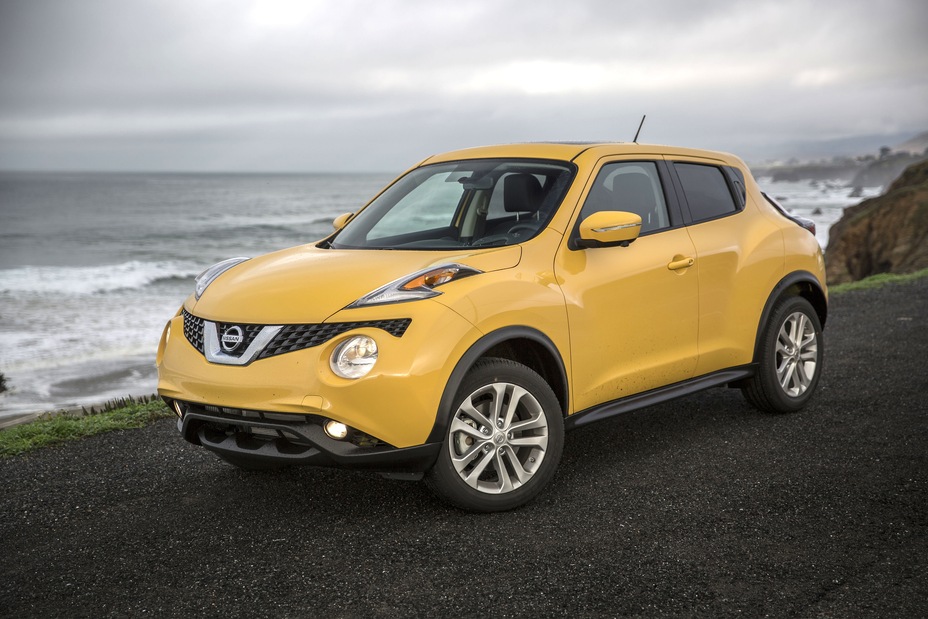
The Nissan Juke is a popular compact SUV known for its distinctive styling, elevated driving position and practical dimensions. But how much space does it actually offer for passengers, shopping, suitcases and everyday family activities?
Understanding Nissan Juke dimensions and boot space is important before choosing this crossover, particularly if we regularly carry luggage, transport children or navigate narrow city streets.
The second-generation Nissan Juke measures approximately 4,210 mm long, 1,800 mm wide and 1,593 mm high. Its boot capacity reaches 422 litres in petrol models, while hybrid versions provide 354 litres.
With the rear seats folded down, luggage capacity increases to 1,305 litres in petrol versions and 1,237 litres in hybrid models.
These figures make the Juke a practical option for many everyday journeys, although its compact design involves certain compromises in rear passenger accommodation.
In this comprehensive guide, we'll explore the Nissan Juke's exterior dimensions, interior space, boot measurements, luggage capacity and family practicality. We'll also compare different generations and explain how the petrol and hybrid versions differ.
Content in this publication
- Nissan Juke Dimensions at a Glance
- Nissan Juke Exterior Dimensions Explained
- Nissan Juke Boot Space: How Many Litres?
- Nissan Juke Boot Space With Seats Down
- Nissan Juke Boot Dimensions in Centimetres
- How Many Suitcases Fit in a Nissan Juke?
- Nissan Juke Interior Dimensions and Passenger Space
- Nissan Juke Dimensions by Generation
- Is the Nissan Juke Easy to Park?
- Is the Nissan Juke Big Enough for a Family?
- Nissan Juke Petrol vs Hybrid: Which Is More Practical?
- How to Maximise Nissan Juke Boot Space
- Nissan Juke Dimensions: Advantages and Disadvantages
- What Should We Check Before Buying a Nissan Juke?
- Frequently Asked Questions
- Conclusion: Is the Nissan Juke Spacious Enough?
Nissan Juke Dimensions at a Glance
Before examining each measurement, let's look at the main dimensions of the second-generation Nissan Juke.
| Specification | Nissan Juke |
|---|---|
| Overall length | 4,210 mm |
| Width without mirrors | 1,800 mm |
| Width including mirrors | 1,983 mm |
| Overall height | 1,593 mm |
| Wheelbase | 2,636 mm |
| Petrol boot capacity | 422 litres |
| Hybrid boot capacity | 354 litres |
| Petrol boot with seats folded | 1,305 litres |
| Hybrid boot with seats folded | 1,237 litres |
| Number of seats | 5 |
| Number of doors | 5 |
These figures reflect commonly published UK specifications for the second-generation Nissan Juke. Measurements can vary slightly depending on the model year, trim level and market.
The dimensions reveal a vehicle designed to balance everyday usability with the benefits of a relatively small exterior footprint.
For drivers who spend considerable time in urban environments, this combination can be particularly appealing.
Nissan Juke Exterior Dimensions Explained
The Nissan Juke belongs to the small SUV segment, where exterior dimensions influence parking convenience, manoeuvrability and interior packaging.
Although the Juke looks relatively substantial because of its bold design, it remains considerably smaller than many traditional family SUVs.
Nissan Juke Length
The second-generation Nissan Juke has an overall length of 4,210 mm, equivalent to 4.21 metres.
This makes it practical for city driving while providing enough body length for a five-seat cabin and useful luggage compartment.
A shorter vehicle offers several everyday advantages:
- Easier parallel parking on busy streets.
- Better manoeuvrability in confined spaces.
- Less difficulty navigating narrow residential roads.
- Greater convenience in smaller parking garages.
- A more manageable size for inexperienced drivers.
However, vehicle length is only one factor affecting practicality.
Interior space also depends on the wheelbase, seating arrangement and the positioning of mechanical components.
The Juke's compact length makes it a sensible option when we want SUV styling without the dimensions of a larger crossover.
Nissan Juke Width
The Nissan Juke measures approximately 1,800 mm wide without mirrors.
Including the exterior mirrors, the overall width increases to approximately 1,983 mm.
This difference is particularly important when entering narrow garages or driving through restricted spaces.
For example, a garage entrance measuring exactly two metres wide would leave extremely little clearance with both mirrors extended.
Before purchasing a Nissan Juke, we recommend measuring the garage entrance and allowing sufficient room for safe manoeuvring.
The vehicle's body width also affects passenger comfort.
While the Juke provides adequate shoulder room for front occupants, three adults sitting across the rear bench may find the space restrictive on longer journeys.
Nissan Juke Height
The second-generation Nissan Juke measures approximately 1,593 mm high.
This gives it a relatively elevated stance compared with many conventional hatchbacks.
The additional height contributes to the SUV-inspired seating position that many drivers appreciate.
Benefits of this arrangement include:
- A higher viewpoint over surrounding traffic.
- Easier entry and exit for many passengers.
- A more upright driving position.
- Greater perceived confidence when navigating busy roads.
Despite its crossover styling, the Nissan Juke is not especially tall compared with larger SUVs.
Consequently, it should fit comfortably into most standard multi-storey car parks, provided there are no additional roof accessories and the stated height limit is sufficient.
Nissan Juke Wheelbase
The Nissan Juke has a wheelbase of 2,636 mm.
The wheelbase represents the distance between the front and rear axles.
It plays an important role in determining how much space designers can allocate to passengers and other interior components.
A longer wheelbase can help create additional cabin room and contribute to greater stability.
Compared with the original Nissan Juke, the second-generation model has a noticeably longer wheelbase.
This change helped improve interior packaging, particularly for rear passengers.
However, rear-seat comfort still depends on the height and positioning of the front seats, as well as the shape of the rear cabin.
Nissan Juke Boot Space: How Many Litres?
Boot capacity is one of the most important considerations when selecting a compact SUV.
Whether we're carrying weekly groceries, holiday luggage, sports equipment or a child's pushchair, the size and shape of the luggage compartment can make a significant difference.
The second-generation Nissan Juke offers two main boot capacities depending on the powertrain.
Petrol models provide 422 litres, while hybrid versions offer 354 litres.
Nissan Juke Petrol Boot Capacity
The petrol-powered Nissan Juke has a boot capacity of 422 litres with the rear seats upright.
This is a useful amount of luggage space for a compact crossover.
In everyday situations, the boot can accommodate shopping bags, backpacks, smaller suitcases and various personal belongings.
Its capacity is particularly convenient for:
- Weekly supermarket shopping.
- Short holidays for two people.
- Weekend trips with moderate luggage.
- Children's school bags and sports equipment.
- Everyday commuting requirements.
The 422-litre capacity also represents a substantial improvement over early first-generation models.
Nevertheless, the official volume does not guarantee that every large object will fit.
The shape of the opening and the dimensions between the wheel arches remain important.
Nissan Juke Hybrid Boot Capacity
The Nissan Juke Hybrid offers 354 litres of boot space with the rear seats upright.
That represents a reduction of 68 litres compared with the petrol version.
The smaller capacity is associated with packaging requirements for the hybrid system, including its battery and related components.
Although 354 litres is less generous than the petrol model's luggage capacity, it remains useful for everyday activities.
For example, we can still transport shopping bags, smaller suitcases and common household items.
However, drivers who frequently carry bulky equipment may notice the reduction.
The difference becomes particularly relevant when travelling with several passengers and their luggage.
Nissan Juke Petrol vs Hybrid Boot Space
| Boot measurement | Petrol | Hybrid |
|---|---|---|
| Standard boot capacity | 422 litres | 354 litres |
| Seats folded capacity | 1,305 litres | 1,237 litres |
| Rear seat configuration | 60:40 split | 60:40 split |
| Passenger capacity | 5 | 5 |
| Difference in boot volume | +68 litres | — |
The petrol Juke provides approximately 19% more standard boot volume than the hybrid version, using the hybrid as the comparison baseline.
For drivers prioritising luggage capacity, the petrol version is therefore the more practical choice.
On the other hand, the hybrid may be attractive for motorists who want improved efficiency in suitable driving conditions and don't require the maximum available cargo space.
Nissan Juke Boot Space With Seats Down
One of the Juke's most useful features is its folding rear-seat arrangement.
When we need to transport larger objects, folding the rear seats significantly increases the available luggage volume.
The maximum capacities are:
- Petrol Nissan Juke: 1,305 litres.
- Hybrid Nissan Juke: 1,237 litres.
This additional volume makes the vehicle more versatile than the standard boot figures might suggest.
We can use the expanded luggage area for larger suitcases, camping accessories, flat-pack furniture and other bulky items.
However, we should remember that the maximum volume measures the total available cargo space rather than the dimensions of one continuous rectangular compartment.
Do the Nissan Juke Rear Seats Fold Flat?
The second-generation Nissan Juke has 60:40 split-folding rear seats.
This allows us to lower either section independently or fold both sections to create the maximum luggage area.
The arrangement provides additional flexibility when carrying a combination of passengers and cargo.
For example, we could fold one section to accommodate a longer item while retaining part of the rear bench for passengers.
However, the folded seats may not create a completely level surface in every configuration.
The final loading arrangement depends on the model, luggage floor position and seat design.
Does the Nissan Juke Have an Adjustable Boot Floor?
Some Nissan Juke petrol models feature an adjustable luggage floor.
This allows us to position the floor at different heights depending on our storage requirements.
A higher floor position can make loading and unloading easier by reducing the height difference between the boot sill and the luggage surface.
A lower floor position can provide additional vertical storage room.
Before purchasing a particular trim level, we should check whether this feature is included.
It is also important to confirm the configuration of hybrid models, as their luggage compartment differs from that of petrol versions.
Nissan Juke Boot Dimensions in Centimetres
Official boot capacity figures are useful, but physical dimensions can be more important when transporting rigid objects.
For example, a large suitcase might fit comfortably by volume but struggle to pass through a narrow boot opening.
For this reason, we should consider the length, width and loading height of the luggage compartment.
The following measurements provide a useful guide for the second-generation Nissan Juke.
| Boot measurement | Approximate size |
|---|---|
| Maximum boot length, seats upright | 75.7 cm |
| Maximum loading length, seats folded | 147.7 cm |
| Maximum quoted luggage width | 124.9 cm |
| Narrowest boot floor width | 101.5 cm |
| Boot opening width near the bottom | 96.8 cm |
| Boot sill height from the ground | 77.7 cm |
These figures combine manufacturer specifications and measurements recorded during independent vehicle assessments. They are approximate and may vary by version.
Nissan Juke Boot Length
With the rear seats upright, the maximum quoted luggage length is approximately 75.7 cm.
This is generally sufficient for many shopping bags, cabin suitcases and smaller pieces of luggage.
However, longer rigid objects may need to be positioned diagonally or carried with part of the rear bench folded.
When the rear seats are lowered, the maximum quoted loading length increases to approximately 147.7 cm.
This creates additional flexibility for transporting longer items.
We should still measure the object before loading it, particularly if it cannot bend or be repositioned.
Nissan Juke Boot Width
The Juke's boot width varies across the luggage compartment.
Although the maximum quoted width is approximately 124.9 cm, the usable width between the narrowest sections is considerably smaller.
Independent measurements suggest approximately 101.5 cm at the narrowest part of the boot floor.
This distinction matters when transporting boxes, furniture or other wide objects.
For practical purposes, the narrowest width is often more important than the maximum measurement.
Nissan Juke Boot Loading Height
The Nissan Juke has a relatively elevated loading sill compared with some traditional hatchbacks.
Independent testing has recorded a boot sill height of approximately 77.7 cm from the ground.
This means we may need to lift heavier objects to a moderate height before placing them inside.
For many drivers, this will not be a major inconvenience.
However, anyone who regularly transports heavy suitcases, equipment or mobility accessories should assess the loading height during a vehicle inspection.
How Many Suitcases Fit in a Nissan Juke?
The number of suitcases that fit inside the Nissan Juke depends on their dimensions and the version of the vehicle.
Boot capacity alone cannot determine the exact number because suitcase shapes vary.
As a general guide, the petrol Juke's 422-litre boot should provide enough room for a couple travelling with moderate luggage.
The hybrid's 354-litre boot offers slightly less flexibility.
| Luggage combination | Likely practicality |
|---|---|
| Two cabin suitcases | Generally easy to accommodate |
| Two cabin suitcases and soft bags | Usually manageable |
| One large suitcase and smaller bags | Often possible |
| Two large rigid suitcases | Depends on their measurements |
| Folded compact pushchair | Frequently possible |
| Several large suitcases | May require folding rear seats |
These examples are indicative rather than guaranteed fitting results.
Is the Nissan Juke Good for Airport Trips?
The Nissan Juke can be a convenient vehicle for airport journeys.
Its compact exterior dimensions make it relatively easy to drive through urban traffic and navigate airport car parks.
For two people carrying medium-sized luggage, the petrol version should offer useful storage capacity.
However, a family of four travelling with multiple large suitcases may find the luggage area restrictive.
In this situation, arranging luggage carefully or choosing a larger vehicle could make travelling more comfortable.
Can You Fit a Pushchair in a Nissan Juke?
Many compact folding pushchairs can fit inside the second-generation Nissan Juke.
However, larger travel systems and double pushchairs may present challenges.
The most reliable approach is to measure the pushchair in its folded position.
We should compare its dimensions with the boot opening and the available floor space.
Parents should also consider whether enough room remains for shopping bags or additional equipment.
Nissan Juke Interior Dimensions and Passenger Space
The Nissan Juke has five seats arranged across two rows.
Its cabin is designed to maximise usability within a compact exterior, although passenger accommodation is not as generous as in larger family SUVs.
Front Seat Space
The Nissan Juke provides a relatively comfortable driving environment for many adults.
The elevated seating position contributes to a good forward view, while the adjustable front seats allow occupants to find a suitable driving posture.
Front passengers generally benefit from more space than those sitting in the rear.
The interior is particularly well suited to everyday commuting, shopping trips and short journeys.
However, taller drivers should check the available headroom and seating adjustments before purchasing.
Rear Legroom
Rear legroom has improved considerably compared with the original Nissan Juke.
The second-generation vehicle's longer wheelbase contributes to the additional space.
Nevertheless, the rear compartment remains relatively compact.
Taller adults may find knee room limited when the front seats are positioned far backwards.
For children and shorter adults, the available space should be adequate for many journeys.
If we regularly carry tall passengers in the rear, testing the seating arrangement is especially important.
Rear Headroom
The Juke's sloping roofline contributes to its distinctive appearance.
However, this design influences the amount of available headroom in the rear passenger compartment.
Taller occupants may notice that the roof feels lower than in some boxier SUVs.
Independent assessments of certain second-generation models have recorded rear headroom of approximately 91 cm, although actual space varies with seating position and measuring method.
For occasional journeys, the available room may be sufficient.
For frequent long-distance trips with taller adults, a larger crossover may offer greater comfort.
Can Three Adults Sit in the Back?
The Nissan Juke is officially a five-seat vehicle.
However, seating three adults across the rear bench can feel cramped.
The main limitation is shoulder room rather than the number of available seats.
For short journeys, three rear passengers may be manageable.
For extended trips, two rear passengers will generally enjoy a more comfortable experience.
Nissan Juke Dimensions by Generation
The Nissan Juke has changed significantly since its original launch.
Understanding the differences between generations is particularly important when buying a used model.
First-Generation Nissan Juke Dimensions
The first-generation Nissan Juke was introduced in 2010 and remained available until the second-generation model arrived in 2019 in major European markets.
Its exterior dimensions were approximately:
| Measurement | First-generation Juke |
|---|---|
| Length | 4,135 mm |
| Width | 1,765 mm |
| Height | 1,570 mm |
| Wheelbase | 2,530 mm |
| Early boot capacity | 251 litres |
| Revised boot capacity | 354 litres |
The original Nissan Juke offered relatively limited boot capacity.
Early versions provided approximately 251 litres, making luggage space one of the vehicle's main practical weaknesses.
Following the 2014 facelift, boot capacity increased to approximately 354 litres in applicable front-wheel-drive versions.
This improvement made the vehicle considerably more useful for everyday activities.
Second-Generation Nissan Juke Dimensions
The second-generation Nissan Juke arrived in 2019 with revised styling, a different platform and improved interior packaging.
Its increased length and wheelbase helped create more usable cabin space.
The petrol version's 422-litre boot also represented a major improvement.
For buyers comparing used vehicles, the second-generation model generally offers greater practicality than early examples of the original Juke.
First-Generation vs Second-Generation Juke
| Specification | First generation (early) | Second generation petrol |
|---|---|---|
| Length | 4,135 mm | 4,210 mm |
| Width | 1,765 mm | 1,800 mm |
| Height | 1,570 mm | 1,593 mm |
| Wheelbase | 2,530 mm | 2,636 mm |
| Boot capacity | 251 litres | 422 litres |
The newer petrol Juke offers 171 litres more boot space than early first-generation versions.
This represents an improvement of approximately 68%.
For families and drivers who frequently carry luggage, this difference can be particularly significant.
Is the Nissan Juke Easy to Park?
One of the Nissan Juke's strongest advantages is its compact exterior size.
At 4.21 metres long, the second-generation model is easier to accommodate in many urban parking situations than larger SUVs.
Its relatively short body makes parallel parking more manageable.
However, several factors deserve consideration.
Parking in Narrow Garages
The vehicle's 1,800 mm body width is manageable for many standard parking spaces.
Nevertheless, the total width including mirrors reaches approximately 1,983 mm.
We should measure garage entrances carefully and allow additional clearance whenever possible.
It is also important to account for the space needed to open the doors after parking.
Rear Visibility
The Juke's bold exterior design includes substantial rear pillars.
These can restrict visibility in certain directions.
Depending on the trim level, reversing cameras, parking sensors and other assistance systems can help when manoeuvring.
We recommend testing visibility personally rather than judging it solely from the vehicle's compact dimensions.
Is the Nissan Juke Big Enough for a Family?
The Nissan Juke can be a practical family vehicle, particularly for smaller households.
However, its suitability depends on the number of passengers and how much equipment we regularly transport.
Nissan Juke for a Family of Three
For two adults and one child, the Nissan Juke should provide adequate practicality for many everyday activities.
The rear bench can accommodate a suitable child seat, while the boot offers enough capacity for shopping and smaller pushchairs.
The petrol model is especially attractive because of its larger luggage compartment.
Nissan Juke for a Family of Four
A family of four can also use the Juke comfortably for many shorter journeys.
However, longer holidays may require careful luggage planning.
Two child seats can occupy a substantial proportion of the rear bench.
We should verify that the required seats fit properly and that the front passengers retain enough legroom.
Nissan Juke for a Family of Five
Although the Nissan Juke has five seats, the rear compartment can feel narrow when carrying three passengers.
For occasional short journeys, this arrangement may be acceptable.
However, families who regularly travel with five occupants might prefer a larger SUV with more rear shoulder room and luggage capacity.
Nissan Juke Petrol vs Hybrid: Which Is More Practical?
Both powertrain options offer everyday usability, but there are important differences.
Advantages of the Petrol Nissan Juke
The petrol model offers the largest luggage compartment.
Its 422-litre boot provides greater flexibility for drivers who regularly carry bulky items.
We may prefer the petrol model when:
- Maximum boot space is essential.
- We frequently transport large suitcases.
- We regularly carry a pushchair.
- We need additional luggage flexibility.
- We want more cargo volume with all five seats available.
Advantages of the Hybrid Nissan Juke
The hybrid version offers a smaller boot but may deliver improved fuel efficiency in suitable driving conditions.
Its 354-litre luggage compartment remains useful for commuting, shopping and shorter trips.
We may prefer the hybrid version when:
- Most journeys involve urban traffic.
- Fuel efficiency is a major priority.
- We generally carry limited luggage.
- We want a hybrid vehicle without external charging.
- We don't need the maximum available boot capacity.
The ideal choice ultimately depends on our driving patterns and practical requirements.
How to Maximise Nissan Juke Boot Space
Although the Juke is a compact SUV, several packing techniques can help us use its luggage compartment efficiently.
Choose Flexible Luggage
Soft travel bags are often easier to position around irregular boot shapes.
Unlike rigid suitcases, they can adapt to narrower spaces and gaps.
Use the Adjustable Boot Floor
Where fitted, the adjustable luggage floor can provide additional flexibility.
The lower setting may create more vertical storage space, while the upper setting can simplify loading.
Fold Part of the Rear Bench
The 60:40 folding rear seats allow us to increase cargo length without necessarily sacrificing every rear passenger position.
This feature is particularly useful when transporting longer objects.
Pack Heavy Items First
Heavier objects should generally be placed low in the boot and secured appropriately.
This helps maintain stability and reduces the risk of luggage moving during braking.
Avoid Overloading the Vehicle
We should always respect the manufacturer's permitted payload and axle load limits.
Large boot capacity does not mean that every available space can be filled with heavy equipment.
Correct weight distribution and securely positioned luggage remain essential for safe driving.
Nissan Juke Dimensions: Advantages and Disadvantages
The Nissan Juke's dimensions deliver a useful balance between compactness and practicality.
However, its design also creates certain limitations.
| Advantages | Disadvantages |
|---|---|
| Compact length for urban driving | Rear legroom is limited for tall adults |
| Manageable exterior width | Three rear passengers may feel cramped |
| Elevated driving position | Rear visibility can be restricted |
| Useful petrol boot capacity | Hybrid boot is smaller |
| Flexible folding rear seats | Bulky pushchairs may be difficult to fit |
| Improved space over older Jukes | Relatively elevated loading sill |
For drivers who spend most of their time in cities, the advantages can outweigh the limitations.
However, motorists prioritising maximum passenger accommodation should consider whether a larger SUV would be more suitable.
What Should We Check Before Buying a Nissan Juke?
Before deciding whether the Nissan Juke provides enough space, we recommend carrying out several practical checks.
1. Measure the garage or parking space. Confirm that the Juke fits comfortably, including sufficient clearance for mirrors and door opening.
2. Test the driving position. Adjust the front seats to determine whether the available legroom and headroom meet our needs.
3. Sit in the rear seats. This is particularly important if taller adults will regularly travel in the back.
4. Check the boot opening. Measure large suitcases, pushchairs or equipment before assuming they will fit.
5. Test child-seat installation. Make sure the required seats can be installed correctly and accessed conveniently.
6. Compare petrol and hybrid luggage capacity. The difference of 68 litres may be significant depending on how we use the vehicle.
These simple checks can help prevent disappointment after purchasing.
Frequently Asked Questions
1. How Big Is the Nissan Juke Boot?
The second-generation Nissan Juke has 422 litres of boot capacity in petrol versions and 354 litres in hybrid models.
With the rear seats folded, these capacities increase to 1,305 litres and 1,237 litres respectively.
Older first-generation models have different luggage capacities depending on their model year and configuration.
2. What Are the Nissan Juke Dimensions in Metres?
The second-generation Nissan Juke measures approximately 4.21 metres long, 1.80 metres wide without mirrors and 1.59 metres high.
Its wheelbase is approximately 2.64 metres.
These dimensions make it a compact crossover suited to many city-driving situations.
3. Can You Fit a Pushchair in a Nissan Juke?
Yes, many compact folding pushchairs can fit inside the Nissan Juke.
However, larger travel systems or double pushchairs may be difficult to accommodate.
The petrol version provides additional luggage capacity, making it more practical for transporting family equipment.
We recommend checking the actual folded dimensions of the pushchair before purchasing.
4. Is the New Nissan Juke Bigger Than the Old Model?
Yes. The second-generation Nissan Juke is longer and wider than the first-generation model.
It also has a longer wheelbase and improved interior packaging.
The petrol version's 422-litre boot represents a substantial improvement over the 251-litre capacity of early first-generation models.
5. Which Nissan Juke Has the Biggest Boot?
The second-generation petrol Nissan Juke offers the largest boot capacity among the petrol and hybrid versions discussed here.
It provides 422 litres with the rear seats upright and 1,305 litres with the seats folded.
The hybrid version offers 354 litres and 1,237 litres respectively.
Conclusion: Is the Nissan Juke Spacious Enough?
The Nissan Juke offers a practical combination of compact exterior dimensions, distinctive styling and everyday usability.
With an overall length of 4,210 mm, width of 1,800 mm and height of 1,593 mm, the second-generation Juke remains manageable for city driving and parking.
Its boot capacity is another important advantage, particularly in petrol versions.
The 422-litre petrol boot provides enough storage for many everyday activities, while folding the rear seats expands the available space to 1,305 litres.
Hybrid models offer slightly less luggage capacity, with 354 litres in the standard configuration and 1,237 litres when the rear seats are folded.
Although the Juke is not the most spacious choice for regularly transporting five adults, it can work well for couples, commuters and smaller families.
Its main limitations involve rear passenger space, the relatively elevated loading sill and the smaller luggage compartment in hybrid versions.
Overall, the Nissan Juke is a sensible compact SUV when we want manageable exterior dimensions without sacrificing too much everyday practicality.
For buyers who prioritise luggage capacity, the petrol version stands out as the more versatile option. Those who value hybrid efficiency and generally carry less cargo may find the hybrid equally suitable for their needs.
If you want to know other articles similar to Nissan Juke Dimensions and Boot Space you can visit the category Service and Parts.
Kia Picanto Dashboard Warning Lights & Symbols: Complete Guide

Hyundai i20 Dashboard Warning Lights Guide
Vauxhall Antara Dashboard Lights: Complete Warning Symbol Guide
Hyundai i10 Dashboard Warning Lights and Their Meanings: Complete Guide
Peugeot 308 Dashboard Symbols, Warning Lights & Fault Guide

Hyundai Kona Dashboard Warning Lights
Leave a Reply
More content of your interest