
Peugeot 206 Fuel Tank Capacity: Complete Guide

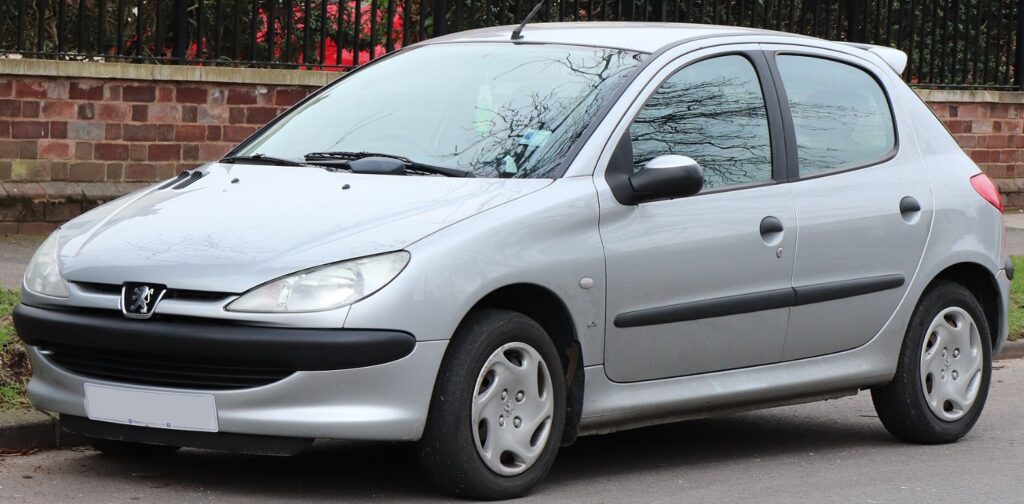
The Peugeot 206 fuel tank capacity is approximately 50 litres, equivalent to about 13.2 US gallons or 11 UK gallons. That figure applies to most mainstream Peugeot 206 hatchback, sedan, SW estate, CC convertible, petrol, and diesel versions.
It sounds like a simple specification, doesn’t it? Yet anyone who owns an older 206 soon discovers that tank capacity is only one piece of the puzzle. The fuel warning light may appear earlier than expected, the gauge can drop unevenly, and a supposedly empty tank might accept considerably less than 50 litres.
So, how much fuel can a Peugeot 206 really hold? How far can we travel on one tank? Is there a separate reserve? And why can the pump occasionally show more than the official capacity?
Let’s fill in the blanks without overfilling the tank.
Content in this publication
- What Is the Peugeot 206 Fuel Tank Capacity?
- Does Every Peugeot 206 Have a 50-Litre Tank?
- Petrol vs Diesel Peugeot 206 Tank Capacity
- How Far Can a Peugeot 206 Travel on a Full Tank?
- Does the Peugeot 206 Have a Fuel Reserve?
- Why Does My Peugeot 206 Take Less Than 50 Litres?
- How to Fill a Peugeot 206 Correctly
- How to Measure Your Peugeot 206’s Real Fuel Economy
- Factors That Reduce Peugeot 206 Driving Range
- Common Peugeot 206 Fuel Gauge Problems
- Can a Larger Fuel Tank Be Installed?
- Is the Peugeot 206 Fuel Tank Large for a Small Car?
- Tips for Getting More Distance From Every Tank
- What to Check When Buying a Used Peugeot 206
- Peugeot 206 Fuel Tank Capacity: Final Verdict
- Frequently Asked Questions
What Is the Peugeot 206 Fuel Tank Capacity?
For most versions, the official Peugeot 206 fuel tank capacity is approximately 50 litres.
Peugeot owner information describes the capacity as approximate rather than presenting 50 litres as an exact, measurable limit. This distinction matters because a vehicle’s fuel system includes more than the main usable portion of the tank. Fuel can also occupy the filler neck and connecting pipes, while manufacturing tolerances and the car’s position can influence how much the pump dispenses.
The 50-litre figure converts to:
- 13.2 US gallons
- 11 UK gallons
- Approximately 50,000 millilitres
The original owner guidance also advises drivers not to continue filling after the fuel nozzle’s third automatic cut-off because overfilling may cause vehicle malfunctions.
Quick Peugeot 206 Fuel Capacity Table
| Peugeot 206 version | Approximate tank capacity |
|---|---|
| Peugeot 206 three-door hatchback | 50 litres |
| Peugeot 206 five-door hatchback | 50 litres |
| Peugeot 206 CC | 50 litres |
| Peugeot 206 SW | 50 litres |
| Peugeot 206 sedan | 50 litres |
| Peugeot 206+ | 50 litres |
| Petrol versions | Usually 50 litres |
| Diesel and HDi versions | Usually 50 litres |
Most factory-produced passenger versions share the same general capacity. Nevertheless, specifications can vary by production market, model year, homologation, or locally manufactured derivative. We should therefore check the owner’s manual or vehicle identification details before treating an online specification as absolute.
Does Every Peugeot 206 Have a 50-Litre Tank?
The safest answer is that most regular Peugeot 206 models use an approximately 50-litre tank.
The model had an unusually long and international life. It appeared as a hatchback, estate, coupé-cabriolet, sedan, performance car, facelifted 206+, and several regional derivatives. It was also sold with petrol and diesel engines ranging from modest city-car units to the lively 2.0-litre GTi powerplant.
Despite that variety, 50 litres remains the capacity most consistently associated with the range. Published specifications for the 206 SW and 206 CC, for example, also report a 50-litre tank.
However, we should be cautious with rare commercial conversions, modified vehicles, replacement tanks, and regional models produced under different names. A previous owner may also have installed an aftermarket tank or changed part of the fuel system.
Peugeot 206 Hatchback Fuel Tank Capacity
The familiar three-door and five-door hatchbacks generally hold approximately 50 litres.
This applies to many popular engines, including:
- 1.1-litre petrol
- 1.4-litre petrol
- 1.6-litre petrol
- 2.0-litre petrol
- 1.4 HDi
- 1.6 HDi
- 1.9 diesel
- 2.0 HDi
The engine may transform fuel consumption, but it does not normally transform the size of the tank. A 1.4 HDi and a sporty 2.0-litre petrol model can carry a similar quantity of fuel while delivering dramatically different driving ranges.
Think of two hikers carrying identical water bottles. One takes small sips; the other drinks like every hill is a desert. The container is the same, but the distance covered is not.
Peugeot 206 CC Fuel Tank Capacity
The Peugeot 206 CC fuel tank capacity is approximately 50 litres, or 13.2 US gallons.
The folding metal roof, two-door body, extra structural reinforcement, and different rear design do not substantially reduce the quoted fuel capacity. Published specifications for the 1.6-litre 206 CC list a 50-litre tank.
Although its tank resembles that of the hatchback in size, the CC can use more fuel because it is generally heavier. Driving with the roof down can also increase aerodynamic drag, particularly at higher speeds.
The result? The convertible may visit the petrol station slightly more frequently, even though it arrives with the same theoretical tank volume.
Peugeot 206 SW Fuel Tank Capacity
The Peugeot 206 SW fuel tank capacity is also around 50 litres.
The SW’s longer estate body offers a more useful luggage compartment, but Peugeot did not simply stretch the fuel tank to match the body. Specifications for popular 1.4- and 1.6-litre SW versions show a 50-litre capacity.
Its actual range depends heavily on load. A lightly occupied SW cruising on an open road can be economical, while a fully loaded car with roof bars, luggage, and four passengers may consume noticeably more fuel.
Peugeot 206 Sedan Fuel Tank Capacity
The four-door Peugeot 206 sedan generally uses an approximately 50-litre fuel tank.
The sedan was particularly important in markets where buyers preferred a separate boot. Although its body shape and overall length differ from the European hatchback, owner information for the four-door version still quotes an approximate 50-litre capacity.
Regional branding can create confusion. Depending on the country, closely related vehicles may appear as the 206 Sedan, 206 SD, 207 Compact Sedan, or another locally marketed derivative. When dealing with one of these cars, we should verify the exact model rather than relying solely on the badge attached to the boot lid.
Peugeot 206+ Fuel Tank Capacity
The facelifted Peugeot 206+ normally has a 50-litre tank.
Although its front styling borrowed visual cues from the Peugeot 207, the 206+ retained much of the original car’s mechanical foundation. Published specifications for the 1.1-litre 206+ also identify a 50-litre tank.
This makes the 206+ relatively practical for a compact car. With an economical engine and sensible driving, a tank can last considerably longer than its modest exterior dimensions might suggest.
Petrol vs Diesel Peugeot 206 Tank Capacity
A petrol and diesel Peugeot 206 usually carry roughly the same amount of fuel. The real difference appears in how quickly they use it.
A small HDi engine can squeeze impressive mileage from each litre, especially on long journeys. A larger petrol engine may feel more responsive and entertaining but will generally consume the tank more rapidly.
Typical Range by Engine Type
The figures below are realistic examples rather than guaranteed results:
| Engine type | Example real-world economy | Estimated range from 50 litres |
| Small petrol | 6.5 L/100 km | 769 km |
| Medium petrol | 7.5 L/100 km | 667 km |
| Performance petrol | 9.0 L/100 km | 556 km |
| Small HDi diesel | 4.5 L/100 km | 1,111 km |
| Larger diesel | 5.5 L/100 km | 909 km |
These are mathematical maximums based on using all 50 litres:
Range = tank capacity ÷ consumption × 100
In normal life, we should not plan to drain every drop. Traffic, hills, weather, mechanical condition, driving style, and fuel-gauge accuracy all influence the distance available.
How Far Can a Peugeot 206 Travel on a Full Tank?
A Peugeot 206 can typically travel around 550 to 1,000 kilometres on a full tank, depending on its engine and operating conditions.
That range is intentionally broad. A 2.0-litre petrol car driven energetically through a crowded city lives in a different universe from a 1.4 HDi cruising steadily along a flat motorway.
For many everyday petrol versions, 600 to 750 kilometres is a sensible expectation. Economical diesel models may cover 800 to 1,000 kilometres, and exceptionally gentle motorway driving can stretch that figure further.
One published example for a 1.6-litre petrol 206 uses a 50-litre capacity and official consumption figures to calculate a potential range of roughly 720 kilometres in urban use and 860 kilometres on the highway. Such calculations are useful for comparison, but actual results will vary.
A More Realistic Range Calculation
Suppose our Peugeot 206 averages 7.2 litres per 100 kilometres.
Using the complete theoretical capacity:
50 ÷ 7.2 × 100 = 694 kilometres
However, suppose we refuel after using only 43 litres because we do not want to risk running dry:
43 ÷ 7.2 × 100 = 597 kilometres
That second result is a much better planning figure. The first is the edge of the map; the second is where sensible travellers turn around.
Miles per Full Tank
For readers who measure distance in miles, approximate ranges might look like this:
- Urban petrol driving: 300–400 miles
- Mixed petrol driving: 350–450 miles
- Motorway petrol driving: 400–500 miles
- Mixed diesel driving: 450–600 miles
- Efficient diesel motorway driving: potentially 600 miles or more
Again, these are estimates. An older car’s condition matters enormously. A dragging brake, failing oxygen sensor, incorrect tyre pressure, blocked air filter, or tired injector can quietly steal range one journey at a time.
Does the Peugeot 206 Have a Fuel Reserve?
The Peugeot 206 does not normally have a completely separate reserve tank. Instead, the term reserve refers to the fuel remaining when the low-level warning appears.
Owners commonly describe the reserve as approximately 5 to 7 litres, but it is best treated as an estimate rather than a fixed guarantee. The warning system measures fuel level, not an inviolable emergency allowance.
If 6 litres remain, theoretical reserve range might be:
- At 5 L/100 km: approximately 120 km
- At 7 L/100 km: approximately 86 km
- At 9 L/100 km: approximately 67 km
We should not rely on those maximums. Fuel moves around the tank while cornering, climbing, braking, or parking on an incline. A weak pump or inaccurate sender may also cause the engine to lose fuel supply before the tank is completely dry.
How Far Can We Drive After the Fuel Light Comes On?
A cautious target is to refuel within 50 kilometres or 30 miles after the warning light appears.
The car might travel farther, but treating the warning as a long-distance challenge is like using a smoke alarm as a cooking timer. It may work for a while, but it misses the point.
Running very low can expose the fuel pump to additional heat and allow sediment or contamination near the bottom of an ageing tank to enter the system. Diesel versions create another concern: if the tank runs completely dry, the fuel circuit may need to be primed before the engine will restart.
Peugeot’s manual guidance notes specific priming procedures for diesel engines after running out of fuel, reinforcing why prevention is easier than recovery.
Why Does My Peugeot 206 Take Less Than 50 Litres?
This is completely normal.
A 50-litre capacity does not mean every visit to the station should involve adding 50 litres. If the tank accepts 38, 42, or 45 litres, fuel was still inside it before filling.
Several factors explain the difference:
- The warning light activates before the tank is empty.
- The gauge may show empty while several litres remain.
- The nozzle may stop early because of fuel splashback.
- The car may be parked on an incline.
- The tank shape can trap air during filling.
- Fuel gauges become less precise as components age.
The capacity figure describes the tank, not the amount required at every refill.
Why Can a Peugeot 206 Sometimes Take More Than 50 Litres?
Occasionally, a driver reports adding slightly more than 50 litres. That does not necessarily mean the specification is wrong.
Possible explanations include:
- The filler neck also contained fuel.
- The pump was repeatedly topped off after automatic shut-off.
- The official capacity was rounded.
- The dispensing pump had a calibration issue.
- The car was positioned at an angle.
- The fuel system or tank had been replaced.
- The recorded refill figure was inaccurate.
There are owner reports of refills exceeding the quoted capacity, but these anecdotes should not encourage us to force additional fuel into the car.
Never Chase a Round Number
We may feel tempted to continue squeezing the nozzle until the display reaches exactly 40 or 50 litres. It is satisfying in the same way as stopping the microwave on one second, but the car gains nothing from it.
The nozzle clicks for a reason. Repeatedly filling beyond the automatic stop can force liquid fuel into areas designed to handle vapour, potentially causing odours, leaks, warning lights, or evaporative-emissions problems.
How to Fill a Peugeot 206 Correctly
The basic process is simple:
- Park safely and switch off the engine.
- Open the exterior fuel flap.
- Insert the ignition key into the locking fuel cap, where fitted.
- Turn the key and remove the cap.
- Confirm the correct fuel type on the label.
- Insert the nozzle fully.
- Fill at a moderate speed.
- Stop when the nozzle automatically cuts off.
- Avoid repeated topping off.
- Refit and lock the cap securely.
The owner guidance states that the engine should be switched off during filling and warns against continuing after the nozzle’s third cut-off.
Which Fuel Does the Peugeot 206 Use?
Fuel type depends on the engine.
Petrol models require unleaded petrol with an octane rating suitable for the engine and local market. Diesel and HDi models require automotive diesel. We should never select fuel merely from memory, especially when borrowing, buying, or inspecting an unfamiliar 206.
Check:
- The label inside the filler flap
- The owner’s manual
- The registration or technical document
- The engine code
- Previous service records
Putting petrol into a diesel or diesel into a petrol car can cause expensive damage. If the wrong fuel enters the tank, do not start the engine. Moving the car by pushing or arranging recovery is far cheaper than circulating incorrect fuel through the system.
How to Measure Your Peugeot 206’s Real Fuel Economy
The dashboard gauge cannot tell us true fuel consumption by itself. The most reliable everyday method is the full-to-full calculation.
Full-to-Full Method
- Fill the tank until the nozzle’s first automatic stop.
- Reset the trip counter.
- Drive normally.
- Refill at the same station or on similar ground.
- Record the litres added.
- Record the kilometres travelled.
- Divide litres by kilometres.
- Multiply the result by 100.
For example:
- Distance travelled: 610 km
- Fuel added: 41 litres
- Calculation: 41 ÷ 610 × 100
- Actual consumption: 6.72 L/100 km
To calculate kilometres per litre:
610 ÷ 41 = 14.88 km/L
Repeat this over several tanks. A single refill can be distorted by nozzle behaviour, road angle, filling speed, or a slightly different stopping point.
Factors That Reduce Peugeot 206 Driving Range
The 206 is small and relatively light, but it cannot escape physics.
Driving Style
Hard acceleration, high engine speeds, and late braking consume more fuel. Smooth driving turns momentum into an ally instead of throwing it away at every traffic light.
Urban Traffic
Cold starts, idling, short journeys, and repeated acceleration can dramatically reduce range. A car that delivers excellent motorway economy may become noticeably thirstier in central traffic.
Tyre Pressure
Underinflated tyres increase rolling resistance. The engine must work harder, rather like cycling with soft tyres.
Check pressures when the tyres are cold and use the values listed on the vehicle label or in the manual.
Mechanical Condition
Fuel economy can suffer because of:
- Worn spark plugs
- Dirty air filters
- Faulty oxygen sensors
- Incorrect engine temperature
- Injector problems
- Binding brakes
- Poor wheel alignment
- Clutch slip
- Exhaust restrictions
A sudden reduction in range deserves investigation, particularly when accompanied by rough running, warning lights, smoke, fuel smells, or difficult starting.
Extra Weight and Aerodynamic Drag
A full boot, roof box, open windows at speed, or unused roof bars all demand additional energy. Each factor may appear small, but together they nibble at range like mice in a pantry.
Air Conditioning and Electrical Loads
Air conditioning places extra load on the engine. Heated windows, lights, and other electrical equipment also require energy, although their influence is generally smaller.
We do not need to avoid useful features. Comfort matters. The goal is simply to understand why two apparently identical journeys may produce different consumption figures.
Common Peugeot 206 Fuel Gauge Problems
Ageing Peugeot 206 models can develop inaccurate or inconsistent fuel readings.
Possible causes include:
- A worn fuel-level sender
- A sticking float
- Damaged wiring
- Poor electrical connections
- Instrument-cluster faults
- BSI communication issues
- An incorrectly installed replacement pump
- A distorted or damaged fuel tank
Typical symptoms include a gauge stuck on full, sudden drops, readings that change after cornering, a warning light that appears too early, or a tank that still shows fuel after the engine has stopped.
Do Not Assume the Gauge Is Perfect
Until a suspected fault is repaired, use the trip counter as a secondary reference. Refill earlier than normal and keep records of distance and litres added.
Never test a faulty gauge by deliberately driving until the engine stops. That experiment gives us one answer while risking several new problems.
Can a Larger Fuel Tank Be Installed?
Technically, custom modifications may be possible, but fitting a larger tank is rarely worthwhile for a normal Peugeot 206.
The tank must fit safely around the exhaust, suspension, body, pump, wiring, ventilation system, and crash structure. A poorly designed modification can create fire, leakage, legal, inspection, and insurance risks.
A safer strategy for long journeys is to:
- Start with a full tank.
- Plan fuel stops in advance.
- Maintain the vehicle properly.
- Monitor consumption.
- Avoid running deep into the reserve.
- Carry approved fuel containers only where legal and genuinely necessary.
For most drivers, the factory 50-litre tank offers a reasonable balance between range, packaging, weight, and cost.
Is the Peugeot 206 Fuel Tank Large for a Small Car?
For a compact hatchback developed in the late 1990s, a 50-litre tank is generous.
Many modern small cars carry less fuel because efficiency has improved and packaging priorities have changed. The Peugeot 206 combines a modest footprint with enough capacity to provide practical touring range, particularly in diesel form.
This helps explain why the car became more than an urban runabout. It can cross cities, handle rural roads, and complete long motorway journeys without stopping every few hours.
Its tank is not enormous, but it is well matched to the car—like a good backpack: large enough for the journey without becoming the journey.
Tips for Getting More Distance From Every Tank
We can improve range without crawling along or turning every trip into an economy competition.
- Accelerate progressively.
- Change gear at sensible engine speeds.
- Maintain a steady speed where conditions allow.
- Anticipate traffic instead of braking late.
- Check tyre pressures regularly.
- Remove unnecessary cargo.
- Remove roof bars when not needed.
- Service the engine on schedule.
- Investigate warning lights promptly.
- Combine very short journeys where practical.
- Avoid long periods of unnecessary idling.
- Record fuel economy over multiple tanks.
The biggest savings usually come from consistency. One smooth journey will not repair months of neglect, just as one healthy lunch cannot carry an entire year of poor habits.
What to Check When Buying a Used Peugeot 206
Fuel-system checks should form part of any used-car inspection.
Look beneath and around the car for:
- Wet areas near the tank
- Strong petrol or diesel smells
- Corroded fuel lines
- Damage around the filler neck
- A loose or missing cap
- Fuel stains beneath the rear seat
- Warning lights
- Irregular gauge movement
- Difficult hot or cold starting
- Unexplained poor fuel economy
Ask the seller when the fuel pump, sender unit, injectors, and filter were last inspected or replaced. On an older vehicle, documentation can be almost as valuable as the component itself.
A cheap 206 with a healthy fuel system may be a better purchase than a prettier example hiding a persistent leak or electrical problem.
Peugeot 206 Fuel Tank Capacity: Final Verdict
The standard Peugeot 206 fuel tank capacity is approximately 50 litres, equal to around 13.2 US gallons or 11 UK gallons. This figure applies to most hatchback, CC, SW, sedan, 206+, petrol, and diesel versions.
Real-world range can vary enormously. A petrol model may cover roughly 550 to 750 kilometres, while an economical HDi diesel can travel 800 kilometres or more under favourable conditions. Maintenance, traffic, load, weather, tyres, and driving style all shape the final result.
The low-fuel warning should be treated as an instruction to find a station—not an invitation to discover the outer limits of French engineering. Refill sensibly, stop when the nozzle cuts off, track your actual consumption, and verify the exact specification for your model and market.
Do that, and the Peugeot 206’s modest tank can carry us surprisingly far.
Frequently Asked Questions
1. How many litres does a Peugeot 206 fuel tank hold?
Most Peugeot 206 models hold approximately 50 litres of fuel. The exact usable amount can differ slightly because of the filler neck, fuel-system design, manufacturing tolerances, and remaining fuel.
2. How many gallons is the Peugeot 206 tank?
A 50-litre Peugeot 206 tank equals approximately 13.2 US gallons or 11 UK gallons. US and imperial gallons are different units, so it is important to use the correct conversion.
3. How far can a Peugeot 206 go on a full tank?
Depending on the engine and driving conditions, a Peugeot 206 can typically travel around 550 to 1,000 kilometres on a full tank. Petrol performance models sit near the lower end, while economical HDi diesels can approach the upper end.
4. How much fuel remains when the warning light appears?
The remaining amount is commonly estimated at roughly 5 to 7 litres, but it is not guaranteed. Gauge accuracy, road angle, tank movement, and vehicle condition can affect the warning. Refuelling within about 50 kilometres is the safer approach.
5. Why does my Peugeot 206 accept more than 50 litres?
A small amount above 50 litres may enter the filler neck, especially when the nozzle is repeatedly topped off. Rounded specifications, pump calibration, vehicle angle, or an altered fuel system may also explain the difference. Avoid forcing in extra fuel after automatic cut-off.
If you want to know other articles similar to Peugeot 206 Fuel Tank Capacity: Complete Guide you can visit the category Service and Parts.
Vauxhall Mokka Tyre Pressure Reset: Complete Guide
How to Reset the Tire Pressure System on Your Hyundai Tucson
Hyundai Kona Tire Pressure: Complete PSI Guide
Vauxhall Corsa Timing Belt Replacement Cost UK 2026
Mazda CX-5 Tire Size Chart: 2013–2026 Guide
How to Reset a Honda Civic: Complete Step-by-Step Guide
Leave a Reply
More content of your interest