
Subaru Impreza Engine Capacity: Complete Engine Size Guide

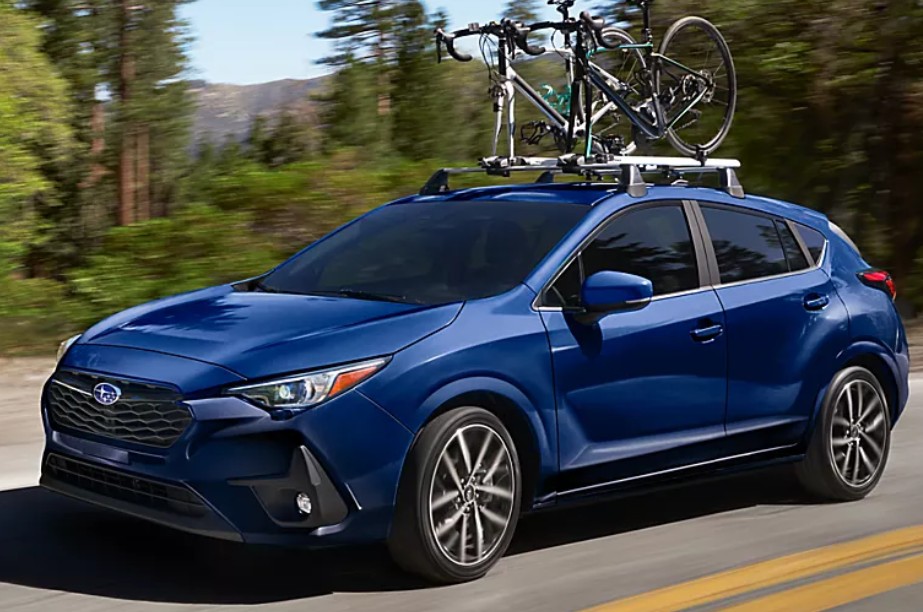
When we talk about Subaru Impreza engine capacity, a single number does not tell the whole story. Depending on the model year, generation, trim level, and market, the Impreza has been offered with several different engine sizes. The familiar choices include 1.5-liter, 1.6-liter, 2.0-liter, and 2.5-liter horizontally opposed engines, while performance-oriented versions from earlier eras add even more variety to the family tree.
For today's U.S.-market Impreza, things are considerably simpler. The 2026 Subaru Impreza is available with either a 2.0-liter four-cylinder BOXER engine or a larger 2.5-liter BOXER four-cylinder, depending on trim. Subaru lists the 2.0-liter engine at 152 horsepower, while the Impreza RS receives the 2.5-liter engine with 180 horsepower.
But what does engine capacity actually mean? Is a 2.5-liter Impreza automatically better than a 2.0-liter version? Does the larger engine consume dramatically more fuel? And why has Subaru stuck with its unusual flat-four configuration when most competitors use conventional inline-four engines?
We are going to unpack all of it.
Content in this publication
- What Is the Subaru Impreza Engine Capacity?
- Understanding Subaru's BOXER Engine Design
- Subaru Impreza 2.0-Liter Engine Capacity
- Subaru Impreza 2.5-Liter Engine Capacity
- 2.0 vs 2.5 Subaru Impreza Engine Capacity
- Subaru Impreza Engine Capacity by Generation
- Second-Generation Subaru Impreza Engine Capacity
- Third-Generation Subaru Impreza Engine Sizes
- Fourth-Generation Subaru Impreza Engine Capacity
- Fifth-Generation Subaru Impreza Engine Capacity
- Sixth-Generation Subaru Impreza Engine Capacity
- What Does 2.0-Liter Engine Capacity Actually Mean?
- Subaru Impreza Engine Capacity and Fuel Economy
- Subaru Impreza Engine Capacity and Reliability
- Subaru Impreza Engine Capacity and Oil Requirements
- Does Engine Capacity Affect Subaru Impreza Insurance?
- Which Subaru Impreza Engine Capacity Is Best?
- Is a Bigger Subaru Impreza Engine Better for Mountain Driving?
- Does Subaru Impreza Engine Capacity Affect AWD Performance?
- Subaru Impreza Engine Capacity vs WRX Engine Capacity
- How to Find Your Subaru Impreza Engine Capacity
- Should You Buy a 2.0 or 2.5 Subaru Impreza?
- Used Subaru Impreza: Why Engine Condition Beats Engine Size
- Subaru Impreza Engine Capacity: Final Thoughts
- Frequently Asked Questions About Subaru Impreza Engine Capacity
What Is the Subaru Impreza Engine Capacity?
Engine capacity, also called engine displacement, describes the total volume displaced by all of the engine's pistons as they move through their cylinders. It is normally expressed in liters or cubic centimeters.
So when we describe an Impreza as having a 2.0-liter engine, we are essentially talking about an engine displacing approximately 2,000 cubic centimeters.
A 2.5-liter engine displaces roughly 2,500 cc.
Simple enough, right?
Where things become more interesting is that displacement affects much more than the number printed in the brochure. Engine size can influence torque, acceleration, fuel consumption, driving character, towing ability, taxation in some countries, insurance categories, and even resale appeal.
Current Subaru Impreza Engine Sizes at a Glance
For the 2026 U.S. model, Subaru offers two capacities:
| Impreza version | Engine capacity | Configuration | Horsepower | Torque |
|---|---|---|---|---|
| Impreza Sport | 2.0 L | BOXER 4-cylinder | 152 hp | 145 lb-ft |
| Impreza RS | 2.5 L | BOXER 4-cylinder | 180 hp | 178 lb-ft |
Both engines use direct injection, dual active valve control, and Subaru's horizontally opposed four-cylinder design.
That means choosing between the current Impreza engines is largely a question of priorities: efficiency and adequate everyday performance with the 2.0-liter, or noticeably stronger acceleration with the 2.5-liter RS.
Understanding Subaru's BOXER Engine Design
Most compact cars position four cylinders vertically or at a slight angle in a row. Subaru does things differently.
Its BOXER engine places the cylinders horizontally, with opposing pistons moving away from and toward each other.
Imagine two boxers throwing punches at one another from opposite sides. That opposing movement is essentially where the engine gets its nickname.
Why Does Subaru Use a Flat Engine?
The horizontal layout allows Subaru to position much of the engine's mass relatively low in the vehicle. In theory, a lower center of gravity can contribute to predictable handling and stability.
The engine configuration also fits naturally with Subaru's symmetrical all-wheel-drive philosophy.
This combination has become part of the brand's identity. Remove the BOXER engine and AWD system from an Impreza, and we would almost be removing the ingredients that make an Impreza feel like an Impreza.
Does BOXER Design Change Engine Capacity?
No.
A 2.0-liter BOXER engine and a 2.0-liter inline-four engine still have approximately the same total displacement.
What changes is the arrangement of the cylinders, not what the displacement measurement means.
That distinction matters because people sometimes assume "BOXER" refers to a particular engine size. It does not. Subaru has produced horizontally opposed engines with several different capacities.
Subaru Impreza 2.0-Liter Engine Capacity
The 2.0-liter engine has long been one of the most important capacities in the Impreza lineup.
In the current U.S.-market 2026 Impreza Sport, the naturally aspirated 2.0-liter BOXER four produces 152 horsepower and 145 lb-ft of torque.
Those figures are hardly going to pin us against the seat like a roller coaster, but that is not the engine's mission.
It is designed primarily for ordinary commuting, city traffic, highway travel, and drivers who want the security of standard all-wheel drive without buying a larger crossover.
Is the 2.0-Liter Impreza Powerful Enough?
For normal driving, yes.
Around town, the engine provides sufficient response to pull away from traffic lights and merge into moderate traffic. On faster roads, however, overtaking or climbing steep hills may require more throttle.
Think of it as a dependable hiking shoe rather than a racing spike. It gets the job done comfortably, but raw speed is not its main attraction.
The Lineartronic continuously variable transmission also plays an important role. It keeps the engine operating in an efficient rev range, although hard acceleration can make the engine sound considerably busier.
Who Should Choose the 2.0-Liter Engine?
The 2.0-liter Impreza makes the most sense when efficiency, purchase price, and everyday usability matter more than outright acceleration.
It is especially well suited to drivers who spend most of their time commuting rather than attacking mountain roads.
Subaru Impreza 2.5-Liter Engine Capacity
Moving from 2.0 to 2.5 liters might sound like a modest increase on paper, yet half a liter represents a 25% increase in displacement.
That extra capacity gives Subaru more room to generate torque without resorting to turbocharging.
The 2026 Impreza RS uses a 2.5-liter naturally aspirated BOXER four-cylinder producing 180 horsepower and 178 lb-ft of torque.
It consequently feels stronger when accelerating onto highways, overtaking slower vehicles, or carrying passengers.
Why the 2.5-Liter Impreza Feels Different
Horsepower receives most of the attention in advertisements, but torque matters enormously during normal driving.
The 2.5-liter engine produces considerably more torque than the 2.0-liter unit, and its peak torque arrives slightly earlier.
That means we do not need to squeeze the engine quite as aggressively to achieve useful acceleration.
It is the difference between pushing a shopping cart with one hand and pushing it with both. Neither task is difficult, but the extra muscle makes everything feel easier.
The Impreza RS and the Return of a Bigger Engine
The RS badge gives buyers a middle ground between an ordinary economy hatchback and something genuinely performance-focused.
It does not transform the Impreza into a WRX replacement. Instead, the larger engine provides more relaxed, responsive everyday performance.
Interestingly, Subaru rated the 2025 U.S. Impreza RS at 182 horsepower, while current specifications list the 2026 model at 180 horsepower.
That small change is a good reminder that engine displacement can remain the same even when official power ratings change.
2.0 vs 2.5 Subaru Impreza Engine Capacity
This is probably the comparison most shoppers actually care about.
Both engines are naturally aspirated flat-fours, but the difference in displacement changes their personalities.
The 2.0-liter option favors efficiency and affordability. The 2.5-liter prioritizes stronger acceleration and easier power delivery.
Subaru Impreza 2.0 vs 2.5 Performance
The biggest practical difference appears when we ask the car to work hard.
Pulling away gently in urban traffic? The difference is relatively modest.
Merging onto a fast interstate with several passengers? The 2.5-liter becomes much more appealing.
Driving uphill with luggage? Again, the extra displacement and torque become obvious.
The RS therefore suits someone who regularly drives in situations where additional power matters.
Does the 2.5-Liter Engine Use Much More Fuel?
Not necessarily.
Engine capacity influences fuel consumption, but it is only one ingredient. Vehicle weight, transmission calibration, aerodynamics, driving conditions, tire choice, weather, and throttle input also matter.
For example, Subaru rates the 2026 Impreza at up to 33 highway mpg, with official specifications showing relatively small fuel-economy differences between current engine choices.
So the larger engine does not automatically mean dramatically higher fuel bills.
Subaru Impreza Engine Capacity by Generation
This is where the Impreza story becomes much more complicated.
Since its introduction in the early 1990s, the model has been sold in numerous countries with different emissions rules, taxation systems, trim structures, and customer preferences.
Consequently, two Imprezas from the same era could have completely different engines depending on where they were originally sold.
First-Generation Subaru Impreza Engine Sizes
Early Impreza models helped establish the recipe that would define the car for decades: compact dimensions, BOXER engines, and widely available all-wheel drive.
Depending on market and specification, first-generation Imprezas appeared with smaller-displacement engines as well as familiar 1.8-liter, 2.0-liter, and performance-oriented turbocharged configurations.
Then, of course, motorsport entered the picture.
Rally success transformed the Impreza from a practical compact into something of an automotive celebrity. Suddenly, the capacity printed on the engine specification sheet represented only part of the story.
Why Early Engine Capacities Differ by Country
Markets with displacement-based taxation often received smaller engines.
In countries where fuel was expensive or annual taxes increased sharply above particular engine-size thresholds, a smaller-capacity Impreza made commercial sense.
North American buyers generally encountered larger engines more frequently.
That geographical variation continues to create confusion in used-car listings today.
Second-Generation Subaru Impreza Engine Capacity
The second-generation Impreza broadened the range further.
Naturally aspirated everyday models existed alongside turbocharged WRX and high-performance STI variants.
A 2.0-liter engine could therefore describe something fairly ordinary or something dramatically more powerful.
This is one reason engine capacity alone cannot tell us how fast an Impreza is.
Capacity vs Turbocharging
Suppose we compare two engines with identical displacement.
One is naturally aspirated.
The other forces extra air into its cylinders with a turbocharger.
Even though both engines may measure 2.0 liters, their performance can be worlds apart.
Turbocharging allows more oxygen into the combustion chambers, enabling the engine to burn more fuel and generate considerably more power.
In other words, capacity measures size—not potential.
Third-Generation Subaru Impreza Engine Sizes
By the third generation, buyers could still encounter several engine capacities depending on market.
Subaru offered economy-minded versions in some regions while continuing larger naturally aspirated and turbocharged options elsewhere.
This period is particularly important for used buyers because engine specifications can vary dramatically between seemingly similar vehicles.
Imported Japanese-market cars, European versions, Australian cars, and North American models may not share the same engine simply because their bodywork looks nearly identical.
Why the VIN Matters More Than Guessing
If we are purchasing replacement parts, engine oil components, ignition pieces, sensors, or internal engine parts, guessing capacity from the model year is risky.
The vehicle identification number, engine code, owner's manual, or factory identification label gives us much better information.
A used Impreza may even have received a replacement engine during its life.
Fourth-Generation Subaru Impreza Engine Capacity
Later generations shifted the mainstream Impreza toward efficient naturally aspirated engines, while the WRX gradually developed into a more distinct branch of the Subaru family.
For many buyers, the 2.0-liter flat-four became the engine most strongly associated with the standard Impreza.
That transition helped clarify the car's identity.
The Impreza increasingly became the practical AWD compact, while WRX models served enthusiasts demanding more aggressive performance.
Fifth-Generation Subaru Impreza Engine Capacity
The fifth-generation model continued the naturally aspirated 2.0-liter formula in important markets.
Instead of chasing giant horsepower numbers, Subaru concentrated on efficiency, usability, all-wheel-drive traction, and safety technology.
That approach makes sense when we remember what most Imprezas actually do every day.
They carry people to work.
They sit in supermarket parking lots.
They drive through rain and snow.
They haul backpacks, groceries, pets, and weekend luggage.
An engine does not have to dominate a drag strip to be useful.
Sixth-Generation Subaru Impreza Engine Capacity
The sixth-generation Impreza brought one of the most interesting changes in recent years: the return of a 2.5-liter engine option through the RS trim.
For U.S. buyers, this created a straightforward two-engine strategy.
The current 2026 range consists of Sport and RS trims, with a 2.0-liter BOXER engine in the Sport and a 2.5-liter BOXER engine in the RS.
The combination makes the buying decision relatively easy.
Want the more affordable everyday Impreza? Choose 2.0 liters.
Want noticeably more punch without moving into a different vehicle category? Choose 2.5 liters.
What Does 2.0-Liter Engine Capacity Actually Mean?
Let's make displacement a little less abstract.
Inside an internal-combustion engine, pistons travel up and down inside cylinders.
Displacement represents the combined swept volume of those cylinders.
A four-cylinder engine totaling approximately 2,000 cc therefore receives the familiar 2.0-liter description.
Does Bigger Capacity Always Mean More Power?
No.
This is one of the biggest misconceptions surrounding engines.
Engine output also depends on compression ratio, cylinder-head design, valve timing, intake efficiency, exhaust design, fuel delivery, turbocharging, engine management software, maximum rpm, and dozens of other variables.
A modern turbocharged 1.6-liter engine can easily produce more power than an older naturally aspirated 2.5-liter unit.
Capacity gives us useful context, but it should never be treated as a horsepower rating.
Subaru Impreza Engine Capacity and Fuel Economy
We might assume that smaller engines always use less fuel.
Broadly speaking, smaller displacement can help efficiency because the engine has less internal volume to fill and often experiences lower pumping and friction losses.
Real-world driving complicates the equation.
A small engine being pushed constantly at high rpm can consume surprising amounts of fuel. Meanwhile, a larger engine operating gently at lower loads can sometimes deliver better efficiency than expected.
How Driving Style Changes the Equation
Heavy acceleration turns almost any engine thirsty.
Short cold journeys hurt economy.
Roof boxes increase aerodynamic drag.
Low tire pressure increases rolling resistance.
Heavy cargo demands additional energy.
So if our 2.0-liter Impreza is returning disappointing fuel economy, blaming engine capacity alone may send us down the wrong rabbit hole.
Subaru Impreza Engine Capacity and Reliability
Is one engine capacity more reliable than another?
There is no universal answer.
Reliability depends heavily on the exact engine family, production year, maintenance history, operating conditions, and previous ownership.
A meticulously maintained 2.5-liter engine can easily be a better purchase than a neglected 2.0-liter engine with half its mileage.
Service records often tell us far more than displacement.
Maintenance Matters More Than Half a Liter
When shopping for a used Impreza, we should pay attention to:
- Regular engine-oil and filter changes
- Coolant condition and maintenance history
- Signs of external fluid leaks
- Unusual cold-start noises
- Warning lights or diagnostic trouble codes
- Evidence of overheating
- Consistent maintenance documentation
- Correct replacement parts and fluids
- Smooth operation during a proper road test
A clean maintenance trail is worth far more than someone saying, "These engines last forever."
Machines do not run on reputation. They run on oil, coolant, sensible temperatures, and maintenance.
Subaru Impreza Engine Capacity and Oil Requirements
Engine displacement can affect oil capacity, but the two measurements should never be confused.
Engine capacity describes displacement inside the combustion cylinders.
Oil capacity describes how much lubricating oil the engine requires.
A 2.0-liter engine therefore does not take two liters of engine oil simply because its displacement is 2.0 liters.
Always check the owner's manual for the exact oil quantity and specification applicable to the model year and engine code.
Why Using the Correct Specification Matters
Modern engines rely on precise lubrication characteristics.
Oil that is too thick can flow poorly when cold.
Oil that is too thin or does not meet the required specification may provide inadequate protection under certain operating conditions.
Buying oil by saying "it's a Subaru Impreza" is therefore not specific enough. Year, engine, and market matter.
Does Engine Capacity Affect Subaru Impreza Insurance?
Potentially.
Insurers evaluate far more than displacement, including repair costs, accident statistics, theft risk, driver profile, location, annual mileage, safety technology, trim level, and vehicle value.
A higher-performance model can sometimes cost more to insure, but engine capacity by itself does not determine the premium.
This becomes particularly relevant when comparing a standard Impreza with old WRX or STI derivatives.
Similar badges do not necessarily mean similar insurance risk.
Which Subaru Impreza Engine Capacity Is Best?
There is no universally "best" engine because different buyers need different things.
For most commuters, the 2.0-liter engine provides enough performance while keeping the car relatively economical.
For drivers who regularly carry passengers, travel through hilly terrain, merge onto fast highways, or simply dislike waiting for acceleration, the 2.5-liter engine is easier to recommend.
Choose the 2.0-Liter If Efficiency Matters Most
The smaller engine makes sense if we value straightforward transportation over performance.
It offers adequate power while retaining the Impreza's central attraction: standard AWD in a compact hatchback package.
There is something refreshingly sensible about it.
No fireworks. No drama. Just transportation that gets on with the job.
Choose the 2.5-Liter If You Want More Flexibility
The RS engine provides an extra cushion of power.
We notice that advantage most when accelerating at highway speeds or climbing steep roads.
The larger engine does not turn the Impreza into a dedicated performance hatchback, but it makes the car feel less strained when we ask for speed.
Think of the 2.0-liter as carrying exactly enough cash for dinner, while the 2.5-liter leaves a little extra in the wallet for dessert.
Is a Bigger Subaru Impreza Engine Better for Mountain Driving?
Generally, the extra torque of a larger engine can make steep terrain easier.
At altitude, naturally aspirated engines also lose some performance because thinner air contains less oxygen.
A 2.5-liter naturally aspirated engine therefore starts with a useful performance advantage over a smaller naturally aspirated engine.
That does not mean a 2.0-liter Impreza cannot handle mountain roads. It certainly can.
The difference is how hard the engine must work.
Does Subaru Impreza Engine Capacity Affect AWD Performance?
Not directly.
Subaru's Symmetrical All-Wheel Drive distributes power through the drivetrain, while engine capacity determines how much displacement the engine has.
A larger engine can supply more torque to the system, but having 2.5 liters does not inherently make the AWD hardware more capable than a 2.0-liter system.
Tires often matter more than people realize.
A powerful AWD car on poor tires can be less capable in snow than a modest car wearing excellent winter tires.
Subaru Impreza Engine Capacity vs WRX Engine Capacity
This comparison deserves special attention because the Impreza and WRX have historically been closely connected.
Today's WRX is marketed as a separate model, and comparing cars purely by displacement can be misleading.
Turbocharging changes everything.
A turbo engine can generate substantially higher output from relatively modest displacement because the turbo forces additional air into the cylinders.
Why 2.0 Liters Can Mean Completely Different Performance
Imagine two restaurants with kitchens of exactly the same size.
One has three cooks.
The other has ten.
Same floor space—vastly different output.
Turbocharging works somewhat like adding extra cooks to the kitchen. Engine capacity remains unchanged, but considerably more work can happen inside that volume.
That is why knowing an Impreza has a 2.0-liter engine tells us only part of the story.
How to Find Your Subaru Impreza Engine Capacity
If we already own an Impreza and are unsure of its engine size, the safest approach is to identify the exact specification rather than relying on exterior appearance.
Useful sources include the owner's manual, registration documentation, VIN information, emissions label, manufacturer specification data, and the engine identification code.
For imported cars, checking the original market specification can be especially important.
Do Not Assume Trim Names Are Universal
A trim name used in the United States may describe a completely different package—or may not exist at all—in Australia, New Zealand, Europe, Japan, or another market.
Even model-year dates can differ slightly between countries.
For maintenance and parts ordering, identifying the actual engine is always safer than relying solely on a trim badge.
Should You Buy a 2.0 or 2.5 Subaru Impreza?
If we were choosing purely on practicality, the 2.0-liter model would satisfy plenty of drivers.
If the budget allows and stronger acceleration matters, however, the 2.5-liter RS offers a meaningful performance improvement rather than a purely cosmetic upgrade.
The decision ultimately comes down to how we use the car.
A city commuter rarely asking for full throttle may never feel deprived in the 2.0-liter version.
Someone living near mountains or regularly driving fast highways could appreciate every extra pound-foot of torque available from the 2.5.
Used Subaru Impreza: Why Engine Condition Beats Engine Size
When shopping used, we should resist becoming obsessed with finding one particular displacement.
A well-maintained Impreza with the supposedly "less desirable" engine is normally a safer purchase than a poorly maintained example with the engine we originally wanted.
Listen carefully during a cold start.
Look underneath for leaks.
Inspect coolant condition.
Check maintenance invoices.
Scan for warning codes.
And whenever possible, arrange an independent pre-purchase inspection.
Engine capacity may get us interested in a car. Engine condition decides whether that car becomes a dependable companion or an expensive driveway ornament.
Subaru Impreza Engine Capacity: Final Thoughts
The Subaru Impreza engine capacity depends on model year, trim, and market, but the modern U.S. lineup makes the choice refreshingly straightforward.
The 2026 Impreza Sport uses a 2.0-liter BOXER four-cylinder producing 152 horsepower and 145 lb-ft of torque, while the 2026 Impreza RS receives a 2.5-liter BOXER four-cylinder with 180 horsepower and 178 lb-ft.
For everyday commuting, the 2.0-liter engine is perfectly sensible. It provides enough performance for normal driving while keeping the Impreza's practical character intact.
The 2.5-liter RS makes sense when we want stronger acceleration without abandoning the compact hatchback formula.
Looking further back through Impreza history reveals far greater variety. Smaller-displacement engines appeared in some international markets, while turbocharged variants demonstrated that displacement alone tells us surprisingly little about performance.
And that may be the most useful lesson of all.
Engine capacity is a starting point—not a verdict.
When comparing Imprezas, we should consider displacement alongside horsepower, torque, transmission, vehicle weight, fuel economy, maintenance history, and the way we actually plan to drive.
A number engraved on an engine block cannot tell us which car will fit our life best.
The road can.
Frequently Asked Questions About Subaru Impreza Engine Capacity
1. What engine capacity does the Subaru Impreza have?
Current U.S.-market 2026 Subaru Impreza models use either a 2.0-liter or 2.5-liter four-cylinder BOXER engine. The Impreza Sport receives the 2.0-liter engine, while the Impreza RS uses the 2.5-liter engine. Other capacities have been offered in different generations and markets.
2. How many cc is a 2.0 Subaru Impreza engine?
A 2.0-liter Subaru Impreza engine has approximately 2,000 cc of displacement. Exact displacement can vary slightly from the rounded marketing description, so technical specifications should be checked when precise figures are required.
3. Is the Subaru Impreza 2.0 or 2.5 better?
The 2.0-liter engine is a good choice for everyday driving and drivers prioritizing affordability and economy. The 2.5-liter engine provides stronger acceleration and additional torque, making it attractive for highway driving, hills, or anyone who simply wants more responsive performance.
4. Does a larger Impreza engine use more fuel?
Usually a larger engine has the potential to consume more fuel, but displacement is not the only factor. Transmission calibration, vehicle weight, driving style, road conditions, speed, and engine technology all influence real-world fuel economy. The difference between contemporary 2.0-liter and 2.5-liter Imprezas is relatively modest under official test conditions.
5. Is Subaru Impreza engine capacity the same as oil capacity?
No. Engine capacity or displacement describes the volume swept by the pistons inside the cylinders. Oil capacity describes the quantity of lubricant required by the engine. A 2.0-liter engine therefore does not mean the engine requires two liters of oil. Always consult the owner's manual for the correct oil quantity and specification.
If you want to know other articles similar to Subaru Impreza Engine Capacity: Complete Engine Size Guide you can visit the category Service and Parts.
Nissan Qashqai Fuel Tank Capacity: Complete Guide

Suzuki Swift Fuel Tank Capacity: Complete Guide
Mazda CX-5 Weight (2013–2026): Complete Guide in Pounds and KG
Kia Sportage Dashboard Symbols and Warning Lights

MINI Cooper Weight (2002–2027): Complete Weight Chart & Guide

Toyota RAV4 Engine Sizes: Complete Guide (1994–2026)
Leave a Reply
More content of your interest