A dashboard symbol can be a simple reminder—or a reason to stop immediately. With Toyota Aygo X warning lights, we need to look at the symbol, its colour, whether it flashes, and any message or buzzer that accompanies it. A picture alone cannot tell us which component needs replacing.
This guide explains the main warning lights and operating indicators, what we can safely check, and when professional diagnosis is needed. The emphasis is on the 1.0-litre petrol Aygo X introduced in 2022, with a separate section for the newer Aygo X Hybrid. Equipment and display graphics vary by year, market and transmission. The illustrations are recognition aids; some are representative Toyota or standard automotive symbols rather than exact reproductions of every Aygo X cluster.
Quick answer: stop safely for an oil-pressure warning, overheating, a charging-system warning, or a brake-system warning that remains on after releasing the parking brake. Read the display before deciding what to do with an amber light. Some amber warnings also require stopping, so colour is not permission to continue driving.
First, Make Sure We Are Identifying the Right Aygo
The Aygo X crossover and the earlier Toyota Aygo are different vehicles. An older Aygo guide may discuss a diesel glow-plug light or an automated manual gearbox that does not match the Aygo X in front of us. Similarly, a petrol Aygo X with a conventional engine and a newer hybrid do not have identical operating indicators.
For the correct interpretation, we should identify the model year, engine and gearbox, then match the complete message. A registration year alone can be misleading when a car was built earlier or imported. Where a feature is marked “if equipped,” its absence from the dashboard is normal.
What the Warning Light Colours Mean
Colour or behaviour
Usual meaning
Our first action
Red warning
Potentially urgent fault or a safety reminder
Identify it immediately; stop safely for a critical system warning.
Amber or yellow
Fault, unavailable assistance or a disabled feature
Read the message and follow the specific instruction.
Green or white
System selected, available or operating
Check the feature status; no repair is normally needed.
Blue
Usually high-beam headlights
Dip the lights when necessary.
Flashing
Intervention, a fault or an urgent reminder
Interpret it for that symbol; flashing does not mean the same thing everywhere.
Several lights illuminate during the ignition self-check and then go out. That is different from a light appearing while driving. We should also investigate a safety-system lamp that fails to appear during its expected self-check, because an unlit bulb is not proof that the system works.
Critical Engine, Brake and Electrical Warning Lights
Low Engine Oil Pressure Warning
Urgent — stop safely and switch off the engine.The oil-can symbol concerns lubrication pressure. It is not simply a reminder to change the oil. Continuing to run an engine without adequate oil pressure can cause severe damage, even if it still sounds normal.Once safely parked and with the engine off, we can check the oil level using the correct procedure after allowing it to settle. A low level may be relevant, but a normal dipstick reading does not rule out a pressure fault. Do not restart just to see whether the light disappears; obtain assistance and have the cause established.
High Engine Coolant Temperature Warning
Urgent — stop safely and let the engine cool.A thermometer above waves signals excessive coolant temperature. Flashing or steady illumination must be taken seriously. Reduced performance, steam or a hot smell adds urgency, but we should not wait for these symptoms before stopping.Follow the overheating instructions for the vehicle. Never remove the coolant cap while the system is hot. Once everything has cooled, a low reservoir level or visible leak can help the repairer identify the problem. Topping up does not repair a leak, failed fan or circulation fault.
Charging System Warning
Urgent — stop safely and arrange assistance.The rectangular battery symbol indicates a charging-system problem. On a petrol Aygo X, this may involve the alternator, its drive, wiring or associated electrical equipment. The symbol does not prove that the battery itself needs replacing.The car may continue running briefly on stored electrical energy, but we cannot know how long that will last. Repeated restarts consume more of that reserve. Move to a safe stopping place and contact a repairer rather than treating a successful restart as a fix.
Brake System Warning Light
Urgent if it remains on with the parking brake released.A brake warning can indicate low brake fluid or a braking-system malfunction. Check whether the parking brake is still applied, but do not assume that explains a persistent warning. A soft pedal, poor braking, unusual travel or fluid leakage means we should not continue.Stop in a safe location and arrange professional help. Adding brake fluid blindly can hide a leak or another problem. The cause matters more than making the lamp disappear. If the ABS warning appears at the same time, treat the combination as a serious braking fault.
Parking Brake Indicator
Reminder — release the parking brake before moving.A parking-brake symbol confirms that the brake is applied. On the petrol Aygo X, we should check the manual parking-brake lever rather than follow electronic parking-brake instructions intended for a different Toyota.If the indicator remains on after full release, stop and check the accompanying message. Do not drive against an applied brake. A warning that will not clear, or a car that feels held back, needs inspection rather than repeated acceleration.
Check Engine Light or Malfunction Indicator Lamp
Fault — stop safely and obtain advice for the Aygo X warning.The engine-shaped light can relate to electronic engine management, electronic throttle control or the Multidrive control system where fitted. It identifies a monitored fault, not a specific failed sensor. We should not assume that every steady amber engine light is safe to drive with.The early petrol Aygo X warning instructions call for stopping safely and contacting a repairer for this malfunction warning. Follow any additional message on the car. If the engine shakes, power drops sharply or the light flashes, avoid further driving. Fault codes and operating data are needed before choosing a repair.
Steering, Braking Assistance and Tyre Symbols
Electric Power Steering Warning
Red or yellow — steering assistance may be reduced or lost.The steering-wheel warning concerns electric power steering. A yellow warning can accompany restricted assistance; a red warning can mean assistance is lost. The steering can become much heavier, especially during slow manoeuvres.Grip the wheel firmly and move to a safe stopping position if handling is affected. A voltage problem can sometimes trigger a steering warning, but we should not dismiss it as “just the battery.” Arrange immediate inspection and use recovery if the car cannot be controlled safely.
ABS Warning Light
Amber — anti-lock braking or brake assist needs inspection.ABS helps prevent wheel lock during heavy braking. When its warning remains on, we may lose this assistance even if ordinary braking still feels normal. Avoid assuming the full braking safety package is available.Have the car inspected promptly and avoid abrupt braking where possible. If the red brake warning is also illuminated, or braking feels abnormal, stop and arrange recovery. Cleaning a sensor or replacing a wheel bearing is not a universal fix; the fault must be identified first.
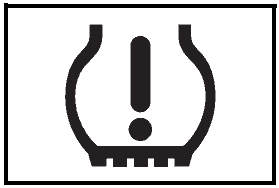
Tyre Pressure Warning Light
Steady: check pressures. Flashing then steady: investigate the monitoring system.The horseshoe-shaped symbol with an exclamation mark warns about tyre pressure or the monitoring system. Slow down smoothly, stop safely and inspect the tyres. A visibly flat tyre, damage or rapid pressure loss needs attention before we continue.Measure cold pressures and use the vehicle pressure label for the tyre size and load. Do not use the maximum pressure moulded on the tyre sidewall as the target. On applicable Aygo X systems, flashing for approximately a minute before remaining on indicates a monitoring fault. A reset cannot repair a puncture or faulty monitoring equipment.
Slip, Traction Control and Stability Indicator
Flashing can be normal intervention; persistent illumination can mean a fault.The skidding-car symbol may flash when traction or stability control is helping on a slippery surface. Ease the accelerator, reduce speed and give the tyres more grip. It is telling us that conditions or our inputs are demanding intervention.A light that stays on can indicate a problem with VSC, traction control or hill-start assistance. We should arrange inspection and avoid relying on those features. Repeated flashing on a dry, straight road also deserves attention to tyres, conditions and vehicle behaviour.
VSC OFF Indicator
Status — stability control has been switched off.VSC OFF is different from a fault warning that appears unexpectedly. It usually means a system has been deliberately disabled. Depending on the configuration, other assistance features may also become unavailable when stability control is switched off.For normal road driving, restore the normal setting using the correct controls. If it will not reactivate or warning messages remain, have the car checked. Turning a feature off to silence a warning does not solve the underlying problem.
Occupant Protection and Everyday Reminders
SRS Airbag Warning Light
Fault — arrange immediate safety-system inspection.The seated-person-and-airbag symbol can indicate a problem with airbags or seat-belt pretensioners. Some protection may not work as intended in a collision. A car that drives normally can still have a serious restraint-system fault.We should leave diagnosis to a qualified repairer. Do not probe airbag wiring or unplug connectors beneath seats as an experiment. A code reader that only accesses engine faults may not communicate with the restraint system at all.
Front and Rear Seat Belt Reminders
Reminder — check every occupied seat.Seat-belt warnings identify an unfastened belt, often with a buzzer. Rear-seat status can appear differently from the front-seat symbol, and the display may distinguish individual seating positions.Make sure every occupant is correctly restrained. A bag placed on the front passenger seat can trigger occupant detection; move luggage to a secure location. If a warning continues with the belt correctly latched, inspect the latch area for obvious obstruction and arrange diagnosis if necessary. Do not use buckle bypass devices.
Passenger Airbag ON or OFF Indicator
Status — verify the setting before carrying a passenger.The passenger-airbag display reports whether that airbag is enabled or disabled. OFF is not automatically a fault, because the vehicle may have a deliberate passenger-airbag deactivation setting. Its normal behaviour differs from the SRS malfunction warning.Follow the vehicle and child-seat instructions carefully. Never place a rear-facing child restraint in front of an active passenger airbag. If the displayed status does not match the intended setting, resolve it before using that seat.
Door or Tailgate Open Display
Reminder — stop safely and check the closures.A vehicle outline or text message can show that a door or the tailgate is not fully closed. We should stop safely rather than ask a passenger to manipulate a door while moving.Check for luggage, a trapped belt or another obstruction, then close the opening securely. A persistent message with everything properly shut may indicate a latch or switch problem. Do not assume a door is secure simply because it looks flush from the driver's seat.
Low Fuel Warning Light
Action — refuel soon.The fuel-pump symbol means the remaining fuel is low. The predicted range is an estimate influenced by speed, temperature, hills and recent driving. It is not a guaranteed distance to the next filling station.Choose a nearby safe refuelling option instead of trying to use every mile of the estimate. The newer hybrid still needs petrol; battery assistance does not make an empty fuel tank harmless. A fuel warning that remains after a meaningful refill needs checking.
Toyota Safety Sense and Driver Assistance Warnings
PCS or Pre-Collision System Warning
Check the message — disabled, temporarily unavailable and faulty are different states.PCS supports collision avoidance or mitigation within its operating limits. A warning may appear because the system is switched off, temporarily unable to operate or malfunctioning. On early Aygo X versions, the buzzer and message help distinguish these situations.If the message identifies a blocked sensor area, park safely and remove dirt, snow or condensation using the appropriate cleaning method. Do not touch or reposition the camera. Persistent warnings, fault messages or repeated unexpected intervention require inspection. Until resolved, drive without relying on automatic emergency braking.
Lane Tracing Assist and Lane Departure Indications
Normal status can change with road markings; an orange fault indication needs attention.Lane assistance uses display graphics to show availability and operation. A change in lane-line appearance does not necessarily mean a broken system: faded markings, glare, bends and weather can affect recognition.An orange warning with a malfunction message is different from an unavailable lane marking. Keep control of the steering and follow the display instruction. Check a dirty or misted camera viewing area if appropriate, but seek inspection when the warning persists. Lane support never removes our responsibility to steer.
Cruise Control and Dynamic Radar Cruise Control
Status or fault — distinguish selection from active speed control.A cruise symbol can mean the feature is selected, while a SET indication confirms a stored speed. Dynamic radar cruise also uses following-distance information. Available modes depend on the vehicle configuration.If cruise cancels unexpectedly or a malfunction message appears, control the accelerator and brakes normally. Do not repeatedly attempt to engage it in unsuitable conditions. Sensor obstruction can affect radar assistance, but a persistent fault needs diagnosis. A selected cruise symbol alone does not mean the car is controlling its speed.
Speed Limiter Indicator
Status — a speed limit has been selected, where equipped.The limiter helps restrict acceleration beyond a selected setting within the system's operating rules. It is different from cruise control: we normally still use the accelerator to drive.If acceleration feels restricted, check the selected limit before assuming an engine fault. We must still brake as necessary, especially downhill. A malfunction message or unusual behaviour should be checked rather than overcome by repeatedly pressing the accelerator harder.
Toyota Parking Assist-Sensor OFF Indicator
Steady OFF can be a setting; flashing can indicate unavailability or a fault.Where parking sensors are fitted, this indicator tells us that assistance is disabled or unavailable. Dirt, ice or another obstruction can affect the sensors, while a persistent warning can indicate a system problem.Clean the exterior sensor surfaces gently and read the message before retrying. Do not rely on beeps while the warning is active. Look around the car and manoeuvre slowly; repairing parking sensors does not replace direct observation of people and obstacles.
Inappropriate Pedal Operation Warning
Action — release the accelerator and follow the displayed instruction.This warning relates to protective functions such as Brake Override or Drive-Start Control where applicable. It can appear because of pedal use or an operating intervention, while an associated buzzer or fault message may require further action.Take your foot off the accelerator and use the brake appropriately. Check for a trapped or incorrectly fitted floor mat once safely parked. If the warning persists without conflicting pedal inputs, arrange diagnosis. Do not disable a protective feature to conceal repeated warnings.
Stop & Start, Key and Efficiency Indicators
Stop & Start Indicator
Normal operation — the petrol engine has stopped automatically.On a petrol Aygo X with Stop & Start, this indicator shows an automatic engine stop. Restart conditions vary with the transmission and vehicle state, so we should use the normal controls described for that version.The engine may remain running because of battery condition, temperature, climate-control demand or another operating requirement. That alone is not proof of a fault. Before leaving the car or working under the bonnet, switch the vehicle fully off rather than relying on an automatic engine stop.
Stop & Start Cancel Indicator
Steady: cancellation. Flashing: check for a malfunction.A steady cancel indication can simply mean Stop & Start has been switched off. On applicable petrol versions, a flashing cancel indicator is a warning that needs investigation rather than a normal choice of setting.Read the message and have a persistent flashing warning checked. Battery condition can affect operation, but replacing the battery without testing is guesswork. Any replacement battery must meet the requirements of the vehicle's Stop & Start system.
Smart Entry and Start Indicator or Key Message
Action depends on the message and equipment.A key-related indication can prompt us to bring the electronic key into the car, operate a pedal or address a detection problem. It is not a universal engine fault symbol. Cars without smart entry do not use every display shown on equipped versions.Check that the correct key is present and not buried beside electronics or metal objects. If its battery is weak, use the specified backup starting procedure. Persistent recognition problems with a known working key need diagnosis. Do not assume a new key is required without testing.
Security or Immobiliser Indicator
Flashing while parked is normally a security status.A small security indicator can flash when the car is switched off to show that the immobiliser is active. We do not need to repair a normal parked-car security flash.If the vehicle will not start and the indicator behaves abnormally, try the correct registered key and check the display. A key-recognition issue, low electrical supply and an immobiliser fault require different solutions. Repeated attempts without identifying the cause can simply flatten the battery.
Eco Driving Indicator
Information — economical operation, where fitted.An Eco Driving indication rewards operation within an efficient driving range. Its appearance and availability vary with transmission and display. It can disappear with stronger acceleration without indicating a malfunction.We can use it as feedback for smooth driving, but should never sacrifice safe progress to keep it illuminated. Do not confuse an economical-driving indicator with a separately selected ECO drive mode on a different powertrain.
Low Outside Temperature Indicator
Caution — road surfaces may be icy.The snowflake or low-temperature indication alerts us to cold conditions. On applicable early Aygo X displays it appears at roughly 3°C or below, but ice can form in particular locations even when the reported air temperature is higher.Reduce speed where grip may be poor, increase following distance and avoid abrupt inputs. Bridges, shaded sections and exposed roads deserve extra care. This is an environmental warning, not a fault that needs clearing with a diagnostic tool.
Exterior Lighting Indicators
Turn Signals and Hazard Warning Indicators
Normal flashing — a direction indicator or the hazards are operating.The arrows confirm that the indicators are selected. Both sides flash for hazard warning operation. An unusual flashing rate can suggest a lamp or circuit issue, so check the exterior lights when safely parked.A working dashboard arrow does not guarantee that every exterior indicator is visible. If a lamp has failed, repair it using the correct parts and method rather than assuming all units have a replaceable bulb.
Tail Lights and Dipped-Beam Lighting
Status — confirm the actual exterior light setting.The lighting indicator can show that the position or exterior lights are on. A dipped-beam pictogram is also useful for recognising the headlight setting, although not every Aygo X cluster displays a separate dipped-beam telltale.We should check the lighting control and road illumination instead of relying on dashboard brightness. Daytime running lights are not a substitute for the correct headlights and rear lighting in darkness or poor visibility.
High-Beam Indicator
Blue — main-beam headlights are on.The blue headlamp symbol shows high beam. Dip the headlights when other road users could be dazzled, including traffic ahead in the same direction.If the symbol remains on unexpectedly, check the stalk position. A lighting fault should be diagnosed if the actual lamps do not match the control setting.
Automatic High Beam Indicator
Status — automatic high-beam assistance is selected or available.The headlamp with an A identifies automatic high-beam assistance. It is different from the blue high-beam indicator, which tells us that high beam is actually illuminated.Poor weather, dirty glass or difficult lighting can affect detection. Take manual control whenever necessary. If a warning persists after the viewing area is clear, have the system checked rather than assuming it will always recognise approaching traffic.
Front and Rear Fog Light Indicators
Status — fog lights are switched on, where fitted.Front fog lights and the rear fog light have different symbols and colours. The rear fog light is particularly bright and should be used only when visibility justifies it under local road rules.Switch the fog lights off when conditions improve. If an indicator remains on unexpectedly, check the control position; a normal illuminated fog-light symbol does not require a reset or service visit.
What Changes on the Newer Aygo X Hybrid?
The later hybrid version adds powertrain-specific displays and can use different assistance features. We should not apply the petrol model's Stop & Start explanations to normal hybrid engine stopping. Nor should we assume every indicator found in a Prius or Yaris is fitted to an Aygo X Hybrid.
READY Indicator on Hybrid Models
Normal status — the hybrid vehicle can move.READY means the hybrid system is active, even when the petrol engine is silent. Silence does not mean the car is switched off. Keep the brake applied when appropriate and select the correct gear before moving.Before leaving the vehicle, follow its shutdown procedure and confirm it is off. If READY will not appear, read the message and check the normal starting conditions; a 12-volt supply problem and a hybrid-system fault are different possibilities that need proper assessment.
EV Operation Indicator on Hybrid Models
Normal status — electric propulsion is being used when indicated.An EV indication can show electric operation. The petrol engine may start or stop automatically as driving conditions and energy needs change. That transition is usually part of normal hybrid operation.An EV operation indicator is not a plug-in charging instruction and does not guarantee that a separately selectable EV mode is available. If a hybrid-system malfunction or overheating message appears, follow its exact stopping instruction and obtain assistance. Never handle orange high-voltage cables or attempt a high-voltage repair.
How We Find the Correct Fix Without Replacing Parts at Random
Record the Warning Before Clearing Anything
Photograph the dashboard once safely parked. Record the exact message, colour, flashing pattern, engine behaviour and whether the warning appeared during starting, braking or driving. This context can be more useful than saying that “all the lights came on.”
A recent flat battery, tyre replacement, windscreen replacement or repair may also be relevant. It is background information, not proof that the recent work caused the warning. Give the repairer the sequence of events without jumping straight to a replacement-part diagnosis.
Match the Diagnostic Tool to the System
A basic engine-code reader may not read ABS, airbags, steering or driver-assistance modules. We need a tool capable of communicating with the affected system and interpreting vehicle-specific information.
A fault code describes what the control unit detected; it does not always identify the component that must be replaced. Wiring, supply voltage, connectors and mechanical conditions can produce similar symptoms. Test the relevant circuit or system before buying parts.
Reset Only After the Cause Is Addressed
Clearing codes can erase useful evidence and temporarily hide a warning. Disconnecting the battery is also not a general warning-light repair. A lamp that returns needs the cause resolved, not another reset.
For tyre-pressure initialization, first inspect the tyres and set the correct cold pressures, then follow the procedure for the exact vehicle. A service reminder, low-pressure warning and engine malfunction are separate items with different requirements.
Know When Recovery Is the Sensible Option
We should arrange recovery for critical warnings, unsafe braking or steering, a severely misfiring engine, significant leaks, smoke or a car that cannot maintain safe progress. If the display explicitly instructs us to stop, a generic online colour chart should not override it.
For a normal status indicator, a simple setting change may be all that is needed. For a genuine malfunction, the safest “fix” often begins with an accurate diagnosis rather than roadside experimentation.
Conclusion
Understanding Toyota Aygo X dashboard symbols starts with identifying the right version and reading the full message. We can deal with straightforward reminders, check tyre pressures and recognise normal lighting or assistance indicators. Oil pressure, overheating, charging, braking and other serious faults need a different response: stop safely and obtain the appropriate help. The aim is to resolve the cause while protecting the people in the car—not merely switch a light off.
Frequently Asked Questions
1. Can we drive a Toyota Aygo X with the check engine light on?
Do not assume it is safe because the light is amber. Early petrol Aygo X instructions call for stopping safely and contacting a repairer for the malfunction indicator warning. Follow the vehicle's display and matching handbook, especially if the engine runs roughly, loses power or the light flashes.
2. Why does the tyre pressure light stay on after inflating the tyres?
The pressures may still be incorrect when cold, a tyre may be leaking, initialization may be required, or the monitoring system may have a fault. Check each tyre against the pressure label. Flashing for about a minute before staying on points toward a monitoring-system problem on applicable versions; repeated resets are not the solution.
3. What does a flashing Stop & Start OFF light mean?
On applicable petrol Aygo X models, a flashing cancel indicator can signal a malfunction, while a steady indicator may simply mean the feature has been switched off. Read the accompanying message and arrange inspection if it keeps flashing. Normal temporary unavailability is not automatically a defective battery.
4. Why are several warning lights showing at the same time?
A shared electrical problem or a fault that disables dependent systems can produce several warnings. However, we should not assume they all have a harmless common cause. Prioritise any stop instruction or critical warning, then have the affected systems scanned and the electrical supply tested as appropriate.
5. Is a green READY or EV symbol a fault on the Aygo X Hybrid?
Normally, no. READY means the hybrid vehicle is active and capable of moving, even with a silent petrol engine. An EV indication shows electric operation when displayed. A separate malfunction message changes the situation, so always read the text rather than judging the car solely by engine noise.
If you want to know other articles similar to Toyota Aygo X Warning Lights: The Complete Guide to Every Symbol, Meaning & Fix you can visit the category Service and Parts.
Auto Guide
I show you the best reviews of all car brands, the information we collect and show is verified by our mechanics, we hope that everything you read here is useful to buy the car of your dreams










More content of your interest