

Toyota Hilux Tyre Pressure: The Complete PSI Guide

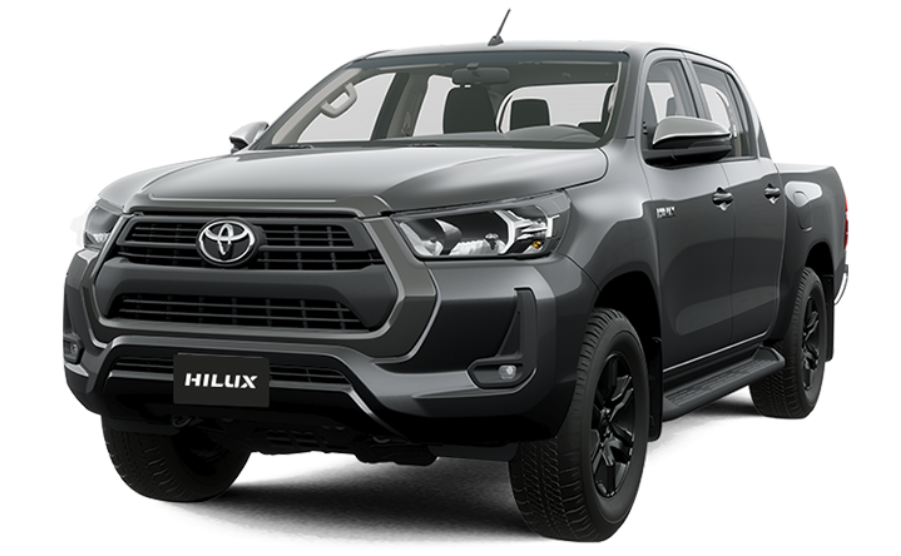
Getting Toyota Hilux tyre pressure right sounds simple enough. Grab a gauge, pump the tyres, screw the valve caps back on, and off we go. Yet the moment we start looking for one magic PSI number, things get surprisingly messy.
Why? Because a Toyota Hilux isn't one single vehicle configuration.
We have different generations, wheel sizes, tyre specifications, body styles, payloads, towing conditions, and markets. A lightly loaded double-cab cruising through town doesn't necessarily need to be treated exactly like a Hilux carrying tools, equipment, passengers, and a trailer.
That's why the safest starting point is always the tyre-pressure placard fitted to the vehicle, usually inside the driver's door area, together with the owner's manual. Toyota Australia specifically advises owners to use the pressure listed on the vehicle label or in the owner's manual and to measure inflation pressure when the tyres are cold.
Still, we can make the subject much easier to understand.
In this guide, we'll explain typical Hilux pressures, why tyre size matters, what happens when we carry heavy loads, how off-road driving affects pressure, and which mistakes are worth avoiding.
Content in this publication
- What Is the Correct Toyota Hilux Tyre Pressure?
- Where Can We Find the Hilux Recommended Tyre Pressure?
- Should Toyota Hilux Tyre Pressure Be Checked Cold?
- Toyota Hilux Tyre Pressure in PSI, Bar and kPa
- Toyota Hilux Tyre Pressure for 265/65 R17 Tyres
- Toyota Hilux Tyre Pressure for 265/60 R18 Tyres
- Toyota Hilux Tyre Pressure for 225/70 R17 Tyres
- Does the Front and Rear Hilux Tyre Pressure Have to Match?
- Toyota Hilux Tyre Pressure When Fully Loaded
- Toyota Hilux Tyre Pressure When Towing
- Toyota Hilux Tyre Pressure for Highway Driving
- Toyota Hilux Tyre Pressure for Off-Road Driving
- Toyota Hilux Tyre Pressure for Sand
- Toyota Hilux Tyre Pressure on Gravel and Corrugations
- Toyota Hilux Tyre Pressure for Mud and Rocks
- How Often Should We Check Hilux Tyre Pressure?
- Should We Check the Hilux Spare Tyre Too?
- Does the Toyota Hilux Have a Tyre Pressure Monitoring System?
- Why Is My Toyota Hilux Tyre Pressure Warning Light On?
- What Happens If Hilux Tyre Pressure Is Too Low?
- What Happens If Hilux Tyre Pressure Is Too High?
- Should We Use the Maximum PSI Printed on the Tyre Sidewall?
- Do Aftermarket Tyres Change Toyota Hilux Tyre Pressure?
- Does Temperature Affect Toyota Hilux Tyre Pressure?
- Can Wrong Tyre Pressure Increase Fuel Consumption?
- Does Tyre Pressure Affect Hilux Tyre Wear?
- How to Check Toyota Hilux Tyre Pressure Properly
- Common Toyota Hilux Tyre Pressure Mistakes
- Toyota Hilux Tyre Pressure: Our Practical Recommendation
- Conclusion: Get the Pressure Right and Let the Hilux Work
- Frequently Asked Questions
What Is the Correct Toyota Hilux Tyre Pressure?
There isn't one correct pressure for every Toyota Hilux.
As a current reference, Toyota UK's tyre guide lists the following general pressures for several Hilux tyre sizes:
| Hilux tyre size | Front | Rear |
|---|---|---|
| 225/70 R17 | 35 psi / 2.4 bar | 35 psi / 2.4 bar |
| 265/65 R17 | 29 psi / 2.0 bar | 29 psi / 2.0 bar |
| 265/60 R18 | 29 psi / 2.0 bar | 29 psi / 2.0 bar |
These figures come from Toyota UK's published tyre-pressure guidance, but they shouldn't automatically be applied to every Hilux worldwide. Specifications can differ between model years, trims, tyres, loads, and markets.
That distinction matters.
The number printed on our particular vehicle's placard takes priority over a generic internet table.
A Quick Toyota Hilux Tyre Pressure Rule
For everyday road use:
Start with the cold pressure specified on the Toyota tyre placard.
Then account for anything unusual, such as:
- Heavy payloads
- Towing
- Replacement tyres
- Different wheel sizes
- Extended high-speed driving
- Sand
- Mud
- Rocky tracks
- Very hot or cold conditions
Pressure shouldn't be chosen by guesswork.
Think of tyre pressure like shoe size: close isn't necessarily good enough just because we can squeeze into it.
Where Can We Find the Hilux Recommended Tyre Pressure?
The most reliable information is already attached to the vehicle.
Toyota says the recommended pressure can be found on a label inside the driver's door area or in the owner's manual.
Depending on model and market, look around:
- Driver's door jamb
- B-pillar
- Door opening
- Owner's manual
- Official Toyota vehicle documentation
The placard normally identifies the original tyre size and recommended inflation pressures.
Why the Door Placard Beats Internet Advice
An online article doesn't know exactly which Hilux is sitting in our driveway.
The placard does.
It was specified for that vehicle configuration, which makes it far more useful than somebody saying, "I run 38 PSI and it feels fine."
Personal experience can be useful, especially off-road, but it isn't a substitute for the manufacturer's road-pressure specification.
Should Toyota Hilux Tyre Pressure Be Checked Cold?
Yes.
Toyota recommends checking tyre pressure when the tyres are cold for an accurate reading.
A cold tyre doesn't necessarily mean one sitting in freezing weather. It generally means the tyre hasn't been significantly heated by driving.
As we drive, the tyre flexes and heats up. The air inside warms as well, causing measured pressure to rise.
Why Hot Tyre Pressure Is Higher
Imagine blowing air into a balloon and leaving it in the sun. Heat changes what's happening inside.
Tyres behave similarly.
A tyre that started at the correct cold pressure may read several PSI higher after a long drive. That doesn't automatically mean it has been overinflated.
If we release air simply because a hot reading looks high, the tyre may end up underinflated once it cools.
The Practical Approach
Check tyre pressure:
- Before a long drive
- When the vehicle has been parked for several hours
- Preferably before the day's temperature rises substantially
- With a reliable tyre-pressure gauge
Then inflate to the figure specified for that vehicle.
Toyota Hilux Tyre Pressure in PSI, Bar and kPa
Pressure specifications aren't always displayed in PSI.
Depending on where our Hilux was sold, the label may use:
- PSI
- bar
- kPa
A useful approximation is:
| PSI | Bar | kPa |
|---|---|---|
| 29 | 2.0 | 200 |
| 32 | 2.2 | 220 |
| 35 | 2.4 | 240 |
| 36 | 2.5 | 250 |
| 38 | 2.6 | 260 |
| 41 | 2.8 | 280 |
| 44 | 3.0 | 300 |
Don't worry if conversions don't appear perfectly round. Manufacturers often specify pressure primarily in one measurement system, and conversions can be rounded.
Toyota Hilux Tyre Pressure for 265/65 R17 Tyres
The 265/65 R17 is a common tyre size on modern Hilux variants.
Toyota Australia's recent Hilux specification information shows 265/65 R17 tyres across multiple grades, confirming just how common this setup remains in the range.
Toyota UK's published general pressure for a Hilux running 265/65 R17 tyres is 29 PSI front and rear.
However, don't turn that into a universal law.
An Australian Hilux, a UK-market Hilux, a modified 4x4, or a vehicle carrying considerable payload may have different requirements.
Does 265/65 R17 Always Mean 29 PSI?
No.
Tyre dimensions alone don't determine the correct pressure.
We also need to consider:
- Vehicle version
- Gross axle limits
- Tyre load rating
- Original versus aftermarket tyres
- Payload
- Driving conditions
- Manufacturer placard specification
Two vehicles can wear tyres with the same dimensions but require different inflation pressures.
Toyota Hilux Tyre Pressure for 265/60 R18 Tyres
Another familiar Hilux size is 265/60 R18, particularly on higher-spec models.
Toyota UK's general Hilux guide lists 29 PSI (2.0 bar) front and rear for 265/60 R18 tyres.
Again, treat that number as a useful reference rather than permission to ignore the vehicle placard.
The 18-inch wheel may look sharper and fill the arches beautifully, but appearance changes nothing about the need for correct inflation.
Toyota Hilux Tyre Pressure for 225/70 R17 Tyres
For Hilux models equipped with 225/70 R17 tyres, Toyota UK's guide gives 35 PSI (2.4 bar) front and rear.
Notice the interesting part.
The narrower 225 tyre in Toyota's UK guide receives a higher recommended pressure than the wider 265 tyres listed alongside it.
That's a perfect example of why we shouldn't assume that a bigger tyre automatically needs more PSI.
Tyre pressure, construction, vehicle weight, tyre load capacity, and intended operating characteristics work together.
Does the Front and Rear Hilux Tyre Pressure Have to Match?
Not necessarily.
Some Hilux configurations specify equal front and rear pressures for normal driving, while others may have different recommendations depending on loading or vehicle specification.
A pickup naturally places us in a slightly unusual position because rear axle load can change dramatically.
Drive to the supermarket with an empty tray and the rear may be carrying relatively little cargo.
Load the tray with hundreds of kilograms of tools or equipment and the situation changes completely.
Payload Changes the Equation
The tyre has to support weight.
As load rises, correct pressure becomes increasingly important to maintain:
- Tyre shape
- Load-carrying ability
- Steering response
- Braking behaviour
- Heat control
- Tread stability
This is why commercial vehicles deserve more attention to pressure than many passenger cars.
Toyota Hilux Tyre Pressure When Fully Loaded
A loaded Hilux may require higher pressure than it does when lightly loaded, depending on Toyota's pressure schedule for the specific vehicle.
Never simply add an arbitrary 5 or 10 PSI because the tray looks full.
Instead, check whether the tyre placard provides different settings for normal and loaded operation.
Why Heavy Loads Create More Heat
An underinflated tyre flexes excessively.
Add substantial weight and that flexing gets more severe.
Flex generates heat.
Heat is the enemy we can't see.
The tyre may look reasonably normal while its internal structure is working far harder than intended.
That's one reason correct inflation becomes particularly important when:
- Carrying maximum payload
- Driving long distances
- Travelling at highway speeds
- Driving in hot climates
- Towing
Don't Forget Axle and Tyre Limits
Correct pressure doesn't magically increase the Hilux's legal payload.
Even perfectly inflated tyres can't compensate for exceeding:
- Gross vehicle mass
- Axle ratings
- Tyre load index
- Towball limits
- Manufacturer towing limits
Pressure helps the tyre perform correctly within its limits. It doesn't rewrite them.
Toyota Hilux Tyre Pressure When Towing
Hooking a caravan, boat, machinery trailer, or camper to the back of a Hilux alters the load distribution.
Towball mass adds weight around the rear axle, meaning rear tyres can be subjected to considerably more load than during normal solo driving.
Before towing, we should inspect:
- Vehicle tyre placard
- Owner's manual
- Trailer tyre pressure
- Tyre load indexes
- Towball mass
- Vehicle payload
- Axle loads
Don't forget the trailer tyres either.
A perfectly prepared Hilux attached to a trailer with badly underinflated tyres is still a recipe for an unpleasant roadside afternoon.
Toyota Hilux Tyre Pressure for Highway Driving
For ordinary sealed-road and highway use, begin with Toyota's specified cold pressure.
Some drivers believe dramatically higher pressure automatically reduces fuel consumption and makes the tyre safer at speed.
That's overly simplistic.
Yes, insufficient pressure increases rolling resistance and heat generation. But excessive pressure can also alter the tyre's contact patch, ride, braking behaviour, and wear pattern.
We're searching for the correct pressure, not the highest pressure.
Highway Pressure Isn't the Same as Sand Pressure
This deserves emphasis.
The tyre pressure we use at highway speed should generally not be the reduced pressure we use deliberately on soft off-road surfaces.
If we've aired down for a beach or trail, we need to reinflate before returning to sustained road speeds.
Low pressure plus high speed produces heat quickly.
Toyota Hilux Tyre Pressure for Off-Road Driving
Now things get more interesting.
Off-road drivers often deliberately reduce tyre pressure to allow the tyre to flex around obstacles and increase the size of its contact patch.
That can improve:
- Traction
- Comfort
- Floatation
- Ability to absorb rocks
- Performance on corrugations
But there isn't one universal Hilux off-road PSI either.
Conditions matter enormously.
Toyota Hilux Tyre Pressure for Sand
Sand is where airing down becomes particularly useful.
Reducing pressure lengthens the tyre footprint, helping the Hilux float rather than dig.
Picture walking across a soft mattress wearing high heels versus snowshoes. The same weight distributed across a larger footprint sinks less.
That's broadly what we're trying to achieve.
How Low Should We Go on Sand?
There's no manufacturer-approved universal sand PSI suitable for every tyre and Hilux.
Experienced off-roaders may use substantially lower pressures than road settings, but the appropriate number depends on:
- Vehicle weight
- Tyre construction
- Wheel size
- Sidewall height
- Sand softness
- Speed
- Load
- Temperature
The lower we go, the more carefully we have to drive.
The Danger of Extremely Low Pressure
Drop pressure too far and we increase the risk of:
- Tyre slipping on the rim
- Bead separation
- Sidewall damage
- Wheel damage
- Excessive heat
- Poor steering response
Reduced pressure requires reduced speed.
Those two concepts belong together.
Toyota Hilux Tyre Pressure on Gravel and Corrugations
Gravel roads aren't necessarily a reason to slash tyre pressure dramatically.
A moderate pressure adjustment may improve compliance on rough corrugations, but the correct approach depends on speed, tyre construction, load, and road conditions.
Too much pressure can make the Hilux dance over corrugations like a shopping trolley on cobblestones.
Too little pressure, meanwhile, can generate excess heat or expose the sidewalls to damage.
Balance matters.
Toyota Hilux Tyre Pressure for Mud and Rocks
Mud and rocky terrain introduce different priorities.
In mud, a larger footprint can improve traction in some situations.
On rocky trails, a softer tyre can deform around obstacles instead of bouncing over them.
Yet rocky terrain also threatens sidewalls.
Running very low pressures without appropriate tyres or bead-retention systems increases the chance of damage or losing the bead.
This is why off-road pressure isn't just mathematics. It's a combination of equipment, terrain, load, speed, and judgement.
How Often Should We Check Hilux Tyre Pressure?
Toyota Australia recommends visually checking tyres weekly and checking inflation pressure with a gauge fortnightly or, at minimum, monthly. Toyota also reminds drivers to check the spare.
For a working Hilux, we'd lean toward checking more often rather than less.
Pressure deserves another check:
- Before long journeys
- Before towing
- Before carrying heavy loads
- Before off-road trips
- After airing down
- After major temperature changes
- When steering feels unusual
- After hitting a pothole
- When TPMS alerts appear
A pressure gauge costs very little compared with a set of tyres.
Should We Check the Hilux Spare Tyre Too?
Absolutely.
The spare tyre spends months quietly hiding underneath the vehicle, gathering dust and receiving approximately zero attention.
Then one afternoon we need it.
That's a terrible moment to discover it's sitting at half the pressure it needs.
Toyota explicitly recommends including the spare when checking tyre pressures.
Why Spare Tyres Lose Pressure
Air gradually escapes through tyre materials and valves.
Temperature changes also influence measured pressure.
So even a spare tyre that has never touched the road can be underinflated when we eventually need it.
Include it in routine maintenance.
Future us will be grateful.
Does the Toyota Hilux Have a Tyre Pressure Monitoring System?
It depends on model, market, and specification.
Modern Hilux models in some regions feature a tyre-pressure monitoring or warning system. Toyota UK's recent Hilux documentation, for example, lists a Tyre Pressure Warning System across its specified grades, while recent Toyota Australia specifications show TPMS availability on selected Hilux grades.
That variation is another reason generic statements about "the Hilux" can be misleading.
Can We Rely Entirely on TPMS?
No.
TPMS is a safety aid, not an excuse to retire the tyre-pressure gauge.
A tyre can be incorrectly inflated for our intended load without necessarily producing the warning we expect.
We should continue checking pressures manually.
Why Is My Toyota Hilux Tyre Pressure Warning Light On?
If the warning appears, one or more tyres may have lost pressure.
Possible causes include:
- Normal gradual air loss
- Cold weather
- Puncture
- Damaged valve
- Wheel damage
- Tyre damage
- Incorrect inflation
- TPMS-related fault
Check every tyre with a gauge rather than relying entirely on appearance.
A radial tyre can lose considerable pressure while still looking surprisingly normal.
What Happens If Hilux Tyre Pressure Is Too Low?
Underinflation causes the tyre to flex more than intended.
Potential consequences include:
- Increased heat
- Higher rolling resistance
- Sluggish handling
- Accelerated shoulder wear
- Reduced fuel efficiency
- Poor stability
- Increased risk of tyre damage
A heavily loaded or fast-moving Hilux magnifies some of those risks.
Signs Our Hilux Tyres May Be Underinflated
We might notice:
- Heavy steering
- Vague cornering
- Increased fuel consumption
- Tyres looking unusually compressed
- Outer-edge wear
- TPMS warning
Don't diagnose pressure from appearance alone.
Use a gauge.
What Happens If Hilux Tyre Pressure Is Too High?
More isn't automatically better.
Overinflation can produce:
- Harsher ride quality
- Reduced ability to absorb bumps
- Increased centre tread wear in some circumstances
- Altered traction characteristics
- Greater sensitivity to rough surfaces
A Hilux already has the personality of a working pickup. We don't need to turn every pothole into a personal introduction to the suspension.
Correct pressure usually provides the best compromise between load capacity, ride, tyre life, handling, and efficiency.
Should We Use the Maximum PSI Printed on the Tyre Sidewall?
Usually, no.
This is one of the most common tyre-pressure mistakes.
The figure moulded into the tyre sidewall relates to the tyre's rated load and pressure information. It isn't automatically the everyday inflation recommendation for our vehicle.
For road use, follow the vehicle manufacturer's pressure specification applicable to the tyre configuration and load.
The tyre sidewall and the Hilux placard answer different questions.
Do Aftermarket Tyres Change Toyota Hilux Tyre Pressure?
They can.
Hilux owners love modifications.
Larger all-terrain tyres, mud terrains, LT construction, different wheels, suspension upgrades—we've seen the menu.
Once we significantly move away from the factory setup, the original pressure recommendation may no longer produce exactly the same behaviour.
LT Tyres Can Behave Differently
Light-truck tyres can have substantially different construction from passenger-type tyres.
Their stronger carcasses may respond differently at the same PSI.
That doesn't mean we should invent a pressure ourselves.
If the Hilux is running non-standard tyres, speak with the tyre manufacturer or a qualified tyre specialist about an appropriate inflation strategy based on:
- Axle weight
- Tyre dimensions
- Load index
- Load range
- Vehicle use
- Maximum load
For heavily modified touring rigs, actual axle weights can be especially informative.
Does Temperature Affect Toyota Hilux Tyre Pressure?
Yes.
Air pressure changes with temperature.
When ambient temperature falls, cold tyre pressure tends to decrease. When temperatures rise, pressure increases.
That's why a Hilux may appear correctly inflated one month and slightly low after a major seasonal temperature drop.
Should We Reduce Pressure in Hot Weather?
Don't automatically remove air because the weather is hot.
Set the tyre to its recommended cold pressure.
The vehicle and tyre are designed with operating temperature changes in mind.
The mistake is looking at a warmed-up tyre after driving and assuming the higher number needs to be corrected downward.
Can Wrong Tyre Pressure Increase Fuel Consumption?
Yes, particularly when tyres are underinflated.
A softer tyre generally creates more rolling resistance.
The engine then has to work slightly harder to maintain speed.
On a Hilux covering tens of thousands of kilometres every year, small inefficiencies accumulate.
Correct tyre pressure isn't going to transform the pickup into a hybrid hatchback, but it's one of the easiest efficiency variables we can control.
Does Tyre Pressure Affect Hilux Tyre Wear?
Definitely.
Persistent incorrect inflation can contribute to abnormal tread wear.
Typical patterns may include:
Underinflation
- Greater wear toward the shoulders
- More heat generation
- Increased casing flex
Overinflation
- Greater tendency toward centre wear
- Harder ride
- Reduced compliance
But tyre wear isn't caused by pressure alone.
Alignment, suspension condition, rotation patterns, driving habits, load, and road surfaces all matter.
If one tyre wears dramatically differently from the others despite correct pressure, we'd inspect beyond inflation.
How to Check Toyota Hilux Tyre Pressure Properly
The process is refreshingly simple.
Step-by-Step Method
- Let the tyres cool.
- Locate the vehicle's tyre-pressure placard.
- Confirm the correct front and rear specifications.
- Remove the valve cap.
- Press a reliable gauge squarely onto the valve.
- Read the pressure.
- Add air if necessary.
- Release a small amount if genuinely overinflated while cold.
- Recheck.
- Replace the valve cap.
- Repeat for every road tyre.
- Check the spare.
Toyota recommends using cold tyres for the most accurate reading.
Buy a Decent Pressure Gauge
Service-station gauges can be convenient, but carrying our own gauge makes it easier to monitor pressures consistently.
Consistency matters because two inexpensive gauges can sometimes disagree slightly.
If we're serious about touring or off-road driving, a portable compressor and accurate pressure gauge are among the most useful accessories we can keep in the vehicle.
Common Toyota Hilux Tyre Pressure Mistakes
A few mistakes appear over and over again.
1. Assuming Every Hilux Uses 30 PSI
It doesn't.
2. Copying Another Owner's Pressure
Their Hilux may have different tyres, weight, modifications, or usage.
3. Inflating to the Sidewall Maximum
The sidewall maximum isn't automatically the vehicle's road-pressure recommendation.
4. Checking Immediately After Highway Driving
Hot pressure isn't directly comparable with the manufacturer's cold specification.
5. Forgetting the Spare
The spare doesn't maintain itself.
6. Airing Down and Forgetting to Reinflate
Soft sand pressure and motorway pressure are very different worlds.
7. Ignoring Payload
A ute carrying nothing and one sitting near its maximum payload aren't operating under identical conditions.
Toyota Hilux Tyre Pressure: Our Practical Recommendation
For normal driving, the process should be almost boring.
That's a good thing.
Find the Hilux tyre placard. Inflate the tyres to the specified cold pressure for the vehicle, tyres, and loading situation. Check them regularly.
For perspective, Toyota UK's published figures include 35 PSI for 225/70 R17 Hilux tyres and 29 PSI for 265/65 R17 and 265/60 R18 configurations, but these should be treated as model-specific reference values rather than universal Hilux settings.
When load, towing, off-roading, or aftermarket tyres enter the picture, we need to think beyond a single generic number.
That's the key takeaway.
The perfect Toyota Hilux tyre pressure isn't whatever somebody on a forum runs.
It's the pressure appropriate for our Hilux, our tyres, our load, and our conditions.
Conclusion: Get the Pressure Right and Let the Hilux Work
The Hilux earned its reputation by doing hard jobs without unnecessary drama, and tyre maintenance should follow the same philosophy.
For everyday sealed-road use, Toyota's vehicle placard and owner's manual remain our primary references. Measure pressures cold, check them regularly, remember the spare, and adjust our preparation whenever load or driving conditions change.
When we venture off-road, reduced pressure can dramatically improve traction and comfort, but lower PSI requires lower speeds and greater awareness. When we return to sealed roads, reinflation matters.
A minute with a tyre gauge can improve handling, tyre longevity, efficiency, and safety.
Not bad for a job that takes less time than buying a coffee.
Frequently Asked Questions
1. What PSI should Toyota Hilux tyres be?
It depends on the model, tyre size, market, and loading condition. Toyota UK's published guidance, for example, lists 35 PSI front and rear for 225/70 R17 Hilux tyres and 29 PSI front and rear for 265/65 R17 and 265/60 R18 tyres. Always verify the pressure shown on your own vehicle's tyre placard before using these figures.
2. What is the Toyota Hilux 265/65 R17 tyre pressure?
Toyota UK's general tyre guide lists 29 PSI, or 2.0 bar, front and rear for a Hilux equipped with 265/65 R17 tyres. Specifications may differ by market, generation, load, and vehicle configuration, so the placard remains the final reference.
3. Should Hilux front and rear tyre pressures be the same?
They can be, but not every configuration or load situation is necessarily identical. Follow the front and rear pressure values printed on the vehicle's placard, particularly when the Hilux is heavily loaded or towing.
4. Do we check Hilux tyre pressure hot or cold?
Cold. Toyota advises checking pressure when the tyres are cold because this provides a more accurate comparison with the recommended specification.
5. How often should Toyota Hilux tyre pressure be checked?
Toyota Australia recommends a visual tyre check weekly and checking inflation pressure with a gauge fortnightly or at least monthly. It's also sensible to check before long journeys, towing, heavy-load trips, and off-road travel. Don't forget the spare tyre.
If you want to know other articles similar to Toyota Hilux Tyre Pressure: The Complete PSI Guide you can visit the category Service and Parts.
Volvo S90 Engine Oil: Type, Capacity & Change Guide
Volvo S90 Boot Space: Size, Capacity and Practicality
SEO Title: Volvo S90 Oil Capacity: Complete Guide by Engine

Kia Sorento Oil Type: Complete Guide by Year & Engine
Kia Sorento Engine Capacity: Complete Guide by Year
Peugeot 308 Clutch Replacement Cost: Complete UK Guide for 2026
Leave a Reply
More content of your interest