
Vauxhall Corsa Fuel Tank Capacity: Complete Guide

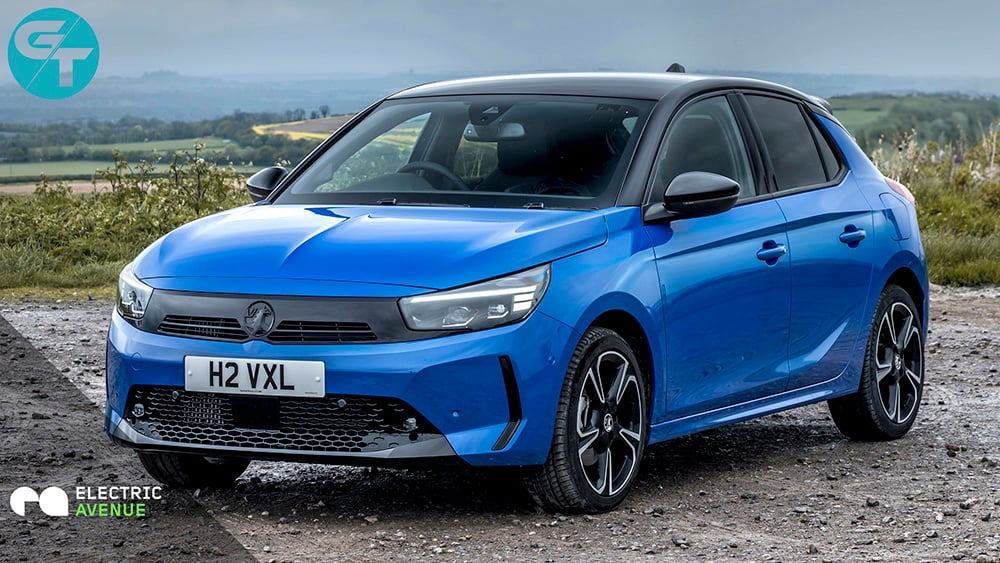
Knowing the Vauxhall Corsa fuel tank capacity is useful whether we're planning a long journey, calculating fuel costs, comparing different model years or simply wondering how many litres we need for a full tank.
The Vauxhall Corsa has been one of Britain's most recognisable small hatchbacks for decades. While its compact dimensions make it ideal for urban driving, its fuel tank is generally large enough for motorway journeys and everyday commuting without constant visits to the petrol station.
However, not every Corsa has exactly the same fuel tank size. Depending on the generation, production year and engine, capacities can range from approximately 40 to 46 litres.
Modern petrol and hybrid versions generally have tanks of around 44–45 litres, while certain diesel models use smaller tanks.
In this guide, we'll explore the fuel tank capacities of different Vauxhall Corsa generations, explain how far we can travel on a full tank, compare petrol and diesel versions, and share practical advice for improving fuel efficiency.
Content in this publication
- How Many Litres Is a Vauxhall Corsa Fuel Tank?
- Vauxhall Corsa Fuel Tank Capacity by Year
- Vauxhall Corsa 2026 Fuel Tank Capacity
- Vauxhall Corsa 2019–2023 Fuel Tank Capacity
- Vauxhall Corsa 2014–2019 Fuel Tank Capacity
- Vauxhall Corsa 2006–2014 Fuel Tank Capacity
- Vauxhall Corsa 2000–2006 Fuel Tank Capacity
- Vauxhall Corsa 1993–2000 Fuel Tank Capacity
- Vauxhall Corsa Fuel Tank Capacity in Gallons
- How Many Miles Can a Vauxhall Corsa Do on a Full Tank?
- Does the Vauxhall Corsa Petrol or Diesel Have Better Range?
- How Much Does It Cost to Fill a Vauxhall Corsa?
- How to Check Your Vauxhall Corsa Fuel Tank Capacity
- When Does the Vauxhall Corsa Low Fuel Light Come On?
- What Happens If You Run a Corsa Out of Fuel?
- How to Fill the Vauxhall Corsa Fuel Tank Properly
- Why Does My Corsa Take Less Fuel Than Its Tank Capacity?
- How to Improve Vauxhall Corsa Fuel Economy
- Vauxhall Corsa Hybrid vs Petrol Fuel Range
- Does the Vauxhall Corsa Electric Have a Fuel Tank?
- Is the Vauxhall Corsa Fuel Tank Big Enough for Long Journeys?
- Common Misconceptions About Vauxhall Corsa Fuel Tanks
- Frequently Asked Questions
- Conclusion: Understanding Vauxhall Corsa Fuel Tank Capacity
How Many Litres Is a Vauxhall Corsa Fuel Tank?
Most Vauxhall Corsa models have a fuel tank capacity of approximately 44 or 45 litres.
However, the exact figure depends on the model:
- Recent petrol models: Typically 44–45 litres.
- Recent hybrid models: Approximately 44–45 litres.
- 2019–2023 petrol models: Generally 44 litres.
- 2019–2023 diesel models: Generally 41 litres.
- 2014–2019 Corsa: Generally 45 litres.
- 2006–2014 Corsa: Usually 45 litres, although some ecoFLEX diesel versions have 40-litre tanks.
- 2000–2006 Corsa: Approximately 44 litres.
- 1993–2000 Corsa: Approximately 46 litres.
These differences might appear small, but they can influence how much fuel we purchase, our estimated driving range and the amount we spend at the pump.
We should also remember that published specifications sometimes differ slightly between manufacturer brochures, online configurators and individual model variants.
For the most accurate information, we recommend checking the owner's manual corresponding to the specific vehicle.
Vauxhall Corsa Fuel Tank Capacity by Year
The following table provides an overview of the main Vauxhall Corsa generations and their typical fuel tank capacities.
| Vauxhall Corsa Generation | Production Years | Fuel Tank Capacity |
|---|---|---|
| Corsa B | 1993–2000 | Approx. 46 litres |
| Corsa C | 2000–2006 | 44 litres |
| Corsa D | 2006–2014 | 40–45 litres |
| Corsa E | 2014–2019 | 45 litres |
| Corsa F Petrol | 2019–2023 | 44 litres |
| Corsa F Diesel | 2019–2023 | 41 litres |
| Corsa F Petrol / Hybrid | 2023–2026 | 44–45 litres |
| Corsa Electric | 2020 onward | No petrol or diesel tank |
Note: Production years are approximate generation ranges. Tank capacity can vary with engine, specification and model year.
An important distinction is that the current Corsa generation is often described as having either a 44-litre or 45-litre tank.
For example, recent UK manufacturer technical sheets list 45 litres, while some manufacturer configurator information specifies 44 litres.
Rather than assuming every vehicle has the same capacity, we should confirm the exact specification of the car we're driving.
Vauxhall Corsa 2026 Fuel Tank Capacity
The 2026 Vauxhall Corsa is available with different powertrain options, including conventional petrol engines, petrol hybrids and fully electric versions.
For petrol and hybrid models, the UK model-year 2026 technical information generally lists a 45-litre fuel tank.
However, some current online manufacturer specifications quote 44 litres.
Vauxhall Corsa 1.2 Petrol
The modern 1.2-litre petrol engine is designed to offer a balance between everyday performance and fuel economy.
Depending on the transmission and specification, official combined fuel consumption can be around 5.4–5.7 litres per 100 kilometres.
Using a nominal 45-litre tank, we can estimate its theoretical driving range.
For example:
- Fuel tank capacity: 45 litres.
- Average consumption: 5.4 L/100 km.
- Estimated theoretical range: 833 km.
- Equivalent distance: Approximately 518 miles.
This calculation assumes that the entire nominal fuel capacity is available and that the vehicle consistently achieves the stated consumption.
Real-world range will generally be lower.
Vauxhall Corsa Hybrid
The Corsa Hybrid combines a petrol engine with an electric motor and a small battery.
Unlike a fully electric vehicle, it still requires petrol.
Recent versions commonly have a fuel tank capacity of approximately 44–45 litres, depending on the specification used.
One advantage of hybrid technology is that the electric motor can assist the petrol engine, particularly during urban driving.
The system can recover energy while slowing down, reducing the amount of petrol needed in certain conditions.
This means a Corsa Hybrid may travel farther on a tank than a conventional petrol version, even when both have similar fuel tank capacities.
Vauxhall Corsa 2019–2023 Fuel Tank Capacity
The sixth-generation Corsa, known as the Corsa F, introduced a more modern platform, updated engines and an electric version.
The petrol and diesel variants did not necessarily share the same fuel tank capacity.
Corsa F Petrol Tank Capacity
The original Corsa F petrol models generally have a 44-litre tank.
This includes several versions of the 1.2-litre petrol engine, such as naturally aspirated and turbocharged variants.
A 44-litre tank is approximately equivalent to:
- 9.68 UK gallons.
- 11.62 US gallons.
- 44,000 millilitres.
The capacity is appropriate for a small hatchback focused on fuel economy and daily practicality.
Corsa F Diesel Tank Capacity
The 1.5-litre diesel version of the early Corsa F has a smaller 41-litre fuel tank.
Although this is three litres less than the petrol version, diesel efficiency can make a considerable difference to driving range.
A diesel Corsa may therefore travel farther between refuelling stops despite carrying less fuel.
Early Corsa F diesel models also have a separate AdBlue system.
AdBlue is not diesel fuel and should never be poured into the diesel tank.
Vauxhall Corsa 2014–2019 Fuel Tank Capacity
The fifth-generation Vauxhall Corsa, commonly called the Corsa E, generally features a 45-litre petrol or diesel fuel tank.
This generation was available with several engines, including:
- 1.2-litre petrol.
- 1.4-litre petrol.
- 1.4-litre turbo petrol.
- 1.0-litre turbo petrol.
- 1.3-litre CDTi diesel.
- Performance-oriented petrol engines.
The owner's manual for this generation lists a 45-litre petrol/diesel refilling capacity across its main engine variants.
How Far Can a 2016 Corsa Travel on a Full Tank?
Let's consider a hypothetical 2016 Vauxhall Corsa with a 45-litre fuel tank and an average consumption of 6.0 L/100 km.
We calculate:
45 ÷ 6.0 × 100 = 750 km
That equals approximately 466 miles.
However, this is a theoretical maximum based on average fuel consumption.
If we're driving in heavy traffic, making frequent short journeys or using air conditioning extensively, actual fuel consumption may increase.
Consequently, the realistic range can be lower.
Vauxhall Corsa 2006–2014 Fuel Tank Capacity
The fourth-generation Corsa, known as the Corsa D, is particularly common on the UK used-car market.
Most Corsa D versions have a 45-litre tank.
However, certain fuel-efficient diesel variants were equipped with smaller tanks.
Standard Corsa D Petrol and Diesel
Most petrol engines and many diesel variants have a 45-litre capacity.
These include popular versions such as the 1.2-litre and 1.4-litre petrol models.
A 45-litre tank provides practical range for commuting and longer journeys.
Corsa D ecoFLEX Diesel
Some Corsa D 1.3 CDTi ecoFLEX models have a 40-litre tank.
For example, certain 95 PS ecoFLEX S, Design and Exclusiv specifications were listed with this smaller capacity.
This is why we should avoid assuming that every 2012 or 2013 Corsa holds 45 litres.
The engine variant and trim can matter just as much as the registration year.
Vauxhall Corsa 2000–2006 Fuel Tank Capacity
The Corsa C was sold with a variety of petrol and diesel engines.
The owner's manual lists a nominal fuel tank capacity of 44 litres for the Corsa.
This generation included popular 1.0, 1.2 and 1.4 petrol versions alongside diesel alternatives.
With relatively modest engine sizes and a lightweight body, many Corsa C models could cover a useful distance between fuel stops.
For instance, at an illustrative average consumption of 6.5 L/100 km, a 44-litre tank provides a theoretical range of approximately 677 kilometres, or 421 miles.
Actual mileage depends heavily on vehicle condition, engine specification and driving conditions.
Vauxhall Corsa 1993–2000 Fuel Tank Capacity
The Corsa B arrived in the UK during the 1990s and remains familiar to many drivers.
Its typical fuel tank capacity is approximately 46 litres.
That makes it slightly larger than the nominal capacity quoted for several later Corsa generations.
Nevertheless, a larger tank does not automatically mean a greater driving range.
Older engines are often less efficient than modern turbocharged petrol or hybrid systems.
A vehicle with a 46-litre tank consuming 7.5 L/100 km will generally travel a shorter distance than a modern Corsa using 5.0 L/100 km.
What About the First-Generation Corsa?
The first-generation Opel Corsa was marketed in Britain as the Vauxhall Nova.
Some versions had fuel tanks of approximately 42 litres, although specifications varied by body style and model.
Because UK buyers knew this car as the Nova, it is usually more useful to begin a British-market Vauxhall Corsa comparison with the 1993 Corsa B.
Vauxhall Corsa Fuel Tank Capacity in Gallons
In the United Kingdom, fuel is sold by the litre, but many drivers still measure fuel economy in miles per gallon.
Importantly, the UK uses imperial gallons, which are larger than US gallons.
One imperial gallon equals approximately 4.546 litres.
Here is a convenient conversion table.
| Fuel Tank Capacity | UK Gallons | US Gallons |
|---|---|---|
| 40 litres | 8.80 | 10.57 |
| 41 litres | 9.02 | 10.83 |
| 44 litres | 9.68 | 11.62 |
| 45 litres | 9.90 | 11.89 |
| 46 litres | 10.12 | 12.15 |
If we're calculating fuel economy using UK mpg figures, we must use UK gallons rather than US gallons.
Mixing the two measurements can produce inaccurate range estimates.
How Many Miles Can a Vauxhall Corsa Do on a Full Tank?
This is one of the most common questions among Corsa owners.
The answer depends on fuel tank capacity and average fuel economy.
A larger fuel tank provides the potential to carry more fuel, but efficiency determines how quickly that fuel is used.
Vauxhall Corsa Full Tank Range Calculator
We can estimate the theoretical driving range using this formula:
Range in miles = Fuel tank capacity in litres ÷ 4.546 × UK mpg
For example, if we have a 45-litre tank and achieve 50 mpg:
45 ÷ 4.546 × 50 = approximately 495 miles.
The following table shows several hypothetical examples.
| Fuel Tank | Average Economy | Theoretical Range |
|---|---|---|
| 40 litres | 50 mpg | 440 miles |
| 41 litres | 60 mpg | 541 miles |
| 44 litres | 45 mpg | 436 miles |
| 44 litres | 50 mpg | 484 miles |
| 45 litres | 50 mpg | 495 miles |
| 45 litres | 60 mpg | 594 miles |
| 46 litres | 45 mpg | 455 miles |
These are calculations rather than guaranteed real-world ranges.
In practice, we should refuel before exhausting the nominal tank capacity.
Why Real-World Fuel Range Is Lower
Several factors can reduce driving range:
- Heavy traffic and repeated stop-start driving.
- Frequent acceleration and braking.
- High motorway speeds.
- Cold weather and short journeys.
- Underinflated tyres.
- Roof boxes or additional luggage.
- Poor maintenance.
- Carrying unnecessary weight.
We should also remember that displayed fuel economy is not necessarily identical to the amount calculated at the pump.
For the most accurate assessment, tracking actual fuel purchases across several tanks is useful.
Does the Vauxhall Corsa Petrol or Diesel Have Better Range?
Diesel and petrol Corsas have different characteristics.
Petrol engines are often attractive for urban drivers, particularly those making relatively short journeys.
Diesel engines can be more economical on longer trips, although actual performance varies by generation.
Consider two hypothetical vehicles:
| Specification | Petrol Corsa | Diesel Corsa |
|---|---|---|
| Fuel tank | 44 litres | 41 litres |
| Average consumption | 5.8 L/100 km | 4.3 L/100 km |
| Theoretical range | 759 km | 953 km |
| Approximate miles | 472 miles | 592 miles |
Although the diesel carries less fuel, it achieves a greater theoretical range because it uses fewer litres per kilometre.
However, diesel ownership also involves other considerations, including emissions equipment and suitability for short journeys.
For predominantly urban use, a modern petrol or hybrid Corsa may be a more practical choice.
How Much Does It Cost to Fill a Vauxhall Corsa?
The cost of filling a Vauxhall Corsa depends on the tank capacity, the amount of fuel already remaining and the pump price.
We can calculate the approximate cost using a simple formula:
Refuelling cost = Litres purchased × Price per litre
Let's assume petrol costs £1.50 per litre as an illustrative example, not a current pump-price quotation.
| Tank Capacity | Cost at £1.50/L |
|---|---|
| 40 litres | £60.00 |
| 41 litres | £61.50 |
| 44 litres | £66.00 |
| 45 litres | £67.50 |
| 46 litres | £69.00 |
These amounts represent the theoretical cost of purchasing the entire stated tank capacity.
In normal driving, we rarely refill from a completely empty tank.
Example: Refilling a 45-Litre Corsa
Suppose our vehicle has a 45-litre tank and we purchase 35 litres of petrol.
At £1.50 per litre:
35 × £1.50 = £52.50.
The amount we pay depends on the fuel added, not the vehicle's total tank capacity.
This distinction is important when budgeting for weekly or monthly fuel expenses.
How to Check Your Vauxhall Corsa Fuel Tank Capacity
If we're unsure of the tank size, there are several reliable ways to identify it.
1. Check the Owner's Manual
The owner's manual is generally the best starting point.
Look for sections titled:
- Technical data.
- Capacities.
- Fuel tank.
- Refilling quantities.
Depending on the generation, the manual may identify separate figures for different engines.
Make sure the document corresponds to the correct vehicle generation and model year.
2. Identify the Engine
Two Corsas registered in the same year may have different engines.
For example, a 2020 petrol Corsa and a 2020 diesel Corsa can have different fuel tank capacities.
Identifying the engine type is therefore essential.
3. Check the Manufacturer's Specifications
Technical brochures and official vehicle data can also provide fuel tank information.
However, specifications may be revised between model years, and some published sources round capacities differently.
If a brochure and online configurator disagree, the vehicle-specific manual or manufacturer confirmation is preferable.
4. Review Your Refuelling Records
Fuel receipts can help us understand how much petrol or diesel we usually add.
However, filling the tank with 37 litres does not mean it has a 37-litre capacity.
There may already have been several litres remaining when we stopped for fuel.
Refuelling records are useful for estimating consumption, but they are not a precise measurement of the tank's total capacity.
When Does the Vauxhall Corsa Low Fuel Light Come On?
The low fuel warning light appears when the vehicle detects that the remaining fuel has fallen below a predetermined threshold.
Its purpose is to alert us that refuelling should be arranged soon.
The precise amount remaining when the warning appears depends on the model and its fuel-level calibration.
We should not assume that every Vauxhall Corsa has the same reserve quantity.
How Many Miles Are Left After the Fuel Light?
There is no guaranteed number of miles.
The distance we can travel depends on:
- The amount of fuel remaining.
- Our recent fuel consumption.
- Driving conditions.
- Vehicle load.
- Road gradients.
- Engine type.
Some vehicles display an estimated distance to empty.
This estimate is based on calculations and may change during a journey.
For example, moving from efficient motorway cruising into heavy urban traffic may cause the displayed remaining range to decrease more quickly.
We recommend refuelling promptly rather than trying to achieve the maximum possible distance after the warning appears.
What Happens If You Run a Corsa Out of Fuel?
Running out of fuel is inconvenient and can create safety risks, particularly on motorways or busy roads.
The engine may hesitate, lose power and eventually stop.
Power steering assistance and brake assistance may also be affected after the engine stops, depending on the vehicle's systems.
If we notice the vehicle is running out of fuel, we should aim to stop somewhere safe.
Driving until the tank is empty is not an effective way to measure fuel capacity.
For diesel vehicles, running out of fuel may also introduce air into the fuel system, potentially complicating restarting.
The safest approach is to maintain a reasonable fuel reserve.
How to Fill the Vauxhall Corsa Fuel Tank Properly
Refuelling a Corsa is straightforward, but following the correct procedure can help prevent mistakes.
Step 1: Park Safely
Switch off the engine and apply the parking brake.
Make sure we're using the correct fuel pump.
Step 2: Open the Fuel Filler Flap
On many modern Vauxhall Corsa models, the fuel filler flap is located on the right-hand rear side of the vehicle.
The vehicle may need to be unlocked before the flap opens.
Older models can use different locking arrangements.
Step 3: Check the Fuel Type
Confirm whether the vehicle requires petrol or diesel.
We should also follow the fuel grade recommended by the manufacturer.
Never rely only on the colour of the pump handle.
Step 4: Insert the Nozzle
Insert the correct nozzle fully into the filler neck.
Avoid forcing the nozzle or using an incompatible fuel dispenser.
Step 5: Refuel Until Automatic Shut-Off
Allow the pump to stop automatically.
Repeatedly forcing extra fuel into the tank is generally unnecessary and can cause problems with the fuel system or overflow.
Step 6: Secure the Cap and Flap
If the vehicle has a removable fuel cap, tighten it correctly.
Then close the fuel filler flap and make sure it is secure before driving away.
Why Does My Corsa Take Less Fuel Than Its Tank Capacity?
Suppose we own a Corsa with a published capacity of 45 litres, but the pump only delivers 36 litres when we refill.
This is usually normal.
The explanation is simple: the tank was not completely empty.
Fuel Remaining in the Tank
Even when the fuel gauge reads close to empty, some fuel may remain.
The warning system is designed to give us an opportunity to refuel before the engine stops.
Fuel Gauge Calibration
The fuel gauge is an estimate, not a laboratory measurement.
The displayed level can be influenced by the design of the tank, the fuel-level sensor and the vehicle's position.
Refuelling Conditions
The amount added can also vary depending on:
- How much fuel remained before filling.
- When the pump nozzle automatically stopped.
- The position of the vehicle.
- Fuel temperature and measurement tolerances.
Small differences are not necessarily evidence of a faulty tank or inaccurate pump.
However, if the fuel gauge behaves erratically or consistently gives implausible readings, the fuel-level sensor and related components may need inspection.
How to Improve Vauxhall Corsa Fuel Economy
A Corsa's fuel tank capacity is fixed, but we can improve the distance achieved between refuelling stops.
Here are several practical strategies.
Maintain Correct Tyre Pressures
Underinflated tyres increase rolling resistance.
This means the engine must work harder to move the vehicle.
Check the recommended tyre pressures for the specific tyre size and vehicle load.
Accelerate Smoothly
Aggressive acceleration generally increases fuel consumption.
Smooth driving allows us to use fuel more efficiently, particularly in urban conditions.
Avoid Unnecessary Weight
Carrying heavy objects that we don't need can increase fuel consumption.
Removing unnecessary luggage may help improve efficiency.
Maintain the Vehicle
Following the recommended maintenance schedule can help keep the engine operating correctly.
Important checks include:
- Engine oil condition.
- Air filter condition.
- Tyre condition.
- Brake operation.
- Engine warning lights.
Mechanical problems can affect performance and fuel consumption.
Reduce Unnecessary Idling
Leaving the engine running while stationary consumes fuel without covering any distance.
Where appropriate, using the vehicle's stop-start system can reduce unnecessary consumption.
Drive at Sensible Motorway Speeds
Air resistance increases as speed rises.
Maintaining a steady, appropriate speed is generally more economical than repeatedly accelerating and braking.
We should always prioritise safe driving and comply with speed limits.
Vauxhall Corsa Hybrid vs Petrol Fuel Range
The modern Corsa Hybrid has an important advantage over a conventional petrol model: its electrified powertrain can reduce fuel consumption in suitable conditions.
Although both versions have similar fuel tank capacities, the hybrid may achieve a greater distance between refuelling stops.
Consider this illustrative comparison using a 45-litre tank.
| Specification | Petrol | Hybrid |
|---|---|---|
| Tank capacity | 45 litres | 45 litres |
| Example consumption | 5.4 L/100 km | 4.5 L/100 km |
| Theoretical range | 833 km | 1,000 km |
| Approximate range | 518 miles | 621 miles |
These values demonstrate how fuel economy affects driving range.
They are not guaranteed results for every trim or driving situation.
Does the Hybrid Need Charging?
The Corsa's conventional 48V hybrid system is designed to manage its battery charging automatically through the engine and regenerative braking.
We do not need to plug it into an external charger.
This differs from the fully electric Corsa, which uses a much larger battery and must be charged.
Does the Vauxhall Corsa Electric Have a Fuel Tank?
No.
The Vauxhall Corsa Electric does not have a petrol or diesel fuel tank because it operates entirely on electricity.
Instead, it uses a high-voltage traction battery.
Depending on model year and specification, battery capacities have included approximately 50 kWh and 51 kWh.
A battery's capacity is expressed in kilowatt-hours rather than litres.
Fuel Tank Capacity vs Battery Capacity
These measurements describe different things.
Fuel tank capacity tells us how much liquid fuel a petrol or diesel vehicle can store.
Battery capacity describes the amount of electrical energy stored in an electric vehicle's battery.
For the Corsa Electric, driving range depends on battery capacity, energy consumption, weather conditions and driving style.
We cannot directly convert litres of petrol into battery kilowatt-hours without defining the efficiency and energy assumptions involved.
Is the Vauxhall Corsa Fuel Tank Big Enough for Long Journeys?
For many drivers, yes.
A Corsa is a small hatchback rather than a large touring vehicle, but its fuel capacity and efficient engines make it suitable for a range of driving situations.
A petrol Corsa achieving 50 UK mpg with a 45-litre tank has a theoretical maximum range of approximately 495 miles.
That can be sufficient for many UK journeys without stopping specifically to refuel.
Of course, we should plan sensible breaks on longer journeys and avoid depending on the last few litres of fuel.
The car's suitability for long-distance driving also depends on comfort, passenger load, luggage requirements and personal preferences.
For drivers who regularly cover substantial motorway mileage, overall fuel economy may be more important than the difference between a 44-litre and 45-litre tank.
Common Misconceptions About Vauxhall Corsa Fuel Tanks
Several misunderstandings can arise when comparing fuel capacities.
A Larger Tank Always Means More Range
Not necessarily.
A smaller tank combined with an efficient engine can provide more range than a larger tank with higher consumption.
Every Corsa Has a 45-Litre Tank
This is incorrect.
Some older and newer versions have different nominal capacities, including 40, 41, 44 and 46 litres.
The Fuel Warning Means the Tank Is Empty
The warning normally appears before the fuel supply is exhausted.
However, the remaining quantity should never be treated as a guaranteed driving reserve.
Adding Less Than 45 Litres Means Something Is Wrong
Not necessarily.
A vehicle with a 45-litre tank will usually accept less than 45 litres during a normal refill because some fuel remains.
Hybrid Models Do Not Need Petrol
The conventional Corsa Hybrid still has a petrol engine and requires refuelling.
Only the fully electric version operates without petrol or diesel.
Frequently Asked Questions
1. How Many Litres Does a Vauxhall Corsa Hold?
Most Vauxhall Corsa petrol models hold approximately 44–45 litres. Older models and certain diesel versions can differ, with published capacities ranging from around 40 to 46 litres. The exact figure depends on the generation, engine and model year.
2. What Is the Fuel Tank Capacity of a 2015 Vauxhall Corsa?
The 2015 Vauxhall Corsa, part of the Corsa E generation, generally has a 45-litre fuel tank. This applies to its main petrol and diesel engine options. We recommend checking the owner's manual to confirm the vehicle's specification.
3. How Many Miles Can a Vauxhall Corsa Do on a Full Tank?
The distance depends on fuel consumption and tank capacity. As an example, a Corsa with a 45-litre tank averaging 50 UK mpg has a theoretical range of approximately 495 miles. Real-world range will usually be lower because of driving conditions and the need to retain a fuel reserve.
4. Does a Vauxhall Corsa Diesel Have a Bigger Fuel Tank?
Not always. Some diesel Corsas have smaller tanks than their petrol equivalents. For example, early Corsa F diesel versions have a 41-litre tank compared with 44 litres in petrol versions. Despite the smaller tank, diesel efficiency can allow a greater driving range.
5. How Much Does It Cost to Fill a Vauxhall Corsa in the UK?
The amount depends on the fuel price and how many litres are needed. At an illustrative price of £1.50 per litre, purchasing 45 litres would cost £67.50, while 44 litres would cost £66.00. In normal use, the actual cost of a refill is lower whenever fuel remains in the tank.
Conclusion: Understanding Vauxhall Corsa Fuel Tank Capacity
The Vauxhall Corsa fuel tank capacity varies across generations, engine types and model years, but most examples have a tank holding approximately 44 or 45 litres.
Older Corsa B models generally have a capacity of around 46 litres, the Corsa E commonly uses a 45-litre tank, and certain Corsa D ecoFLEX diesel variants have a smaller 40-litre tank.
Early Corsa F petrol models typically hold 44 litres, while the corresponding diesel versions generally hold 41 litres. Recent petrol and hybrid specifications are commonly quoted at 44–45 litres.
For us as drivers, the most important factor is not simply how many litres the tank holds, but how efficiently the car uses that fuel.
By checking the correct specifications, maintaining the vehicle properly and adopting economical driving habits, we can make better refuelling decisions, estimate running costs more accurately and enjoy more miles between petrol station visits.
Ultimately, checking the exact model year and engine is the most reliable way to determine how much fuel our Vauxhall Corsa can hold.
If you want to know other articles similar to Vauxhall Corsa Fuel Tank Capacity: Complete Guide you can visit the category Service and Parts.
Nissan Qashqai Fuel Tank Capacity: Complete Guide

Suzuki Swift Fuel Tank Capacity: Complete Guide
Mazda CX-5 Weight (2013–2026): Complete Guide in Pounds and KG
Kia Sportage Dashboard Symbols and Warning Lights

MINI Cooper Weight (2002–2027): Complete Weight Chart & Guide

Toyota RAV4 Engine Sizes: Complete Guide (1994–2026)
Leave a Reply
More content of your interest