

Vauxhall Meriva Code 95: Meaning, Causes, Diagnosis, and Repair

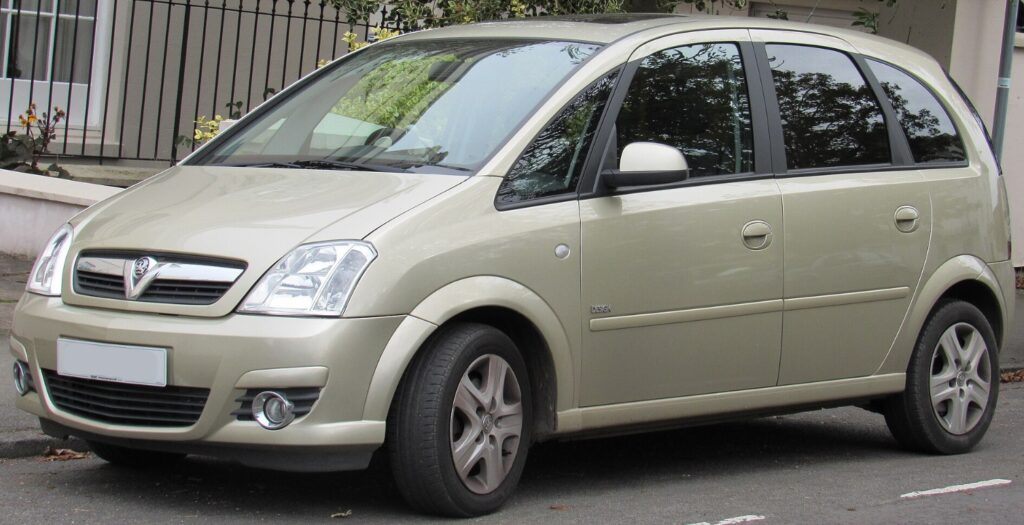
Seeing Vauxhall Meriva Code 95 appear on the dashboard can be unsettling, particularly when it arrives alongside the airbag warning light. The car may continue to start, steer, brake, and drive normally, which makes the message easy to underestimate. Yet Code 95 is not a routine maintenance reminder or a harmless electrical hiccup that we should simply ignore.
On the Vauxhall Meriva B, Code 95 generally indicates that the vehicle has detected a fault within the airbag and seat-belt pretensioner safety system, often called the Supplemental Restraint System or SRS. The dashboard message does not identify the defective component by itself. Instead, it warns us that the restraint control module has recorded a problem requiring further diagnosis.
Sometimes the cause is relatively simple, such as a loose connector under one of the front seats. In other cases, the fault may involve damaged wiring, a seat-belt pretensioner, the steering-wheel clock spring, an impact sensor, or the airbag control module itself.
That range of possibilities is exactly why guessing can become expensive. Replacing parts at random is like trying to fix a leaking roof by repainting the ceiling. We may briefly hide the symptom without correcting the underlying problem.
In this guide, we will explain what Vauxhall Meriva Code 95 means, whether it is safe to drive, what commonly triggers it, how a technician diagnoses it, and what we can realistically expect during the repair process.
Content in this publication
- What Does Vauxhall Meriva Code 95 Mean?
- Which Vauxhall Meriva Models Commonly Display Code 95?
- What Symptoms Accompany Vauxhall Meriva Code 95?
- Is It Safe to Drive a Vauxhall Meriva With Code 95?
- The Most Common Causes of Vauxhall Meriva Code 95
- 1. Loose Connectors Under the Front Seats
- 2. Seat-Belt Pretensioner Fault
- 3. Damaged or Chafed Wiring
- 4. Steering-Wheel Clock Spring Failure
- 5. Seat-Occupancy Sensor Problem
- 6. Low Battery Voltage or Electrical Instability
- 7. Airbag Control Module Fault
- 8. Previous Accident Damage or Poor Repairs
- 9. Impact-Sensor or Communication Fault
- Why Vauxhall Meriva Code 95 May Be Intermittent
- How a Technician Diagnoses Vauxhall Meriva Code 95
- Can We Fix Vauxhall Meriva Code 95 at Home?
- Can Disconnecting the Battery Clear Code 95?
- Can a Standard OBD2 Scanner Clear Vauxhall Meriva Code 95?
- How Much Does It Cost to Repair Vauxhall Meriva Code 95?
- Will Vauxhall Meriva Code 95 Cause an MOT Failure?
- Why Does Code 95 Return After Repair?
- How to Prevent Code 95 From Returning
- What Information Should We Give the Garage?
- Questions to Ask Before Authorising the Repair
- Common Mistakes When Dealing With Vauxhall Meriva Code 95
- Vauxhall Meriva Code 95 Diagnosis Checklist
- Final Thoughts on Vauxhall Meriva Code 95
- Frequently Asked Questions
What Does Vauxhall Meriva Code 95 Mean?
Vauxhall Meriva Code 95 means that the car has detected a malfunction in the passive-safety system. This system includes more than the visible airbags. Depending on the vehicle specification, it may monitor:
- Driver and passenger front airbags
- Side airbags
- Curtain airbags
- Front seat-belt pretensioners
- Seat-occupancy detection equipment
- Impact sensors
- Airbag wiring and electrical connectors
- The steering-wheel clock spring
- The SRS control module
The important word here is system. Code 95 does not necessarily mean that an airbag unit itself has failed. It means that the control module has found an electrical value, communication signal, resistance level, or component response that falls outside its expected range.
A connector with poor contact can therefore trigger the same dashboard message as a defective pretensioner or internal control-module fault. That is why Code 95 should be treated as a warning category rather than a precise diagnostic result.
Is Code 95 an OBD Fault Code?
Not in the conventional sense.
The number shown on the Meriva’s information display is a vehicle message code intended for the driver. It is not necessarily the complete diagnostic trouble code stored inside the airbag control unit.
A professional scan may reveal a more specific code such as one relating to:
- An open circuit
- Resistance that is too high
- Resistance that is too low
- A short circuit to ground
- A short circuit to battery voltage
- Loss of communication
- A defective deployment loop
- A pretensioner circuit fault
- Internal module data
The dashboard tells us, “There is a restraint-system problem.” The diagnostic scanner tells the technician where that problem appears to be located.
Why the Distinction Matters
A basic engine-code reader may communicate only with the powertrain control module. It might report no faults even while Code 95 remains on the display.
To diagnose Code 95 properly, the scanner must support the Vauxhall or Opel SRS module. This is one reason owners sometimes plug in a cheap reader, find no codes, and conclude that the warning is false. The scanner simply may not be looking in the right electronic room.
Which Vauxhall Meriva Models Commonly Display Code 95?
Code 95 is most commonly discussed in relation to the Vauxhall Meriva B, sold during the 2010–2017 period. Manuals and model-specific repair references associate the message with this second-generation Meriva and its restraint-system monitoring.
The earlier Meriva A uses a different dashboard and electrical architecture, so fault messages may not appear in exactly the same form.
When researching a repair, we should therefore confirm:
- The vehicle’s model year
- Whether it is a Meriva A or Meriva B
- The exact dashboard message
- Whether the airbag warning light is illuminated
- The full SRS fault code stored in the module
Parts, wiring layouts, connector locations, and diagnostic procedures can vary by year and specification.
What Symptoms Accompany Vauxhall Meriva Code 95?
The most obvious symptom is the appearance of Code 95 in the driver-information display. It may be accompanied by the red or amber airbag symbol, depending on the instrument-cluster design.
Other patterns may include:
- The warning appearing immediately after starting
- The message sounding a chime
- The light remaining on continuously
- The fault appearing after moving a front seat
- The warning disappearing and later returning
- The message appearing only with a passenger in the seat
- The fault starting after interior cleaning
- The warning beginning after battery work
- The code returning after it has been cleared
The car will often feel completely normal. There may be no engine hesitation, steering problem, unusual noise, or loss of braking performance.
That normal behaviour is deceptive. Airbag faults tend not to affect ordinary driving because the restraint system is waiting in the background for an accident. We may only discover its importance during the exact moment when we need it most.
Is It Safe to Drive a Vauxhall Meriva With Code 95?
The vehicle may still be mechanically driveable, but we should not assume that the complete airbag system will operate correctly while Code 95 and the airbag warning light are active.
Depending on the stored fault and the system’s fail-safe strategy, one or more airbags or seat-belt pretensioners may be unavailable. Because Code 95 does not identify the affected device on the dashboard, we cannot tell whether the issue concerns the driver, passenger, side-airbag, or pretensioner circuit without scanning the SRS module.
Vauxhall’s manual warns that a fault in the airbag or belt-tensioner system can prevent the equipment from triggering in an accident. The system therefore requires workshop attention rather than casual observation.
Can We Drive It to a Garage?
A short, cautious journey to a qualified repairer may be possible when:
- The car otherwise operates normally
- There are no signs of collision damage
- No wiring has overheated
- There is no smoke or burning smell
- The warning is limited to the restraint system
- The workshop is reasonably close
Nevertheless, the safest choice is to minimise unnecessary journeys until the fault has been diagnosed.
If the warning appeared after an accident, water intrusion, major electrical failure, or attempted airbag repair, recovery may be more sensible than driving.
The Most Common Causes of Vauxhall Meriva Code 95
There is no single guaranteed cause. However, several problems appear repeatedly in Meriva B diagnosis and owner reports.
1. Loose Connectors Under the Front Seats
Electrical connectors beneath the driver or passenger seat are among the most frequently suspected causes.
The seat must slide forward and backward, while the wiring underneath needs enough freedom to move with it. Over time, the harness may be tugged, twisted, compressed, or disturbed by objects stored under the seat.
A poor electrical connection can increase resistance in an airbag or pretensioner circuit. The control module notices that the circuit no longer matches its expected values and activates Code 95.
Meriva-specific repair references describe under-seat airbag connectors as a recurring area of concern, while owner reports have linked the message to front pretensioner connections beneath the seats.
Why Moving the Seat Can Trigger the Warning
Imagine bending a paper clip backwards and forwards. It may remain intact for a while, but repeated movement eventually weakens it.
Seat wiring experiences a gentler version of that stress. Each adjustment can move the harness slightly. If a connector is already loose or a conductor is partly fractured, changing the seat position may briefly open the circuit.
That explains why some owners notice Code 95 after:
- Sliding the seat all the way back
- Adjusting it for a different driver
- Vacuuming underneath it
- Carrying an object in the rear footwell
- Having interior trim repaired
2. Seat-Belt Pretensioner Fault
The front seat-belt pretensioners form part of the SRS system. During a qualifying collision, a pretensioner helps tighten the belt rapidly so the occupant is held more securely before or during airbag deployment.
A fault may arise from:
- A defective pretensioner unit
- Damaged pretensioner wiring
- Poor terminal contact
- Excessive circuit resistance
- Previous accident deployment
- Corrosion or moisture
- A connector that has been disturbed
A scan may point toward the driver-side or passenger-side pretensioner deployment loop. However, the component itself should not automatically be condemned. Wiring and terminals must be checked because a connector problem can imitate a failed pretensioner.
3. Damaged or Chafed Wiring
Wiring can be damaged by seat frames, trim panels, sharp brackets, previous repairs, or objects pushed under the seats.
Common forms of damage include:
- Crushed insulation
- Partially broken conductors
- Exposed copper
- Corroded terminals
- Stretched wiring
- Poor-quality previous splices
- Loose terminal pins
- Harnesses routed too tightly
A wire may appear healthy from the outside while only a few strands remain intact internally. This type of fault can be intermittent, reacting to movement, temperature, vibration, or occupant weight.
4. Steering-Wheel Clock Spring Failure
The clock spring is a coiled electrical connection inside the steering-column assembly. It allows the steering wheel to rotate while maintaining electrical contact with the driver’s airbag, horn, and steering-wheel controls.
A damaged clock spring may cause:
- The airbag warning light
- Code 95
- A non-working horn
- Intermittent steering-wheel buttons
- Clicking or rubbing from the steering column
- A warning that changes as the wheel turns
Not every Code 95 case involves the clock spring, but it becomes more suspicious when the restraint warning appears alongside steering-wheel electrical problems.
Why a Clock Spring Cannot Use Ordinary Wiring
Ordinary wires would twist around the steering column every time we turned the wheel. The clock spring stores a flat ribbon cable in a spiral housing, allowing controlled movement in both directions.
If that ribbon cracks or the mechanism is installed off-centre, the circuit to the driver’s airbag may become open or intermittent.
5. Seat-Occupancy Sensor Problem
Some versions use an occupancy-detection system to determine whether the front passenger seat is occupied and how the passenger airbag should be managed.
A defective sensor mat, damaged connector, or calibration issue may trigger a restraint warning. Clues may include:
- The warning changing when someone sits down
- Incorrect passenger-airbag status
- The fault appearing after seat removal
- The warning starting after upholstery work
- The code returning when pressure is applied to the seat cushion
This problem should be diagnosed with model-specific scan data rather than bypass devices. Installing resistors or emulators may interfere with the safety logic and could create serious liability and protection issues.
6. Low Battery Voltage or Electrical Instability
A weak battery does not automatically mean that it caused Code 95, but low voltage can contribute to warning messages and stored communication faults.
The SRS module expects a stable power supply. Problems may occur during:
- A difficult cold start
- Jump-starting
- Battery replacement
- Charging-system failure
- Loose battery terminals
- Poor earth connections
- A battery that has been deeply discharged
If Code 95 appeared immediately after a flat battery, the charging system and stored SRS faults should both be checked. Clearing the message without correcting a weak battery may only invite it back.
7. Airbag Control Module Fault
The airbag control module monitors deployment circuits, impact sensors, system voltage, and crash information. It may fail because of:
- Internal electronic damage
- Water intrusion
- Corrosion
- Power-supply faults
- Previous collision data
- Incorrect repair work
- Communication failure
Module faults are less convenient than a loose connector because replacement may involve coding, programming, configuration, or specialist resetting.
We should not assume that the module is defective merely because Code 95 appears. It is one possibility among several and usually requires proper diagnostic confirmation.
8. Previous Accident Damage or Poor Repairs
A Meriva with previous collision repairs may have:
- Deployed pretensioners
- Replacement airbags
- Incorrectly coded modules
- Damaged harnesses
- Crash data stored in the module
- Resistors installed to conceal faults
- Missing or mismatched components
A warning that returns soon after purchase deserves careful investigation, particularly when the vehicle’s accident history is uncertain.
Cosmetic repairs can make a car look immaculate while the hidden restraint system remains a patchwork quilt underneath.
9. Impact-Sensor or Communication Fault
Impact sensors help the restraint module evaluate a collision. Wiring faults, sensor damage, corrosion, or communication errors may trigger the warning even when no airbag has deployed.
These faults are less suitable for visual guesswork because sensor readings and module communication need to be assessed with appropriate diagnostic equipment.
Why Vauxhall Meriva Code 95 May Be Intermittent
An intermittent warning often suggests a connection that is hovering between acceptable and unacceptable.
The circuit may function while the car is stationary, then fail when:
- The seat moves
- A passenger sits down
- The cabin warms up
- The vehicle crosses a bump
- The steering wheel turns
- Moisture reaches a connector
- The battery voltage falls during starting
Electrical resistance can change with pressure and temperature. A terminal that barely touches may work one minute and fail the next.
Intermittent does not mean imaginary. In fact, intermittent faults can be more challenging because the circuit may behave perfectly when the technician first inspects it.
Why the Light May Stay On After the Connection Improves
The SRS module may store the fault even after the loose connection temporarily makes contact again. Depending on the fault type and system design, the warning may remain until:
- The circuit passes repeated self-checks
- The code is cleared with a compatible scanner
- The underlying problem is repaired
- A technician completes a specified diagnostic procedure
Clearing the memory without repairing the circuit is not a lasting fix.
How a Technician Diagnoses Vauxhall Meriva Code 95
A careful diagnosis follows evidence rather than assumptions.
Step 1: Confirm the Warning
The technician checks:
- Whether Code 95 appears
- Whether the airbag light remains illuminated
- When the message occurs
- Whether seat movement affects it
- Whether other electrical equipment has failed
- Whether the vehicle has been in an accident
- Whether recent battery or interior work was performed
This initial conversation matters. A statement such as “It started after I moved the passenger seat fully forward” can save considerable diagnostic time.
Step 2: Scan the SRS Control Module
A suitable diagnostic tool is connected to read:
- Stored fault codes
- Current fault codes
- Historical fault codes
- Circuit descriptions
- Status information
- Module communication
- Vehicle voltage
This is the pivotal step. Code 95 alone is broad; the SRS code provides direction.
For example, a diagnostic result may point toward a specific front pretensioner circuit, driver-airbag loop, passenger detection system, or control-module fault.
Step 3: Record Codes Before Clearing Them
Clearing codes immediately can erase useful clues.
A good technician records:
- Full code numbers
- Code descriptions
- Whether each fault is current or stored
- Relevant freeze-frame or event data
- Battery voltage
- Which faults return instantly
Only after recording the information should clearing be considered.
Step 4: Perform a Visual Inspection
The inspection may include:
- Under-seat connectors
- Harness routing
- Seat-frame contact points
- Signs of crushed wiring
- Previous splices
- Corrosion
- Water damage
- Steering-column symptoms
- Battery terminals and earth points
The technician may carefully move the seat or harness while monitoring live diagnostic status, but airbag-circuit testing requires specialist precautions.
Step 5: Carry Out Circuit Tests Safely
Airbag circuits are not ordinary lighting circuits. Incorrect test methods can damage modules or, in extreme circumstances, contribute to accidental deployment.
Technicians follow manufacturer-approved procedures and use suitable equipment. They do not casually probe deployment circuits with powered test lamps.
Step 6: Repair the Actual Cause
The repair might involve:
- Securing or replacing a connector
- Repairing a damaged harness
- Replacing terminal pins
- Replacing a pretensioner
- Replacing a clock spring
- Repairing an earth or power supply
- Replacing and coding a control module
- Correcting previous accident repairs
Step 7: Clear the Fault and Confirm the Repair
After repair, the technician clears the SRS codes, cycles the ignition, rescans the system, and verifies that the warning remains off.
The seat should be moved through its normal adjustment range where relevant. A road test may also be appropriate to confirm that vibration does not reactivate the warning.
Can We Fix Vauxhall Meriva Code 95 at Home?
We can perform limited, non-invasive checks, but airbag repairs demand caution.
Safe preliminary observations may include:
- Checking whether anything is trapped under a seat
- Noting whether the warning changes with seat position
- Checking the battery’s general condition
- Looking for obvious water intrusion
- Recording when the warning first appeared
- Checking whether the horn and steering-wheel buttons work
- Arranging an SRS-compatible scan
However, disconnecting, probing, soldering, bypassing, or replacing restraint components is not a sensible first-time electrical project.
Important Airbag Safety Precautions
Before professional work begins, the correct manufacturer procedure should be followed. General precautions commonly include:
- Switching off the ignition
- Removing the key
- Disconnecting the battery according to approved procedures
- Waiting the specified time before touching SRS circuits
- Avoiding static electricity
- Never measuring airbag igniters casually
- Keeping airbags facing safely during handling
- Never installing unknown second-hand safety parts without verification
Because procedures can vary, the vehicle’s workshop information should take priority over general internet advice.
Do Not Fit a Resistor to Extinguish the Warning
A resistor may fool the control module into seeing an expected electrical load, but it does not restore the missing safety component.
That is not a repair. It is more like removing the batteries from a smoke alarm because the noise is annoying.
The dashboard may become quiet while the occupant remains unprotected.
Can Disconnecting the Battery Clear Code 95?
Disconnecting the battery might reset some temporary vehicle behaviour, but it should not be treated as a repair for Code 95.
If the SRS module has stored a genuine circuit fault:
- The code may remain stored
- The warning may return immediately
- The warning may return when the seat moves
- The system may still be disabled
- New low-voltage codes may be created if battery procedures are poor
Battery disconnection also carries possible side effects involving windows, radio settings, steering calibration, stop-start operation, and other learned functions.
We should identify the cause rather than hoping a power reset makes the car forget.
Can a Standard OBD2 Scanner Clear Vauxhall Meriva Code 95?
Many basic OBD2 readers only access engine and emissions data. They may not communicate with the airbag module.
A suitable device must support:
- Vauxhall or Opel systems
- The Meriva’s model year
- Supplemental Restraint System diagnosis
- Code reading and clearing
- Ideally, live data and module identification
Even a capable scanner should be used as a diagnostic tool, not an electronic eraser. If the fault remains active, the warning will return.
How Much Does It Cost to Repair Vauxhall Meriva Code 95?
The cost varies because Code 95 describes a system fault rather than one failed part.
A repair may be inexpensive when it involves:
- Diagnosing and securing an under-seat connector
- Repairing a small section of wiring
- Cleaning and replacing damaged terminals
- Correcting a poor earth connection
Costs rise when the vehicle needs:
- A new pretensioner
- A replacement clock spring
- An occupancy sensor
- A control module
- Programming or coding
- Repairs after previous accident damage
- Extensive wiring investigation
The diagnostic fee is often money well spent. Paying for one hour of accurate testing can be cheaper than replacing three good components based on guesswork.
Why Price Quotes Differ So Much
One garage may quote only for scanning and repairing a connector. Another may include:
- Diagnostic labour
- Seat removal
- Wiring repair
- Replacement terminals
- New restraint components
- Module programming
- Fault clearing
- Post-repair testing
- Tax
Before approving work, ask what the quote includes and which stored fault code led to the diagnosis.
Will Vauxhall Meriva Code 95 Cause an MOT Failure?
In the United Kingdom, an illuminated airbag or Supplemental Restraint System malfunction indicator can create an MOT problem because the warning shows that a monitored safety system is not operating as intended.
MOT rules can be updated, so we should check the current official inspection criteria or ask an authorised testing station before the test date.
Regardless of the inspection outcome, turning off the warning without restoring the system is not a safe solution.
Why Does Code 95 Return After Repair?
A returning warning usually means one of four things:
- The original fault was not fully repaired.
- A second fault exists elsewhere in the system.
- The wiring repair cannot tolerate seat movement.
- The wrong component was replaced.
For example, replacing a pretensioner will not help if the real problem is a loose terminal in the connector. Similarly, tightening one under-seat plug may not solve damaged wiring inside the loom.
The stored code should be read again and compared with the original result. We should not assume that every recurrence is identical.
The Difference Between a Symptom Repair and a Root-Cause Repair
A symptom repair makes the light disappear today.
A root-cause repair ensures that:
- The circuit remains stable
- The component responds correctly
- The harness is routed safely
- The warning stays off after seat movement
- No current SRS codes return
- The safety system passes its self-test
That distinction separates a quick patch from a dependable repair.
How to Prevent Code 95 From Returning
Not every electrical fault is preventable, but careful habits can reduce avoidable strain.
Keep the Area Under the Seats Clear
Avoid storing bottles, tools, umbrellas, toys, chargers, or bulky objects beneath the front seats. These items may snag the wiring when the seat moves.
Move Seats Carefully
If a seat suddenly becomes difficult to slide, stop rather than forcing it. An object or harness may be trapped in the mechanism.
Protect the Cabin From Moisture
Investigate wet carpets, leaking doors, blocked drains, or heater-matrix problems quickly. Moisture and electrical terminals are poor companions.
Use Qualified Technicians for Seat Removal
Inform the technician that the seats contain restraint wiring. The battery and SRS connectors must be handled according to the proper procedure.
Maintain the Battery and Charging System
A healthy battery reduces low-voltage events and makes vehicle electronics more stable. Have the battery tested if starting becomes slow or warning lights appear during cranking.
What Information Should We Give the Garage?
A clear description helps the technician narrow the search.
Mention:
- The year and engine of the Meriva
- When Code 95 first appeared
- Whether the airbag light remains on
- Whether it changes when the seats move
- Whether a passenger affects the warning
- Any recent battery trouble
- Any recent seat, carpet, stereo, or interior work
- Whether the car has had accident repairs
- Whether the horn or steering controls have also failed
- Whether anyone previously cleared the code
A five-minute conversation can prevent an hour of blind investigation.
We can ask the garage:
- What is the complete SRS diagnostic code?
- Is the fault current or only stored?
- Which component or circuit does it identify?
- Has the wiring been inspected before replacing the component?
- Does the new part require coding?
- Is the repair guaranteed?
- Has the seat been moved and the system rescanned afterward?
- Are there any signs of previous accident-related work?
A trustworthy workshop should be able to explain the diagnosis in ordinary language.
Common Mistakes When Dealing With Vauxhall Meriva Code 95
Ignoring the Warning Because the Car Drives Normally
The engine and airbag systems perform different jobs. Normal engine performance says nothing about whether the restraints will deploy correctly.
Replacing an Airbag Without Scanning the Module
Code 95 does not prove that an airbag unit is defective. The fault may be in a pretensioner, connector, sensor, wiring harness, or control module.
Buying the Cheapest Scanner Available
A reader that cannot access the SRS module provides little value for this particular warning.
Clearing the Code Before Recording It
This can remove diagnostic evidence and make an intermittent fault harder to locate.
Repeatedly Pushing Under-Seat Connectors Together
The warning may disappear temporarily, but an internally damaged terminal or wire can fail again. Airbag connectors require a durable repair, not repeated wiggling.
Using Bypass Devices
Bypass resistors can hide the warning while disabling part of the safety system. They should not be confused with proper diagnosis or repair.
Vauxhall Meriva Code 95 Diagnosis Checklist
When Code 95 appears, we can follow this practical sequence:
- Confirm whether the airbag warning light is illuminated.
- Avoid unnecessary driving.
- Do not place objects beneath the front seats.
- Record when and how the warning occurs.
- Check for recent battery or interior work.
- Use a scanner capable of accessing the SRS module.
- Record the complete diagnostic code before clearing it.
- Inspect the identified circuit and related wiring.
- Repair the underlying defect using approved procedures.
- Clear the code and rescan the vehicle.
- Move the relevant seat or steering wheel through normal operation.
- Confirm that no active SRS faults return.
Final Thoughts on Vauxhall Meriva Code 95
Vauxhall Meriva Code 95 is best understood as a broad warning from the vehicle’s restraint system. It commonly points toward an airbag, seat-belt pretensioner, connector, or related electrical-circuit fault rather than an engine problem.
Under-seat connectors and pretensioner wiring are frequently discussed causes on the Meriva B, but we should not leap directly to that conclusion. The message can also be produced by a clock spring, occupancy sensor, damaged harness, low-voltage event, impact sensor, or control-module issue.
The correct approach is straightforward: scan the SRS module, record the full fault, inspect the indicated circuit, repair the cause, and verify that the warning remains off.
Code 95 may look like a small collection of pixels on the dashboard, but it watches over equipment designed for the worst few seconds of a journey. Treating it seriously is not overreacting. It is simply giving an important safety system the attention it deserves.
Frequently Asked Questions
1. What does Code 95 mean on a Vauxhall Meriva?
Code 95 generally means the vehicle has detected a fault within the airbag and seat-belt pretensioner system. A compatible diagnostic scanner is needed to identify the specific component or circuit responsible.
2. Is Vauxhall Meriva Code 95 usually caused by a connector under the seat?
An under-seat connector or wiring fault is a commonly reported cause, especially when the warning appears after a front seat has been moved. However, Code 95 can have several causes, so the SRS module should be scanned before parts are replaced.
3. Can I continue driving with Code 95 displayed?
The car may continue to drive normally, but one or more restraint components may not operate correctly in an accident. Unnecessary journeys should be avoided until the fault has been diagnosed and repaired.
4. Will disconnecting the battery remove Vauxhall Meriva Code 95?
Battery disconnection is unlikely to provide a permanent solution when an active SRS fault exists. The message may remain or return as soon as the module detects the defective circuit again.
5. Can a cheap OBD2 reader diagnose Code 95?
Many inexpensive readers access only engine and emissions codes. Diagnosing Code 95 requires equipment capable of communicating with the Vauxhall Meriva’s airbag or SRS control module.
If you want to know other articles similar to Vauxhall Meriva Code 95: Meaning, Causes, Diagnosis, and Repair you can visit the category Service and Parts.
Nissan Qashqai Fuel Tank Capacity: Complete Guide

Suzuki Swift Fuel Tank Capacity: Complete Guide

Mazda CX-5 Weight (2013–2026): Complete Guide in Pounds and KG

Kia Sportage Dashboard Symbols and Warning Lights

MINI Cooper Weight (2002–2027): Complete Weight Chart & Guide

Toyota RAV4 Engine Sizes: Complete Guide (1994–2026)
Leave a Reply
More content of your interest