
Volkswagen Amarok Tyre Pressure: Complete PSI Guide

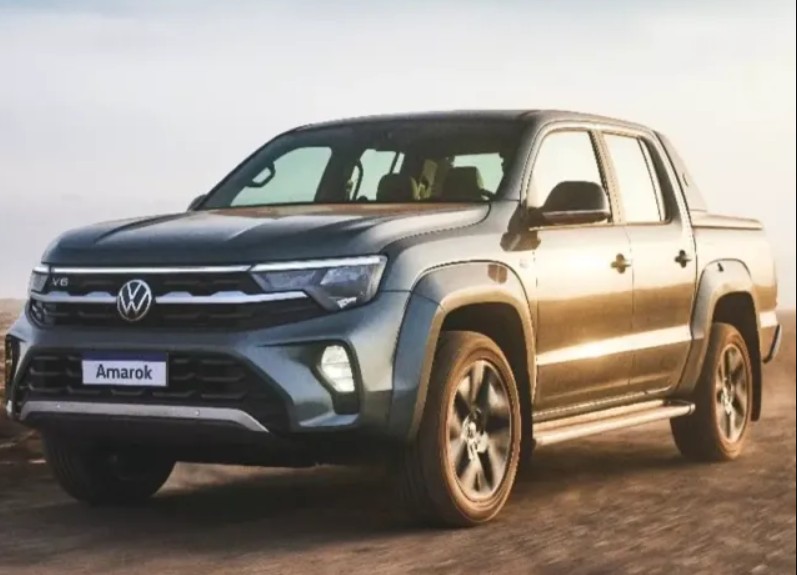
Getting your Volkswagen Amarok tyre pressure right might seem like one of those tiny maintenance jobs we can put off until the weekend. In reality, those few pounds of air inside each tyre influence almost everything: steering feel, braking, tyre wear, fuel consumption, stability when carrying a load, and even how comfortably the Amarok rolls down the road.
And there is one important point we need to establish straight away: there isn't one universal tyre-pressure figure that fits every Volkswagen Amarok.
The correct pressure can change according to the model year, tyre size, wheel combination, payload, and whether we're towing. Volkswagen itself advises owners to use the pressure information provided on the vehicle, commonly found around the driver's door frame or fuel-flap area, because the required pressures can vary according to load.
So rather than throwing out one magic PSI number and pretending it works for every Amarok ever built, let's understand how tyre pressure actually works and how we can set it properly.
Content in this publication
- What Is the Correct Volkswagen Amarok Tyre Pressure?
- Where Can We Find the Amarok Tyre Pressure Label?
- Volkswagen Amarok Tyre Pressure in PSI, Bar and kPa
- Should Front and Rear Amarok Tyres Have the Same Pressure?
- Volkswagen Amarok Tyre Pressure When Towing
- How to Check Volkswagen Amarok Tyre Pressure Properly
- How Often Should We Check Amarok Tyre Pressure?
- What Happens When Amarok Tyre Pressure Is Too Low?
- What Happens When Amarok Tyre Pressure Is Too High?
- Does Temperature Affect Volkswagen Amarok Tyre Pressure?
- Volkswagen Amarok Tyre Pressure Monitoring System
- What Does the Amarok Tyre Pressure Warning Light Mean?
- Why Does the Amarok Tyre Pressure Light Keep Coming Back?
- Volkswagen Amarok Tyre Pressure for Off-Road Driving
- Amarok Tyre Pressure on Gravel and Rough Tracks
- Should We Use the Pressure Written on the Tyre Sidewall?
- Does Changing Tyres Affect Amarok Tyre Pressure?
- Tyre Pressure and Amarok Fuel Economy
- Tyre Pressure and Tread Wear
- How Accurate Are Petrol Station Tyre Gauges?
- Should We Fill Amarok Tyres With Nitrogen?
- Common Amarok Tyre Pressure Mistakes
- A Simple Volkswagen Amarok Tyre Pressure Routine
- Is There One Best PSI for Every Volkswagen Amarok?
- Conclusion: Let the Amarok Tell Us What Pressure It Needs
- Frequently Asked Questions About Volkswagen Amarok Tyre Pressure
What Is the Correct Volkswagen Amarok Tyre Pressure?
The safest answer is simple: use the pressure printed on your Amarok's factory tyre-pressure label.
That label takes priority over generic pressure charts found online because Volkswagen can specify different pressures for different wheel sizes, tyre specifications, vehicle configurations, and loads.
You may find recommendations expressed in:
- PSI
- bar
- kPa
- separate front and rear pressures
- normal-load pressures
- full-load pressures
For example, an Amarok running relatively small factory wheels may not use exactly the same pressure as an Amarok equipped with larger alloy wheels and lower-profile tyres.
Likewise, a nearly empty pickup commuting to work doesn't necessarily need the same rear tyre pressure as one carrying tools, camping equipment, or a substantial payload.
Think of tyre pressure like adjusting a backpack strap. One setting feels right when the bag is empty, but load it with 20 kilograms and suddenly the old adjustment doesn't make quite as much sense.
Where Can We Find the Amarok Tyre Pressure Label?
Volkswagen advises checking the vehicle's tyre-pressure information rather than relying on a generic figure. Depending on the vehicle and market, the label can typically be found around the driver's door frame or fuel flap.
The label is our best friend here.
It may show several pressure combinations depending on passenger numbers and load.
Understanding the Tyre Pressure Sticker
Suppose the sticker provides two sets of figures.
One may represent normal driving with a light load, while another may apply when the vehicle is heavily loaded.
We should follow the configuration that matches how we're actually using the Amarok.
Don't assume the largest number on the sticker is automatically the "best" pressure. Higher isn't always better.
Why Wheel Size Matters
Amaroks have been sold with many different wheel and tyre packages over the years.
Depending on version and market, Volkswagen has offered different factory wheel sizes, and current-generation variants can also feature tyre-pressure monitoring. Volkswagen Australia's Amarok documentation, for example, lists tyre-pressure monitoring among vehicle equipment, while different variants use different wheel and tyre combinations.
A taller tyre sidewall behaves differently from a low-profile tyre. That's one reason we shouldn't simply copy the tyre pressure used by another Amarok owner.
Their truck may look identical from across the car park while sitting on a completely different tyre specification.
Volkswagen Amarok Tyre Pressure in PSI, Bar and kPa
Tyre-pressure labels and pressure gauges aren't always speaking the same language.
Fortunately, converting between the common units is straightforward.
As a rough reference:
1 bar = approximately 14.5 PSI = 100 kPa
So:
| Pressure | PSI | kPa |
|---|---|---|
| 2.0 bar | 29 PSI | 200 kPa |
| 2.2 bar | 32 PSI | 220 kPa |
| 2.4 bar | 35 PSI | 240 kPa |
| 2.5 bar | 36 PSI | 250 kPa |
| 2.6 bar | 38 PSI | 260 kPa |
| 2.8 bar | 41 PSI | 280 kPa |
| 3.0 bar | 44 PSI | 300 kPa |
These figures are conversions, not universal Amarok recommendations. We still need to use the pressure stated for our particular vehicle.
That distinction matters.
Searching "Amarok tyre pressure 35 PSI" and blindly filling every tyre to 35 PSI might accidentally be correct for one particular configuration while being wrong for another.
Should Front and Rear Amarok Tyres Have the Same Pressure?
Not necessarily.
Pickup trucks lead slightly more complicated lives than ordinary hatchbacks.
The front axle carries substantial mechanical weight, including the engine and drivetrain components. Meanwhile, the rear axle can go from carrying comparatively little weight to supporting hundreds of kilograms of cargo.
For that reason, manufacturers may specify different front and rear pressures depending on load.
Normal Driving
When we're driving with one or two occupants and little cargo in the tray, the normal-load recommendation shown on the pressure placard is generally the one to follow.
Avoid increasing the rear pressure just because the Amarok is a pickup.
More pressure isn't automatically safer.
Heavy Loads
Load the tray with equipment, luggage, building materials, or camping gear and the equation changes.
Volkswagen specifically notes that tyre pressures may need to be altered according to vehicle load.
If the pressure label provides a full-load setting, that's the relevant figure when we're approaching that type of operating condition.
Why Rear Pressure Becomes More Important
The rear tyres support much of the additional payload.
If they're significantly underinflated under heavy load, the tyre casing flexes more, generating heat and compromising stability.
That's exactly when we don't want tyres feeling vague or overloaded.
Volkswagen Amarok Tyre Pressure When Towing
Towing adds another layer to the conversation.
The current Amarok is designed to perform serious utility work; Volkswagen New Zealand, for example, advertises variants capable of towing up to 3.5 tonnes.
But towing capacity and tyre pressure aren't interchangeable concepts.
Connecting a trailer increases the load placed on the vehicle, particularly through the tow ball and rear axle.
That can mean the loaded tyre-pressure specification becomes appropriate.
The key word is can.
We should still use the vehicle's pressure label and owner's information for the specific Amarok rather than automatically inflating the rear tyres to an arbitrary towing number.
How to Check Volkswagen Amarok Tyre Pressure Properly
Checking tyre pressure takes only a few minutes, but technique matters.
1. Check the Tyres When Cold
Tyre-pressure specifications generally refer to cold tyres.
"Cold" doesn't mean refrigerated. It means the tyres haven't been significantly heated by driving.
Driving creates friction and flexing, which raises tyre temperature and increases the pressure reading.
If we measure immediately after a long motorway journey, we may see a higher figure than we would first thing in the morning.
2. Find the Factory Recommended Pressure
Open the driver's door and inspect the door-frame area. If the information isn't there, check around the fuel flap and consult the owner's documentation.
Volkswagen identifies these vehicle locations as places where tyre-pressure information can be provided.
3. Remove the Valve Cap
Unscrew the valve cap and keep it somewhere safe.
It has a habit of bouncing into the darkest corner of the driveway precisely when we're in a hurry.
4. Attach a Reliable Pressure Gauge
Push the gauge firmly onto the valve.
A short burst of escaping air is normal while positioning the gauge, but continuous hissing means it isn't seated properly.
5. Compare the Reading With the Placard
Add or release air until the pressure matches the appropriate specification for the vehicle's current load.
6. Check All Four Tyres
Don't assume the opposite tyre must be fine because one side is correct.
Small pressure differences can develop over time.
7. Remember the Spare
If the Amarok carries a conventional spare wheel, check it periodically as well.
A perfectly maintained truck with a completely flat spare isn't much help beside a lonely highway.
How Often Should We Check Amarok Tyre Pressure?
A sensible habit is to inspect pressures regularly and certainly before demanding journeys.
Useful occasions include:
- before a long road trip;
- before towing;
- before carrying a heavy payload;
- after substantial temperature changes;
- when the steering feels different;
- after striking a pothole;
- whenever the tyre-pressure warning appears.
Tyres naturally deserve regular inspection because pressure loss isn't always dramatic enough to notice visually.
A tyre can look reasonably normal while still being below its recommended pressure.
What Happens When Amarok Tyre Pressure Is Too Low?
Underinflation is one of the most common tyre-maintenance problems.
A soft tyre deforms more as it rolls.
Imagine repeatedly bending a piece of rubber back and forth. It gets warm. The same principle helps explain why an underinflated tyre can generate excessive heat.
Heavier Steering
The Amarok may feel less crisp through corners.
Steering response can become slower, particularly if the front tyres are low.
Higher Rolling Resistance
More tyre deformation generally means greater rolling resistance.
The engine then has to work harder to keep the vehicle moving.
Uneven Tyre Wear
Persistent underinflation can encourage wear toward the outer portions of the tread.
Instead of getting the full useful life from the tyre, we may effectively sand away its shoulders.
More Heat
This becomes particularly important when travelling quickly, towing, or carrying heavy loads.
Heat is one of a tyre's greatest enemies.
What Happens When Amarok Tyre Pressure Is Too High?
Overinflation creates its own problems.
Some drivers deliberately pump tyres well beyond the recommended road pressure because they believe firmer automatically means faster, safer, and more economical.
That's oversimplifying things.
A Harsher Ride
The Amarok may begin reacting sharply to bumps, joints, and rough surfaces.
It's like replacing the soles of our shoes with wooden boards.
Technically, we're still moving. Comfort has simply left the conversation.
Different Handling Characteristics
Excessive pressure changes the way the tyre meets the road.
That can affect steering response and available grip.
Abnormal Tread Wear
Running consistently above the appropriate pressure can contribute to uneven wear patterns.
Rather than chasing a theoretical fuel-saving advantage, we're better off using Volkswagen's intended settings.
Does Temperature Affect Volkswagen Amarok Tyre Pressure?
Absolutely.
Air pressure changes with temperature.
That's why a tyre that looked perfectly inflated during warm weather may show a noticeably lower reading after a cold spell.
The tyre hasn't necessarily developed a leak.
The air inside has simply become colder.
Cold Mornings and Pressure Warnings
Seasonal temperature drops can sometimes coincide with tyre-pressure alerts.
Rather than immediately assuming there's a puncture, inspect every tyre carefully and measure the pressure.
However, don't dismiss a warning automatically either.
A puncture may also be developing.
Should We Overinflate for Hot Weather?
No need to invent our own seasonal pressure formula.
Set the tyres correctly when cold using the vehicle recommendation.
Normal increases in pressure as the tyres heat while driving are expected.
Volkswagen Amarok Tyre Pressure Monitoring System
Modern Amarok versions can be equipped with tyre-pressure monitoring.
Volkswagen documentation for newer Amarok models lists tyre-pressure monitoring among the available or standard vehicle systems depending on specification and market.
The system provides another layer of warning, but it doesn't replace physical tyre inspection.
Think of TPMS as a smoke alarm.
Very useful? Absolutely.
A replacement for checking what's happening? No.
What Does the Amarok Tyre Pressure Warning Light Mean?
Volkswagen states that an amber tyre-pressure monitoring warning means action is required. The company advises checking and, where necessary, correcting the pressure on all wheels and then storing or resetting the tyre-pressure values using the applicable vehicle controls.
On Volkswagen vehicles with systems capable of detecting significant pressure loss, a warning may indicate that one or more tyres have lost pressure or suffered damage. Volkswagen advises checking the tyres and correcting their pressures, with damaged tyres requiring replacement.
Don't Simply Reset the Warning
This deserves emphasis.
We shouldn't see the warning light and immediately hunt through the infotainment menus for a reset button.
First:
- Inspect the tyres.
- Measure the pressures.
- Correct them according to the placard.
- Look for visible damage.
- Only then perform the appropriate reset or calibration procedure.
Resetting a warning without fixing the underlying pressure is like silencing a fire alarm while the kitchen is still smoking.
Why Does the Amarok Tyre Pressure Light Keep Coming Back?
If the warning returns repeatedly, something may require attention.
Possible causes include gradual pressure loss, a puncture, valve leakage, wheel or tyre damage, or an incorrectly calibrated pressure-monitoring system.
A temperature change can also alter pressure enough to trigger a warning in some circumstances.
Check for a Slow Puncture
A nail or screw doesn't always flatten a tyre immediately.
Sometimes the tyre loses air slowly over several days.
If the same tyre repeatedly falls below the others, it deserves professional inspection.
Inspect the Valve
Tyre valves can leak as well.
A tyre technician can test the valve and valve core quickly.
Consider Recent Tyre Work
Has the Amarok recently received new tyres, wheel rotation, balancing, or a pressure adjustment?
If so, the monitoring system may need its pressure values stored or recalibrated according to the vehicle procedure.
Volkswagen Amarok Tyre Pressure for Off-Road Driving
Here's where tyre pressure becomes particularly interesting.
Off-road drivers sometimes reduce tyre pressure to increase tyre compliance and improve the size of the contact patch on loose surfaces.
That technique can be useful in appropriate conditions, but off-road pressures aren't the same thing as Volkswagen's normal road-pressure recommendation.
Sand Driving
Lower pressure can help a tyre float over soft sand rather than digging into it.
But how low we can safely go depends on:
- tyre construction;
- vehicle weight;
- load;
- wheel size;
- terrain;
- speed.
There isn't one universal Amarok sand pressure.
Why Speed Must Drop
As pressure decreases, the tyre flexes more.
That's why reduced off-road pressure should be paired with reduced speed.
Driving at motorway speed with severely lowered off-road pressures can generate excessive heat and tyre damage.
Amarok Tyre Pressure on Gravel and Rough Tracks
Modestly altered pressures may sometimes improve comfort and traction on rough terrain, but tyre construction and load matter enormously.
The safest approach is conservative.
Once we're back on sealed roads, tyres should be returned to the proper road pressure before normal-speed driving.
A portable compressor becomes almost essential if we're regularly taking an Amarok off-road.
Should We Use the Pressure Written on the Tyre Sidewall?
This is one of the biggest tyre-pressure misunderstandings.
No, the sidewall figure should not be treated as the vehicle's recommended everyday tyre pressure.
The tyre itself and the vehicle manufacturer are telling us different things.
The vehicle placard gives the pressure Volkswagen has specified for the vehicle configuration.
That's the number we need for ordinary operation.
Don't see a large PSI figure moulded into the tyre and automatically inflate to it.
Does Changing Tyres Affect Amarok Tyre Pressure?
Potentially.
Owners frequently replace the Amarok's factory tyres with:
- all-terrain tyres;
- mud-terrain tyres;
- higher-load-rated tyres;
- different-size tyres;
- aftermarket wheel-and-tyre combinations.
Once we substantially move away from the factory combination, determining ideal pressure becomes more complicated.
Aftermarket All-Terrain Tyres
A tougher LT or all-terrain tyre may have a different casing construction from the original tyre.
That doesn't mean we should arbitrarily run it much harder.
Load rating, tyre size, axle weight, and manufacturer guidance all matter.
If the replacement setup differs substantially from stock, a knowledgeable tyre specialist can help establish an appropriate pressure while respecting the vehicle's axle loads and the tyre manufacturer's requirements.
Tyre Pressure and Amarok Fuel Economy
Correct pressure can help the vehicle roll efficiently.
When tyres are substantially underinflated, rolling resistance increases.
That means more energy is wasted flexing the tyre rather than moving the Amarok down the road.
But there's no need to overinflate in pursuit of tiny fuel savings.
Correct pressure gives us a better overall compromise between efficiency, comfort, tyre durability, and vehicle behaviour.
Tyre Pressure and Tread Wear
Tyres leave clues about how they've been treated.
Wear on Both Shoulders
This may be associated with prolonged underinflation, although alignment and driving conditions should also be considered.
Greater Centre Wear
Excessive inflation can contribute to unfavourable tread wear in some situations.
Wear on One Edge
If only one side of a tyre is disappearing, pressure may not be the whole story.
Alignment, suspension condition, loading, and other mechanical factors deserve inspection.
How Accurate Are Petrol Station Tyre Gauges?
They're convenient, but we shouldn't assume every public gauge is perfectly calibrated.
These machines live tough lives.
They're dropped, driven over, exposed to weather, and used hundreds of times.
A decent handheld pressure gauge can provide greater consistency because we use the same instrument every time.
Consistency is surprisingly useful.
If we always check the tyres using the same reliable gauge, changes are easier to notice.
Should We Fill Amarok Tyres With Nitrogen?
Nitrogen isn't magic.
For ordinary road use, correctly maintained compressed air works perfectly well.
Remember that normal air is already mostly nitrogen anyway.
Nitrogen inflation may offer advantages in certain specialised applications, but it doesn't remove the need to check tyre pressure.
A nitrogen-filled tyre can still leak.
Common Amarok Tyre Pressure Mistakes
Most tyre-pressure problems aren't caused by complicated mechanical failures.
They're caused by simple habits.
The most common mistakes are:
- copying another Amarok owner's PSI;
- checking only when a warning light appears;
- measuring immediately after highway driving;
- forgetting to adjust for heavy loads where specified;
- ignoring the spare tyre;
- using the maximum sidewall pressure as the target;
- resetting TPMS without checking the tyres;
- forgetting to reinflate after off-road driving;
- assuming all four tyres must always use identical pressure;
- ignoring a tyre that repeatedly loses air.
Avoid those mistakes and we've already eliminated a large portion of the confusion around Amarok tyre pressure.
A Simple Volkswagen Amarok Tyre Pressure Routine
We don't need to turn tyre maintenance into an engineering project.
A simple routine works.
Before Normal Driving
Check pressures when cold and use the normal-load values listed for the vehicle.
Before Carrying Heavy Cargo
Check the pressure label and use the specified loaded setting where applicable.
Before Towing
Confirm tyre pressure, tyre condition, tread, load limits, and the appropriate loaded setting before connecting a substantial trailer.
Before Off-Road Driving
Check the tyres for damage and establish a sensible terrain-specific strategy.
After Leaving the Trail
Reinflate to the recommended road pressure before returning to sustained road speeds.
That last step is easy to forget.
After several hours crawling through sand or rocks, the highway can feel irresistibly smooth. But low off-road pressure and high road speed make a poor partnership.
Is There One Best PSI for Every Volkswagen Amarok?
No.
And that's probably the most useful takeaway from this entire guide.
The Amarok has existed across multiple generations, engines, wheel sizes, cab styles, trims, and international markets. Even within the current model range, different tyre and wheel combinations exist.
So when someone confidently says:
"Every Amarok should run exactly XX PSI."
We should be sceptical.
Maybe that pressure is perfect for their Amarok.
That doesn't make it perfect for ours.
Conclusion: Let the Amarok Tell Us What Pressure It Needs
Getting Volkswagen Amarok tyre pressure right isn't complicated once we stop searching for one universal number.
Our Amarok already gives us the answer.
Check the factory pressure label, identify the correct setting for the tyre configuration and vehicle load, measure the tyres cold, and adjust them accurately.
Volkswagen specifically advises owners to refer to vehicle pressure information and notes that pressure requirements can vary with load.
From there, good habits do most of the work.
Check pressures regularly. Recheck them before towing or carrying substantial cargo. Take tyre-pressure warnings seriously. Inspect any tyre that keeps losing air. And if we're airing down for off-road driving, remember to reinflate before hitting the highway again.
Tyres aren't glamorous. Nobody buys an Amarok because they're excited about checking valve stems on Sunday morning.
Yet those four small patches of rubber are the only parts of the truck actually touching the road.
Keeping them at the right pressure is one of the cheapest maintenance jobs we can do—and one of the most worthwhile.
Frequently Asked Questions About Volkswagen Amarok Tyre Pressure
1. What PSI should Volkswagen Amarok tyres be?
The correct PSI depends on the specific Amarok, tyre size, wheel configuration, and vehicle load. Check the factory tyre-pressure placard around the driver's door frame or fuel-flap area rather than relying on a universal online number. Volkswagen notes that pressure requirements may vary according to load.
2. Should Amarok front and rear tyre pressures be the same?
Not always. The required front and rear pressures can differ, particularly when the vehicle is heavily loaded. Follow the front and rear figures printed on the vehicle's tyre-pressure label for the relevant loading condition.
3. Why is my Volkswagen Amarok tyre pressure light on?
An amber tyre-pressure warning indicates that tyre pressure requires attention. Volkswagen recommends checking all tyres, correcting their pressures where necessary, and then storing or resetting the pressure values using the applicable vehicle procedure. If a tyre appears damaged or continues losing pressure, have it inspected.
4. Do I need higher Amarok tyre pressure when towing?
Towing increases vehicle load, particularly around the rear axle. The loaded-pressure specification shown on the vehicle placard may therefore apply. Don't use an arbitrary towing PSI; follow the pressure recommendation provided for your specific Amarok and loading condition.
5. Can I lower Volkswagen Amarok tyre pressure for sand driving?
Experienced off-road drivers sometimes reduce tyre pressure on soft surfaces to improve flotation and traction, but the correct amount depends on tyre construction, vehicle weight, load, terrain, and speed. Reduced off-road pressures shouldn't be treated as road pressures. Reinflating before sustained higher-speed road driving is essential.
If you want to know other articles similar to Volkswagen Amarok Tyre Pressure: Complete PSI Guide you can visit the category Service and Parts.
Nissan Qashqai Fuel Tank Capacity: Complete Guide

Suzuki Swift Fuel Tank Capacity: Complete Guide
Mazda CX-5 Weight (2013–2026): Complete Guide in Pounds and KG

Kia Sportage Dashboard Symbols and Warning Lights

MINI Cooper Weight (2002–2027): Complete Weight Chart & Guide

Toyota RAV4 Engine Sizes: Complete Guide (1994–2026)
Leave a Reply
More content of your interest