
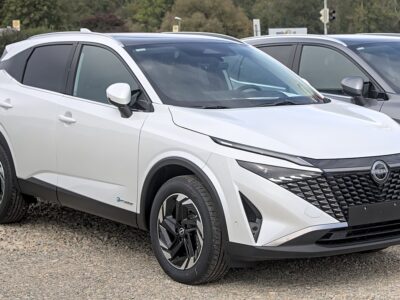
Volkswagen T-Cross Dimensions & Size Guide


The Volkswagen T-Cross is a compact SUV designed to combine everyday practicality, comfortable passenger space, and easy urban manoeuvrability. Despite its relatively small exterior dimensions, it offers a surprisingly spacious cabin, flexible seating arrangements, and a practical luggage compartment.
But how big is the Volkswagen T-Cross? Is it larger than the Volkswagen Polo? Does it offer enough room for a family? And can it fit comfortably inside a standard garage?
In this comprehensive guide, we'll explore the Volkswagen T-Cross dimensions, including its length, width, height, wheelbase, interior measurements, boot capacity, and ground clearance.
We'll also compare its size with other Volkswagen models, including the Polo, Taigo, and T-Roc, to help us understand where this compact SUV fits within the manufacturer's lineup.
For the current European Volkswagen T-Cross, the main dimensions are:
- Length: 4,127 mm
- Width: 1,760 mm (excluding mirrors)
- Height: 1,573 mm
- Wheelbase: 2,551 mm
- Boot capacity: 385–455 litres
- Maximum boot capacity: 1,281 litres
- Seating capacity: 5 passengers
These measurements refer to the European version. Specifications may vary depending on the model year, equipment, and country where the vehicle is sold.
Content in this publication
- Volkswagen T-Cross Dimensions at a Glance
- Volkswagen T-Cross Exterior Dimensions
- Volkswagen T-Cross Wheelbase
- Volkswagen T-Cross Interior Dimensions
- Volkswagen T-Cross Boot Dimensions
- Volkswagen T-Cross Boot Space With Seats Down
- Volkswagen T-Cross Ground Clearance
- Volkswagen T-Cross Turning Circle
- Volkswagen T-Cross Dimensions in Feet and Inches
- Volkswagen T-Cross vs Polo Dimensions
- Volkswagen T-Cross vs Taigo Dimensions
- Volkswagen T-Cross vs T-Roc Dimensions
- Volkswagen T-Cross Dimensions by Model Year
- Can the Volkswagen T-Cross Fit in a Standard Garage?
- Is the Volkswagen T-Cross Easy to Park?
- Is the Volkswagen T-Cross Big Enough for a Family?
- Volkswagen T-Cross Size Advantages and Disadvantages
- Is the Volkswagen T-Cross the Right Size for You?
- Frequently Asked Questions About Volkswagen T-Cross Dimensions
- Conclusion: Volkswagen T-Cross Dimensions Explained
Volkswagen T-Cross Dimensions at a Glance
Before examining individual measurements, let's look at the most important Volkswagen T-Cross size specifications.
| Measurement | Volkswagen T-Cross |
|---|---|
| Overall length | 4,127 mm |
| Overall width (without mirrors) | 1,760 mm |
| Overall height | 1,573 mm |
| Wheelbase | 2,551 mm |
| Turning circle | Approximately 10.6 m |
| Front headroom | Approximately 1,034 mm |
| Rear headroom | Approximately 966 mm |
| Boot capacity | 385–455 litres |
| Maximum luggage capacity | 1,281 litres |
| Seating capacity | 5 |
These dimensions position the T-Cross firmly within the small SUV category.
It is noticeably smaller than the Volkswagen Tiguan and the latest T-Roc, making it particularly attractive for drivers who spend much of their time navigating busy cities.
However, its compact dimensions don't necessarily mean a cramped interior.
Volkswagen has designed the T-Cross with a relatively tall roofline, upright seating positions, and adjustable rear seats to maximise the available passenger and cargo space.
Volkswagen T-Cross Exterior Dimensions
The exterior dimensions determine how easily the Volkswagen T-Cross fits into parking spaces, residential garages, narrow streets, and urban environments.
Its relatively short body and manageable width are among its strongest practical advantages.
Let's explore each measurement in detail.
Volkswagen T-Cross Length
The current European Volkswagen T-Cross measures 4,127 mm in length, equivalent to approximately 4.13 metres.
In imperial units, that is around 162.5 inches or 13.5 feet.
This relatively compact length makes the T-Cross particularly convenient for city driving.
For comparison, the Volkswagen Polo is approximately 4,074 mm long, meaning the T-Cross is only 53 mm longer.
Despite this small difference, the T-Cross offers a taller body and a more SUV-like driving position.
Its short length provides several practical benefits:
- Easier parallel parking.
- Better manoeuvrability on narrow streets.
- Less difficulty navigating underground car parks.
- Convenient parking in residential driveways.
- Reduced space requirements compared with larger SUVs.
For drivers moving from a conventional hatchback, the T-Cross generally won't feel excessively large.
However, exact lengths can vary between earlier models and international versions.
Volkswagen T-Cross Width
The Volkswagen T-Cross has a body width of approximately 1,760 mm, excluding its exterior mirrors.
That equals 1.76 metres or approximately 69.3 inches.
This measurement is important because vehicle width affects how easily we can drive through narrow roads and park between other vehicles.
At less than 1.8 metres wide, the T-Cross is relatively narrow for an SUV.
This makes it suitable for:
- Congested city streets.
- Narrow residential roads.
- Compact parking bays.
- Older parking garages.
- Urban areas with limited road space.
However, body width doesn't include the additional space occupied by the mirrors.
Volkswagen T-Cross Width Including Mirrors
When its exterior mirrors are extended, certain T-Cross specifications indicate an overall width of approximately 1,993 mm.
This means the vehicle may occupy almost two metres of width when the mirrors are included.
The distinction is particularly important when checking whether the SUV can fit through a narrow garage entrance.
For example, a garage door measuring two metres wide might appear sufficient based on the official body width.
However, the extended mirrors would leave very little clearance.
We recommend measuring both the garage entrance and the vehicle's actual mirror-to-mirror width before attempting to park in a particularly narrow space.
Volkswagen T-Cross Height
The current European T-Cross measures approximately 1,573 mm in height.
That is equivalent to 1.57 metres or 61.9 inches.
Its relatively tall body is one of the main reasons the vehicle offers a practical and comfortable cabin.
Compared with a conventional hatchback, the T-Cross has a more upright seating arrangement.
This design provides several advantages:
- An elevated driving position.
- Convenient entry and exit.
- Useful front and rear headroom.
- Better outward visibility for many drivers.
- A more spacious feeling inside the cabin.
Despite its SUV appearance, the T-Cross isn't particularly tall.
Most conventional multi-storey parking facilities offer more than enough vertical clearance for the standard vehicle.
Nevertheless, roof rails, roof boxes, and bicycle carriers can increase the overall height.
We should always consider these accessories when using parking facilities with height restrictions.
Volkswagen T-Cross Wheelbase
The Volkswagen T-Cross has a wheelbase of approximately 2,551 mm.
The wheelbase is the distance between the centres of the front and rear wheels.
It is an important measurement because it influences the vehicle's proportions, passenger compartment layout, and driving characteristics.
A longer wheelbase can help manufacturers provide additional interior space, particularly for rear passengers.
However, wheelbase length alone doesn't determine cabin comfort.
Seat thickness, dashboard positioning, interior packaging, and body design also influence the amount of usable space.
Why Is the T-Cross Wheelbase Important?
The T-Cross uses its compact wheelbase efficiently.
Volkswagen has combined a relatively short overall body with an upright cabin layout to maximise passenger accommodation.
This approach allows the T-Cross to provide useful interior space without becoming unnecessarily large.
Its wheelbase also contributes to its compact turning circle, which is especially helpful when navigating narrow roads or performing parking manoeuvres.
Interestingly, the T-Cross has a wheelbase very similar to that of the Volkswagen Polo.
This demonstrates how two vehicles with comparable underlying dimensions can offer noticeably different seating positions and interior layouts.
Volkswagen T-Cross Interior Dimensions
Exterior measurements are useful, but interior dimensions often matter more when choosing a practical family vehicle.
The Volkswagen T-Cross is designed to accommodate five occupants, with two front seats and a three-person rear bench.
Its relatively high roof and upright seating arrangement help maximise usable passenger space.
Although it remains a small SUV, its interior can feel more spacious than its exterior dimensions suggest.
Volkswagen T-Cross Front Seat Dimensions
The front cabin offers generous accommodation for a vehicle in this category.
Selected European specifications indicate the following approximate measurements:
| Front interior measurement | Dimension |
|---|---|
| Front headroom | 1,034 mm |
| Front interior width | 1,460 mm |
The available headroom makes the T-Cross suitable for many taller drivers.
Its elevated seating position also provides a clear view of the road ahead.
We particularly appreciate this layout for everyday urban driving because it can make judging surrounding traffic and road positioning easier.
The seats offer various adjustments depending on the selected trim and equipment.
However, buyers should always test the driving position personally, especially if they are unusually tall.
Volkswagen T-Cross Rear Seat Dimensions
The rear passenger compartment is designed for three occupants.
Selected specifications provide the following approximate measurements:
| Rear interior measurement | Dimension |
|---|---|
| Rear headroom | 966 mm |
| Rear interior width | 1,429 mm |
| Rear seating capacity | 3 passengers |
The rear seats can accommodate two adults comfortably on many everyday journeys.
However, three adults sitting side by side may find the available shoulder room limited.
This is common among compact SUVs.
For families with children, the available space is generally more practical.
Nevertheless, anyone regularly transporting five adults should consider testing the rear bench before making a purchase decision.
Volkswagen T-Cross Rear Legroom
One of the most interesting features of the T-Cross is its adjustable rear bench.
The rear seats can slide forwards or backwards by approximately 140 mm.
This allows us to adjust the balance between rear passenger legroom and luggage capacity.
When the seats are moved backwards, passengers benefit from additional legroom.
When the seats are moved forwards, more space becomes available in the boot.
This flexibility is particularly useful when travelling with different combinations of passengers and luggage.
For example, a family carrying several suitcases may choose to move the rear bench forwards when additional luggage space is required.
On shorter journeys with little cargo, the bench can be positioned further backwards for improved passenger comfort.
Volkswagen T-Cross Boot Dimensions
Boot capacity is one of the Volkswagen T-Cross's strongest practical features.
Despite its compact exterior measurements, the vehicle offers a relatively spacious and adaptable luggage compartment.
The boot size changes depending on the position of the sliding rear bench.
Volkswagen T-Cross Boot Capacity in Litres
| Rear seat configuration | Boot capacity |
|---|---|
| Rear seats moved backwards | 385 litres |
| Rear seats moved forwards | 455 litres |
| Rear seats folded down | Up to 1,281 litres |
The adjustable rear bench allows the luggage compartment to expand from 385 to 455 litres.
This represents an additional 70 litres of usable luggage volume.
When the rear seatbacks are folded, the available cargo space increases considerably.
For a small SUV, this is a useful amount of versatility.
Volkswagen T-Cross Boot Length
The luggage compartment offers the following approximate length measurements on certain European specifications:
| Boot measurement | Dimension |
|---|---|
| Boot length with rear seats upright | 748 mm |
| Boot length with rear seats folded | 1,465 mm |
These figures provide a useful indication of how much room is available for longer objects.
However, actual usable dimensions can depend on the position of the sliding rear bench, the loading angle, and the shape of the item being transported.
For particularly large items, we recommend measuring the boot opening as well as the cargo floor.
Is the Volkswagen T-Cross Boot Big Enough?
For most daily activities, the T-Cross provides practical luggage space.
Its boot can accommodate many common items, including:
- Weekly supermarket shopping.
- Backpacks and school bags.
- Small and medium-sized suitcases.
- Sports bags and gym equipment.
- Compact folded pushchairs.
- Everyday travel accessories.
However, luggage volume doesn't tell the complete story.
A large suitcase or pushchair might have dimensions that prevent it from fitting comfortably, even if its volume is smaller than the advertised boot capacity.
This is why the actual shape and measurements of the luggage compartment matter.
For families regularly carrying bulky equipment, checking the boot in person is advisable.
Volkswagen T-Cross Boot Space With Seats Down
Folding the rear seatbacks increases the maximum luggage capacity to approximately 1,281 litres.
This makes the T-Cross considerably more versatile when transporting bulky objects.
The rear seats use a split-folding arrangement, allowing part of the bench to remain available for passengers while additional cargo space is created.
This configuration can be helpful when carrying:
- Larger shopping purchases.
- Sports equipment.
- Camping accessories.
- Flat-packed furniture.
- Travel luggage.
- Household items.
The T-Cross may also feature an adjustable luggage compartment floor, depending on its equipment.
This can make the loading area more convenient and help accommodate objects of different sizes.
However, the maximum quoted luggage capacity should not be confused with the standard space available below the parcel shelf.
The actual usable volume depends on the loading configuration.
Volkswagen T-Cross Ground Clearance
Ground clearance is an important consideration for drivers interested in SUVs.
It describes the distance between the road surface and the lowest relevant point underneath the vehicle.
Certain international T-Cross versions have a quoted ground clearance of approximately 188 mm.
However, this measurement isn't necessarily identical across all markets.
Suspension configurations, wheel and tyre specifications, vehicle loading, and regional production differences can influence ground clearance.
Is the Volkswagen T-Cross High Enough for Rough Roads?
The T-Cross is primarily intended for paved roads and everyday urban driving.
Its SUV-style body can provide some practical advantages when dealing with moderate road irregularities.
These include:
- Speed bumps.
- Uneven residential streets.
- Sloping driveway entrances.
- Minor road surface changes.
- Rougher urban roads.
However, it is important to understand that the T-Cross isn't a dedicated off-road vehicle.
Ground clearance alone doesn't determine whether a vehicle is suitable for demanding terrain.
Approach angles, departure angles, tyres, traction, suspension travel, and underbody protection all influence off-road capability.
For regular driving on challenging terrain, a vehicle specifically designed for those conditions would generally be more appropriate.
Volkswagen T-Cross Turning Circle
The Volkswagen T-Cross has a turning circle of approximately 10.6 metres, depending on the model and measurement specification.
This is a useful characteristic for drivers who regularly navigate congested urban environments.
A compact turning circle makes several manoeuvres easier:
- U-turns where permitted.
- Three-point turns.
- Parking in confined spaces.
- Navigating narrow residential streets.
- Turning around in small parking areas.
Combined with its short overall length, this contributes to the T-Cross's reputation as an easy-to-manage compact SUV.
For drivers moving from a larger SUV, the smaller dimensions may make everyday parking noticeably more convenient.
Volkswagen T-Cross Dimensions in Feet and Inches
For readers who prefer imperial measurements, the main European T-Cross dimensions can be expressed in feet and inches.
| Measurement | Feet and inches | Inches |
|---|---|---|
| Length | Approximately 13 ft 6.5 in | 162.5 in |
| Width without mirrors | Approximately 5 ft 9.3 in | 69.3 in |
| Height | Approximately 5 ft 1.9 in | 61.9 in |
| Wheelbase | Approximately 8 ft 4.4 in | 100.4 in |
These conversions can be particularly useful when comparing the vehicle with garage dimensions or parking spaces measured in imperial units.
However, for precise clearance calculations, we recommend using the original measurements in millimetres.
Rounded conversions can introduce small differences that matter in particularly tight spaces.
Volkswagen T-Cross vs Polo Dimensions
The Volkswagen Polo and T-Cross share similar exterior footprints, but their body styles are noticeably different.
The Polo is a traditional hatchback, while the T-Cross offers a taller body and elevated seating position.
| Dimension | VW T-Cross | VW Polo |
|---|---|---|
| Length | 4,127 mm | 4,074 mm |
| Width | 1,760 mm | 1,751 mm |
| Height | 1,573 mm | 1,451 mm |
| Wheelbase | 2,551 mm | 2,552 mm |
| Boot capacity | 385–455 L | 351 L |
These are representative dimensions for recent European-market versions.
Is the T-Cross Bigger Than the Polo?
Yes. The T-Cross is slightly longer and wider than the Polo.
However, the biggest difference is height.
The T-Cross stands approximately 122 mm taller.
This additional height contributes to its SUV styling, elevated driving position, and upright cabin layout.
The T-Cross also provides a larger luggage compartment with an adjustable rear bench.
Nevertheless, the similarities in wheelbase mean the two vehicles are closer in overall passenger-compartment size than their different appearances might suggest.
For buyers seeking a compact vehicle with a higher seating position, the T-Cross is particularly appealing.
Those who prefer a conventional hatchback may find the Polo more suitable.
Volkswagen T-Cross vs Taigo Dimensions
The Volkswagen Taigo is another small crossover offered by Volkswagen.
Although the T-Cross and Taigo occupy similar positions in the market, they feature different exterior designs.
The Taigo has a sportier, coupe-inspired roofline, while the T-Cross features a more upright SUV profile.
| Dimension | VW T-Cross | VW Taigo |
|---|---|---|
| Length | 4,127 mm | 4,266 mm |
| Width | 1,760 mm | 1,757 mm |
| Height | 1,573 mm | 1,518 mm |
| Wheelbase | 2,551 mm | 2,554 mm |
These are representative European-market dimensions.
Which Is Bigger: T-Cross or Taigo?
The Taigo is approximately 139 mm longer than the T-Cross.
However, the T-Cross is around 55 mm taller.
Interestingly, their widths and wheelbases are very similar.
This means their different designs are more significant than their underlying platform dimensions might suggest.
The T-Cross prioritises an upright SUV body, while the Taigo emphasises a sleeker exterior profile.
For buyers who value a tall cabin and adjustable rear seating, the T-Cross may be more attractive.
Those who prefer a sportier appearance may favour the Taigo.
Volkswagen T-Cross vs T-Roc Dimensions
The Volkswagen T-Roc sits above the T-Cross in the manufacturer's SUV range.
It offers a larger exterior footprint and is generally aimed at buyers who want additional space.
| Dimension | VW T-Cross | New-generation VW T-Roc |
|---|---|---|
| Length | 4,127 mm | 4,372 mm |
| Width | 1,760 mm | 1,828 mm |
| Height | 1,573 mm | 1,573 mm |
| Wheelbase | 2,551 mm | 2,629 mm |
| Boot capacity | 385–455 L | 475 L |
These measurements compare the European T-Cross with the newer-generation T-Roc. Earlier T-Roc models have different dimensions.
Is the Volkswagen T-Roc Much Bigger?
The new-generation T-Roc is approximately 245 mm longer and 68 mm wider than the T-Cross.
It also has a longer wheelbase.
These differences give the T-Roc a larger overall footprint.
For families requiring additional passenger space, the T-Roc may be worth considering.
However, the T-Cross has an advantage when it comes to compact exterior dimensions.
Its shorter body can be more convenient for urban parking, while the adjustable boot adds flexibility.
The better choice depends on whether we prioritise additional vehicle size or easier manoeuvrability.
Volkswagen T-Cross Dimensions by Model Year
One important consideration when researching Volkswagen T-Cross dimensions is that the vehicle has been updated since its original introduction.
Different model years and international versions may have different exterior measurements.
Volkswagen T-Cross 2019–2023 Dimensions
Earlier European T-Cross models generally featured the following dimensions:
| Measurement | Earlier T-Cross |
|---|---|
| Length | Approximately 4,108 mm |
| Width | Approximately 1,760 mm |
| Height | Approximately 1,584 mm |
| Wheelbase | 2,551 mm |
| Maximum boot capacity with seats upright | 455 litres |
These measurements can vary slightly depending on model specifications and equipment.
The original T-Cross already offered a flexible rear seating arrangement and practical luggage capacity.
Volkswagen T-Cross 2024–2026 Dimensions
The facelifted European Volkswagen T-Cross introduced updated styling while retaining the compact proportions of the original vehicle.
Its principal dimensions are:
| Measurement | Updated T-Cross |
|---|---|
| Length | 4,127 mm |
| Width | 1,760 mm |
| Height | 1,573 mm |
| Wheelbase | 2,551 mm |
| Boot capacity | 385–455 litres |
The facelift brought relatively modest changes to the vehicle's exterior footprint.
As a result, buyers upgrading from an earlier European T-Cross shouldn't expect a dramatic difference in parking requirements.
However, the exact dimensions should always be checked against the specification for the vehicle being considered.
Why Do International T-Cross Dimensions Differ?
The Volkswagen T-Cross isn't identical in every market.
Some Latin American versions, for example, have a longer body and wheelbase than the European model.
Certain specifications list a length of approximately 4,218 mm and a wheelbase of 2,651 mm.
This is a significant difference compared with the European vehicle's 4,127 mm length and 2,551 mm wheelbase.
These variations are important when researching:
- Parking requirements.
- Passenger space.
- Boot dimensions.
- Vehicle comparisons.
- Replacement accessories.
- Garage compatibility.
When comparing specifications online, we should always verify the market and model year rather than assuming every T-Cross uses the same measurements.
Can the Volkswagen T-Cross Fit in a Standard Garage?
One of the most common questions about Volkswagen T-Cross dimensions concerns garage compatibility.
Fortunately, the T-Cross's compact exterior makes it suitable for many conventional residential garages.
However, the actual answer depends on the dimensions of the available space.
Let's consider an example.
Suppose a garage measures:
- Length: 4.8 metres.
- Width: 2.4 metres.
- Height: 2.0 metres.
The European T-Cross measures approximately 4.13 metres long, 1.76 metres wide without mirrors, and 1.57 metres tall.
Based on these figures, the vehicle would physically fit inside the example garage.
However, simply fitting inside doesn't necessarily mean parking will be convenient.
Garage Width Requirements
The body width of 1,760 mm leaves approximately 640 mm of total space inside a garage measuring 2,400 mm wide.
If the car is perfectly centred, that represents approximately 320 mm of clearance on each side.
However, the mirrors reduce the available clearance further.
We must also consider whether the doors can open sufficiently for passengers to enter and exit comfortably.
Garage Length Requirements
A 4,800 mm garage would provide approximately 673 mm of total remaining length around a 4,127 mm vehicle.
That space must be distributed between the front and rear.
We should also consider shelving, storage cabinets, garage doors, and other obstacles.
Garage Height Requirements
With a height of approximately 1,573 mm, the standard European T-Cross should fit comfortably under many conventional garage height restrictions.
However, roof-mounted accessories can change the situation.
A roof box may increase the overall vehicle height considerably.
Checking the complete height before entering a restricted parking facility is essential.
Is the Volkswagen T-Cross Easy to Park?
The Volkswagen T-Cross is particularly well suited to urban parking.
Its relatively short length, manageable width, and compact turning circle help make parking easier than in many larger SUVs.
The elevated seating position can also provide a useful view of the surrounding environment.
Depending on the model and trim, the T-Cross may offer parking assistance equipment such as:
- Rear parking sensors.
- Front parking sensors.
- Reversing camera.
- Parking assistance systems.
These features can make manoeuvring more convenient, especially in tight parking spaces.
Nevertheless, drivers should remain aware of the vehicle's actual dimensions.
The mirrors, bumpers, and required door-opening space are all important when parking in confined areas.
For drivers who regularly use narrow city streets and compact parking facilities, the T-Cross offers an attractive balance between SUV practicality and manageable size.
Is the Volkswagen T-Cross Big Enough for a Family?
The Volkswagen T-Cross can be a practical choice for smaller families.
Its five-seat layout, adjustable rear bench, and useful boot capacity make it suitable for a variety of daily activities.
However, whether it provides enough space depends on the number of passengers and their individual needs.
Volkswagen T-Cross for Families With Children
For families with one or two children, the T-Cross can offer a practical combination of passenger space and luggage capacity.
Its relatively tall roofline can make accessing the rear seats easier.
The adjustable rear bench also allows parents to prioritise either legroom or cargo capacity.
However, child seat dimensions should always be checked carefully.
Larger rear-facing child seats may require the front seats to be moved forwards.
Before purchasing, we recommend testing the exact child seats that will be used.
Volkswagen T-Cross for Five Adults
Although the T-Cross has five seat belts, travelling with five adults may not be particularly comfortable on longer journeys.
The rear bench is relatively narrow compared with those found in larger SUVs.
For occasional short trips, this may not be a major concern.
However, buyers who regularly transport five adults may prefer a larger vehicle with more rear shoulder room.
Volkswagen T-Cross for Family Holidays
The T-Cross offers a practical boot for a small SUV.
With 385–455 litres available, depending on the rear-seat position, it can accommodate a useful amount of holiday luggage.
However, families travelling with several large suitcases, pushchairs, and other equipment may find the available space restrictive.
The sliding rear bench provides some flexibility, but moving it forwards also reduces passenger legroom.
For regular long-distance journeys with several passengers and substantial luggage, a larger SUV may be more comfortable.
Volkswagen T-Cross Size Advantages and Disadvantages
The T-Cross's compact dimensions offer several benefits, but there are also compromises worth considering.
Advantages
Easy urban manoeuvrability: Its relatively short body makes the T-Cross convenient for city driving.
Compact parking footprint: The vehicle requires less space than many larger SUVs.
Elevated driving position: Its taller body offers a higher seating arrangement than a conventional hatchback.
Flexible luggage capacity: The sliding rear bench allows us to adjust the available cargo space.
Practical interior: The cabin offers useful passenger accommodation within a compact exterior.
Convenient access: The upright body design can make entry and exit easier for many passengers.
Disadvantages
Limited rear shoulder room: Three adults may find the rear bench narrow.
Cargo-space trade-off: Increasing boot capacity by sliding the rear seats forwards reduces legroom.
Not ideal for oversized luggage: The T-Cross remains a small SUV despite its flexible interior.
Limited off-road suitability: Its design is intended primarily for everyday road use.
Different international dimensions: Buyers must verify specifications for the exact version being considered.
Overall, the T-Cross provides a practical balance of compact size and everyday versatility.
Is the Volkswagen T-Cross the Right Size for You?
Choosing the right vehicle size depends on how we intend to use it.
The T-Cross is particularly attractive for drivers who spend most of their time in urban environments.
Its compact exterior makes it easy to manage, while the taller cabin provides a more SUV-like driving experience.
It may be a good choice for:
- Drivers seeking a compact city SUV.
- Couples needing occasional rear passenger space.
- Smaller families with moderate luggage requirements.
- Buyers moving from a hatchback.
- Drivers who prefer an elevated seating position.
- People with relatively limited parking space.
However, those who frequently carry five adults or large quantities of luggage may benefit from considering a larger SUV.
We also recommend checking the exact vehicle's dimensions before purchasing, particularly when comparing models from different international markets.
Frequently Asked Questions About Volkswagen T-Cross Dimensions
1. How Long Is the Volkswagen T-Cross?
The current European Volkswagen T-Cross measures approximately 4,127 mm (4.13 metres) in length.
Earlier European models measure around 4,108 mm, while some international versions are longer.
The exact measurement depends on the model year and market.
2. How Wide Is the Volkswagen T-Cross Including Mirrors?
The T-Cross has a body width of approximately 1,760 mm without mirrors.
Certain specifications indicate an overall width of around 1,993 mm with the mirrors extended.
We recommend checking the exact mirror-to-mirror measurement before using a narrow garage entrance.
3. How Big Is the Volkswagen T-Cross Boot?
The European Volkswagen T-Cross offers between 385 and 455 litres of boot capacity, depending on the position of the sliding rear bench.
When the rear seats are folded down, maximum luggage capacity increases to approximately 1,281 litres.
This makes it one of the more versatile options for drivers looking for a compact SUV.
4. Is the Volkswagen T-Cross Bigger Than the Polo?
Yes. The T-Cross is slightly longer and wider than the Volkswagen Polo.
It is also considerably taller, providing an elevated driving position and more upright cabin layout.
The T-Cross additionally offers a larger and more flexible luggage compartment.
However, the two vehicles have very similar wheelbase measurements.
5. Is the Volkswagen T-Cross Bigger Than the T-Roc?
No. The Volkswagen T-Cross is smaller than the latest Volkswagen T-Roc.
The T-Cross measures approximately 4,127 mm long, while the newer-generation T-Roc measures around 4,372 mm.
The T-Roc is also wider and has a longer wheelbase.
However, the T-Cross's smaller size can make it more convenient for urban driving and parking.
Conclusion: Volkswagen T-Cross Dimensions Explained
The Volkswagen T-Cross dimensions demonstrate how a compact SUV can combine manageable exterior measurements with practical interior space.
With a length of approximately 4,127 mm, a width of 1,760 mm, and a height of 1,573 mm, the current European T-Cross is well suited to urban driving, daily commuting, and many family activities.
Its relatively short wheelbase and compact turning circle help make parking and manoeuvring easier than in larger SUVs.
Inside, the elevated seating position and adjustable rear bench provide useful flexibility.
The boot offers between 385 and 455 litres of capacity, increasing to approximately 1,281 litres when the rear seats are folded.
Compared with the Volkswagen Polo, the T-Cross offers a taller cabin and greater luggage flexibility. Compared with the Taigo, it has a more upright SUV design. And compared with the larger T-Roc, it offers a more compact exterior footprint.
For drivers looking for a small SUV that balances practicality, comfortable seating, and everyday convenience, the Volkswagen T-Cross is a compelling option.
Before making a purchase, we recommend checking the dimensions for the exact model year and market, measuring any parking restrictions, and testing the interior with the passengers and luggage we regularly carry.
If you want to know other articles similar to Volkswagen T-Cross Dimensions & Size Guide you can visit the category Service and Parts.
Nissan Qashqai Fuel Tank Capacity: Complete Guide

Suzuki Swift Fuel Tank Capacity: Complete Guide
Mazda CX-5 Weight (2013–2026): Complete Guide in Pounds and KG
Kia Sportage Dashboard Symbols and Warning Lights

MINI Cooper Weight (2002–2027): Complete Weight Chart & Guide
Toyota RAV4 Engine Sizes: Complete Guide (1994–2026)
Leave a Reply
More content of your interest