
What Ford Ranger Engine Is Best? Complete Buyer’s Guide

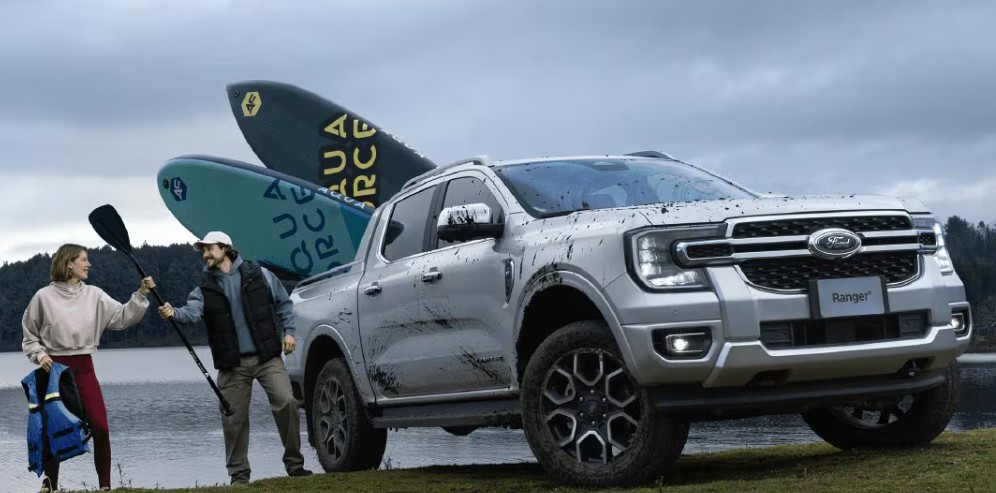
Choosing the best Ford Ranger engine sounds simple until we look at how many versions Ford has offered across different countries and generations. Depending on where we live, the Ranger may come with a compact single-turbo diesel, a muscular V6 diesel, an EcoBoost petrol engine, a plug-in hybrid system, or the wild twin-turbo petrol V6 fitted to the Ranger Raptor.
So, what Ford Ranger engine is best?
For most current-generation Ranger buyers, the 3.0-litre V6 turbo-diesel is the best all-round engine. It delivers strong low-speed torque, relaxed towing performance, confident overtaking power, and a smoother driving experience than the smaller diesels.
That does not mean everyone should buy the V6. The smaller 2.0-litre diesel can be cheaper to purchase and run, while North American buyers may find the 2.3-litre EcoBoost petrol engine offers the most sensible balance. Meanwhile, the Ranger Raptor’s 3.0-litre twin-turbo EcoBoost V6 is the obvious choice for outright performance—but not necessarily for towing, fuel economy, or everyday value.
Let’s separate the noise from the useful stuff and find the right engine for the way we actually drive.
Content in this publication
- Quick Verdict: Which Ford Ranger Engine Should We Choose?
- Why There Is No Single Best Ranger Engine for Everyone
- Current Ford Ranger Engine Options Explained
- Best Overall: 3.0-Litre V6 Turbo-Diesel
- Best Value Work Engine: 2.0-Litre Single-Turbo Diesel
- Best Four-Cylinder Diesel: 2.0-Litre Bi-Turbo
- Best North American Everyday Engine: 2.3-Litre EcoBoost
- Best North American Upgrade: 2.7-Litre EcoBoost V6
- Best Performance Engine: 3.0-Litre Twin-Turbo EcoBoost V6
- Best for Electrified Driving: Ranger Plug-In Hybrid
- Best Older Ford Ranger Engine: 3.2-Litre Five-Cylinder Diesel
- Which Ranger Engine Is Best for Towing?
- Which Ranger Engine Is Best for Fuel Economy?
- Which Ford Ranger Engine Is Most Reliable?
- Engines We Would Choose for Different Owners
- Ford Ranger Engine Comparison Table
- Final Verdict: What Ford Ranger Engine Is Best?
- Frequently Asked Questions
Quick Verdict: Which Ford Ranger Engine Should We Choose?
Here is the simple version:
- Best overall Ranger engine: 3.0-litre V6 turbo-diesel
- Best for towing: 3.0-litre V6 turbo-diesel
- Best for fuel-conscious work use: 2.0-litre single-turbo diesel
- Best balance of economy and performance: 2.0-litre Bi-Turbo diesel
- Best North American everyday engine: 2.3-litre EcoBoost petrol
- Best North American upgrade: 2.7-litre EcoBoost V6
- Best for performance: 3.0-litre twin-turbo EcoBoost V6 in the Raptor
- Best for short journeys with regular charging: Ranger plug-in hybrid
- Best older Ranger engine for simplicity: 3.2-litre five-cylinder diesel, provided it has been properly maintained
The key phrase here is properly maintained. A well-serviced smaller engine can be a far better purchase than a neglected V6 wearing shiny wheels and a suspiciously clean engine bay.
Why There Is No Single Best Ranger Engine for Everyone
Engines are tools. Asking which Ranger engine is best without considering its job is like asking which pair of boots is best without saying whether we are hiking, welding, or walking through an airport.
The best choice depends on:
- How much we tow
- How much weight we carry
- Whether we drive mainly in town or on motorways
- Local fuel prices
- Annual mileage
- Maintenance costs
- Whether we prefer diesel or petrol
- Whether charging a plug-in hybrid is practical
- Which engines are offered in our country
- Whether we are buying new or used
A person pulling a large caravan across Australia will judge an engine differently from someone commuting in an American Ranger. The caravan owner may value diesel torque and full-time four-wheel drive. The commuter may prefer a quieter petrol engine, simpler emissions equipment, and a lower initial cost.
That is why we need to examine each option on its own terms.
Current Ford Ranger Engine Options Explained
Ford Ranger engine availability varies significantly by market. Current Australian models may include 2.0-litre and 3.0-litre turbo-diesels, a plug-in hybrid, and the Raptor’s petrol V6.
In North America, the Ranger is commonly offered with a 2.3-litre EcoBoost four-cylinder, an available 2.7-litre EcoBoost V6, and a 3.0-litre EcoBoost V6 in the Ranger Raptor.
In the United Kingdom and other selected markets, the lineup may include 2.0-litre EcoBlue diesels, a 3.0-litre V6 diesel, the Raptor petrol engine, and a plug-in hybrid.
In other words, the Ranger is not one truck with one engine menu. It is a global family with different recipes.
Best Overall: 3.0-Litre V6 Turbo-Diesel
If we want the engine that makes the Ranger feel most complete, the 3.0-litre V6 turbo-diesel takes the crown.
It is not merely quicker than the smaller diesel. It changes the character of the vehicle. There is more torque available when moving away from a junction, climbing a hill, overtaking with passengers aboard, or pulling a trailer into a headwind.
The engine feels less hurried, as though it is moving the truck with its shoulders rather than dragging it by its fingertips.
Why the V6 Diesel Feels Better
The V6 layout helps deliver power with greater smoothness than many four-cylinder diesels. We still hear the familiar diesel rumble, but acceleration tends to feel more natural and less strained.
Its advantages include:
- Strong low-rpm pulling power
- Easier towing on gradients
- Less need for aggressive throttle inputs
- More relaxed motorway overtaking
- Better performance with passengers and cargo
- Full-time four-wheel drive on many variants
- A more premium driving character
The difference becomes especially noticeable when the Ranger is loaded. An empty pickup can make almost any engine feel acceptable. Add tools, passengers, a canopy, camping equipment, larger tyres, and a trailer, and the engine’s reserves start to matter.
Is the 3.0 V6 Diesel Worth the Extra Money?
For buyers who tow regularly, travel long distances, or plan to keep the truck for several years, it often is.
The V6 option generally costs more to purchase. It may also consume more fuel than a lightly driven four-cylinder diesel, and servicing or repair costs can be higher because there is simply more engine and supporting hardware involved.
However, value is not only measured at the fuel pump. If the V6 performs a demanding job without feeling stressed, that extra capability may be worth far more than a small theoretical saving in fuel.
Who Should Buy the V6 Diesel?
Choose it when we:
- Tow a caravan, boat, livestock trailer, or machinery regularly
- Drive long distances with heavy loads
- Want stronger overtaking performance
- Prefer full-time four-wheel drive where offered
- Live in hilly or mountainous areas
- Want the most effortless non-Raptor Ranger
- Are willing to pay more for power and refinement
For these buyers, the 3.0 V6 diesel is not an indulgence. It is the engine that best matches the Ranger’s size and capability.
Best Value Work Engine: 2.0-Litre Single-Turbo Diesel
The 2.0-litre single-turbo diesel is the sensible pair of work boots in the Ranger cupboard. It may not turn heads, but it can get through the day without demanding applause.
It provides enough torque for ordinary trade work, commuting, rural driving, and occasional towing. It will not surge forward with the authority of the V6, particularly when fully loaded, but not every owner needs a heavyweight powertrain.
Main Advantages of the Single-Turbo Diesel
Its appeal is based on practicality:
- Lower purchase price
- Respectable low-speed torque
- Potentially lower fuel use
- Suitable for fleet and trade applications
- Less complicated turbo arrangement than a twin-turbo setup
- Available in work-focused specifications
- Adequate performance for ordinary loads
The single-turbo diesel makes the most sense when the Ranger is primarily a business tool. We may care more about payload, tray configuration, insurance, servicing, and monthly costs than rapid acceleration.
Where the 2.0 Single-Turbo Feels Limited
The engine’s weaknesses become clearer during high-speed overtaking, steep climbs, or heavy towing.
The difference is not something we notice only on a brochure. We feel it when the transmission downshifts more often, when acceleration slows with a trailer attached, or when we need a longer gap to overtake.
Who Should Choose It?
The 2.0 single-turbo diesel is best for:
- Urban tradespeople
- Fleet operators
- Moderate annual mileage
- Light or occasional towing
- Buyers prioritising purchase price
- Drivers who rarely carry maximum loads
- Anyone who sees the Ranger as equipment rather than entertainment
It is not the most exciting Ranger engine, but excitement does not pay operating expenses.
Best Four-Cylinder Diesel: 2.0-Litre Bi-Turbo
The 2.0-litre Bi-Turbo diesel has long been one of the most appealing Ranger engines because it attempts to blend smaller-engine efficiency with stronger performance.
It sits neatly between the basic single-turbo diesel and the 3.0-litre V6.
How the Bi-Turbo System Works
Rather than relying on one turbocharger to cover every driving situation, the engine uses a sequential arrangement designed to improve response across a broader rev range.
In simple terms, the system aims to provide:
- Faster response at lower engine speeds
- Stronger airflow as revs rise
- More torque than the basic diesel
- Better flexibility during overtaking
- Good performance without moving to a larger V6
On the road, the Bi-Turbo generally feels more energetic than the single-turbo unit. It pulls harder through the middle of the rev range and is better suited to mixed family, work, and recreational use.
Is the 2.0 Bi-Turbo Better Than the 3.0 V6?
For fuel-conscious buyers, perhaps. For outright ability, usually not.
The Bi-Turbo may be the smarter compromise when we want decent power but cannot justify the V6’s purchase price. It can tow, commute, tour, and handle ordinary work without feeling like the budget engine.
The V6 still wins when loads become heavier or journeys more demanding. Its extra displacement and torque give it a deeper well of performance. The Bi-Turbo feels capable; the V6 feels comfortable.
Potential Complexity Matters
Two turbochargers and their associated control systems naturally create more potential components to inspect as the vehicle ages.
This does not mean every Bi-Turbo will become unreliable. It means maintenance history matters enormously on a used example.
We should look for:
- Consistent oil-change records
- Correct oil specifications
- Evidence of scheduled servicing
- Smooth cold starts
- No abnormal turbo whistle
- No hesitation or limp-mode warnings
- No unexplained coolant loss
- Clean, predictable transmission behaviour
A cared-for Bi-Turbo can be an excellent all-rounder. A neglected one can turn apparent fuel savings into repair bills.
Best North American Everyday Engine: 2.3-Litre EcoBoost
For buyers in the United States and Canada, the 2.3-litre EcoBoost four-cylinder is arguably the most rational Ranger engine.
You may be interested in reading Is GMC Sierra a Full-Size Truck? A Complete Guide
It delivers strong petrol-engine performance without the price or thirst of the larger V6 options. It also avoids some of the diesel emissions-treatment hardware that may be less suitable for drivers who mainly complete short suburban trips.
Why the 2.3 EcoBoost Makes Sense
The 2.3 offers a convincing blend of:
- Competitive power
- Responsive acceleration
- Broad availability
- Lower entry price than V6 models
- Good everyday drivability
- Strong towing ability when correctly configured
- Better suitability for short journeys than many modern diesels
Choosing the smaller petrol engine does not automatically make the Ranger a lightweight. Correct configuration, axle ratings, payload, hitch loading, and trailer setup remain essential, but the engine itself is capable.
Does the 2.3 EcoBoost Feel Underpowered?
Not for ordinary use.
A modern turbocharged petrol engine in a midsize pickup can provide enough performance for commuting, home improvement projects, camping, and recreational towing.
It may need more revs than a large diesel during towing, and it lacks the deeper character of a V6, but it offers enough performance for most daily situations.
It is the type of engine that disappears into the background—and that is often a compliment.
Who Should Buy the 2.3 EcoBoost?
It suits buyers who:
- Mainly drive without a trailer
- Want strong performance at a reasonable price
- Complete frequent short journeys
- Prefer petrol over diesel
- Tow occasionally rather than constantly
- Want a practical everyday pickup
Best North American Upgrade: 2.7-Litre EcoBoost V6
The 2.7-litre EcoBoost V6 is the Goldilocks engine of the North American Ranger range.
It offers more muscle than the 2.3 without turning the truck into the fuel-hungry performance toy that the Raptor can become.
This engine is likely to appeal to drivers who tow more regularly, carry heavier accessories, or simply enjoy stronger acceleration.
Why Choose the 2.7 Over the 2.3?
The extra cylinders and displacement create a fuller driving experience. The truck feels more relaxed when accelerating onto a motorway, climbing with a trailer, or moving on larger off-road tyres.
Its principal benefits are:
- More power and torque
- Better performance under load
- Stronger passing ability
- Smoother V6 character
- A useful middle ground below the Raptor
- Suitable for buyers who want capability without extreme performance tuning
Is the 2.7 EcoBoost the Best Ranger Petrol Engine?
For non-Raptor drivers, it probably is.
The 2.3 remains the smarter value choice, but the 2.7 is the more satisfying engine. It provides meaningful additional performance rather than a barely noticeable brochure upgrade.
Think of the 2.3 as a good cup of coffee and the 2.7 as the same coffee with an extra shot. We can live without it, but once we get used to it, going back may feel disappointing.
Best Performance Engine: 3.0-Litre Twin-Turbo EcoBoost V6
The Ranger Raptor’s 3.0-litre twin-turbo petrol V6 is the best engine for one purpose: fun.
This engine transforms the Ranger from a practical pickup into something closer to a desert racing toy with number plates.
What Makes the Raptor Engine Special?
It offers:
- Explosive acceleration
- Strong high-rpm performance
- Immediate petrol-engine response
- A more exciting exhaust character
- Excellent compatibility with high-speed off-road driving
- Far greater output than ordinary Ranger engines
But we should not confuse “most powerful” with “best for everybody.”
Why the Raptor Engine Is Not the Best Workhorse
The Raptor is designed around off-road performance, suspension travel, speed, and driver engagement. Its towing and payload priorities differ from those of a work-focused Ranger.
The petrol V6 may also consume considerably more fuel when driven enthusiastically—which, let’s be honest, is how many people will drive it.
Who Should Buy the Raptor V6?
Buy it when we:
- Want the fastest Ranger
- Spend time on rough tracks or dunes
- Value performance above economy
- Do not need maximum payload efficiency
- Want a genuinely special driving experience
- Accept higher fuel, tyre, insurance, and purchase costs
The Raptor engine is the best toy, not necessarily the best tool.
Best for Electrified Driving: Ranger Plug-In Hybrid
The Ranger plug-in hybrid adds a new answer to the engine debate.
Its powertrain combines a turbocharged petrol engine with an electric motor. On paper, that sounds like the best of every world: strong torque, electric commuting, petrol backup, and pickup capability.
Reality depends on how we use it.
When the Ranger PHEV Makes Sense
The plug-in hybrid can be ideal when:
- We can charge at home every night
- Most daily trips are short
- We still need a pickup for weekend towing or work
- Electricity is cheaper than petrol in our area
- We value quiet low-speed driving
- We can benefit from onboard electrical power features
For a tradesperson travelling a short distance between home and local jobs, regular charging could reduce petrol use dramatically.
For someone driving hundreds of motorway kilometres daily without charging, the heavy hybrid hardware may offer less benefit.
Is the PHEV Better Than the V6 Diesel for Towing?
Its combined torque may be impressive, but numbers alone do not tell the entire story.
The diesel’s sustained low-rpm behaviour, long-distance fuel convenience, and suitability for remote touring may still make it the preferred towing engine for many drivers.
The hybrid may be better for mixed local use, especially when daily electric driving offsets fuel consumption.
We should choose the PHEV because our routine suits charging—not merely because its torque figure looks enormous.
Best Older Ford Ranger Engine: 3.2-Litre Five-Cylinder Diesel
Among used Rangers, the 3.2-litre five-cylinder turbo-diesel remains a favourite.
It was never the quietest or most economical engine, but it developed a reputation for strong low-speed pulling power and a distinctive, industrial character.
It feels like an engine built to work, with a soundtrack somewhere between a tractor and a distant thunderstorm.
Why Used Buyers Still Like the 3.2
Its attractions include:
- Strong torque delivery
- Good towing behaviour
- Proven use across work and recreational vehicles
- Less complicated turbo arrangement than the later Bi-Turbo
- Wide mechanic familiarity in many markets
- Strong aftermarket support
- A characterful five-cylinder sound
However, age now matters as much as engine design. Many 3.2 Rangers have worked hard, towed heavily, travelled off-road, or been modified.
What Should We Check on a Used 3.2 Ranger?
Before buying, inspect:
- Complete service records
- Cooling-system condition
- Oil leaks
- Injector behaviour
- Turbocharger noise
- Exhaust smoke
- Transmission servicing
- Four-wheel-drive operation
- Signs of overheating
- Poorly installed modifications
- Evidence of frequent heavy towing
A 3.2 with high mileage and meticulous records may be safer than a lower-mileage example with no history.
Is the 3.2 More Reliable Than the 2.0 Bi-Turbo?
It is tempting to say yes because the 3.2 uses a single turbo and has been around longer. Yet reliability depends on condition, servicing, workload, modifications, and the specific vehicle.
The 3.2 may appeal to buyers who prefer an older, less highly stressed design. The 2.0 Bi-Turbo can offer better performance per litre and improved efficiency, but it uses a more complex boosting arrangement.
For a used purchase, we would choose the better-maintained truck rather than buying solely by engine badge.
Which Ranger Engine Is Best for Towing?
The 3.0-litre V6 turbo-diesel is the best conventional Ranger towing engine in markets where it is available.
Why?
Because towing is not just about the maximum approved trailer weight. It is about how confidently the truck reaches that weight, maintains speed on hills, controls gear changes, and responds when we need to merge or overtake.
You may be interested in readingIs GMC Sierra a Full-Size Truck? A Complete GuideYou may be interested in reading
 Peugeot 206 Insurance Group: Costs, Ratings and Ways to Save
Even when two engines share the same headline towing limit, the V6’s additional torque gives it more breathing room.
Towing Capacity Is Not the Whole Story
We must also calculate:
- Tow-ball mass
- Payload remaining after passengers
- Accessories and canopy weight
- Gross vehicle mass
- Gross combined mass
- Axle-load limits
- Trailer braking requirements
- Local licence and road regulations
A Ranger may be rated to pull a certain trailer, but loading the bed with tools, adding four adults, fitting a bull bar, and attaching a heavy caravan can consume available limits surprisingly quickly.
The best towing engine cannot rescue an overloaded setup.
Which Ranger Engine Is Best for Fuel Economy?
The answer depends on journey type.
For long motorway trips and work use, a 2.0-litre diesel is generally the fuel-conscious conventional choice. The single-turbo version may be especially appealing where ultimate performance is unnecessary.
For short daily commutes with reliable charging, the plug-in hybrid may use the least liquid fuel because many journeys can be completed partly or entirely on electric power.
For North American petrol buyers, the 2.3 EcoBoost should generally consume less fuel than the larger V6 engines under similar conditions, though actual results vary with drivetrain, load, tyres, speed, climate, and driving style.
Why Official Economy Figures Can Mislead Us
Laboratory figures are useful for comparisons, but pickups live messy lives.
Fuel consumption rises when we add:
- Roof racks
- Bull bars
- Canopies
- Mud-terrain tyres
- Suspension lifts
- Heavy drawers
- Towing mirrors
- Trailers
- Constant four-wheel-drive use
- Aggressive acceleration
A modified Ranger can move through the air like a garden shed in a hurricane. Engine choice matters, but configuration matters too.
Which Ford Ranger Engine Is Most Reliable?
There is no honest way to declare one current Ranger engine universally the most reliable without considering years of real-world service, market-specific equipment, maintenance standards, and usage.
However, we can make a practical judgement.
A lower-output engine with fewer highly stressed components may appear attractive for long-term ownership, which gives the 2.0 single-turbo diesel an argument based on relative simplicity.
In North America, the widely used 2.3 EcoBoost may also be a sensible long-term choice when serviced correctly and left unmodified.
For older used Rangers, the 3.2 five-cylinder diesel remains appealing because mechanics know it well and there is extensive parts and service experience around it.
The Most Reliable Engine Is Often the Least Abused One
A Ranger used for school runs and annual holidays lives a different life from one that has spent five years hauling machinery through dust.
When buying used, maintenance evidence matters more than online mythology.
Look for:
- Oil changes completed on time
- Correct lubricants and filters
- Cooling-system maintenance
- Transmission-fluid history
- No performance remapping
- No deleted emissions equipment
- Factory-sized or sensibly sized tyres
- Clean diagnostic scans
- Smooth cold and hot starts
- Receipts that support the stamped service book
A remapped engine may feel brilliant during a test drive. It may also have spent years producing more cylinder pressure, turbo heat, and transmission load than its manufacturer intended.
Engines We Would Choose for Different Owners
For a Tradesperson
Choose the 2.0 single-turbo diesel when purchase cost and operating efficiency matter most.
Move to the 2.0 Bi-Turbo when the truck regularly carries more equipment or travels longer distances at motorway speed.
Choose the 3.0 V6 diesel when towing and heavy loads are central to the business.
For a Family and Touring Vehicle
The 3.0 V6 diesel is our first choice. It handles passengers, luggage, accessories, hills, and trailers without feeling breathless.
The 2.0 Bi-Turbo remains a strong alternative when the budget does not stretch to the V6.
For an Urban Commuter
In North America, choose the 2.3 EcoBoost.
In markets with the plug-in hybrid, choose the Ranger PHEV only when regular charging is realistic.
Buying a plug-in hybrid without plugging it in is rather like buying a refrigerator and using it as a cupboard.
For Serious Off-Road Fun
Choose the Raptor’s 3.0 twin-turbo EcoBoost V6.
For slower remote touring where range and load-carrying matter more than speed, the 3.0 V6 diesel may still be the better companion.
For a Used-Ranger Buyer
Choose between the 3.2 five-cylinder diesel and a properly maintained 2.0-litre diesel, based on condition rather than reputation alone.
Pay for a professional inspection. It is cheaper than learning about turbochargers, injectors, and automatic transmissions through personal financial experience.
Ford Ranger Engine Comparison Table
| Engine | Best use | Main strength | Main drawback |
|---|---|---|---|
| 2.0 single-turbo diesel | Work and fleets | Value and sensible torque | Modest loaded performance |
| 2.0 Bi-Turbo diesel | Mixed work and family use | Strong balance | Greater mechanical complexity |
| 3.0 V6 turbo-diesel | Towing and touring | Torque and refinement | Higher price and fuel use |
| 2.3 EcoBoost petrol | North American daily driving | Performance and value | Less diesel-style low-rpm character |
| 2.7 EcoBoost V6 | Petrol towing and stronger performance | Smooth, muscular output | Costs more than the 2.3 |
| 3.0 EcoBoost V6 Raptor | High-speed off-road driving | Maximum excitement | Fuel use and lower work focus |
| Ranger plug-in hybrid | Short trips with charging | Electric driving and high combined torque | Benefits depend on regular charging |
| Older 3.2 five-cylinder diesel | Used towing and work | Strong, proven character | Age, fuel use, and vehicle condition |
Final Verdict: What Ford Ranger Engine Is Best?
The 3.0-litre V6 turbo-diesel is the best Ford Ranger engine for most buyers who want maximum all-round capability.
It offers the blend we expect from a premium modern pickup: strong low-speed torque, smooth performance, confident towing, relaxed touring, and useful reserves when the vehicle is full of people or equipment.
It does not need to shout. It simply gets on with the job like a large dog calmly pulling a small cart.
The 2.0-litre single-turbo diesel is the better value choice for straightforward work. The 2.0 Bi-Turbo is a capable middle ground. North American buyers should view the 2.3 EcoBoost as the sensible default and the 2.7 EcoBoost V6 as the worthwhile upgrade.
The Raptor’s 3.0 twin-turbo petrol V6 is the most exciting engine, while the plug-in hybrid could be the smartest choice for owners whose daily routes fit its electric capability.
Ultimately, the best Ranger engine is the one that matches our real workload—not the fantasy journey we take twice a year. Buy for the other 363 days, check the service history, and avoid paying for power we will never use.
Frequently Asked Questions
1. Is the 2.0 or 3.0 Ford Ranger engine better?
The 3.0-litre V6 diesel is better for towing, heavy loads, overtaking, and relaxed long-distance driving. The 2.0-litre diesel is better for buyers prioritising purchase price and fuel economy.
For frequent demanding use, we would choose the V6. For ordinary commuting and light work, the 2.0 may be sufficient.
2. What is the most reliable Ford Ranger diesel engine?
No single engine is guaranteed to be the most reliable. The older 3.2-litre five-cylinder diesel has a strong following, while the 2.0 single-turbo may appeal because of its comparatively straightforward layout.
Maintenance history, correct oil, cooling-system care, workload, and modifications matter more than reputation alone.
3. Is the Ford Ranger V6 diesel good for everyday driving?
Yes. Although designed to provide serious torque, the V6 diesel is also smooth and relaxed in everyday use.
Its main disadvantages are the higher purchase price and potentially greater fuel and servicing costs compared with a smaller four-cylinder engine.
4. Is the 2.3 EcoBoost enough for a Ford Ranger?
Yes. The 2.3 EcoBoost provides strong everyday performance and can support substantial towing capacity when the truck is properly configured.
The 2.7 V6 is preferable for drivers who regularly carry heavy loads or simply want more effortless acceleration.
5. Should We Buy a Diesel Ranger or a Petrol Ranger?
Choose diesel for frequent towing, long-distance driving, low-rpm torque, and heavy work.
You may be interested in readingIs GMC Sierra a Full-Size Truck? A Complete GuideYou may be interested in reading
Peugeot 206 Insurance Group: Costs, Ratings and Ways to SaveYou may be interested in reading
GMC Sierra Smells Like Gas: Causes, Risks, and FixesChoose petrol for shorter journeys, quieter operation, responsive acceleration, and markets where petrol Rangers are more common.
A modern diesel may not be ideal for repeated short trips because its emissions systems generally benefit from reaching normal operating temperature.
If you want to know other articles similar to What Ford Ranger Engine Is Best? Complete Buyer’s Guide you can visit the category Blog.
Volvo S90 Reliability: Problems, Costs & Best Years
Is Haval Jolion a Good Car? Honest Review, Reliability, Pros and Cons
How to Start Haval Jolion With Spare Key: Complete Guide
How to Calculate Per Diem on an Auto Loan

How to Calculate the Residual Value of a Car

Is the Honda Passport Selling Well? Sales Numbers Tell the Story
Leave a Reply
More content of your interest