
What Is the Cupra Formentor Based On? A Deep Dive Into Its DNA



Content in this publication
- Introduction: More Than Just Another SUV
- The Short Answer: MQB Platform Roots
- Understanding the MQB Platform
- Cars That Share the Same DNA
- So… Is the Formentor Just a Rebadged Car?
- Cupra’s First Truly Independent Model
- Design Inspiration: Where Style Meets Aggression
- Under the Hood: Shared Engines, Unique Tuning
- Driving Dynamics: Where It Breaks Away
- Interior: Familiar Yet Distinct
- How It Compares to the SEAT Leon
- Is It Based on the Volkswagen Golf?
- The Role of the MQB Evo Platform
- Plug-In Hybrid Variant: A Modern Twist
- Manufacturing Origins
- Why the Formentor Feels So Unique
- Who Should Consider the Formentor?
- Closing Thoughts: More Than the Sum of Its Parts
- FAQs
Introduction: More Than Just Another SUV
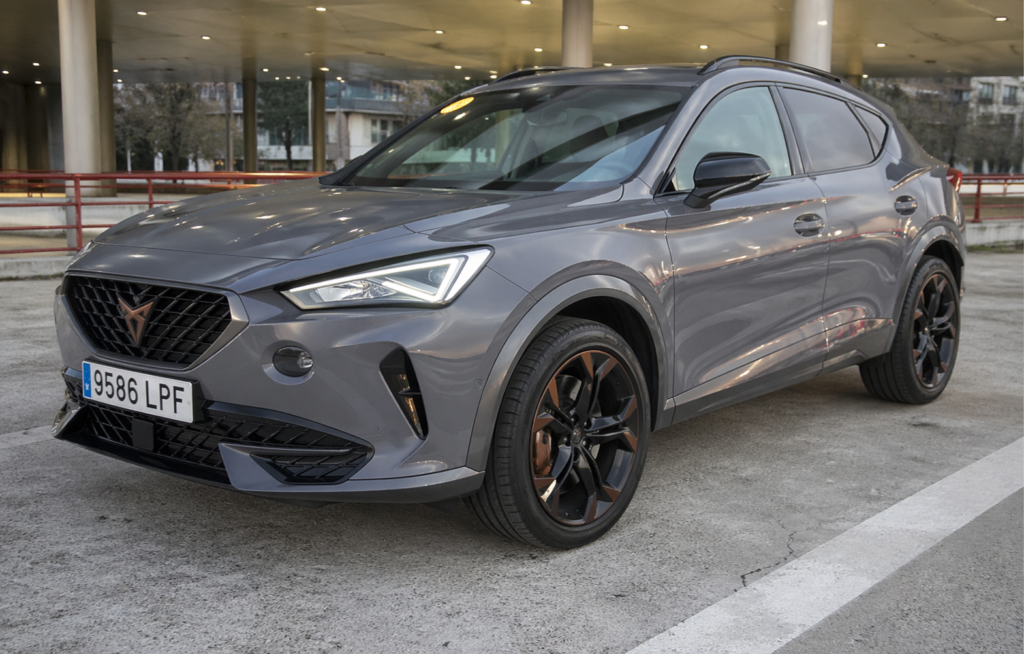
Let’s be honest—when we first laid eyes on the Cupra Formentor, it didn’t feel like just another crossover. It felt like a rebellion on wheels. Sleek, aggressive, and unapologetically sporty, it stands out in a sea of predictable SUVs.
But here’s the real question we all end up asking:
What is the Cupra Formentor actually based on?
Is it just a dressed-up version of something else? Or is it truly a unique creation?
Let’s peel back the layers and explore its roots, platform, engineering DNA, and everything in between.
The Short Answer: MQB Platform Roots
The Foundation Beneath the Surface
At its core, the Cupra Formentor is built on the Volkswagen Group MQB platform.
This is the same versatile architecture used across a wide range of vehicles in the Volkswagen Group family.
Think of it like a universal skeleton—flexible, scalable, and engineered to support everything from hatchbacks to SUVs.
Understanding the MQB Platform
What Does MQB Actually Mean?
MQB stands for Modularer Querbaukasten (yes, it’s a mouthful). Translated loosely, it means:
“Modular transverse matrix”
In simpler terms:
- It’s a shared platform for cars with transverse engines
- It standardizes key components like engine placement and axle positioning
- It allows different brands to build diverse vehicles efficiently
Why MQB Matters
The platform isn’t just about cost-saving—it’s about:
- Consistency in engineering
- Improved safety standards
- Flexible design possibilities
- Performance scalability


Meet the Family Members
The Formentor shares its underlying architecture with several well-known models:
- Volkswagen Golf
- Audi A3
- SEAT Leon
- Škoda Octavia
But here’s the twist…
None of these cars look or feel like the Formentor.
So… Is the Formentor Just a Rebadged Car?
Absolutely Not
This is where things get interesting.
Unlike many vehicles that borrow heavily from siblings, the Formentor was:
- Designed exclusively for Cupra
- Not directly derived from a single existing model
- Developed as a standalone identity piece
It’s not a Golf in disguise. It’s not a Leon with makeup.
It’s something entirely its own.
You may be interested in reading Citroën C4 Cactus Reliability: The Honest Long-Term Verdict We All Want
Cupra’s First Truly Independent Model
A Statement of Intent
The Formentor was the first car developed solely by Cupra after splitting from SEAT.
And you can feel that independence in every curve.
Why This Matters
- It marks Cupra’s evolution from a performance sub-brand
- It showcases a new design language
- It establishes identity beyond SEAT
Design Inspiration: Where Style Meets Aggression


From Concept to Reality
The Formentor stayed remarkably true to its original concept car.
That’s rare.
Most cars lose their edge during production—but not this one.
Key Design Influences
- Coupe-SUV silhouette
- Sharp, angular lines
- Full-width LED lighting
- Copper accents (a Cupra signature)
The Engine Lineup
The Formentor borrows engines from the Volkswagen Group ecosystem:
- 1.5L TSI
- 2.0L TSI
- Plug-in hybrid (PHEV)
But here’s the key:
👉 Cupra tunes them differently.
Performance Twist
Take the VZ models:
- Up to 310 HP
- AWD capability
- Sport-focused suspension
This isn’t your average MQB experience—it’s turned up to eleven.
Driving Dynamics: Where It Breaks Away
Not Your Typical MQB Ride
While many MQB cars lean toward comfort, the Formentor leans into:
- Sportiness
- Precision handling
- Driver engagement
What Makes It Feel Different?
- Lower ride height than typical SUVs
- Wider stance
- Adaptive chassis control
It feels more like a hot hatch on stilts than a traditional SUV.
Interior: Familiar Yet Distinct


Yes, you’ll recognize some elements from other VW Group cars:
- Infotainment system
- Digital cockpit
- Switchgear
But Cupra adds its own flavor:
- Copper detailing
- Sport seats
- Driver-focused layout
How It Compares to the SEAT Leon
Same Platform, Different Personality
Let’s put it simply:
- Leon = Practical, balanced
- Formentor = Emotional, sporty
Even though they share DNA, they feel worlds apart.
Is It Based on the Volkswagen Golf?
Technically Yes… But Not Really
Because they share the MQB platform, there’s a connection.
But calling the Formentor a Golf-based SUV is like saying:
“A gourmet burger is just bread and meat.”
You may be interested in readingYou may be interested in reading
True—but wildly oversimplified.
The Role of the MQB Evo Platform
Next-Level Evolution
The Formentor uses the updated MQB Evo version, which brings:
- Better electronics
- Improved connectivity
- Enhanced driver assistance systems
Plug-In Hybrid Variant: A Modern Twist
Electrification Meets Performance
The PHEV versions combine:
- Electric motor
- Petrol engine
- Battery pack
Result?
- Lower emissions
- Instant torque
- Surprisingly fun driving experience
Manufacturing Origins
Where Is It Built?
The Formentor is produced in:
- Martorell, Spain
This is the same facility tied to SEAT—but now heavily associated with Cupra’s future.
Why the Formentor Feels So Unique
It’s the Blend That Matters
What makes it special isn’t just what it’s based on—it’s how everything comes together:
- Shared platform
- Unique design
- Performance tuning
- Brand identity
It’s like taking familiar ingredients and creating a completely new recipe.
Who Should Consider the Formentor?
Ideal Buyers
- Drivers bored of conventional SUVs
- People who want performance without going full sports car
- Fans of bold design
Closing Thoughts: More Than the Sum of Its Parts
So, what is the Cupra Formentor based on?
Yes, it rides on the MQB platform shared across the Volkswagen Group.
But that’s just the foundation.
Everything else—the design, tuning, personality—feels like Cupra carved out its own lane.
It’s not just built on a platform.
It’s built on an idea.
An idea that driving should still feel exciting.
FAQs
1. Is the Cupra Formentor based on the SEAT Leon?
Not directly. They share the MQB platform, but the Formentor is a standalone model.
Yes, many mechanical components come from the VW Group ecosystem.
It sits between mainstream and premium—offering high-end features with sporty appeal.
4. What platform does the Formentor use?
It uses the Volkswagen Group MQB Evo platform.
You may be interested in readingCitroën C4 Cactus Reliability: The Honest Long-Term Verdict We All WantYou may be interested in reading
Citroën C4 Key Battery Replacement: The Complete Guide We Wish We Had EarlierYou may be interested in reading
Citroën C4 Heater Fan Not Working: Complete Troubleshooting & Fix Guide5. Is the Formentor unique compared to rivals?
Yes, especially in design and driving dynamics—it stands out in its segment.
If you want to know other articles similar to What Is the Cupra Formentor Based On? A Deep Dive Into Its DNA you can visit the category Blog.
Is Vauxhall Agila a Good Car? Reliability, Problems and Buying Guide
Honda Passport Life Expectancy: How Many Miles Can It Last?
Honda Passport Depreciation: How Well Does It Hold Its Value?

Nissan Rogue Reliability Rating: How Reliable Is the Rogue?
Nissan Rogue Life Expectancy: How Long Does It Last?
Vauxhall Agila Reliability: Common Problems, Best Engines and What to Check
Leave a Reply
More content of your interest