

Is Alfa Romeo Giulia Reliable? The Truth About Ownership, Problems, and Long-Term Durability

Content in this publication
- Why the Alfa Romeo Giulia Sparks So Much Debate
- How Alfa Romeo’s Reputation Affects the Giulia
- So, Is the Alfa Romeo Giulia Reliable?
- Which Alfa Romeo Giulia Years Are the Most Reliable?
- Common Alfa Romeo Giulia Problems
- Electrical Problems Are the Biggest Weakness
- Battery Problems Cause Many Reliability Complaints
- Infotainment System Reliability
- Engine Reliability in the Alfa Romeo Giulia
- Transmission Reliability Is Surprisingly Strong
- Does the Alfa Romeo Giulia Break Down Often?
- Maintenance Matters More Than Average With the Giulia
- How Expensive Is Alfa Romeo Giulia Maintenance?
- Dealer Experience Plays a Huge Role
- How Long Can an Alfa Romeo Giulia Last?
- Is the Giulia More Reliable Than BMW?
- How the Giulia Compares to Audi and Mercedes
- Why So Many Owners Still Love the Giulia
- Should You Buy a Used Alfa Romeo Giulia?
- Certified Pre-Owned vs Private Seller
- Is Alfa Romeo Reliability Improving?
- Who Should Buy an Alfa Romeo Giulia?
- Who Should Avoid the Giulia?
- Final Verdict on Alfa Romeo Giulia Reliability
- FAQs
Why the Alfa Romeo Giulia Sparks So Much Debate
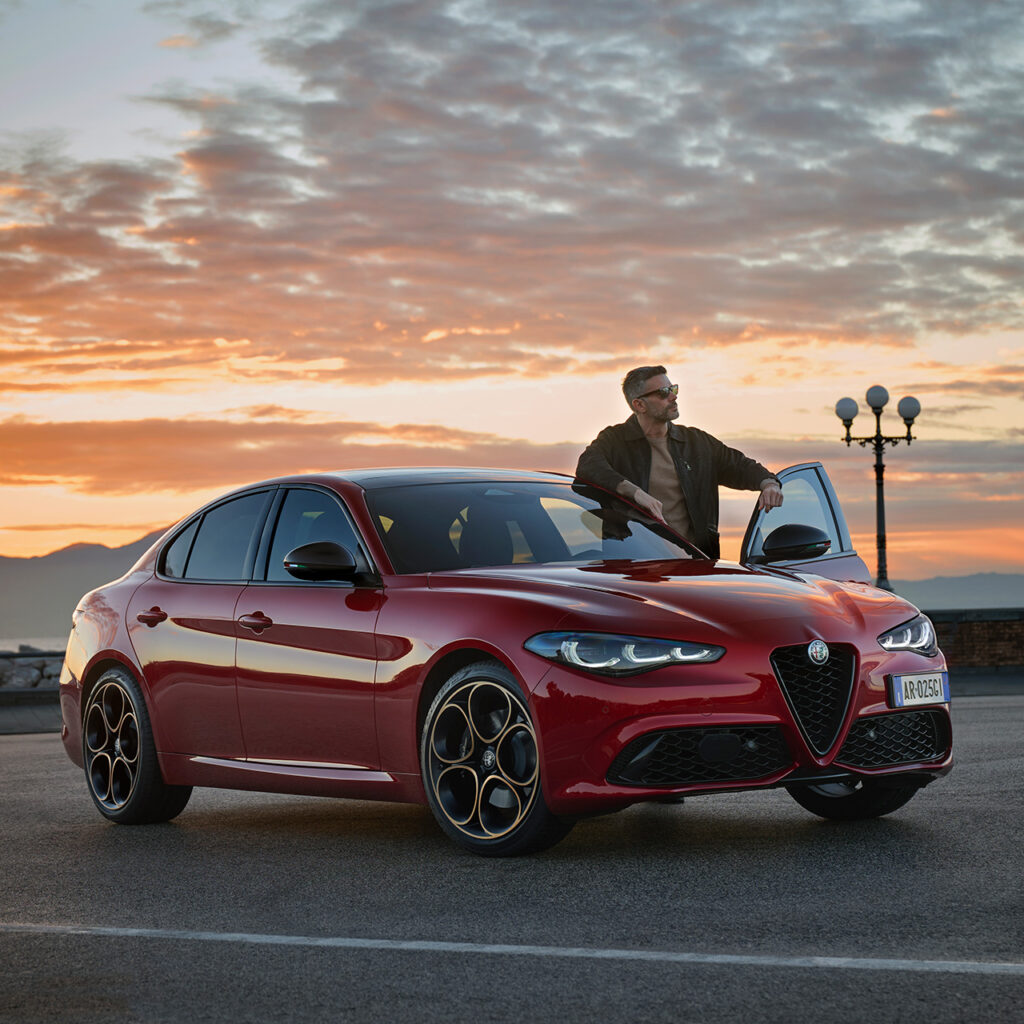
The Alfa Romeo Giulia is not an ordinary sedan. It doesn’t blend into traffic like wallpaper. It doesn’t quietly move from one point to another with zero emotion. Instead, it feels alive. The steering is razor sharp, the styling looks sculpted by artists rather than engineers, and the driving experience has enough personality to make many German rivals feel emotionally flat.
But there’s always one question following the Giulia around like a shadow:
Is Alfa Romeo Giulia reliable?
That question matters because passion alone doesn’t pay repair bills. A car can make us smile every morning, but if it spends half its life at the dealership, the romance quickly fades. The Giulia sits in a fascinating place between brilliance and unpredictability, and that balance is exactly why opinions about it vary so wildly.
Some owners call it the best sports sedan they’ve ever driven. Others complain about warning lights, electrical glitches, and expensive repairs. The truth sits somewhere in the middle.
The Giulia is far more reliable than old Alfa Romeos, but it still carries a few Italian quirks that buyers should understand before signing the paperwork.
How Alfa Romeo’s Reputation Affects the Giulia
Alfa Romeo has carried reliability baggage for decades. Older models earned reputations for:
- Electrical nightmares
- Rust issues
- Mechanical inconsistency
- Expensive ownership
- Weak long-term durability
For years, people joked that Alfa Romeos spent more time being admired than driven.
Then the Giulia arrived.
When Alfa launched the Giulia in 2016, it felt like a declaration of war against the established luxury brands. The car immediately impressed journalists worldwide because it delivered something many competitors lacked: genuine emotion.
The Giulia wasn’t merely fast. It was exciting.
It challenged the BMW 3 Series, Audi A4, and Mercedes-Benz C-Class in ways few expected.
But emotional driving and reliability are two completely different conversations.
So, Is the Alfa Romeo Giulia Reliable?
The short answer is yes — moderately reliable.
The longer answer is more interesting.
The Giulia is not as dependable as a Lexus IS or a Toyota Camry, but it’s also nowhere near the disaster some internet forums claim it to be.
Most reliability concerns come from:
- Electronics
- Software glitches
- Battery sensitivity
- Minor electrical faults
The core mechanical components, especially in later model years, are actually fairly solid.
In many ways, owning a Giulia is like owning a beautifully handcrafted Italian espresso machine. When everything works, it’s magical. But it demands attention and proper care.
Which Alfa Romeo Giulia Years Are the Most Reliable?
Not all Giulia model years are equal.
The earliest versions experienced the highest number of complaints, while later versions improved significantly.
Best Giulia Years for Reliability
These are generally considered the safest years to buy:
- 2020
- 2021
- 2022
- 2023
These models benefited from:
- Improved software
- Better electrical systems
- Stronger quality control
- Updated infotainment hardware
- Refined manufacturing processes
By 2020, Alfa Romeo had already fixed many early-production issues.
Giulia Years To Avoid
The 2017 and 2018 Giulias tend to generate the most complaints.
Common issues included:
- Dashboard warning lights
- Infotainment glitches
- Weak batteries
- Electrical instability
- Sensor failures
That doesn’t mean every early Giulia is problematic, but the risk level is definitely higher.
Buying one without maintenance records is like gambling in a casino where the odds aren’t posted on the wall.
Common Alfa Romeo Giulia Problems
The Giulia’s reliability story revolves mostly around electronics rather than catastrophic engine failures.
That distinction matters.
Many owners experience annoying issues instead of complete breakdowns.
Electrical Problems Are the Biggest Weakness
If the Giulia has a main reliability villain, it’s the electrical system.
Owners commonly report:
- Random warning lights
- Parking sensor errors
- Backup camera failures
- Infotainment crashes
- Keyless entry glitches
- Unexplained alerts
Sometimes these warnings disappear moments later as if the car simply changed its mind.
That inconsistency frustrates many owners because diagnosing the root cause becomes difficult.
Why the Giulia Is So Sensitive Electrically
Modern luxury cars operate like rolling computers. The Giulia contains numerous interconnected modules constantly communicating with one another.
If battery voltage drops slightly, strange things can happen.
Oddly enough, many “major” Giulia problems turn out to be battery-related rather than true mechanical failures.
Battery Problems Cause Many Reliability Complaints
The Giulia is extremely sensitive to battery condition.
A weak battery may trigger:
- Check engine lights
- Start-stop errors
- Transmission warnings
- Sensor malfunctions
- Electronic instability
Replacing the battery often fixes multiple issues at once.
It’s almost like the Giulia becomes emotionally dramatic when it’s tired.
Infotainment System Reliability
Early Giulia infotainment systems were not perfect.
Owners complained about:
- Lagging touchscreens
- Bluetooth disconnects
- Navigation freezing
- Random system reboots
Thankfully, Alfa improved the software over time, and later models behave far better.
These problems are irritating, but they usually don’t leave owners stranded.
You may be interested in reading Jaecoo 7 Insurance Group
Engine Reliability in the Alfa Romeo Giulia
The Giulia’s engines are generally stronger than many people expect.
That surprises some buyers because Alfa’s older reputation still lingers heavily online.
2.0 Turbo Engine Reliability
The 2.0-liter turbocharged four-cylinder is the most common Giulia engine.
Overall, it’s fairly dependable.
Strengths include:
- Good fuel economy
- Strong performance
- Smooth power delivery
- Solid internal durability
Potential issues can include:
- Oil leaks
- Turbo wear over high mileage
- Cooling system problems if neglected
But with regular maintenance, the 2.0T engine can last a long time.
Quadrifoglio Reliability
The Alfa Romeo Giulia Quadrifoglio is another story entirely.
Its Ferrari-inspired twin-turbo V6 delivers breathtaking performance, but higher performance always increases complexity.
Potential Quadrifoglio concerns include:
- Expensive maintenance
- Turbo wear
- Carbon buildup
- Cooling system complexity
- Higher repair costs
The Quadrifoglio is reliable enough for enthusiasts who understand high-performance ownership, but it’s not ideal for someone seeking worry-free transportation.
Owning one is like owning a racehorse. Beautiful, thrilling, and occasionally demanding.
Transmission Reliability Is Surprisingly Strong
One of the Giulia’s biggest strengths is its transmission.
The ZF 8-speed automatic gearbox is excellent.
It’s also used in:
- BMW models
- Dodge performance cars
- Jeep SUVs
- Maserati vehicles
This transmission is respected across the industry for:
- Smooth shifts
- Fast response
- Strong durability
Transmission failures are relatively uncommon in the Giulia.
That’s a major reliability advantage.
Does the Alfa Romeo Giulia Break Down Often?
Not necessarily.
The Giulia is more likely to suffer from:
- Small electrical glitches
- Sensor errors
- Infotainment bugs
Than major catastrophic breakdowns.
Many owners drive their Giulias daily with minimal problems.
Others experience recurring electrical annoyances that damage confidence in the car.
That inconsistency explains why online opinions feel so divided.
Maintenance Matters More Than Average With the Giulia
A neglected Giulia becomes problematic quickly.
This is not a car that tolerates ignored maintenance gracefully.
Key maintenance habits include:
- Regular oil changes
- Monitoring battery health
- Keeping software updated
- Fixing small issues early
- Using quality fluids
Treat the Giulia well, and it usually responds positively.
Ignore it, and problems multiply rapidly.
How Expensive Is Alfa Romeo Giulia Maintenance?
The Giulia costs more to maintain than mainstream sedans.
That’s expected.
This is a luxury sports sedan, not an economy commuter car.
Typical annual maintenance costs range between:
- $800 to $1,500 annually
- Higher for Quadrifoglio models
Common expenses include:
- Premium synthetic oil
- Performance tires
- Brake replacements
- Scheduled servicing
Parts can also cost more than Japanese competitors.
Dealer Experience Plays a Huge Role
A knowledgeable Alfa Romeo dealership can completely change ownership satisfaction.
Because the Giulia relies heavily on software and electronics, inexperienced mechanics may misdiagnose problems repeatedly.
A good dealer often resolves issues quickly.
A bad one can turn small glitches into months of frustration.
That’s why researching local dealer quality matters almost as much as researching the car itself.
How Long Can an Alfa Romeo Giulia Last?
With proper maintenance, a Giulia can realistically last:
- 150,000 to 200,000 miles
The engine and transmission are capable of long-term durability.
The real concern is usually electronics rather than core mechanical components.
If the electrical systems remain healthy, the car itself can age surprisingly well.
Is the Giulia More Reliable Than BMW?
This comparison is more competitive than many people realize.
Modern BMW reliability is not perfect either.
You may be interested in readingJaecoo 7 Insurance GroupYou may be interested in reading
Jaecoo 7 Engine: Everything We Need to Know About Performance, Reliability, and PowerThe Giulia often competes closely with BMW in reliability studies, though BMW still benefits from:
- Larger dealer networks
- Better parts availability
- More experienced technicians
Still, the Giulia frequently feels more exciting to drive.
It’s the difference between a precision-made luxury watch and a handmade Italian leather jacket.
One feels clinically perfect.
The other feels personal.
How the Giulia Compares to Audi and Mercedes
Compared to the Audi A4 and Mercedes-Benz C-Class, the Giulia usually falls slightly behind in long-term reliability.
However, it often wins in:
- Steering feel
- Driver engagement
- Styling uniqueness
- Personality
If your only priority is reliability, Audi or Lexus may make more sense.
But if driving enjoyment matters deeply, the Giulia becomes difficult to ignore.
Why So Many Owners Still Love the Giulia
Despite its flaws, many Giulia owners absolutely adore their cars.
That emotional connection matters.
Owners frequently say:
- “It feels special every day.”
- “I still look back at it after parking.”
- “No other sedan drives like this.”
The Giulia creates an experience.
And sometimes, experience matters more than perfection.
A perfectly reliable car that feels boring can become invisible in our lives.
The Giulia never feels invisible.
Should You Buy a Used Alfa Romeo Giulia?
Yes — but carefully.
Used Giulias offer excellent value because depreciation hits them hard.
Buyers often get:
- Luxury features
- Exotic styling
- Strong performance
- Incredible handling
For prices far below German competitors.
What To Check Before Buying
Before purchasing a used Giulia, inspect:
- Service history
- Battery condition
- Warning lights
- Suspension wear
- Tire condition
- Software update status
A pre-purchase inspection is essential.
Certified Pre-Owned vs Private Seller
A certified pre-owned Giulia is usually safer because it includes:
- Warranty coverage
- Dealer inspection
- Updated software
- Verified maintenance
Private sales can save money, but the risks increase significantly.
Is Alfa Romeo Reliability Improving?
Yes — absolutely.
Modern Alfa Romeos are far more reliable than older generations.
The company has improved:
- Electronics
- Build quality
- Software
- Manufacturing consistency
The Giulia played a major role in restoring Alfa Romeo’s credibility worldwide.
It still isn’t Lexus-level dependable, but it’s dramatically better than the stereotypes suggest.
Who Should Buy an Alfa Romeo Giulia?
The Giulia is ideal for drivers who:
- Love driving
- Appreciate design
- Want something unique
- Maintain cars carefully
- Accept occasional quirks
Who Should Avoid the Giulia?
The Giulia may not suit buyers who:
- Want appliance-like dependability
- Ignore maintenance
- Hate dealership visits
- Prioritize resale value above all else
If reliability is your only concern, there are safer choices.
But if you want emotion, character, and excitement, the Giulia offers something many competitors simply cannot.
Final Verdict on Alfa Romeo Giulia Reliability
So, is the Alfa Romeo Giulia reliable?
Yes — especially newer models.
It’s not perfect, and it still carries some electronic quirks, but the Giulia is far better than Alfa Romeo’s old reputation suggests.
The key is understanding what kind of car it is.
The Giulia rewards attentive ownership. It’s a sedan with personality, soul, and genuine driving passion. In a world filled with overly sanitized luxury cars, the Giulia feels refreshingly human.
And perhaps that’s why so many owners forgive its occasional imperfections.
Because when the road opens up and the steering comes alive in your hands, the Giulia stops feeling like transportation.
It starts feeling like an experience.
FAQs
Is the Alfa Romeo Giulia reliable for daily driving?
Yes, many owners use the Giulia daily without major problems, especially newer models from 2020 onward.
What is the most common Alfa Romeo Giulia problem?
Electrical and battery-related issues are the most common complaints among owners.
How long does an Alfa Romeo Giulia engine last?
With proper maintenance, the Giulia’s engine can last between 150,000 and 200,000 miles.
Is the Alfa Romeo Giulia expensive to repair?
Yes, repair costs are generally higher than mainstream sedans because it is a luxury performance vehicle.
Which Alfa Romeo Giulia year should I buy?
The 2020, 2021, 2022, and 2023 models are generally considered the most reliable.
You may be interested in readingJaecoo 7 Insurance GroupYou may be interested in reading
Jaecoo 7 Engine: Everything We Need to Know About Performance, Reliability, and PowerYou may be interested in reading
Is Jaecoo 7 Reliable? The Honest Deep Dive Buyers NeedIf you want to know other articles similar to Is Alfa Romeo Giulia Reliable? The Truth About Ownership, Problems, and Long-Term Durability you can visit the category Blog.
Does Mercedes A-Class Have a Renault Engine?
Kia Sportage Gas Tank Size: Complete Guide

BMW X1 Life Expectancy: How Long Does It Last?
Is the Toyota Yaris Cross Reliable? 2026 Guide
Kia Sportage Weight Guide: Curb, Kerb & GVWR

Toyota RAV4 Gas Tank Size (Chart & Explanation)
Leave a Reply
More content of your interest